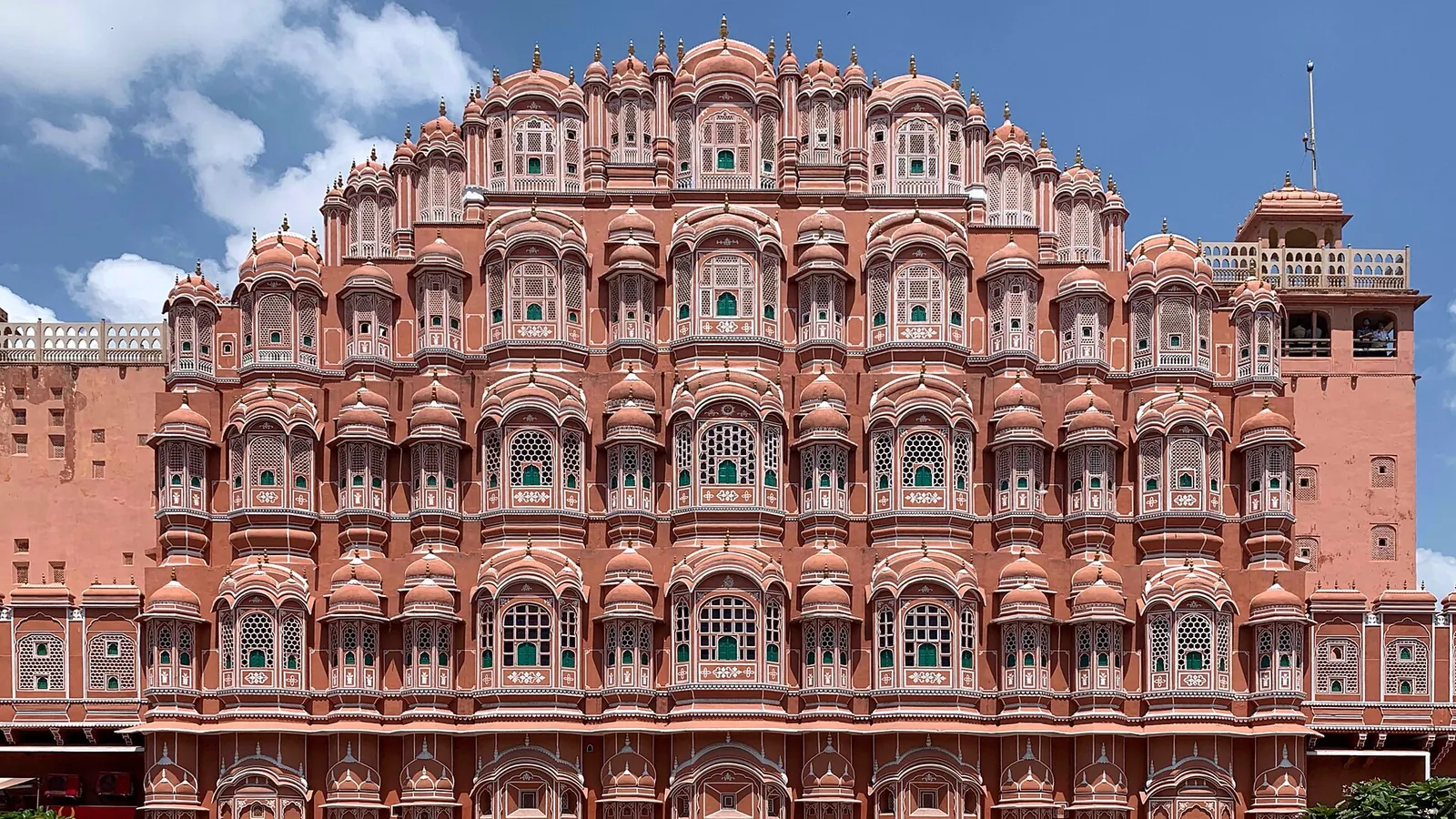
The pink sandstone honeycomb façade of the Hawa Mahal in Jaipur

Rajasthan, northern India · India

Jaipur

The Pink City of Rajasthan: a walled bazaar town of palaces and sandstone façades, a hilltop fort above a lake and a great open-air observatory.

  • Best time October–March
  • Stay 2 days
  • Good for Palaces and forts, shopping, crafts, food, a Golden Triangle stop

Photo: Chainwit. · CC BY-SA 4.0

Welcome to Jaipur

Jaipur was founded in 1727 by Maharaja Sawai Jai Singh II of the Kachwaha Rajput dynasty, who moved his capital down from the hilltop fort at Amber to a new planned city on the plain. It was laid out on a grid, with wide streets and organised bazaars, and its buildings were painted terracotta pink in 1876, traditionally for the visit of the Prince of Wales, which gave it the name Pink City. UNESCO inscribed the walled city in 2019.

The city's palaces, forts and observatory reflect the taste and science of its rulers. The City Palace is still partly the residence of the royal family, the Jantar Mantar is an 18th-century observatory of giant astronomical instruments, and the Hawa Mahal, with its many small windows, is the emblem of the city. Above the city on the ridge are Amber, Jaigarh and Nahargarh forts.

Jaipur is also a working city, with busy bazaars selling textiles, jewellery, gems, leather and pottery, and it is one of the best places in India to shop for crafts. It is hot in summer and crowded in winter, but its energy and colour make it a highlight of Rajasthan.

  • Major City
  • UNESCO Site
  • Historic Site
  • Culture & Arts

Why visit

Why visit Jaipur?

Jaipur is the quintessential Rajasthani city, with monuments, markets and food in a compact area.

  • Fortress and palaces

    Amber Fort, the City Palace and the Hawa Mahal are among the best sights in Rajasthan.

  • A working observatory

    Jantar Mantar's giant instruments still measure time and celestial positions, and are UNESCO-listed.

  • Crafts and shopping

    Block-printed textiles, blue pottery, gemstones, silver jewellery and leather goods.

  • Rajasthani cooking

    Dal baati churma, laal maas, pyaaz kachori and sweet ghewar.

  • An easy base

    It connects Delhi and Agra with Udaipur, Jodhpur and the desert.

Main attractions

Top things to see in Jaipur

The main sights are spread between the old walled city and the ridge to the north, and two days covers them.

  1. The sandstone ramparts and gateways of Amber Fort above the lake

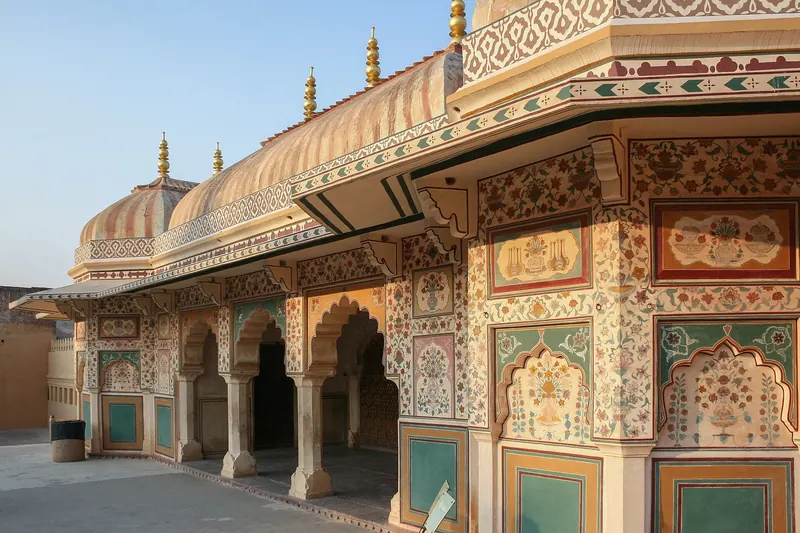
    Amber Fort

    A fort-palace on a hill 11 km from the city, built in the 16th century by Raja Man Singh and expanded by later rulers, with mirror-studded halls, painted gateways and terraces above Maota Lake. It is the finest fort in Rajasthan.

    Tip Go at opening time, and walk up rather than take an elephant.

  2. The Hawa Mahal

    The Palace of Winds, built in 1799, a five-storey façade of 953 small windows that let royal women watch street life unseen. It is best seen from the street opposite in the morning.

    Tip The view from the café across the street is the classic one.

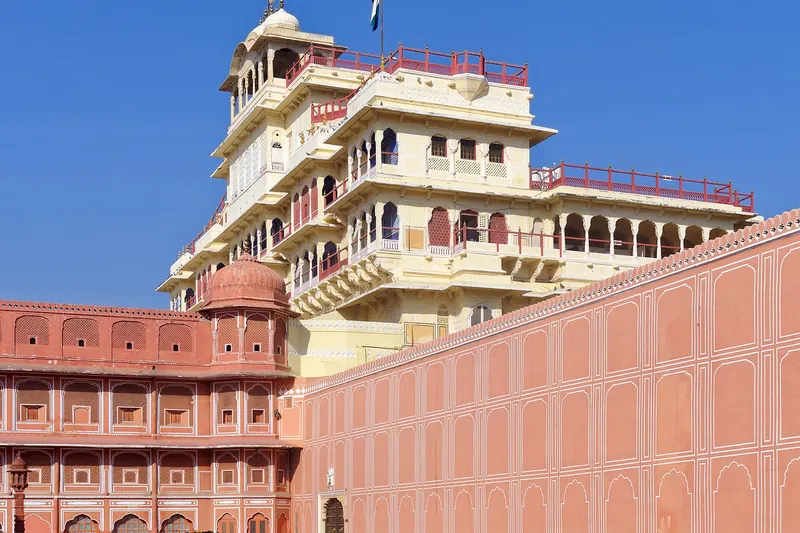
  3. The Chandra Mahal in the City Palace complex in Jaipur

    The City Palace

    A complex of courtyards, pavilions and gates in a blend of Rajput and Mughal styles, partly a museum and partly the home of the royal family. Its four gates are decorated with peacocks and seasons.

    Tip See the Pitam Niwas Chowk gates in the courtyard.

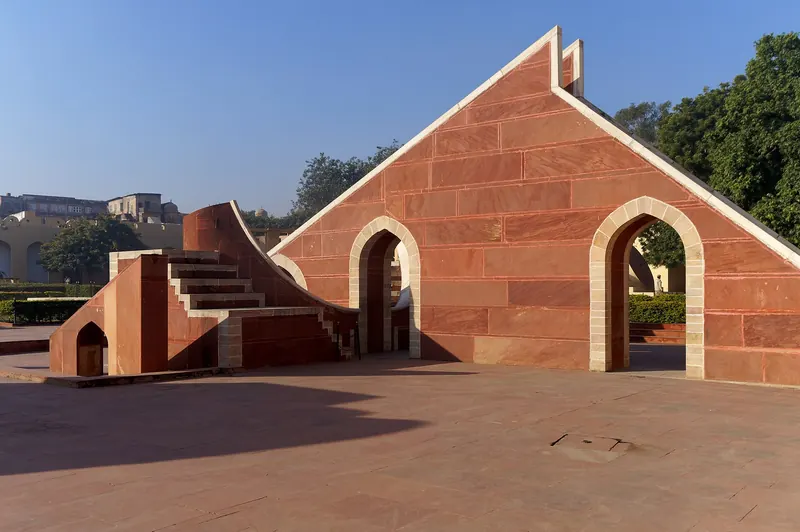
  4. The giant stone instruments of Jantar Mantar observatory in Jaipur

    Jantar Mantar

    An open-air observatory built in the 1730s by Jai Singh II, with 19 astronomical instruments, including the world's largest stone sundial, which can measure time to within seconds.

    Tip Hire a guide to see how the instruments work.

  5. Nahargarh and Jaigarh Forts

    Hilltop forts above the city with sweeping views, particularly at sunset. Jaigarh holds a giant cannon.

    Tip Go by taxi, and stay for sunset.

  6. The bazaars

    Johari Bazaar for jewellery, Bapu Bazaar for textiles and shoes and Tripolia Bazaar for lacquer and metal, all in the walled city.

    Tip Bargain, and keep an eye on your belongings.

Things to do

Best things to do in Jaipur

Jaipur combines sightseeing with shopping and food, and a few workshops are worth seeing.

  1. Explore Amber Fort early

    See the Sheesh Mahal's mirrored ceiling and the views of the lake, ideally at opening time.

    Tip Buy tickets online.

  2. Watch block printing

    Workshops at Sanganer and Bagru print cotton with hand-carved wooden blocks and natural dyes.

    Tip Try printing a scarf yourself.

  3. Shop for gems and jewellery

    Jaipur is a global centre for gemstone cutting, but buy only from reputable shops.

    Tip Ask for a certificate and compare prices.

  4. See blue pottery

    A distinctive local ceramic with cobalt and turquoise glazes.

    Tip Buy from a workshop with fixed prices.

  5. Take a cooking class

    Learn to make Rajasthani dishes in a family kitchen.

    Tip Book through your hotel.

  6. Have dinner on a rooftop

    Terrace restaurants look over the lit-up Hawa Mahal and City Palace.

    Tip Book a table for sunset.

Local food

What to eat in Jaipur

Rajasthani food is hearty, spicy and designed for a hot, dry climate.

  • Dal baati churma

    Baked wheat balls served with lentils and a sweet, crumbly wheat mixture, and the state's signature dish.

    Where to try it Traditional restaurants in the old city.

  • Laal maas

    A fiery mutton curry made with red chillies, from Rajasthan's warrior tradition.

    Where to try it Restaurants serving Rajasthani thalis.

  • Pyaaz kachori

    A crisp, flaky pastry stuffed with spiced onion, a popular street snack.

    Where to try it Street stalls and sweet shops.

  • Ghewar

    A honeycomb-shaped sweet soaked in syrup, made for Teej and Raksha Bandhan festivals.

    Where to try it Sweet shops in monsoon season.

  • Lassi

    Thick, cool yoghurt drink served in clay cups.

    Where to try it Famous lassi shops on MI Road.

  • Rajasthani thali

    A full platter of Rajasthani dishes.

    Where to try it Family restaurants.

Accommodation

Where to stay in Jaipur

Jaipur has a good range of heritage hotels and guesthouses, particularly in the old city and the neighbourhoods just outside it.

  • The Pink City

    Havelis and small hotels within the old city walls.

    Best for: Walking to the bazaars

  • C-Scheme and Bani Park

    Residential areas with guesthouses and boutique hotels.

    Best for: Quiet and good restaurants

  • Outskirts and Amber

    Larger heritage hotels with gardens.

    Best for: Palace stays

What a night costs

Budget guesthouse
US$15–40 per night
Mid-range hotel
US$50–120 per night
Heritage or luxury hotel
US$180–500 per night
Meal at a local restaurant
US$5–15 per person

Transport

Getting to and around Jaipur

Jaipur is about 280 km from Delhi and 240 km from Agra.

Getting there

  • Train from Delhi

    About 4 to 5 hours on fast trains such as the Shatabdi or Vande Bharat.

    Book through IRCTC.

  • Road from Agra or Delhi

    About 4 to 5 hours from Agra, and about 5 hours from Delhi.

    A private car allows a stop at Fatehpur Sikri.

  • Flight

    Direct flights from Delhi, Mumbai and other cities, and some international routes.

    The airport is 30 minutes from the centre.

Getting around

Sights are spread out, and a car or auto-rickshaw is the best way to reach them.

  • Auto-rickshaws

    Cheap for short trips.

    Agree the fare in advance.

  • Taxi or driver

    A day hire covers Amber and the forts easily.

    Ask your hotel to book.

  • Cycle rickshaw

    Useful in the crowded bazaars.

    Negotiate the price.

When to go

Best time to visit Jaipur

Jaipur has hot summers, a short monsoon and pleasant, dry winters.

  • Winter (November–February)

    Best time

    Warm days, cool nights and clear skies. Peak season.

  • Spring (March–April)

    Good

    Warm to hot, and Holi in March.

  • Summer (May–June)

    Think twice

    Very hot, often above 42°C.

  • Monsoon (July–September)

    Quiet

    Humid with showers, green hills and fewer visitors.

Worth planning around: May and June. The Jaipur Literature Festival in January or February brings crowds and higher prices.

Itinerary

Two days in Jaipur

The fort and the observatory on the first day, and the bazaars and workshops on the second.

  1. Day1

    Fort and palace

    Amber and the City Palace.

    • Morning Amber Fort at opening time.
    • Afternoon The City Palace and Jantar Mantar.
    • Evening The Hawa Mahal at dusk, and dinner on a terrace.
  2. Day2

    Bazaars and crafts

    Shopping and tastes.

    • Morning A block-printing workshop.
    • Afternoon The bazaars of the old city.
    • Evening Sunset at Nahargarh Fort.

Travel tips

Jaipur travel tips

Jaipur is a shopper's city, and a few tips help.

  • Go to Amber Fort early. It is hot and crowded by midday.
  • Avoid riding elephants at Amber, since welfare concerns are serious. Walk or take a jeep.
  • Be wary of drivers who steer you into shops for commissions.
  • Buy gems only from certified sellers, and be sceptical of bargains.
  • Buy a composite ticket that includes several monuments, if available.
  • Dress modestly in the bazaars.
  • Carry small notes for change.

FAQ

Jaipur: frequently asked questions

Why is Jaipur called the Pink City?

The old city was painted terracotta pink in 1876, traditionally for a visit by the Prince of Wales. Pink is the colour of hospitality in Rajasthan.

How many days do you need in Jaipur?

Two days for the main sights, and three if you want to shop and visit workshops.

Is it ethical to ride an elephant at Amber?

Welfare concerns are widespread, and many visitors choose to walk up or take a jeep instead.

What is the best time to visit Jaipur?

October to March. Summer is very hot.

Is Jaipur safe?

Generally yes. The main problems are touts, scams and overcharging in the bazaars.

Can I visit Jaipur as a day trip from Delhi?

It is a long day, and it is better to stay overnight.

Read next

Related travel articles

Where to go

Beyond the Big Names: Places Worth the Detour

The most visited place in a country is rarely its best, and it is almost never its best value. This is a method for finding the destinations that do not make the postcards — and a set of examples from five of the 50 countries on this site.

Food

A Country-by-Country Food Primer

Eating well abroad is mostly a matter of knowing when meals happen, how the menu is structured and which dish belongs to the place you are standing in. This covers all three for the five countries in this guide, plus the signals that separate a restaurant that feeds locals from one that feeds coaches.

Advertisement