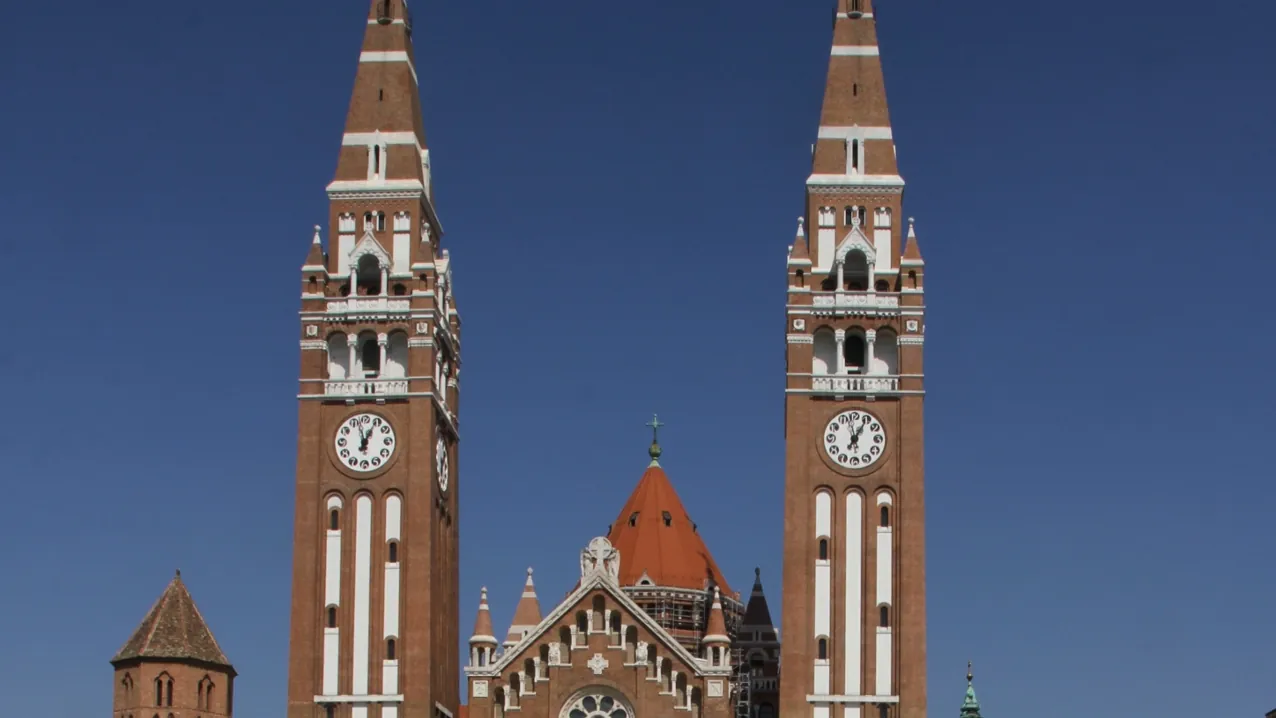
The twin-towered Votive Church of Szeged

Csongrád-Csanád, southern Hungary · Hungary

Szeged

The sunniest city in Hungary, a university town on the Tisza with a twin-towered Votive Church, Art Nouveau facades, fish soup and paprika.

  • Best time May–September
  • Stay 1–2 days
  • Good for City break, food, nightlife, architecture

Photo: Motacilla · CC BY-SA 4.0

Welcome to Szeged

Szeged is the largest city in southern Hungary, with about 160,000 people, and it sits on the Tisza river near the borders with Serbia and Romania. It receives more hours of sunshine than any other Hungarian city, and it is a lively university town, with students making up a big part of the population. It is known as the City of Sunshine.

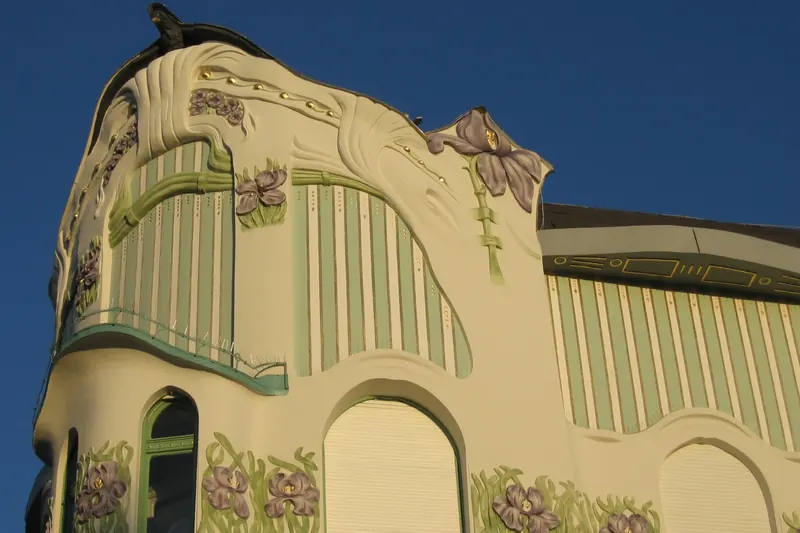
In 1879, a devastating flood destroyed most of the city. Rebuilding created a rational plan of wide boulevards and ring roads, with grand Art Nouveau and eclectic buildings, such as the colourful Reök Palace. The centrepiece is the Votive Church, a twin-towered brick cathedral built after the flood, whose 91-metre spires dominate Dóm Square, where an open-air festival of theatre and music is held each summer.

Szeged is also a food city. It is the home of halászlé, the paprika fish soup made with river carp and catfish, of Pick salami, and of one of the country's main paprika-growing areas. It makes a good stop on the way to or from Serbia, and one or two days is enough.

  • Major City
  • Culture & Arts
  • Food & Wine

Why visit

Why visit Szeged?

Szeged is a bright, youthful city with excellent food.

  • A grand cathedral

    The Votive Church.

  • Art Nouveau streets

    Rebuilt after the flood.

  • Fish soup and paprika

    Szeged's signature foods.

  • Sunshine

    The sunniest Hungarian city.

  • Student energy

    Cafés and open-air festivals.

Main attractions

Top things to see in Szeged

The centre is compact and walkable.

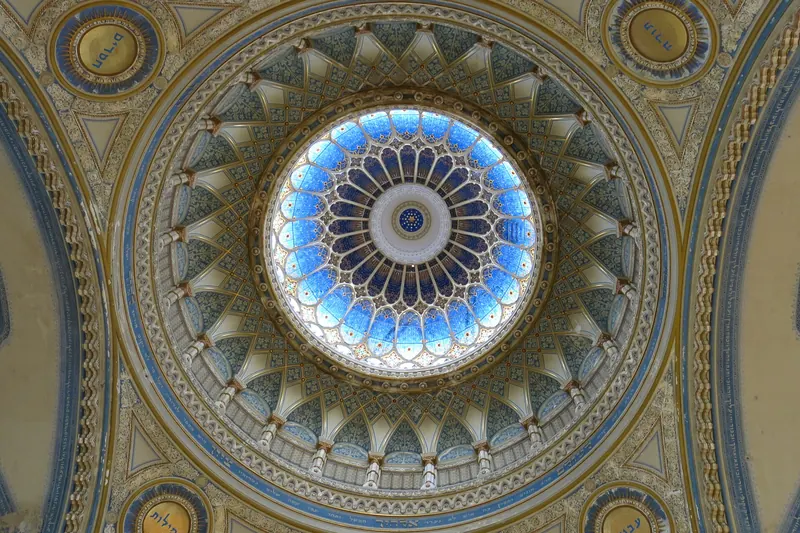
  1. The painted interior ceiling of the Votive Church of Szeged

    Votive Church

    A twin-towered church of brick, built after the 1879 flood, with a richly painted interior.

    Tip Climb the tower.

  2. The colourful Art Nouveau facade of the Reök Palace in Szeged

    Reök Palace

    A colourful Art Nouveau building of 1907, decorated with tiles and sculptures.

    Tip Visit the gallery inside.

  3. Dóm Square

    The main square, home of the summer open-air festival.

    Tip Visit in July.

  4. Tisza riverfront

    Promenades along the river.

    Tip Go at sunset.

  5. Szeged Great Synagogue

    One of the largest synagogues in Europe.

    Tip Check hours.

  6. Szeged Zoo

    A green city zoo.

    Tip With children.

Things to do

Best things to do in Szeged

Szeged is for eating and evenings.

  1. Eat halászlé

    Fish soup with paprika.

    Tip Try the local version.

  2. Watch a summer festival

    Open-air theatre.

    Tip Book tickets.

  3. Buy paprika and salami

    Shop for the spice and Pick salami.

    Tip Try the market.

  4. Relax by the river

    Cafés and terraces.

    Tip Evenings.

  5. Go to a thermal spa

    Local baths.

    Tip Bring a swimsuit.

  6. Explore Art Nouveau

    Walk the centre.

    Tip Look up.

Local food

What to eat in Szeged

Szeged is one of Hungary's great food cities.

  • Szegedi halászlé

    Paprika fish soup.

    Where to try it Riverside restaurants.

  • Pick salami

    Famous winter salami.

    Where to try it Shops.

  • Paprika

    Ground spice.

    Where to try it Markets.

  • Szegedi tarhonya

    Pasta pearls.

    Where to try it Restaurants.

  • Stuffed peppers

    With rice and meat.

    Where to try it Restaurants.

Accommodation

Where to stay in Szeged

Stay in the centre.

  • City centre

    Hotels.

    Best for: Walking

  • Near the river

    Guesthouses.

    Best for: Views

  • Near the station

    Business hotels.

    Best for: Transport

What a night costs

Hostel dorm
US$13–24 per night
Mid-range hotel
US$55–100 per night
Luxury hotel
US$110–190 per night
Meal
US$7–16 per person

Transport

Getting to and around Szeged

Szeged is in the south-east.

Getting there

  • Train from Budapest

    About 2.5 hours from Nyugati.

    Frequent.

  • Bus

    About 3 hours.

    Book.

  • Car

    About 2 hours on the M5.

    E-vignette.

Getting around

The centre is flat.

  • On foot

    The whole centre.

    Comfortable shoes.

  • Tram

    Serves the city.

    Cheap.

  • Bicycle

    Flat.

    Rent.

When to go

Best time to visit Szeged

Szeged is hot in summer.

  • Spring (April–May)

    Best time

    Mild.

  • Summer (June–August)

    Good

    Hot, with festivals.

  • Autumn (September–October)

    Best time

    Pleasant.

  • Winter (November–March)

    Quiet

    Cold.

Worth planning around: The heat of July afternoons.

Itinerary

One to two days in Szeged

Church, facades and fish soup.

  1. Day1

    Szeged

    The centre.

    • Morning The Votive Church.
    • Afternoon Reök Palace and Art Nouveau walk.
    • Evening Halászlé by the river.

Travel tips

Szeged travel tips

A few tips help you plan.

  • Try halászlé.
  • Visit in July for the festival.
  • Buy paprika and salami.
  • Climb the church tower.
  • Walk the river.
  • Watch for sun.
  • Check train times.

FAQ

Szeged: frequently asked questions

What is Szeged known for?

Sunshine, fish soup and paprika.

How far is it from Budapest?

About 2.5 hours.

Is it worth visiting?

Yes.

When is the festival?

In summer.

How many days?

One or two.

Was it flooded?

Yes, in 1879.

Read next

Related travel articles

Food

A Country-by-Country Food Primer

Eating well abroad is mostly a matter of knowing when meals happen, how the menu is structured and which dish belongs to the place you are standing in. This covers all three for the five countries in this guide, plus the signals that separate a restaurant that feeds locals from one that feeds coaches.

Where to go

Beyond the Big Names: Places Worth the Detour

The most visited place in a country is rarely its best, and it is almost never its best value. This is a method for finding the destinations that do not make the postcards — and a set of examples from five of the 50 countries on this site.

Advertisement