Horses on the open grassland of the Hortobágy puszta

Hajdú-Bihar, Great Hungarian Plain · Hungary

Hortobágy National Park

The puszta, Central Europe's largest grassland, with horsemen, grey cattle, racka sheep, migrating cranes and the longest stone bridge in Hungary.

  • Best time May–October
  • Stay 1 day
  • Good for Nature, birdwatching, folk culture, day trips

Photo: Veronika.szappanos · CC BY-SA 4.0

Welcome to Hortobágy

The puszta is the Great Hungarian Plain, an enormous grassland stretching across eastern Hungary. Hortobágy National Park, founded in 1973, protects 800 square kilometres of it, and is Hungary's largest protected area. The landscape is flat and vast, with grasses, wetlands, fish ponds and a vast sky, and it has been shaped by centuries of grazing by cattle, horses and sheep. UNESCO lists it as a cultural landscape.

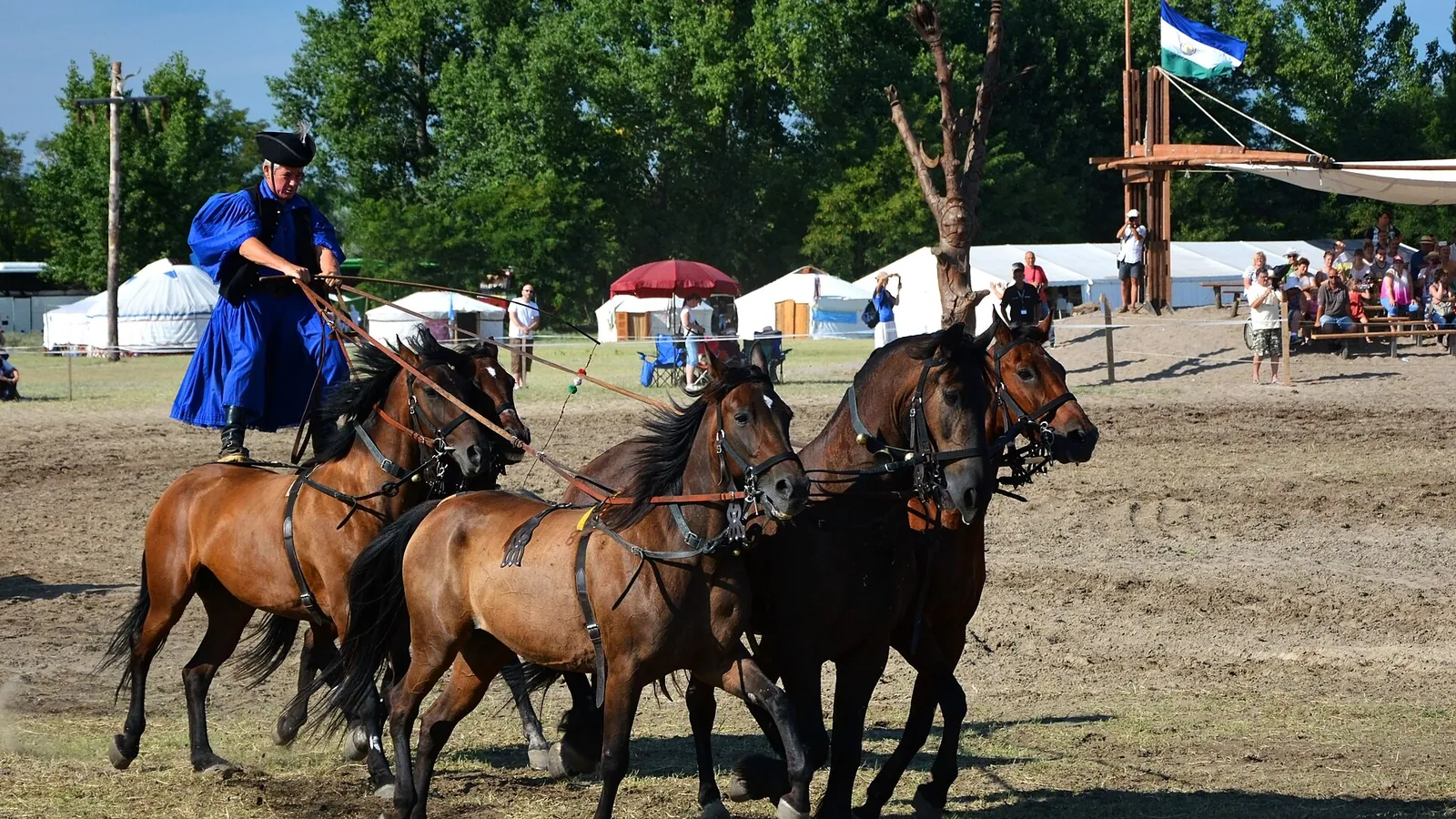
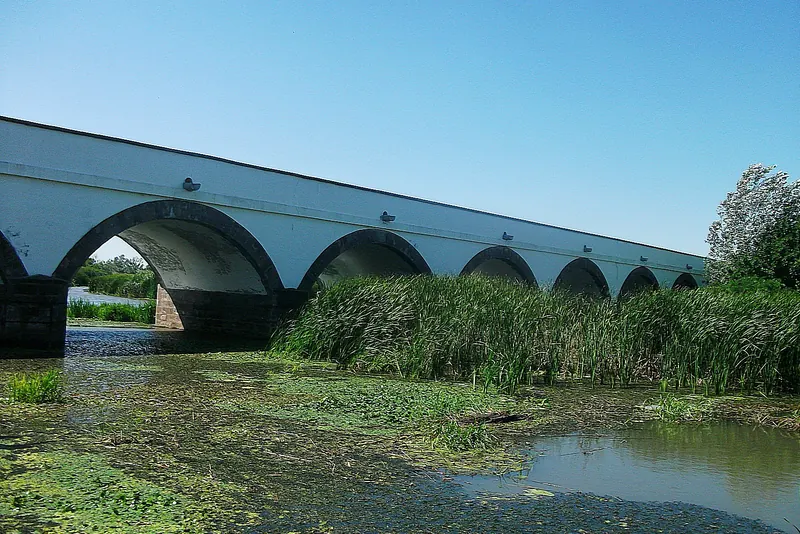
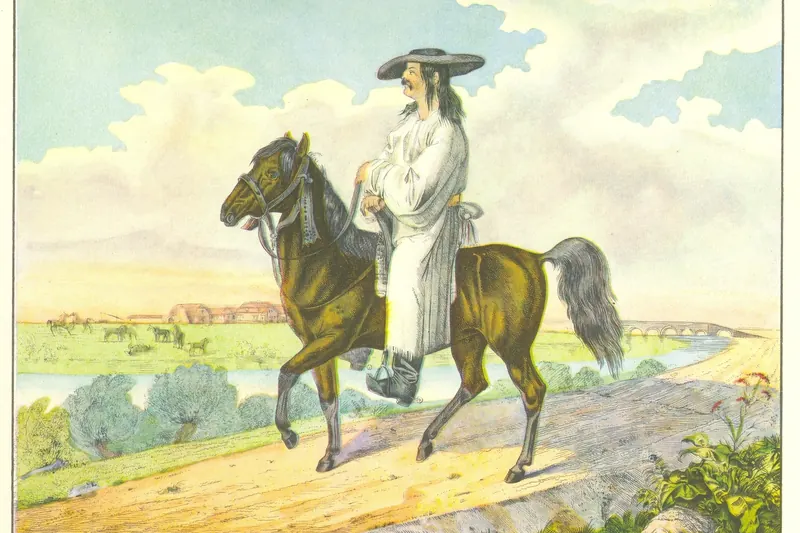
The traditional life of the puszta is still on show. Herdsmen, called csikós when they tend horses, ride in a distinctive costume of blue shirts, wide trousers and hats, and perform horse shows in which riders control teams of five horses at a gallop. Curly-horned Racka sheep and long-horned Hungarian grey cattle graze, and the stone Nine-Hole Bridge, the longest in Hungary at 167 metres, dates from 1833.

For nature lovers, the park is a major bird area. In October, tens of thousands of common cranes stop here on their migration, and visitors also see spoonbills, great bustards and many others. The park is a day trip from Debrecen or Tokaj, or a stop on a road trip east of Budapest.

  • National Park
  • Nature & Wildlife
  • UNESCO Site
  • Culture & Arts

Why visit

Why visit Hortobágy?

Hortobágy is the best place to see traditional Hungarian rural life and wide open landscapes.

  • The puszta

    Endless grassland.

  • Horse shows

    Csikós horsemen.

  • Birdwatching

    Cranes in autumn.

  • Nine-Hole Bridge

    A historic stone bridge.

  • Folk culture

    Traditional herding.

Main attractions

Top things to see in Hortobágy

The sights are in and around Hortobágy village.

  1. The nine-arched stone bridge over the Hortobágy river

    Nine-Hole Bridge

    A 167-metre stone bridge with nine arches, the longest in Hungary, built in 1833 on the old trade route.

    Tip Walk across.

  2. Grasslands and a well pole on the Hortobágy puszta

    The puszta

    The open grassland with traditional well poles, grazing herds and mirages on hot days.

    Tip Take a horse-cart tour.

  3. Horse shows

    Demonstrations of csikós riding, including the five-in-hand.

    Tip Check show times.

  4. Herdsmen's Museum

    A museum on pastoral life.

    Tip Near the bridge.

  5. Hortobágy fish ponds

    Ponds for birdwatching.

    Tip Bring binoculars.

  6. Crane migration

    Thousands of cranes stop in October.

    Tip Go at dusk.

Things to do

Best things to do in Hortobágy

A visit is about the plains.

  1. Watch a horse show

    Skilled riders.

    Tip Best in summer.

  2. Take a carriage ride

    Cross the puszta.

    Tip Book.

  3. Watch birds

    Cranes and spoonbills.

    Tip Bring binoculars.

  4. Visit the Wildlife Park

    See native animals.

    Tip Family.

  5. Eat at a csárda

    Traditional inns.

    Tip Try the goulash.

  6. Cycle

    Flat trails.

    Tip Take water.

Local food

What to eat in Hortobágy

Puszta food is simple and hearty.

  • Gulyás

    Cauldron-cooked soup.

    Where to try it Csárda inns.

  • Hortobágyi palacsinta

    Meat-filled pancakes.

    Where to try it Restaurants.

  • Bogrács stew

    Cooked over a fire.

    Where to try it Inns.

  • Grey cattle beef

    Local beef.

    Where to try it Restaurants.

  • Pálinka

    Brandy.

    Where to try it Inns.

Accommodation

Where to stay in Hortobágy

Stay in the village or Debrecen.

  • Hortobágy village

    Inns.

    Best for: Atmosphere

  • Debrecen

    Hotels.

    Best for: Services

  • Tiszafüred

    Guesthouses.

    Best for: Lake Tisza

What a night costs

Guesthouse
US$30–60 per night
Mid-range hotel
US$60–110 per night
Horse show
US$8–15 per person
Meal
US$7–15 per person

Transport

Getting to and around Hortobágy

Hortobágy is between Debrecen and Tiszafüred.

Getting there

  • Train from Debrecen

    About 45 minutes.

    Frequent.

  • Train from Budapest

    About 3 hours, some with a change.

    Book.

  • Car

    About 2.5 hours on the M3.

    E-vignette.

Getting around

Sights are spread out.

  • Carriage or tour

    Book a puszta tour.

    Seasonal.

  • Bicycle

    Flat.

    Rent.

  • Car

    Best.

    Drive carefully.

When to go

Best time to visit Hortobágy

The puszta is best in summer and autumn.

  • Spring (April–May)

    Good

    Green.

  • Summer (June–August)

    Good

    Hot, with horse shows.

  • Autumn (September–October)

    Best time

    Cranes.

  • Winter (November–March)

    Quiet

    Cold and empty.

Worth planning around: Midday summer heat.

Itinerary

One day in Hortobágy

Bridge, horses and birds.

  1. Day1

    The puszta

    Plains.

    • Morning The Nine-Hole Bridge.
    • Afternoon Horse show and carriage ride.
    • Evening Goulash at a csárda.

Travel tips

Hortobágy travel tips

A few tips help you plan.

  • Bring sun protection.
  • Bring binoculars.
  • Check show times.
  • Visit in October for cranes.
  • Hire a guide for birds.
  • Wear closed shoes.
  • Bring water.

FAQ

Hortobágy: frequently asked questions

What is the puszta?

The Great Hungarian Plain.

When do the cranes come?

October.

Is Hortobágy worth it?

Yes for nature and culture.

How long do I need?

One day.

How do I get there?

Train from Debrecen.

Is it a UNESCO site?

Yes.

Read next

Related travel articles

Road trips

How to Plan a US National Parks Road Trip

American national parks are no longer places you turn up at. Timed entry, permit lotteries and mandatory shuttles now govern the popular ones, and the distances between them are larger than almost any visitor expects. Here is how to plan around both.

Where to go

Beyond the Big Names: Places Worth the Detour

The most visited place in a country is rarely its best, and it is almost never its best value. This is a method for finding the destinations that do not make the postcards — and a set of examples from five of the 50 countries on this site.

Advertisement