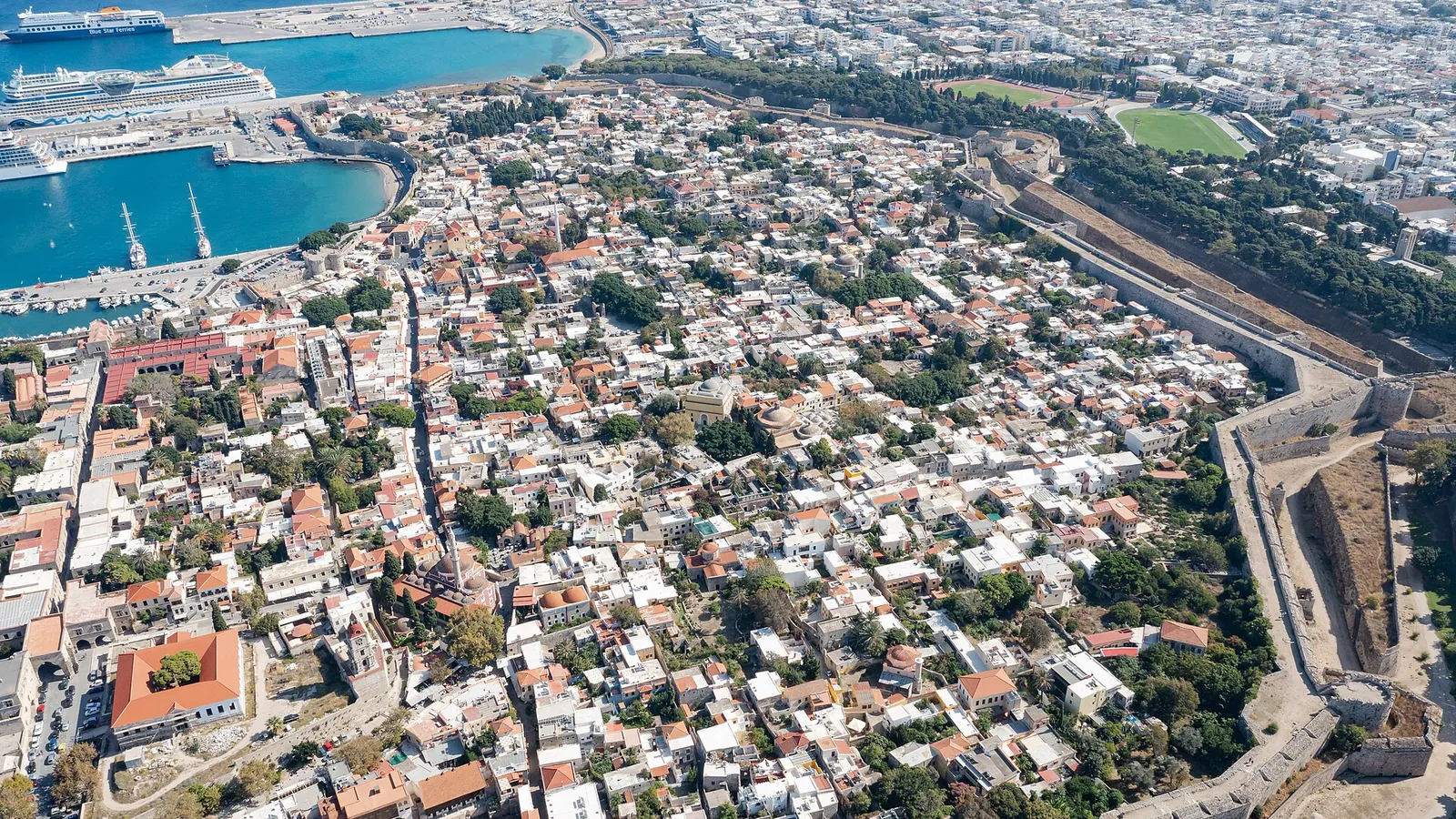
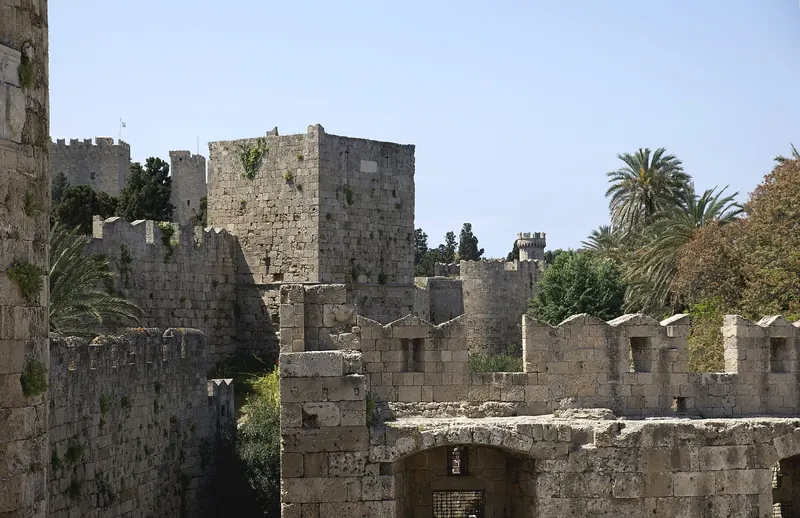
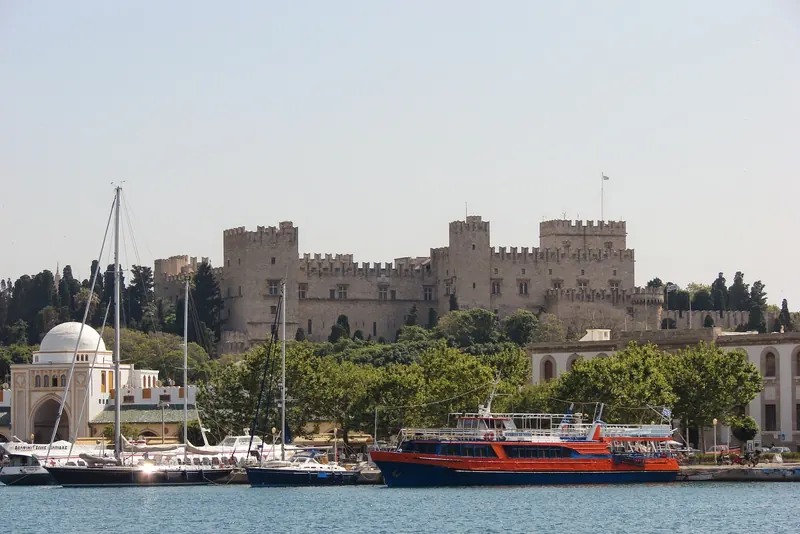
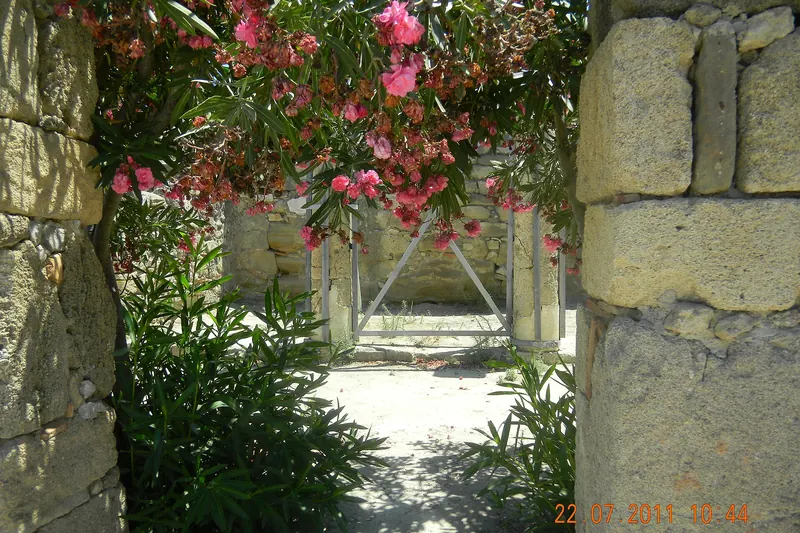
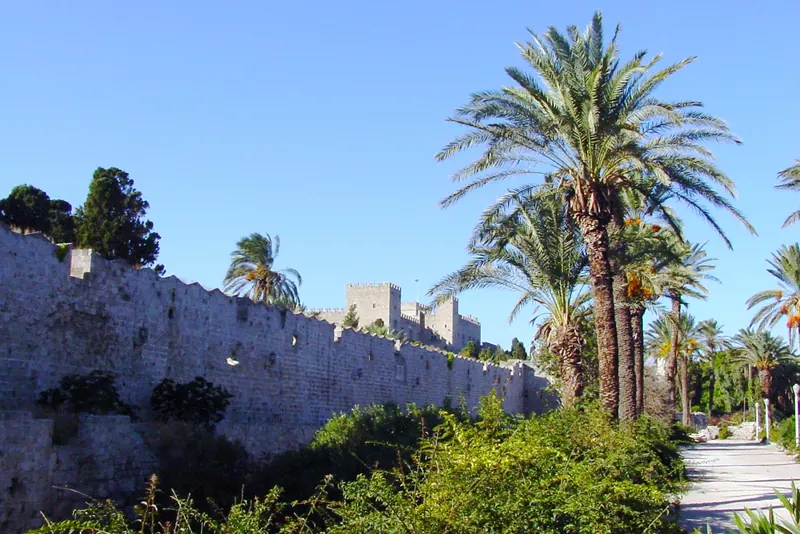
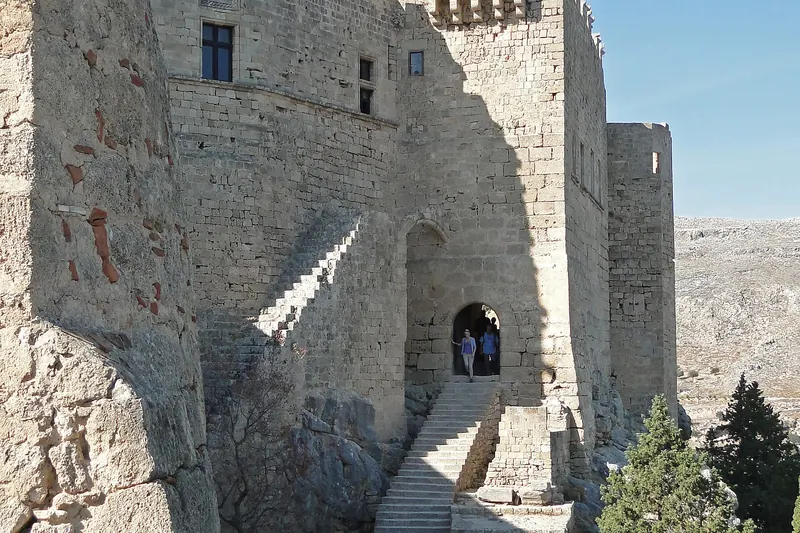
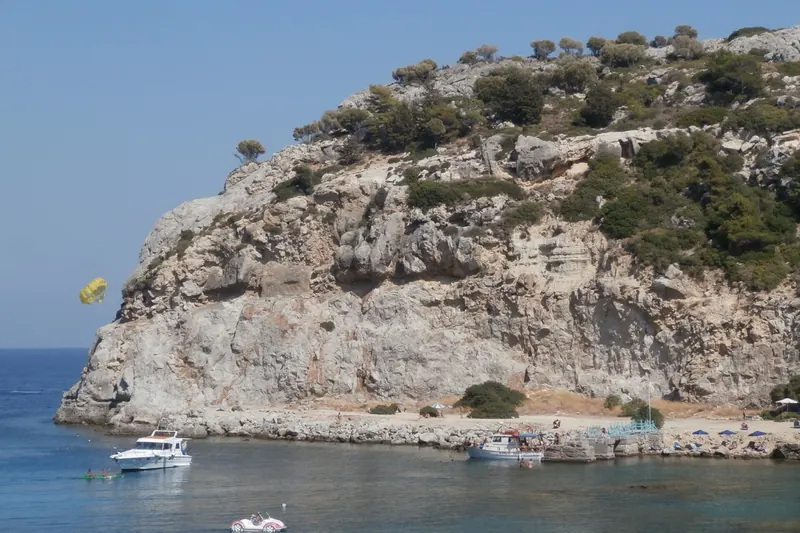
The medieval walls and towers of Rhodes Old Town

Dodecanese · Greece

Rhodes

A Dodecanese island built around one of Europe's best-preserved medieval towns, its knights'-era walled Old Town paired with the clifftop Acropolis of Lindos and some of the Aegean's most reliable beaches.

  • Best time May–June and September, for warm weather without peak crowds
  • Stay 4–5 days
  • Good for History, beaches, architecture, food

Photo: dronepicr · CC BY 2.0

Welcome to Rhodes

Rhodes' Old Town is one of Europe's largest and best-preserved inhabited medieval towns, built by the Knights Hospitaller after they took the island in 1309 and fortified it into one of the Crusader era's most formidable strongholds — its walls, gates and knights'-era streets still standing largely intact over seven centuries later.

That medieval core sits within a much older history — Rhodes was a significant power in the ancient Greek world, home to the Colossus of Rhodes, one of the Seven Wonders of the Ancient World, and later passed through Byzantine, Ottoman and Italian rule before joining modern Greece, each leaving its own visible layer on the island.

Beyond the Old Town, Rhodes pairs the clifftop village and Acropolis of Lindos with dependable beaches and a mountainous, olive-and-vine-covered interior, giving the island real range beyond its famous medieval centre.

  • Island
  • Historic Site
  • Coast & Beaches

Why visit

Why visit Rhodes?

Rhodes' case is that no other Dodecanese island pairs this significant a medieval town with this much genuine ancient history and reliable beach time.

  • The Old Town is one of Europe's great medieval towns

    A UNESCO World Heritage site and one of the continent's largest inhabited medieval towns, its knights'-era fortifications still substantially intact.

  • Lindos pairs genuine ancient and medieval history

    An acropolis with ancient Greek temple ruins layered beneath a medieval castle, above a striking whitewashed village.

  • The beaches are reliable

    A long, sunny season and a real range of coastline, from organised resort beaches to quieter coves further from the main towns.

  • The island's history runs deep

    Ancient Greek, Byzantine, Crusader, Ottoman and Italian layers are all visibly present across the island.

  • It connects well to the wider Dodecanese and beyond

    Ferries reach Symi, Kos and other Dodecanese islands, with seasonal connections to Crete, widening a Rhodes-based trip.

Main attractions

Top things to see in Rhodes

Rhodes' essential sights, from its medieval walled town to its clifftop acropolis and ancient ruins.

  1. The fortified medieval walls of Rhodes Old Town

    The Old Town of Rhodes

    One of Europe's largest and best-preserved inhabited medieval towns, its knights'-era walls, gates and cobbled streets forming a genuine UNESCO World Heritage site.

    Tip Walk the full circuit of the outer walls, partially open to visitors — a different perspective on the town's scale than exploring the streets alone.

  2. The fortified Palace of the Grand Master in Rhodes

    The Palace of the Grand Master

    The Knights Hospitaller's imposing fortified palace, one of the Old Town's most significant buildings, restored with mosaic floors and period furnishings.

    Tip The palace's upper floor rooms are worth the extra time — many visitors only see the ground-floor halls.

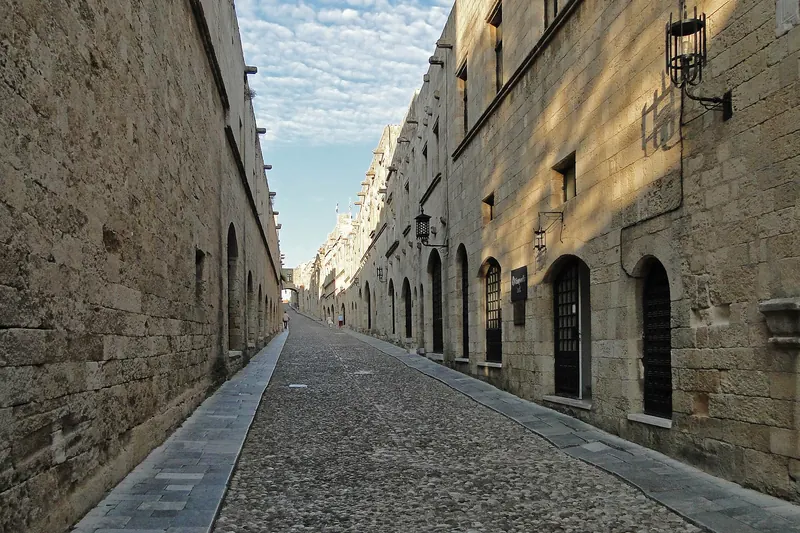
  3. The medieval Street of the Knights in Rhodes Old Town

    The Street of the Knights

    An atmospheric medieval street lined with the former inns of the Knights Hospitaller's various language groups, among Europe's best-preserved medieval streetscapes.

    Tip Visit early morning for the street largely to yourself, before Old Town crowds build through the day.

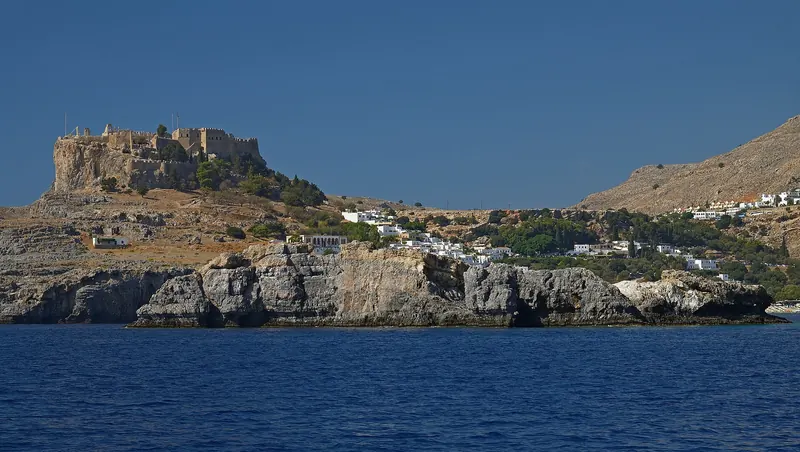
  4. Lindos village beneath its clifftop Acropolis

    Lindos and its Acropolis

    A dramatic clifftop acropolis layering ancient Greek temple ruins beneath a medieval castle, above a striking whitewashed village and bay.

    Tip Take the donkey ride or walk up early to beat both the heat and the day-trip crowds from Rhodes Town.

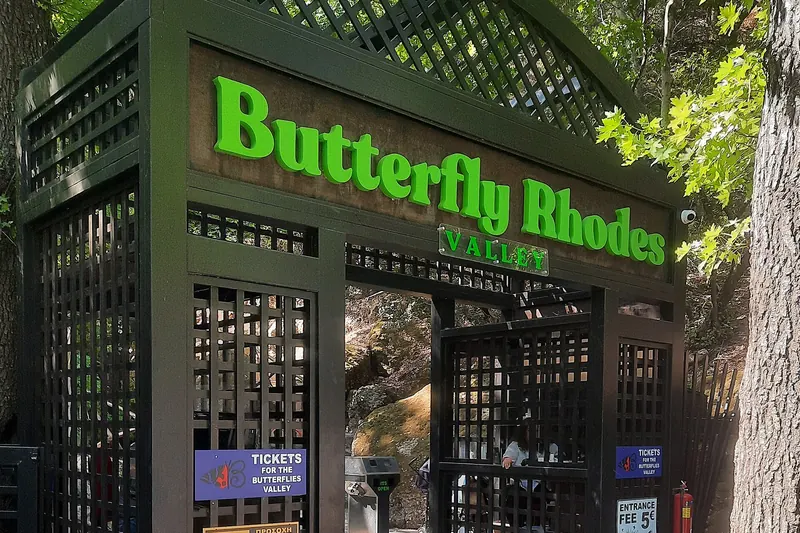
  5. The shaded forest valley of the Valley of the Butterflies

    The Valley of the Butterflies

    A shaded, cool forest valley that hosts a large seasonal gathering of Jersey tiger moths each summer, a distinctive natural attraction.

    Tip Visit between June and September for the moths — outside that window, the valley is a pleasant walk without the main draw.

  6. The ruins of the ancient city of Kamiros

    Ancient Kamiros

    The well-preserved ruins of one of Rhodes' three ancient city-states, less visited than Lindos despite its comparable archaeological significance.

    Tip The site offers little shade — bring water and a hat, particularly in summer.

Things to do

Best things to do in Rhodes

Beyond the Old Town and Lindos, Rhodes rewards its beaches, its wider Dodecanese connections and its serious food culture.

  1. Walking beside the Old Town's walls and dry moat

    Walk the medieval Old Town's walls and moat

    A rewarding way to grasp the fortifications' scale, following the partially open wall circuit and the dry moat below.

    Tip Wall access is seasonal and limited to certain days and hours — check current times before planning around it.

  2. The medieval gate leading up to the Acropolis of Lindos

    Climb to the Acropolis of Lindos

    A worthwhile climb above Lindos village, rewarded with ancient temple ruins, a medieval castle and sweeping bay views.

    Tip Start early morning or late afternoon — the climb offers little shade and midday summer heat is intense.

  3. The scenic cove of Anthony Quinn Bay

    Swim at Anthony Quinn Bay or Tsambika beach

    Two of Rhodes' most striking beaches, the former a scenic cove named for the actor, the latter backed by dramatic cliffs.

    Tip Both beaches crowd by mid-morning in peak season — an early arrival secures a better spot.

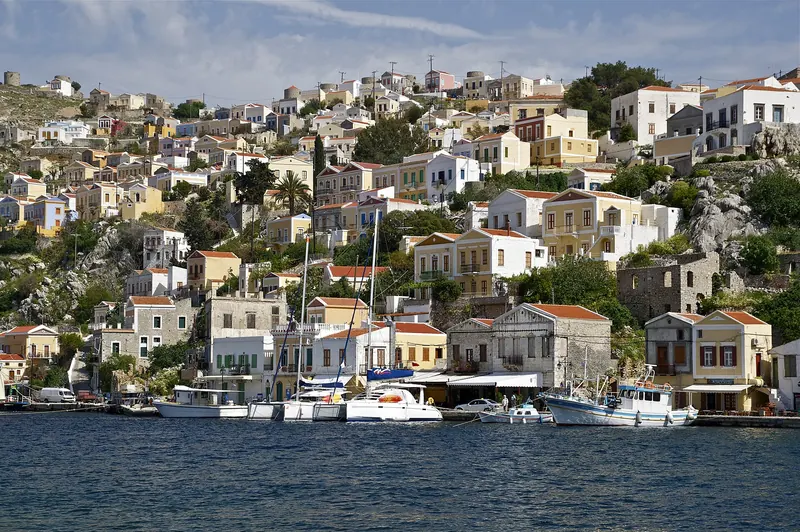
  4. The pastel-coloured neoclassical houses of Symi

    Take a day trip to Symi

    A beautiful neighbouring island, its neoclassical harbour houses in pastel colours among the Dodecanese's most photogenic sights.

    Tip Boat trips typically include a stop at the Panormitis Monastery — a worthwhile addition to the day.

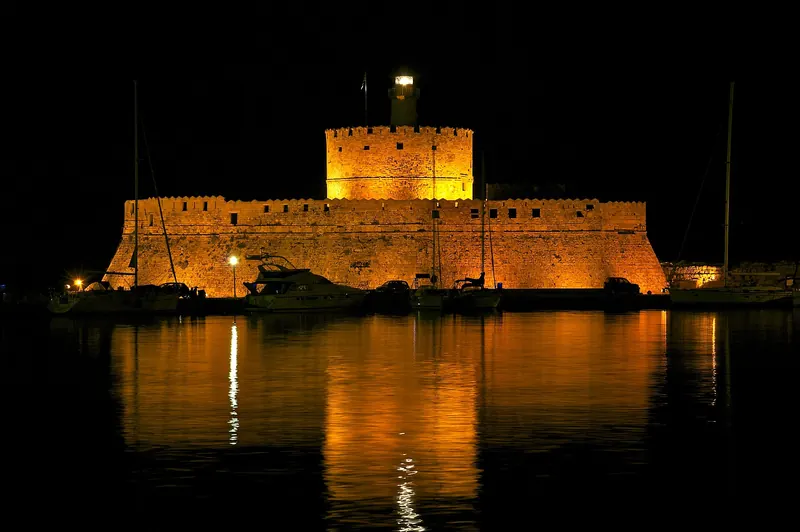
  5. The Fort of St Nicholas at the entrance to Mandraki harbour

    Explore Rhodes Town beyond the Old Town

    Rhodes Town's newer areas hold genuine interest too, from Mandraki harbour, where the Colossus of Rhodes is believed to have stood, to the town's historic Jewish Quarter.

    Tip Mandraki harbour's deer statues mark the Colossus's traditional, if archaeologically unconfirmed, location — worth knowing before you look for actual ruins.

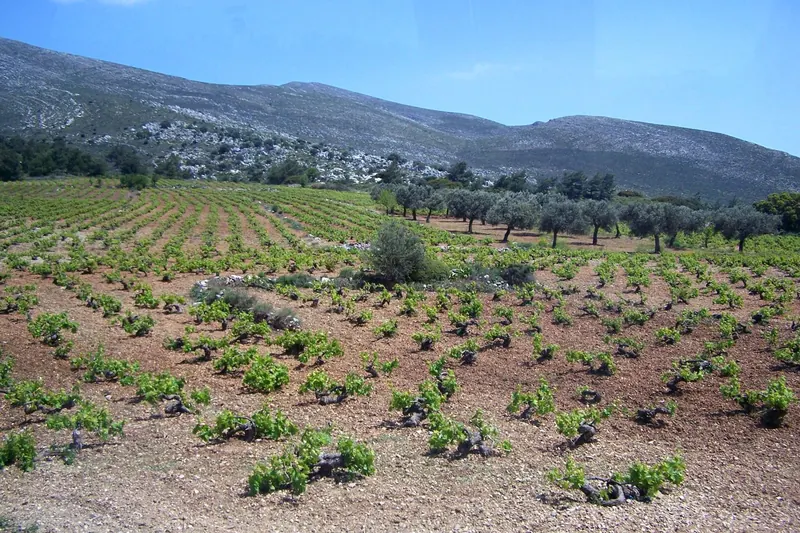
  6. A vineyard in Rhodes' mountain wine country

    Go wine tasting around Embonas

    Rhodes' mountain wine country, centred on Embonas village, produces distinctive wines from the island's own Athiri and Mandilaria grapes.

    Tip Combine a winery visit with lunch in Embonas village, known for hearty, traditional mountain cooking.

Local food

What to eat in Rhodes

Rhodian cuisine draws on the island's mountain villages and coastline alike, with several dishes distinct to the Dodecanese.

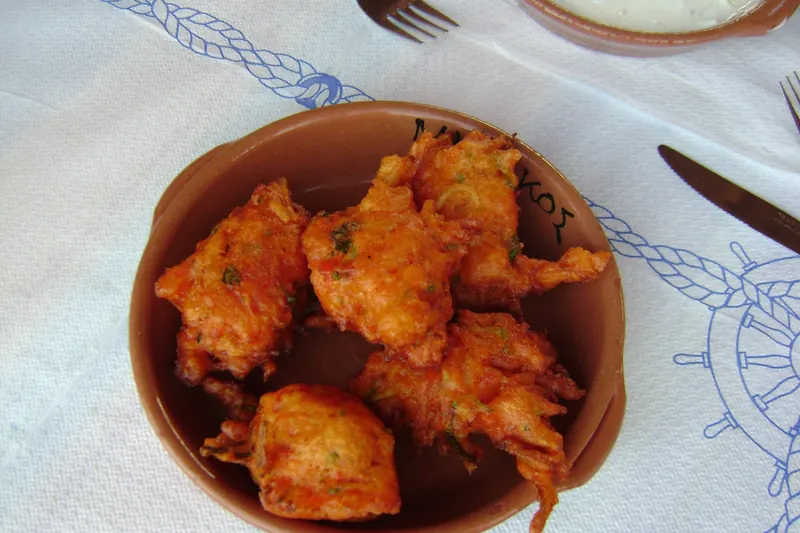
  • Pitaroudia, Rhodes' chickpea and courgette fritters

    Pitaroudia

    Chickpea and courgette fritters seasoned with fresh herbs, a genuine Rhodes specialty found on nearly every taverna menu.

    Where to try it Traditional tavernas across the island, a near-universal starter.

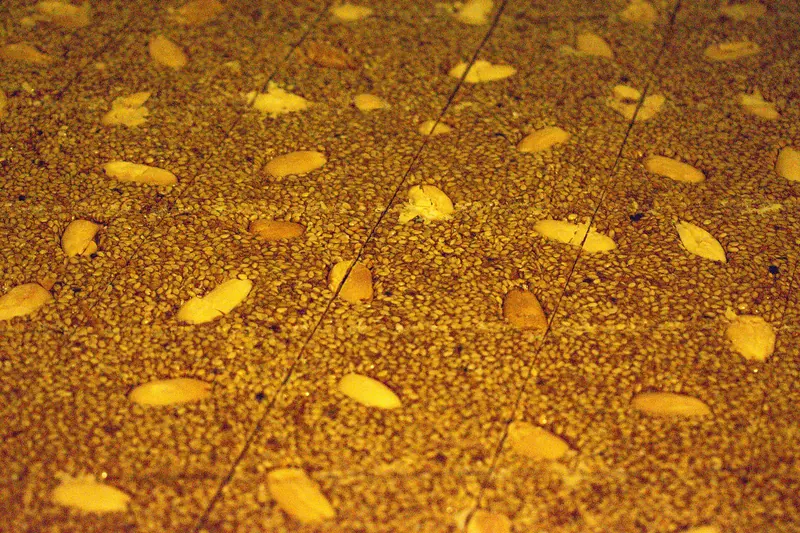
  • Melekouni, a dense sesame and honey sweet

    Melekouni

    A dense sesame and honey sweet, traditionally served at Rhodian weddings, specific to the island's food culture.

    Where to try it Old Town sweet shops and traditional bakeries across the island.

  • Souma

    The Dodecanese's own grape-pomace spirit, similar to Crete's raki but distinct to Rhodes and its neighbouring islands.

    Where to try it Traditional tavernas, often offered after a meal alongside dessert.

  • Rhodian wine

    Wines from the island's own Athiri and Mandilaria grapes, particularly around the mountain village of Embonas, distinctive within Greek wine.

    Where to try it Wineries around Embonas, and wine lists across the island's better tavernas.

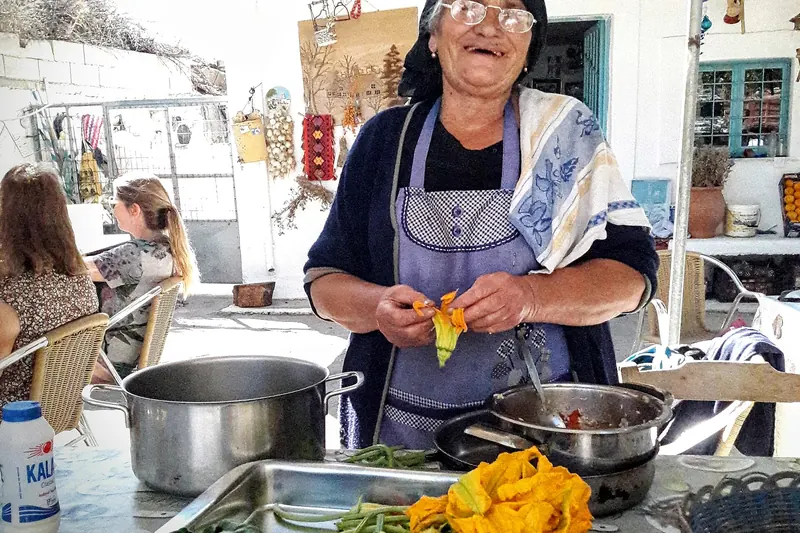
  • Courgette flowers stuffed with rice and herbs

    Stuffed courgette flowers

    Courgette blossoms filled with rice and herbs, a popular Rhodian taverna dish drawing on the island's productive market gardens.

    Where to try it Traditional tavernas across the island, particularly in season through summer.

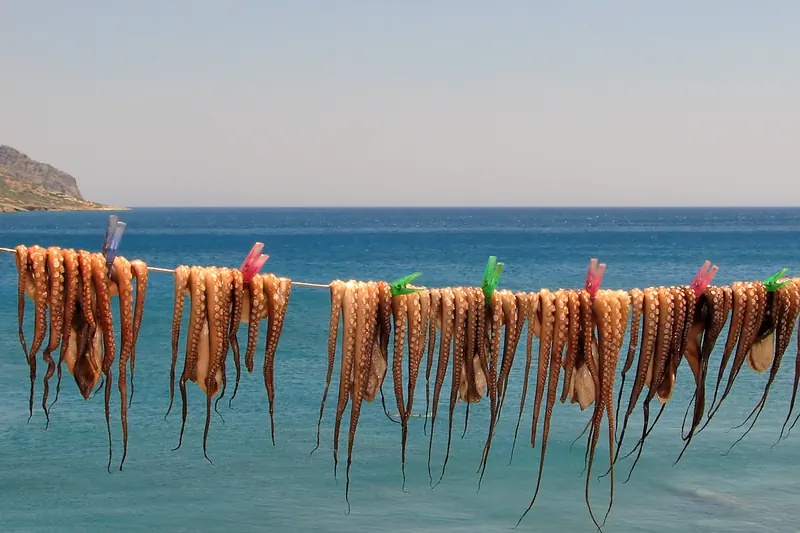
  • Octopus drying in the sun before grilling

    Grilled octopus by the harbour

    A genuine Rhodes Town staple, octopus dried in the sun before grilling, a classic sight and dish along Mandraki's waterfront tavernas.

    Where to try it Harbourside tavernas in Rhodes Town, particularly around Mandraki.

Accommodation

Where to stay in Rhodes

Rhodes' right base depends on the balance you want between the Old Town's atmosphere, beach access and Lindos's quieter charm.

  • Rhodes Town (Old Town or New Town)

    The island's most atmospheric and best-connected base, putting the Old Town, Mandraki harbour and transport links within easy reach.

    Best for: Medieval atmosphere and central convenience

  • Lindos

    Charming but considerably smaller and quieter than Rhodes Town, with its own acropolis and beach on the doorstep.

    Best for: A quieter, more boutique base

  • Faliraki or the east coast resorts

    Purpose-built resort areas offering direct beach access, at the cost of the Old Town's historic atmosphere.

    Best for: Beach-focused stays

What a night costs

Hostel dorm
€20–35 per night
Mid-range hotel
€75–140 per night
Palace of the Grand Master entry
€10 (€6 off-season)
Pitaroudia at a taverna
€5–7

Transport

Getting to and around Rhodes

Rhodes has its own international airport, with ferries also connecting the island to Athens and the wider Dodecanese.

Getting there

  • Flight from Athens

    A short flight from Athens reaches Rhodes in about an hour, the fastest option from the mainland.

    Book ahead in peak summer, when popular flight times can sell out or spike in price.

  • Ferry from Piraeus

    Overnight ferries from Athens' port reach Rhodes in around 15–18 hours, a slow but scenic option via other islands.

    Cabin berths offer a comfortable way to arrive rested for the long overnight crossing.

  • Ferry from Crete or other Dodecanese islands

    Seasonal ferries connect Rhodes to Crete, alongside more frequent routes to Symi, Kos and other Dodecanese islands.

    Routes and frequency vary considerably by season — check current schedules before finalising an island-hopping itinerary.

Getting around

Rhodes Town and Lindos are both walkable individually, with buses and rental vehicles covering the wider island.

  • Rental car or scooter

    The most practical way to reach Lindos, Kamiros, Embonas and quieter beaches at your own pace.

    Mountain roads in the interior can be narrow and winding — allow more time than GPS estimates suggest.

  • KTEL buses

    A reliable network connects Rhodes Town to Lindos, Faliraki and other main towns along both coasts.

    Less frequent service to the mountainous interior — a car becomes useful for villages like Embonas.

  • Organised tours or boat trips

    A convenient option for Symi and other island day trips, which involve logistics easier left to a boat operator.

    Boat trips typically depart from Mandraki harbour each morning in season.

When to go

Best time to visit Rhodes

Rhodes enjoys one of Greece's longest sunny seasons, and shoulder season offers comparable weather with real relief from July and August's peak crowds.

  • Spring (April–June)

    Best time

    Mild, increasingly warm weather with wildflowers across the countryside and noticeably thinner crowds than peak summer.

  • Summer (July–August)

    Good

    Hot and reliably sunny, the best swimming weather, but also the island's most crowded and expensive months.

  • Autumn (September–October)

    Best time

    Warm sea temperatures lingering from summer, comfortable air temperatures and noticeably thinner crowds.

  • Winter (November–March)

    Shoulder

    Mild by northern European standards but too cool for swimming, with many resort-area businesses closed for the season.

Worth planning around: Peak July and August without accommodation booked well ahead, when Rhodes Town and Lindos both fill considerably and prices spike.

Itinerary

Four days in Rhodes

The Old Town first, then Lindos, then the island's beaches and a taste of its wider Dodecanese connections.

  1. Day1

    Arrive in Rhodes Town

    The island's medieval heart.

    • Morning Land and settle into Rhodes Town.
    • Afternoon The Old Town's walls, the Street of the Knights and the Palace of the Grand Master.
    • Evening Dinner in the Old Town.
  2. Day2

    Lindos

    Ancient and medieval history above the sea.

    • Morning Travel to Lindos and climb to the Acropolis.
    • Afternoon Explore Lindos village and its beach.
    • Evening Return to Rhodes Town, or stay overnight in Lindos.
  3. Day3

    East coast beaches

    Rhodes' most striking coastline.

    • Morning Swim at Tsambika or Anthony Quinn Bay.
    • Afternoon The Valley of the Butterflies, in season, or Ancient Kamiros.
    • Evening Dinner back in Rhodes Town.
  4. Day4

    Symi or wine country

    A final day beyond the main sights.

    • Morning A boat trip to Symi, or travel to Embonas.
    • Afternoon Symi's harbour town, or a wine tasting in Embonas.
    • Evening A final Rhodian dinner featuring pitaroudia and local wine.

Travel tips

Rhodes travel tips

Practical notes on timing, transport and etiquette that make a real difference to a Rhodes trip.

  • Book Old Town wall access in advance if possible — hours are seasonal and limited.
  • Visit Lindos's Acropolis early morning or late afternoon to avoid both the heat and the day-trip crowds.
  • Rent a car for at least part of the trip — Embonas, Kamiros and quieter beaches reward the flexibility.
  • Visit the Valley of the Butterflies between June and September for the moths — the main draw is seasonal.
  • Book accommodation ahead for peak summer, when both Rhodes Town and Lindos fill up considerably.
  • Wear proper shoes for Kamiros and the Acropolis of Lindos — both involve uneven ancient stonework.
  • Check ferry schedules for Symi and other Dodecanese day trips well ahead, especially outside peak summer.

FAQ

Rhodes: frequently asked questions

How many days do you need in Rhodes?

Four to five for a first visit, enough to cover the Old Town, Lindos and the island's best beaches without feeling rushed.

Is Rhodes worth visiting outside the Old Town?

Yes — Lindos, the east coast beaches and the mountain wine country around Embonas all reward time beyond Rhodes Town itself.

Do I need a car in Rhodes?

Helpful but not essential — buses cover Rhodes Town, Lindos and Faliraki reasonably well, though a car helps considerably for Kamiros, Embonas and quieter beaches.

What is the best time of year to visit?

May to June and September offer warm weather with crowds and prices well below the July-August peak, which is the island's busiest, hottest season.

Can I visit other Dodecanese islands from Rhodes?

Yes — Symi is a popular day trip, and ferries also connect Rhodes to Kos and other Dodecanese islands, with seasonal routes to Crete.

Read next

Related travel articles

Practical

Packing by Season and Trip Type

Most packing advice is a list of things. This is the opposite: the small number of decisions that determine whether your luggage helps or hinders, organised by the kind of trip you are actually taking.

Heritage

UNESCO Sites Worth Planning a Trip Around

A UNESCO listing tells you a place matters; it does not tell you whether it is worth two days and a detour. This is how to read the list usefully — and which sites reward building a trip around them.

Advertisement