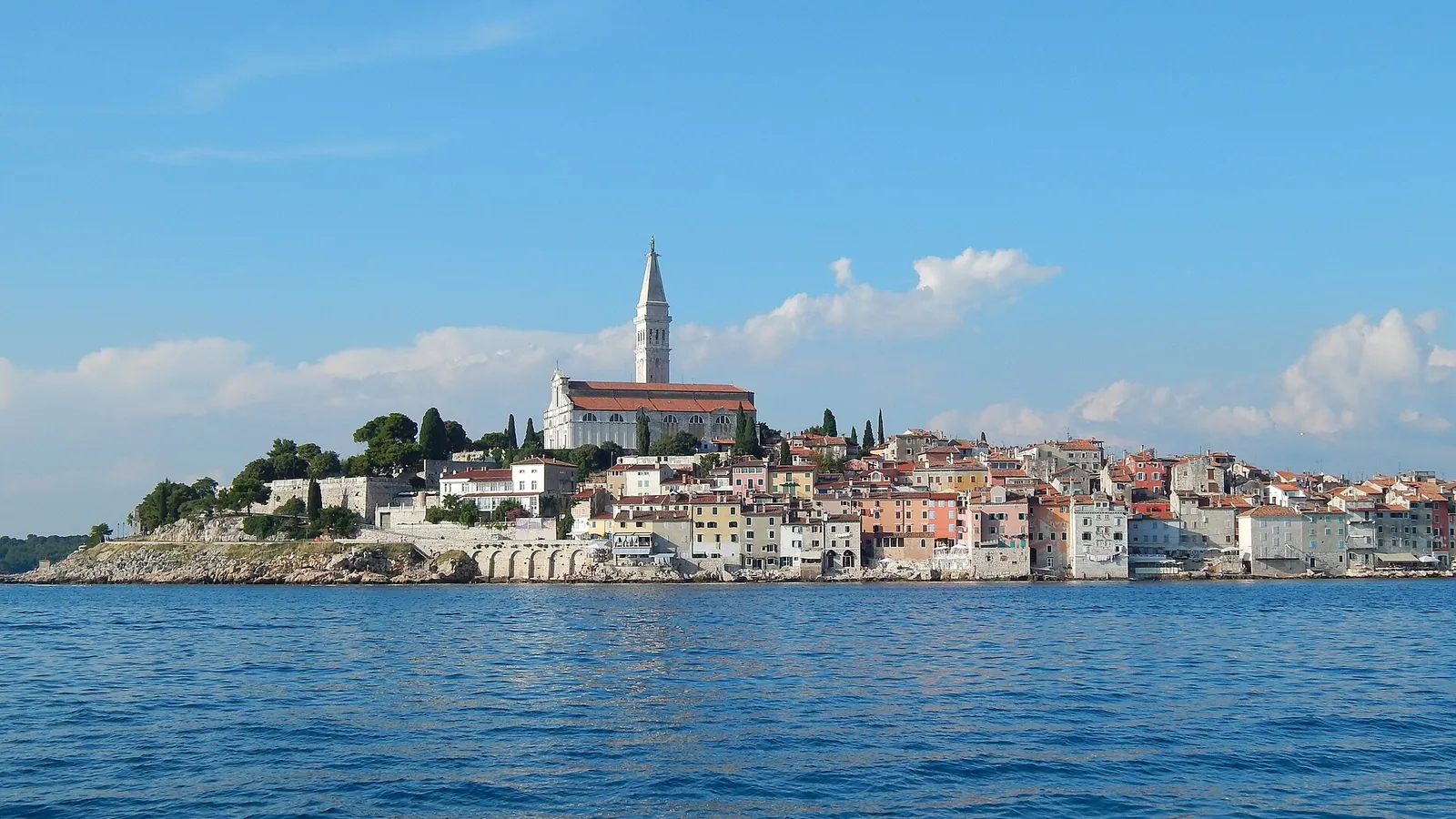
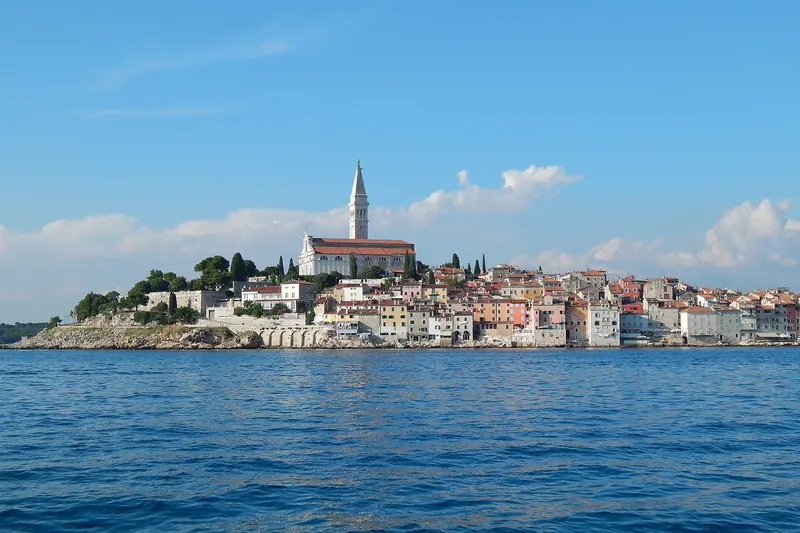
Rovinj's old town rising from the Adriatic

Istria · Croatia

Rovinj

Istria's most photographed town, pastel houses rising straight from the Adriatic beneath a bell tower visible from half the peninsula.

  • Best time May, June and September for warm weather without peak crowds
  • Stay 2-3 days
  • Good for Romance, food and wine, photography

Photo: Giacomo Alessandroni · CC BY-SA 4.0

Welcome to Rovinj

Rovinj is Istria's most photographed town, its pastel old houses rising in tiers straight from the Adriatic on a former island now joined to the mainland.

The whole townscape is watched over by St Euphemia's Church, its Venetian-style bell tower visible from boats and hilltops across much of the peninsula.

It's also a natural base for exploring Istria's celebrated food and wine country, from white truffles to the region's own Malvazija wine, all within easy reach inland.

  • Coast & Beaches
  • Romantic
  • Food & Wine
  • Off the Beaten Path

Why visit

Why visit Rovinj?

Rovinj's case rests on a setting that ranks among the most beautiful on the entire Croatian coast.

  • The setting is postcard-perfect

    Pastel houses stacked in tiers straight above the Adriatic, unlike anywhere else in Croatia.

  • St Euphemia's Church is a defining landmark

    Its Venetian bell tower visible from across the surrounding coastline.

  • It's a quieter alternative to the Dalmatian coast

    A slower, more art-focused pace than Dubrovnik or Split.

  • It's a gateway to real Istrian food and wine

    White truffles, olive oil and Malvazija wine all sit just inland from the coast.

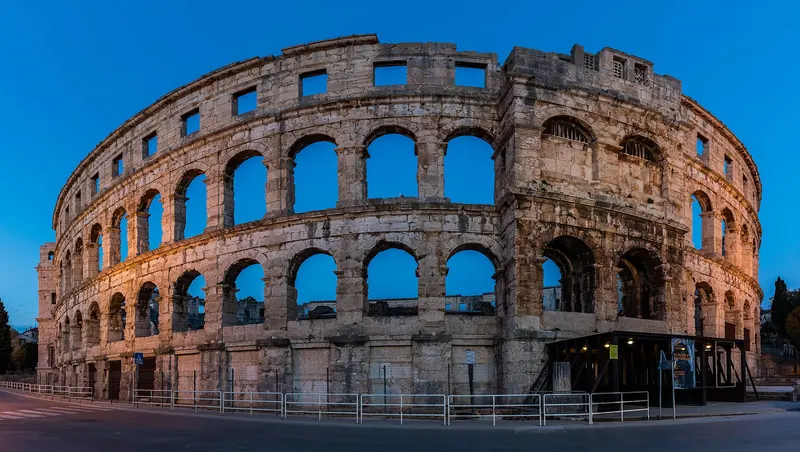
  • It works well paired with Pula

    Croatia's Roman amphitheatre town sits under an hour down the coast.

Main attractions

Top things to see in Rovinj

Rovinj's essential sights are centred on its hilltop church and the tiered old town beneath it.

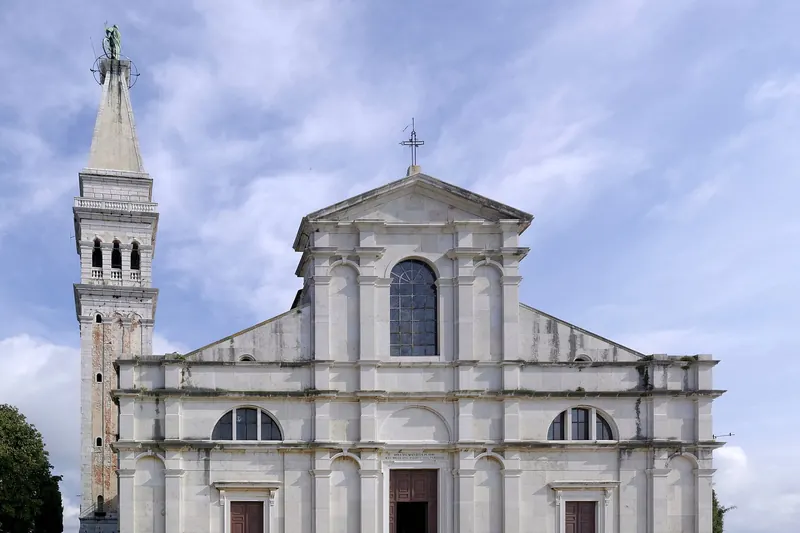
  1. St Euphemia's Church above Rovinj's old town

    St Euphemia's Church

    The town's defining landmark, a baroque church with a Venetian-style bell tower crowning the old town's hill.

    Tip Inside, look for the tomb of St Euphemia herself, the town's patron saint.

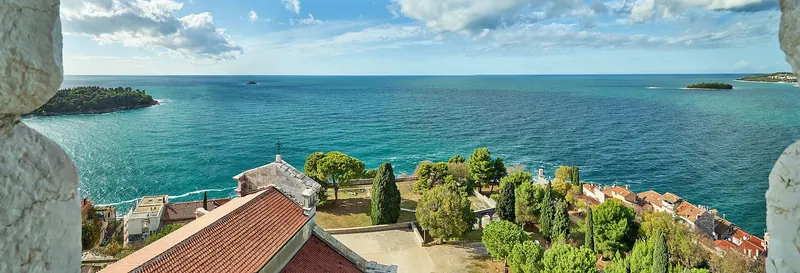
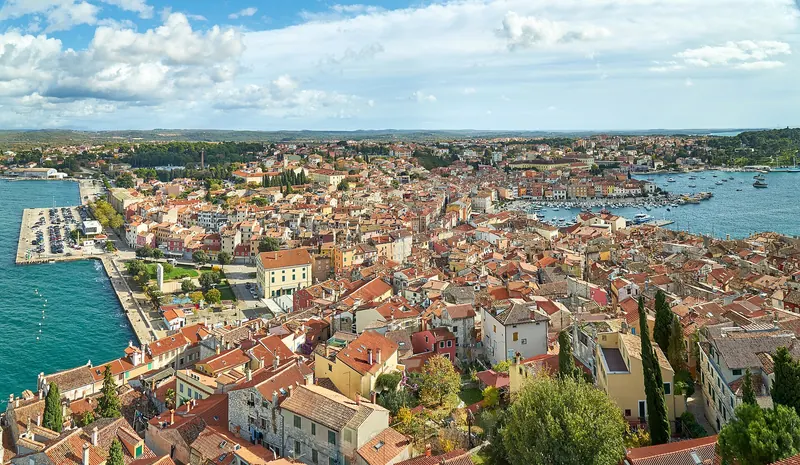
  2. The view from St Euphemia's bell tower over Rovinj

    The view from St Euphemia's bell tower

    The best view in town, a sweeping panorama over the old town's rooftops and the Adriatic beyond.

    Tip Worth the climb up narrow stairs for a view found nowhere else in Rovinj.

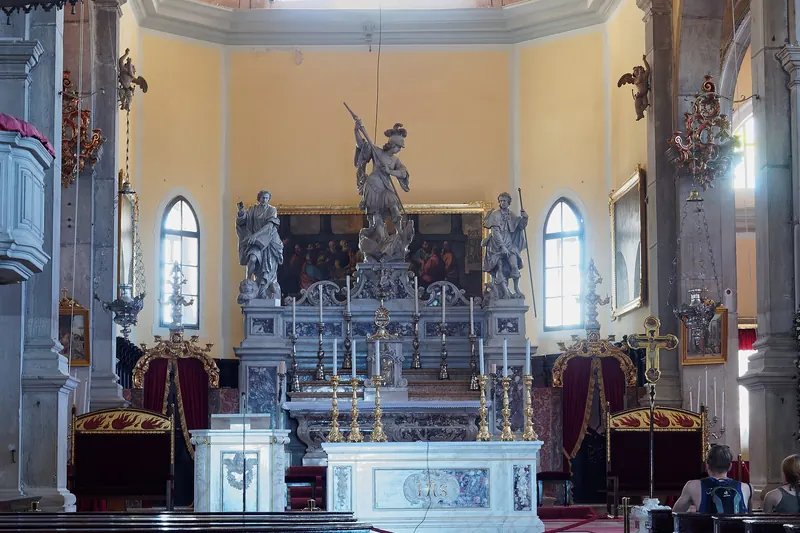
  3. The interior of St Euphemia's Church in Rovinj

    St Euphemia's interior

    Worth a proper look inside, a richly decorated baroque interior beneath the landmark tower.

    Tip Check for opening hours — the interior doesn't keep the same schedule as the tower climb.

  4. Rovinj's old town seen from the water

    The old town seen from the water

    The classic Rovinj view, tiered pastel houses rising straight from the Adriatic.

    Tip A short boat trip or even a walk along the harbour both offer this iconic angle.

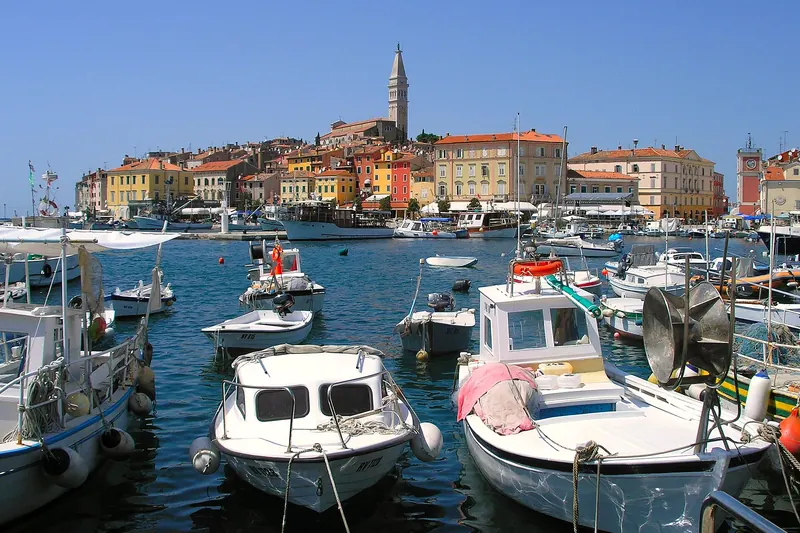
  5. Rovinj's harbour

    Rovinj's harbour

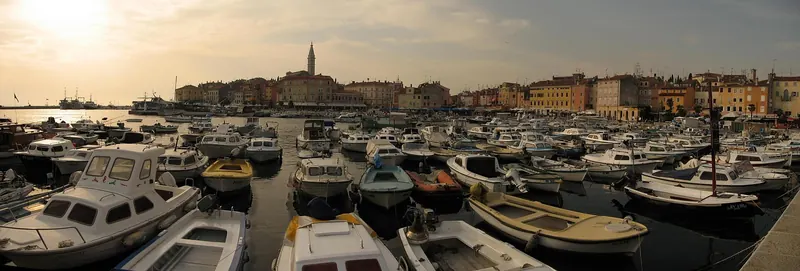
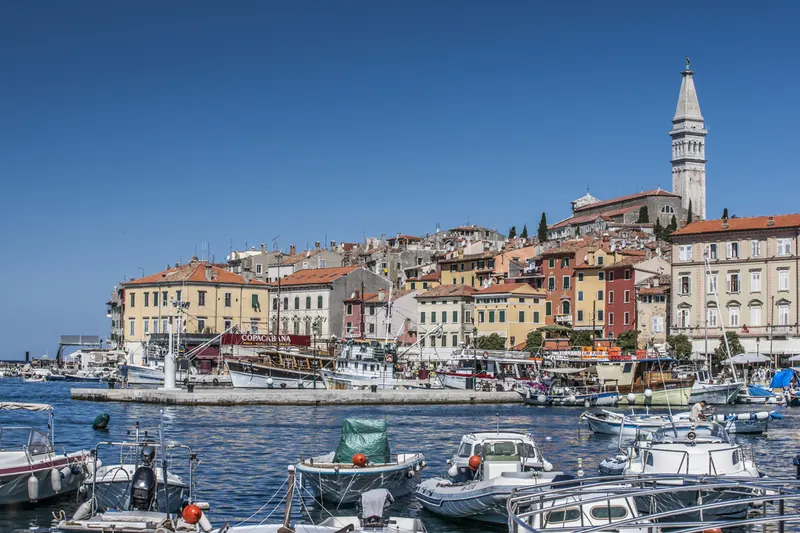
    The town's working waterfront, fishing boats and yachts sharing space beneath the old town walls.

    Tip A lovely spot for an evening walk once the day's heat has eased.

  6. Sunrise over Rovinj's old town

    Rovinj at sunrise

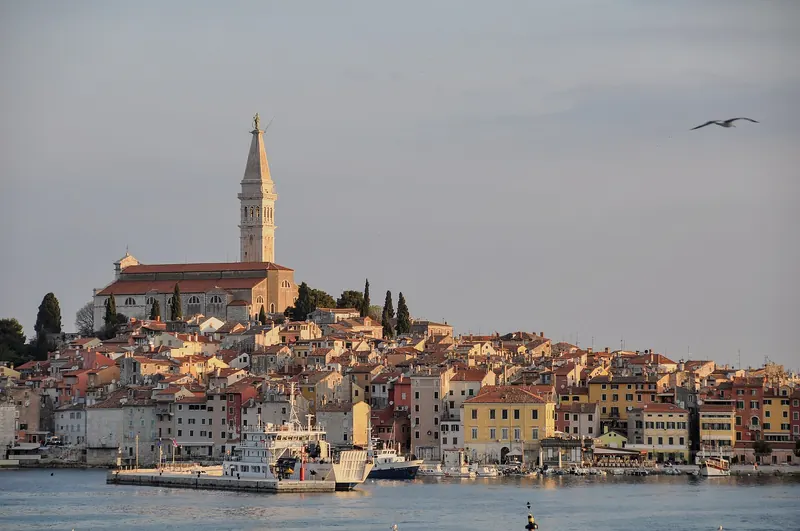
    A magical time to see the town, soft morning light catching the tiered rooftops before the day's crowds arrive.

    Tip Worth the early start for photographers especially.

  7. Streets in Rovinj's old town

    The old town's streets

    Worth simply wandering, narrow lanes climbing steeply between pastel houses toward the church above.

    Tip Head uphill without a fixed route — every lane eventually leads toward St Euphemia's.

Things to do

Best things to do in Rovinj

Rovinj rewards a slow pace, split between the old town's lanes and Istria's food and wine country inland.

  1. The view from St Euphemia's bell tower

    Climb St Euphemia's bell tower

    An essential Rovinj experience, climbing for the town's best panoramic view.

    Tip Check the tower's opening hours ahead — they can vary by season.

  2. Wander Grisia Street's artist stalls

    A charming climb, a steep cobbled street lined with small galleries and artists' studios leading up to the church.

    Tip Visit in August for the street's long-running annual open-air art exhibition.

  3. Walk or cycle Zlatni Rt forest park

    A peaceful escape from the old town, pine-shaded paths along the coast just south of the centre.

    Tip Rent a bicycle for a longer loop, or simply walk the closer sections.

  4. Rovinj's old town photographed from the water

    Photograph the old town from the water

    A rewarding pursuit, the town's tiered silhouette photographing beautifully from nearly any angle on the water.

    Tip A short kayak or paddleboard rental gets you the classic view without an organised tour.

  5. Sunrise over Rovinj's harbour

    Watch sunrise over the harbour

    A lovely, quiet ritual, watching the light change over the water before the town wakes up.

    Tip Bring a coffee and find a bench along the harbour for the full effect.

  6. Swim at a rocky cove near town

    An easy way to cool off, small swimming spots dotted along the coast just outside the old town.

    Tip Pack water shoes — most of Rovinj's swimming spots are rocky rather than sandy.

Local food

What to eat in Rovinj

Rovinj's food reflects Istria's distinct culinary identity, built around truffles, olive oil and its own wine.

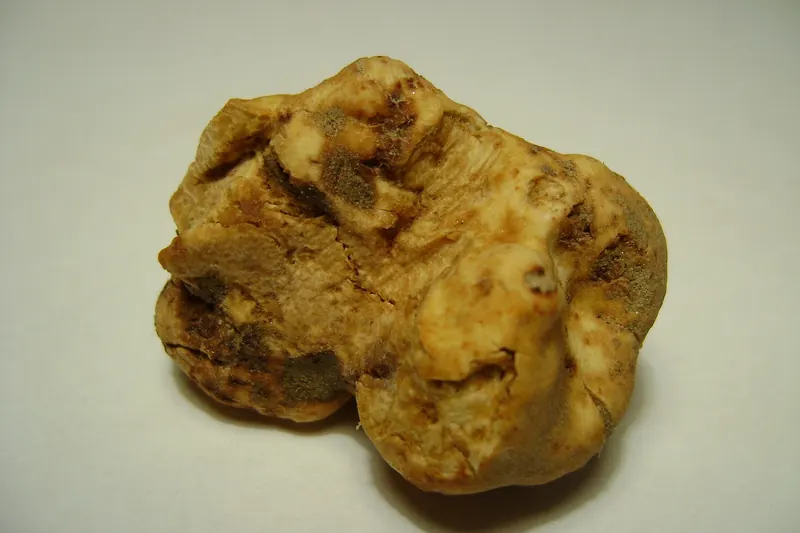
  • A white truffle, prized in Istrian cuisine

    Istrian white truffle

    One of Istria's most celebrated products, shaved fresh over pasta or eggs at restaurants across the region.

    Where to try it Restaurants throughout Rovinj and the wider Istrian interior.

  • Istrian pršut (prosciutto)

    Distinct from its Dalmatian cousin, cured with a different process and noticeably milder flavour.

    Where to try it Restaurants and delis throughout Rovinj.

  • Fuži with game or truffles

    A beloved Istrian pasta shape, traditionally paired with rich game sauces or shaved truffle.

    Where to try it Traditional konobas throughout Rovinj's old town.

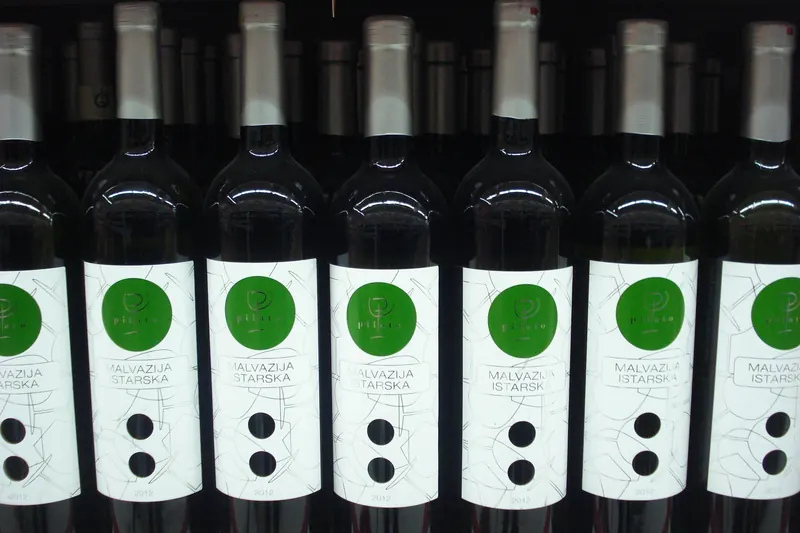
  • Malvazija, Istria's signature white wine

    Malvazija (Istrian white wine)

    The region's signature grape, a crisp, aromatic white produced throughout the Istrian countryside.

    Where to try it Wine bars throughout Rovinj, or wineries a short drive inland.

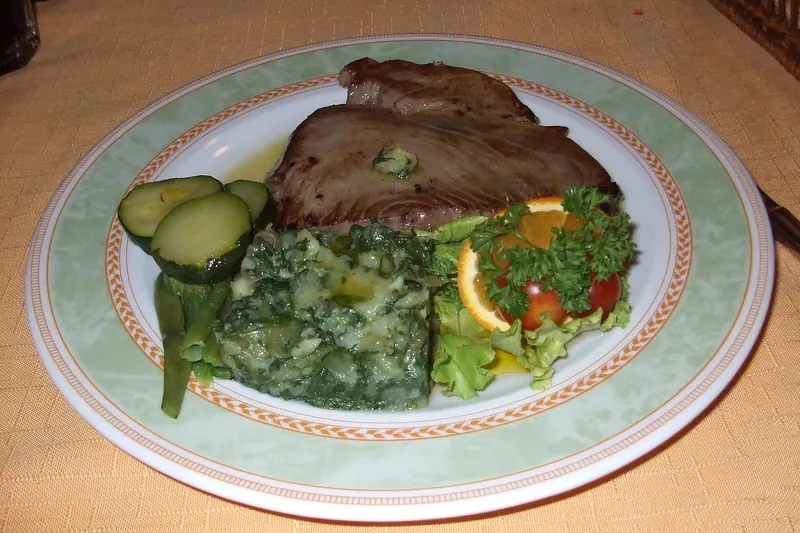
  • Grilled seafood at a traditional Croatian konoba

    Fresh grilled seafood

    A highlight of dining here, fish and shellfish grilled simply at harbourfront restaurants.

    Where to try it Konobas throughout Rovinj's harbour and old town.

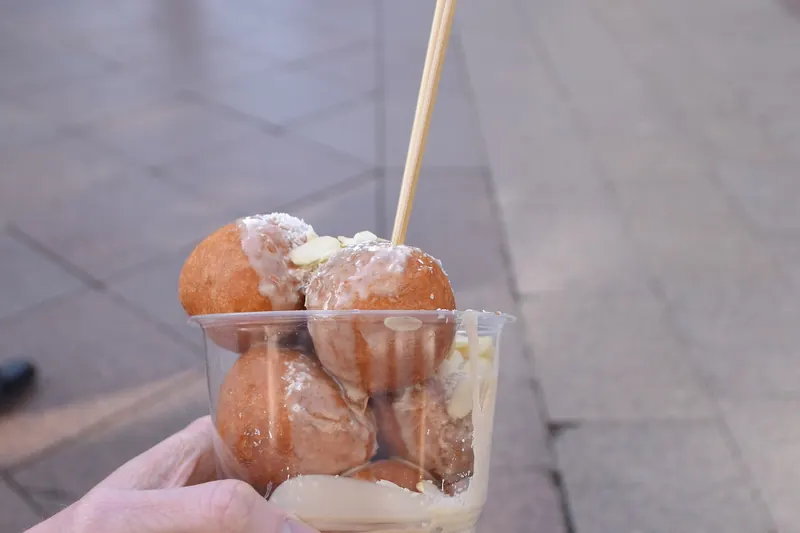
  • Fritule, small Croatian fried doughnuts

    Fritule (small fried doughnuts)

    A nice sweet treat, found at bakeries and cafés throughout the old town.

    Where to try it Bakeries throughout Rovinj.

Accommodation

Where to stay in Rovinj

Rovinj offers everything from budget guesthouses to boutique hotels, with location inside the old town commanding a real premium.

  • The old town

    The most atmospheric, and priciest, base right among the tiered pastel houses.

    Best for: Being immersed in Rovinj's postcard setting

  • Just outside the old town

    Easy walking distance to the old town, with more modern accommodation options.

    Best for: A better-value stay a short walk from the centre

What a night costs

Budget guesthouse
€65–120 per night
Mid-range hotel
€150–280 per night
St Euphemia's bell tower climb
About €3–5
Dinner at a mid-range restaurant
About €30–55 per person

Transport

Getting to and around Rovinj

Rovinj is reached via Pula's airport or by road from the rest of Istria and beyond.

Getting there

  • Flight into Pula, then transfer

    The fastest route from further afield.

    Pula Airport sits about 40 minutes by road from Rovinj.

  • Bus from Zagreb or the Italian border

    A straightforward overland option.

    Takes around three to four hours from Zagreb; closer from Trieste, Italy.

  • Car or private driver

    The most flexible option for exploring Istria's interior.

    Well-maintained roads connect Rovinj to Pula, Poreč and inland hill towns.

Getting around

Rovinj's car-free old town is entirely walkable, with the rest of Istria best explored by car.

  • On foot

    The only way to explore the old town's steep, narrow lanes.

    Cars are largely restricted from the historic centre.

  • Bicycle

    A pleasant way to reach Zlatni Rt forest park and nearby coves.

    Widely available for rent throughout town.

  • Car for Istria's interior

    Essential for reaching truffle country and hill towns beyond Rovinj.

    A car opens up the wider region far more than staying coastal alone.

When to go

Best time to visit Rovinj

Rovinj is busiest in July and August, with shoulder months offering better value and a calmer pace.

  • Late spring (May–June)

    Best time

    Warm enough to swim, with noticeably thinner crowds than peak summer.

  • Summer (July–August)

    Good

    Warm and lively, though the old town gets busy.

  • Early autumn (September–October)

    Best time

    Still pleasant for the sea, and the start of white truffle season inland.

  • Winter (November–March)

    Good

    Quiet, with many businesses reducing hours, though the setting stays beautiful.

Worth planning around: Nothing strongly, though peak July and August bring the heaviest old town crowds.

Itinerary

Two days in Rovinj

Built around the old town and church, with a slower second day exploring the coast and Istrian food.

  1. Day1

    The old town and St Euphemia's

    The essential Rovinj sights.

    • Morning Wander the old town's lanes up to St Euphemia's Church.
    • Afternoon Climb the bell tower and explore Grisia Street's galleries.
    • Evening Dinner at a harbourfront konoba.
  2. Day2

    Zlatni Rt and Istrian food

    A slower day of nature and local cuisine.

    • Morning Walk or cycle through Zlatni Rt forest park.
    • Afternoon Swim at a rocky cove along the coast.
    • Evening A truffle-focused dinner paired with Malvazija wine.

Travel tips

Rovinj travel tips

Practical notes that make a Rovinj visit noticeably smoother.

  • Book accommodation well ahead for a July or August visit.
  • Wear comfortable, grippy shoes — the old town's lanes are steep and cobbled.
  • Visit Grisia Street's galleries during the annual August art exhibition if your dates align.
  • Pack water shoes for the area's mostly rocky swimming spots.
  • Rent a car for a day to explore Istria's inland truffle and wine country.
  • Climb St Euphemia's bell tower early in the day for the clearest views.

FAQ

Rovinj: frequently asked questions

How many days do you need in Rovinj?

Two to three days covers the old town, and allows time to explore Istria's food and wine country inland.

How do you get to Rovinj?

Easiest by flying into Pula and transferring by road, about 40 minutes away.

Is Rovinj worth visiting compared to Dalmatia?

Yes — it offers a quieter, more art-focused version of the classic Croatian coastal town, with excellent food and wine nearby.

Do you need a car in Rovinj?

Not for the old town itself, though a car helps significantly for exploring Istria's interior.

When is truffle season in Istria?

White truffles peak from September to December, though black truffles are found for much of the rest of the year.

Can you combine Rovinj with Pula?

Yes, easily — Pula sits under an hour down the coast, an easy day trip or onward stop.

Read next

Related travel articles

Food

A Country-by-Country Food Primer

Eating well abroad is mostly a matter of knowing when meals happen, how the menu is structured and which dish belongs to the place you are standing in. This covers all three for the five countries in this guide, plus the signals that separate a restaurant that feeds locals from one that feeds coaches.

Where to go

Choosing a Mediterranean Coast

The Mediterranean coasts in this guide are not interchangeable. Some have sand and some have rock; some are glamorous and some are cheap; two of them are effectively closed for half the year. This is a comparison by the things that decide whether a coastal week works — swimming, crowds, cost, transport and what there is to do when you get out of the water.

Advertisement