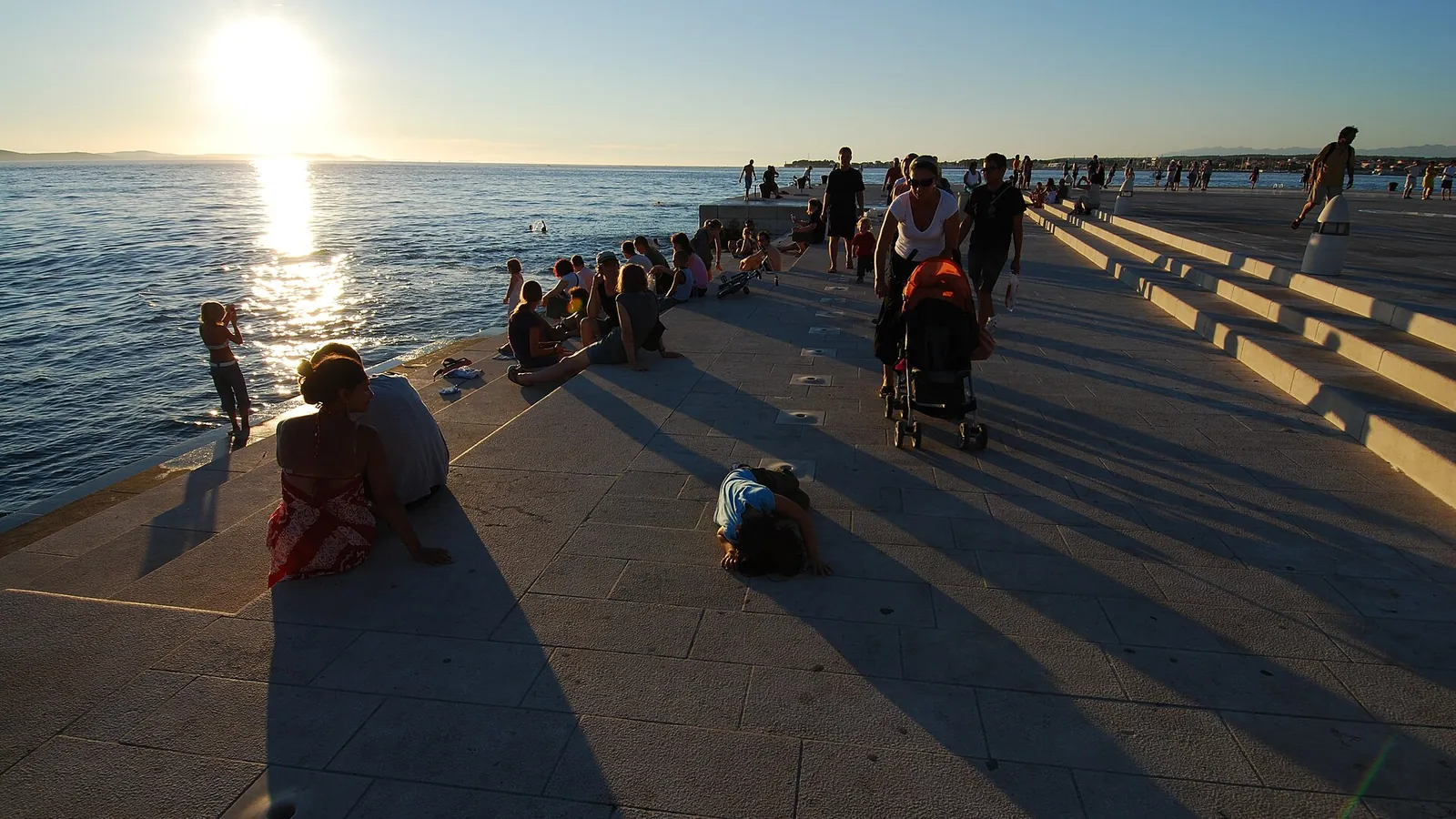
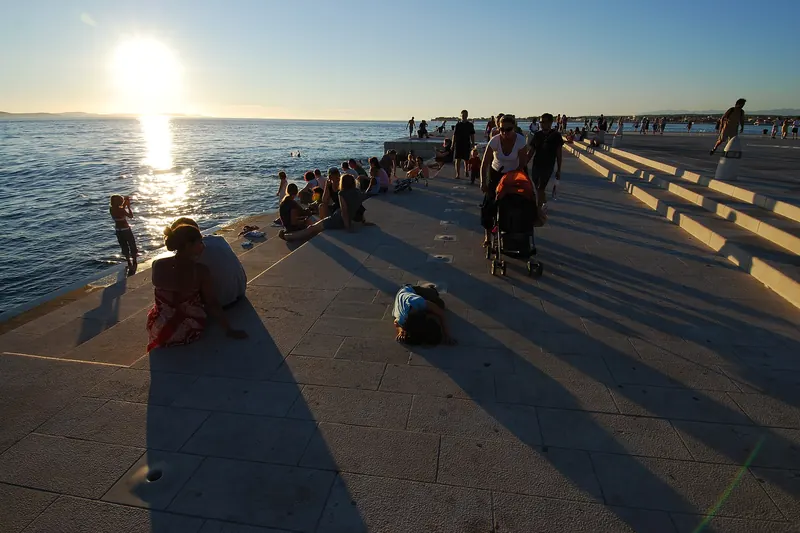

Sunset over Zadar's Sea Organ

Dalmatia · Croatia

Zadar

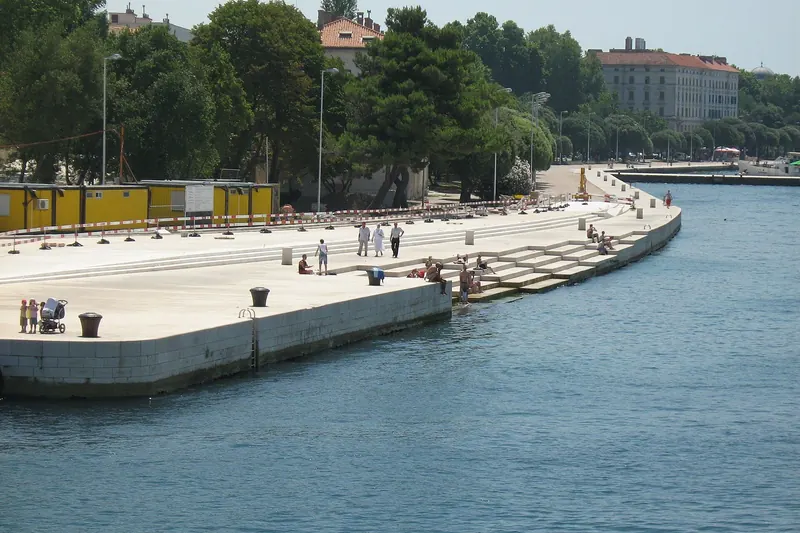
A Dalmatian city where the sea itself makes music, waves pushed through stone pipes beneath a light installation Alfred Hitchcock called the world's best sunset.

  • Best time May, June and September for warm weather without peak crowds
  • Stay 1-2 days
  • Good for Sunsets, history, a relaxed coastal city

Photo: PJL · CC BY 2.5

Welcome to Zadar

Zadar is one of the Adriatic's most quietly rewarding cities, an ancient Roman and Venetian port that spent decades overlooked in favour of Split and Dubrovnik further south.

Its modern fame rests on two unusual public artworks along the waterfront — the Sea Organ, which turns waves into ambient music, and the Monument to the Sun, a light installation Alfred Hitchcock once called the world's most beautiful sunset.

Beneath that modern reputation sits a real Roman and medieval city, its Forum, churches and city gates still standing at the heart of a compact, walkable old town.

  • Coast & Beaches
  • Historic Site
  • Scenic Region
  • Major City

Why visit

Why visit Zadar?

Zadar's case rests on combining ancient Roman history with two of the most original public artworks on the entire coast.

  • The Sea Organ is unlike anything else in Croatia

    Wave-powered pipes beneath stone steps turn the sea itself into ambient music.

  • The sunsets are legendary

    Alfred Hitchcock famously called Zadar's sunset the most beautiful he'd ever seen.

  • The Roman Forum is a real, substantial ruin

    One of the best-preserved forums on the eastern Adriatic coast.

  • It's far less crowded than Dubrovnik or Split

    A real, working Dalmatian city rather than a purely tourist-focused centre.

  • It works well as a coastal stopover

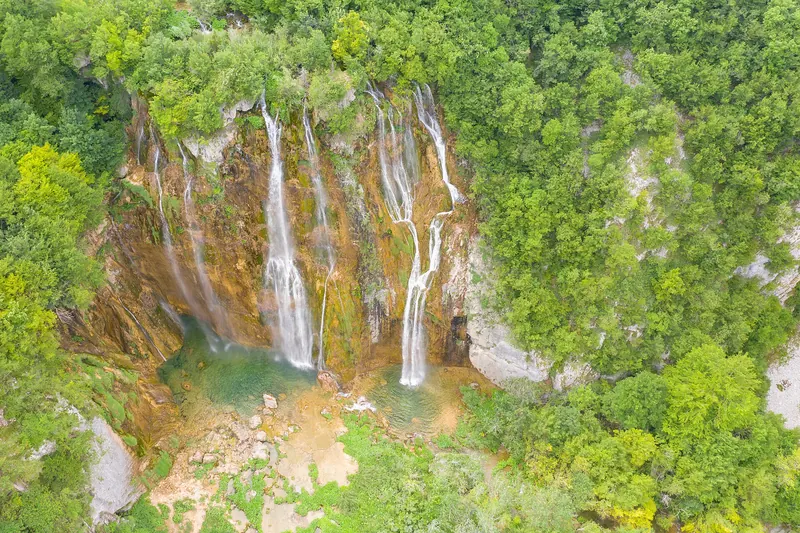
    Conveniently positioned between Plitvice Lakes and the rest of the Dalmatian coast.

Main attractions

Top things to see in Zadar

Zadar's essential sights are spread between its ancient Roman core and its modern waterfront artworks.

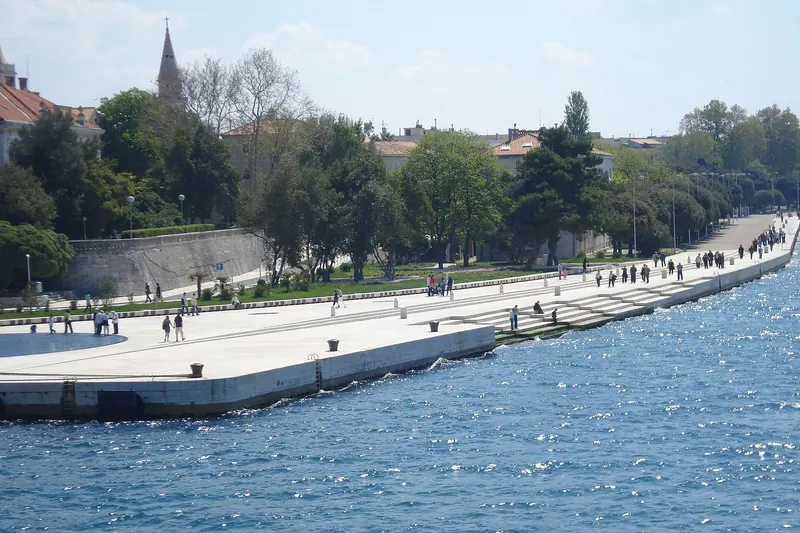
  1. The Sea Organ on Zadar's waterfront

    The Sea Organ

    A one-of-a-kind installation, stone steps hiding pipes that turn wave motion into soft, randomised music.

    Tip Sit for at least ten minutes — the sound takes a moment to notice and appreciate fully.

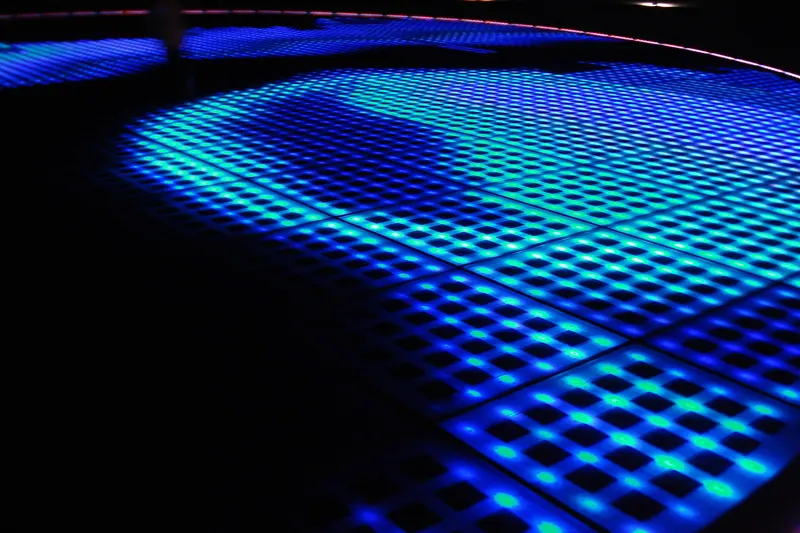
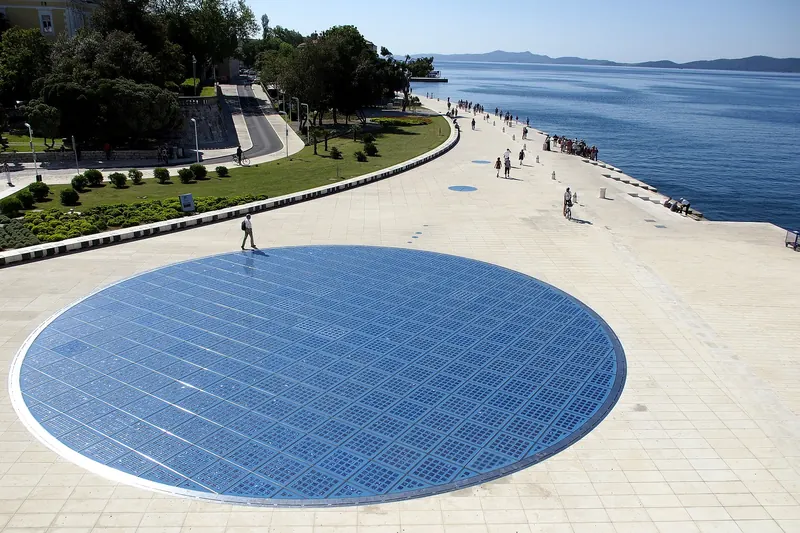
  2. The Monument to the Sun on Zadar's waterfront

    The Monument to the Sun

    A striking circular light installation, solar panels powering a nightly display that draws crowds after sunset.

    Tip Arrive right at sunset to see both the sky and the installation's lights at their best.

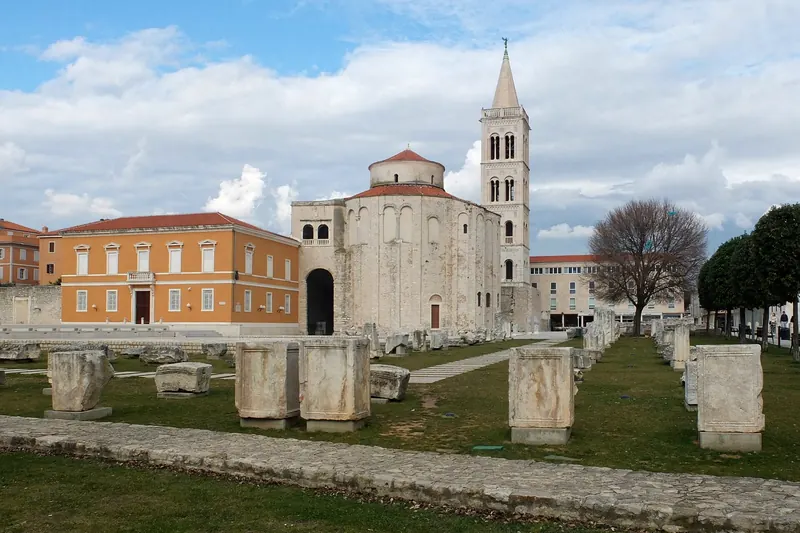
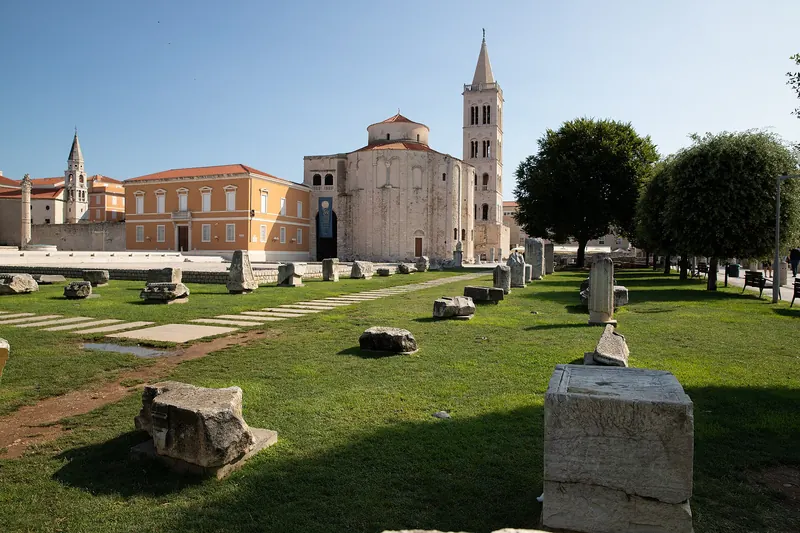
  3. The Roman Forum in Zadar

    The Roman Forum

    One of the best-preserved Roman forums on the eastern Adriatic, its columns and paving still substantially intact.

    Tip Visit in the early morning or evening for photos without the day's crowds.

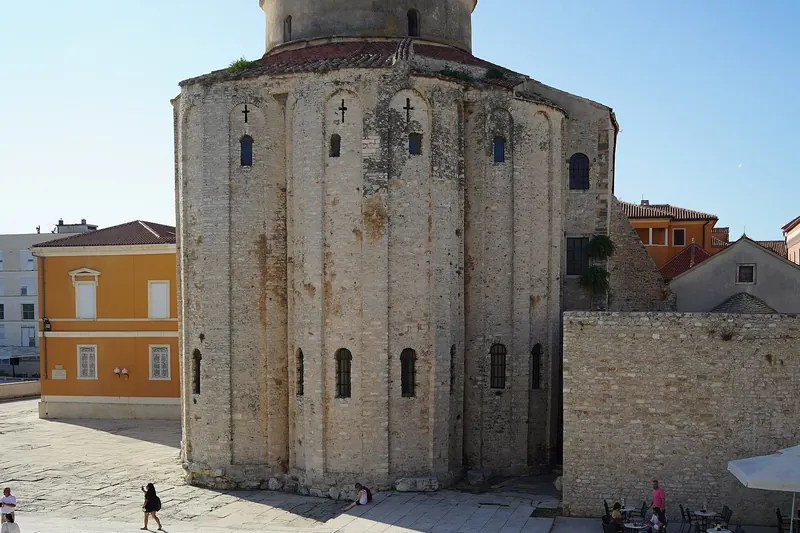
  4. St Donatus Church in Zadar

    St Donatus Church

    A striking 9th-century circular church, built directly on and from the stones of the Roman Forum beside it.

    Tip Check for a classical music concert — the church's acoustics make it a popular performance venue.

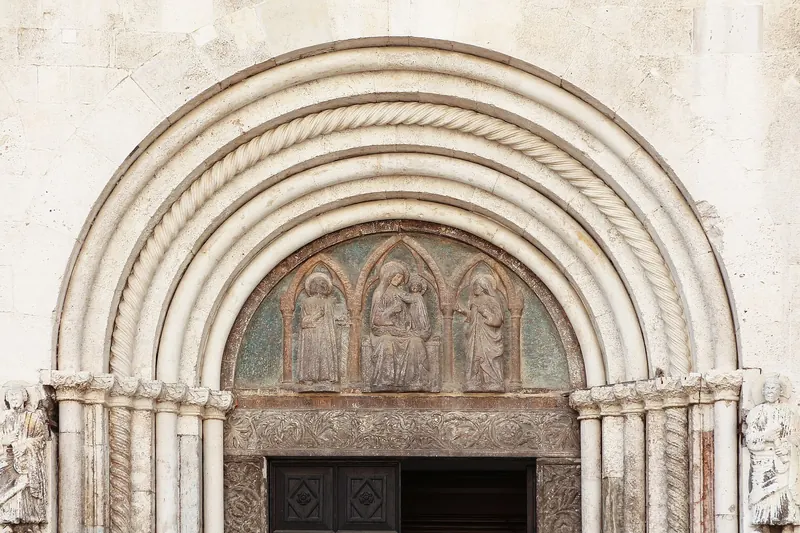
  5. St Anastasia's Cathedral in Zadar

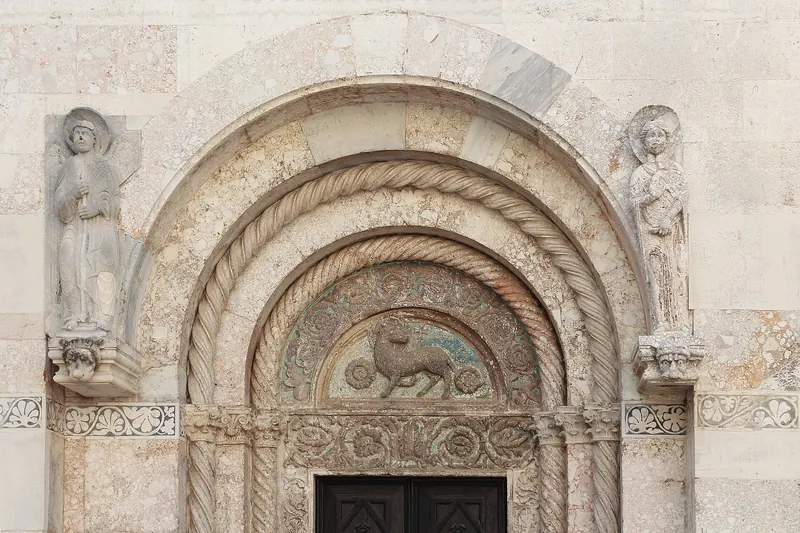
    St Anastasia's Cathedral

    The largest cathedral in Dalmatia, a Romanesque landmark with a climbable bell tower.

    Tip Climb the tower for one of the best views over the old town's rooftops.

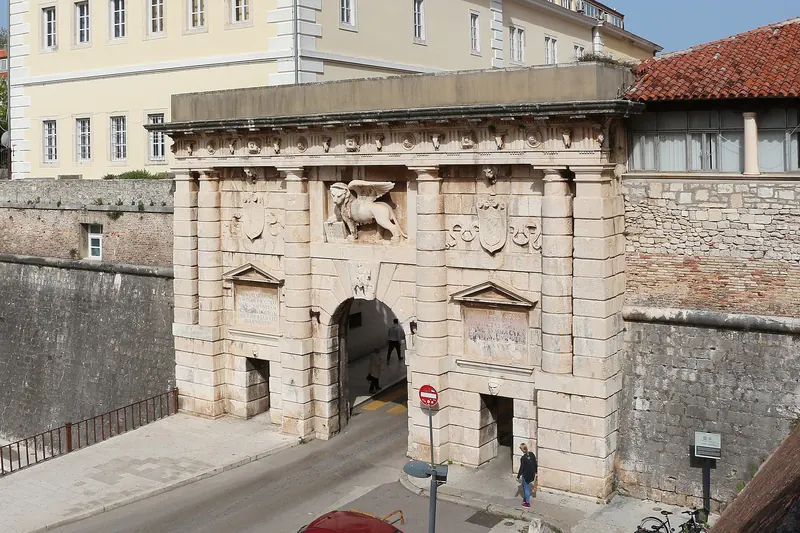
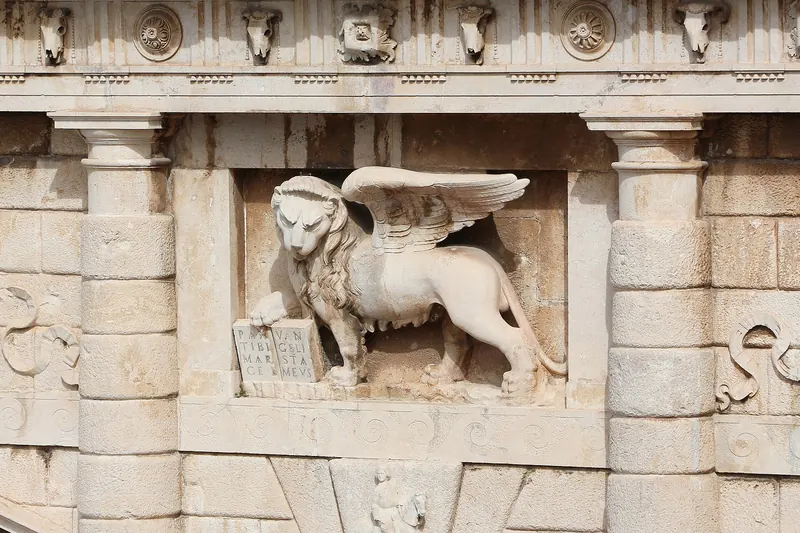
  6. The Land Gate in Zadar's old city walls

    The Land Gate

    A grand 16th-century Venetian gateway, once the main land entrance into the walled city.

    Tip A striking piece of Venetian military architecture, worth a proper look rather than a quick pass-through.

  7. Sunset at Zadar's Sea Organ

    Sunset at the Sea Organ

    Zadar's essential daily ritual, crowds gathering along the waterfront to watch the sky change colour.

    Tip Arrive at least 30 minutes ahead to claim a good spot on the steps.

Things to do

Best things to do in Zadar

Zadar rewards splitting time between its ancient Roman core and its modern waterfront installations.

  1. Listening to Zadar's Sea Organ

    Listen to the Sea Organ

    An essential Zadar experience, letting the waves' random music wash over you on the waterfront steps.

    Tip Calmer seas produce a gentler sound — a slightly choppier day can be more dramatic.

  2. The Monument to the Sun lit up at night in Zadar

    Watch the Monument to the Sun light up at night

    A mesmerising evening spectacle, solar-powered lights pulsing across the circular installation after dark.

    Tip A popular spot for locals too — expect a lively, sociable crowd after sunset.

  3. Exploring the Roman Forum in Zadar

    Explore the Roman Forum

    A worthwhile stop, wandering among columns and paving stones nearly two thousand years old.

    Tip Free to explore at any time, making it easy to fit around other plans.

  4. St Anastasia's Cathedral bell tower in Zadar

    Climb St Anastasia's bell tower

    A rewarding climb, with the best rooftop view over Zadar's compact old town peninsula.

    Tip A good late-afternoon activity, timed to finish near sunset.

  5. The Land Gate in Zadar

    Walk through the Land Gate

    An atmospheric entry point into the old town, a grand Venetian gateway still in daily use.

    Tip A good starting point for a walking route into the old town's narrow streets.

  6. Sunset from Zadar's waterfront promenade

    Watch sunset from the waterfront promenade

    An essential daily ritual here, joining locals and visitors alike to watch the sky change over the Adriatic.

    Tip Combine with the Sea Organ and Monument to the Sun for the complete Zadar sunset experience.

Local food

What to eat in Zadar

Zadar's food spans classic Dalmatian dishes alongside its own distinctive cherry liqueur.

  • Maraschino liqueur

    Invented and still produced in Zadar, a sweet cherry liqueur distilled from local marasca cherries.

    Where to try it Bars and restaurants throughout the old town.

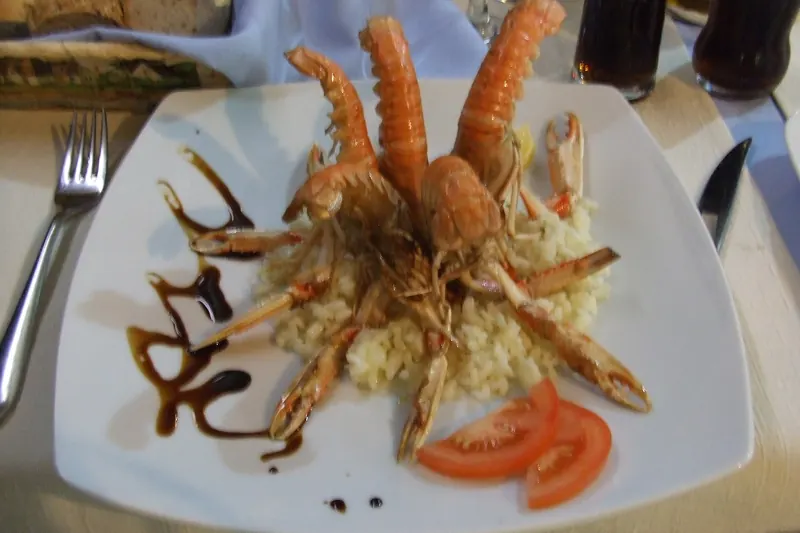
  • Grilled seafood at a traditional Croatian restaurant

    Fresh grilled seafood

    A highlight of dining here, fish and shellfish grilled simply at konobas around the old town.

    Where to try it Konobas throughout Zadar's old town.

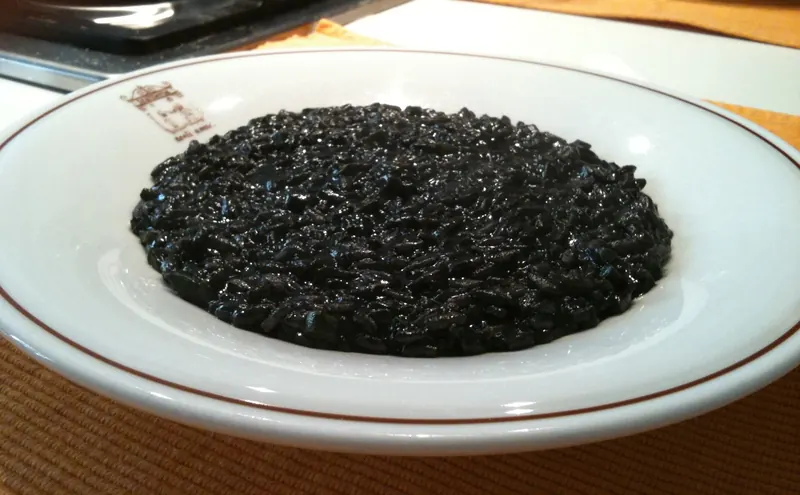
  • Black risotto made with cuttlefish ink

    Crni rižot (black risotto)

    A Dalmatian classic, worth trying at least once during a Zadar visit.

    Where to try it Seafood restaurants throughout the old town.

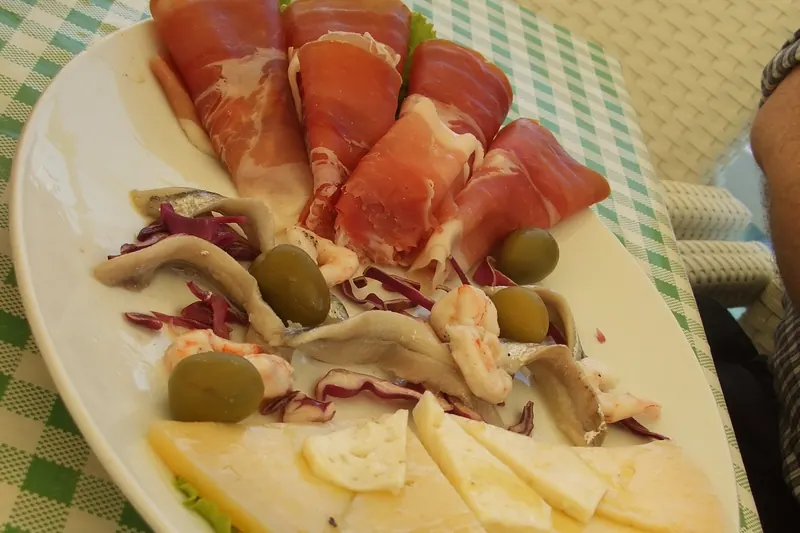
  • Dalmatinski pršut, Croatia's dry-cured ham

    Dalmatinski pršut (dry-cured ham)

    A reliable starter, often served with local cheese and olives.

    Where to try it Restaurants and konobas throughout Zadar.

  • Croatian wine

    Worth exploring, with wines from the surrounding Zadar region alongside better-known Dalmatian labels.

    Where to try it Wine bars throughout the old town.

  • Fritule, small Croatian fried doughnuts

    Fritule (small fried doughnuts)

    A nice sweet treat, found at bakeries and market stalls around the old town.

    Where to try it Bakeries throughout Zadar's old town.

Accommodation

Where to stay in Zadar

Zadar offers noticeably better value than Dubrovnik or Hvar, with everything of interest within easy reach of the old town.

  • The old town peninsula

    The most convenient base, close to the Forum, Sea Organ and Land Gate.

    Best for: Being within walking distance of every major sight

  • Just outside the old town

    Easy access to the peninsula without the old town's peak-season premium.

    Best for: A quieter, better-value stay a short walk from the centre

What a night costs

Budget guesthouse
€55–95 per night
Mid-range hotel
€100–200 per night
St Anastasia's bell tower climb
About €2–3
Dinner at a mid-range restaurant
About €25–45 per person

Transport

Getting to and around Zadar

Zadar is well connected by air and road, sitting conveniently between Zagreb and the rest of the Dalmatian coast.

Getting there

  • Direct international flights

    Available from many European cities, especially in summer.

    Zadar Airport sits about 20 minutes from the old town.

  • Bus from Zagreb or Split

    Comfortable and frequent, with scenic coastal or inland routes.

    Around three hours from Zagreb, or two to three from Split.

  • Ferry to the Zadar archipelago

    Useful if extending to the nearby islands.

    Frequent local ferries connect Zadar to Ugljan, Pašman and other islands.

Getting around

Zadar's compact old town peninsula is entirely walkable, with buses covering the wider city.

  • On foot

    The best way to see the old town's main sights.

    The Forum, Sea Organ and cathedral all sit within a comfortable walk of each other.

  • Local buses

    Useful for reaching the airport or outlying neighbourhoods.

    A frequent, inexpensive network across the wider city.

  • Ferry terminal

    Conveniently located right beside the old town.

    An easy walk from most central accommodation.

When to go

Best time to visit Zadar

Zadar is a pleasant year-round city, with summer bringing the best swimming and sunset weather.

  • Late spring (May–June)

    Best time

    Warm enough to swim, with noticeably thinner crowds than peak summer.

  • Summer (July–August)

    Good

    Warm and lively, the best season for swimming and sunset watching.

  • Early autumn (September)

    Best time

    Still warm enough for the sea, with crowds and prices both easing off.

  • Winter (November–March)

    Good

    Quiet, with a real, lived-in city atmosphere rather than a tourist-focused one.

Worth planning around: Nothing strongly — Zadar works well across most of the year.

Itinerary

One day in Zadar

A single full day covering the Roman core and the waterfront's modern artworks.

  1. Day1

    The old town and the waterfront

    A full day of Roman history and modern art.

    • Morning The Roman Forum, St Donatus Church and St Anastasia's Cathedral.
    • Afternoon Wander the old town and walk through the Land Gate.
    • Evening Sunset at the Sea Organ and Monument to the Sun.

Travel tips

Zadar travel tips

Practical notes that make a Zadar visit noticeably smoother.

  • Time your visit to be at the waterfront for sunset — it's the city's highlight.
  • Visit the Roman Forum early morning or evening for photos without crowds.
  • Climb St Anastasia's bell tower in the late afternoon, finishing near sunset.
  • Try Maraschino liqueur at a local bar — it's a real Zadar specialty.
  • Use Zadar as an easy stopover between Plitvice Lakes and the rest of the coast.
  • Expect noticeably better prices than Dubrovnik or Hvar for food and accommodation.

FAQ

Zadar: frequently asked questions

How many days do you need in Zadar?

One to two days covers the old town's Roman sights and the waterfront installations comfortably.

What is the Sea Organ?

A wave-powered musical installation, stone steps with hidden pipes that turn the sea's motion into ambient sound.

Is Zadar worth visiting compared to Split or Dubrovnik?

Yes — it offers real Roman history and unique modern artworks with noticeably fewer crowds than either.

How do you get from Zadar Airport to the old town?

By airport shuttle bus or taxi, taking about 20 to 30 minutes.

Is Zadar a good base for day trips?

Yes — Plitvice Lakes and the Zadar archipelago's islands are both within easy reach.

When is the best time to see the Monument to the Sun?

Right after sunset, when its solar-powered lights begin their nightly display.

Read next

Related travel articles

Where to go

Choosing a Mediterranean Coast

The Mediterranean coasts in this guide are not interchangeable. Some have sand and some have rock; some are glamorous and some are cheap; two of them are effectively closed for half the year. This is a comparison by the things that decide whether a coastal week works — swimming, crowds, cost, transport and what there is to do when you get out of the water.

Where to go

Beyond the Big Names: Places Worth the Detour

The most visited place in a country is rarely its best, and it is almost never its best value. This is a method for finding the destinations that do not make the postcards — and a set of examples from five of the 50 countries on this site.

Advertisement