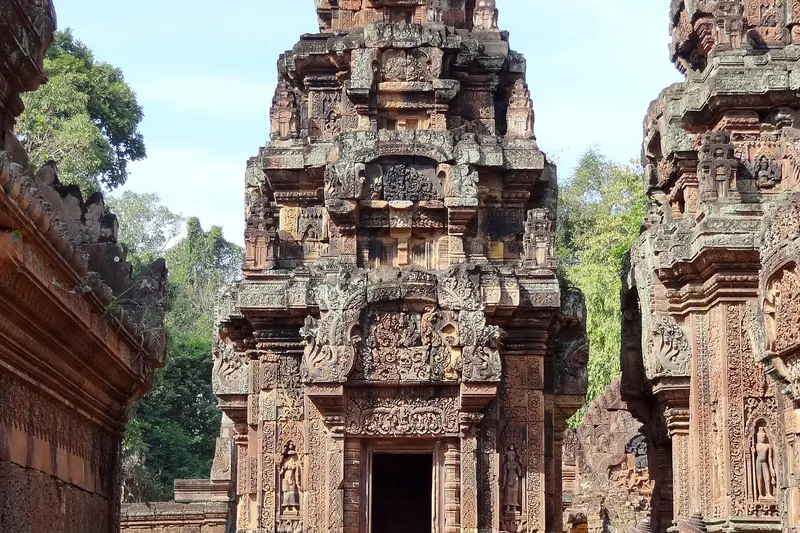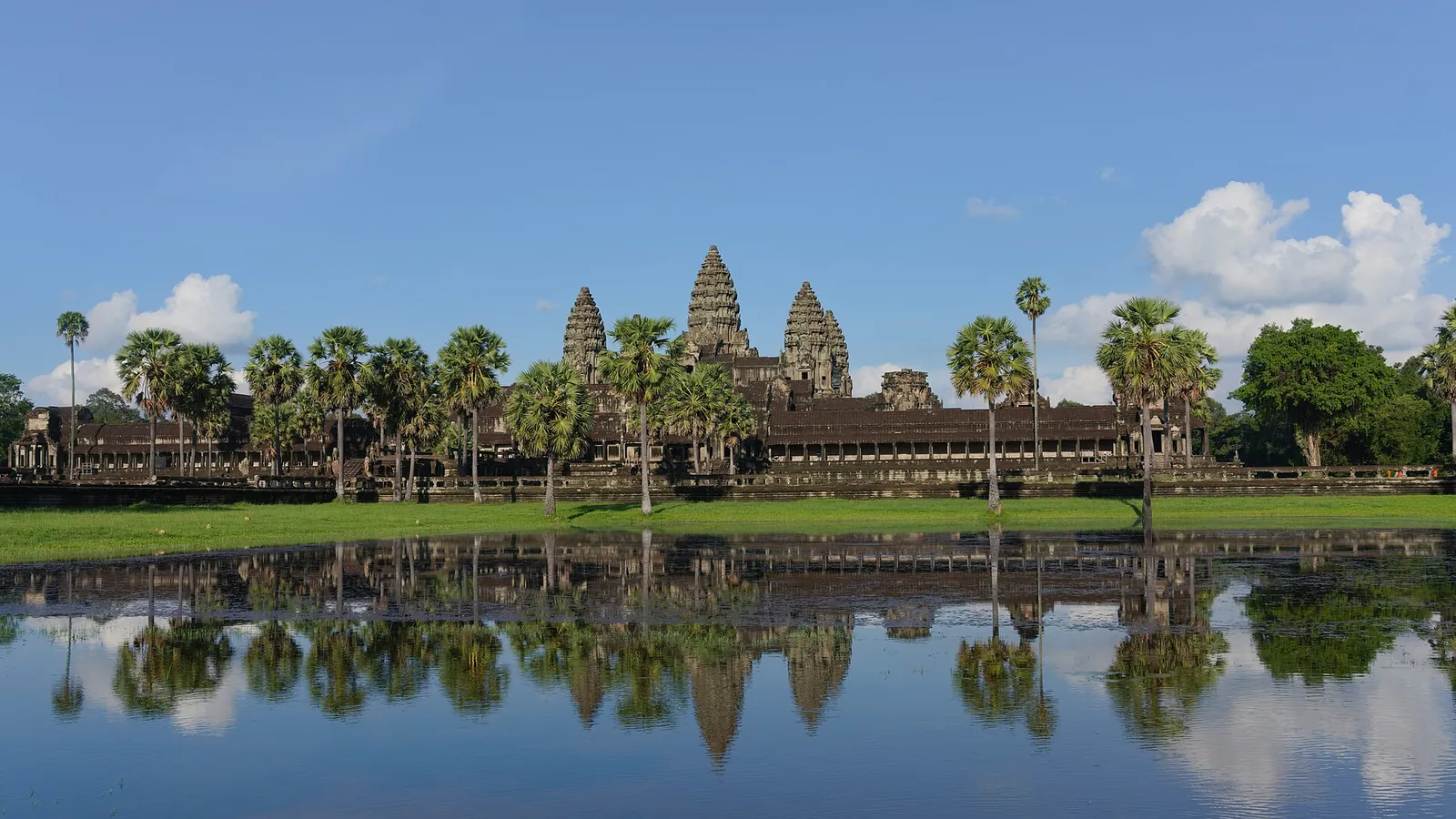
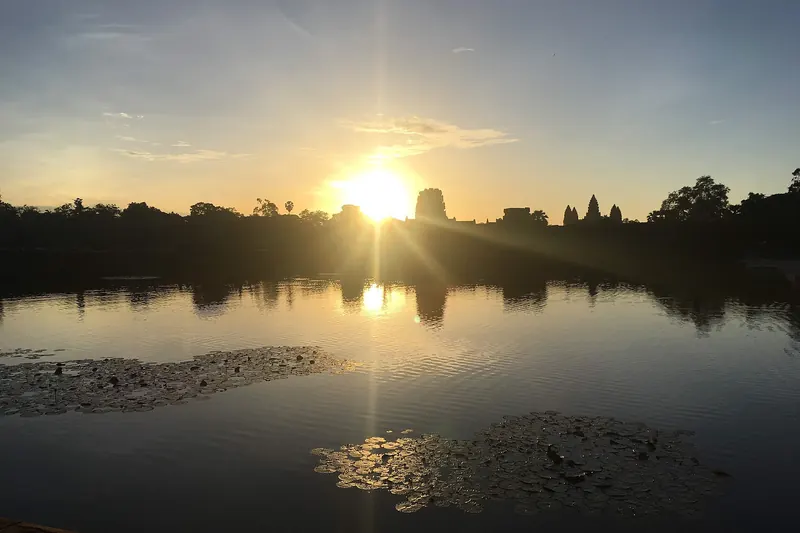
Angkor Wat and its reflection in a pond

Cambodia · Travel guide

The Complete Cambodia Travel Guide

How the country divides, how to choose between the ten destinations, when to go, what it costs and three routes that work.

  • Reading time 12 min read
  • Covers 10 destinations
  • Updated 2026

Photo: Satdeep Gill · CC BY-SA 4.0

Cambodia offers the temples of Angkor, a resilient capital, quiet river towns and islands, at low prices. This guide explains how the country divides, how to choose between the ten destinations, how to travel, when to go, what it costs and three routes that work.

How Cambodia divides

Cambodia is small enough to explore in two weeks, and for a visitor it divides into four zones.

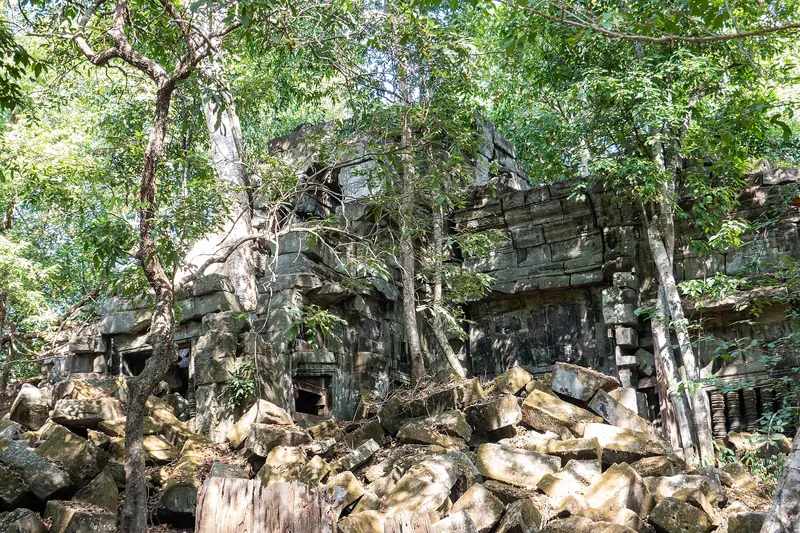
The north-west. Siem Reap is the base for Angkor, Banteay Srei and Kulen and Koh Ker and Beng Mealea, with Battambang a few hours south.

The capital. Phnom Penh sits where three rivers meet and is the hub for the rest of the country.

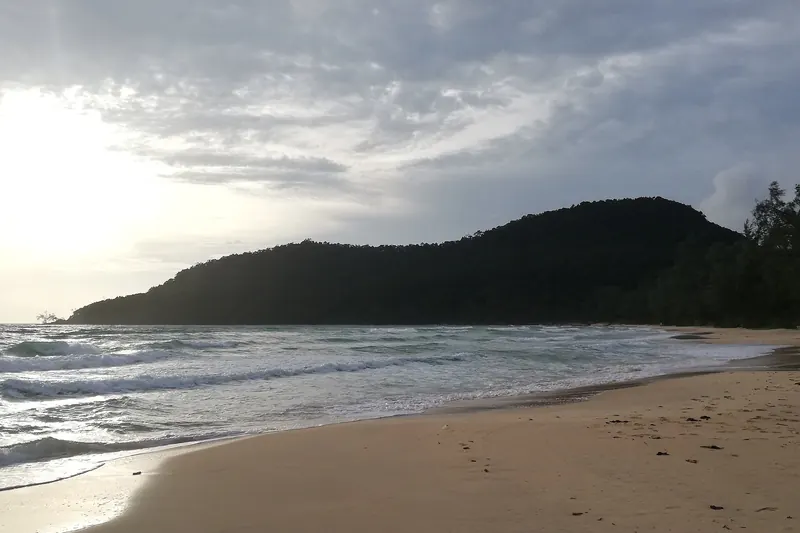
The south coast. Kampot and Kep and Koh Rong offer river life, crab and beaches.

The east. Kratie on the Mekong and Mondulkiri in the hills offer dolphins and elephants.

Worth knowing: A first trip usually combines Angkor with Phnom Penh and a stretch of coast.

Choosing between the ten destinations

  • If you have one week

    [[siem-reap

  • If you love temples

    [[angkor-archaeological-park

  • If you love history

    [[phnom-penh

  • If you love beaches

    [[koh-rong

  • If you love nature

    [[kratie

  • If you want slow travel

    [[battambang

Getting around

Buses and minivans link all the main towns, and are cheap. The Phnom Penh to Siem Reap journey takes about six hours.

Flights link Phnom Penh, Siem Reap and Sihanoukville, saving time on long routes.

Tuk-tuks are the main local transport, and a tuk-tuk or car with a driver is the usual way to see the temples.

Ride-hailing apps such as PassApp and Grab operate in Phnom Penh and Siem Reap.

Worth knowing: Roads are improving, but journeys can be slower than distances suggest.

When to go

Cambodia has a hot, tropical climate with a dry season from November to May and a wet season from June to October.

November to February is the coolest and most comfortable time, and the busiest.

March to May is very hot, especially April, though temples are quiet.

June to October is the green season, with afternoon showers, lower prices and fewer visitors. Angkor remains accessible.

Water Festival in Phnom Penh falls in November, and Khmer New Year in mid-April.

Worth knowing: The Tonle Sap lake floods in the wet season, changing the landscape.

Money, costs and safety

Cambodia is one of the cheapest countries in South-East Asia. A budget traveller can manage on US$30-50 a day, a mid-range traveller on US$70-130.

US dollars are used widely in cities, with change given in riel. Carry small dollar notes. ATMs dispense dollars.

The main costs are Angkor tickets, which are US$37 for one day, US$62 for three days and US$72 for seven days (check current prices), and transport.

Cambodia is generally safe for visitors, but petty theft, bag-snatching from motorbikes and traffic accidents are the main risks. Avoid leaving the paths in rural areas because of unexploded mines.

Three routes that work

  1. One week: Angkor and the capital

    Three nights in [[siem-reap

    Tip Siem Reap]] with a day at [[angkor-archaeological-park

  2. Ten days: add the coast

    One week route plus three nights in [[kampot-kep

    Tip Kampot and Kep]].

  3. Two weeks: the full country

    The itinerary on the country page, covering Siem Reap, Battambang, Phnom Penh, the coast and the east.

    Tip Add [[koh-rong

Reference

The 10 destinations in this guide

Every place named above has its own detailed guide — attractions, food, where to stay, how to get around and a suggested day-by-day plan.

Capital CityMajor City

Phnom Penh

Phnom Penh Municipality

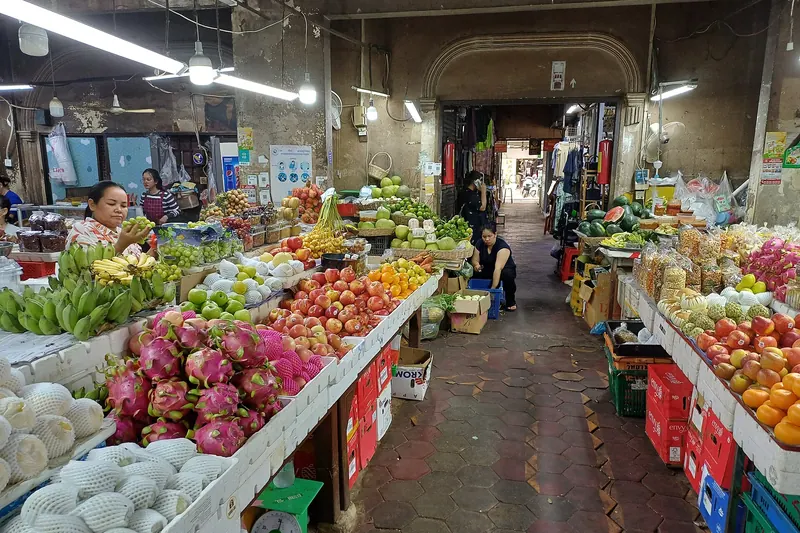
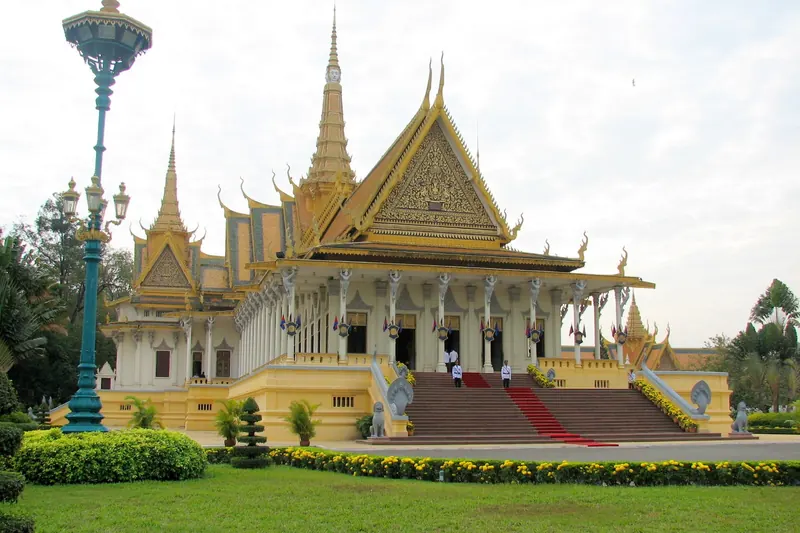
A busy riverside capital with the Royal Palace, Silver Pagoda, National Museum, Central Market, Tuol Sleng, Choeung Ek and a growing food scene.

Don't miss Watching the sun set over the river from a rooftop after a day of palaces and markets.

Explore Destination — Phnom Penh
Culture & ArtsHistoric Site

Battambang

Battambang Province, north-west Cambodia

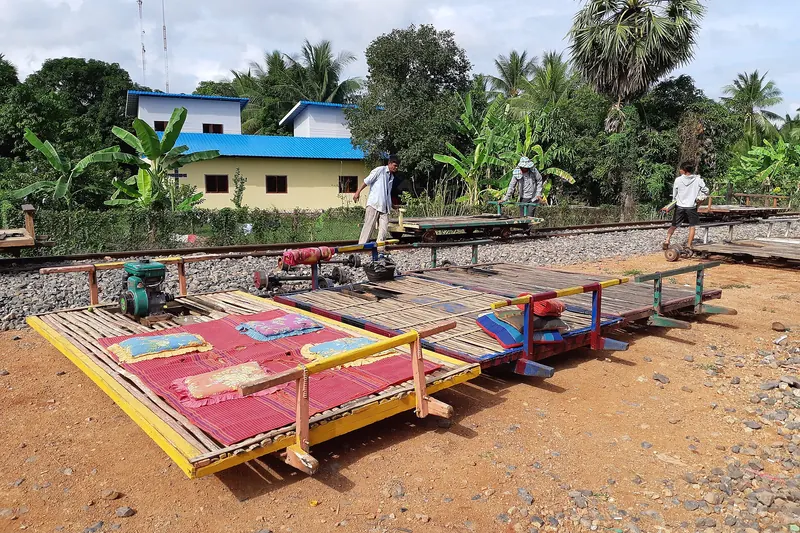
A relaxed provincial capital with French architecture, a contemporary arts scene, the bamboo train, Phnom Sampov bat cave and temples.

Don't miss Riding the rattling bamboo train through green fields.

Explore Destination — Battambang
Coast & BeachesCulture & Arts

Kampot and Kep

Kampot and Kep Provinces, southern coast

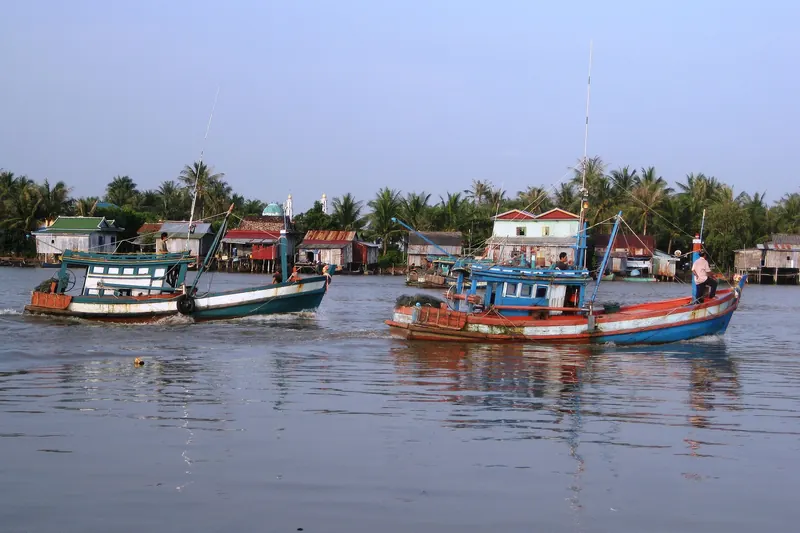
A relaxed southern coast with colonial architecture, Kampot pepper, river cruises, Bokor Hill, Kep crab market and Rabbit Island.

Don't miss Floating down the Kampot river at sunset, then eating crab in Kep.

Explore Destination — Kampot and Kep
Nature & WildlifeOff the Beaten Path

Kratie

Kratie Province, north-east Cambodia

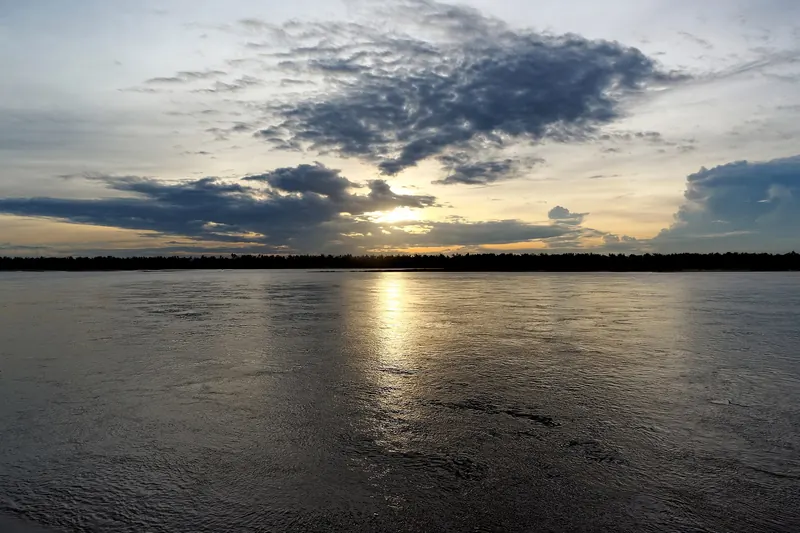
A riverside provincial town with Irrawaddy dolphins at Kampi, Koh Trong island, sunsets over the Mekong and French-era buildings.

Don't miss Watching Irrawaddy dolphins surface in the golden light of the Mekong.

Explore Destination — Kratie
Nature & WildlifeMountains

Mondulkiri

Mondulkiri Province, eastern Cambodia

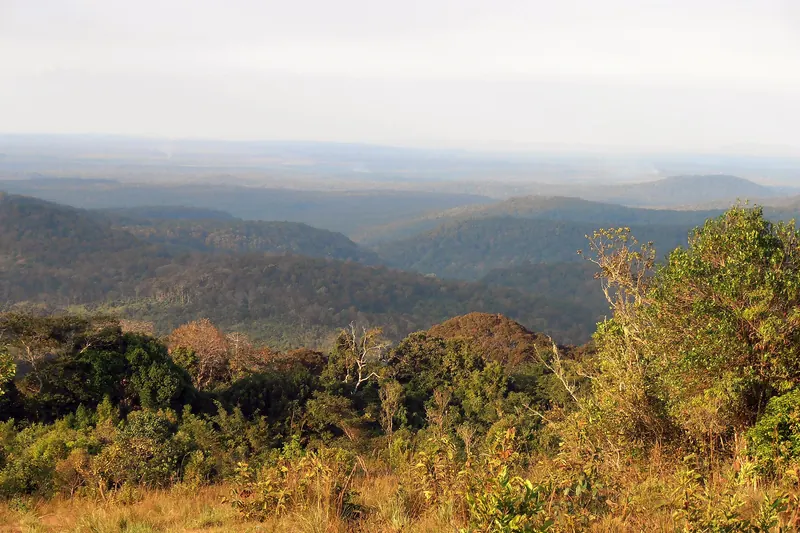
A cool highland province with Sen Monorom, Bunong culture, waterfalls, elephant sanctuaries and wild forest.

Don't miss Walking with rescued elephants through the hills of Mondulkiri.

Explore Destination — Mondulkiri

Back to the Cambodia country page

FAQ

Planning a trip to Cambodia

How many days do I need for Angkor?

Two to three days is ideal for the main temples, plus extra days for outlying sites like Beng Mealea and Banteay Srei.

Is Cambodia cheap?

Yes. A budget traveller can manage on US$30-50 a day, though Angkor tickets and tours add to the cost.

Do I need a visa?

Most nationalities need a visa, available online as an e-visa or on arrival. Check current rules before travelling.

Which currency should I carry?

US dollars are widely used alongside the Cambodian riel. Carry small dollar notes.

Advertisement