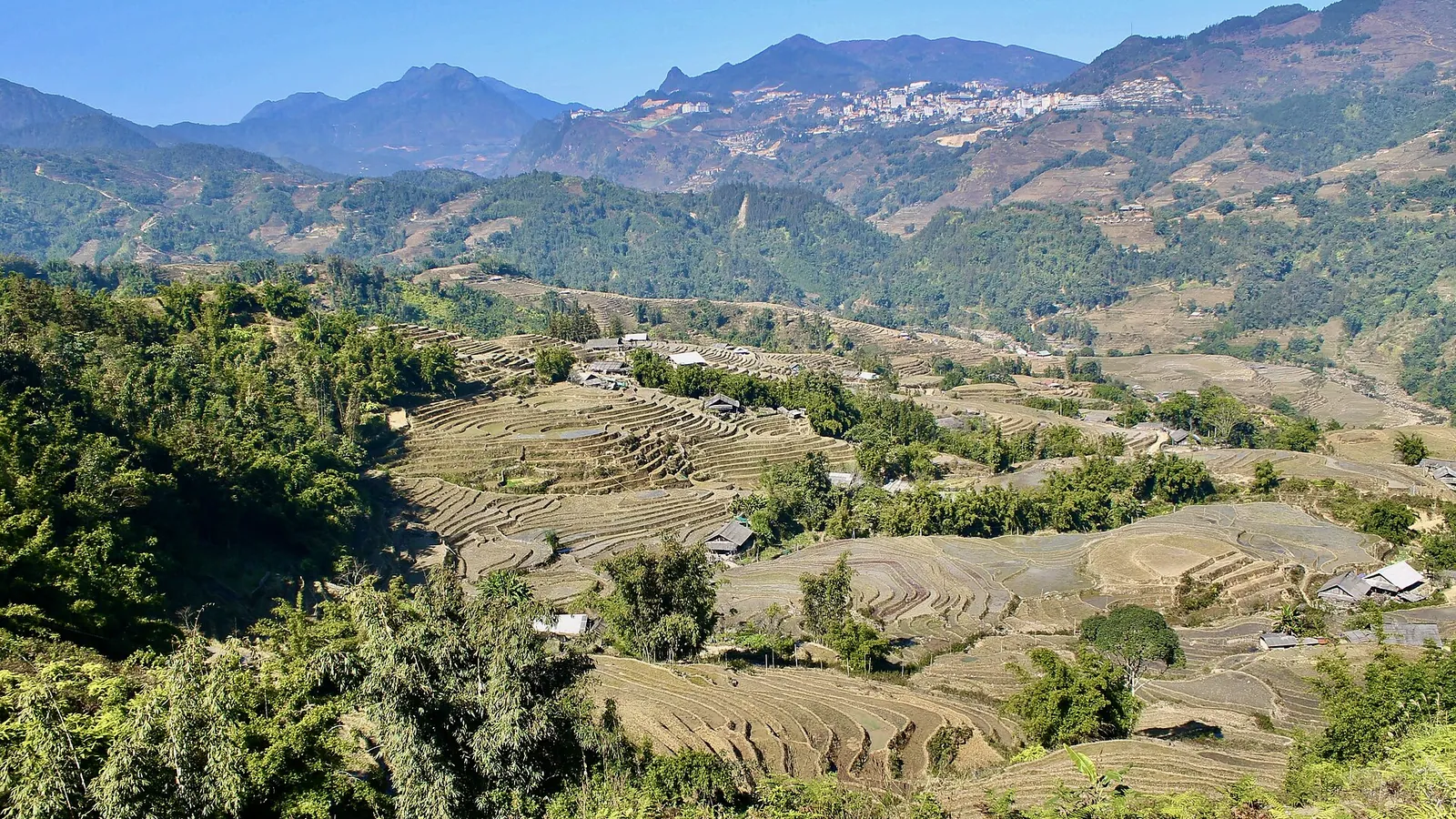
Terraced rice fields curving around a hillside in the mountains of Sapa

Hoang Lien Son mountains, north-west Vietnam · Vietnam

Sapa

Cloud-wrapped mountains near the Chinese border, with terraced rice fields, ethnic-minority villages, homestay treks and the highest peak in Indochina.

  • Best time March–May and September–November
  • Stay 2–3 days
  • Good for Trekking, landscapes, homestays, culture, photography

Photo: Eerin25 · CC0

Welcome to Sapa

Sapa is a small town in the Hoang Lien Son mountains in Vietnam's far north-west, at about 1,500 metres, close to the border with China. The French discovered its cool climate in the early 20th century and built a hill station with villas and a church, much of which was later destroyed in the wars with China and France. Today it is a busy, growing tourist town of hotels, cafés and trekking agencies, surrounded by some of the finest mountain scenery in Vietnam.

The countryside around it is home to several ethnic minorities, notably the Hmong, Red Dao, Tay, Giay and Xa Pho, who farm the steep hillsides with terraces built over centuries. Rice terraces climb the slopes of the Muong Hoa Valley, and trekking between villages, with overnight stays in local homestays, is the main reason to visit. The peak of Fansipan, at 3,143 metres, is the highest mountain in Indochina, reached by a two-day trek or a cable car.

Sapa's popularity has brought change, including souvenir sellers, crowds around the closest villages and a rapid building boom. It is best to go beyond the immediate town, use local guides, and choose homestays that spread the benefit. Done well, a trek here is memorable, and the terraces at harvest time in September are among the most beautiful sights in Vietnam.

  • Mountains
  • Scenic Region
  • Nature & Wildlife
  • Culture & Arts

Why visit

Why visit Sapa?

Sapa offers dramatic scenery and a way of life unlike the lowlands, with excellent trekking.

  • Terraced valleys

    Rice terraces that turn green in summer and golden in September and October.

  • Homestay treks

    Walk between villages and stay with families in traditional houses.

  • Fansipan

    The roof of Indochina, reached on foot or by cable car.

  • Ethnic-minority cultures

    Hmong, Red Dao and other communities with distinctive dress and markets.

  • Cool mountain air

    A refreshing change from the lowland heat in summer.

Main attractions

Top things to see in Sapa

The best of Sapa is in the valleys and villages, reached on foot, with some sights near the town.

  1. The Muong Hoa Valley and its terraces

    A broad valley below the town with terraced rice fields, villages such as Lao Chai and Ta Van, and a river. It is the classic trekking route, of about 10 km.

    Tip Hire a local guide from a village.

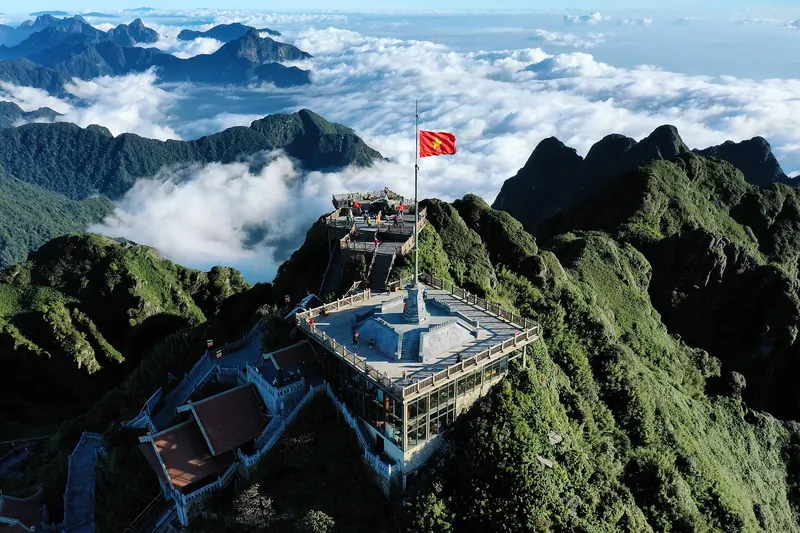
  2. The summit of Fansipan with its temple complex above the clouds

    Fansipan

    The highest peak in Indochina at 3,143 metres. Adventurers can climb it in two days with a guide, while a cable car from Sapa town reaches the summit area in about 20 minutes.

    Tip Clouds often cover the top, so choose a clear day.

  3. Cat Cat Village

    A Hmong village a short walk from Sapa town, with terraced fields and handicrafts. It is close and touristy, but easy to reach.

    Tip Go early.

  4. Bac Ha Sunday market

    A large weekly market about 3 hours from Sapa where Flower Hmong and other groups trade animals, cloth and food.

    Tip It is best visited on a Sunday, with a guide.

  5. Tram Ton Pass and Silver Waterfall

    The highest road pass in Vietnam, with views and a waterfall nearby, about 15 km from the town.

    Tip Bring a jacket, since it is cold and misty.

Things to do

Best things to do in Sapa

Sapa is for walking, and for time in the villages.

  1. Trek to a homestay

    Walk through terraces to a village, share dinner with a family and sleep in their house.

    Tip Book with a local guide or a reputable operator.

  2. Climb Fansipan

    A two-day trek, or take the cable car and walk the last steps.

    Tip Bring warm clothes.

  3. Visit Bac Ha market

    See the colourful market on a Sunday.

    Tip Go with a guide.

  4. Try Hmong dishes and local rice wine

    Village meals of pork, vegetables and sticky rice.

    Tip Ask about the ingredients.

  5. Take photographs at sunrise

    Terraces at dawn, with cloud in the valleys.

    Tip Take a tripod.

  6. Relax in a herbal bath

    The Red Dao are known for medicinal herbal baths.

    Tip Ask your guesthouse.

Local food

What to eat in Sapa

Sapa's food is mountain fare: hearty, simple and based on local produce.

  • Thang co

    A Hmong stew of horse or buffalo meat and offal, cooked in a big pot.

    Where to try it Market stalls.

  • Grilled skewers

    Pork, chicken and vegetables grilled over charcoal on the street.

    Where to try it Sapa's night market.

  • Salmon and trout hotpot

    Cold-water fish raised in the mountains, served in a hotpot.

    Where to try it Restaurants in town.

  • Sticky rice and bamboo rice

    Rice cooked in bamboo tubes.

    Where to try it Villages and markets.

  • Corn wine

    Strong local spirit, made from corn or rice.

    Where to try it Villages and homestays.

Accommodation

Where to stay in Sapa

Choose between a comfortable hotel in Sapa town with valley views, and a homestay in a village.

  • Sapa town

    Hotels and restaurants, with views of the valley.

    Best for: Convenience

  • Muong Hoa Valley villages

    Homestays and lodges in Lao Chai, Ta Van and other villages.

    Best for: Authentic stays

  • Eco-lodges

    Boutique lodges in the valley.

    Best for: Comfort in the countryside

What a night costs

Budget hotel or homestay
US$10–30 per night
Mid-range hotel
US$40–90 per night
Luxury lodge
US$120–300 per night
Meal at a local restaurant
US$3–10 per person

Transport

Getting to and around Sapa

Sapa is about 320 km north-west of Hanoi, reached via Lao Cai.

Getting there

  • Bus or limousine van from Hanoi

    About 5 to 6 hours on the expressway to Lao Cai and the mountain road to Sapa.

    Book a reputable operator.

  • Overnight train to Lao Cai

    About 8 hours, with sleeper cabins, followed by a 1-hour road transfer to Sapa.

    A classic route.

  • Private car

    A comfortable option for a small group.

    Arrange in advance.

Getting around

Sapa town is compact. Villages are reached on foot or by motorbike.

  • Walking

    The main way to see the villages.

    Wear boots.

  • Motorbike taxi

    Useful for reaching the trailheads.

    Agree the fare.

  • Cable car and taxi

    To reach Fansipan and Tram Ton.

    Book tickets ahead.

When to go

Best time to visit Sapa

Sapa has a cool, misty climate, with cold winters and warm, wet summers.

  • Spring (March–May)

    Best time

    Mild and flowering, with flooded terraces reflecting the sky.

  • Summer (June–August)

    Good

    Warm, green and wet, with landslides possible.

  • Autumn (September–November)

    Best time

    Golden terraces at harvest time, clear skies and cooler weather.

  • Winter (December–February)

    Quiet

    Cold and misty, with occasional frost or snow.

Worth planning around: The peak of the rainy season in July and August, and mist-covered weeks in winter.

Itinerary

Three days in Sapa

A trek to a homestay and a day on the mountain.

  1. Day1

    Arrive and walk

    Town and terraces.

    • Morning Arrive in Sapa.
    • Afternoon A walk to Cat Cat Village.
    • Evening Dinner and a warm drink.
  2. Day2

    Muong Hoa Valley trek

    Terraces and a homestay.

    • Morning Trek from Sapa to Lao Chai.
    • Afternoon Continue to Ta Van.
    • Evening A homestay dinner.
  3. Day3

    Fansipan or return

    The summit.

    • Morning The cable car to Fansipan.
    • Afternoon Return to Hanoi.
    • Evening Arrive in Hanoi.

Travel tips

Sapa travel tips

A few tips help you trek respectfully and enjoyably.

  • Hire a local guide from a village, so that the money stays local.
  • Wear sturdy shoes, and bring a rain jacket, since it can be muddy.
  • Ask before photographing people, and do not hand out sweets or money to children.
  • Buy handicrafts directly from artisans.
  • Book Fansipan cable car tickets in advance in high season.
  • Pack layers, since it is cool at night in every season.
  • Book Hanoi transport in advance.

FAQ

Sapa: frequently asked questions

How many days do you need in Sapa?

Two nights is enough for a trek and a homestay. Three allows Fansipan or Bac Ha market.

When are the terraces at their best?

September and early October, when the rice is golden. In May and June, flooded terraces mirror the sky.

Do I need a guide?

Yes, a local guide is recommended for treks and homestays.

Is Sapa too touristy?

The town is touristy. The valleys beyond are quieter, and treks and homestays can be authentic.

How do I get to Sapa?

By bus, limousine or overnight train from Hanoi, about 5 to 8 hours.

Can I climb Fansipan?

Yes, in one to two days with a guide, or by cable car.

Read next

Related travel articles

Practical

Packing by Season and Trip Type

Most packing advice is a list of things. This is the opposite: the small number of decisions that determine whether your luggage helps or hinders, organised by the kind of trip you are actually taking.

Where to go

Beyond the Big Names: Places Worth the Detour

The most visited place in a country is rarely its best, and it is almost never its best value. This is a method for finding the destinations that do not make the postcards — and a set of examples from five of the 50 countries on this site.

Advertisement