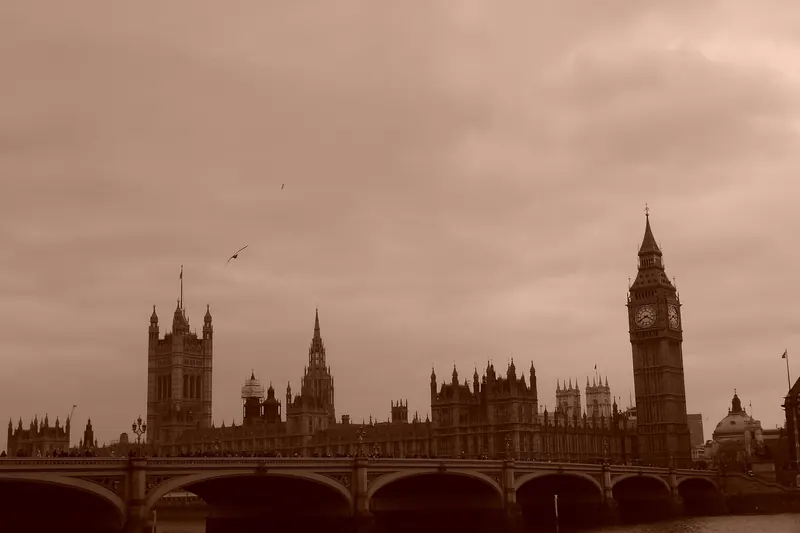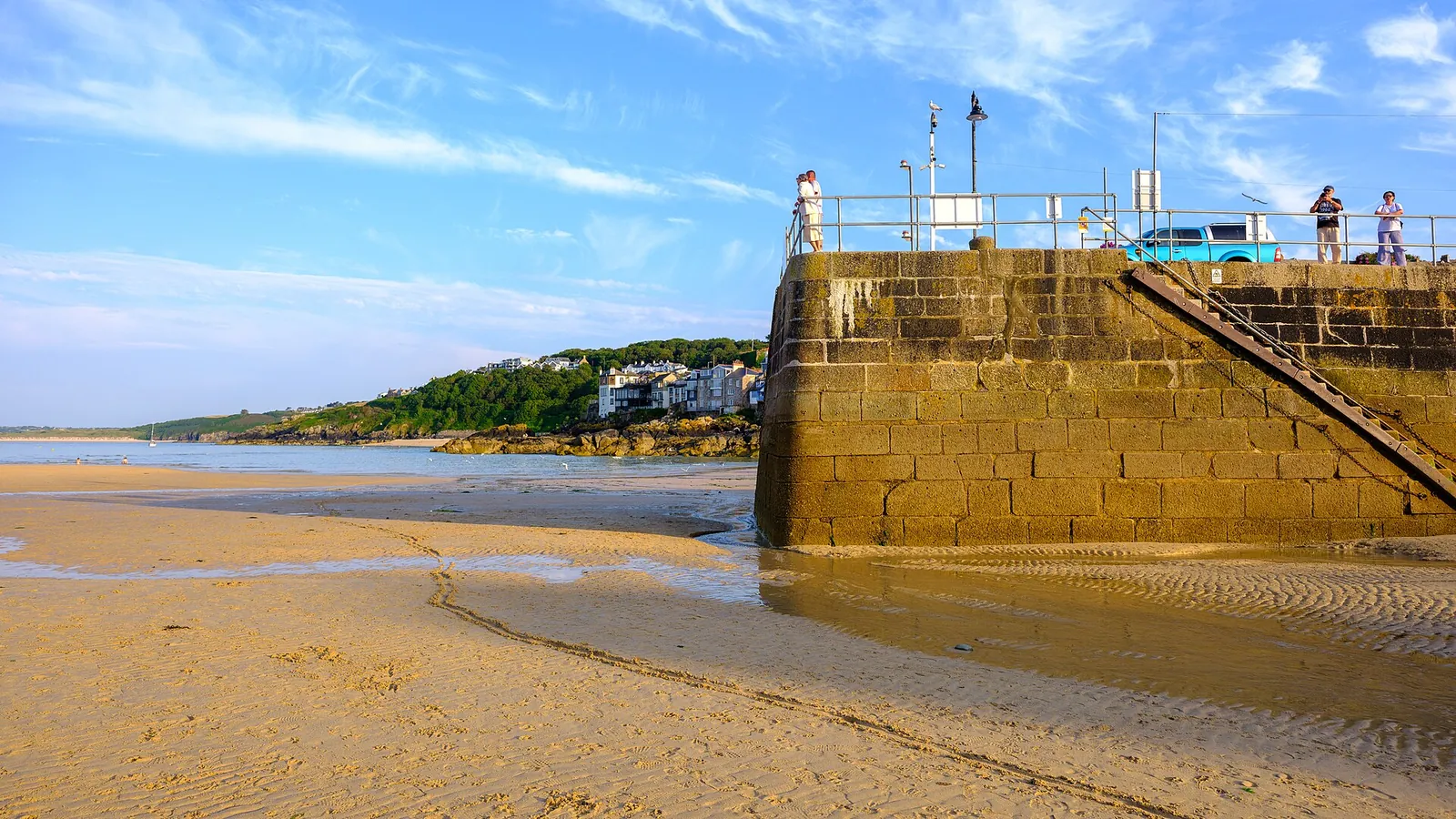



St Ives harbour beach with the pier and town beyond

South West England · United Kingdom

Cornwall

England's far south-west corner: a rugged coastline of fishing harbours, surf beaches and clifftop paths, with its own language, flag and a claim to being a country apart.

  • Best time May–June and September
  • Stay 4–6 days
  • Good for Beaches, coastal walking, families, food

Photo: ArildV · CC BY-SA 4.0

Welcome to Cornwall

Cornwall occupies England's far south-western tip, a peninsula narrow enough that you're rarely more than half an hour from the sea, and shaped by that coastline more than almost anywhere else in Britain. Fishing has defined its economy and culture for centuries, tin and copper mining before that, and more recently tourism and a thriving food and arts scene.

The identity here runs deeper than scenery. Cornish is a recognised Celtic language with its own revival movement, the black-and-white St Piran's flag flies from houses and cars across the county, and many Cornish people consider Cornwall a distinct nation within the UK rather than simply another English county — worth knowing before referring to it as 'the English seaside'.

The coastline itself does the heavy lifting for visitors: the South West Coast Path runs its entire length, surf beaches line the north coast, sheltered fishing harbours dot the south, and the light — famously drawing artists to St Ives for over a century — has a different quality from the rest of England.

  • Coast & Beaches
  • Scenic Region
  • Culture

Why visit

Why visit Cornwall?

Cornwall's case is that no other part of England combines this much dramatic coastline, distinct culture and excellent food in one accessible region.

  • The coastline is spectacular

    Cliffs, coves, surf beaches and fishing harbours change character constantly along a single coast path.

  • Cornish identity is real, not marketing

    A distinct language, flag and cultural history give Cornwall a character different from the rest of England.

  • The food scene is a genuine national leader

    From Rick Stein's Padstow to countless smaller producers, Cornwall punches well above its weight for British food.

  • St Ives' art history is real, not incidental

    The light that drew Turner, Hepworth and generations of artists here still supports a serious gallery scene, Tate St Ives included.

  • It rewards both activity and doing nothing

    Surfing, coastal walking and watersports sit alongside beach days and cream tea afternoons, suiting very different kinds of trip.

Main attractions

Top things to see in Cornwall

Cornwall is large enough that these are best split across a north-coast and south-coast base rather than rushed as day trips from one town.

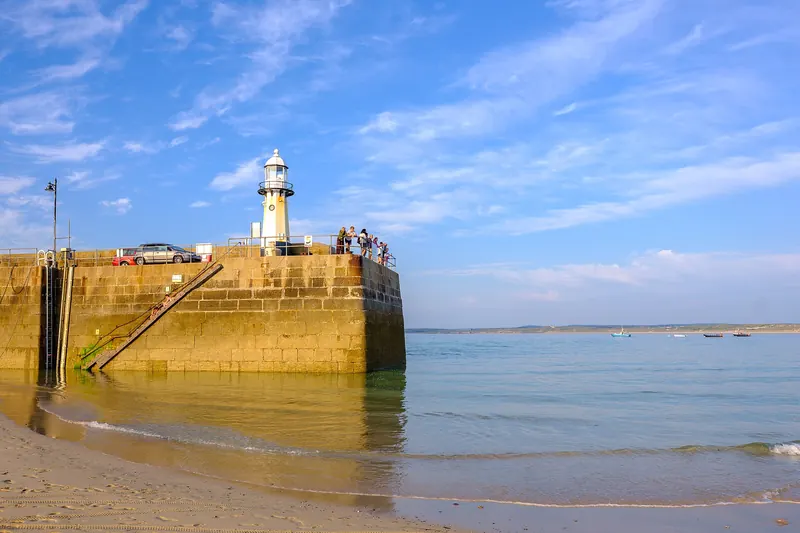
  1. St Ives harbour pier with its lighthouse at low tide

    St Ives

    A former fishing harbour turned art town, with turquoise-watered beaches, narrow cobbled streets and Tate St Ives overlooking Porthmeor Beach.

    Tip Park at the Lelant Saltings park-and-ride and take the scenic branch line train in — St Ives' own parking is difficult in summer.

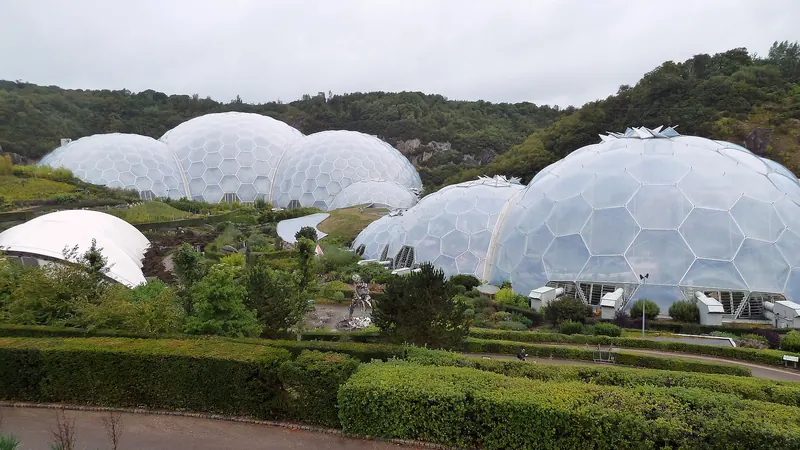
  2. The geodesic biomes of the Eden Project

    The Eden Project

    Two vast geodesic biomes built in a former china clay pit, recreating rainforest and Mediterranean climates, alongside extensive outdoor gardens.

    Tip Allow a full day — the site is considerably larger than it appears from photographs.

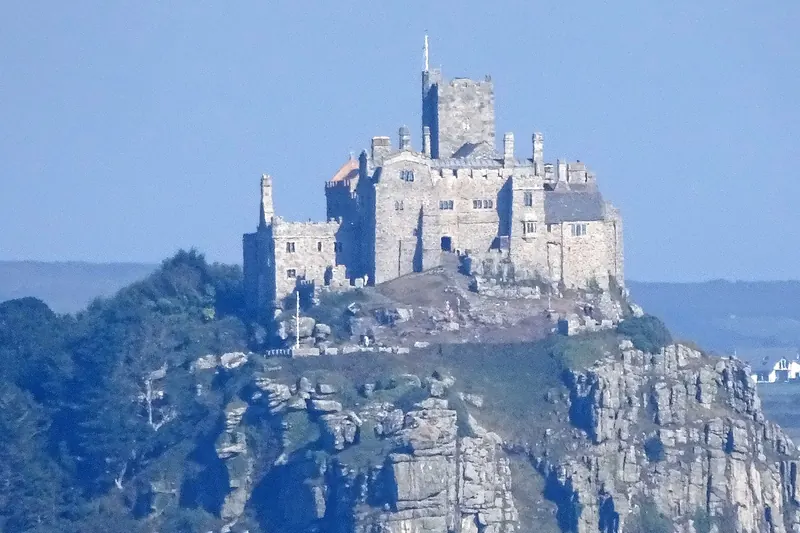
  3. The castle-topped tidal island of St Michael's Mount

    St Michael's Mount

    A tidal island crowned by a medieval castle, reachable on foot via a causeway at low tide or by boat when the tide is in.

    Tip Check tide times before visiting — the causeway is only walkable for a few hours around low tide.

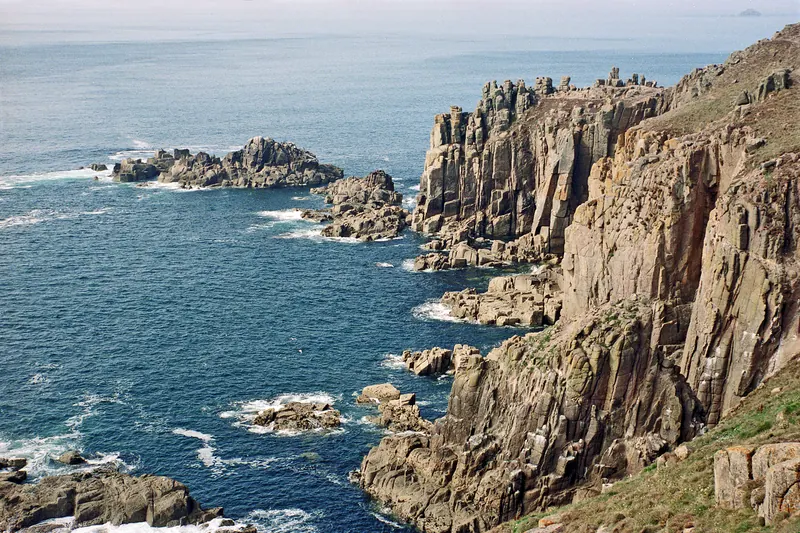
  4. The granite cliffs of Land's End meeting the Atlantic

    Land's End

    The dramatic granite cliffs marking England's most south-westerly point, with striking Atlantic views and a coast path in both directions.

    Tip Skip the commercial attractions at the visitor complex and focus on the cliff walks either side for the real experience.

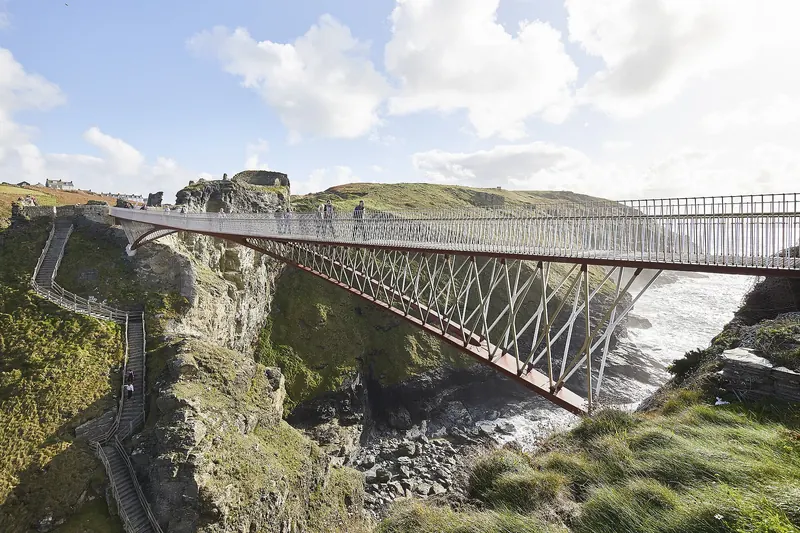
  5. The modern footbridge linking Tintagel Castle's headland to the mainland

    Tintagel Castle

    Ruined medieval castle ruins on a dramatic headland linked to Arthurian legend, connected to the mainland by a striking modern footbridge.

    Tip The site involves genuine steps and uneven terrain — allow more time than the map distance suggests.

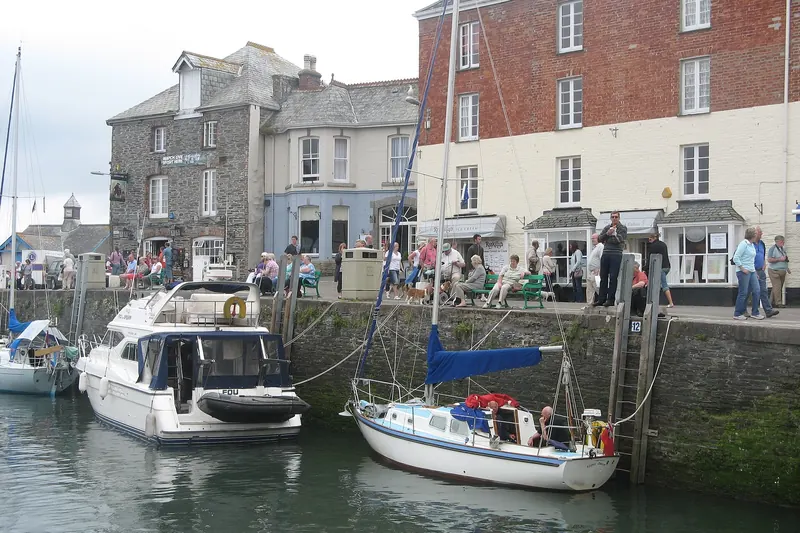
  6. Boats in Padstow's harbour

    Padstow

    A picturesque fishing harbour turned foodie destination, largely thanks to chef Rick Stein, whose restaurants and shops now line the harbourfront.

    Tip The Camel Trail cycle path runs from Padstow along a former railway line, a flat, easy ride through beautiful estuary scenery.

Things to do

Best things to do in Cornwall

Beyond the headline sights, Cornwall rewards slower coastal time and a few local activities.

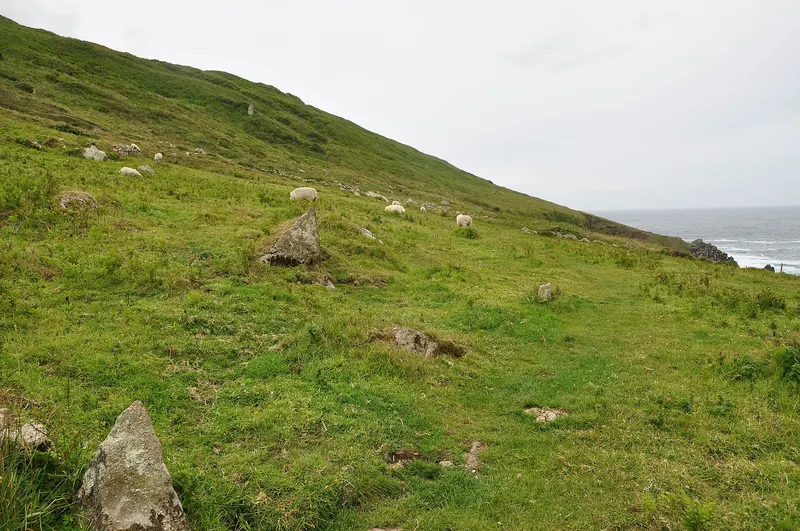
  1. The South West Coast Path running along a Cornish clifftop

    Walk a stretch of the South West Coast Path

    Britain's longest waymarked path runs the entire Cornish coast, with countless manageable day sections offering dramatic cliff and cove scenery.

    Tip The stretch between St Ives and Zennor is among the most scenic and manageable single-day sections.

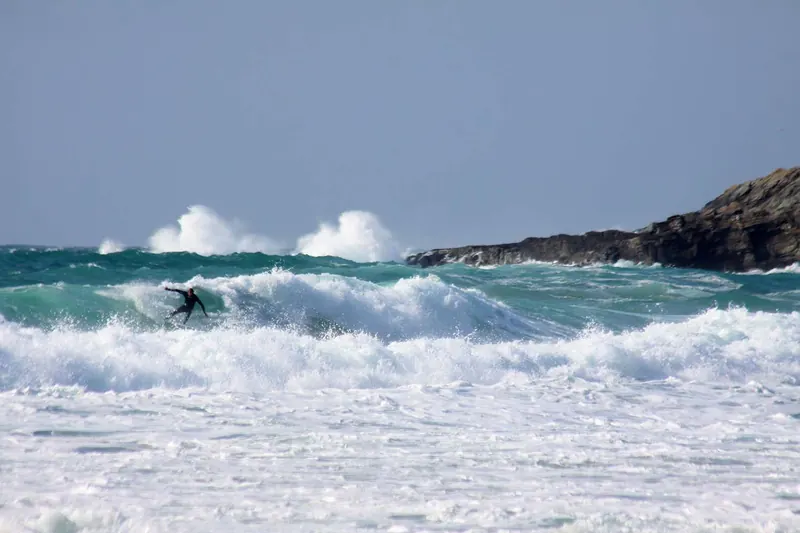
  2. A surfer riding a wave at Fistral Beach

    Learn to surf

    Cornwall's north coast, particularly around Newquay and Fistral Beach, is Britain's most established surfing region, with schools suited to complete beginners.

    Tip Book a lesson rather than going it alone — Cornish beaches have real rip currents that surf schools know how to navigate safely.

  3. Visit a Cornish pasty shop

    A genuine local tradition worth seeking out beyond supermarket versions — small independent bakeries across Cornwall take real pride in the craft.

    Tip A proper Cornish pasty has a crimped edge along the side, not the top — a genuine point of local pride.

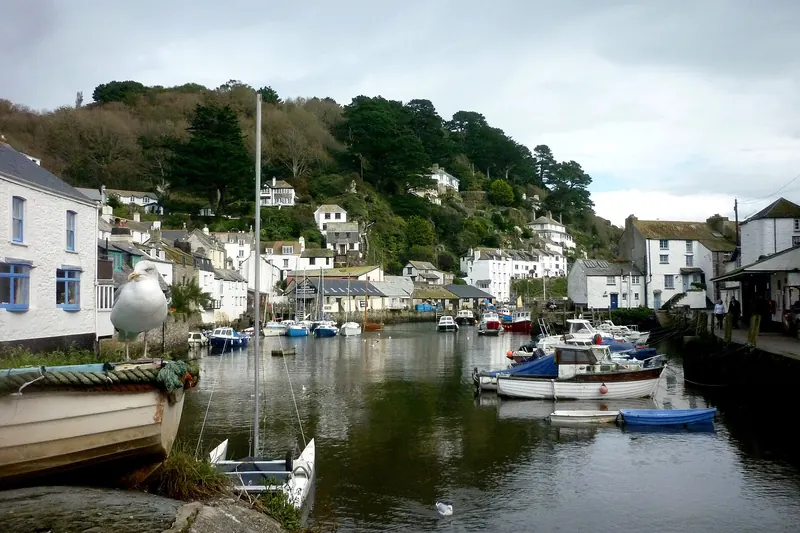
  4. Fishing boats in the small harbour at Polperro

    Explore a fishing harbour village

    Beyond the famous names, Cornwall has dozens of smaller harbour villages — Mousehole, Polperro, Port Isaac — worth a wander without a fixed itinerary.

    Tip Port Isaac is instantly recognisable as the filming location for the Doc Martin television series.

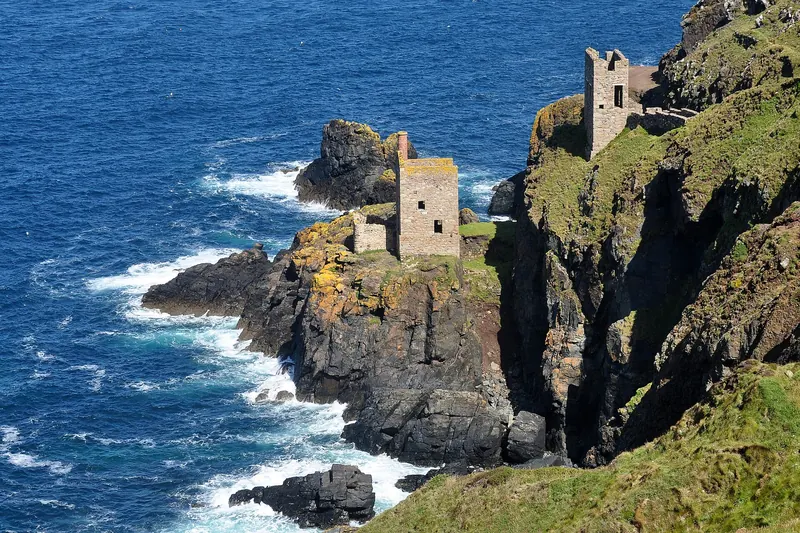
  5. The historic Botallack tin mine engine houses on the cliffside

    Visit a working tin mine

    Cornwall's mining heritage, a UNESCO World Heritage site, is preserved at sites like Geevor Tin Mine, with underground tours giving a genuine sense of the industry's history.

    Tip The coastal engine houses near Botallack, used in the Poldark television series, are striking even viewed from the coast path alone.

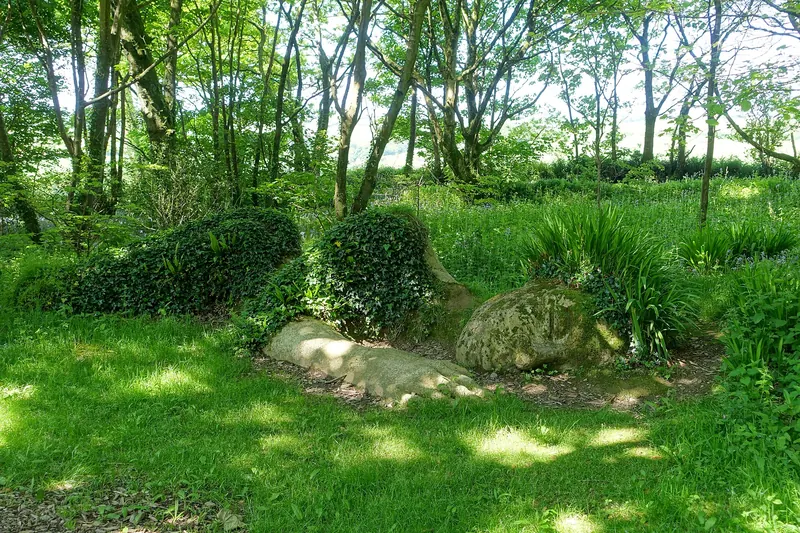
  6. The Mud Maid sculpture at the Lost Gardens of Heligan

    Visit the Lost Gardens of Heligan

    An atmospheric restored Victorian garden, rediscovered overgrown in the 1990s and now one of Britain's most visited gardens.

    Tip The jungle valley and the sleeping giant's head sculpture are the garden's most photographed features.

Local food

What to eat in Cornwall

Cornwall has a strong food identity, from its defining pasty to a food scene punching well above the county's size.

  • A traditional Cornish pasty

    Cornish pasty

    A protected-status pastry of beef, potato, swede and onion, crimped along one edge, originally designed as a portable miners' lunch.

    Where to try it Independent bakeries across Cornwall — genuine local favourites vary town by town.

  • Scones with clotted cream and jam, Cornish style

    Cornish cream tea

    Scones with clotted cream and jam, served the Cornish way — jam first, then cream, a genuine and long-running rivalry with Devon's cream-first tradition.

    Where to try it Tearooms throughout Cornwall, with the jam-first order a point of local pride.

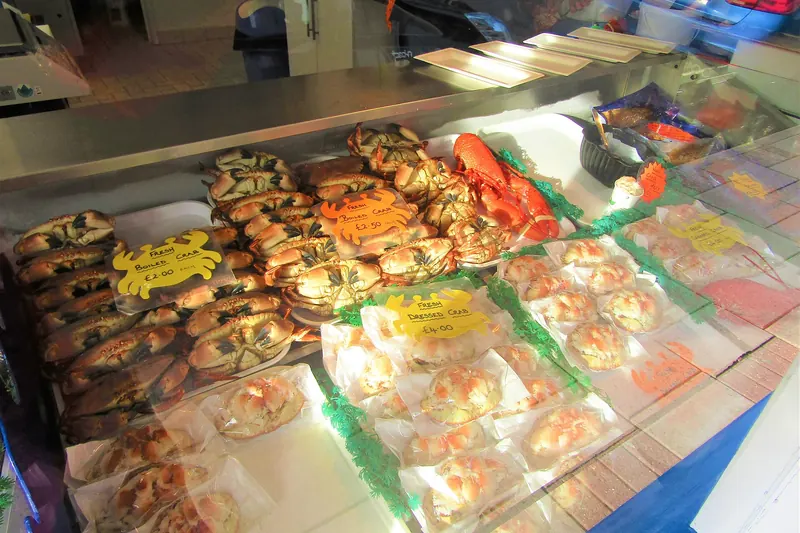
  • A plate of freshly dressed crab

    Fresh seafood

    Cornwall's fishing fleets land excellent seafood, crab and mackerel especially, served simply in harbourside restaurants across the county.

    Where to try it Harbourside restaurants in Padstow, St Ives and Newquay, among many others.

  • A scoop of Cornish clotted cream ice cream

    Cornish ice cream

    Made with local clotted cream, Cornish ice cream has a genuine reputation across Britain, sold from stalls and shops throughout the county.

    Where to try it Beachside kiosks and dedicated ice cream parlours across Cornwall.

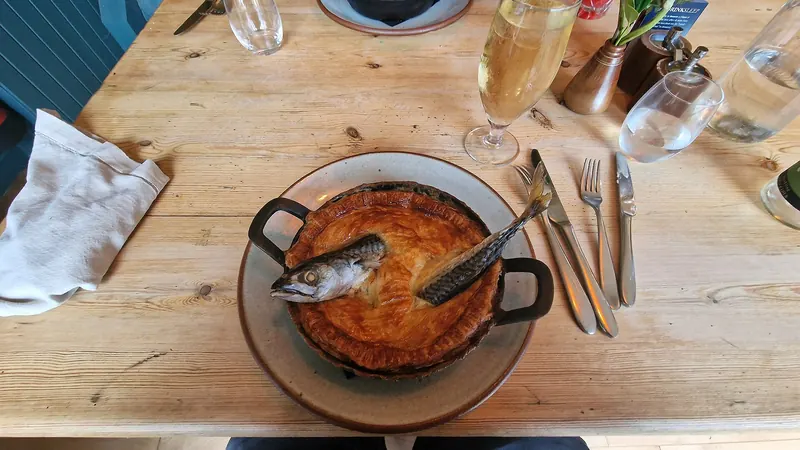
  • A traditional stargazy pie with fish heads poking through the crust

    Stargazy pie

    A traditional Cornish pie with fish heads poking through the crust, said to commemorate a fisherman who saved his village from famine, more a curiosity than a daily dish.

    Where to try it Served traditionally around Mousehole's Tom Bawcock's Eve festival in December.

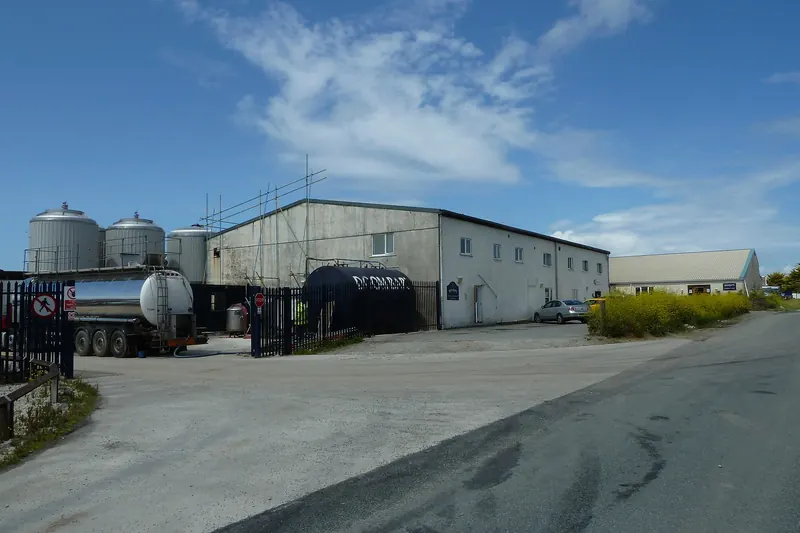
  • Sharp's Brewery in Rock, Cornwall

    Cornish ale and cider

    A strong local brewing tradition, with Cornish ales and ciders widely available in the county's pubs, several from breweries within a short distance.

    Where to try it Traditional pubs throughout Cornwall, particularly in harbour towns.

Accommodation

Where to stay in Cornwall

Cornwall's size means basing yourself in two areas, north and south coast, generally works better than one fixed base.

  • St Ives

    A picturesque base with excellent beaches and galleries, though parking and summer crowds are a real consideration.

    Best for: Art, beaches and the north coast

  • Padstow or Newquay

    Padstow suits a food-focused trip; Newquay is the practical base for surfing and a livelier nightlife scene.

    Best for: Food or surfing

  • Falmouth

    A genuine working harbour town well placed for the Eden Project, the Lost Gardens of Heligan and the calmer south coast.

    Best for: The south coast and Eden Project

What a night costs

Hostel dorm
£25–42 per night
Mid-range hotel or B&B
£90–170 per night
Eden Project entry
£25–33
Surf lesson
£35–50

Transport

Getting to and around Cornwall

Cornwall is far from London — around five hours by car — making rail or a regional flight worth considering.

Getting there

  • Rail from London

    Direct trains run from London Paddington to Penzance, around five hours, with stops throughout Cornwall including St Ives via a scenic branch line.

    The Night Riviera sleeper service offers an overnight option from London to Penzance.

  • Newquay Cornwall Airport (NQY)

    Cornwall's own airport, with domestic connections to London and other UK cities, cutting the journey considerably compared to driving.

    A practical option for visitors short on time, avoiding the long drive from other parts of England.

  • Car

    The most flexible way to explore Cornwall's scattered villages and coastline, though the drive from London takes around five hours.

    Summer traffic on the A30, Cornwall's main artery, can add significant time on peak weekends.

Getting around

A car is close to essential for covering Cornwall's spread-out coastline, though branch line trains serve a few key towns well.

  • Rental car

    The most practical way to reach Cornwall's scattered villages and beaches, particularly beyond the main towns.

    Lanes can be narrow in rural areas — allow more time than distances suggest.

  • Branch line trains

    The St Ives Bay Line and other scenic branch lines connect several key towns directly, avoiding Cornwall's summer traffic and limited parking.

    The St Ives line is considered one of Britain's most scenic short rail journeys.

  • The South West Coast Path

    For those with time, walking sections of the coast path is a practical way to move between coastal villages.

    Baggage transfer services exist for those walking multi-day sections without wanting to carry full packs.

When to go

Best time to visit Cornwall

Cornwall's weather is milder than much of Britain, but shoulder months balance good conditions against summer's considerable crowds.

  • Spring (April–June)

    Best time

    Mild weather, blooming coastal gardens, and crowds well below the summer peak on the main beaches and villages.

  • Summer (July–August)

    Shoulder

    The busiest months, with St Ives and Padstow crowded and roads congested, though the best weather and warmest sea for swimming.

  • Autumn (September–October)

    Best time

    Comfortable temperatures, thinning crowds, and often some of the year's best surf as autumn swells arrive.

  • Winter (November–March)

    Shoulder

    Quiet and atmospheric, with dramatic storm-watching on the coast, though many smaller attractions and restaurants reduce hours or close.

Worth planning around: School summer holiday weeks in late July and August, when Cornwall's roads, car parks and beaches are at their most congested.

Itinerary

Five days in Cornwall

The north coast's art and surf towns first, then south to food and gardens — a loop covering Cornwall's different sides.

  1. Day1

    St Ives

    Settle in and explore the art town's beaches and galleries.

    • Morning Arrive and explore St Ives' harbour and old town.
    • Afternoon Tate St Ives and Porthmeor Beach.
    • Evening Dinner in St Ives.
  2. Day2

    Land's End and the far west

    England's most south-westerly point and the mining coast.

    • Morning Drive to Land's End via the coast road.
    • Afternoon The Botallack engine houses and coast path.
    • Evening Return to St Ives or overnight near Penzance.
  3. Day3

    St Michael's Mount and the move south

    A tidal island castle, then relocate toward the south coast.

    • Morning St Michael's Mount, tide permitting.
    • Afternoon Drive toward the Eden Project area.
    • Evening Overnight near St Austell or Falmouth.
  4. Day4

    The Eden Project and Heligan

    Cornwall's two great gardens.

    • Morning The Eden Project's biomes and gardens.
    • Afternoon The Lost Gardens of Heligan.
    • Evening Dinner in Falmouth.
  5. Day5

    Padstow and Tintagel

    Food and Arthurian legend on the way north.

    • Morning Padstow's harbour and a pasty or seafood lunch.
    • Afternoon Tintagel Castle.
    • Evening Depart.

Travel tips

Cornwall travel tips

Practical notes on traffic, tides and timing that make a real difference to a Cornwall trip.

  • Avoid driving on Saturdays in July and August if possible — changeover day brings Cornwall's worst holiday traffic.
  • Check tide times before visiting St Michael's Mount — the causeway is only walkable around low tide.
  • Book Eden Project tickets online in advance for a small discount and to guarantee entry on busy days.
  • Use park-and-ride or branch line trains for St Ives rather than driving into the town itself.
  • Order your cream tea Cornish-style — jam first, then cream — if you want to fit in locally.
  • Book restaurant tables well ahead in Padstow during summer, especially for Rick Stein's establishments.
  • Pack layers regardless of season — coastal Cornwall's weather can change quickly even in summer.

FAQ

Cornwall: frequently asked questions

How many days do you need in Cornwall?

Four to six. Four covers the essential north-coast towns and one or two major attractions; six allows a proper loop taking in both coasts without feeling rushed.

Do I need a car?

Largely yes, given how spread out Cornwall's villages and beaches are, though branch line trains cover St Ives and a few other key towns well without one.

What is the best time of year to visit?

May to June and September offer the best balance of decent weather, long daylight and manageable crowds. Summer is busiest and roads get congested; winter is quiet but many smaller attractions reduce hours.

Is Cornwall good for surfing beginners?

Yes — Newquay and the wider north coast have well-established surf schools suited to complete beginners, alongside more challenging breaks for experienced surfers.

Is Cornwall part of England or somewhere different?

Constitutionally part of England, but Cornwall has a distinct Celtic history, its own language and a strong regional identity that many locals consider culturally separate — worth being aware of and respectful toward as a visitor.

Read next

Related travel articles

Practical

Packing by Season and Trip Type

Most packing advice is a list of things. This is the opposite: the small number of decisions that determine whether your luggage helps or hinders, organised by the kind of trip you are actually taking.

Transport

Getting Around Europe by Train

European rail is excellent and confusing — six national operators, three completely different pricing models, and a rail pass that is either a bargain or a waste depending on where you are going. Here is how to work out which.

Advertisement