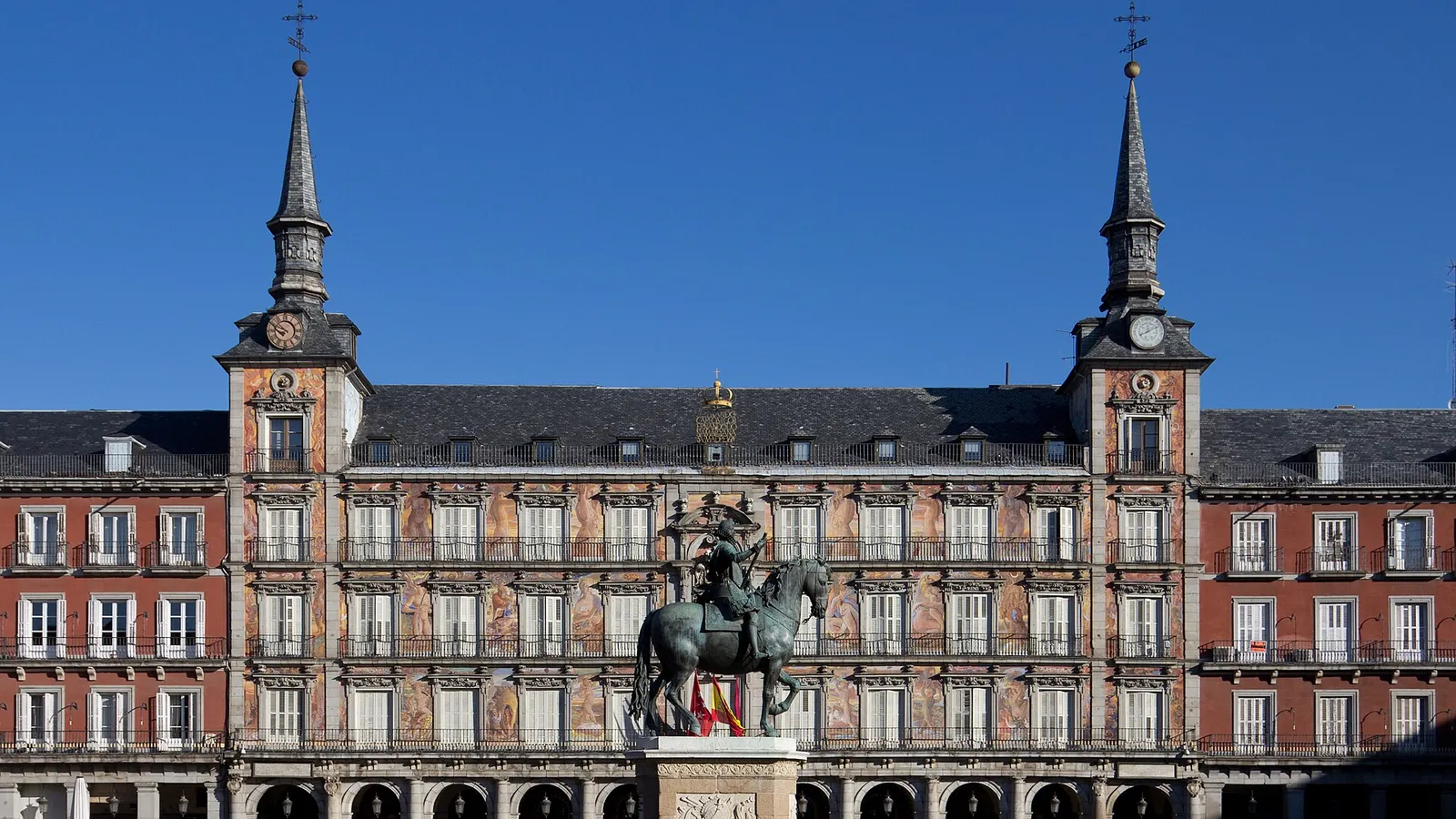
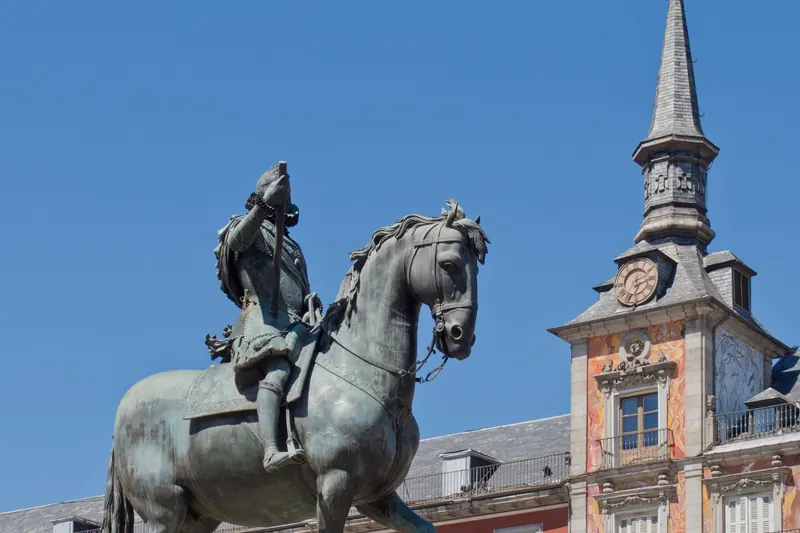



The arcaded Plaza Mayor in Madrid with its red-painted facade and clock tower

Community of Madrid · Spain

Madrid

Three of the world's great art collections on one boulevard, a city that eats at eleven, and the best day trips in Spain within forty minutes.

  • Best time April–June and September–October
  • Stay 3–4 days
  • Good for Art, food, nightlife, day trips

Photo: Carlos Delgado · CC BY-SA 3.0

Welcome to Madrid

Madrid became Spain's capital in 1561 by royal decision rather than by growing into the role, and it shows. It has no river worth the name, no cathedral of any consequence, and none of the layered antiquity of Seville or Toledo. What it has instead is what an empire's capital accumulates: the royal collection, which is now the Prado, and around it the densest concentration of first-rank painting anywhere in the world.

The Paseo del Prado runs about a kilometre and holds three separate museums that would each anchor a different city. The Prado has Velázquez, Goya, Bosch and Titian. The Reina Sofía has Guernica and 20th-century Spanish art. The Thyssen-Bornemisza fills the gaps between them with a private collection assembled over two generations. You can walk between all three in fifteen minutes.

The city around them is louder, later and less picturesque than Barcelona, and considerably more Spanish. Madrid eats dinner at 22:00, drinks until 03:00 and treats a Sunday morning at the Rastro flea market as a civic institution. It is also 650 metres up on a high plateau, which makes the summers ferocious and the winters cold — and puts Toledo, Segovia and Ávila all within forty minutes by train.

  • Capital City
  • Major City
  • Culture & Arts

Why visit

Why visit Madrid?

Madrid is not a city of monuments and it does not photograph as well as its rivals. Its case is made in three museums, a hundred bars and the surrounding province.

  • The art triangle has no equivalent

    Three world-class collections within ten minutes' walk. The Prado alone holds the largest collections of Velázquez, Goya and Bosch anywhere, including Las Meninas, the Black Paintings and The Garden of Earthly Delights. No other European city concentrates this much at this level.

  • The day trips are extraordinary

    Toledo is 33 minutes by AVE — a walled city on a granite outcrop above a river gorge where Christian, Jewish and Muslim quarters survive side by side. Segovia is 27 minutes, with a Roman aqueduct of 167 arches standing without mortar. Ávila and El Escorial are similarly close.

  • The eating culture is unusually democratic

    Madrid's food is not regional — it is everyone's, because everyone moved here. You can eat Galician octopus, Basque pintxos, Andalusian fried fish and Asturian cider in a ten-minute radius, at bar prices, standing up.

  • It stays up

    Dinner starts at 22:00 and bars run until 03:00 on weeknights. This is not a marketing claim; the metro runs until 01:30 and the streets of La Latina and Malasaña are fuller at midnight than at eight.

  • The parks are serious

    The Retiro, a former royal garden of 125 hectares with a boating lake and a glass palace, is UNESCO-listed alongside the Paseo del Prado. Casa de Campo is five times the size of Central Park.

Main attractions

Top things to see in Madrid

Two museums is a full day and three is too many. Book the Prado and the Reina Sofía, and treat everything else as walking.

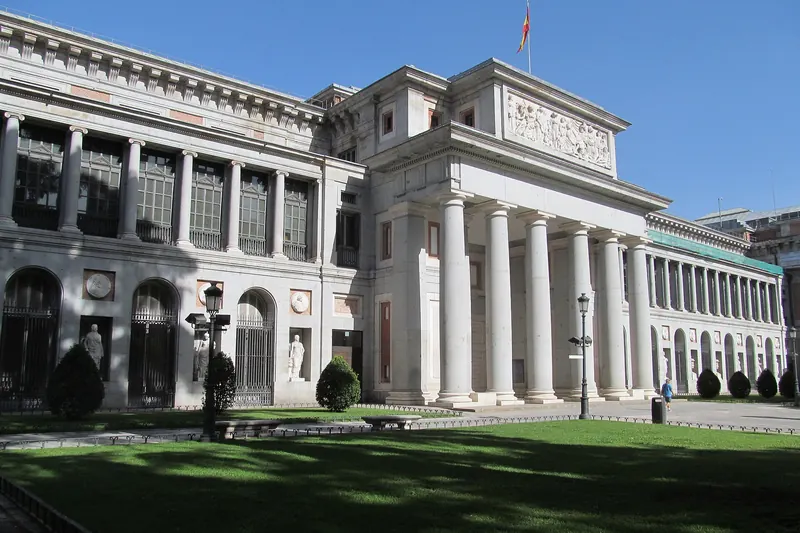
  1. The neoclassical Villanueva facade of the Museo del Prado

    Museo del Prado

    The former royal collection, and the finest single-country holding of paintings in existence. Velázquez's Las Meninas is displayed so you can approach it from the front as the painting intends. Goya's Black Paintings — made on the walls of his own house — occupy a room of their own, and Bosch's Garden of Earthly Delights is here rather than in the Netherlands.

    Tip Free entry for the last two hours daily, which is busy. Better to pay and go at opening; three hours in two wings beats five hours attempting everything.

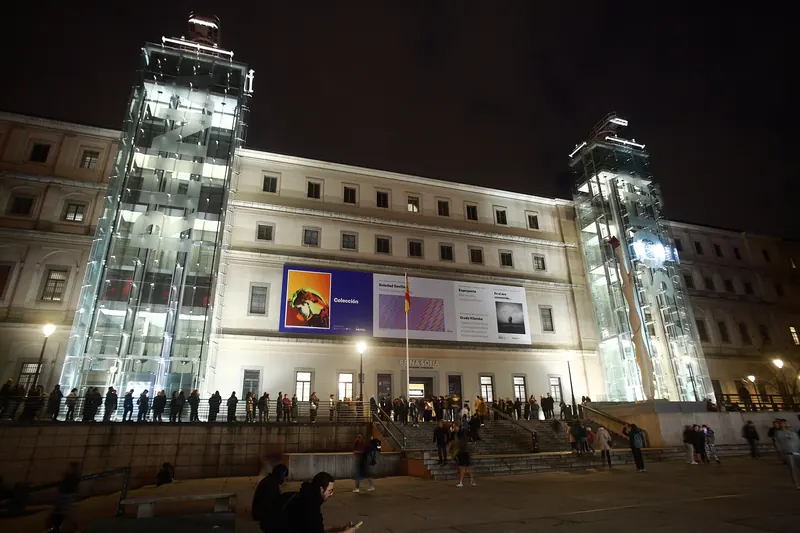
  2. The Reina Sofía museum in its converted hospital building

    Museo Reina Sofía

    Twentieth-century Spanish art in a converted hospital, built around Picasso's Guernica — displayed with the preparatory sketches and photographs that show how it was made. Strong Dalí and Miró holdings alongside it.

    Tip Guernica is the reason most people come and the room is crowded. Go at opening or in the free evening window and see the sketch room first.

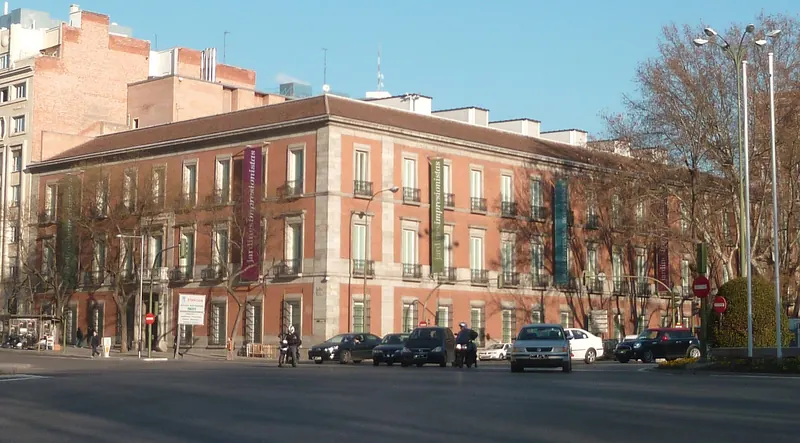
  3. The Palacio de Villahermosa, home of the Thyssen-Bornemisza collection

    Museo Thyssen-Bornemisza

    A private collection of about 1,600 works assembled over two generations and bought by Spain in 1993. It fills the gaps the other two leave — early Italian, Dutch, German Expressionism, Impressionism and American painting — and is much the calmest of the three.

    Tip The best of the three if you have limited appetite for museums. Chronological top floor down is the intended route.

  4. The Casa de la Panadería and the statue of Felipe III on the Plaza Mayor

    Plaza Mayor and the Habsburg quarter

    A fully enclosed arcaded square from 1619, once used for bullfights, royal proclamations and executions. The streets around it — Calle Mayor, Cava Baja, the Mercado de San Miguel — form the oldest part of the city.

    Tip The square itself is priced for visitors. Walk two streets south into Cava Baja for the bars Madrid actually uses.

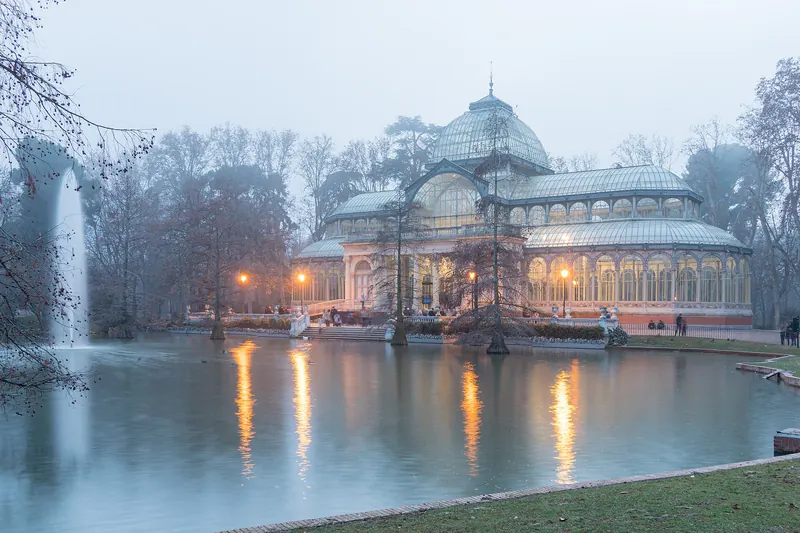
  5. The glass and iron Palacio de Cristal in the Retiro

    Retiro Park

    125 hectares of former royal garden, opened to the public in 1868 and now UNESCO-listed. The Crystal Palace, a glass and iron pavilion built for a Philippines exhibition in 1887, hosts contemporary art installations and is free.

    Tip Sunday morning is when Madrid uses it properly — drummers, tai chi, rowing boats and families. Go then, not on a quiet weekday.

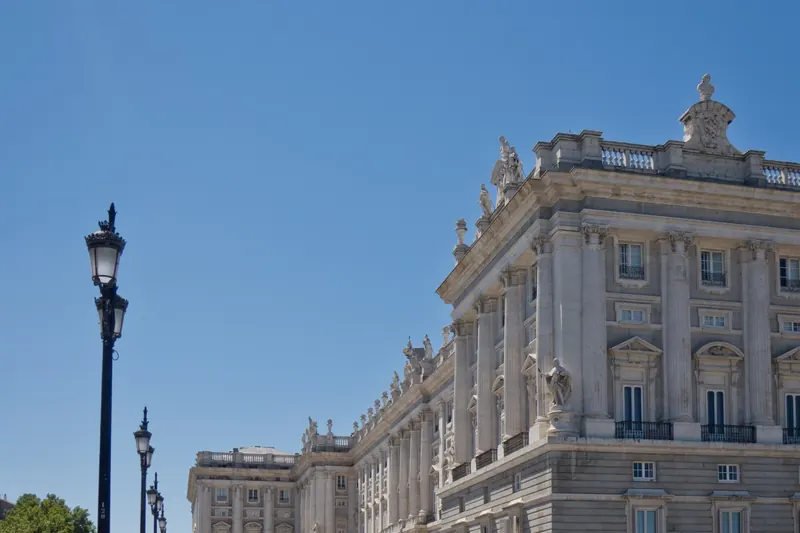
  6. The facade of the Royal Palace of Madrid

    Royal Palace and Almudena

    Europe's largest royal palace by floor area, with 3,418 rooms, of which you see about fifty. Built after the old Habsburg fortress burned down in 1734. The neighbouring cathedral was only finished in 1993 and is worth ten minutes at most.

    Tip The Sabatini and Campo del Moro gardens beside it are free, quiet and better than the queue for the state rooms.

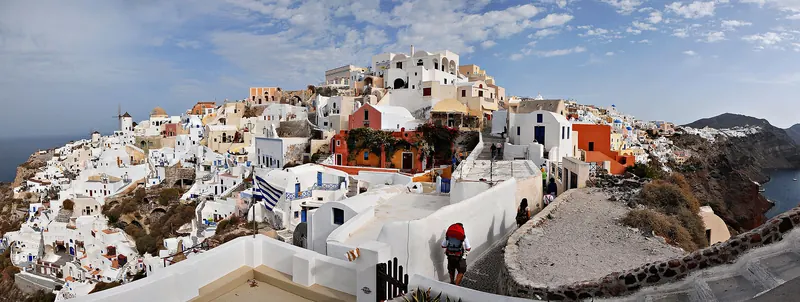
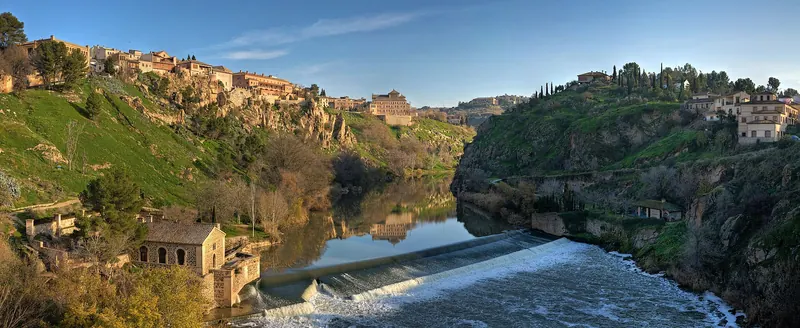
  7. Toledo on its granite spur inside a bend of the Tagus

    Toledo

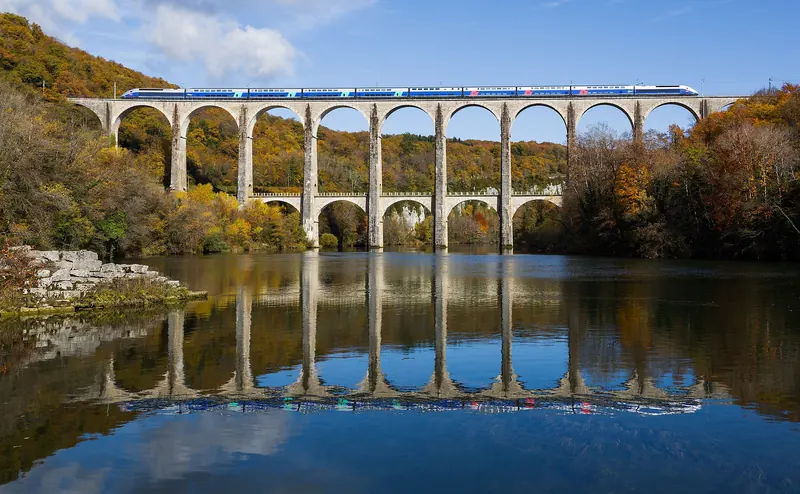
    Thirty-three minutes by AVE. A walled city on a granite spur inside a bend of the Tagus, capital of Spain until 1561, where the cathedral, the synagogues and the mosque survive within a few hundred metres of one another. El Greco lived and painted here.

    Tip Stay overnight if you can — the day-trippers leave at 18:00 and the town becomes extraordinary. Otherwise take the first train out.

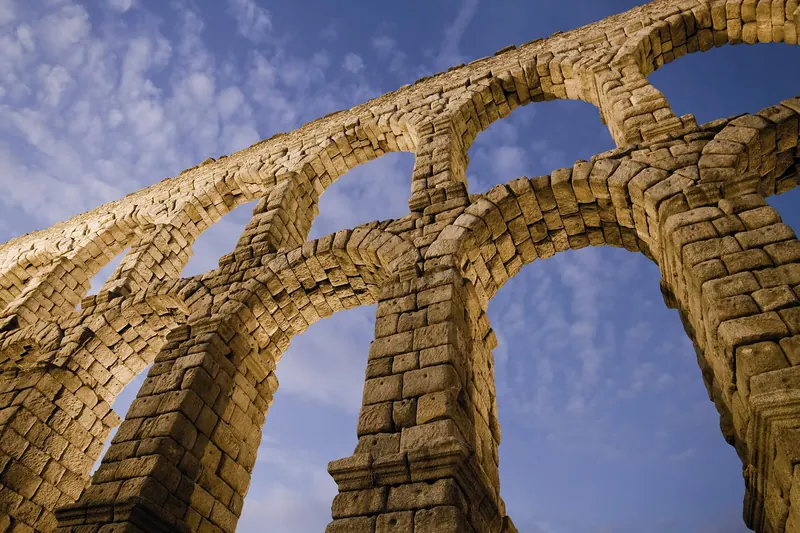
  8. The Roman aqueduct at Segovia

    Segovia

    Twenty-seven minutes by AVE, for a Roman aqueduct of 167 arches, 28 metres high, built without mortar around the first century and in use until 1973. The cathedral and the Alcázar castle complete the visit.

    Tip Segovia is also where you eat cochinillo — suckling pig roasted whole and traditionally carved with a plate edge.

Things to do

Best things to do in Madrid

Madrid rewards evenings more than mornings. Build the days around one museum and let the nights run long.

  1. Do a tapas crawl in La Latina

    Cava Baja and the streets around it hold one of the densest concentrations of bars in Europe. One dish and one drink per bar, standing, then move. Sunday afternoon after the Rastro is the classic time.

    Tip Unlike Granada, tapas here are ordered and paid for. Ask what the house speciality is — most bars have exactly one thing they do well.

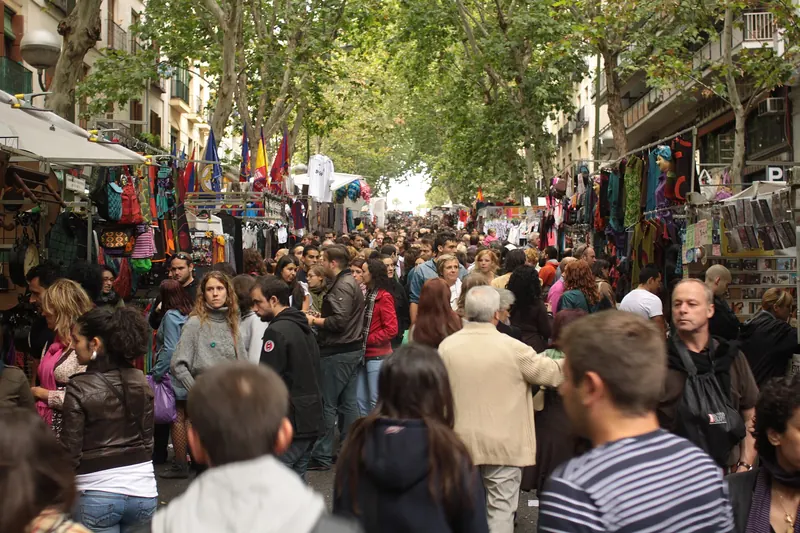
  2. Stalls filling the Ribera de Curtidores at the Rastro flea market

    Go to the Rastro on Sunday

    A flea market that has run since the 1740s, filling the streets below La Latina every Sunday morning with several thousand stalls. Half junk, half interesting, and entirely a Madrid institution.

    Tip It winds down around 15:00 and the crowd moves straight into the surrounding bars. That transition is the point.

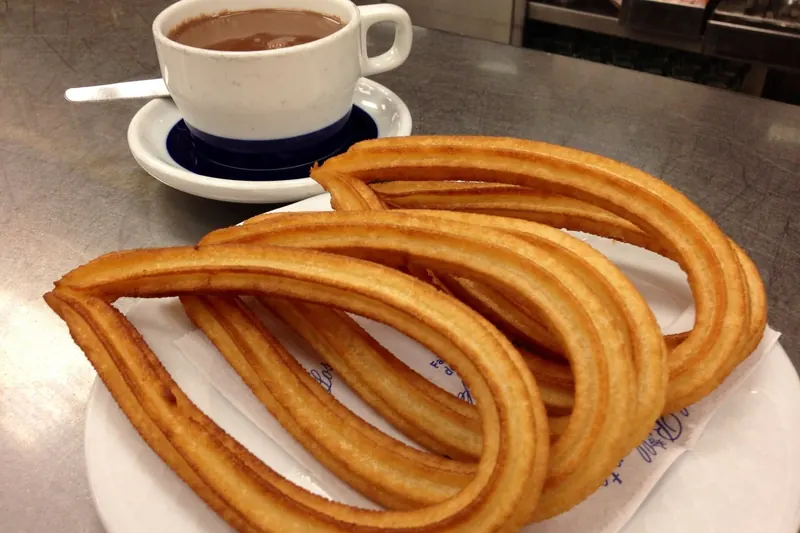
  3. Churros served with a cup of thick drinking chocolate

    Eat churros at an unreasonable hour

    Madrid's churrerías have historically stayed open around the clock, and eating churros dipped in thick chocolate at 06:00 on the way home is a recognised part of a night out rather than an eccentricity.

    Tip Also perfectly respectable at 09:00 for breakfast. The chocolate should be thick enough to hold a churro upright.

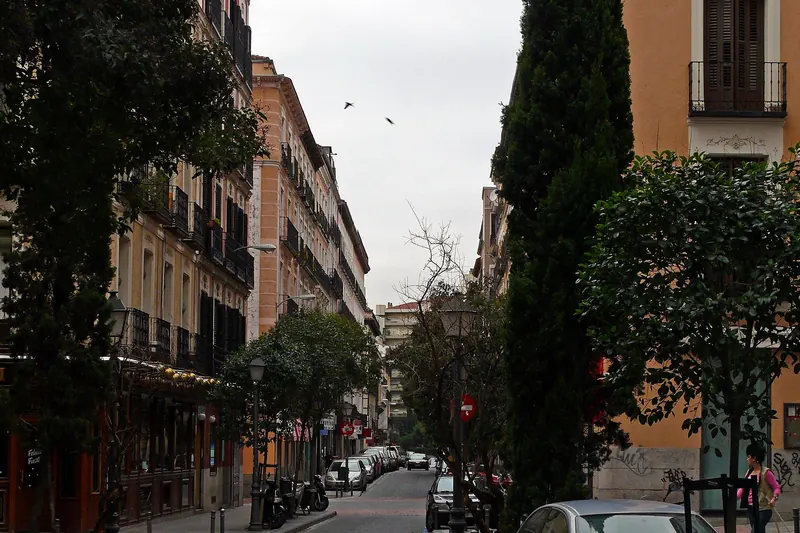
  4. A street in the Malasaña district of Madrid

    Spend an evening in Malasaña or Lavapiés

    Malasaña was the centre of the post-Franco Movida and is still where the city's music and bar culture concentrates. Lavapiés is the most mixed neighbourhood in Madrid, with the best cheap eating in the city.

    Tip Both are within twenty minutes' walk of the centre and neither is on a standard itinerary.

  5. Flamenco performers clapping during a tablao in Madrid

    See a flamenco tablao — knowing it is not local

    Flamenco is Andalusian, but Madrid draws the best performers in Spain and its tablaos are consequently very good. Several have been running since the 1960s and are respected within the form.

    Tip Choose a one-hour performance without dinner. The late show is usually the better one.

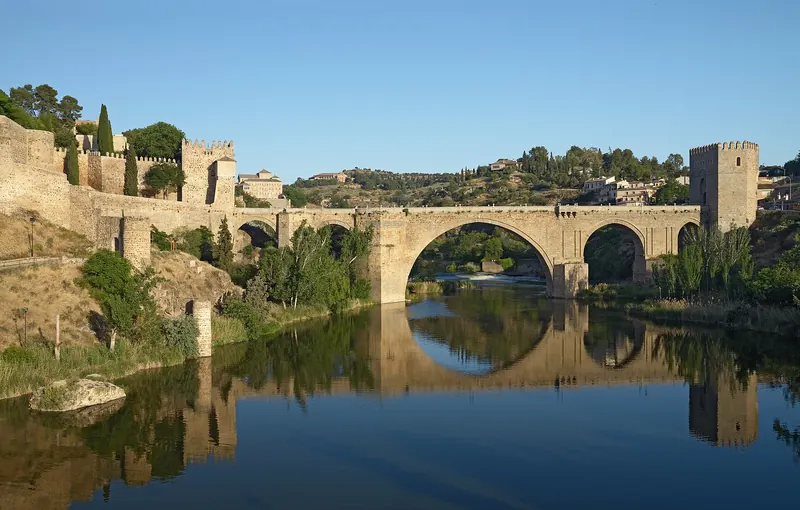
  6. The medieval Puente de San Martín over the Tagus at Toledo

    Take the train to Toledo or Segovia

    Thirty-something minutes each, and both are complete historic cities rather than single sights. Toledo for the layered religious history, Segovia for the aqueduct and the roast suckling pig.

    Tip Do one properly rather than both in a day. Toledo in particular deserves from mid-afternoon into the evening.

Local food

What to eat in Madrid

Madrid has almost no cuisine of its own and eats everyone else's, which is what happens when a city quadruples in size through internal migration. The few Madrid dishes are winter food.

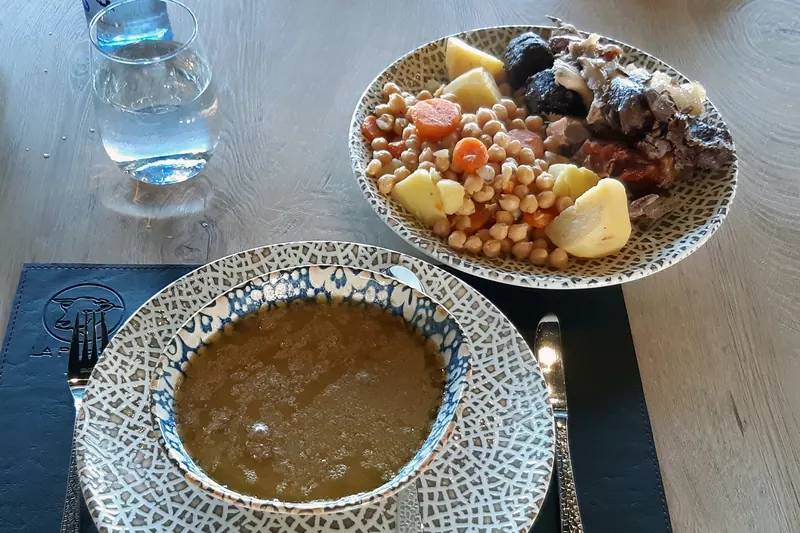
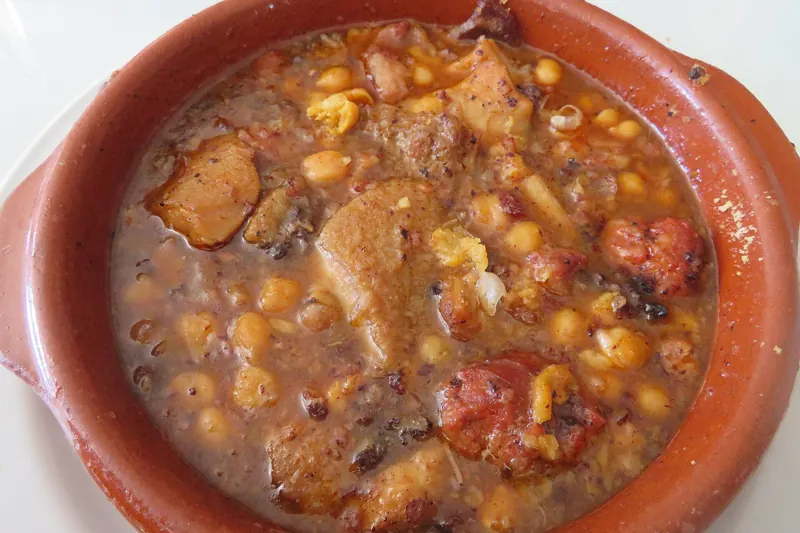
  • Cocido madrileño — chickpeas, meat and vegetables from one pot

    Cocido madrileño

    A chickpea, meat and vegetable stew served in three courses from one pot: first the broth as a soup, then the chickpeas and vegetables, then the meats. A winter dish, usually available only at lunch and often only on set days.

    Where to try it Traditional restaurants in the centre, mostly October to April. Several serve it on Wednesdays only.

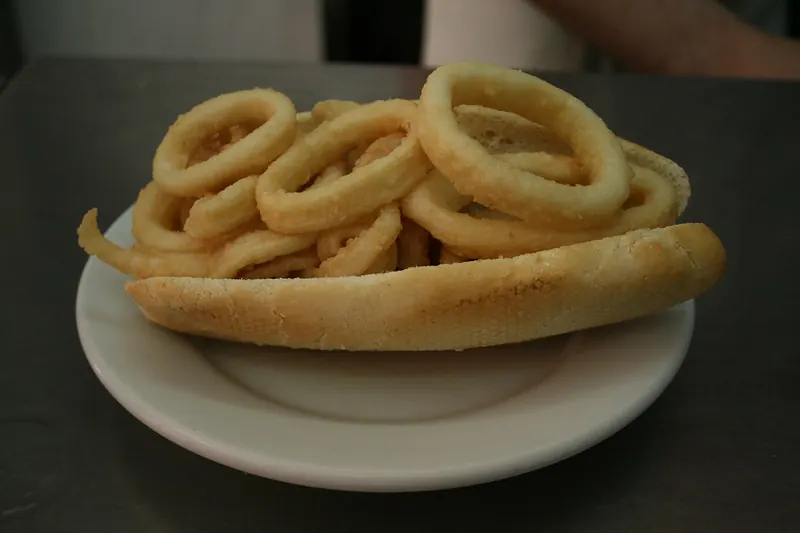
  • A bread roll filled with rings of fried squid

    Bocadillo de calamares

    A bread roll filled with rings of fried squid, and nothing else — no sauce, no salad. Improbably, in a landlocked city 350 km from the sea, this is Madrid's signature snack.

    Where to try it The bars around Plaza Mayor, which specialise in almost nothing else.

  • Callos a la madrileña — tripe stewed with chorizo and paprika

    Callos a la madrileña

    Tripe stewed with chorizo, morcilla and paprika until thick. Divisive, deeply traditional, and one of the few dishes that is from here.

    Where to try it Old-school taverns in La Latina and Lavapiés, usually as a media ración.

  • Churros beside a cup of thick chocolate

    Churros con chocolate

    Fried dough in a cup of chocolate thick enough to be eaten with a spoon. Eaten at breakfast, at merienda, and at dawn on the way home from a night out.

    Where to try it Historic churrerías near Puerta del Sol, some of which have operated continuously for over a century.

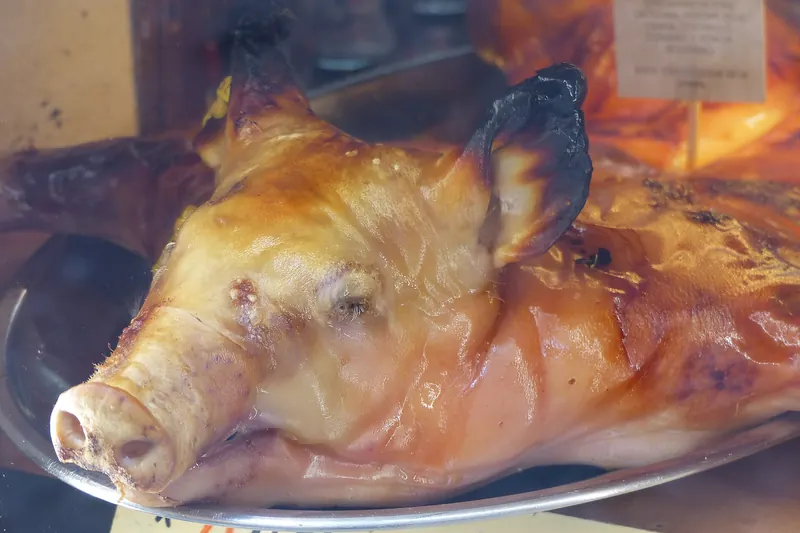
  • Roast suckling pig, the Castilian speciality

    Cochinillo and cordero asado

    Suckling pig and milk-fed lamb roasted in wood-fired ovens — Castilian rather than strictly Madrid, and the reason people drive to Segovia and the villages around the city for lunch.

    Where to try it Segovia, Sepúlveda and the old asador restaurants of central Madrid.

  • House vermouth on ice with an olive and orange

    Vermut de grifo

    House vermouth on tap, sweet and herbal, served on ice with an olive before Sunday lunch. The vermouth hour is a Madrid ritual that has come firmly back into fashion.

    Where to try it Old taverns in La Latina, especially around Cava Baja from noon on Sundays.

Accommodation

Where to stay in Madrid

Madrid's centre is compact and the metro is excellent, so the choice is mostly about how much noise you want. The historic core is loud until very late — that is either the appeal or the problem.

  • Sol, Plaza Mayor and La Latina

    The historic centre, walkable to the museums and surrounded by the city's best tapas streets. Also extremely noisy at weekends — ask for an interior courtyard room.

    Best for: First-time visitors, walking, nightlife

  • Barrio de las Letras

    Between Sol and the Prado, the old writers' quarter with Cervantes's burial place and quotations set into the pavements. Central, characterful and quieter than La Latina.

    Best for: The best all-round base

  • Salamanca

    A grid of 19th-century apartment blocks east of the Retiro, Madrid's most expensive district. Calm, safe and well connected, with the city's best food shops. Less atmospheric, more comfortable.

    Best for: Quiet, elegant, good restaurants

  • Malasaña and Chueca

    North of the centre, the heart of Madrid's music, bar and LGBTQ+ scenes. Younger, cheaper than Salamanca, and lively rather than restful.

    Best for: Nightlife and independent shops

  • Lavapiés

    The most ethnically mixed district in the city, immediately south of the centre, with the cheapest eating and rooms. Steep streets and a scruffier feel, entirely safe.

    Best for: Value and local life

What a night costs

Hostel dorm
€22–40 per night
Comfortable hotel
€100–170 per night
Museum entry
€12–15 each; the Paseo del Arte combined ticket covers all three
Tapas dinner
€18–30 per person across three or four bars

Transport

Getting to and around Madrid

Madrid is the hub of the entire Spanish transport network. Every AVE line radiates from here and Barajas is the country's largest airport.

Getting there

  • Madrid–Barajas Airport

    Twelve kilometres northeast with four terminals. Metro line 8 reaches Nuevos Ministerios in about 15 minutes with a supplement, and the Cercanías train serves T4. Taxis run a fixed fare to the centre.

    Terminals 1–3 and T4 are far apart with a free shuttle between them. Allow extra time if connecting.

  • AVE high-speed rail

    Seville 2h30, Barcelona 2h30, Valencia 1h50, Córdoba 1h45, Málaga 2h30, Granada 3h15. Three competing operators run the busiest routes.

    Atocha serves the south and east, Chamartín the north. Check which before travelling.

  • Cercanías for day trips

    Suburban trains reach El Escorial and Aranjuez in under an hour on cheap fixed fares, with no booking required.

    Toledo and Segovia use AVE from Atocha and Chamartín respectively — faster but requiring a reservation.

  • Long-distance buses

    Cheaper than the train and reaching towns the railway misses. Méndez Álvaro is the main terminal, connected by metro.

    Usually the better option for Granada, which has a slower rail connection than its distance suggests.

Getting around

One of the best metro systems in Europe, and a centre small enough that you will walk most of it anyway.

  • Metro

    Twelve lines, over 300 stations, running 06:00 to 01:30. Cheap, clean and frequent, with trains every two to four minutes on the central lines.

    Requires a rechargeable Multi card bought once at any machine. The airport journey carries a supplement.

  • Walking

    Sol to the Prado is fifteen minutes, to La Latina ten, to Malasaña twelve. The whole central area is about 3 km across and largely flat, except the drop west towards the palace.

    Madrid is 650 m above sea level, which makes the summer sun sharper than the temperature alone suggests.

  • Cercanías

    Suburban rail crossing the city underground and reaching the airport, Aranjuez and El Escorial. Faster than the metro between Atocha, Sol and Chamartín.

    Often free with a long-distance AVE ticket on the day of travel — ask when booking.

  • Buses and BiciMAD

    An extensive bus network including night buses, and an electric bike-share scheme suited to the city's gentle hills.

    Night buses, called búhos, radiate from Cibeles when the metro is shut.

  • Taxi

    Plentiful and inexpensive by Western European standards, with a fixed fare to and from the airport.

    Useful at 03:00 when the metro has closed and the night buses are slow.

When to go

Best time to visit Madrid

Madrid sits on a high plateau with a continental climate, and the old saying — nine months of winter, three months of hell — is only a slight exaggeration. The shoulder seasons are excellent and the extremes are extreme.

  • Spring (April–June)

    Best time

    Warm, dry and bright at 18–28°C, with terraces open and the Retiro at its best. May and early June are the peak of it, before the heat sets in properly.

  • Summer (July–August)

    Think twice

    Regularly 35–40°C with fierce dry heat. Madrileños leave in August, which empties the city and closes a noticeable share of restaurants. Hotel rates fall accordingly, and evenings on a terrace are lovely — but daytime sightseeing is punishing.

  • Autumn (September–October)

    Best time

    The heat breaks in mid-September and October is close to perfect: 15–25°C, clear skies, the city back at work and the museums manageable.

  • Winter (November–March)

    Good

    Cold and dry at 3–12°C, with occasional snow. Bright most days, cheap, and the season for cocido and roast lamb. The museums are at their quietest all year.

Worth planning around: August, when a significant number of the city's own restaurants and bars close for the month while their owners are at the coast. Check specific places are open rather than assuming.

Itinerary

Four days in Madrid

One museum a day, one neighbourhood each evening, and one day trip. Deliberately paced so the late nights are survivable.

  1. Day1

    The Prado and the old centre

    The big museum first, then the Habsburg city around Plaza Mayor.

    • Morning The Prado at opening for three hours — Velázquez, Goya's Black Paintings and Bosch. Two wings, not all of it.
    • Afternoon Walk up through the Barrio de las Letras to Plaza Mayor, the Mercado de San Miguel and the Royal Palace gardens.
    • Evening Tapas along Cava Baja in La Latina, standing, moving every twenty minutes.
  2. Day2

    Toledo

    A complete medieval city, thirty-three minutes away.

    • Morning First AVE from Atocha. The cathedral, the Santa María la Blanca synagogue and the El Greco works at Santo Tomé.
    • Afternoon The Alcázar, the Tagus gorge walk, and the lanes of the old Jewish quarter once the coaches have gone.
    • Evening Stay for sunset from the Mirador del Valle if you can, then the late train back.
  3. Day3

    Modern art and the Retiro

    Guernica in the morning, green space in the afternoon.

    • Morning The Reina Sofía at opening for Guernica and the preparatory sketches, then Dalí and Miró.
    • Afternoon The Retiro — the Crystal Palace, the boating lake and an hour doing nothing.
    • Evening Malasaña or Chueca for dinner at 22:00, then bars.
  4. Day4

    Thyssen, the Rastro, or Segovia

    Depends on the day of the week and your appetite.

    • Morning If Sunday, the Rastro flea market below La Latina. Otherwise the Thyssen-Bornemisza, the calmest of the three museums.
    • Afternoon Alternatively, Segovia by AVE for the Roman aqueduct and roast suckling pig.
    • Evening Vermouth and a last tapas circuit, or churros at an unreasonable hour.

Travel tips

Madrid travel tips

Madrid-specific practicalities, mostly about timing and heat.

  • The Prado, Reina Sofía and Thyssen all offer free entry in the last two hours of the day, and all three are crowded then. Paying for a morning slot buys you a better visit for about €15.
  • Do not attempt more than one major museum per day. Three hours in the Prado is productive; six is not, and the fatigue carries into the next museum.
  • Madrid eats late even by Spanish standards — dinner from 21:30, and kitchens in the centre serve until midnight. A restaurant full at 20:00 is a restaurant full of visitors.
  • Toledo and Segovia are both under 35 minutes by AVE but the trains are reservation-only and sell out on weekends. Book a few days ahead.
  • The city is 650 m above sea level, which makes summer sun harsher and winter nights colder than the raw temperatures suggest. Hat in July, coat in January.
  • In August a noticeable share of Madrid's own restaurants and bars close for several weeks. Check specific places are open before building an evening around one.
  • The metro requires a rechargeable Multi card bought once from any station machine — there are no single paper tickets. The airport journey carries a supplement on top of the normal fare.
  • Atocha serves the south and east, Chamartín the north and Segovia. Confirm the departure station rather than just the city, as they are 20 minutes apart.

FAQ

Madrid: frequently asked questions

How many days do you need in Madrid?

Three to four. One for the Prado and the old centre, one for the Reina Sofía and the Retiro, and one or two for day trips to Toledo and Segovia. Madrid has fewer must-see monuments than Barcelona or Seville, but the museums and the surrounding province easily justify four days.

Is Madrid or Barcelona better?

They are different propositions. Barcelona has Gaudí, a medieval quarter and a beach, and is the easier first visit. Madrid has three of the world's great art collections within a kilometre, better and cheaper food, far better day trips, and a much stronger sense of being a working Spanish city rather than a destination. Art and eating favour Madrid; architecture and coastline favour Barcelona.

Is the Prado free?

It offers free entry for the last two hours of each day, and so do the Reina Sofía and Thyssen. Those windows are crowded, particularly for Las Meninas and Guernica. A paid morning ticket costs about €15 and buys a substantially better visit — worth it unless you are on a tight budget.

What is the best day trip from Madrid?

Toledo, 33 minutes by AVE — a walled city on a granite spur above the Tagus where the cathedral, the synagogues and the mosque survive within a few hundred metres of one another, and where El Greco worked. Segovia, 27 minutes, is the strong alternative for its Roman aqueduct and roast suckling pig. Do one properly rather than both in a day.

When is the best time to visit Madrid?

April to June and September to October. Madrid sits at 650 m on a high plateau with a continental climate: July and August regularly reach 35–40°C, and winter nights drop near freezing. October is arguably the single best month — clear, 15–25°C, and the city fully back at work after the summer.

Is Madrid safe at night?

Yes, and it is unusually busy late — the centre is fuller at midnight than at eight, which is itself a safety factor. Petty theft exists around Sol, Gran Vía and on the metro, and is far less organised than in Barcelona. Normal precautions with bags and back pockets are enough.

Do I need to book Madrid museums in advance?

Not weeks ahead, but a day or two helps at the Prado and Reina Sofía in high season, and a timed ticket lets you skip the entry queue. The Royal Palace is the one that most often has a long walk-up line. Nothing in Madrid sells out the way the Alhambra or Sagrada Família does.

Read next

Related travel articles

Planning

Planning Your First Trip to Europe

Most first European trips go wrong in the same three ways: too many cities, too little time in each, and a route shaped by a cheap flight rather than by geography. Here is how to avoid all three.

Transport

Getting Around Europe by Train

European rail is excellent and confusing — six national operators, three completely different pricing models, and a rail pass that is either a bargain or a waste depending on where you are going. Here is how to work out which.

Seasons

The Best Time to Visit Southern Europe

Southern Europe has one obvious peak season and one much better one. This is the month-by-month case for going in spring or early autumn — plus the handful of things that only happen in July and August.

Advertisement