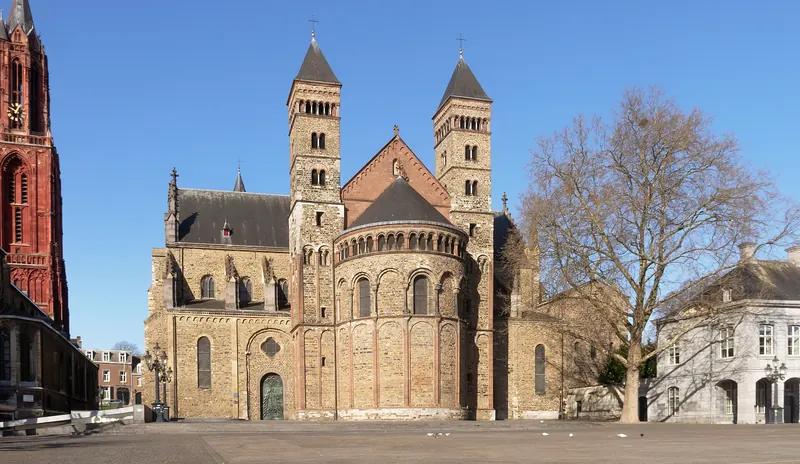
The Vrijthof square in Maastricht, with the towers of St. Servatius Basilica and St. John's Church

Limburg · Netherlands

Maastricht

A Burgundian southern city on the Belgian border, its Roman roots, limestone tunnels and relaxed café culture feeling quite unlike the rest of the Netherlands.

  • Best time April–September for terrace weather, or February for Carnival
  • Stay 2 days
  • Good for History, food, a different side of the Netherlands

Photo: Ben Bender · CC BY-SA 3.0

Welcome to Maastricht

Maastricht sits at the far southern tip of the Netherlands, wedged between Belgium and Germany, and it feels different from the rest of the country as a result — older Roman roots, a relaxed café culture built around wide town squares, and a warmth in local hospitality that residents themselves often describe as 'Burgundian' rather than typically Dutch.

The city's Roman history runs deep: Maastricht was a significant settlement on the road between Cologne and Boulogne, and the soft limestone hill of Sint-Pietersberg just outside the centre has been quarried for building stone since Roman times, leaving behind a vast network of tunnels that later sheltered Rembrandt's Night Watch during the Second World War.

Modern Maastricht is proud of its border-town status — Belgium is a short walk from the centre in places, and the city's food, architecture and unhurried pace all carry a real cross-border character that makes it feel like a distinct region rather than simply the southern edge of the Netherlands.

  • Historic Site
  • Culture Arts
  • Off the Beaten Path

Why visit

Why visit Maastricht?

Maastricht's case is a different, more Burgundian side of the Netherlands, built on real Roman history and a relaxed border-town culture.

  • It's unlike the rest of the Netherlands

    A relaxed, café-culture pace and real cross-border character set Maastricht apart from the flatter, more businesslike cities further north.

  • The Sint-Pietersberg caves are vast

    Centuries of limestone quarrying left behind tunnels extensive enough to have sheltered Rembrandt's Night Watch during the Second World War.

  • The Vrijthof is one of the Netherlands' finest squares

    A wide, café-lined space framed by two historic churches, functioning as the genuine social heart of the city.

  • Boekhandel Dominicanen is one of the world's most beautiful bookstores

    A 13th-century Gothic church converted into a working bookshop, regularly ranked among the most striking anywhere.

  • It's easy to combine with Belgium

    The border is a short walk or tram ride from the centre, making a Liège or Aachen add-on straightforward.

Main attractions

Top things to see in Maastricht

Maastricht's essential sights span its Roman-era hill, grand squares and a converted medieval church.

  1. The Vrijthof square in Maastricht, with the towers of St. Servatius Basilica and St. John's Church

    The Vrijthof

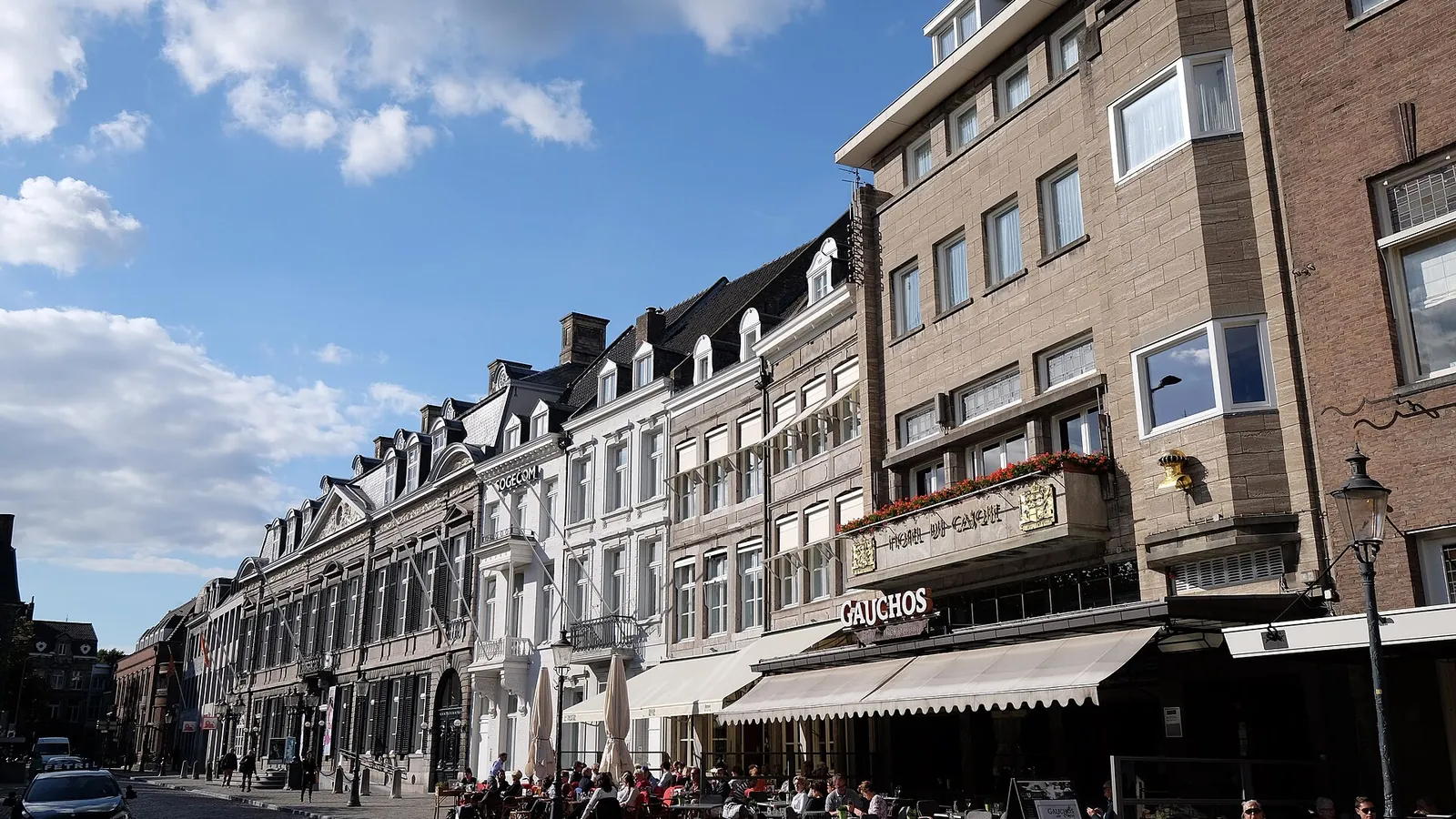
    Maastricht's grandest square, the social heart of the city, framed by the Basilica of Saint Servatius and the red-towered St. John's Church, with café terraces filling much of the open space.

    Tip The square hosts major events through the year, including Maastricht's famous Carnival celebrations — check the calendar before visiting for what's on.

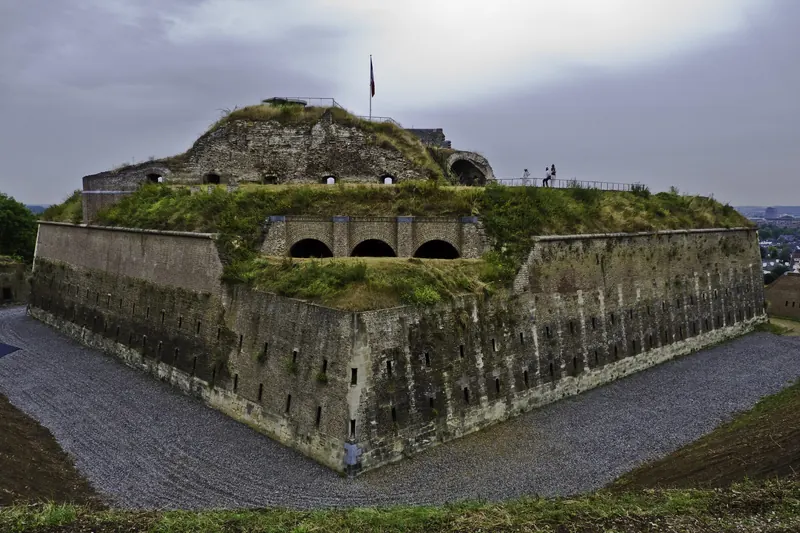
  2. Fort Sint Pieter atop the Sint-Pietersberg hill in Maastricht

    Sint-Pietersberg and Fort Sint Pieter

    A limestone hill quarried since Roman times, its vast network of underground tunnels sheltered Rembrandt's Night Watch during the Second World War, with the 18th-century Fort Sint Pieter standing above.

    Tip Tunnel visits are by guided tour only — book ahead, since the network is too extensive and disorienting to explore alone.

  3. The Basilica of Saint Servatius on the Vrijthof in Maastricht

    Basilica of Saint Servatius

    The Netherlands' oldest place of Christian worship in continuous use, its treasury holding significant medieval relics and gilded reliquaries associated with the city's patron saint.

    Tip The treasury is a separate ticket from the church itself — worth the small extra fee for the reliquaries alone.

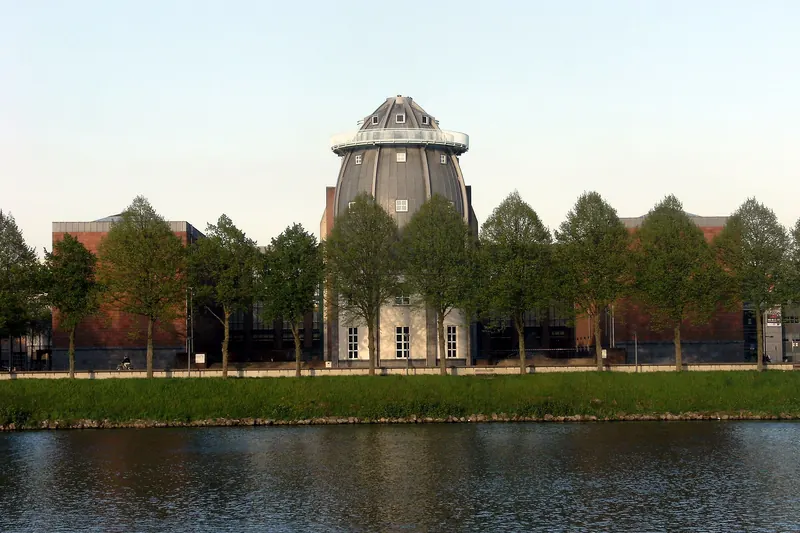
  4. The distinctive rocket-topped Bonnefanten Museum on the Maas riverbank in Maastricht

    Bonnefanten Museum

    A striking modern building on the Maas riverbank, its collection spanning medieval and Old Master art alongside contemporary work, topped by a distinctive rocket-shaped dome.

    Tip The building itself, designed by Aldo Rossi, is worth seeing even for visitors less interested in the collection inside.

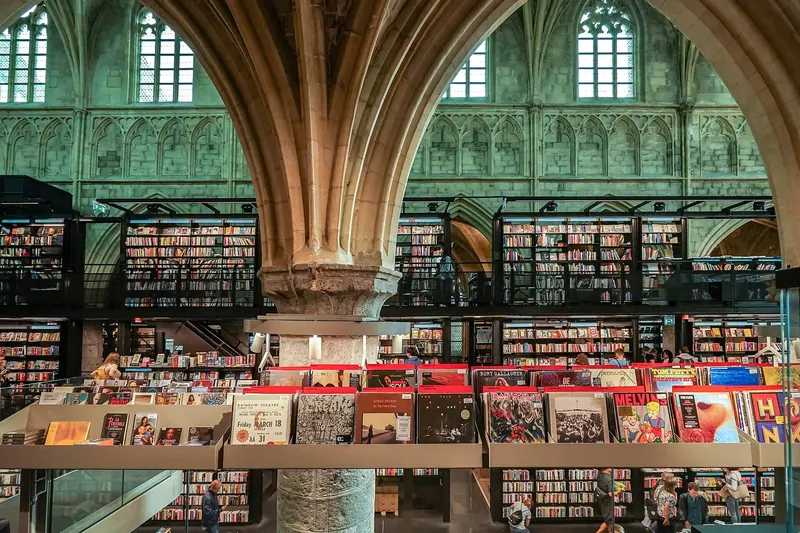
  5. The interior of Boekhandel Dominicanen, a 13th-century church converted into a bookstore

    Boekhandel Dominicanen

    A 13th-century Gothic Dominican church, deconsecrated and converted into a working bookstore, its soaring vaulted interior now lined with bookshelves and a café built onto a raised platform.

    Tip Regularly ranked among the world's most beautiful bookshops — worth a visit even without buying anything.

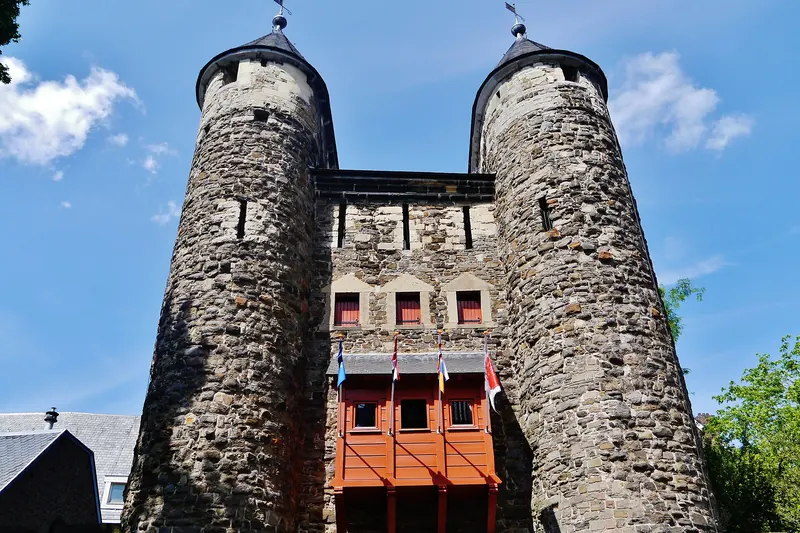
  6. The Helpoort, the oldest surviving city gate in the Netherlands

    The Helpoort

    The oldest surviving city gate in the Netherlands, dating to around 1229, its twin brick towers marking the edge of Maastricht's medieval fortifications.

    Tip A short walk from the centre, worth combining with a stroll along the surviving stretches of city wall nearby.

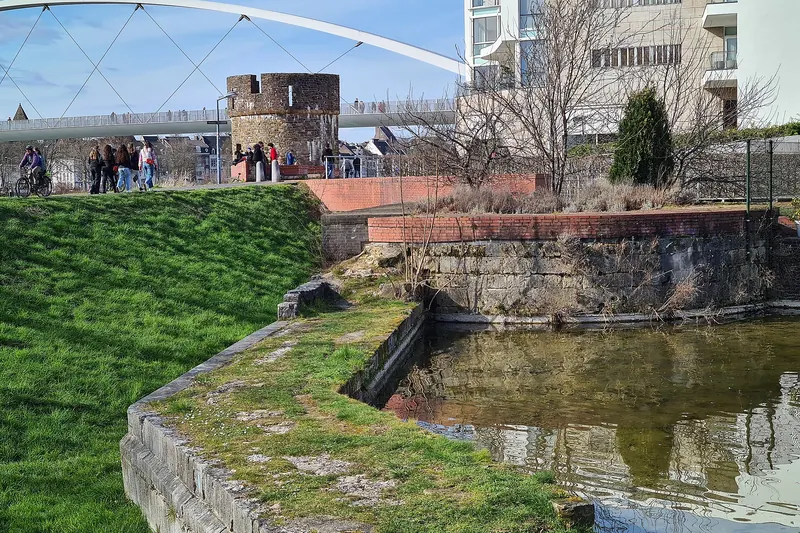
  7. Surviving medieval fortification towers in Maastricht's Wyck district

    The Wyck fortifications

    Surviving towers and wall sections from Maastricht's medieval defences, scattered through the Wyck district on the eastern bank of the Maas.

    Tip Combine with a wander through Wyck's own boutiques and restaurants, a fashionable district in its own right.

Things to do

Best things to do in Maastricht

Maastricht rewards slow exploration, its café culture and cross-border position both worth building time around.

  1. The hill and fort above the Sint-Pietersberg tunnel network in Maastricht

    Tour the Sint-Pietersberg tunnels

    Guided tours lead through a small fraction of the tunnel network's many kilometres, with stories of wartime art storage and centuries of quarrying along the way.

    Tip Wear a jacket — the tunnels stay cool year-round regardless of the weather outside.

  2. Bookshelves inside the converted Gothic church of Boekhandel Dominicanen

    Browse Boekhandel Dominicanen

    Worth an unhurried browse regardless of language ability — the building itself is the main draw as much as any book you might buy.

    Tip The café built onto the raised platform inside offers a unique vantage point over the whole converted nave.

  3. Café terraces filling Maastricht's Vrijthof square

    Sit at a café on the Vrijthof

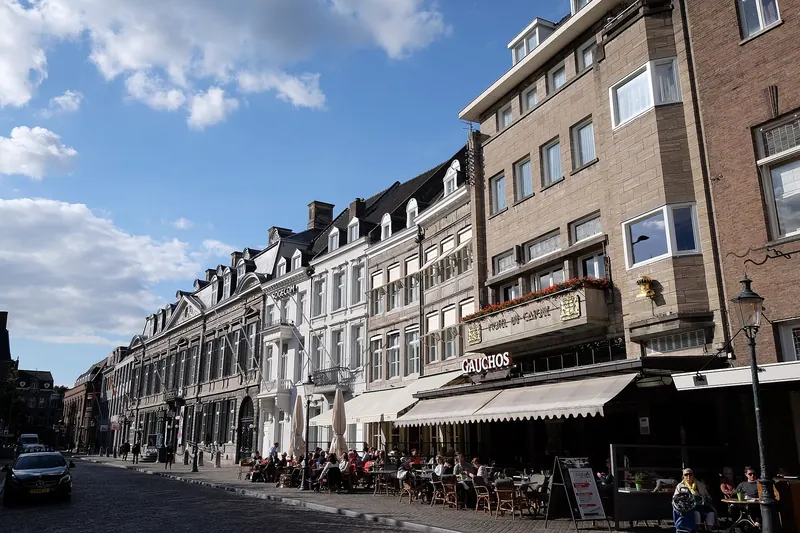
    The square's wide terraces capture Maastricht's relaxed, Burgundian pace better than any single sight — a coffee or beer here is a real local ritual, not just a tourist stop.

    Tip Terraces facing the Basilica offer the best view, though they fill up fastest on warm afternoons.

  4. Walk across the border into Belgium

    Belgium is a short walk or tram ride from central Maastricht in places, making a quick cross-border excursion an easy, low-effort addition to a visit.

    Tip A tram service now connects Maastricht directly to Liège, one of the easiest international transit links in Europe.

  5. Experience Maastricht Carnival

    If timed right, Maastricht's Carnival celebrations in February or March are among the most elaborate and enthusiastically celebrated in the Netherlands, reflecting the city's Catholic, southern character.

    Tip Book accommodation many months ahead if visiting during Carnival — the city fills completely for the celebrations.

  6. Streets and surviving fortifications in Maastricht's Wyck district

    Explore the Wyck district

    The eastern-bank district of Wyck offers a more boutique, less touristy alternative to the main historic centre, with independent shops and restaurants.

    Tip Cross the Sint Servaasbrug bridge from the centre — the walk itself gives a good river view of both banks.

Local food

What to eat in Maastricht

Maastricht's food carries a distinct Limburg regional identity, closer in spirit to neighbouring Belgium than the rest of the Netherlands.

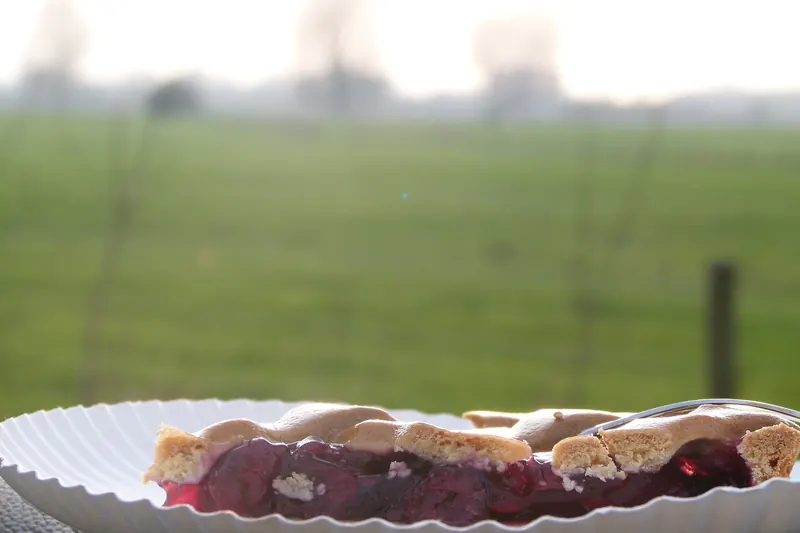
  • Limburgse vlaai, a traditional fruit-filled pie from the Limburg region

    Limburgse vlaai

    A beloved regional fruit pie, its shortcrust base filled with fruit like cherry, apricot or rhubarb — a defining Limburg specialty found at every local bakery.

    Where to try it Bakeries throughout Maastricht; a slice with coffee is a genuine local ritual.

  • Zoervleis

    A rich, slow-cooked sour beef stew, marinated in vinegar and spices, often served with fries — a Limburg comfort dish quite different from Dutch cuisine further north.

    Where to try it Traditional restaurants throughout the city centre and Wyck.

  • A plate of bitterballen, deep-fried Dutch meat croquettes, with mustard

    Bitterballen

    Deep-fried, breadcrumbed balls of a rich beef ragout, the classic accompaniment to a beer on a Vrijthof terrace.

    Where to try it Café terraces around the Vrijthof and throughout the centre.

  • Wheels of cheese on display

    Local Limburg cheese

    The Limburg region produces its own farmhouse cheeses alongside the more famous Gouda tradition further north, sold at markets and specialist shops.

    Where to try it The Friday and Saturday markets on the Markt square.

  • Stroopwafels, thin waffles filled with caramel syrup

    Stroopwafel

    Two thin waffles sandwiching a gooey caramel syrup filling, sold fresh and warm at markets across the city.

    Where to try it Market stalls on the Markt square.

  • Poffertjes, small fluffy Dutch pancakes, dusted with powdered sugar

    Poffertjes

    Small, fluffy mini pancakes, a beloved Dutch treat, traditionally dusted with powdered sugar and a knob of butter.

    Where to try it Café stands around the Vrijthof and Markt squares.

Accommodation

Where to stay in Maastricht

Maastricht is compact enough that most central neighbourhoods work well as a base.

  • Around the Vrijthof

    The most atmospheric base, with hotels and B&Bs close to the main squares and churches.

    Best for: Walking distance to everything, genuine old-town atmosphere

  • Wyck

    A fashionable district with its own independent shops and restaurants, a short walk from the historic centre.

    Best for: A quieter, more boutique feel across the river

  • Near the train station

    A short walk from Wyck and the centre, well-connected for trains further into the Netherlands or across the border.

    Best for: Convenience and easy onward travel

What a night costs

Budget hotel
€75–110 per night
Mid-range hotel
€120–190 per night
Sint-Pietersberg tunnel tour
About €10–13
Vlaai and coffee
€6–9

Transport

Getting to and around Maastricht

Maastricht sits at the far south of the Netherlands, closer to Brussels and Cologne than to Amsterdam.

Getting there

  • Train from Amsterdam

    Direct or one-change intercity trains connect Amsterdam to Maastricht in about 2h30.

    Book ahead for the best fares on the longer intercity routes.

  • Train from Belgium or Germany

    Maastricht connects easily to Liège, Brussels and Aachen, all under an hour away.

    A tram now runs directly to Liège, a convenient cross-border option.

  • Maastricht Aachen Airport

    A small regional airport with a limited number of routes; Eindhoven and Amsterdam Schiphol serve as the main gateways.

    Eindhoven Airport is about an hour away by train and bus, with a wider range of European routes.

Getting around

Maastricht's historic centre is compact and best explored on foot.

  • Walking

    The Vrijthof, Basilica and Boekhandel Dominicanen are all within a compact, walkable old town.

    Maastricht is flat and easy to cover on foot, unlike some hillier southern European cities.

  • Cycling

    Flat terrain and good cycle paths make a bike useful for reaching Sint-Pietersberg or Wyck without walking.

    Rental is available near the train station and throughout the centre.

  • City buses

    A local network covers the wider city and outer neighbourhoods efficiently.

    An OV-chipkaart or contactless card covers all local transit — tap in and out on every journey.

When to go

Best time to visit Maastricht

Maastricht is workable year-round, with its café culture especially appealing in warmer months.

  • Spring (April–May)

    Best time

    Mild temperatures and the Vrijthof's terraces coming back to life after winter.

  • Summer (June–August)

    Best time

    The warmest weather, with the squares and riverside at their liveliest.

  • Autumn (September–October)

    Good

    Mild and quiet, a good season for the museums and indoor sights.

  • Winter (November–March)

    Good

    Cold, though February or March brings Maastricht's elaborate Carnival celebrations for visitors who time it right.

Worth planning around: Nothing strongly, though Carnival week brings both the city's most authentic celebration and its most crowded, fully booked accommodation.

Itinerary

Two days in Maastricht

Built around the historic centre, with the Sint-Pietersberg caves and a possible Belgium detour.

  1. Day1

    The historic centre

    The city's essential squares and churches.

    • Morning The Vrijthof, Basilica of Saint Servatius and St. John's Church.
    • Afternoon Boekhandel Dominicanen and the Bonnefanten Museum.
    • Evening Dinner and drinks on the Vrijthof.
  2. Day2

    Sint-Pietersberg and Wyck

    The caves, fortifications and a quieter district.

    • Morning A guided tour of the Sint-Pietersberg tunnels.
    • Afternoon The Helpoort and a wander through Wyck.
    • Evening A final dinner of zoervleis in the old town.

Travel tips

Maastricht travel tips

Practical notes on booking, timing and transport that make a real difference to a Maastricht trip.

  • Book Sint-Pietersberg tunnel tours ahead — the network is too extensive to explore without a guide.
  • Check the Carnival calendar if visiting in February or March, and book accommodation many months ahead if attending.
  • Combine Maastricht easily with Liège or Aachen — both are under an hour away and worth the short trip.
  • Carry a contactless card — many smaller vendors no longer accept cash at all.
  • Try zoervleis and vlaai specifically — both are distinct from food found in the rest of the Netherlands.
  • Visit Boekhandel Dominicanen even if you don't read Dutch — the building itself is the real draw.

FAQ

Maastricht: frequently asked questions

Is Maastricht worth visiting?

Yes — it offers a distinctly Burgundian, southern character unlike the rest of the Netherlands, real Roman and medieval history, and one of the world's most beautiful converted bookstores, all in a walkable historic centre.

How many days do you need in Maastricht?

Two days covers the Vrijthof, Sint-Pietersberg caves and Boekhandel Dominicanen comfortably, with time to explore Wyck or take a short trip across the Belgian border.

Why does Maastricht feel different from the rest of the Netherlands?

Its position at the far southern tip of the country, wedged between Belgium and Germany, gives it a more Burgundian, relaxed café culture and Catholic southern character distinct from the flatter, more businesslike cities further north.

What are the Sint-Pietersberg caves?

A vast network of tunnels left behind by centuries of limestone quarrying, extensive enough to have sheltered Rembrandt's Night Watch during the Second World War — visits are by guided tour only.

Can you easily visit Belgium from Maastricht?

Yes, easily — the border is a short walk or tram ride from the centre in places, and a direct tram now connects Maastricht to Liège.

What is Boekhandel Dominicanen?

A 13th-century Gothic church, deconsecrated and converted into a working bookstore, its soaring vaulted interior now lined with bookshelves — regularly ranked among the most beautiful bookshops in the world.

Read next

Related travel articles

Where to go

Beyond the Big Names: Places Worth the Detour

The most visited place in a country is rarely its best, and it is almost never its best value. This is a method for finding the destinations that do not make the postcards — and a set of examples from five of the 50 countries on this site.

Food

A Country-by-Country Food Primer

Eating well abroad is mostly a matter of knowing when meals happen, how the menu is structured and which dish belongs to the place you are standing in. This covers all three for the five countries in this guide, plus the signals that separate a restaurant that feeds locals from one that feeds coaches.

Advertisement