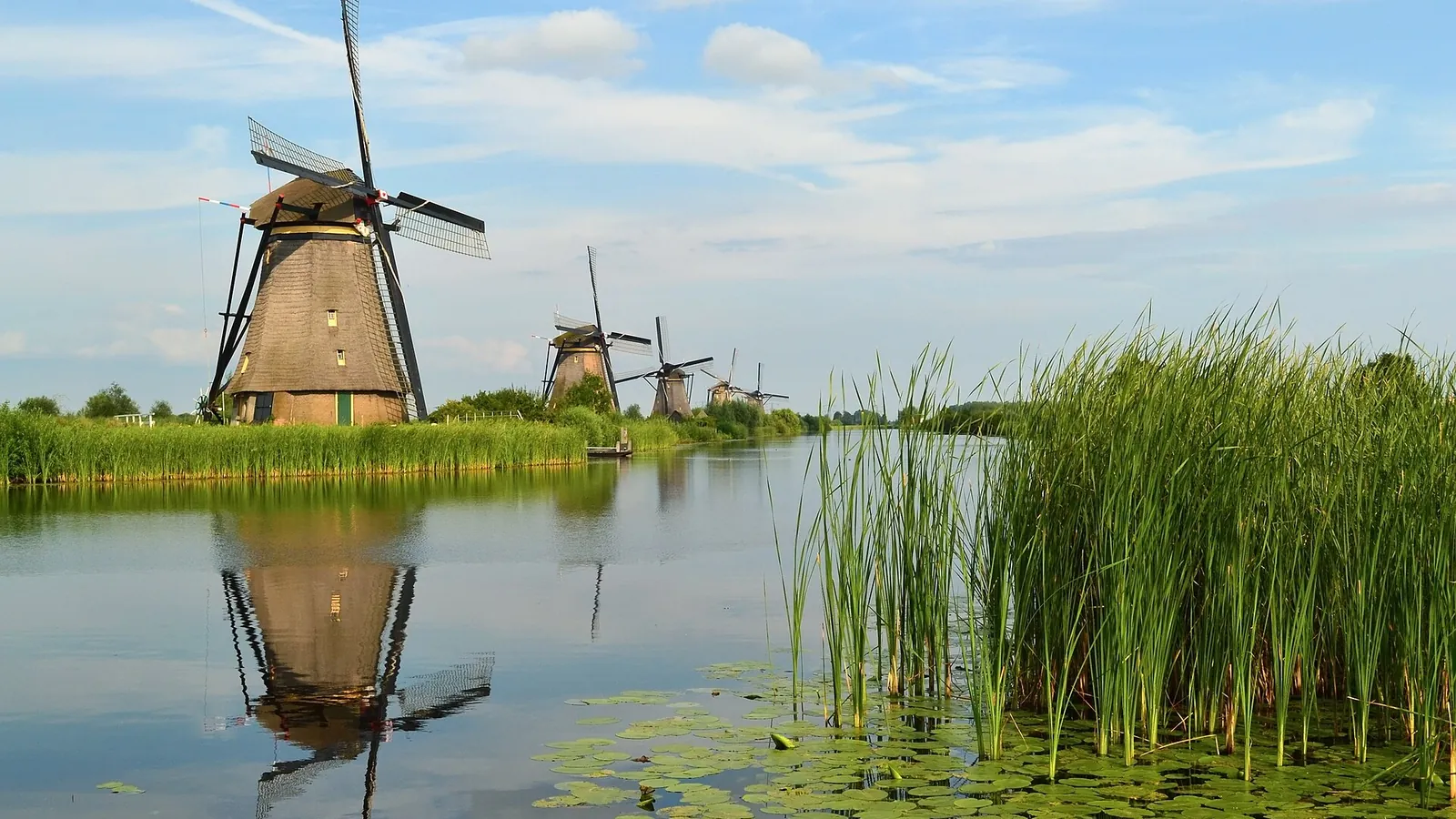
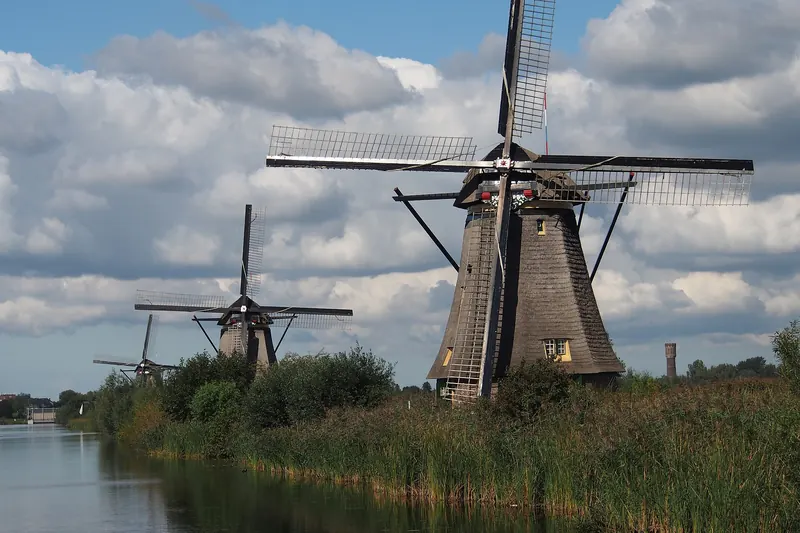
The row of 19 UNESCO-listed windmills at Kinderdijk

South Holland · Netherlands

Kinderdijk

A UNESCO-listed row of 19 windmills, still standing exactly where they were built to keep the surrounding polder dry since the 18th century.

  • Best time Any season, but check closing times for a sunset visit
  • Stay Half a day
  • Good for Photography, an easy half-day outside Rotterdam

Photo: Tarod · CC BY-SA 3.0 nl

Welcome to Kinderdijk

Kinderdijk exists because the land here sits below sea level, in a polder that would flood without constant pumping — and for over two and a half centuries, from 1740 until well into the 20th century, that pumping was done entirely by windmill power, the 19 mills that still stand here today built for that single practical purpose rather than as a monument.

UNESCO listed the site as a World Heritage Site in 1997, recognising it as the most complete and best-preserved example of traditional Dutch water-management infrastructure anywhere in the country — a real working system, not a recreation, even though modern electric pumps have now taken over the actual drainage work.

A handful of the mills remain inhabited, and one, the Museummolen, is open to visitors as a furnished interior showing exactly how a miller's family lived and worked inside a functioning windmill, wind power and daily domestic life sharing the same small space.

  • UNESCO Site
  • Historic Site
  • Scenic Region
  • Nature & Wildlife

Why visit

Why visit Kinderdijk?

Kinderdijk's case is a complete, UNESCO-listed windmill landscape that was built to work, not to be photographed — though it happens to deliver both.

  • It's the most complete windmill landscape in the Netherlands

    All 19 mills survive in their original positions, recognised by UNESCO as the country's best-preserved example of traditional water management.

  • The mills were functional, not decorative

    Built in 1740 specifically to keep the surrounding polder dry, they did that real job for over two centuries.

  • The Museummolen shows genuine daily life inside a working mill

    A furnished interior lets visitors see exactly how a miller's family lived and worked in the same small space as the machinery.

  • It's one of the easiest UNESCO sites to reach in Europe

    A short bus or scenic waterbus ride from central Rotterdam makes it realistic even for visitors with limited time.

  • It's one of the most photographed sights in the Netherlands

    The full row of mills reflected in still water, especially at sunset, delivers the classic Dutch landscape image reliably.

Main attractions

Top things to see in Kinderdijk

Kinderdijk's essential sights are the windmill network itself and the water-management infrastructure built alongside it.

  1. The row of 19 UNESCO-listed windmills at Kinderdijk

    The windmill row

    All 19 mills survive in their original 1740 positions, strung along the polder's waterways in one of the most complete traditional windmill landscapes anywhere in Europe.

    Tip Walk or cycle the full length of the row rather than viewing only from the entrance — the perspective changes considerably along the way.

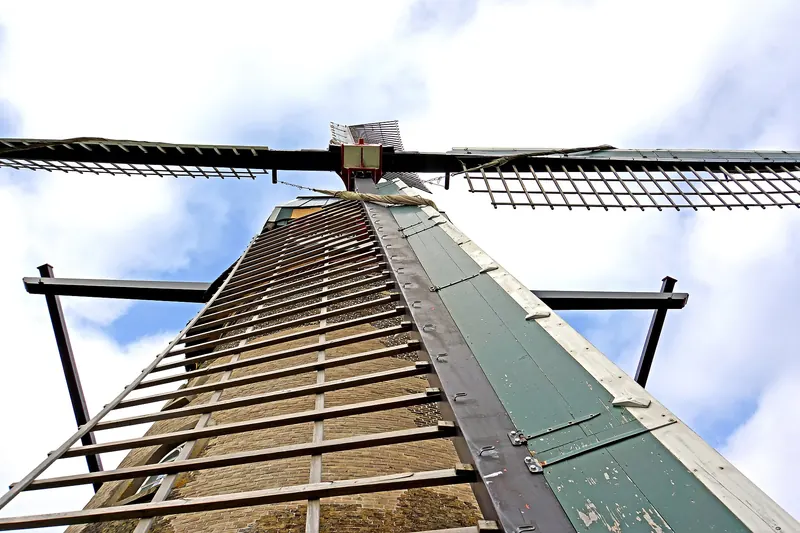
  2. The mechanical workings inside the Museummolen at Kinderdijk

    The Museummolen

    A furnished windmill interior open to visitors, showing both the mechanical workings that pumped water and the cramped domestic quarters where a miller's family actually lived.

    Tip The mill's upper floors involve steep, narrow stairs — not ideal for visitors with limited mobility.

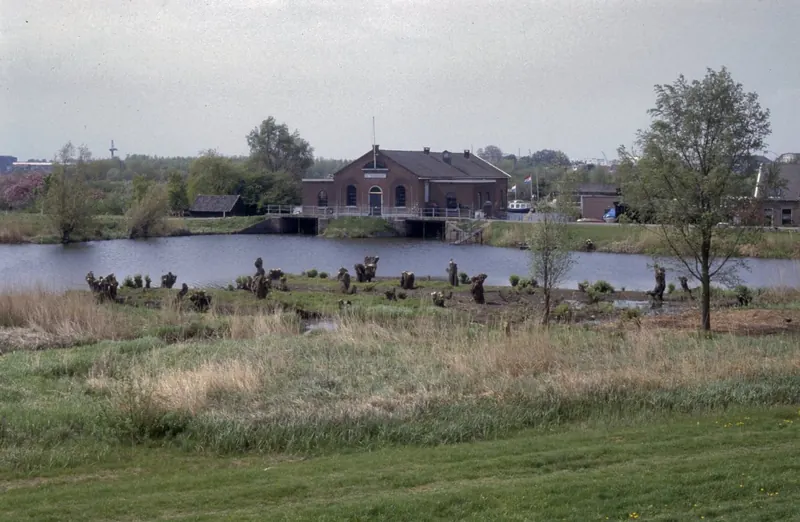
  3. The historic Wisboom pumping station at Kinderdijk

    The Wisboom pumping station

    A 19th-century steam-powered pumping station, built as windmill power proved insufficient during the wettest years, marking the site's transition toward mechanical drainage.

    Tip A useful counterpoint to the windmills themselves, showing how the polder's water management evolved over time.

  4. A windmill beside the polder waterways at Kinderdijk

    The polder waterways

    The canals and channels between the mills are still part of a functioning drainage system, now managed by modern electric pumps working alongside the historic infrastructure.

    Tip A boat cruise along these waterways gives a different, lower vantage point than the paths and cycle tracks above.

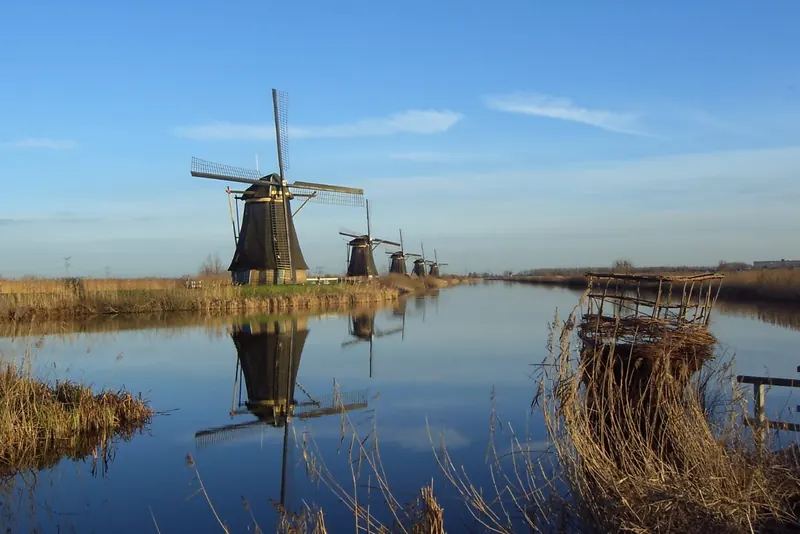
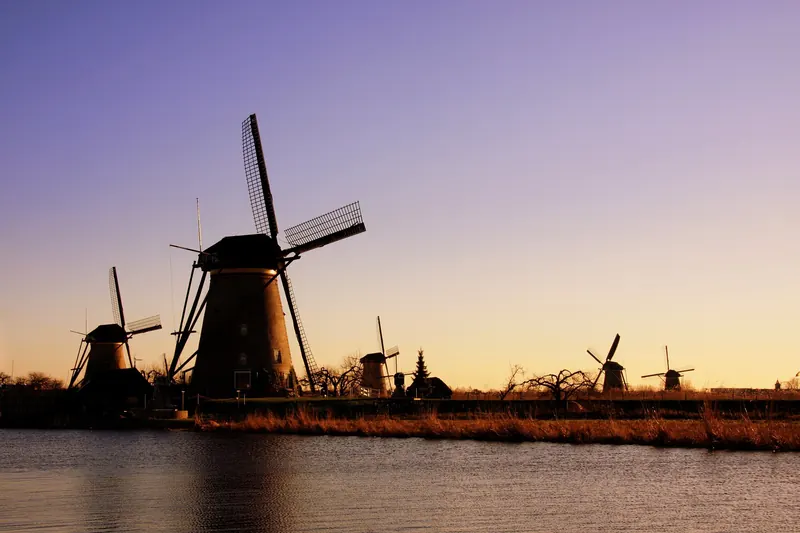
  5. The windmills of Kinderdijk silhouetted at sunset

    Sunset over the windmills

    The full row of mills against a setting sun, reflected in the still polder water, is one of the most photographed views in the Netherlands.

    Tip Check closing times before planning a sunset visit — the site doesn't always stay open through actual sunset in every season.

Things to do

Best things to do in Kinderdijk

Kinderdijk rewards getting out along the water and dikes, not just viewing the mills from the entrance.

  1. A boat cruise passing windmills at Kinderdijk

    Take a boat cruise through the windmill network

    Boats navigate the same waterways the mills were built to manage, offering a lower, quieter perspective than the paths above.

    Tip Combine the cruise with a walk along the dike for two different views of the same mills.

  2. A dike path running alongside the windmills at Kinderdijk

    Cycle or walk the dike path

    A flat, well-maintained path runs the full length of the windmill row, rewarding a slow walk or cycle rather than a quick look from the entrance.

    Tip Bike rental is available near the entrance — the easiest way to cover the full row without rushing.

  3. The interior workings of the Museummolen windmill at Kinderdijk

    Visit the Museummolen's living interior

    Seeing the cramped domestic quarters alongside the working machinery brings home how physically demanding life as a miller's family actually was.

    Tip Allow at least 30–45 minutes to properly explore all the mill's levels and exhibits.

  4. The windmills of Kinderdijk silhouetted against a setting sun

    Photograph the mills at sunset

    The classic Kinderdijk photograph depends on timing — still water, low sun and the full row of mills together.

    Tip Check the site's current seasonal closing time before planning around actual sunset, since hours vary through the year.

  5. Learn about Dutch water management at the visitor centre

    The visitor centre explains how the polder system works, useful context for understanding why this landscape exists at all.

    Tip A worthwhile first stop before heading out to the mills themselves, particularly for visitors unfamiliar with Dutch polder engineering.

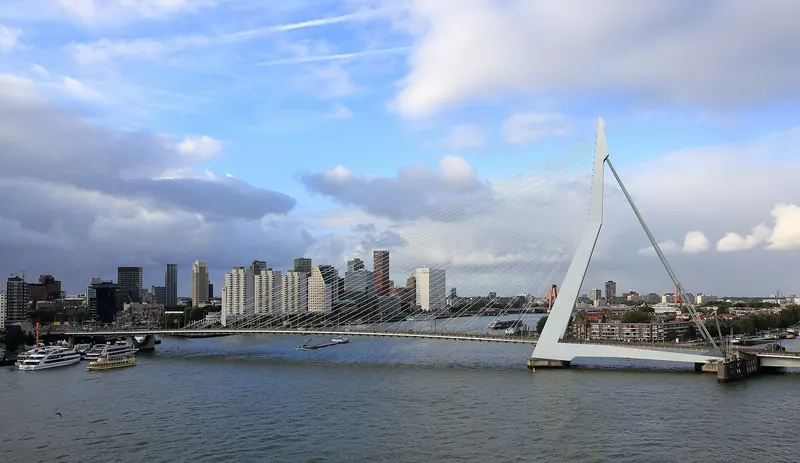
  6. Rotterdam's Erasmusbrug, an easy combination with a Kinderdijk day trip

    Combine with a day in Rotterdam

    Kinderdijk's genuine proximity to Rotterdam makes it easy to combine as a half-day add-on rather than a full separate trip.

    Tip The scenic waterbus ferry between central Rotterdam and Kinderdijk is worth the small extra time over the bus.

Local food

What to eat in Kinderdijk

Food options at Kinderdijk itself are limited, running on the same Dutch classics found across the wider region.

  • Stroopwafels, thin waffles filled with caramel syrup

    Stroopwafel

    Two thin waffles sandwiching a gooey caramel syrup filling, sold at the visitor centre café.

    Where to try it The Kinderdijk visitor centre café.

  • A plate of bitterballen, deep-fried Dutch meat croquettes, with mustard

    Bitterballen

    Deep-fried, breadcrumbed balls of a rich beef ragout, available at the site's café alongside a beer.

    Where to try it The visitor centre café, or restaurants back in Rotterdam.

  • Poffertjes, small fluffy Dutch pancakes, dusted with powdered sugar

    Poffertjes

    Small, fluffy mini pancakes, a beloved Dutch treat, occasionally available at seasonal stalls near the entrance.

    Where to try it Seasonal stalls near the Kinderdijk entrance, when open.

  • Wheels of Gouda cheese on display

    Gouda cheese

    The Netherlands' most famous export, widely available in the nearby villages surrounding Kinderdijk.

    Where to try it Shops in the nearby village of Kinderdijk itself, or back in Rotterdam.

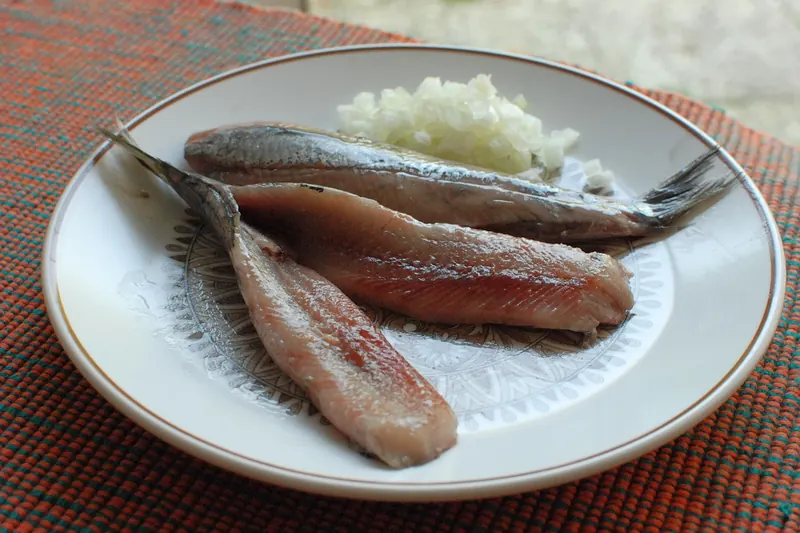
  • Raw Dutch herring served with chopped onion

    Haring (raw herring)

    Lightly cured raw herring, traditionally eaten by the tail with chopped onion — best found back in Rotterdam rather than at the site itself.

    Where to try it Fish stalls back in central Rotterdam.

  • A portion of Dutch fries (patat) in a paper cone

    Patat (Dutch fries)

    Twice-fried potato chips served in a paper cone, defined by the sauce — mayonnaise, not ketchup, is the default order.

    Where to try it The visitor centre café, or friteries back in Rotterdam.

Accommodation

Where to stay in Kinderdijk

Almost all visitors see Kinderdijk as a half-day trip from Rotterdam rather than staying overnight nearby.

  • Rotterdam

    The standard base — a short bus or scenic waterbus ride away, making an overnight stay near Kinderdijk itself largely unnecessary.

    Best for: Combining Kinderdijk with the rest of a Rotterdam trip

What a night costs

Site entry
About €12.50, windmill interiors extra
Waterbus ferry from Rotterdam
About €10–15 return
Canal boat cruise
About €7–9
Café snack
€6–10

Transport

Getting to and around Kinderdijk

Kinderdijk is one of the easiest UNESCO sites to reach in Europe, a short trip from central Rotterdam.

Getting there

  • Waterbus from Rotterdam

    A scenic ferry runs directly from central Rotterdam to Kinderdijk, the most pleasant way to arrive.

    The waterbus takes a little longer than the bus but is worth it for the river views alone.

  • Bus from Rotterdam

    Direct buses connect Rotterdam to Kinderdijk in well under an hour.

    A faster, more straightforward option than the ferry if time is limited.

  • Rental car

    Driving takes about 20–25 minutes from central Rotterdam, with parking available near the entrance.

    Useful if combining Kinderdijk with wider exploration of the surrounding countryside.

Getting around

Kinderdijk's windmill row is walkable, though a bike or boat covers the full length more easily.

  • Walking

    A flat path runs the length of the windmill row, comfortably covered on foot within an hour or two.

    The full site, including the Museummolen and Wisboom station, takes closer to half a day to see properly.

  • Cycling

    Bike rental near the entrance makes covering the full row and surrounding polder paths easier.

    A good option for visitors wanting to explore beyond just the main windmill row itself.

  • Canal boat

    Short cruises run through the site's waterways, a different perspective from the paths above.

    Boats depart regularly from near the visitor centre in season.

When to go

Best time to visit Kinderdijk

Kinderdijk is workable year-round; the windmills themselves don't depend on a specific season the way Keukenhof's tulips do.

  • Spring (April–May)

    Best time

    Mild weather and good light, before the peak summer crowds arrive.

  • Summer (June–August)

    Good

    Warm weather and the longest days, but the busiest season on the dike paths.

  • Autumn (September–October)

    Best time

    Mild and noticeably quieter, with good light for photographing the mills and reflections.

  • Winter (November–March)

    Good

    Cold but atmospheric, with far fewer visitors and, in a hard freeze, ice on the polder waterways.

Worth planning around: Nothing strongly, though summer weekends bring heavier crowds on the main dike path near the entrance.

Itinerary

Half a day at Kinderdijk

The windmill row and Museummolen cover the essentials comfortably within a few hours.

  1. Day1

    The windmills and waterways

    The complete essential visit.

    • Morning Arrive via waterbus, and walk or cycle the full windmill row.
    • Afternoon The Museummolen interior and a canal boat cruise.
    • Evening Return to Rotterdam, or stay for sunset over the mills.

Travel tips

Kinderdijk travel tips

Practical notes on timing and transport that make a real difference to a Kinderdijk visit.

  • Take the scenic waterbus from Rotterdam rather than the bus, if time allows — the river views are worth it.
  • Check current seasonal closing times before planning a sunset visit, since hours vary through the year.
  • Rent a bike near the entrance to cover the full windmill row without rushing.
  • Allow at least half a day — the site is larger than it first appears from the entrance.
  • Combine Kinderdijk with Rotterdam rather than planning a full separate day here.
  • Carry a contactless card — the visitor centre café and ticket booths accept card payment.

FAQ

Kinderdijk: frequently asked questions

Is Kinderdijk worth visiting?

Yes — it offers the most complete surviving windmill landscape in the Netherlands, UNESCO-listed and still functionally connected to the polder water system it was built to manage, all within easy reach of Rotterdam.

How much time do you need at Kinderdijk?

Half a day covers the windmill row, Museummolen and a canal boat cruise comfortably. It's better as a Rotterdam add-on than a full separate day trip.

Are the windmills at Kinderdijk still used?

The historic mills no longer do the primary drainage work, which modern electric pumps now handle, but the waterways and polder system around them are still functional, and a few mills remain inhabited.

Can you go inside the windmills at Kinderdijk?

One, the Museummolen, is open to visitors as a furnished interior, showing both the mechanical workings and the cramped domestic quarters where a miller's family lived and worked.

How do you get to Kinderdijk from Rotterdam?

A scenic waterbus ferry or a direct bus both connect central Rotterdam to Kinderdijk in under an hour, making it one of the easiest UNESCO sites in Europe to reach without a car.

When is the best time to photograph Kinderdijk?

Sunset delivers the classic image, with the full windmill row reflected in still water — though it's worth checking current seasonal closing times before planning a visit specifically around it.

Read next

Related travel articles

Heritage

UNESCO Sites Worth Planning a Trip Around

A UNESCO listing tells you a place matters; it does not tell you whether it is worth two days and a detour. This is how to read the list usefully — and which sites reward building a trip around them.

Where to go

Beyond the Big Names: Places Worth the Detour

The most visited place in a country is rarely its best, and it is almost never its best value. This is a method for finding the destinations that do not make the postcards — and a set of examples from five of the 50 countries on this site.

Advertisement