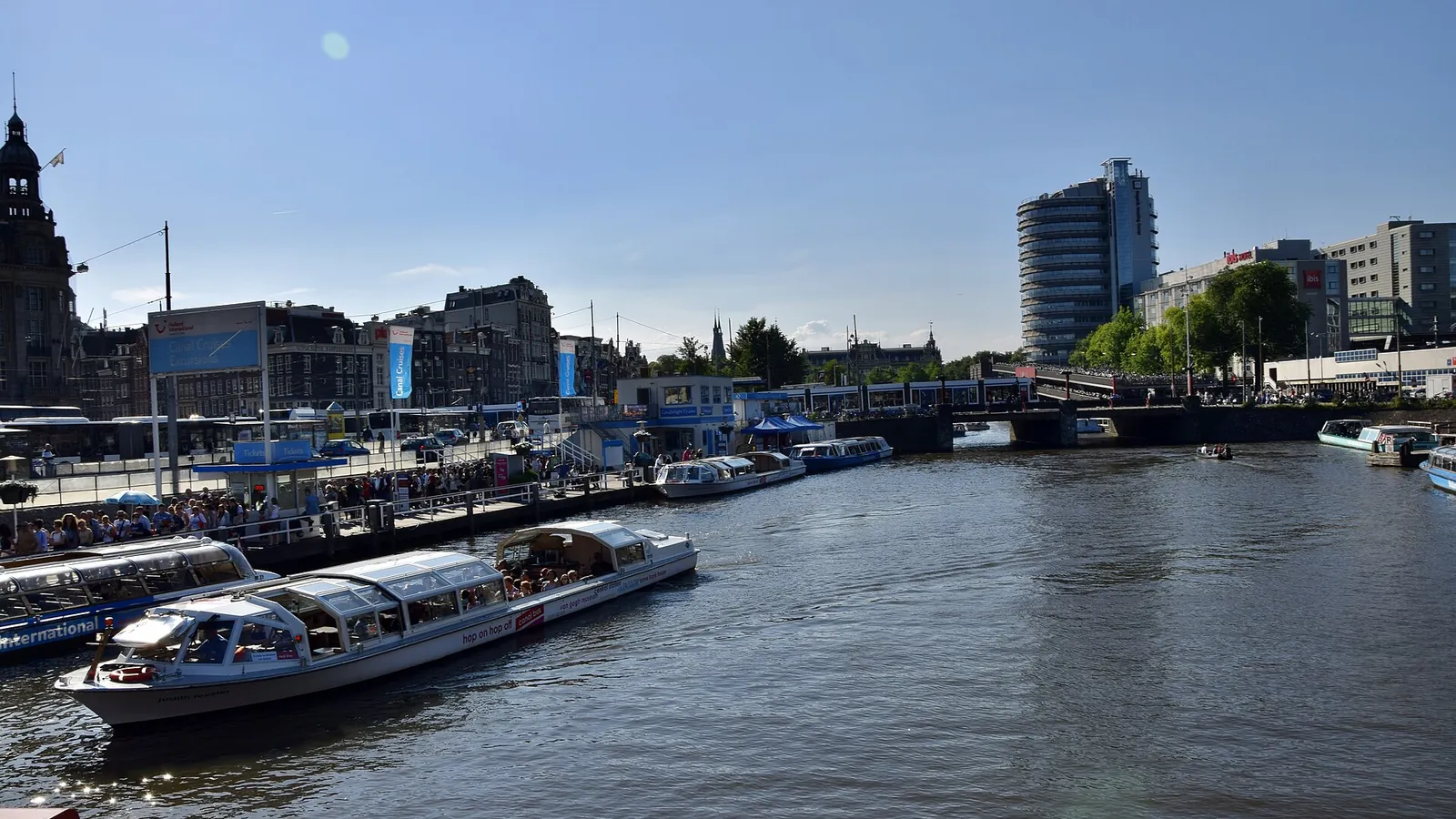
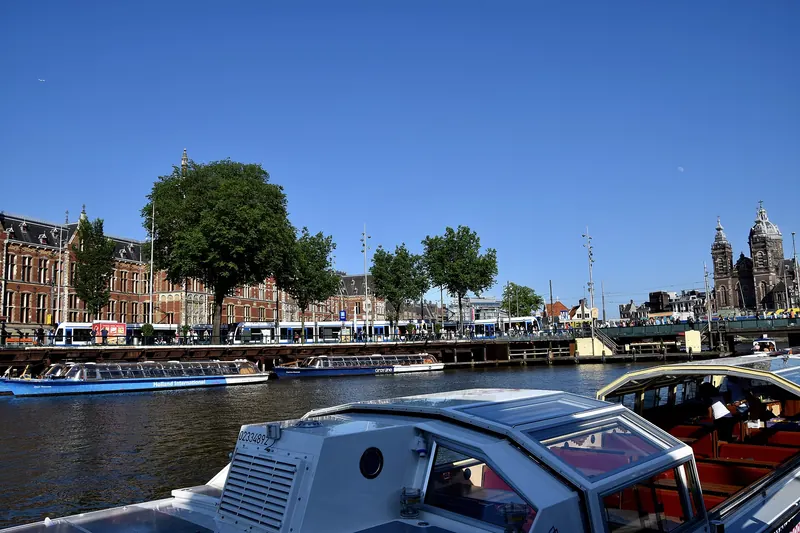
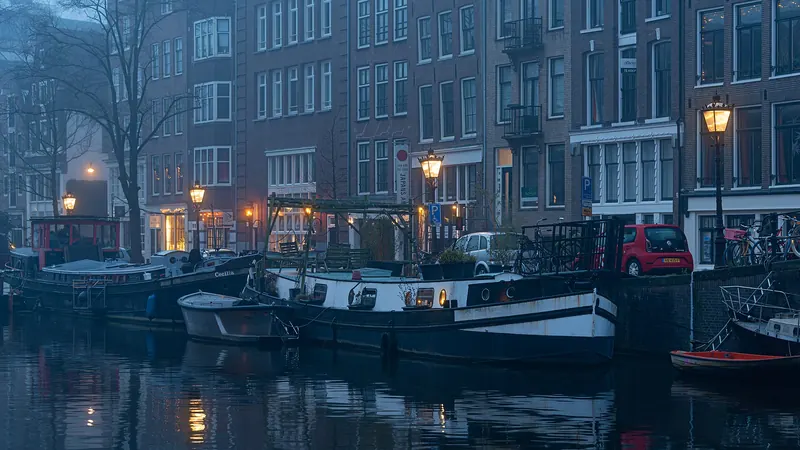
Gabled canal houses reflected in an Amsterdam canal

North Holland · Netherlands

Amsterdam

A canal-ringed capital built on 17th-century merchant wealth, its concentric waterways a UNESCO World Heritage Site and its museums among Europe's finest.

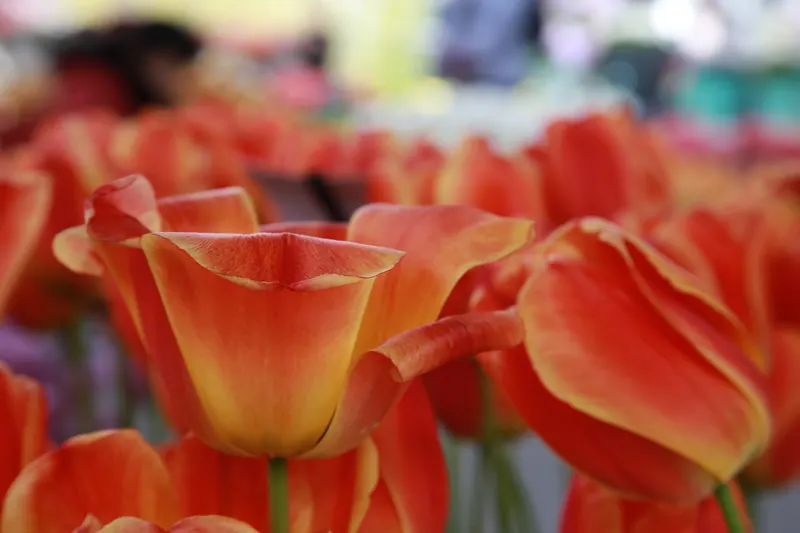
  • Best time April–May for tulip season, or June–September for the warmest weather
  • Stay 3–4 days
  • Good for Art, history, cycling, a genuine gateway to the Netherlands

Photo: Ank Kumar · CC BY-SA 4.0

Welcome to Amsterdam

Amsterdam's identity was forged in the 17th century, when Dutch merchant wealth from the Golden Age financed a deliberate ring of concentric canals around the medieval centre — the Grachtengordel, now a UNESCO World Heritage Site — lined with the narrow, gabled townhouses that still define the city's postcard image today.

That wealth also built one of the finest concentrations of art museums anywhere in the world: the Rijksmuseum's Dutch Golden Age masterpieces, the Van Gogh Museum's unmatched single-artist collection, and the Anne Frank House, which turns a hidden annex into one of the most affecting historical sites in Europe.

What consistently surprises first-time visitors is how completely cycling has replaced driving here — dedicated bike lanes carry more daily traffic than the roads beside them, and renting a bike for even a single day is the best way to understand how the city actually works.

  • Capital City
  • Major City
  • Historic Site
  • Culture & Arts
  • UNESCO Site

Why visit

Why visit Amsterdam?

Amsterdam's case is that no other European capital pairs this much canal-side charm with world-class museums in such a compact, walkable centre.

  • The canal ring is a UNESCO World Heritage Site

    The 17th-century Grachtengordel is one of the most complete examples of deliberate urban planning to survive from its era anywhere in Europe.

  • The museums are world class

    The Rijksmuseum, Van Gogh Museum and Anne Frank House sit within walking distance of each other, a remarkable concentration for a city this size.

  • Cycling is how the city functions

    Dedicated bike infrastructure carries more daily traffic than cars, and it is the way residents actually get around, not a tourist novelty.

  • The Golden Age architecture is intact

    Narrow, gabled merchant houses line canal after canal, largely unchanged in silhouette for nearly four centuries.

  • It's the natural gateway to the rest of the Netherlands

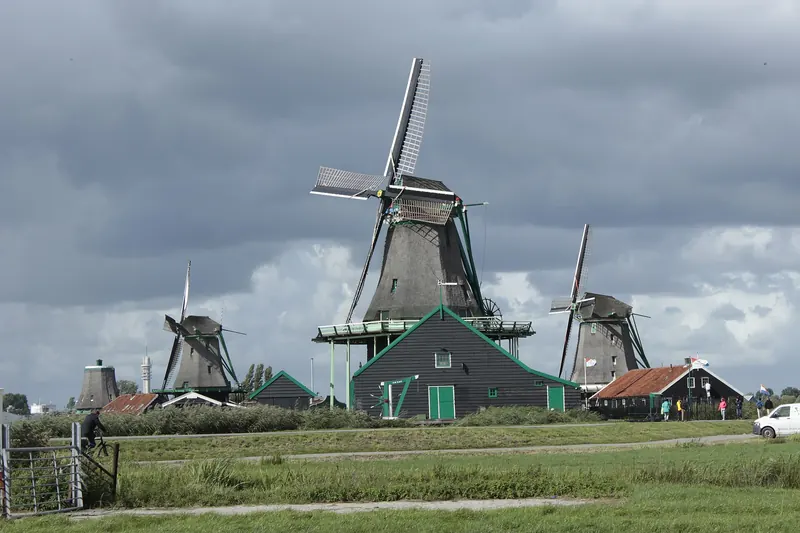
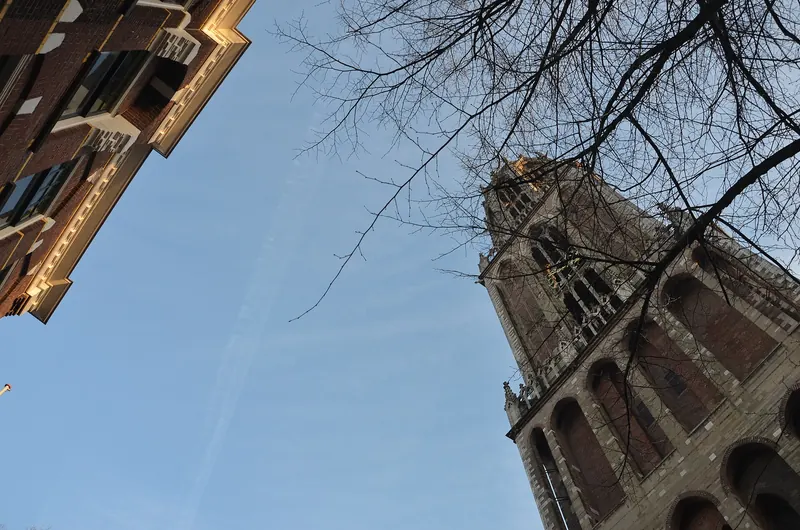
    Zaanse Schans, Utrecht and Keukenhof are all a short train or bus ride from Amsterdam Centraal.

Main attractions

Top things to see in Amsterdam

Amsterdam's essential sights, spanning its world-class museums and the historic canal ring itself.

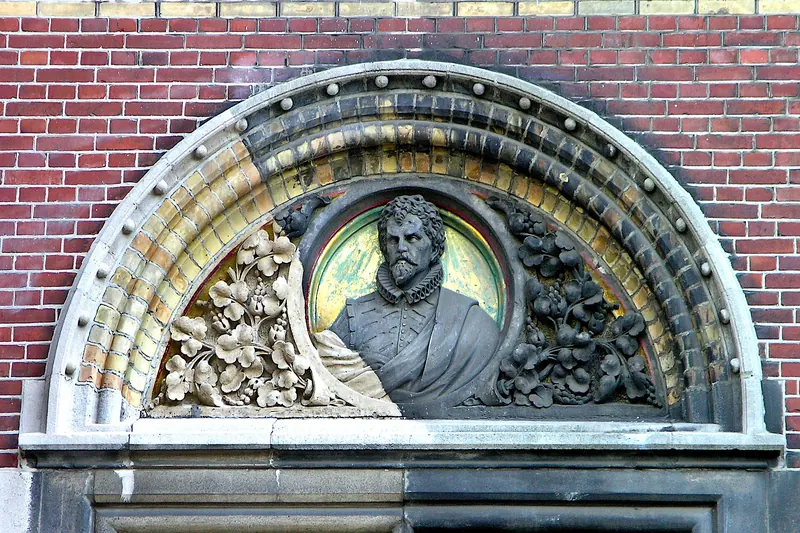
  1. The restored 19th-century exterior of the Rijksmuseum in Amsterdam

    The Rijksmuseum

    The Netherlands' national museum, its collection anchored by Dutch Golden Age masterpieces including Rembrandt's The Night Watch and Vermeer's The Milkmaid, housed in a grand 19th-century building with a dramatic glass-roofed atrium.

    Tip Book timed-entry tickets online well ahead — same-day entry is rarely available in high season.

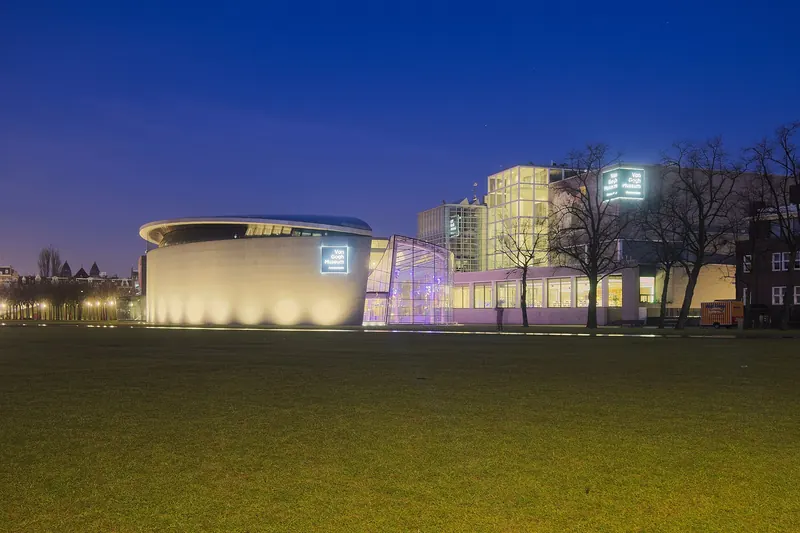
  2. The modern exterior of the Van Gogh Museum on Amsterdam's Museumplein

    The Van Gogh Museum

    The world's largest collection of Van Gogh's work, tracing his entire career from early dark Dutch scenes to the vivid late paintings, housed in a purpose-built museum on the Museumplein.

    Tip Combine with the Rijksmuseum on the same day — both sit on the Museumplein, a short walk apart.

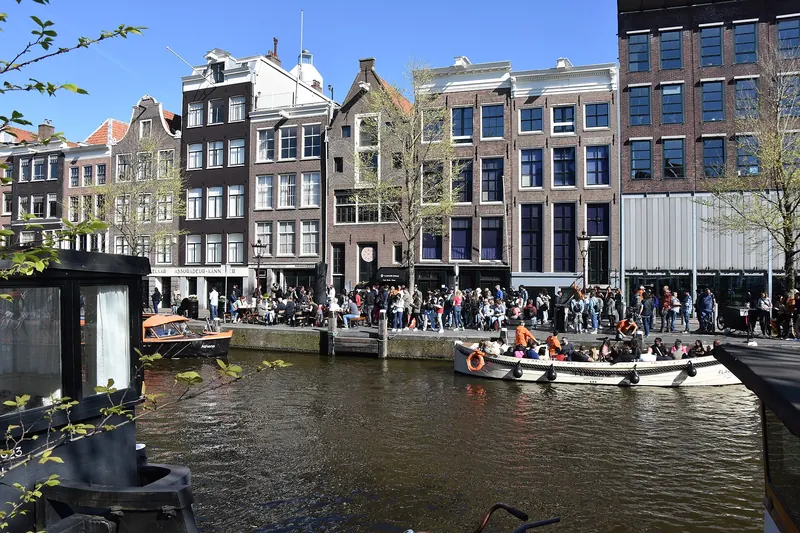
  3. The canal-side building housing the Anne Frank House museum in Amsterdam

    The Anne Frank House

    The actual canal-side building where Anne Frank and her family hid for over two years during the Nazi occupation, its preserved secret annex one of the most affecting historical sites in Europe.

    Tip Tickets are released online exactly six weeks ahead and sell out within minutes — set a reminder rather than hoping for a same-week slot.

  4. Narrow gabled houses along a canal in Amsterdam's historic centre

    The Jordaan and the canal ring

    The UNESCO-listed 17th-century canal ring and the adjoining Jordaan district, a former working-class neighbourhood now full of independent galleries, boutiques and quiet courtyard gardens (hofjes).

    Tip Get deliberately lost in the Jordaan's side streets rather than following a fixed route — the neighbourhood rewards genuine wandering.

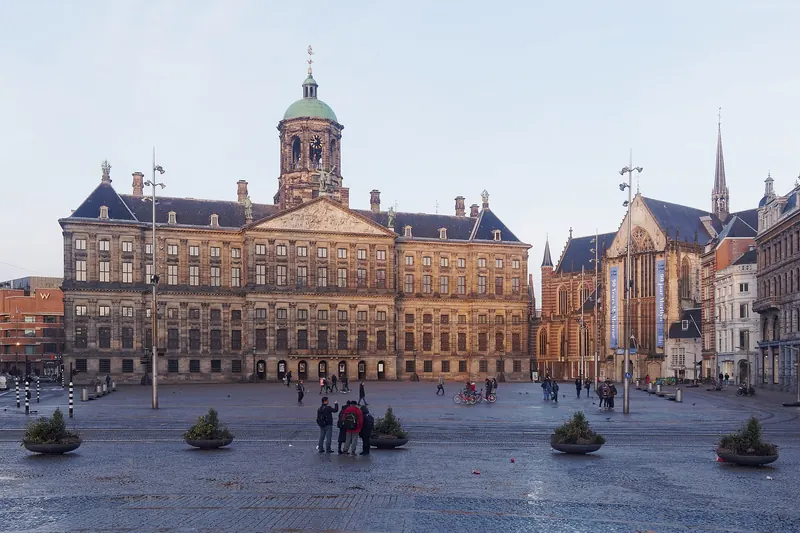
  5. Dam Square in Amsterdam with the Royal Palace and Nieuwe Kerk

    Dam Square and the Royal Palace

    The city's historic central square, the site of the dam that gave Amsterdam its name, flanked by the 17th-century Royal Palace and the Nieuwe Kerk.

    Tip The square is a genuine crossroads and can feel crowded and touristy — the surrounding streets reward a slower look.

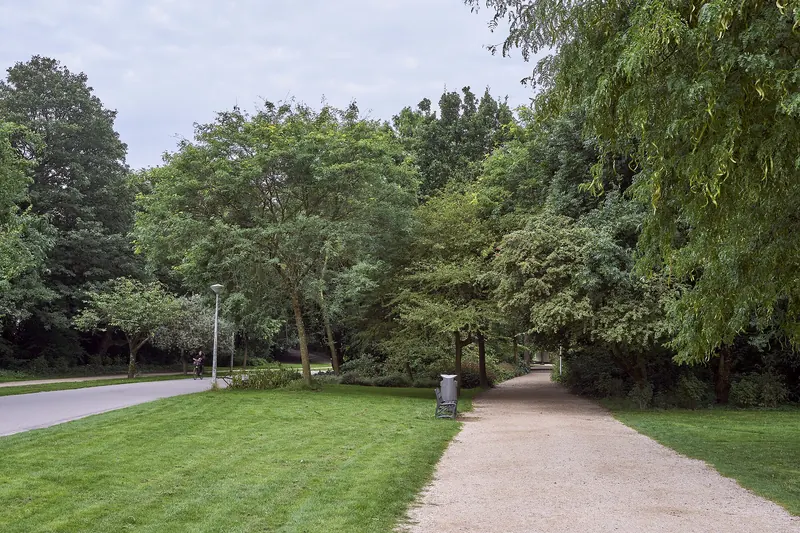
  6. Green lawns and paths in Amsterdam's Vondelpark

    Vondelpark

    Amsterdam's largest and most-loved park, full of locals cycling, picnicking and relaxing rather than a tourist attraction in its own right.

    Tip Rent a bike and ride the park's paths — a pleasant break from the busier museum district nearby.

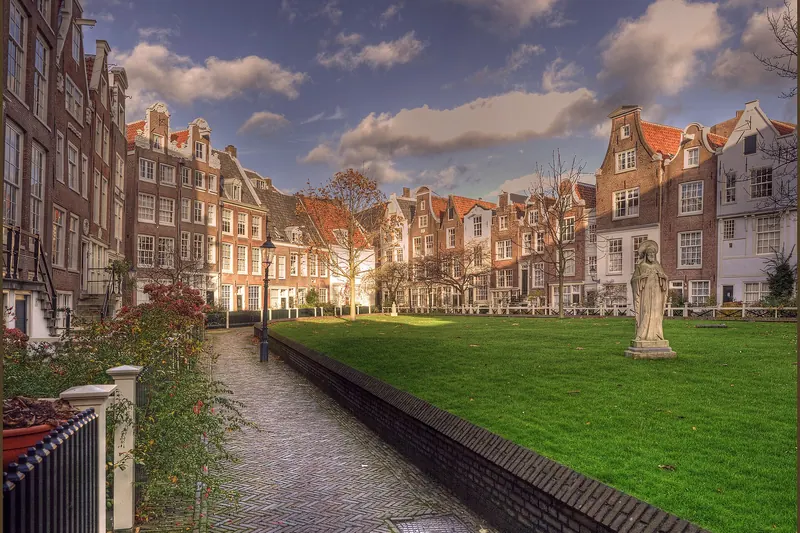
  7. The quiet historic courtyard of the Begijnhof in central Amsterdam

    The Begijnhof

    A tranquil hidden courtyard of historic almshouses just off the busy Kalverstraat shopping street, home to one of Amsterdam's oldest surviving wooden houses.

    Tip Keep voices down — genuine residents still live here, and the courtyard asks for quiet out of respect.

Things to do

Best things to do in Amsterdam

Beyond the museums, Amsterdam rewards its cycling culture, markets and Golden Age food traditions.

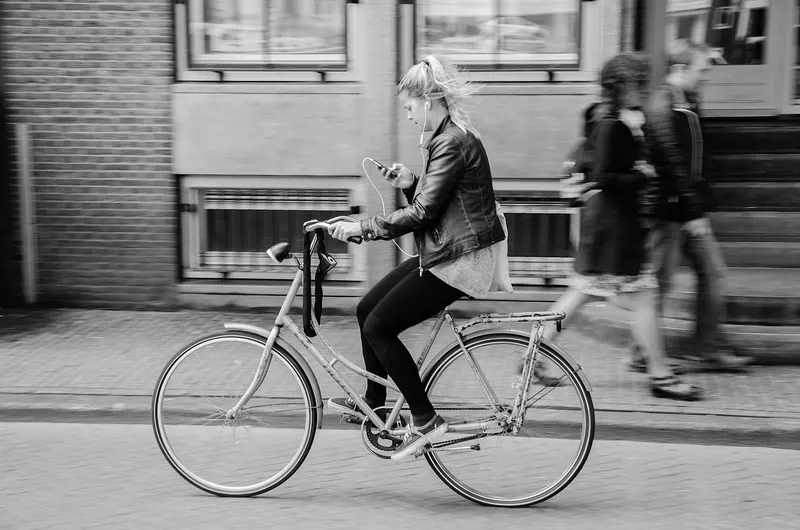
  1. Cyclists riding through central Amsterdam

    Cycle through Vondelpark and the canals

    The best way to experience the city the way locals actually do, on dedicated cycle paths running through the canal ring and out into Vondelpark.

    Tip Rent from a station-based shop rather than a tourist-priced kiosk near Centraal Station, and always signal turns.

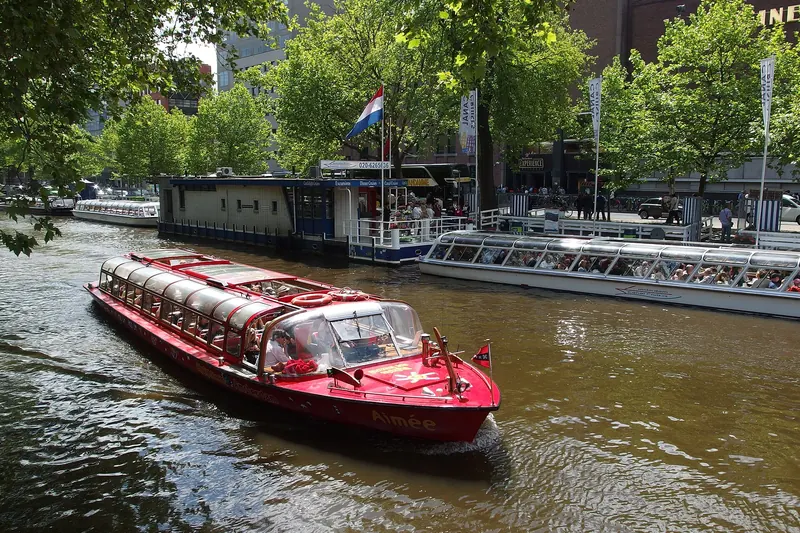
  2. A canal tour boat passing beneath a bridge in Amsterdam

    Take an evening canal cruise

    The canal ring is best seen from the water, gliding beneath humpbacked bridges as the gabled houses light up at dusk.

    Tip An evening cruise avoids the midday crowds and gives noticeably better light for photos of the reflections.

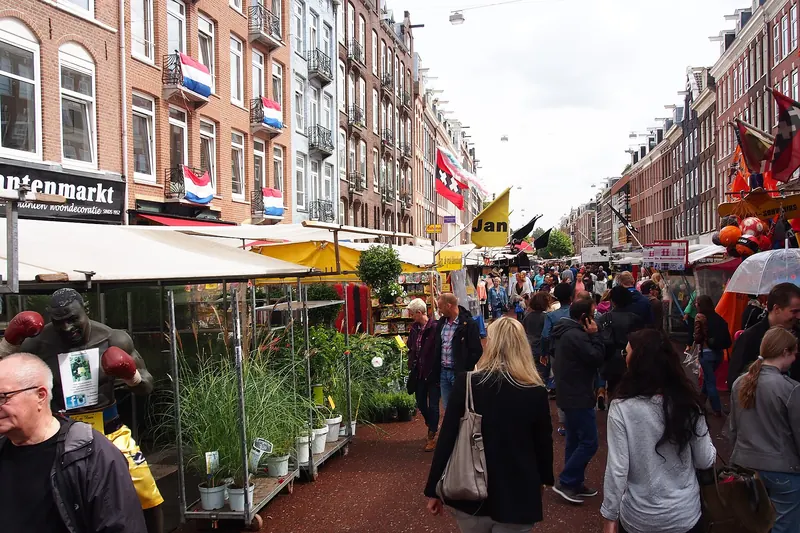
  3. Stalls at Amsterdam's Albert Cuyp street market

    Browse the Albert Cuyp Market

    The Netherlands' largest daily street market, a working neighbourhood market rather than a tourist bazaar, selling everything from fresh stroopwafels to fabric and flowers.

    Tip Go hungry — the food stalls, particularly for fresh stroopwafels and herring, are the real draw.

  4. Have a beer and bitterballen at a brown café

    Amsterdam's traditional 'brown cafés' — named for their tobacco-stained walls and dark wood interiors — are where locals actually drink, a world away from the tourist bars near Dam Square.

    Tip Look for a café without an English-language menu outside the Jordaan or De Pijp neighbourhoods for the most genuine experience.

  5. A canal crossing one of Amsterdam's Nine Streets shopping district

    Explore the Nine Streets

    A grid of nine small streets connecting the main canals, full of independent boutiques, vintage shops and cafés rather than chain stores.

    Tip Come on a weekday morning for a noticeably quieter, more local browsing experience than weekend afternoons.

  6. Historic windmills at Zaanse Schans, a short trip from Amsterdam

    Day-trip to Zaanse Schans

    A well-preserved windmill village barely 20 minutes from Amsterdam by train, with working mills, a clog workshop and a cheese farm.

    Tip Go early or late in the day to avoid the tour-bus crowds that arrive mid-morning and stay through lunch.

Local food

What to eat in Amsterdam

Amsterdam's food scene spans genuine Dutch comfort food to a colonial-era Indonesian tradition found nowhere else in Europe quite like this.

  • Stroopwafels, thin waffles filled with caramel syrup

    Stroopwafel

    Two thin waffles sandwiching a gooey caramel syrup filling, best bought fresh and warm from a market stall rather than a packaged supermarket version.

    Where to try it The Albert Cuyp Market's stalls, made fresh in front of you.

  • A plate of bitterballen, deep-fried Dutch meat croquettes, with mustard

    Bitterballen

    Deep-fried, breadcrumbed balls of a rich beef ragout, the classic accompaniment to a beer at any brown café.

    Where to try it Brown cafés throughout the Jordaan and De Pijp neighbourhoods.

  • Raw Dutch herring served with chopped onion

    Haring (raw herring)

    Lightly cured raw herring, traditionally eaten by the tail with chopped onion — a genuine Amsterdam street-food institution sold from carts across the city.

    Where to try it Herring carts (haringkar) near the canals and markets, especially around the Albert Cuyp.

  • A slice of Dutch appeltaart, apple pie with whipped cream

    Appeltaart

    Dense, cinnamon-spiced Dutch apple pie, a different tradition from American apple pie, served with a generous dollop of whipped cream.

    Where to try it Historic cafés throughout the Jordaan, several claiming the city's best version.

  • A portion of Dutch fries (patat) in a paper cone

    Patat (Dutch fries)

    Twice-fried potato chips served in a paper cone, defined by the sauce — mayonnaise, not ketchup, is the default order.

    Where to try it Independent friteries (frituur) across the city, better than any chain.

  • A rijsttafel spread of small Indonesian dishes

    Rijsttafel

    An elaborate spread of small Indonesian dishes, a genuine legacy of the Dutch colonial era in Indonesia and now one of Amsterdam's most beloved dining traditions.

    Where to try it Long-running Indonesian restaurants across the city, several with recipes passed down for generations.

Accommodation

Where to stay in Amsterdam

Amsterdam is compact enough that most central neighbourhoods work well, with the canal ring the most atmospheric base.

  • The canal ring (Grachtengordel)

    Gabled canal houses converted into hotels and B&Bs, the most picturesque base though often with steep, narrow stairs.

    Best for: Classic Amsterdam atmosphere, walking distance to everything

  • The Jordaan

    A charming former working-class district, now full of independent cafés and boutiques, a short walk from the canal ring.

    Best for: A quieter, more local feel close to the centre

  • De Pijp

    Home to the Albert Cuyp Market and a lively restaurant and bar scene, popular with younger visitors and residents alike.

    Best for: Nightlife, markets and a younger, more local crowd

  • Near Centraal Station

    Well-connected for trains and trams, though the immediate area around the station itself is busier and less charming than the canal ring.

    Best for: Convenience and easy day trips

What a night costs

Hostel dorm bed
€35–55 per night
Mid-range hotel
€130–200 per night
Rijksmuseum ticket
About €22.50
Bitterballen and a beer
€8–12

Transport

Getting to and around Amsterdam

Amsterdam Schiphol is one of Europe's best-connected airports, with a fast, direct rail link straight into the city centre.

Getting there

  • Train from Schiphol Airport

    Direct trains run every few minutes from Schiphol to Amsterdam Centraal, taking about 15–20 minutes.

    Buy tickets from machines or an OV-chipkaart at the station — one of the easiest airport-to-city links in Europe.

  • Train from elsewhere in the Netherlands

    Fast intercity trains connect Utrecht, Rotterdam and The Hague to Amsterdam in well under an hour each.

    An OV-chipkaart or contactless bank card covers all NS train travel — no separate tickets needed.

  • International trains and Eurostar

    Direct high-speed trains connect Amsterdam to Brussels, Paris and London, arriving straight into Centraal Station.

    Book ahead for the best fares, particularly on the London Eurostar route.

Getting around

Amsterdam's centre is compact and best explored on foot or by bike, with trams covering longer distances.

  • Cycling

    The way most residents get around — dedicated bike lanes reach nearly everywhere, and rental is available across the city.

    Always use a proper lock, and never leave a bike unlocked, even briefly — theft is common.

  • Walking

    The canal ring and central neighbourhoods are compact enough to cross on foot in well under an hour.

    Watch for bikes and trams when crossing streets — Amsterdam's traffic patterns take some getting used to.

  • Trams and buses (GVB)

    A comprehensive network covers the whole city, useful for reaching Vondelpark or De Pijp without cycling.

    An OV-chipkaart or contactless card covers all GVB transit — tap in and out on every journey.

  • Free ferries

    Ferries across the IJ river to Amsterdam-Noord run frequently and are free for pedestrians and cyclists.

    A good, low-cost way to see the harbour and reach Amsterdam-Noord's newer neighbourhoods.

When to go

Best time to visit Amsterdam

Amsterdam is workable year-round, though spring and summer both have distinct, strong cases for a visit.

  • Spring (April–May)

    Best time

    Mild temperatures and, in April, King's Day — the city's biggest annual street party — alongside easy access to nearby tulip season.

  • Summer (June–August)

    Best time

    The warmest weather and longest daylight hours, with canal-side café culture in full swing — also the busiest and most expensive season.

  • Autumn (September–October)

    Good

    Mild and noticeably quieter than summer, with good light for photography and thinning museum queues.

  • Winter (November–March)

    Shoulder

    Cold and often grey, though canal-side Christmas lights and, in a genuine cold snap, skating on frozen canals offer real winter charm.

Worth planning around: Book major museums and the Anne Frank House online well ahead regardless of season — same-day entry is rarely available at any time of year.

Itinerary

Three days in Amsterdam

Built around the museums, the canal ring, and one easy windmill-village day trip.

  1. Day1

    The canal ring and Jordaan

    Get oriented on foot and by water.

    • Morning Walk the canal ring from Dam Square through to the Jordaan.
    • Afternoon The Begijnhof and the Nine Streets for boutique browsing.
    • Evening An evening canal cruise, then bitterballen at a brown café.
  2. Day2

    Museums day

    The city's world-class art collections.

    • Morning The Rijksmuseum (booked well ahead).
    • Afternoon The Van Gogh Museum, a short walk away on the Museumplein.
    • Evening The Anne Frank House on a booked evening slot, then dinner in De Pijp.
  3. Day3

    Zaanse Schans and markets

    A windmill-village day trip, back in time for the city's markets.

    • Morning Train to Zaanse Schans for the windmills and cheese farm.
    • Afternoon Return to Amsterdam and browse the Albert Cuyp Market.
    • Evening A final rijsttafel dinner.

Travel tips

Amsterdam travel tips

Practical notes on booking, timing and cycling etiquette that make a real difference to an Amsterdam trip.

  • Book the Anne Frank House the moment tickets release, exactly six weeks ahead — they sell out within minutes.
  • Book the Rijksmuseum and Van Gogh Museum online well ahead too, particularly in spring and summer.
  • Rent a bike for at least one day — it's the best way to experience the city.
  • Never walk or stand in the red-paved bike lanes — they carry fast, serious commuter traffic.
  • Carry a contactless card — many smaller vendors no longer accept cash at all.
  • Pack for rain in any season — Amsterdam's weather is changeable regardless of month.

FAQ

Amsterdam: frequently asked questions

How many days do you need in Amsterdam?

Three to four days covers the major museums, the canal ring and at least one day trip comfortably. A shorter stay of two days is workable if you prioritise just one or two museums.

Do I need to book the Anne Frank House in advance?

Yes, essentially always — tickets release online exactly six weeks ahead and sell out within minutes. Walk-up availability is rare and not something to plan around.

Is Amsterdam expensive?

Moderately, by Western European standards, and noticeably higher than the rest of the Netherlands. Accommodation is the biggest cost; food and transit are comparable to other major European capitals.

Do you need a car in Amsterdam?

No — and it's a hindrance. The city centre is compact and walkable, cycling covers everything else, and trains reach every other destination in this guide without a car.

What is the best way to get around Amsterdam?

By bicycle — it's how most residents get around, and dedicated cycle paths reach nearly everywhere. Walking and the tram network cover the rest.

What's a good day trip from Amsterdam?

Zaanse Schans, a well-preserved windmill village about 20 minutes away by train, is the easiest and most popular. Utrecht, Kinderdijk and, in season, Keukenhof are all also within easy reach.

Read next

Related travel articles

Heritage

UNESCO Sites Worth Planning a Trip Around

A UNESCO listing tells you a place matters; it does not tell you whether it is worth two days and a detour. This is how to read the list usefully — and which sites reward building a trip around them.

Transport

Getting Around Europe by Train

European rail is excellent and confusing — six national operators, three completely different pricing models, and a rail pass that is either a bargain or a waste depending on where you are going. Here is how to work out which.

Planning

Planning Your First Trip to Europe

Most first European trips go wrong in the same three ways: too many cities, too little time in each, and a route shaped by a cheap flight rather than by geography. Here is how to avoid all three.

Advertisement