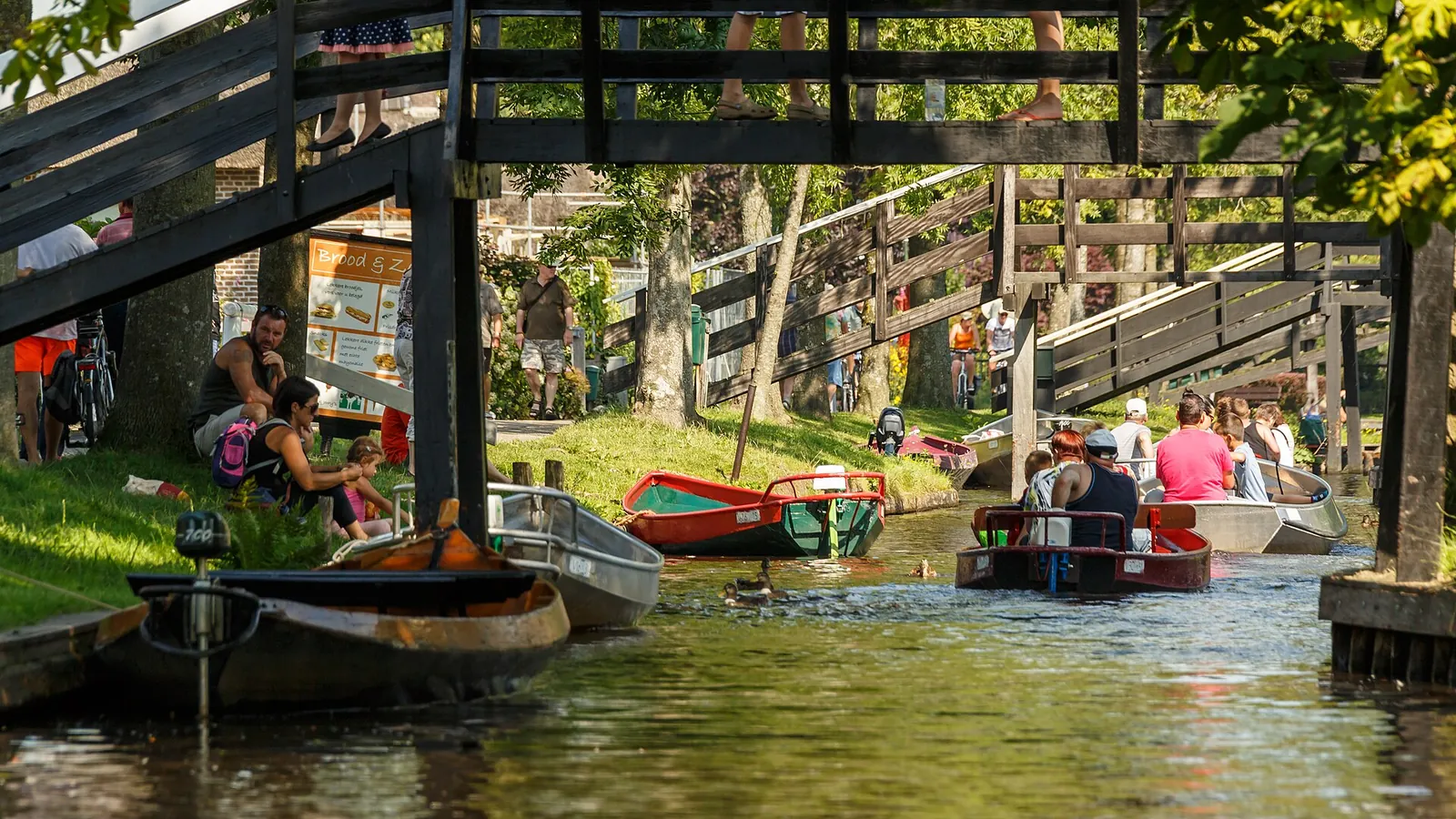
Thatched farmhouses along a canal in the car-free village of Giethoorn

Overijssel · Netherlands

Giethoorn

A car-free village of thatched farmhouses reachable only by water or on foot, its canals dug by hand from centuries of peat digging.

  • Best time April–September for boating weather
  • Stay 1 day, or overnight for a quiet evening
  • Good for A different, slower side of the Netherlands

Photo: CEphoto, Uwe Aranas · CC BY-SA 3.0

Welcome to Giethoorn

Giethoorn's canals were never planned as a tourist attraction — they're the direct result of centuries of peat digging, the waterways left behind once the peat itself had been cut and sold, with the village's houses built on the resulting narrow islands between them.

The result is a car-free settlement: much of the older part of the village has no roads at all, only footpaths, private wooden bridges and water, meaning most residents keep a boat the way people elsewhere keep a car, and many older farmhouses are still only reachable by water.

Giethoorn sits at the edge of the Weerribben-Wieden, one of the largest protected wetland areas in northwestern Europe, and that setting — thatched roofs, still water and reed marsh stretching beyond the village — gives it a different pace from anywhere else in this guide.

  • Off the Beaten Path
  • Scenic Region
  • Nature & Wildlife
  • Rural

Why visit

Why visit Giethoorn?

Giethoorn's case is a car-free village unlike anywhere else in the Netherlands, set inside a real protected wetland landscape.

  • It's car-free

    Much of the historic village has no roads at all — only water, footpaths and private wooden bridges connect its houses.

  • The canals are functional, not decorative

    They're the direct result of historic peat digging, not a planned tourist feature, which gives the village a real, unmanufactured character.

  • Piloting your own boat is part of the experience

    Silent electric 'whisper boats' are rented by the hour, letting visitors navigate the canals themselves rather than only riding as passengers.

  • It sits inside a genuine protected wetland

    The Weerribben-Wieden National Park surrounds the village, offering a real nature dimension beyond the canals themselves.

  • It's unlike any other destination in this guide

    No other Dutch town in this guide offers the same combination of car-free water streets and thatched rural architecture.

Main attractions

Top things to see in Giethoorn

Giethoorn's essential sights are woven directly into its car-free, water-based layout.

  1. Thatched farmhouses along a canal in the car-free village of Giethoorn

    The canals and waterside farmhouses

    The village's defining feature: narrow canals lined with thatched farmhouses, private gardens and small wooden jetties, still the main 'street' for many houses.

    Tip The quieter northern stretches of canal, away from the main tourist dock, are just as picturesque with far fewer boats.

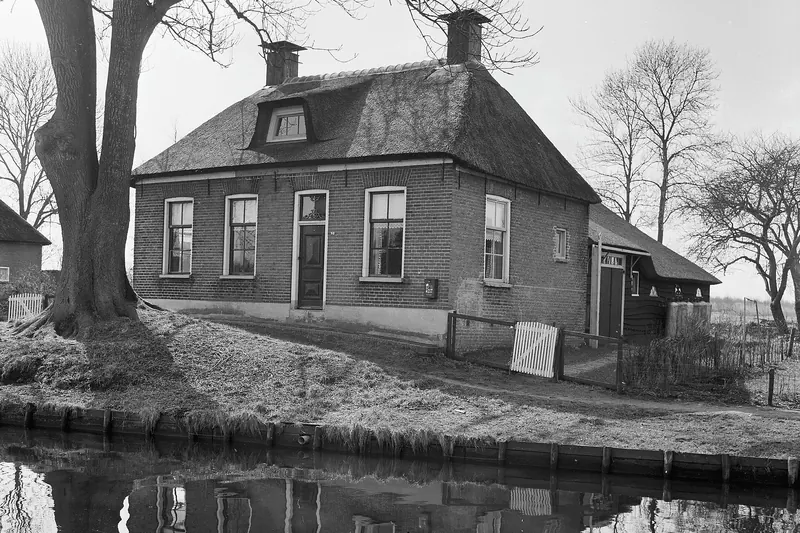
  2. A traditional thatched farmhouse beside a canal in Giethoorn

    Thatched farmhouses

    Traditional reed-thatched farmhouses, many still lived in and maintained using historic building techniques, line the canals throughout the older part of the village.

    Tip Many are private homes — admire and photograph from the water or path rather than stepping onto private jetties.

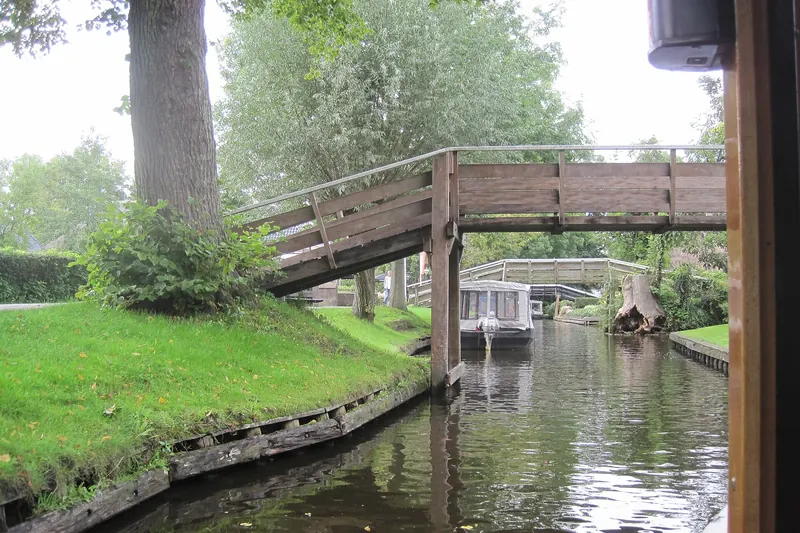
  3. A traditional wooden footbridge crossing a canal in Giethoorn

    The wooden footbridges

    Over 170 small wooden bridges connect the village's footpaths across its network of canals, each one a private or semi-private crossing rather than a formal public structure.

    Tip Crossing several bridges on foot is a good way to see the village slowly, between boat trips.

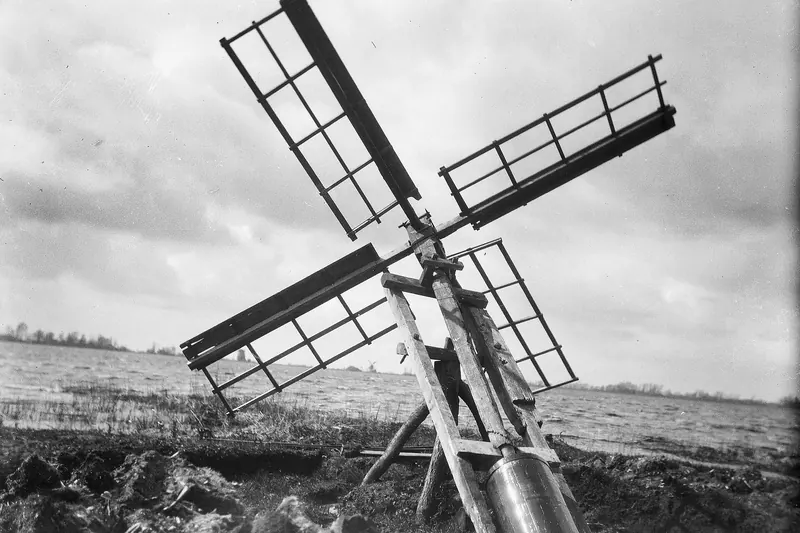
  4. A traditional tjasker windmill beside the Bovenwijde lake near Giethoorn

    The Bovenwijde lake and its windmill

    An open stretch of water at the edge of the village, where a small traditional tjasker windmill — once used to drain the surrounding peat marsh — still stands.

    Tip The Bovenwijde is where canal boats have room to open up a little more speed than the narrow village channels allow.

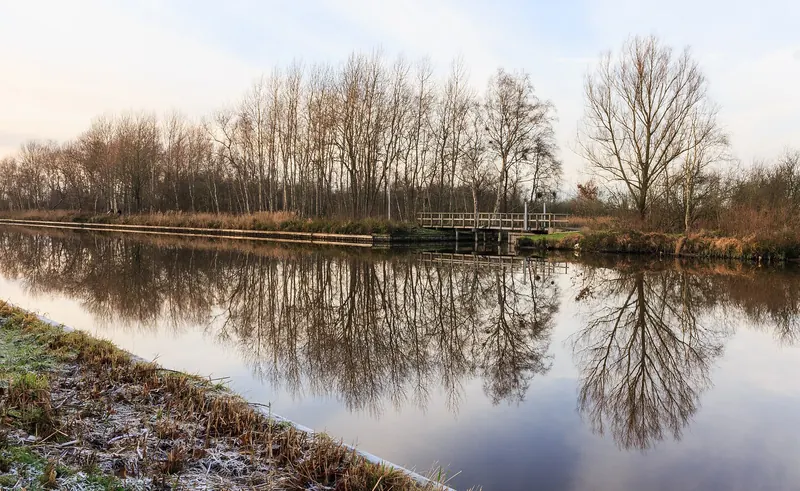
  5. Still water and reed marsh in the Weerribben-Wieden National Park near Giethoorn

    De Weerribben-Wieden National Park

    One of the largest protected wetlands in northwestern Europe, surrounding Giethoorn with reed marsh, peat lakes and walking and canoe trails beyond the village itself.

    Tip The park's marked walking and canoe routes reward an extra half-day beyond the village canals alone.

Things to do

Best things to do in Giethoorn

Giethoorn's car-free, water-based layout rewards slow exploration, by boat and on foot.

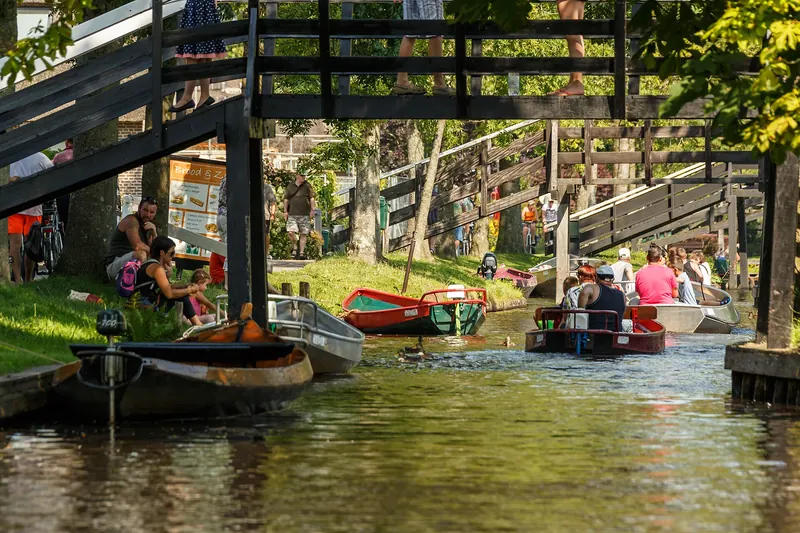
  1. A canal in Giethoorn, navigable by rented electric whisper boat

    Pilot a whisper boat yourself

    Silent electric boats, rented by the hour with no licence required, let visitors navigate the canals themselves rather than only riding as passengers.

    Tip Rent for at least two hours — the canals connect further than they first appear, and rushing defeats the point of the visit.

  2. A guided boat tour on the water near Giethoorn's Bovenwijde lake

    Take a guided canal tour

    For visitors who'd rather not pilot their own boat, guided tours cover the same canals with local commentary on the village's history.

    Tip A guided tour is a good option for a first visit, giving context you'd otherwise miss self-piloting.

  3. A quiet footpath beside thatched houses in Giethoorn

    Walk the car-free footpaths

    The village's footpaths let you see the thatched houses and bridges up close, at a pace boats simply can't match.

    Tip Walking and boating give different perspectives on the same village — worth doing both if time allows.

  4. A quiet waterway through the reed marsh of Weerribben-Wieden National Park

    Canoe or kayak through Weerribben-Wieden

    Beyond the village, the national park's marked canoe routes open up a wilder, reed-marsh landscape few day-trippers see.

    Tip Rental is available at several points around the village — a worthwhile extension for visitors with a full day.

  5. Ice skate on frozen canals

    In a genuine hard winter, when the canals freeze solid, Giethoorn briefly becomes a place to skate directly past the same thatched houses seen by boat in summer.

    Tip This depends entirely on a cold enough winter — not something to plan a trip around, but a real possibility some years.

  6. A wooden bridge in Giethoorn, a good vantage point at golden hour

    Photograph the village from a bridge at golden hour

    The wooden footbridges offer the best elevated vantage points over the canals, especially as the low evening light catches the thatched roofs.

    Tip Early morning works just as well as evening, and avoids the busiest midday boat traffic in your shot.

Local food

What to eat in Giethoorn

Giethoorn's food leans into its rural, waterside setting, with genuine regional Overijssel dishes alongside Dutch classics.

  • Pannenkoeken

    Large, thin Dutch pancakes, a defining Giethoorn specialty — the village has an unusually high concentration of dedicated pancake restaurants, several reachable only by boat.

    Where to try it Canal-side pannenkoeken restaurants throughout the village, many with their own boat dock.

  • Gerookte paling (smoked eel)

    Smoked eel from the surrounding lakes and wetlands, a traditional regional delicacy tied directly to Giethoorn's watery landscape.

    Where to try it Local restaurants and smokehouses around the village and wider Weerribben-Wieden area.

  • Poffertjes, small fluffy Dutch pancakes, dusted with powdered sugar

    Poffertjes

    Small, fluffy mini pancakes, a beloved Dutch treat, traditionally dusted with powdered sugar and a knob of butter.

    Where to try it Cafés throughout the village, often alongside the larger pannenkoeken.

  • Stroopwafels, thin waffles filled with caramel syrup

    Stroopwafel

    Two thin waffles sandwiching a gooey caramel syrup filling, sold at cafés throughout the village.

    Where to try it Canal-side cafés and small shops in the village centre.

  • A plate of bitterballen, deep-fried Dutch meat croquettes, with mustard

    Bitterballen

    Deep-fried, breadcrumbed balls of a rich beef ragout, the classic accompaniment to a beer on a canal-side terrace.

    Where to try it Restaurants and cafés along the main canal.

  • Wheels of farmhouse cheese on display

    Overijssel farmhouse cheese

    Local farms around Giethoorn produce their own cheese, sold at small farm shops rather than the industrial scale of Gouda's own region.

    Where to try it Small farm shops on the outskirts of the village and surrounding countryside.

Accommodation

Where to stay in Giethoorn

Staying overnight in Giethoorn gives access to the canals after the day-trip boat traffic has gone.

  • The village centre

    A handful of small hotels and B&Bs, several reachable partly by water, offer the village at its quietest in early morning and evening.

    Best for: Waking up on the canals without day-trip crowds

  • The surrounding countryside

    Farmhouse stays and campsites in the wider Weerribben-Wieden area, useful for visitors combining Giethoorn with the national park.

    Best for: A quieter, more rural stay just outside the village

What a night costs

Budget guesthouse
€70–100 per night
Mid-range hotel
€110–170 per night
Whisper boat rental (per hour)
€30–45
Pannenkoeken dinner
€12–18

Transport

Getting to and around Giethoorn

Giethoorn sits well off the main Randstad rail network, easier to reach by car than public transport.

Getting there

  • Rental car

    About 1h30 from Amsterdam or Utrecht, the most flexible way to reach Giethoorn and explore the wider Weerribben-Wieden area.

    Parking is available at the edge of the village — cars cannot enter the historic car-free core itself.

  • Train and bus

    Trains to Steenwijk, with a connecting bus into Giethoorn, take roughly two hours from Amsterdam.

    Workable without a car, though slower and less flexible than driving.

  • Organised day tours

    Full-day tours from Amsterdam, often combined with Zaanse Schans, are widely available and handle transport entirely.

    An easy option for visitors without a car who'd rather not manage train and bus connections.

Getting around

Giethoorn's historic core is car-free — getting around means walking, boating, or both.

  • Whisper boat

    Silent electric boats, rented by the hour with no licence required, are the classic way to see the village.

    Rental points are concentrated near the main village entrance and museum.

  • Walking

    Footpaths and wooden bridges connect the entire historic village on foot.

    Comfortable shoes are enough — the village is flat and compact.

  • Guided boat tour

    An easy option for visitors who'd rather not navigate themselves, with local commentary included.

    Tours depart regularly from the main dock in season.

When to go

Best time to visit Giethoorn

Giethoorn is prettiest, and most functional for boat rental, in the warmer months.

  • Spring (April–May)

    Best time

    Mild weather and thinner crowds than the summer peak, with the canals and gardens coming into bloom.

  • Summer (June–August)

    Good

    The warmest weather and the busiest boat traffic on the canals — book whisper boats ahead on weekends.

  • Autumn (September–October)

    Best time

    Mild and quiet, with good light for photography as the reed marshes turn golden.

  • Winter (November–March)

    Shoulder

    Cold and quiet, with limited boat rental, though a genuine hard freeze occasionally allows for skating on the canals.

Worth planning around: Summer weekends bring heavy boat traffic on the main canals — a weekday visit, or the quieter northern channels, gives a noticeably calmer experience.

Itinerary

One day in Giethoorn

The canals and surrounding wetland cover the essentials comfortably within a single day.

  1. Day1

    Canals and wetland

    The complete essential visit.

    • Morning Rent a whisper boat and explore the main canals and Bovenwijde.
    • Afternoon Walk the footpaths and wooden bridges, or canoe into Weerribben-Wieden.
    • Evening A pannenkoeken dinner at a canal-side restaurant.

Travel tips

Giethoorn travel tips

Practical notes on booking, timing and transport that make a real difference to a Giethoorn trip.

  • Rent a whisper boat for at least two hours — the canal network connects further than it first appears from the main dock.
  • Visit on a weekday if possible — summer weekends bring heavy boat traffic on the main canals.
  • A car is the most practical way to reach Giethoorn — public transport works but takes considerably longer.
  • Respect that many canal-side farmhouses are private homes — admire from the water or path rather than stepping onto jetties.
  • Book whisper boat rental ahead in summer, when demand outstrips the available fleet on busy days.
  • Combine Giethoorn with Zaanse Schans or a wider Overijssel countryside day if travelling by organised tour.

FAQ

Giethoorn: frequently asked questions

Is Giethoorn worth visiting?

Yes — it offers a car-free canal village found nowhere else in the Netherlands, set inside a real protected wetland, and piloting your own whisper boat through it is a distinctive experience.

How many days do you need in Giethoorn?

A single day covers the main canals and village comfortably. An overnight stay lets you see the canals in the quiet of early morning or evening, after the day-trip boat traffic has gone.

Is Giethoorn really car-free?

The historic core is — much of the older village has no roads at all, only footpaths, private wooden bridges and water. Cars park at the edge of the village and cannot enter the centre.

What is a whisper boat?

A silent electric boat, rented by the hour with no licence required, that lets visitors navigate Giethoorn's canals themselves rather than only riding as a passenger on a guided tour.

Do you need a car to visit Giethoorn?

It helps — Giethoorn sits well off the main rail network, and driving takes about 1h30 from Amsterdam versus roughly two hours by train and connecting bus.

Can you visit Giethoorn as a day trip from Amsterdam?

Yes, workable, either by rental car or an organised day tour, though an overnight stay gives a noticeably quieter, more atmospheric experience of the canals.

Read next

Related travel articles

Where to go

Beyond the Big Names: Places Worth the Detour

The most visited place in a country is rarely its best, and it is almost never its best value. This is a method for finding the destinations that do not make the postcards — and a set of examples from five of the 50 countries on this site.

Planning

Planning Your First Trip to Europe

Most first European trips go wrong in the same three ways: too many cities, too little time in each, and a route shaped by a cheap flight rather than by geography. Here is how to avoid all three.

Advertisement