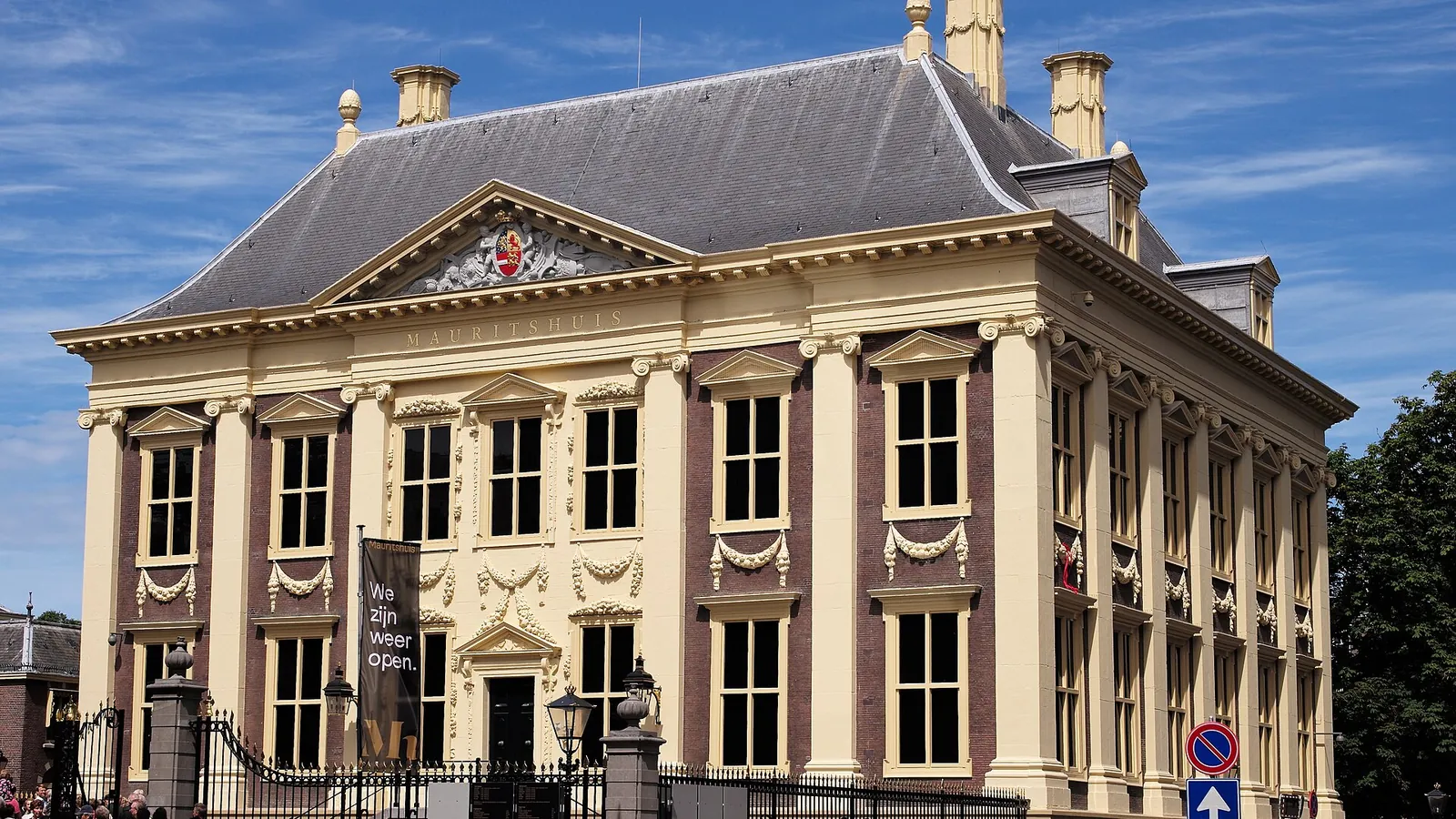
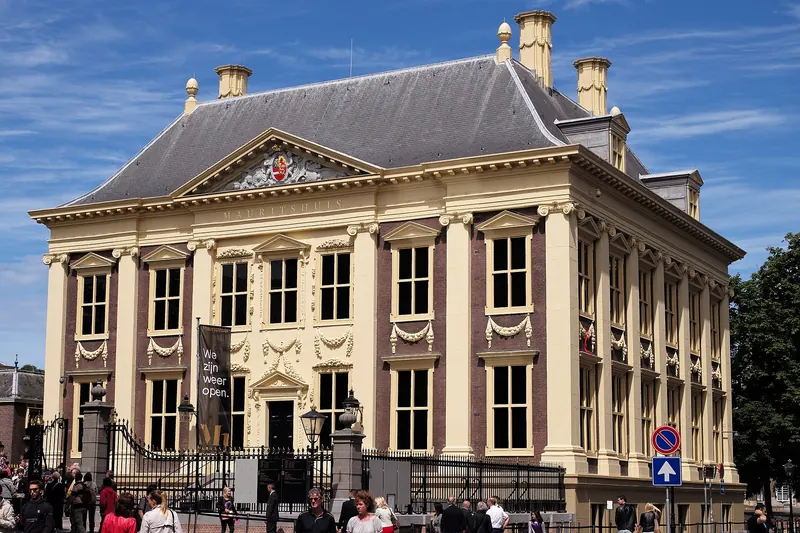
The Mauritshuis art museum on the Hofvijver lake in The Hague

South Holland · Netherlands

The Hague

The genuine seat of Dutch government and international justice, its stately art museums and North Sea beach giving it a character quite different from Amsterdam's tourist bustle.

  • Best time May–September for the beach, or any season for the museums
  • Stay 1–2 days
  • Good for Art, government history, an easy beach afternoon

Photo: Roman Boed from The Netherlands · CC BY 2.0

Welcome to the Hague

The Hague has been the seat of Dutch government since the 13th century, and despite that, it has never been the country's official capital — Amsterdam holds that title constitutionally, while The Hague runs the country day to day, hosting parliament, the royal family's working palace, and the International Court of Justice.

That institutional weight gives the city a different character from Amsterdam: stately rather than bustling, with the compact Mauritshuis holding one of the finest small art collections in Europe, anchored by Vermeer's Girl with a Pearl Earring and Rembrandt's The Anatomy Lesson of Dr. Nicolaes Tulp.

The Hague is also, unusually for a European seat of government, a beach town — Scheveningen, its North Sea resort district, sits just a tram ride from the government quarter, giving visitors a legitimate reason to combine museum-going with a walk along the pier.

  • Major City
  • Culture Arts
  • Coast Beaches
  • Historic Site

Why visit

Why visit the Hague?

The Hague's case is a world-class small art collection paired with real government and international-law history, plus a North Sea beach few European capitals can offer.

  • The Mauritshuis is one of Europe's finest small museums

    A compact collection built almost entirely of masterpieces, including Vermeer's Girl with a Pearl Earring, without the overwhelming scale of a larger institution.

  • It's the working seat of Dutch government

    The Binnenhof complex has housed Dutch political power since the 13th century and remains in active use today.

  • It's home to international justice

    The Peace Palace houses the International Court of Justice, giving The Hague a real global significance beyond its size.

  • Scheveningen adds a genuine beach dimension

    A proper North Sea resort with a pier and boardwalk, a short tram ride from the museums and government quarter.

  • It's less crowded than Amsterdam

    The Hague's sights rarely feel overrun, even at the Mauritshuis, despite the quality of what's on show.

Main attractions

Top things to see in the Hague

The Hague's essential sights span its government quarter, world-class small museums and North Sea coastline.

  1. The Mauritshuis art museum on the Hofvijver lake in The Hague

    The Mauritshuis

    A compact 17th-century townhouse turned museum, its collection built almost entirely of masterpieces — Vermeer's Girl with a Pearl Earring, Rembrandt's The Anatomy Lesson, and Carel Fabritius's The Goldfinch among them.

    Tip Book timed-entry tickets online — the collection's small scale means the museum limits visitor numbers even outside peak season.

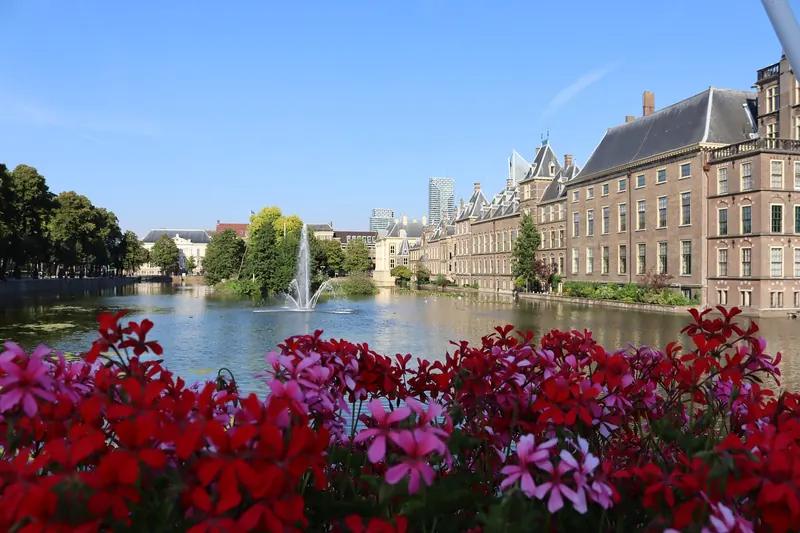
  2. The historic Binnenhof government complex in The Hague

    The Binnenhof

    The genuine seat of Dutch political power since the 13th century, its medieval Ridderzaal (Hall of Knights) still used for the annual state opening of parliament.

    Tip The complex reopened after major renovation — check current visitor access, since parts function as working government offices.

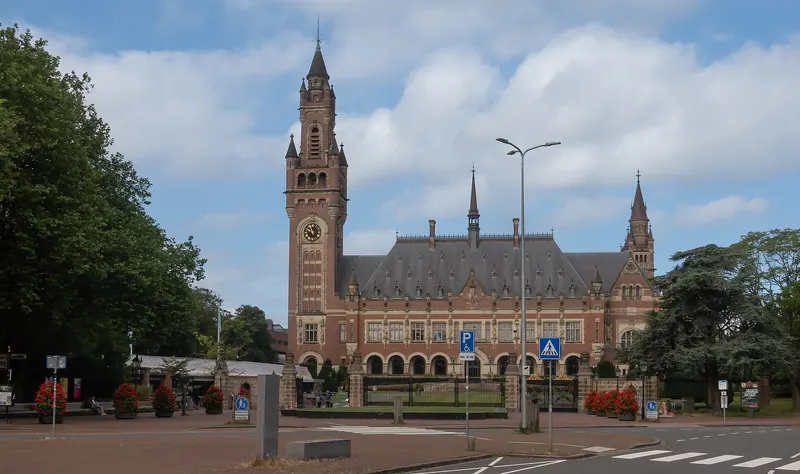
  3. The Peace Palace, home to the International Court of Justice, in The Hague

    The Peace Palace

    A grand 1913 building housing the International Court of Justice and the Permanent Court of Arbitration, giving The Hague real standing as a centre of international law.

    Tip The visitor centre across the road explains the building's role even when court sessions aren't open to the public.

  4. Miniature-scale Dutch buildings and landmarks at Madurodam

    Madurodam

    A charming miniature park recreating the Netherlands' most famous buildings and landmarks at 1:25 scale, a national institution since 1952.

    Tip Best suited to visitors travelling with children, though the detail and craftsmanship have a real appeal regardless of age.

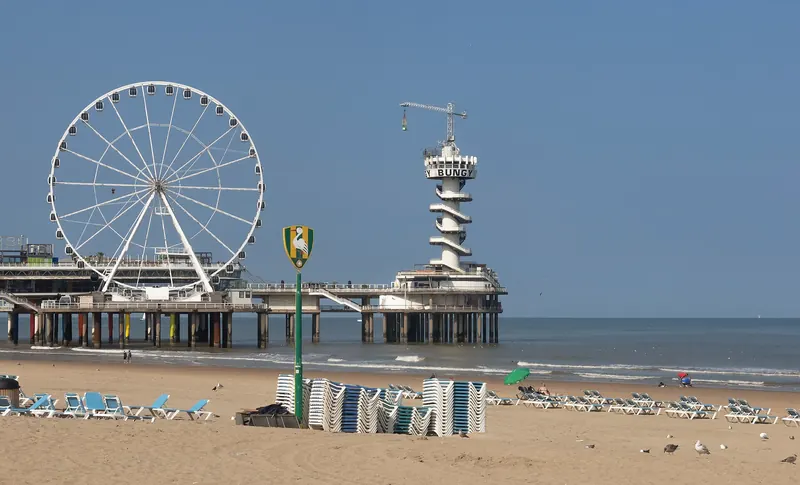
  5. Scheveningen Pier extending into the North Sea at The Hague's beach district

    Scheveningen Pier

    A long pier extending out over the North Sea, with a Ferris wheel, bungee jump and a long sandy beach stretching in both directions below the boardwalk.

    Tip The pier and boardwalk are a short, direct tram ride from the museums and government quarter — easy to combine in one day.

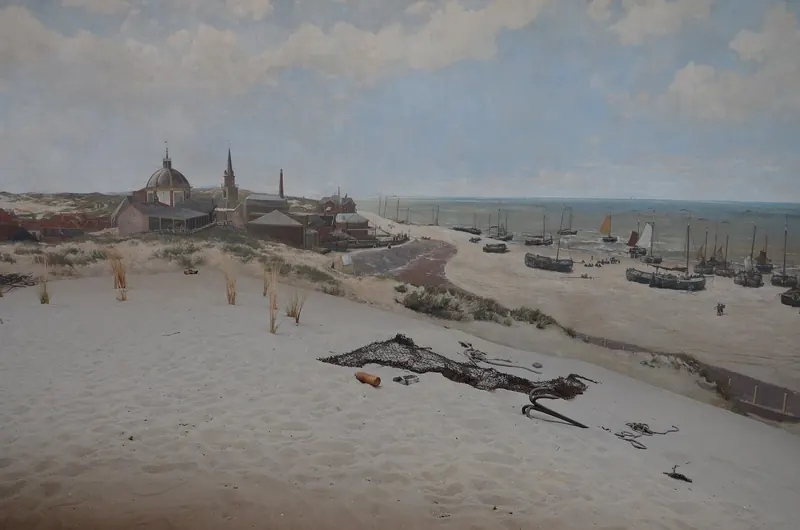
  6. The vast 19th-century cylindrical seascape painting Panorama Mesdag

    Panorama Mesdag

    An enormous 1881 cylindrical painting of the Scheveningen coast, viewed from a central platform designed to create a full 360-degree illusion of standing on the dunes.

    Tip One of the world's oldest surviving panorama paintings still displayed in its purpose-built rotunda — worth the modest entry fee.

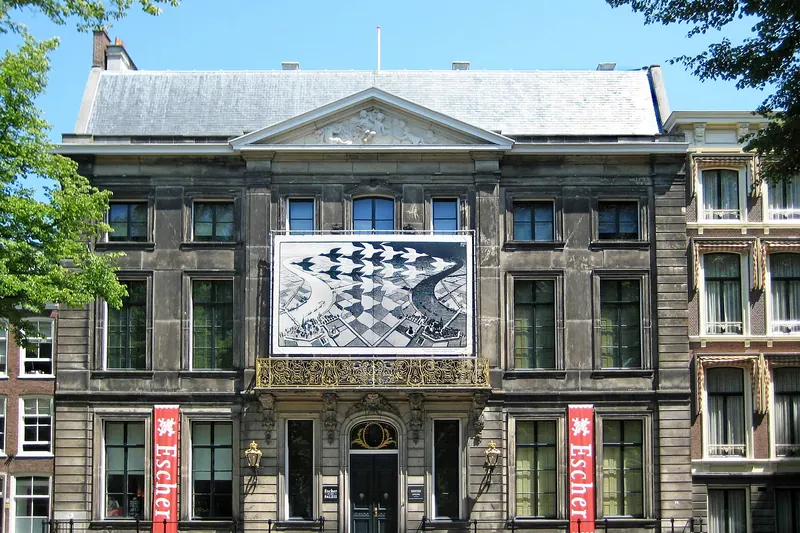
  7. The former royal palace now housing the Escher in Het Paleis museum in The Hague

    Escher in Het Paleis

    A former royal winter palace now dedicated to M.C. Escher's mind-bending graphic work, the optical-illusion prints displayed in a fittingly grand historic setting.

    Tip The top floor's illusion rooms are popular for photos — expect a short wait during busy periods.

Things to do

Best things to do in the Hague

Beyond the museums and government quarter, The Hague rewards its North Sea coastline and a genuine day-trip case for nearby Delft.

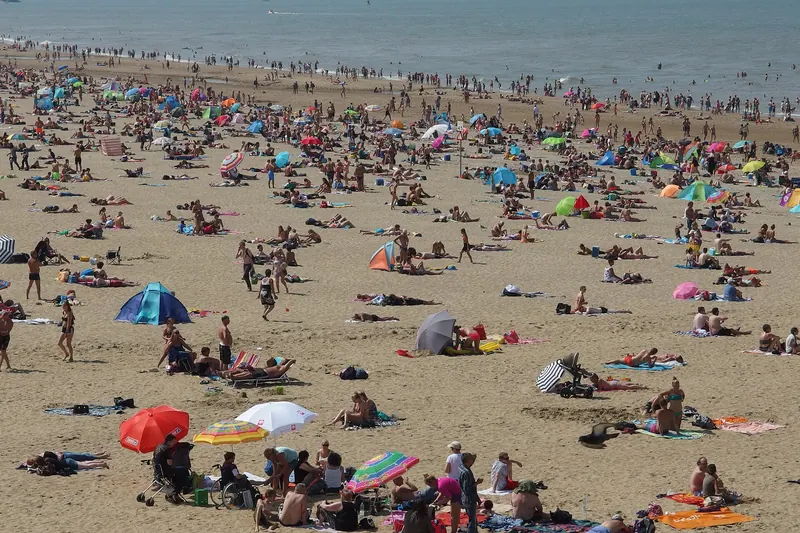
  1. The sandy beach at Scheveningen, The Hague's North Sea resort district

    Walk Scheveningen's beach and pier

    A proper North Sea beach and boardwalk, a short tram ride from the museums, with beach clubs, a pier and a long stretch of sand in both directions.

    Tip Sunset here is worth timing a visit around — the pier and boardwalk face directly into the evening light.

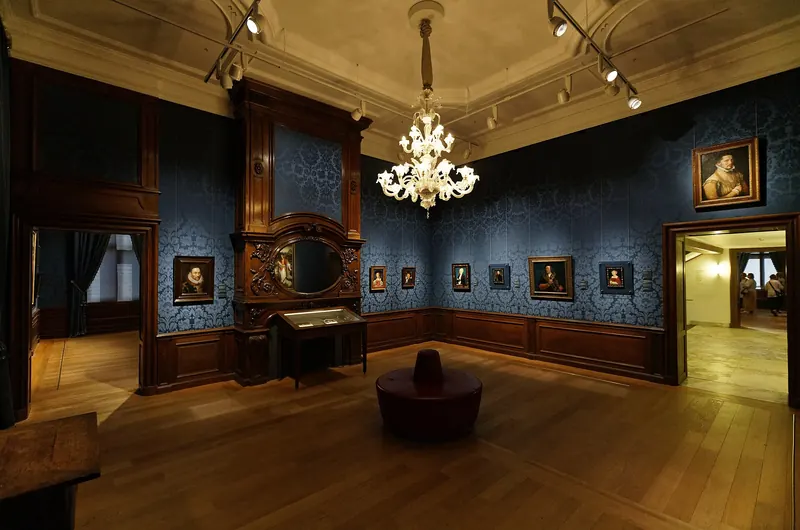
  2. A gallery room inside the Mauritshuis museum in The Hague

    See Girl with a Pearl Earring up close

    Vermeer's small, famous portrait draws a disproportionate crowd to one quiet corner of the Mauritshuis — worth timing your visit for a moment when the room is less busy.

    Tip Early morning, right at opening, gives the best chance of a quieter moment in front of the painting.

  3. Cycle the North Sea coast dunes

    Dedicated cycle paths run along the dunes north and south of Scheveningen, offering a completely different, wilder coastal landscape than the beach town itself.

    Tip The dunes north toward Wassenaar are quieter and less developed than the stretch immediately by the pier.

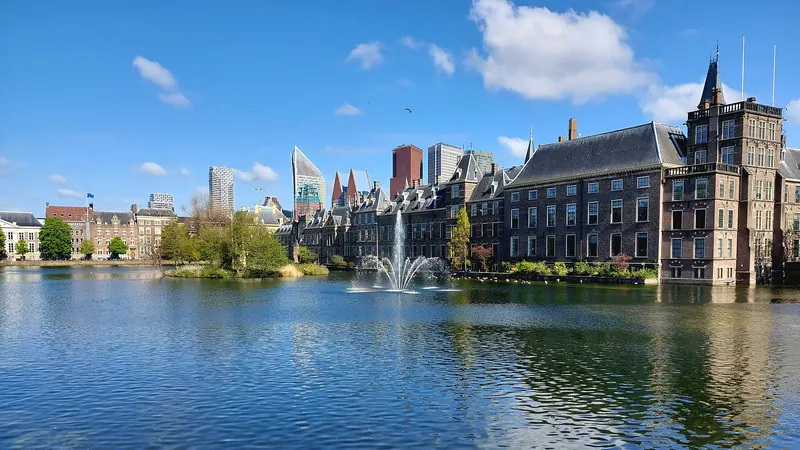
  4. The Hofvijver lake reflecting the Binnenhof government buildings in The Hague

    Explore the Hofvijver and government quarter

    The reflecting lake beside the Binnenhof gives one of the most photographed views in the city, the government buildings mirrored in still water.

    Tip The Lange Voorhout street nearby, lined with grand townhouses, is a pleasant extension of the same walk.

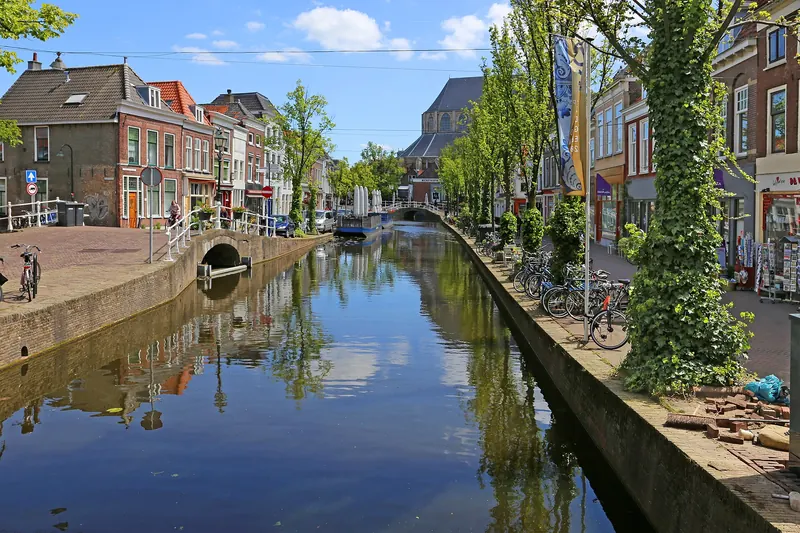
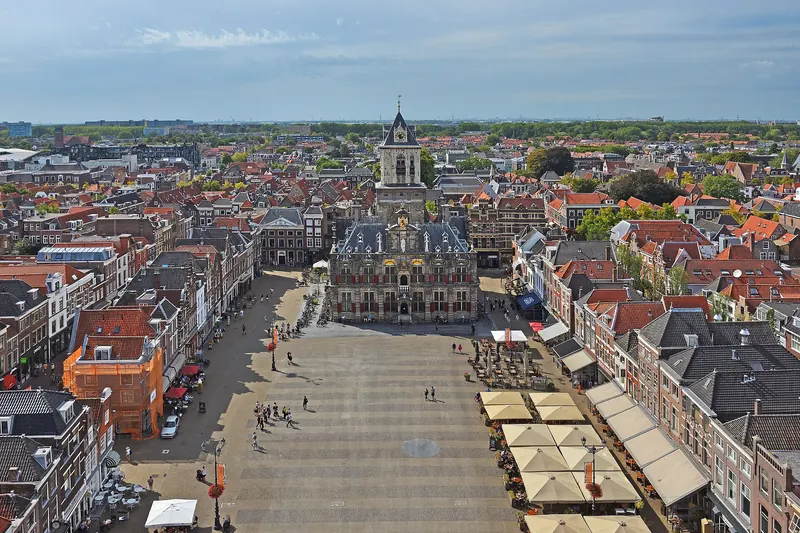
  5. A canal in the historic centre of Delft, near The Hague

    Day-trip to Delft

    Vermeer's home city is just a short tram ride away, its old town and Delftware tradition making an easy half-day addition to a Hague stay.

    Tip Tram 1 runs directly between The Hague and Delft's centre — no train transfer required.

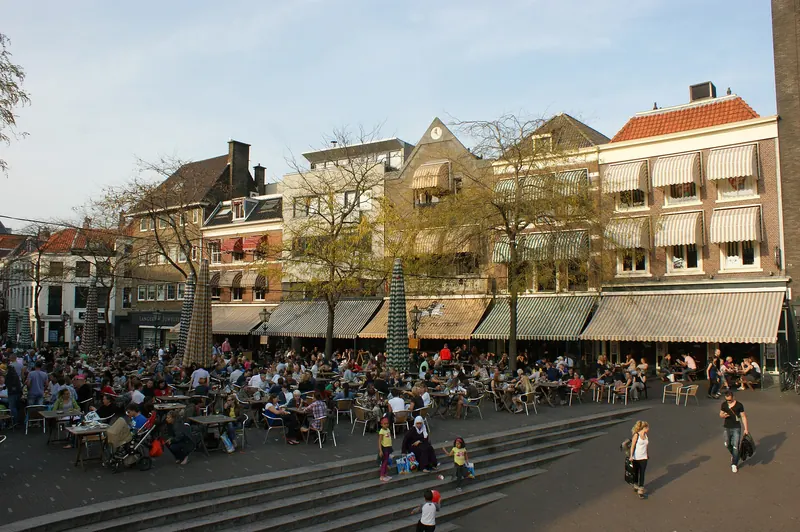
  6. The Grote Markt square in central The Hague

    Browse the Grote Markt

    The city's central square, lively with restaurant terraces and a lower-key, more local feel than the museum quarter nearby.

    Tip A good spot for an evening meal after a day of museums — more relaxed than the tourist-heavy streets near the Mauritshuis.

Local food

What to eat in the Hague

The Hague's food culture carries a strong Indonesian-Dutch heritage alongside the usual Dutch classics, a legacy of returnees from the former Dutch East Indies.

  • Stroopwafels, thin waffles filled with caramel syrup

    Stroopwafel

    Two thin waffles sandwiching a gooey caramel syrup filling, best bought fresh and warm rather than a packaged supermarket version.

    Where to try it Market stalls around the Grote Markt and city centre.

  • A plate of bitterballen, deep-fried Dutch meat croquettes, with mustard

    Bitterballen

    Deep-fried, breadcrumbed balls of a rich beef ragout, the classic accompaniment to a beer at any Dutch bar.

    Where to try it Bars around the Grote Markt and Plein squares.

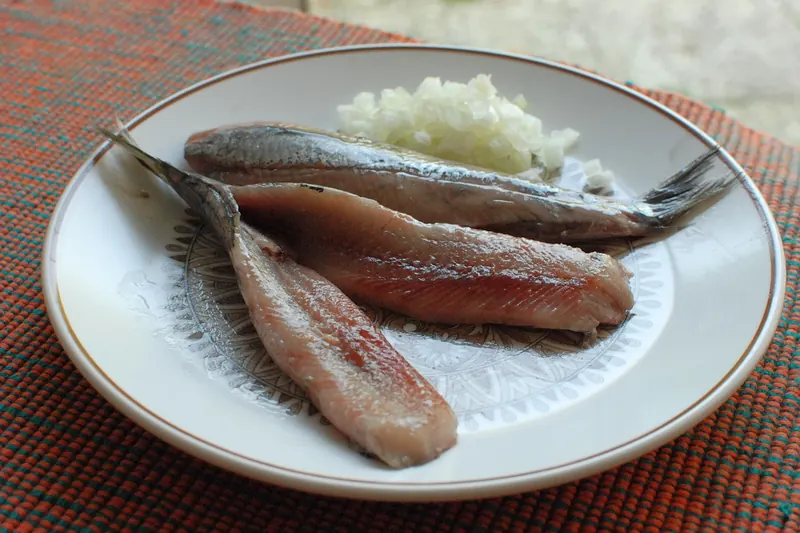
  • Raw Dutch herring served with chopped onion

    Haring (raw herring)

    Lightly cured raw herring, traditionally eaten by the tail with chopped onion — a genuine Dutch institution, especially good fresh near the Scheveningen fishing harbour.

    Where to try it Herring stalls around Scheveningen's harbour and the city centre markets.

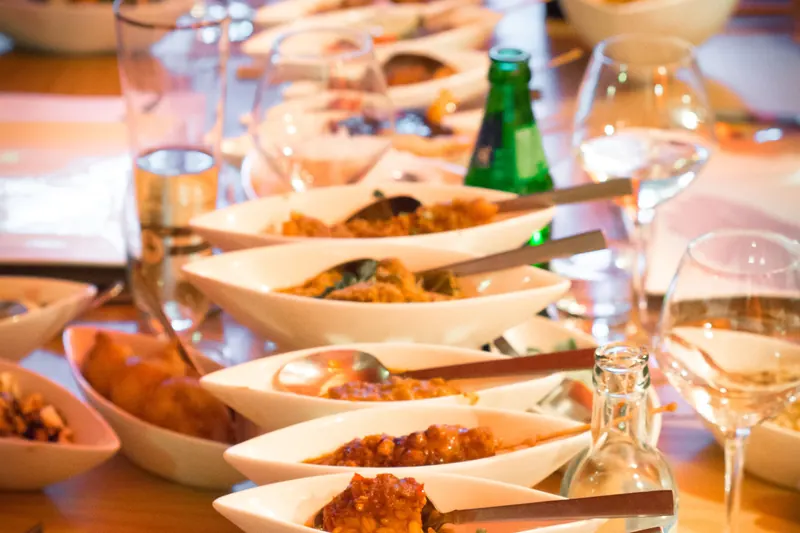
  • A rijsttafel spread of Indonesian dishes served on The Hague's Javastraat

    Rijsttafel on Javastraat

    An elaborate spread of small Indonesian dishes, a defining Hague tradition thanks to a large community with roots in the former Dutch East Indies, concentrated along Javastraat.

    Where to try it Long-running Indonesian restaurants on and around Javastraat, several open for generations.

  • A portion of kibbeling, Dutch battered fried fish, with sauce

    Kibbeling

    Bite-sized battered, deep-fried white fish with a garlicky sauce, at its best fresh from a stall near Scheveningen's fishing harbour.

    Where to try it Fish stalls along the Scheveningen harbourfront.

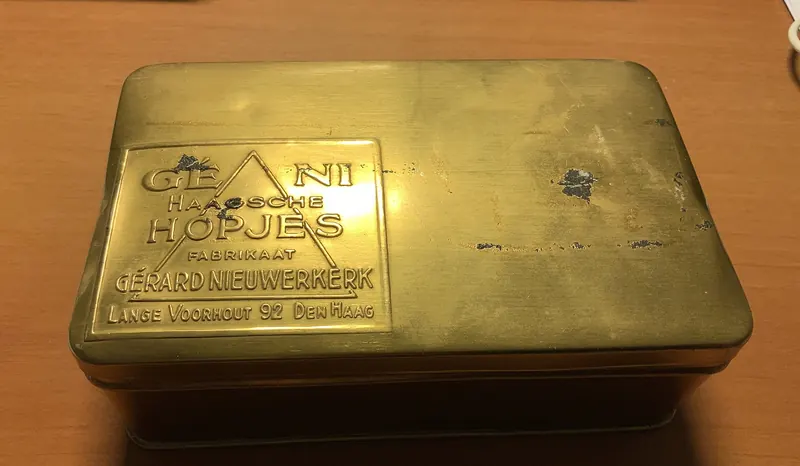
  • Haagse hopjes, coffee-flavoured caramel sweets from The Hague

    Haagse hopjes

    Small coffee-flavoured caramel sweets invented in The Hague in the 18th century, still sold in the distinctive tins found in shops across the city.

    Where to try it Confectioners and souvenir shops throughout the city centre.

Accommodation

Where to stay in the Hague

The Hague splits between the stately city centre and the beach at Scheveningen, both easy bases.

  • City centre

    The government and museum quarter, the most convenient base for sightseeing, with a mix of business and boutique hotels.

    Best for: Walking distance to the Mauritshuis and Binnenhof

  • Scheveningen

    More resort-like than the city centre, with sea-view hotels and a short, direct tram ride to the museums.

    Best for: A beach-town stay with easy tram access to the centre

What a night costs

Budget hotel
€75–110 per night
Mid-range hotel
€120–180 per night
Mauritshuis ticket
About €17.50
Rijsttafel dinner
€25–40 per person

Transport

Getting to and around the Hague

The Hague sits on the main rail line through the Randstad, easy to reach from anywhere in the region.

Getting there

  • Train from Amsterdam

    Direct intercity trains connect Amsterdam to The Hague in under an hour.

    Trains arrive at either Den Haag Centraal or Den Haag HS — check which is closer to your accommodation.

  • Train from Rotterdam or Delft

    Both Rotterdam and Delft connect to The Hague in well under 30 minutes.

    Tram 1 also runs directly to Delft, a scenic alternative to the train.

  • Rotterdam The Hague Airport

    A smaller regional airport with limited European routes; Amsterdam Schiphol is the main international gateway.

    A direct train or bus connects the airport area to The Hague's centre.

Getting around

The Hague's centre is walkable, with trams reaching Scheveningen and the outer neighbourhoods easily.

  • Walking

    The Mauritshuis, Binnenhof and Hofvijver are all within a compact, walkable government and museum quarter.

    The city centre is flat and easy to cover on foot in a morning.

  • Trams (HTM)

    A comprehensive network connects the centre to Scheveningen, Madurodam and the wider city efficiently.

    An OV-chipkaart or contactless card covers all HTM transit — tap in and out on every journey.

  • Cycling

    Flat terrain and good cycle paths make biking a pleasant way to reach Scheveningen or the dunes.

    Rental is available near both main train stations and throughout the city centre.

When to go

Best time to visit the Hague

The Hague's museums work year-round, but Scheveningen's beach only comes alive in the warmer months.

  • Spring (April–May)

    Good

    Mild temperatures and thinning crowds, with the beach starting to come back to life by May.

  • Summer (June–August)

    Best time

    The best weather for Scheveningen's beach and boardwalk, alongside the museums' full opening hours.

  • Autumn (September–October)

    Good

    Mild and quiet, a good season for the museums without summer's beach crowds.

  • Winter (November–March)

    Shoulder

    Cold, grey and often windy on the coast, though the Mauritshuis and other indoor sights work well regardless.

Worth planning around: Nothing strongly — the museums are a year-round draw regardless of beach weather.

Itinerary

Two days in The Hague

Built around the museum quarter, with the beach and a Delft day trip rounding out the visit.

  1. Day1

    Museums and government quarter

    The city's essential art and history.

    • Morning The Mauritshuis, booked ahead.
    • Afternoon The Binnenhof, Hofvijver and Lange Voorhout.
    • Evening Dinner on the Grote Markt.
  2. Day2

    The coast, or a Delft day trip

    Either the beach or a short trip to Vermeer's home city.

    • Morning Scheveningen's pier and beach, or the tram to Delft.
    • Afternoon Madurodam or Panorama Mesdag, or continued exploring in Delft.
    • Evening A rijsttafel dinner on Javastraat.

Travel tips

The Hague travel tips

Practical notes on booking, timing and transport that make a real difference to a The Hague trip.

  • Book Mauritshuis tickets online ahead — the museum's small scale means it limits visitor numbers even outside peak season.
  • Check which station your train arrives at — Den Haag Centraal or Den Haag HS — before booking accommodation.
  • Combine The Hague with Delft via Tram 1 rather than the train — it's a scenic, direct alternative.
  • Time a Scheveningen visit for late afternoon and sunset — the pier and boardwalk face directly into the evening light.
  • Carry a contactless card — many smaller vendors no longer accept cash at all.
  • Book a rijsttafel dinner on Javastraat ahead on weekends — the best-known restaurants fill up.

FAQ

The Hague: frequently asked questions

Is The Hague worth visiting alongside Amsterdam?

Yes — it offers world-class small museums, real government and international-law history, and a proper North Sea beach, all in under an hour from Amsterdam by train.

How many days do you need in The Hague?

One to two days covers the Mauritshuis, Binnenhof and Scheveningen beach comfortably. A day trip from Amsterdam is workable but rushed given the quality of the museums.

Is The Hague the capital of the Netherlands?

No — Amsterdam holds that title constitutionally, but The Hague is the genuine seat of government, hosting parliament, the working royal palace and the International Court of Justice.

What is the Mauritshuis known for?

A compact 17th-century collection built almost entirely of masterpieces, most famously Vermeer's Girl with a Pearl Earring, alongside major works by Rembrandt and other Dutch Golden Age painters.

Can you combine The Hague with a beach day?

Yes, easily — Scheveningen, The Hague's North Sea resort district, is a short direct tram ride from the museum and government quarter.

Is Delft easy to visit from The Hague?

Yes, very — Tram 1 runs directly between the two, taking well under 30 minutes, making Delft an easy half-day addition to a Hague stay.

Read next

Related travel articles

Transport

Getting Around Europe by Train

European rail is excellent and confusing — six national operators, three completely different pricing models, and a rail pass that is either a bargain or a waste depending on where you are going. Here is how to work out which.

Where to go

Beyond the Big Names: Places Worth the Detour

The most visited place in a country is rarely its best, and it is almost never its best value. This is a method for finding the destinations that do not make the postcards — and a set of examples from five of the 50 countries on this site.

Advertisement