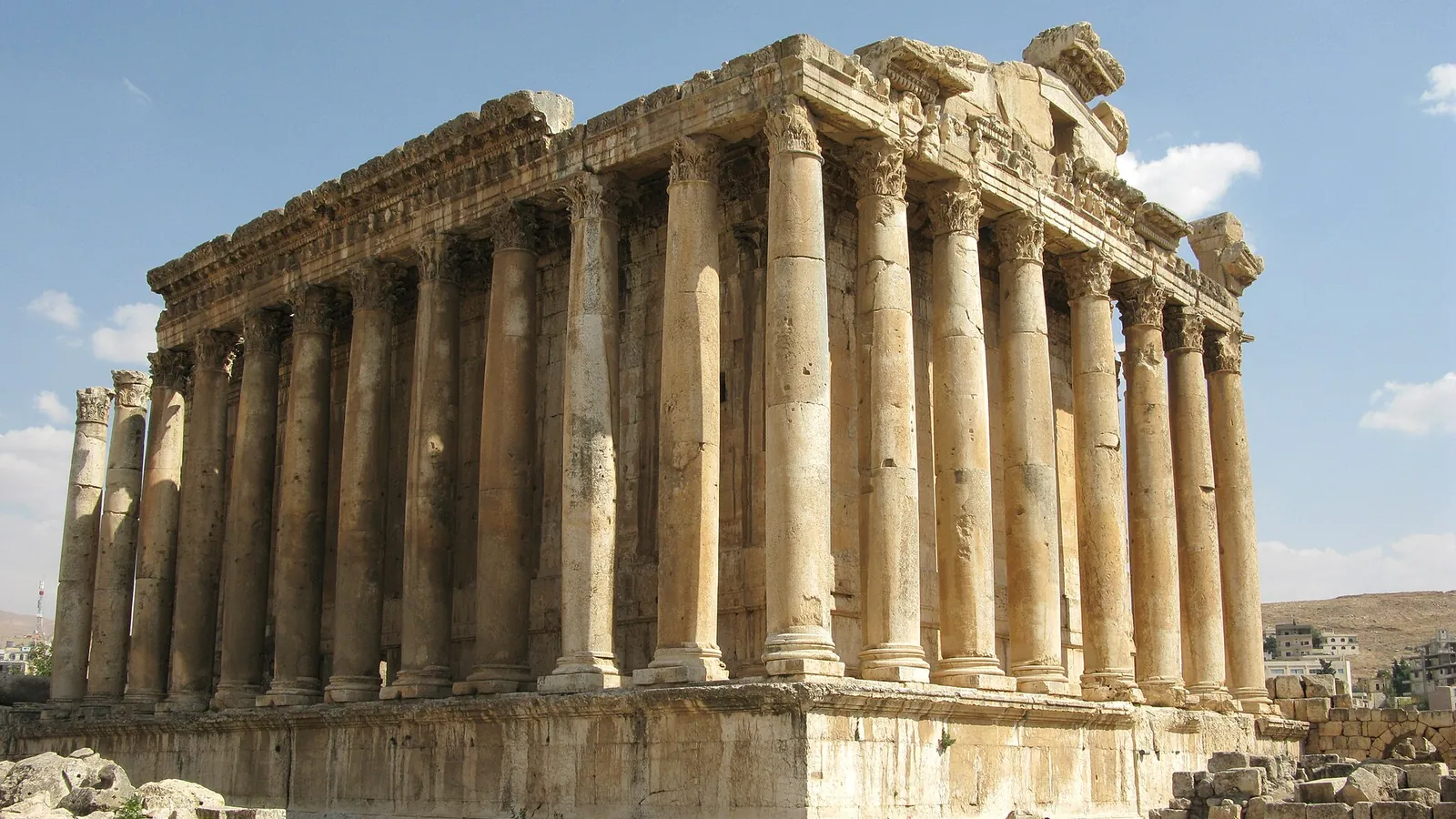
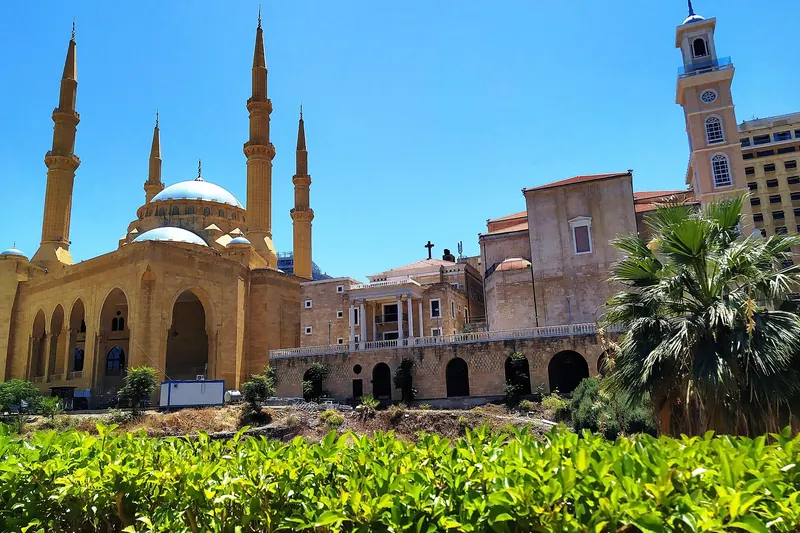
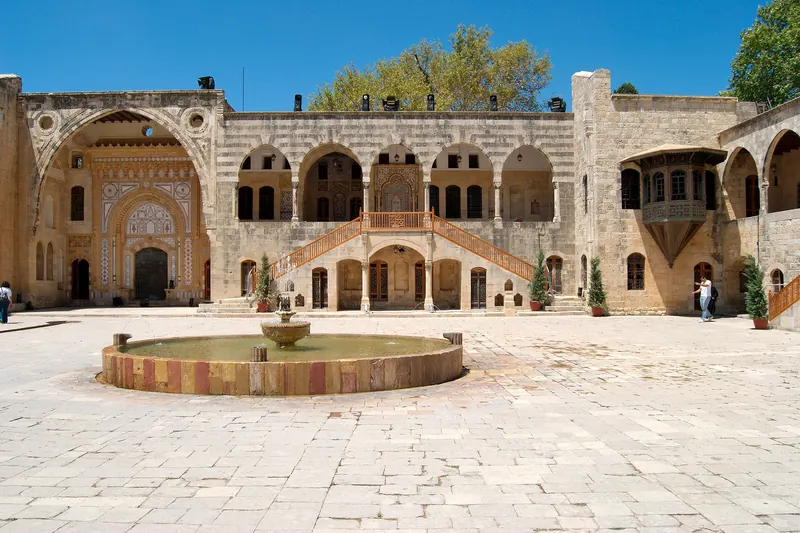
The columns and doorway of the Temple of Bacchus at Baalbek

Baalbek-Hermel Governorate, Bekaa Valley · Lebanon

Baalbek

The largest Roman temple complex ever built, with six of the tallest columns of the ancient world still standing above the Bekaa Valley and a temple more complete than the Parthenon.

  • Best time April–June and September–October
  • Stay Half a day to a day
  • Good for Roman archaeology, photography, history

Photo: Vyacheslav Argenberg · CC BY 4.0

Welcome to Baalbek

Baalbek lies on the eastern slopes of the Bekaa Valley, about 85 km north-east of Beirut, at 1,100 metres. It was an ancient sanctuary of a Phoenician god, Baal, and under the Greeks and Romans it was called Heliopolis, 'the city of the sun'. From the 1st century BCE to the 3rd century CE, the Romans built an enormous temple complex here, dedicated to Jupiter, Bacchus and Venus, in the largest sanctuary in their empire.

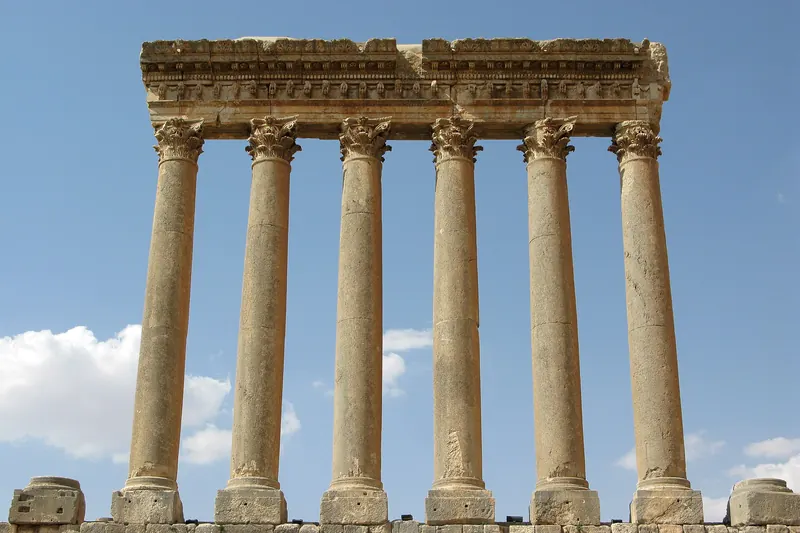
The scale is what stays with visitors. The Temple of Jupiter stood on a huge platform, and six of its columns, 22 metres high, still tower over the site. Beside it, the Temple of Bacchus, with its carved doorway and coffered ceiling, is one of the best-preserved Roman temples anywhere and is larger than the Parthenon. Beneath the platform, the Trilithon, three limestone blocks each weighing around 800 tonnes, is among the biggest worked stones in the world.

Baalbek was listed by UNESCO in 1984 and was for many years Lebanon's greatest tourist attraction, with an annual international festival in the temples. It lies in an area where Hezbollah has strong support, and the city and surrounding valley were bombed heavily in October and November 2024, with evacuation orders that at times included areas close to the ruins. UNESCO gave provisional enhanced protection to the site and other Lebanese monuments in that period. At the time of writing, many governments advised against travel to the Bekaa, so check current advice before considering a visit.

  • UNESCO Site
  • Archaeology
  • Historic Site

Why visit

Why visit Baalbek?

Baalbek is the finest Roman site in the Middle East and one of the great sites of the ancient world.

  • The scale of the Temple of Jupiter

    The six surviving columns are 22 metres tall, and the temple platform, the Trilithon and the huge blocks of its foundation show the ambition of Roman builders.

  • The Temple of Bacchus

    Almost complete, with carved friezes, a richly decorated doorway and a cella that can still be entered.

  • The giant stones

    The Trilithon and the nearby quarry, which holds an unfinished stone of about 1,000 tonnes, raise questions about how the Romans moved such weights.

  • A layered site

    Roman, Byzantine and Islamic remains stand together, including an Umayyad mosque and later fortifications.

  • A dramatic setting

    The Bekaa Valley and the Anti-Lebanon mountains form a superb backdrop, particularly at sunset.

Main attractions

Top things to see in Baalbek

The site takes two to three hours. This describes the site as it was before 2024 and is subject to current access.

  1. The six standing columns of the Temple of Jupiter at Baalbek

    The Temple of Jupiter

    The great temple of the complex, of which six Corinthian columns survive, standing about 22 metres high with their entablature. It was reached by a huge staircase, a forecourt and a propylaeum.

    Tip Stand at the base of the columns to appreciate the scale.

  2. The Temple of Bacchus

    A superbly preserved temple of the 2nd century CE, with fluted columns, a coffered ceiling and an ornately carved doorway. It was used as a fortress in the Middle Ages.

    Tip Look at the carved ornament on the doorway and the interior walls.

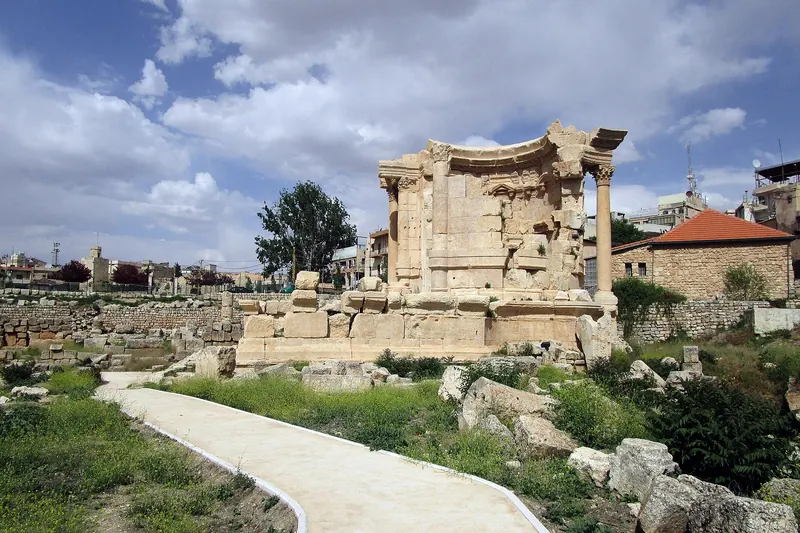
  3. The small round Temple of Venus at Baalbek

    The Temple of Venus

    A small circular temple with a curved facade, built outside the main sanctuary, unlike anything else in the Roman world.

    Tip It is a short walk from the main complex.

  4. The Great Court and the Hexagonal Court

    The vast forecourts that led to the main temple, with the remains of altars, basins and exedrae. They give a sense of the scale of the ceremonial processions.

    Tip Walk through the underground passages beneath the courts.

  5. The Trilithon and the Stone of the Pregnant Woman

    Three enormous blocks in the temple's western wall, each about 800 tonnes, and an even larger unfinished block, about 1,000 tonnes, in the quarry about a kilometre away.

    Tip The quarry stone is a short drive from the main site.

  6. The Baalbek Museum and the Umayyad mosque

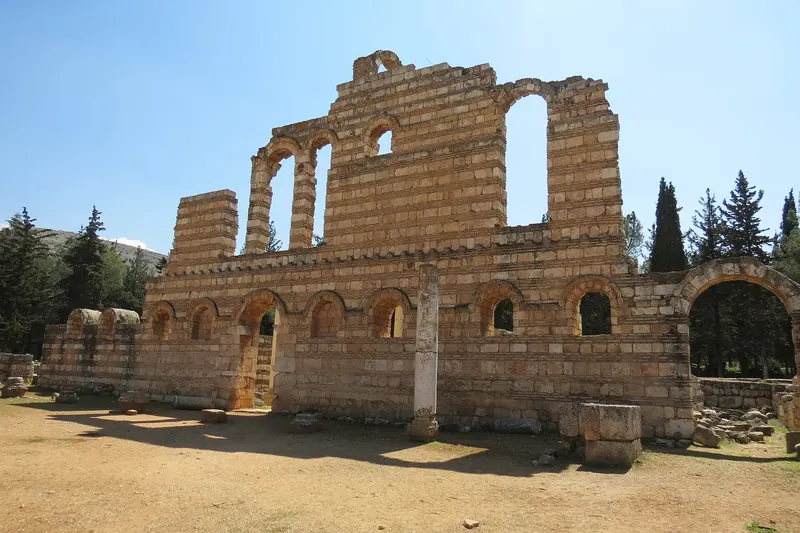
    A small museum in the vaults of the site, with finds from Baalbek, and the ruins of a mosque built after the Arab conquest.

    Tip Check whether they are open.

Things to do

Best things to do in Baalbek

Baalbek is best in a slow morning, if access allows.

  1. Walk the site at opening

    The light is soft and the crowds are small in the first hour, and the temples look their best.

    Tip Check the opening hours and current access before you go.

  2. See the Trilithon and the quarry stone

    Examine the huge blocks that form the foundation, and visit the unfinished stone in the quarry.

    Tip A guide or a good guidebook explains the engineering.

  3. Hire a local guide

    A guide brings the history and the layout to life, and can explain how the site has changed.

    Tip Ask your driver or hotel for a recommendation.

  4. Have lunch in Baalbek

    Local restaurants serve grilled meats, mezze and the region's sweets, including the famous Baalbek sfiha.

    Tip Try a sfiha, a small meat pie, at a bakery.

  5. Visit a Bekaa winery

    Wineries such as Ksara and Kefraya are about an hour's drive to the south, and offer tastings.

    Tip Book in advance and confirm they are open.

  6. Attend the Baalbek International Festival, if held

    The summer festival, with concerts and performances in the temples, has been held in most years since 1956, but has been suspended in difficult ones.

    Tip Check whether it is taking place.

Local food

What to eat in Baalbek

Baalbek's food is the food of the Bekaa: bread, dairy, meat and fresh produce, with strong local traditions of sweets.

  • Sfiha

    A small open pie of minced lamb with tomatoes, onions and spices, baked in a wood oven. Baalbek is famous for its version.

    Where to try it Bakeries in the town centre.

  • Grilled meats

    Lamb, chicken and mixed grills served with bread, pickles and salads.

    Where to try it Restaurants near the site.

  • Baalbek sweets

    Sweet shops sell baklava, knefe and ashta-filled pastries.

    Where to try it Sweet shops in the town centre.

  • Bekaa wine and arak

    Wineries in the valley produce wine, and the region is known for arak.

    Where to try it Wineries and restaurants nearby.

  • Fresh dairy

    Labneh, white cheese and yoghurt made from local milk, eaten with bread and olive oil.

    Where to try it Restaurants and shops.

  • Bread and manakish

    Freshly baked flatbread and toppings, a staple of any meal.

    Where to try it Bakeries.

Accommodation

Where to stay in Baalbek

Most visitors visit as a day trip from Beirut, and accommodation in the town has been limited and affected by conflict. Check what is open, and consider staying in Beirut or the mountains.

  • Baalbek town

    A few hotels near the ruins, some historic. Availability has varied with conditions.

    Best for: An early start at the site

  • Zahle and the wineries

    The town of Zahle, about 50 km south, has guesthouses and restaurants, and is close to several wineries.

    Best for: Wine and mountain views

  • Beirut

    A wider choice, about two and a half hours away.

    Best for: Most visitors

What a night costs

Guesthouse
US$40–80 per night
Mid-range hotel
US$90–150 per night
Site entry
A few US dollars
Driver from Beirut for the day
US$80–150

Transport

Getting to and around Baalbek

Baalbek is about 85 km from Beirut, over the Mount Lebanon range via the Beirut–Damascus highway. Check current conditions and advice.

Getting there

  • Private driver or tour

    About two and a half hours from Beirut by road, with a stop at a winery on the way. The easiest option, and drivers know the current conditions.

    Agree the itinerary and price, and ask about road closures.

  • Hire car

    Possible, but the road over the mountains is heavy with trucks and the Bekaa has checkpoints.

    Check advice for the area before setting out.

  • Bus or service taxi

    Buses and shared taxis run from Beirut's Cola station to Baalbek, taking three hours or more.

    Ask about current services.

Getting around

The site is explored on foot, and the town is small.

  • On foot

    The ruins are extensive but flat, and easy to walk in two to three hours.

    Wear a hat and bring water.

  • Taxi

    Taxis take you to the quarry and around the town.

    Agree the fare.

  • Guide

    Licensed guides are available at the entrance.

    Agree the price.

When to go

Best time to visit Baalbek

Baalbek is at 1,100 m and has a continental climate: hot dry summers and cold winters, sometimes with snow. Spring and autumn are the best seasons.

  • Spring (March–May)

    Best time

    Warm, clear days and green fields in the valley.

  • Summer (June–August)

    Shoulder

    Hot and dry, but cooler than the coast. Visit in the morning.

  • Autumn (September–November)

    Best time

    Warm and clear, with the grape harvest nearby.

  • Winter (December–February)

    Quiet

    Cold and often snowy, with few visitors. Roads over the mountains may close.

Worth planning around: Any period of conflict or heightened tension, and winter storms.

Itinerary

Half a day at Baalbek

The temples in the morning, lunch in the town, and a winery in the afternoon. Assumes a driver from Beirut and current conditions that allow it.

  1. Day1

    The temples of Heliopolis

    Roman scale and a valley view.

    • Morning The Temples of Jupiter, Bacchus and Venus, and the museum.
    • Afternoon Lunch in Baalbek, then the quarry stone.
    • Evening A winery on the way back, and dinner in Beirut.

Travel tips

Baalbek travel tips

Baalbek is magnificent, and it needs more caution than most places.

  • Read your government's advice before you plan a visit. The Bekaa has been the target of strikes, and advice is strict.
  • Check conditions on the day. Access can change at short notice, and your driver or hotel will know the latest.
  • Go early. The site is quiet and cool in the first hour, and you have time for lunch and a winery.
  • Take water, a hat and sunscreen. There is little shade among the ruins.
  • Hire a guide. The site is complex, and a guide explains the layout and history.
  • Avoid photographing military or political sites, or party flags and posters.
  • Dress modestly, as the town is more conservative than Beirut.

FAQ

Baalbek: frequently asked questions

Is Baalbek safe to visit?

Baalbek and the Bekaa were struck heavily in the 2024 war, and many governments advise against travel to the area. Conditions can change quickly. Check your government's advice and current conditions, and do not visit if advised against it.

What is special about Baalbek?

It has the largest Roman temple complex in the world, with the tallest surviving columns of a Roman temple and one of the best-preserved temples, the Temple of Bacchus. The Trilithon is among the largest worked stones in the world.

How long do you need at Baalbek?

Two to three hours for the site, and half a day with the museum, the quarry and lunch.

Was the site damaged in the 2024 war?

The main temples were reported not to have been directly hit, but the city and the surrounding area were bombed, and UNESCO gave the site provisional enhanced protection. Check for current information.

How do I get to Baalbek?

By private driver or tour from Beirut, about two and a half hours each way. Buses and shared taxis run from Beirut, but take longer.

When is the best time to visit?

April to June and September to October. Summer is hot, and winter is cold and sometimes snowy.

Read next

Related travel articles

Heritage

UNESCO Sites Worth Planning a Trip Around

A UNESCO listing tells you a place matters; it does not tell you whether it is worth two days and a detour. This is how to read the list usefully — and which sites reward building a trip around them.

Where to go

Beyond the Big Names: Places Worth the Detour

The most visited place in a country is rarely its best, and it is almost never its best value. This is a method for finding the destinations that do not make the postcards — and a set of examples from five of the 50 countries on this site.

Advertisement