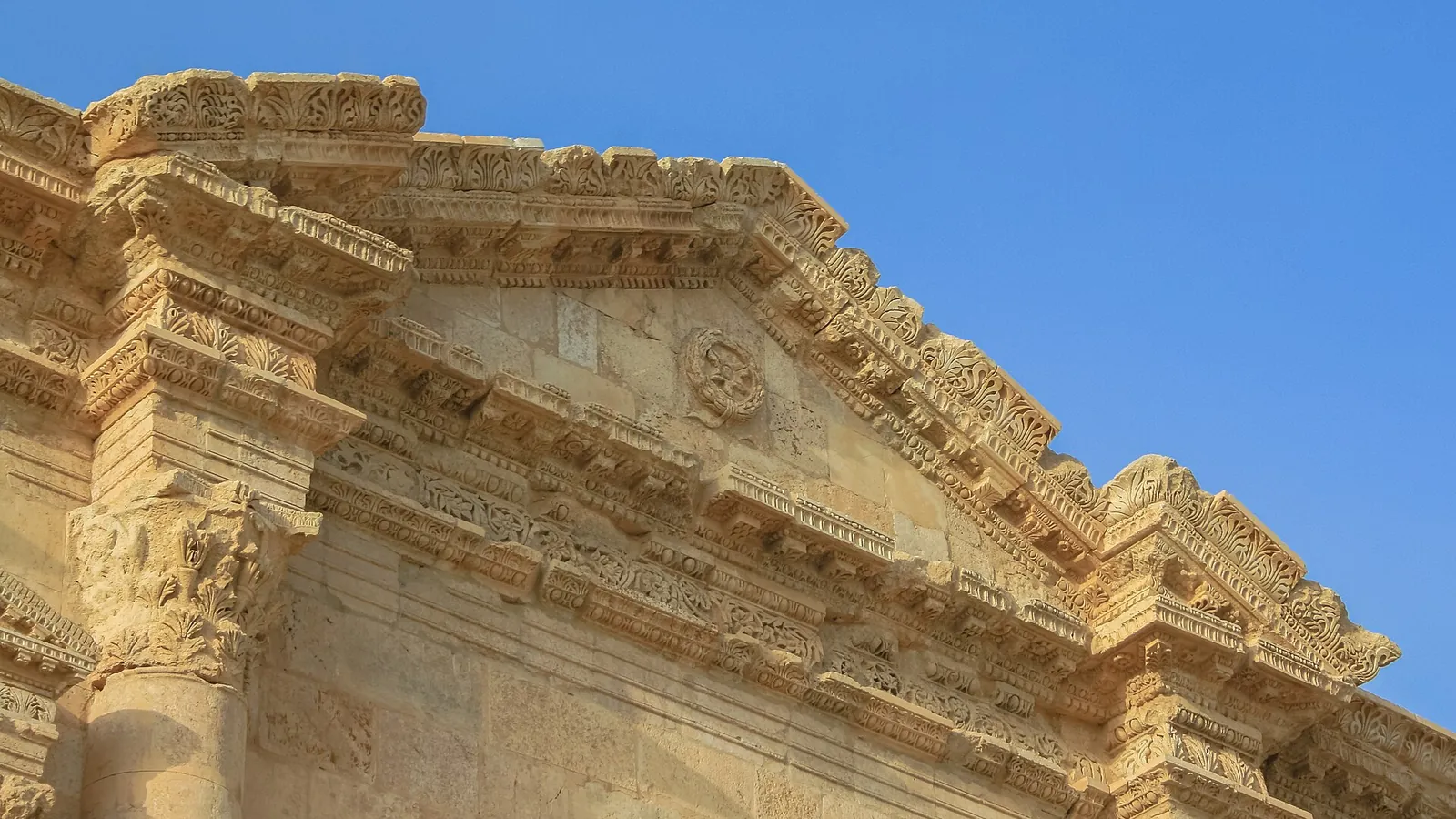
The Arch of Hadrian at the southern entrance to Jerash

Jerash Governorate, northern Jordan · Jordan

Jerash

One of the best-preserved Roman provincial cities anywhere — a triumphal arch, a hippodrome, an oval forum and a mile of columned street.

  • Best time March–May and September–November
  • Stay Half a day to a day
  • Good for Roman archaeology, day trips, walking, history

Photo: Diego Delso · CC BY-SA 3.0

Welcome to Jerash

Jerash is the modern name of Gerasa, a city that flourished in the Roman and Byzantine periods and was one of the ten cities of the Decapolis, a league of Greek-speaking cities in the eastern Roman provinces. It was at its height in the 2nd century AD, when it was rebuilt on a grand scale with a paved and colonnaded main street, an oval forum, temples and theatres.

It survives unusually well because of what happened next. Earthquakes and a shift in trade routes left the city in decline, and it was gradually covered by sand and largely abandoned rather than built over. Excavations began in the 1920s and continue, and much of the site has been restored, making it one of the most complete Roman provincial cities in the Middle East.

The modern town of Jerash sits next to the ruins, and the site is a short drive from Amman. It is an easy half-day trip, though a full day lets you see the whole site and the museum at a comfortable pace.
  • Archaeology
  • Historic Site

Why visit

Why visit Jerash?

Jerash gives you a sense of a Roman city as a place where people lived, rather than as a scatter of foundations.

  • Streets and buildings, not just ruins

    The paved Cardo Maximus runs for around 800 metres, lined with columns and marked by the ruts of cartwheels, with theatres, temples and a fountain still standing.

  • Hadrian's Arch

    A triumphal arch built to welcome the emperor Hadrian in 129–130 AD, and a dramatic entrance to the site.

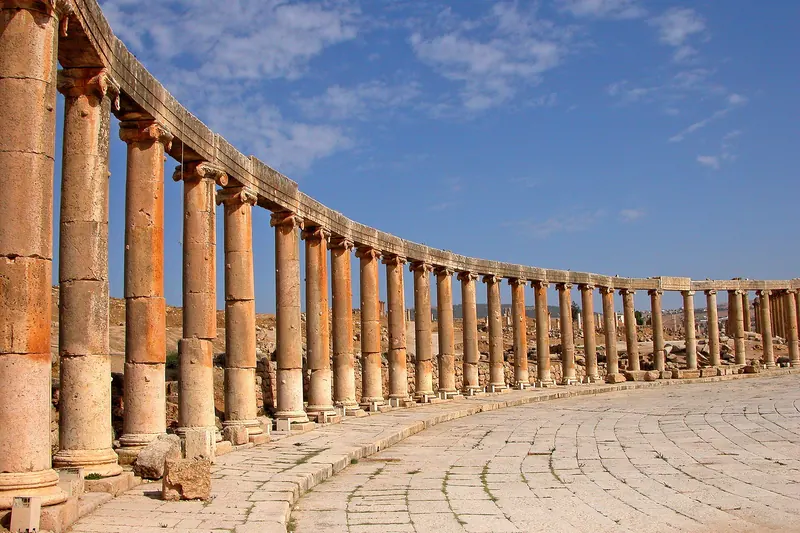
  • The Oval Plaza

    A large open forum with an unusual oval shape and a colonnade of Ionic columns, and one of the best photographs on the site.

  • Easy to reach

    An hour north of Amman by road, so it fits into a day trip or a stop on the way to the north.

  • Less crowded than Petra

    It gets busy on weekends and holidays, but the site is large and it is easy to find quiet corners.

Main attractions

Top things to see in Jerash

Enter at the south gate, walk north along the Cardo, and finish at the Northern Theatre. The site takes three to four hours.

  1. Hadrian's Arch

    A triple-arched gateway built in 129 AD to mark the emperor's visit. It stands at the southern edge of the site, next to a hippodrome that once seated around 15,000 spectators.

    Tip Arrive here first for the best photographs, and see the hippodrome before the site gets busy.

  2. The Hippodrome

    A Roman chariot-racing track, restored in part and used for re-enactments of races and gladiator fights. It is one of the best-preserved in the region.

    Tip Re-enactments have run on a set schedule at times; check when you visit.

  3. The oval plaza and colonnade at Jerash

    The Oval Plaza and the Cardo Maximus

    The main street of the city runs north from the Oval Plaza, lined with Corinthian columns, shops and a monumental fountain, the Nymphaeum. Wheel ruts in the paving stones are still visible.

    Tip Walk the full length in the morning light, and look at the drainage covers in the road.

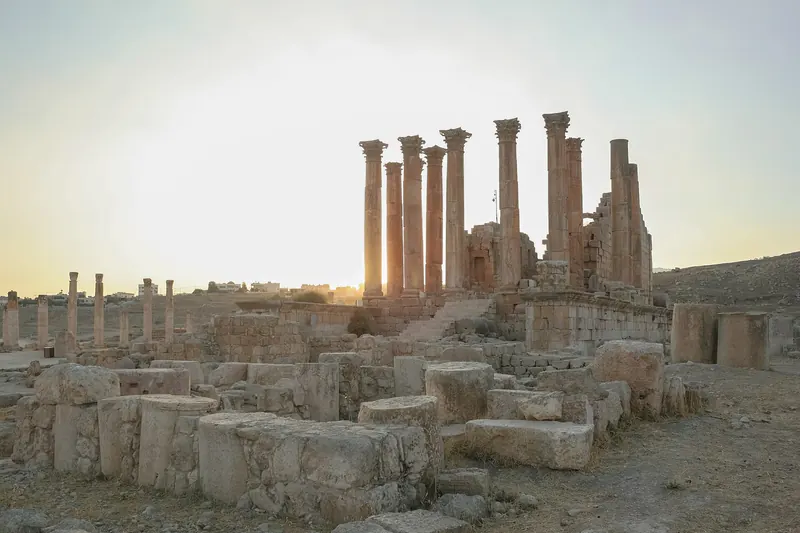
  4. The colossal columns of the Temple of Artemis at Jerash

    The Temple of Artemis

    A large temple to the city's patron goddess, with a monumental staircase and a portico of huge Corinthian columns. It is the most impressive building on the site.

    Tip The temple is a short climb up steps. It is lovely in the late afternoon.

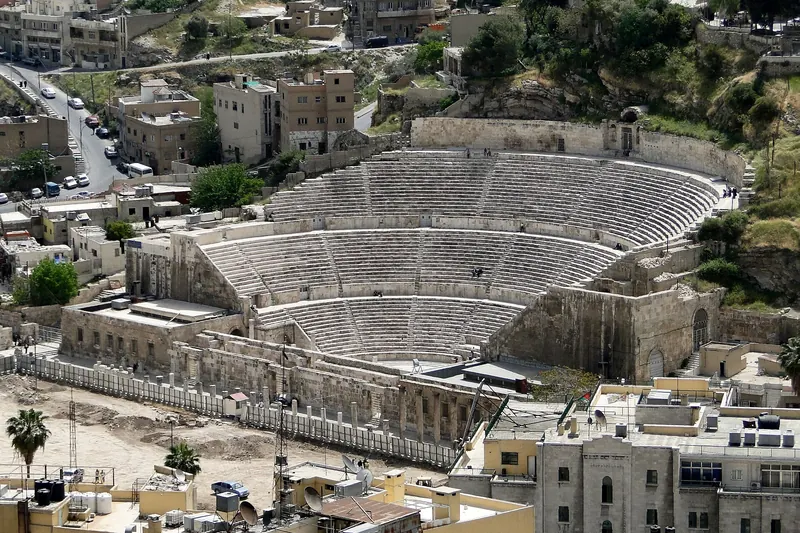
  5. The South Theatre

    A well-preserved Roman theatre with room for about 3,000 people and excellent acoustics. Musicians sometimes play the bagpipes here for visitors.

    Tip Sit at the top row and speak quietly. The acoustics are remarkable.

  6. The Northern Theatre

    A smaller theatre near the north end of the site, used for council meetings and performances. It is much less visited than the South Theatre.

    Tip Combine it with the Church of Saint Theodore and the other Byzantine churches nearby.

  7. The Byzantine churches

    Several churches from the 5th and 6th centuries stand on the site, some with mosaic floors. They show Jerash's change from a pagan to a Christian city.

    Tip Look for the mosaic floors in the Cathedral and the Church of Saint Cosmas and Damian.

Things to do

Best things to do in Jerash

The ruins themselves take up most of a visit, but a few extras add to it.

  1. Walk the whole site

    Start at the south gate and walk north along the Cardo, taking in the Oval Plaza, the temples and the theatres. It is a gentle walk of about 3 km with almost no shade.

    Tip Go on a weekday morning, and bring water and a hat.

  2. Visit the Archaeological Museum

    A small museum near the Oval Plaza, with finds from the site and a good introduction to its history.

    Tip Go before you walk the site, to give yourself context.

  3. See the hippodrome show

    Re-enactments of Roman chariot races and legionary drill have been staged at the hippodrome in the past. They are aimed at tour groups and entertaining if not entirely serious.

    Tip Check whether they are running and at what time.

  4. Eat in the town

    Jerash has several good restaurants serving mansaf and grilled meats, and is a better choice for lunch than the cafés at the site.

    Tip Ask for the daily special.

  5. Visit in July for the festival

    The annual Jerash Festival of Culture and Arts has traditionally been held in summer, with music, dance and theatre in the ruins. Dates and programmes vary, so check locally.

    Tip Book accommodation early, as Amman hotels fill up.

  6. Combine it with Ajloun

    Ajloun Castle is only 25 km west of Jerash, so the two can be combined in a long day.

    Tip Start at Jerash early, and drive to Ajloun for lunch.

Local food

What to eat in Jerash

Jerash is a small town with a strong tradition of Jordanian home cooking. Lunch after the ruins is part of the visit.

  • Mansaf

    The national dish, lamb in a dried-yoghurt sauce over rice, is served in traditional restaurants in the town.

    Where to try it Restaurants near the main entrance to the site, and family-run places in Jerash town.

  • Grilled meat and mixed grill

    Kebabs, lamb chops and chicken grilled over charcoal and served with salads and bread. A dependable lunch.

    Where to try it Grill restaurants on the main street of Jerash.

  • Falafel and hummus

    Standard, cheap and good, and a fine light lunch before or after a long walk.

    Where to try it Stalls and small restaurants in the town centre.

  • Fresh orange juice

    Fresh-squeezed juice sold along the road and at the entrance. It is a good way to cool down.

    Where to try it Juice stalls near the south gate.

  • Local olive oil and olives

    The hills around Jerash are covered in olive groves, and oil and pickled olives are sold in shops and markets.

    Where to try it The market in Jerash town and shops near the site.

  • Sweets and kunafa

    Local sweet shops sell kunafa, baklava and other pastries.

    Where to try it Sweet shops in the town.

Accommodation

Where to stay in Jerash

Most visitors visit as a day trip from Amman, and few stay overnight. If you want to stay, choose between a small hotel near the site and one of the guesthouses in the countryside.

  • Near the archaeological site

    A handful of small hotels and guesthouses within walking distance of the south gate. They are simple, but staying over lets you visit before the tour groups.

    Best for: An early start

  • Amman

    Jerash is 50 km from the capital, and most visitors stay in Amman and travel up for the day.

    Best for: Most visitors

What a night costs

Budget guesthouse
JD 20–40 per night
Mid-range hotel
JD 50–90 per night
Entry to the site
Included in the Jordan Pass; otherwise a low single-digit dinar fee
Lunch in Jerash
JD 4–10 per person

Transport

Getting to and around Jerash

Jerash is about 50 km north of Amman. It is easy to reach by public transport or road.

Getting there

  • Car or private driver

    About an hour from Amman. It is a good half-day trip and combines well with Ajloun.

    Park at the visitor centre near the south gate.

  • Bus from Amman

    Minibuses and buses run from the Tabarbour or Amman North bus station to Jerash regularly, taking about an hour and costing a dinar or two.

    They stop in the town, a short walk from the site.

  • Organised tour

    Many Amman hotels sell half-day and day tours to Jerash, often combined with Ajloun or the Dead Sea.

    Check what is included, especially entry and lunch.

Getting around

Everything at the site is on foot. The town is small.

  • Walking

    The site is compact and flat, with a gentle slope. It takes three to four hours to see the highlights.

    There is little shade, so bring water and a hat.

  • Guides at the entrance

    Licensed guides are available at the visitor centre and are worth paying for if you want context.

    Agree the price before you begin.

  • Taxi

    Taxis in Jerash town are cheap and can take you to nearby sites such as Ajloun.

    Agree the price in advance.

When to go

Best time to visit Jerash

Jerash sits in the northern highlands, which are cooler and greener than the south. It is pleasant for most of the year, hot in summer and cold and sometimes rainy in winter.

  • Spring (March–May)

    Best time

    Green hills, wildflowers among the ruins and warm, comfortable days.

  • Summer (June–August)

    Shoulder

    Hot but drier than the coast. The site has little shade, so go in the early morning.

  • Autumn (September–November)

    Best time

    Warm, clear and quiet, with good light.

  • Winter (December–February)

    Quiet

    Cool and sometimes rainy, with few visitors. Bring a jacket.

Worth planning around: Midday in summer, and Friday and holiday weekends, when local families visit.

Itinerary

One day at Jerash

A morning walking the site, lunch in town and an afternoon side trip to Ajloun. Assumes a start from Amman.

  1. Day1

    Jerash and Ajloun

    The Roman city, then a castle.

    • Morning Arrive at opening, walk from Hadrian's Arch through the hippodrome, the Oval Plaza and the Cardo to the Temple of Artemis.
    • Afternoon The theatres, then lunch in town.
    • Evening A drive to Ajloun Castle for the sunset, then back to Amman.

Travel tips

Jerash travel tips

Jerash is easy, and a few points help you make the most of it.

  • Go early. The site opens in the morning, and by 10:00 or 11:00 the tour groups arrive and the heat rises.
  • Wear a hat and sunglasses. There is very little shade.
  • Start at the south gate and walk north. The light and the sequence of monuments are better that way.
  • Consider a guide. A licensed guide brings the ruins to life and is inexpensive.
  • Buy the Jordan Pass. Entry to Jerash is included.
  • Bring water and snacks, as prices inside the site are high.
  • Avoid Fridays and holidays. Local families visit in large numbers.
  • Combine Jerash with Ajloun for a full day out of Amman.

FAQ

Jerash: frequently asked questions

How long do you need at Jerash?

Three to four hours for the main site. Add another hour for the museum and lunch in town, and more if you also want to visit Ajloun.

Is Jerash worth visiting?

Yes. It is one of the best-preserved Roman cities in the region, with paved streets, temples and theatres, and it is only an hour from Amman.

Can I visit Jerash as a day trip from Amman?

Yes, and most visitors do. It takes about an hour each way by car or bus.

Is Jerash included in the Jordan Pass?

Yes. The Jordan Pass includes entry to Jerash and most of the country's major sites. Check the current terms.

What is the best time of day to visit?

Early morning, when it is cool and quiet, or the late afternoon when the light is warm. Avoid midday in summer.

Is Jerash suitable for children?

Yes. The site is open and mostly flat, and children enjoy the hippodrome and the theatres. Bring plenty of water and a hat.

Read next

Related travel articles

Heritage

UNESCO Sites Worth Planning a Trip Around

A UNESCO listing tells you a place matters; it does not tell you whether it is worth two days and a detour. This is how to read the list usefully — and which sites reward building a trip around them.

Where to go

Beyond the Big Names: Places Worth the Detour

The most visited place in a country is rarely its best, and it is almost never its best value. This is a method for finding the destinations that do not make the postcards — and a set of examples from five of the 50 countries on this site.

Advertisement