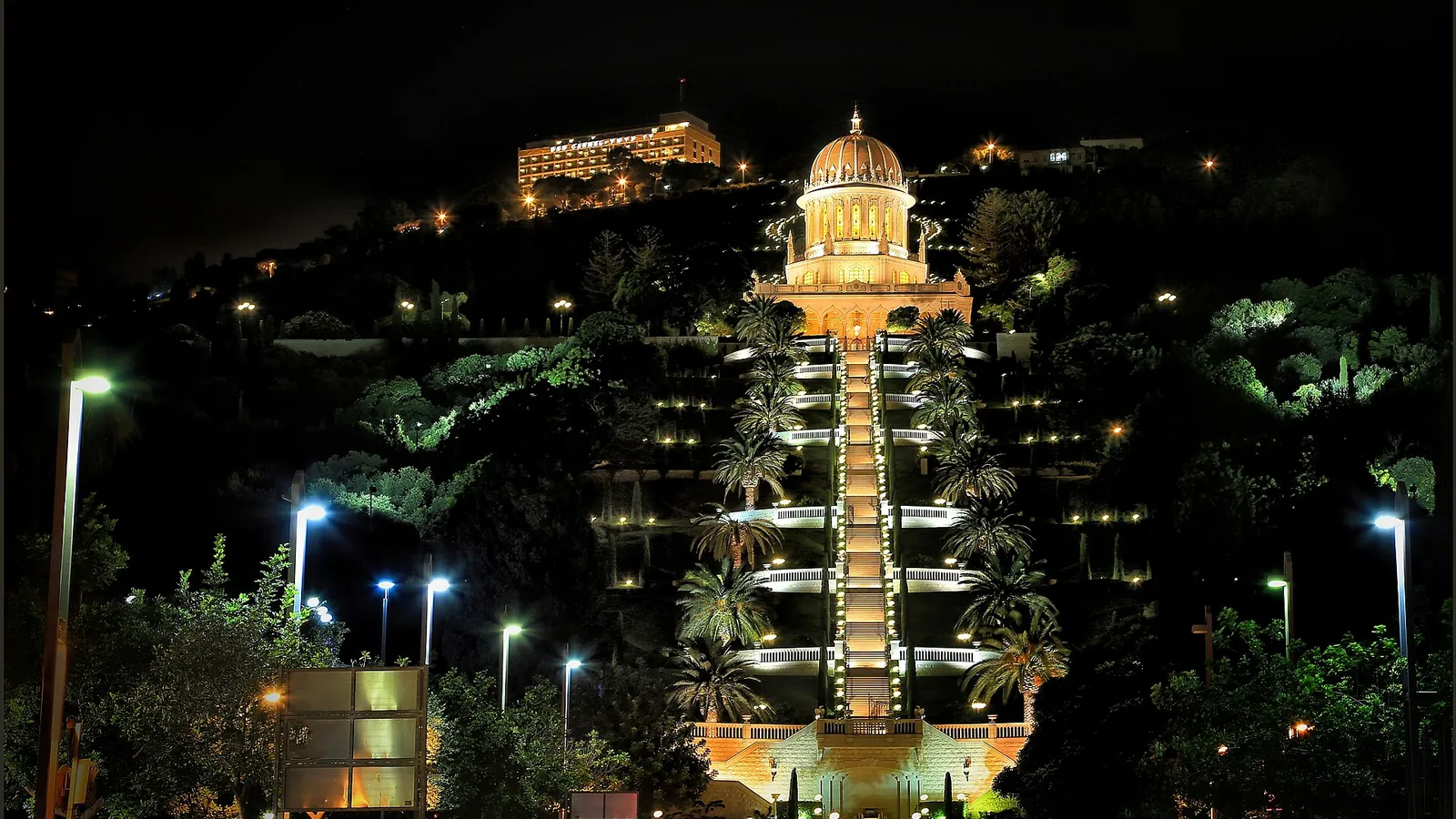
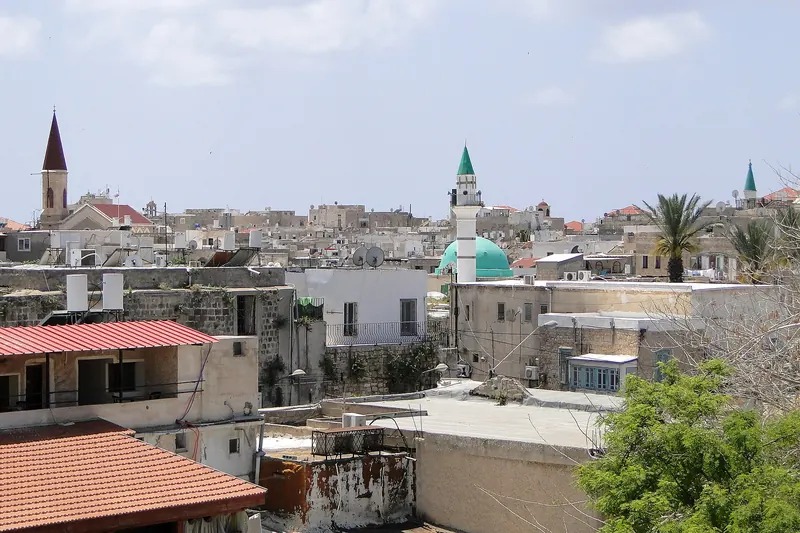
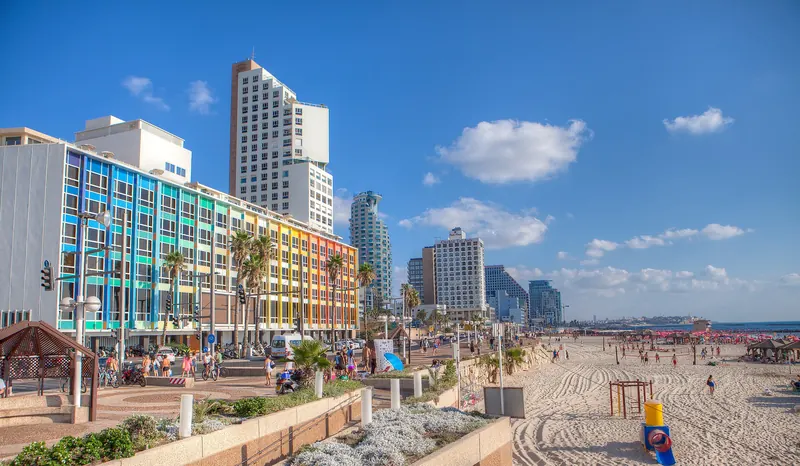
The terraced Baháʼí Gardens climbing Mount Carmel above Haifa

Haifa District, Mount Carmel · Israel

Haifa & the Baháʼí Gardens

A port city on the slopes of Mount Carmel, with nineteen terraced gardens that fall in a great green staircase from a golden-domed shrine to the sea.

  • Best time March–May and September–November
  • Stay 1–2 days
  • Good for Gardens, architecture, food, culture, a relaxed city

Photo: Dani Lavi 0007 · CC BY-SA 4.0

Welcome to Haifa

Haifa climbs the slopes of Mount Carmel to the sea and has three levels: the port at the bottom, the middle-slope Hadar district and the leafy summit of the Carmel. It is Israel's third-largest city, a working port and industrial centre and, unusually for Israel, a place where Jewish and Arab residents live together in mixed neighbourhoods.

The city's great attraction is the Baháʼí Gardens. The Baháʼí Faith, which began in 19th-century Persia, has its world centre in Haifa and Acre, and its followers built a set of terraced gardens that run down the northern slope of Mount Carmel from the Shrine of the Báb, a golden-domed mausoleum that houses the remains of the religion's forerunner. The gardens and the shrines in Acre were inscribed by UNESCO in 2008.

Haifa also has a German Colony founded by Templers in the 19th century, the mixed Arab-Jewish Wadi Nisnas district, a lively food scene and a long beach. It is much quieter and more relaxed than Tel Aviv or Jerusalem, and it offers a different view of the country.

  • UNESCO Site
  • Major City
  • Culture & Arts

Why visit

Why visit Haifa?

Haifa combines a UNESCO garden, a great view and a city that is easy and pleasant to walk in.

  • One of the most beautiful gardens in the Middle East

    Nineteen terraces of clipped lawns, staircases and flowerbeds fall in perfect symmetry down the slope, ending at a street that runs to the sea.

  • The Shrine of the Báb

    A gold-domed building of pale stone at the centre of the terraces, one of the most photographed landmarks in Israel.

  • A mixed city

    Jewish, Arab, Christian, Druze and Baháʼí communities share the city, and its neighbourhoods and restaurants reflect that.

  • Views over the bay

    From the top of Mount Carmel, you can see across Haifa Bay to Acre and, on clear days, the Lebanese coast.

  • Uncrowded and affordable

    Haifa is cheaper than Tel Aviv, and largely free of tour groups.

Main attractions

Top things to see in Haifa

The gardens are the main event, and the rest of the city can be covered on foot or by metro in a day.

  1. The Baháʼí Gardens and the Shrine of the Báb

    Nineteen terraces, completed in 2001, descend the slope of Mount Carmel from the Shrine of the Báb. The upper terraces are free to enter by a gate on Yefe Nof Street, and guided tours go down through the whole garden.

    Tip Dress modestly, and check the opening hours and tour times; the gardens are closed on some days.

  2. The Persian Garden and the Louis Promenade

    A viewing platform on the Carmel with a panoramic view of the gardens, the port and the bay, and a good place to see the terraces from above.

    Tip Go at sunset for the best light.

  3. The German Colony

    A tree-lined street of red-tiled stone houses built by German Templers in the late 19th century, now full of restaurants and cafés. Many have inscriptions in German over the doors.

    Tip Come in the evening for dinner.

  4. Wadi Nisnas

    A mainly Arab neighbourhood with a lively market, small restaurants and street art. It hosts the annual Holiday of Holidays festival in December.

    Tip Try the hummus and sweets, and go in the morning.

  5. The Stella Maris Monastery

    A Carmelite monastery on the slopes of the Carmel, with a church built over a cave associated with the prophet Elijah. Cable cars run to the site from the shore.

    Tip Combine it with a ride on the Carmel cable car.

  6. The Haifa Museums

    The Tikotin Museum of Japanese Art, the National Maritime Museum and the Haifa Museum of Art make up the city's cultural offerings. The Israel Railway Museum is in the old station.

    Tip Check the days and hours, as museums close on Saturdays.

  7. Dado Beach and the seafront

    A quiet beach on the Carmel coast, popular with locals, and one of the cleanest and least crowded in the country.

    Tip Combine it with lunch by the sea.

Things to do

Best things to do in Haifa

Haifa is best enjoyed at a leisurely pace, going down the slope with the views.

  1. Take a guided tour of the Baháʼí Gardens

    Free tours are offered in several languages and take you through the terraces and the lower gardens. They give useful background on the faith and the design.

    Tip Book ahead if possible, and check the times.

  2. Ride the Carmelit metro

    A single-line underground funicular that runs from the port to the top of the Carmel in about six minutes. It is one of the smallest subway systems in the world.

    Tip It does not run on Shabbat.

  3. Eat in Wadi Nisnas and the German Colony

    Some of the best Arab food in the city is at small restaurants in Wadi Nisnas, and the German Colony has bars and restaurants along Ben Gurion Boulevard.

    Tip Go for lunch in Wadi Nisnas, and dinner in the German Colony.

  4. Walk the Carmel's nature trails

    Mount Carmel National Park has pine forests, hiking trails and lookouts just outside the city.

    Tip Spring is the best season.

  5. Visit the Baháʼí shrine at Bahji

    The Shrine of Baháʼu'lláh and its gardens near Acre is the holiest place in the Baháʼí Faith and a UNESCO site. It is about 25 km from Haifa.

    Tip Combine it with Acre, and check visiting hours and dress rules.

  6. Take the cable car to the sea

    A cable car connects the Carmel with Bat Galim, offering a view over the coast and the bay.

    Tip It does not run on Shabbat.

Local food

What to eat in Haifa

Haifa has a food culture that mixes Arab, Jewish, German and Russian traditions, and it is often called the country's most underrated food city.

  • Hummus and falafel

    The city's Arab restaurants serve some of the best hummus in Israel, often with fuul, and falafel is a specialty of Wadi Nisnas.

    Where to try it Small restaurants in Wadi Nisnas and the lower city.

  • Fresh seafood

    Grilled fish and shrimp are served at restaurants along the port and the seafront.

    Where to try it The port and Bat Galim.

  • Knafeh and Arab sweets

    Hot cheese pastry with syrup, baklava and other Arab sweets are sold in bakeries in Wadi Nisnas.

    Where to try it Sweet shops in Wadi Nisnas.

  • Modern Israeli cooking

    The German Colony and the Carmel have restaurants serving modern Israeli cuisine, mixing local ingredients and traditions.

    Where to try it Ben Gurion Boulevard and the Carmel Centre.

  • Craft beer and wine

    A growing number of breweries and wine bars are in the city centre and the German Colony.

    Where to try it Bars in the German Colony.

  • Bakeries and pastries

    Bakeries produce fresh bread, borekas and cakes, reflecting the city's Eastern European and Middle Eastern heritage.

    Where to try it Bakeries in Hadar and the German Colony.

Accommodation

Where to stay in Haifa

Haifa is a relaxed and inexpensive base for the north. Choose between the German Colony, the Carmel and the quieter beach areas.

  • German Colony

    Boutique hotels and guesthouses in restored Templer houses at the foot of the gardens, close to bars, cafés and the train.

    Best for: Restaurants, walking and views of the gardens

  • The Carmel

    Hotels and apartments on top of the mountain, with panoramic views of the bay and the gardens. It is quiet and a little far from the lower city.

    Best for: Views and quiet

  • Bat Galim and the seafront

    Hotels near the beach and the cable car, popular with families and local visitors.

    Best for: Beach access

What a night costs

Hostel or guesthouse
₪200–400 per night
Mid-range hotel
₪500–900 per night
Boutique or upscale hotel
₪900–1,600 per night
Baháʼí Gardens
Free, with free guided tours

Transport

Getting to and around Haifa

Haifa is about 90 km north of Tel Aviv, and well connected by train and bus.

Getting there

  • Train

    Coastal trains from Tel Aviv, Ben Gurion airport and Acre reach Haifa's Merkaz HaShmona and Bat Galim stations in about an hour from Tel Aviv.

    Trains do not run on Shabbat.

  • Bus

    Frequent intercity buses connect Haifa with Tel Aviv, Jerusalem, Nazareth and Tiberias.

    Buses run less often on Shabbat.

  • Car

    About 75 minutes from Tel Aviv by Route 2. Parking is easier at the bottom and the top of the Carmel than in the middle.

    Traffic can be heavy in the mornings.

Getting around

Haifa is steep. Public transport and taxis help.

  • Carmelit funicular and buses

    The Carmelit subway connects the lower city with the top of the Carmel, and buses cover the rest.

    Buy a Rav-Kav card.

  • Walking

    The gardens, the German Colony and Wadi Nisnas are walkable from each other, but the hills are steep.

    Walk downhill and take the funicular up.

  • Taxi

    Useful for the Carmel, the museums and Shabbat, when public transport is limited.

    Use an app or agree the fare.

When to go

Best time to visit Haifa

Haifa has a Mediterranean climate that is cooler and breezier than Tel Aviv. It is pleasant for most of the year, with humid summers and a wet, mild winter.

  • Spring (March–May)

    Best time

    Mild and green, with flowers in the gardens and the Carmel.

  • Summer (June–August)

    Shoulder

    Warm and humid, with a sea breeze. The Carmel is cooler than the coast.

  • Autumn (September–November)

    Best time

    Warm, sunny and quiet, with fewer visitors.

  • Winter (December–February)

    Quiet

    Cool and rainy, but a good time for museums and food. December sees the Holiday of Holidays festival.

Worth planning around: Rainy days if you want to see the gardens, and public holidays when the gardens may close.

Itinerary

One day in Haifa

The Baháʼí Gardens in the morning, lunch in Wadi Nisnas, the German Colony and the Carmel in the afternoon. Assumes a train from Tel Aviv or a night in the city.

  1. Day1

    Gardens, market and view

    The city's highlights.

    • Morning A guided tour of the Baháʼí Gardens, from the top down.
    • Afternoon Lunch in Wadi Nisnas, then the German Colony.
    • Evening The Carmelit to the top and sunset from the Louis Promenade.

Travel tips

Haifa travel tips

Haifa is easy and relaxed, and a few tips make it better.

  • Book a guided tour of the Baháʼí Gardens. It is the only way to see the middle terraces and it is free.
  • Dress modestly for the gardens, with shoulders and knees covered.
  • Take the Carmelit to the top, and walk down. The city is steep.
  • Combine Haifa with Acre. They are 20 minutes apart by train and complement each other.
  • Check the schedule on Saturdays. The gardens, the funicular and the museums may be closed.
  • Follow local advice on the situation in the north. Haifa has been affected by rocket fire in recent years.
  • Eat in Wadi Nisnas at lunchtime, when it is at its liveliest.

FAQ

Haifa: frequently asked questions

Is Haifa worth visiting?

Yes. It offers the Baháʼí Gardens, a diverse city, good food and a relaxed atmosphere, and it is very easy to combine with Acre and the Galilee.

What are the Baháʼí Gardens?

A set of nineteen terraced gardens that descend from the Shrine of the Báb on Mount Carmel. The gardens and the Baháʼí shrines at Acre were listed by UNESCO in 2008.

Can I visit the gardens for free?

Yes. Entry is free, and guided tours are offered several times a day. You need to check the opening hours, and go on a tour to see the middle terraces.

How many days do you need in Haifa?

One day is enough for the gardens, the German Colony and Wadi Nisnas. A second day lets you add Acre, the Carmel or the beach.

Is Haifa safe?

It is generally regarded as safe and known for peaceful relations between communities, but the north has been affected by conflict, and there have been rocket alerts. Check current advice from your government.

What is the Baháʼí Faith?

A religion founded in 19th-century Persia that teaches the unity of God, the unity of religion and the unity of humanity. Its world centre is in Haifa and Acre.

Read next

Related travel articles

Heritage

UNESCO Sites Worth Planning a Trip Around

A UNESCO listing tells you a place matters; it does not tell you whether it is worth two days and a detour. This is how to read the list usefully — and which sites reward building a trip around them.

Food

A Country-by-Country Food Primer

Eating well abroad is mostly a matter of knowing when meals happen, how the menu is structured and which dish belongs to the place you are standing in. This covers all three for the five countries in this guide, plus the signals that separate a restaurant that feeds locals from one that feeds coaches.

Advertisement