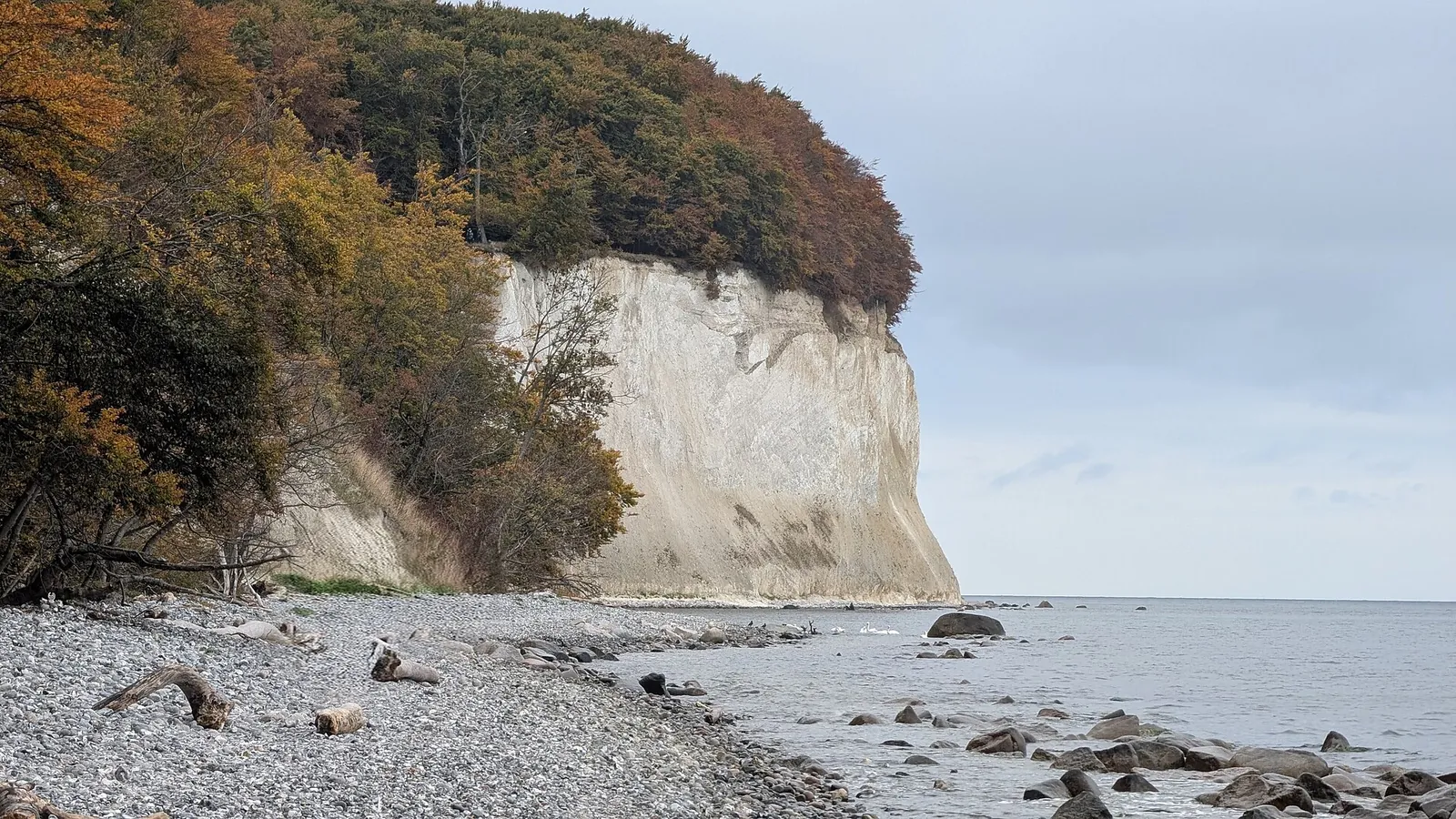
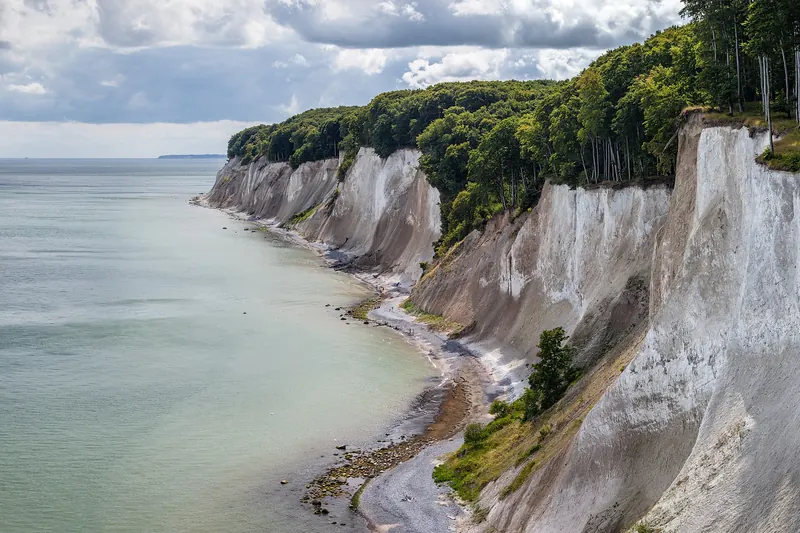
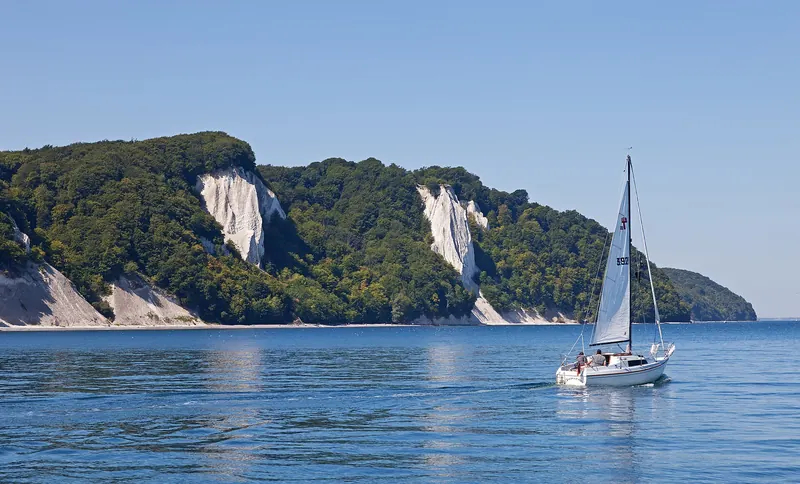
The white chalk cliffs of Rügen's Jasmund National Park dropping into the Baltic Sea

Mecklenburg-Vorpommern · Germany

Rügen and the Baltic Coast

Germany's largest island, its chalk cliffs rising white out of the Baltic above beech forest, ringed by 19th-century seaside resort towns most visitors never expect to find in Germany.

  • Best time June and September for warm weather without the peak-summer crowds
  • Stay 3 days
  • Good for Coastal scenery, hiking, seaside relaxation, architecture

Photo: Siarhei Besarab · CC BY-SA 4.0

Welcome to Rügen and the Baltic Coast

Rügen is Germany's largest island, a different landscape from anything inland — chalk cliffs, beech forest, wide sandy beaches and a Baltic coastline that surprises most first-time visitors who don't associate Germany with seaside resorts at all. The island has drawn German holidaymakers for well over a century, and its architecture still shows it.

The island's chalk cliffs, protected within Jasmund National Park, were made famous well beyond Germany by Caspar David Friedrich's early 19th-century Romantic paintings, which turned the dramatic white cliffs and beech forest into a genuine symbol of the Romantic movement's fascination with sublime nature.

Rügen's coastal towns, along with mainland resorts like Heiligendamm further along the Baltic coast, developed a distinctive 'Bäderarchitektur' — ornate white seaside villas built for 19th-century bathing tourism — that still defines the region's elegant resort towns today, largely spared the wartime destruction that reshaped so much of urban Germany.

  • Coast & Beaches
  • Nature & Wildlife
  • Seaside Resort

Why visit

Why visit Rügen and the Baltic Coast?

Rügen's case is that no other part of Germany pairs this dramatic a coastline with this much genuine, well-preserved seaside resort architecture.

  • The chalk cliffs are dramatic

    Jasmund National Park's white cliffs above the Baltic rank among Germany's most striking natural landscapes.

  • The resort architecture is well preserved

    The island's Bäderarchitektur seaside towns largely escaped wartime destruction, keeping their 19th-century elegance intact.

  • It's a different side of Germany

    Wide beaches, island light and Baltic scenery most visitors never expect to find within the country at all.

  • The hiking is rewarding

    Coastal trails through beech forest and along the cliffs offer some of northern Germany's best walking.

  • It works well as a slower, restorative stop

    A genuine change of pace after Germany's historic cities, built around beaches, forest and open sea air.

Main attractions

Top things to see in Rügen and the Baltic Coast

Rügen's essential sights, from its dramatic chalk cliffs to its elegant 19th-century seaside resort towns.

  1. Chalk cliffs rising above the Baltic in Jasmund National Park

    The Jasmund National Park chalk cliffs

    Rügen's most famous landscape, white chalk cliffs rising directly from the Baltic above dense beech forest, protected as one of Germany's smallest but most striking national parks.

    Tip The Königsstuhl viewing platform offers the classic view, though quieter cliff-top trails nearby give a less crowded perspective.

  2. The Königsstuhl chalk cliff formation and Viktoria-Sicht viewpoint

    The Königsstuhl (King's Chair)

    The most famous individual chalk cliff formation, with a modern visitor centre explaining the coastline's geology and Caspar David Friedrich's role in making it famous.

    Tip Book the shuttle bus from Sassnitz in summer, as the car park fills early on clear days.

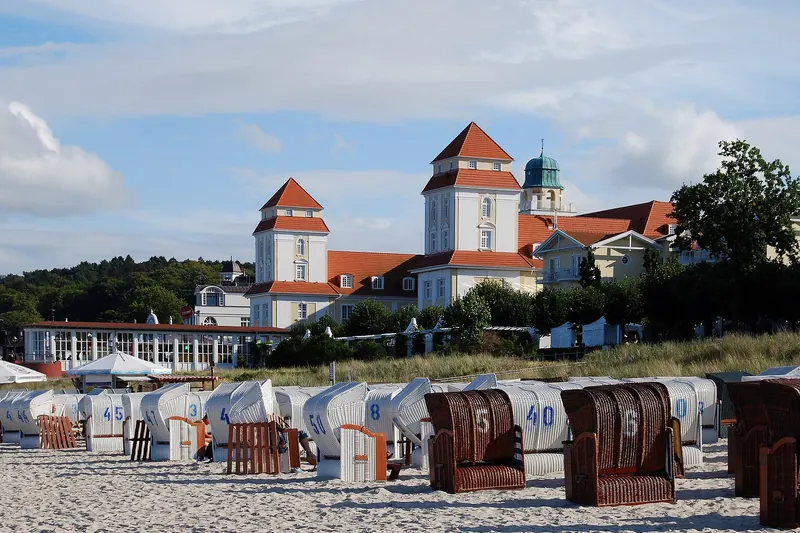
  3. The Kurhaus and beach at Binz, Rügen's grandest seaside resort

    Binz

    Rügen's grandest seaside resort town, its long promenade lined with elegant white Bäderarchitektur villas built for 19th-century bathing tourism.

    Tip The Kurhaus and pier make a good anchor for exploring the villa-lined side streets.

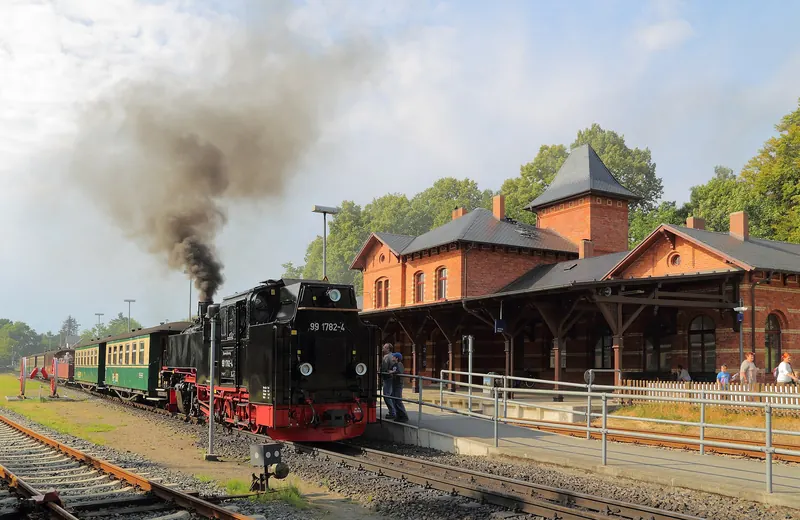
  4. The Rasender Roland narrow-gauge steam train on Rügen

    The Rasender Roland steam railway

    A narrow-gauge steam train connecting several of Rügen's resort towns, running since 1895 and still a working piece of the island's transport history.

    Tip The Putbus to Binz stretch is the most scenic and most frequently run section.

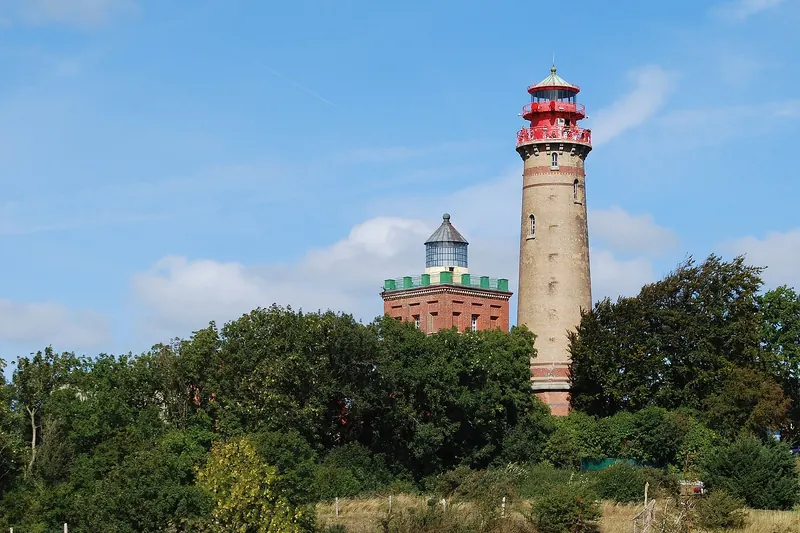
  5. The two historic lighthouses at Cape Arkona, Rügen's northernmost point

    Cape Arkona

    The island's northernmost point, with two historic lighthouses above dramatic cliffs, marking the spot where the Baltic and Rügen's coastline meet most directly.

    Tip The cliff-top walk from Putgarten village to the lighthouses is short but scenic.

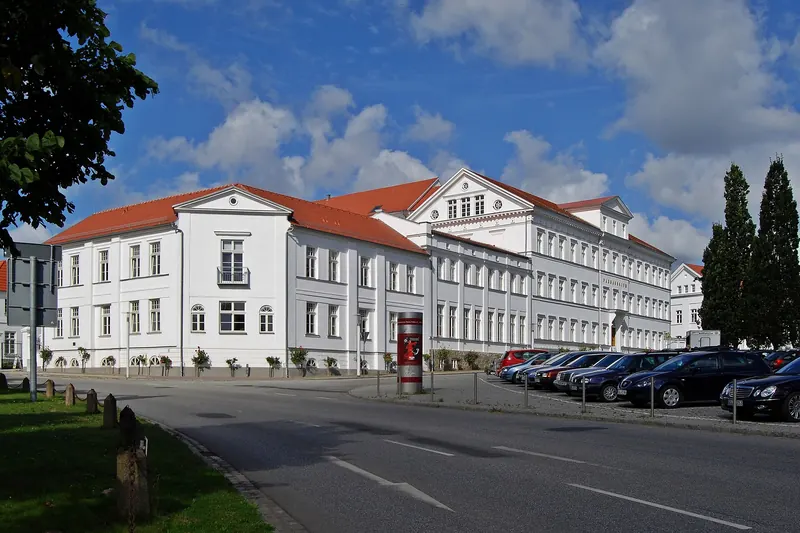
  6. A neoclassical building in Putbus, Rügen's planned 19th-century town

    Putbus

    A planned neoclassical town built by a 19th-century prince, its circular market square and white buildings unlike anywhere else on the island.

    Tip The town's Orangery and English landscape park make a peaceful stop away from the coastal crowds.

Things to do

Best things to do in Rügen and the Baltic Coast

Beyond the cliffs and resort architecture, Rügen rewards slow coastal walking and its own Baltic food traditions.

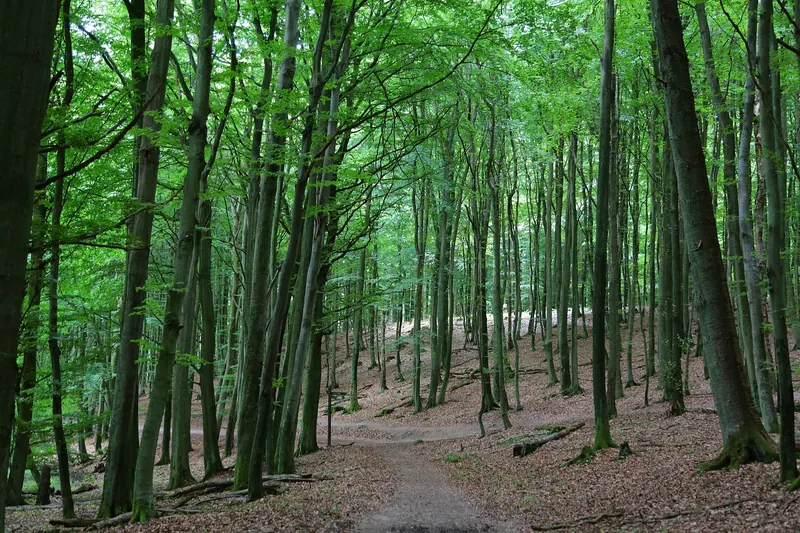
  1. The beech forest of the Stubnitz, crossed by Jasmund's cliff-top hiking trail

    Hike the Höhenweg cliff-top trail

    A spectacular coastal path through Jasmund's beech forest and along the chalk cliff edge, one of northern Germany's best day hikes.

    Tip Start early from Sassnitz to have the quieter northern stretches largely to yourself.

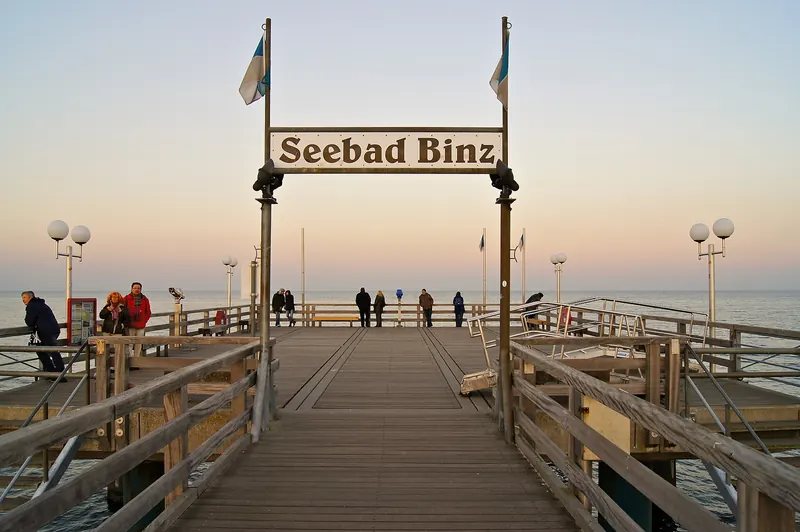
  2. Binz's pier extending into the Baltic Sea

    Walk Binz's promenade and pier

    A relaxed evening walk past the resort town's grand villas and out along its pier is an essential part of the Rügen experience.

    Tip Sunset over the Baltic from the pier is worth timing a visit around.

  3. The Rasender Roland steam train at Putbus station

    Ride the Rasender Roland steam train

    A charming way to move between resort towns, the narrow-gauge steam railway is as much an attraction as a transport link.

    Tip Sit on the right-hand side heading from Putbus to Binz for the better coastal glimpses.

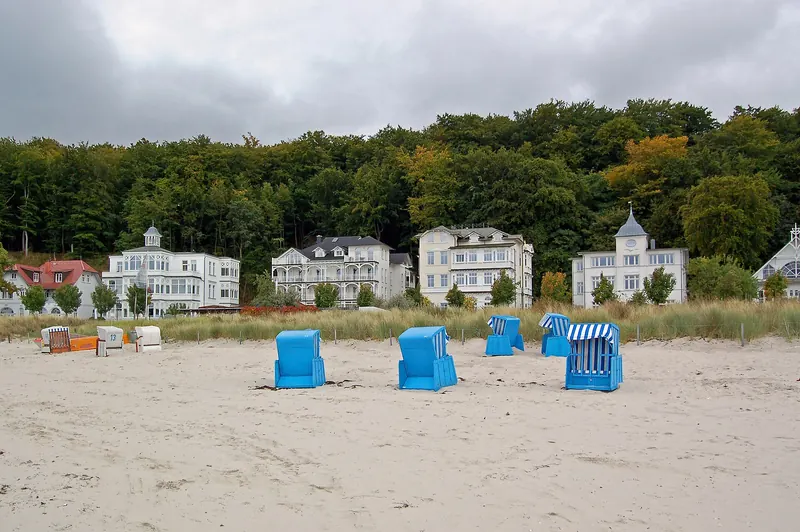
  4. A sandy Baltic Sea beach near Binz, Rügen

    Swim or relax on Rügen's beaches

    Wide, sandy Baltic beaches line much of the island's eastern coast, dotted with the traditional wicker Strandkorb beach chairs.

    Tip Renting a Strandkorb for the day is an essential piece of Baltic beach culture, not just a tourist gimmick.

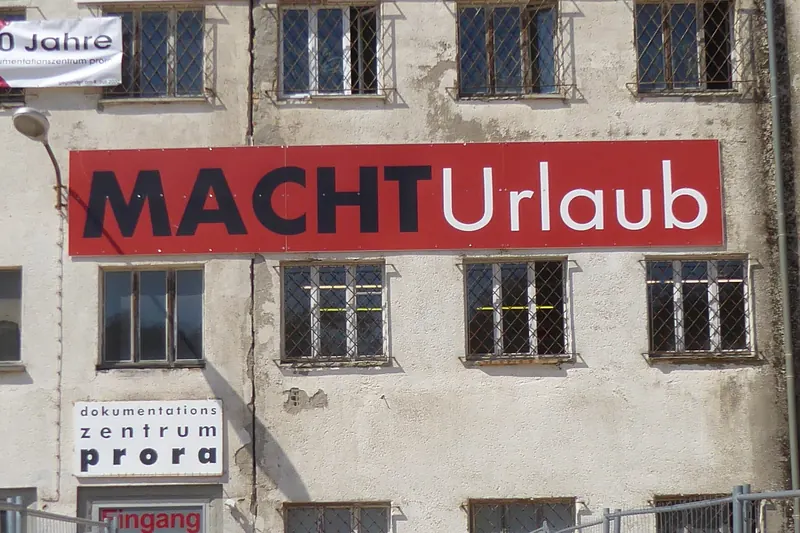
  5. The entrance to the Prora Documentation Centre, Rügen

    Visit the Störtebeker Festival or Prora history site

    Rügen's history runs from medieval pirate legend to a vast unfinished Nazi-era holiday complex at Prora, now partly a thoughtful museum on the site's history.

    Tip The Prora museum's exhibits on the complex's later East German military use are as interesting as its Nazi-era origins.

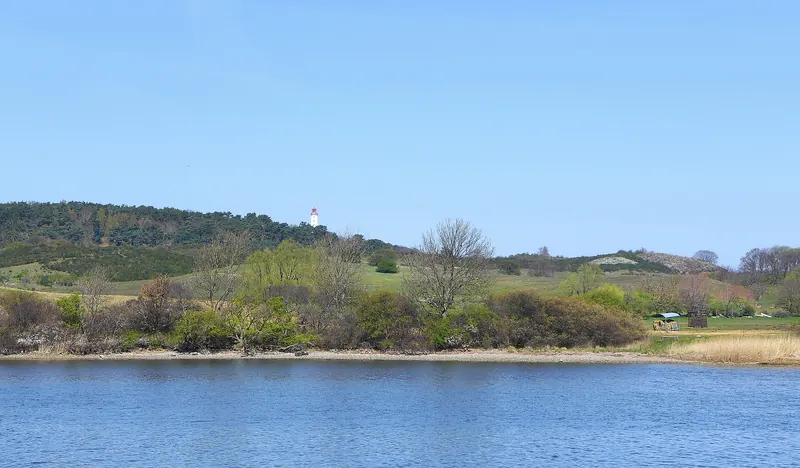
  6. The shoreline of Hiddensee, Rügen's car-free neighbouring island

    Day trip to Hiddensee island

    A car-free neighbouring island reachable by ferry, historically a retreat for German writers and artists, offering an even quieter version of Rügen's own pace.

    Tip Rent a bike on arrival — it's the easiest way to see Hiddensee's full length in a day.

Local food

What to eat in Rügen and the Baltic Coast

Rügen and the Baltic coast lean on fresh fish, smoking traditions and the region's own hearty northern German cooking.

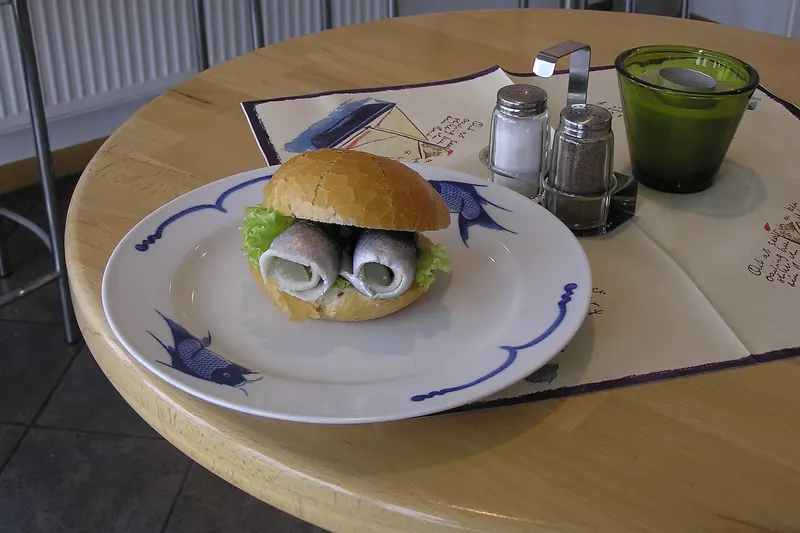
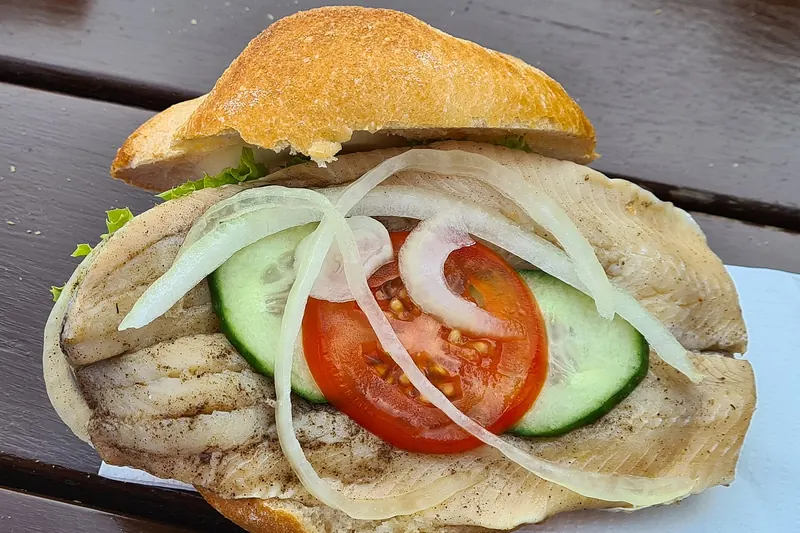
  • A Fischbrötchen, a fresh fish sandwich sold from Baltic coast harbour stands

    Fischbrötchen

    A fresh or smoked fish sandwich sold from harbourside stands all along the Baltic coast, the region's defining quick meal.

    Where to try it Harbour fish stands in Sassnitz and Binz, sold straight off the boat in season.

  • Pepper herring from the fishing village of Vitt on Rügen

    Räucherfisch (smoked fish)

    Herring, eel and sprat smoked at small harbourside smokehouses, a genuine Baltic coastal tradition going back generations.

    Where to try it Traditional smokehouses (Räuchereien) at Sassnitz harbour and along the coast.

  • Rügener Backfisch

    Lightly battered and fried fish, typically caught locally, a simple and popular coastal dish served at harbourside kiosks.

    Where to try it Harbour kiosks and seaside restaurants throughout Rügen's resort towns.

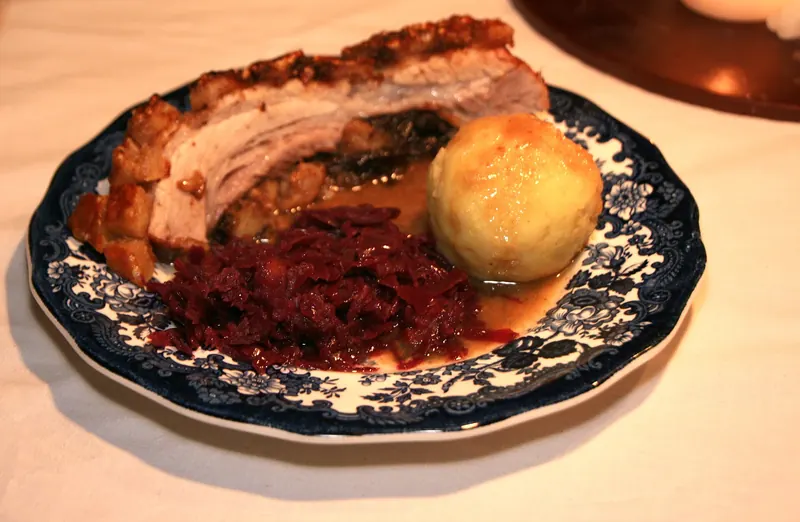
  • Mecklenburg Rippenbraten, roasted pork stuffed with prunes and apples

    Mecklenburg Rippenbraten

    A hearty roasted pork dish stuffed with prunes and apples, a genuine regional classic from the wider Mecklenburg-Vorpommern countryside.

    Where to try it Traditional inns inland from the coast, especially in the colder months.

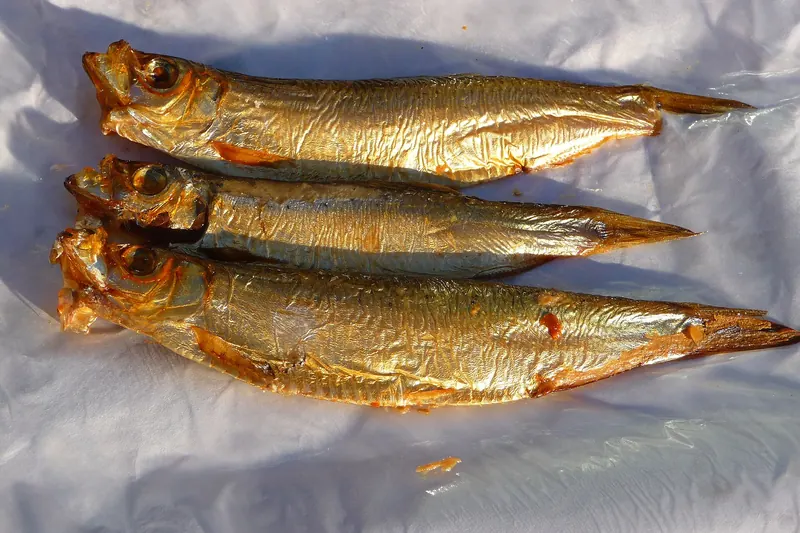
  • Smoked Baltic sprats, a traditional regional catch

    Baltic Sea sprat

    Small, oily Baltic fish, traditionally smoked or pickled, a humble but historically important regional catch.

    Where to try it Fish markets and smokehouses at any of the island's working harbours.

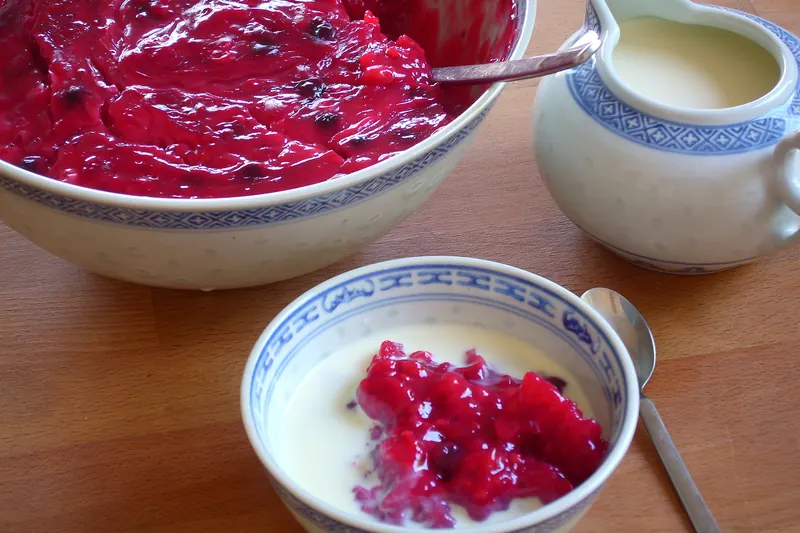
  • Rote Grütze, a tart red berry compote served with vanilla sauce

    Rote Grütze

    A tart red berry compote served with cream or vanilla sauce, a beloved northern German dessert found the length of the Baltic coast.

    Where to try it Cafés and restaurants throughout Rügen's resort towns.

Accommodation

Where to stay in Rügen and the Baltic Coast

Rügen's accommodation spreads across several distinct resort towns, each with a different character.

  • Binz

    The island's largest and liveliest resort, with the widest range of hotels and the most Bäderarchitektur to walk past.

    Best for: Grand resort atmosphere and nightlife

  • Sassnitz

    The closest base to Jasmund National Park, with a working harbour and a more low-key, less resort-like feel.

    Best for: The chalk cliffs and hiking

  • Putbus

    The island's neoclassical planned town, peaceful and central for the Rasender Roland's full network.

    Best for: A quieter, architecturally distinct stay

What a night costs

Hostel dorm
€24–38 per night
Mid-range hotel
€85–160 per night
Königsstuhl visitor centre entry
€12
Fischbrötchen
€5–8

Transport

Getting to and around Rügen and the Baltic Coast

Rügen sits well off Germany's main rail network, making a longer journey or a rental car worthwhile.

Getting there

  • Rail from other German cities

    Direct trains connect Berlin to Binz in about 3h30, crossing the Rügen bridge from the mainland.

    Book Sparpreis fares ahead, as this longer route benefits significantly from advance pricing.

  • Rostock-Laage or Hamburg Airport

    Rostock-Laage is the closer regional airport, though Hamburg offers a far wider range of international connections.

    A rental car or onward train from either airport covers the final stretch to the island.

  • Rental car

    The most flexible way to reach and explore Rügen, crossing the road bridge from Stralsund on the mainland.

    Summer weekend traffic across the bridge can back up significantly — an early or late crossing helps.

Getting around

Rügen's resort towns are walkable individually, with the steam railway and buses linking them across the island.

  • Rasender Roland steam railway

    Connects Putbus, Binz and several smaller stops, a scenic and practical way to move between towns.

    Runs several times daily year-round, more frequently in summer.

  • Rental car

    The most flexible option for reaching Cape Arkona, Jasmund's trailheads and the island's quieter corners.

    Parking at popular trailheads fills early on clear summer days.

  • Bicycle

    Rügen's relatively flat terrain and dedicated cycle paths make it a rewarding island to explore by bike.

    Most resort towns and the Stralsund mainland side rent bikes by the day.

When to go

Best time to visit Rügen and the Baltic Coast

Rügen's Baltic climate means a short warm season, and its popularity as a domestic German holiday spot makes timing matter.

  • Spring (April–May)

    Good

    Cool but increasingly pleasant, with the island's beech forests turning a vivid fresh green.

  • Early summer (June)

    Best time

    Warm, long days and the best balance of good weather against the school-holiday crowds of July and August.

  • Peak summer (July–August)

    Good

    The warmest swimming weather, though also the island's busiest and most heavily booked season.

  • Autumn (September)

    Best time

    Mild, quieter, and often clear for cliff views, with the crowds of summer largely gone.

Worth planning around: July and August without accommodation booked well ahead, when German school holidays fill the island's resort towns.

Itinerary

Three days on Rügen

The chalk cliffs first, then the resort towns and coastline, then the island's quieter corners.

  1. Day1

    Jasmund and the chalk cliffs

    Rügen's defining landscape.

    • Morning The Königsstuhl visitor centre and viewing platform.
    • Afternoon The Höhenweg cliff-top hiking trail through the beech forest.
    • Evening Dinner in Sassnitz by the harbour.
  2. Day2

    Binz and the resort coast

    The island's grand seaside architecture.

    • Morning Binz's promenade and Bäderarchitektur villas.
    • Afternoon A Rasender Roland ride to Putbus and its neoclassical town centre.
    • Evening Sunset from Binz's pier.
  3. Day3

    Cape Arkona or Hiddensee

    Choose the island's far north or its quieter neighbour.

    • Morning Cape Arkona's lighthouses and cliff-top walk, or the ferry to Hiddensee.
    • Afternoon Bike or walk the chosen destination at an unhurried pace.
    • Evening A final Fischbrötchen and return to the mainland.

Travel tips

Rügen and the Baltic Coast travel tips

Practical notes on timing, transport and the coast that make a real difference to a Rügen trip.

  • Book accommodation well ahead for July and August, when German school holidays fill the island.
  • Cross the Rügen bridge outside weekend peak times in summer to avoid significant traffic delays.
  • Wear proper walking shoes for the Höhenweg trail — parts run close to genuine cliff edges.
  • Rent a Strandkorb beach chair for at least one day — it's a real, not just touristic, piece of Baltic beach culture.
  • Visit the Königsstuhl visitor centre early in the day in summer, before tour groups arrive.
  • Consider the ferry to Hiddensee if the resort towns start to feel busy — it's a quieter contrast.
  • Pack layers even in summer — Baltic coastal weather can shift quickly.

FAQ

Rügen and the Baltic Coast: frequently asked questions

How many days do you need on Rügen?

Three works well — one for the chalk cliffs, one for the resort towns, and one for Cape Arkona or a Hiddensee day trip.

Is Rügen worth visiting if I'm not going for the beaches?

Yes — the chalk cliffs, hiking trails and seaside resort architecture stand on their own beyond swimming season.

How do you get to Rügen without a car?

Direct trains run from Berlin and other German cities to Binz, crossing the road-and-rail bridge from Stralsund on the mainland.

What is the best time of year to visit?

June and September offer warm weather with noticeably fewer crowds than July and August, which coincide with German school holidays.

Is Rügen easy to combine with the rest of a Germany trip?

It's a genuine detour from the country's central cities, roughly 3 hours from Berlin by train, best suited to itineraries with a dedicated coastal leg.

Read next

Related travel articles

Practical

Packing by Season and Trip Type

Most packing advice is a list of things. This is the opposite: the small number of decisions that determine whether your luggage helps or hinders, organised by the kind of trip you are actually taking.

Transport

Getting Around Europe by Train

European rail is excellent and confusing — six national operators, three completely different pricing models, and a rail pass that is either a bargain or a waste depending on where you are going. Here is how to work out which.

Advertisement