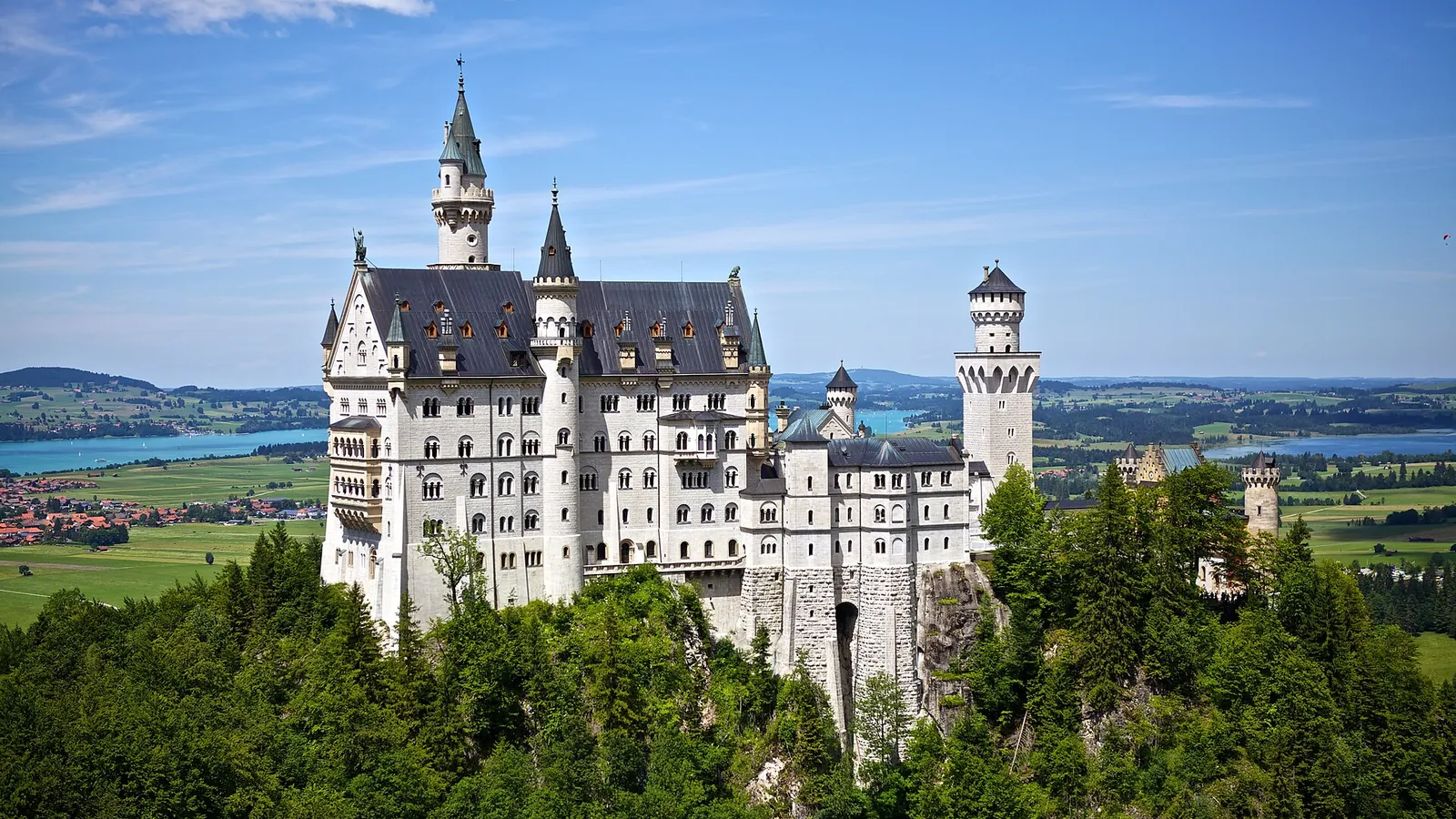
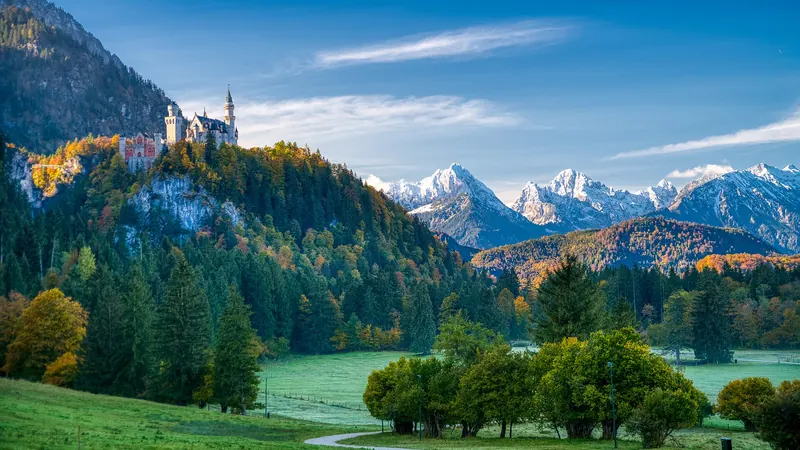
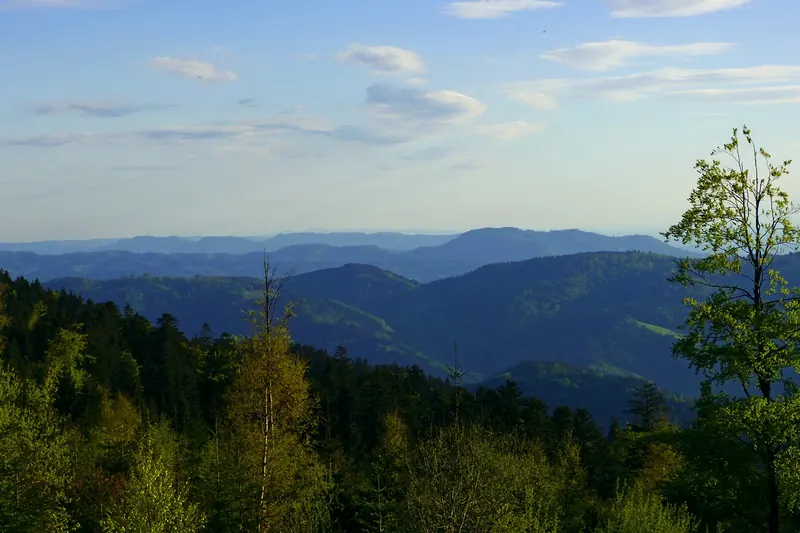
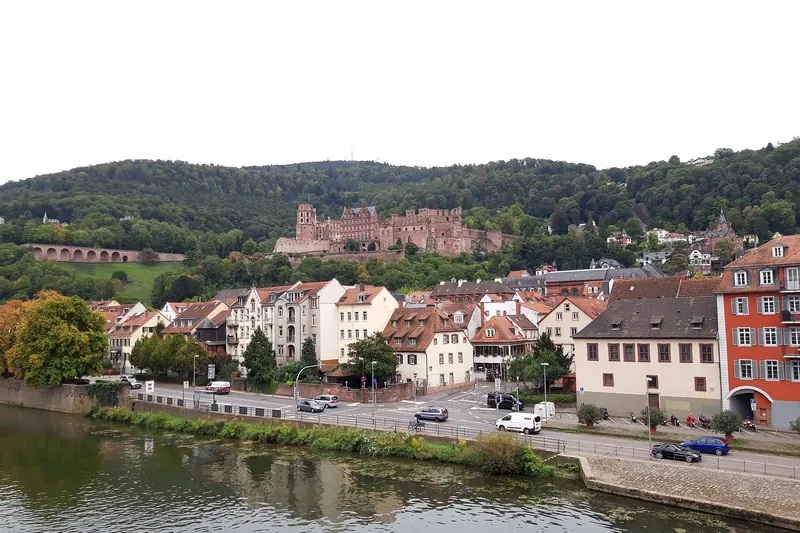
Neuschwanstein Castle rising from the forest above the Bavarian countryside

Bavaria · Germany

The Romantic Road & Neuschwanstein

A 350-kilometre route of walled medieval towns strung between Würzburg and the Alps, ending at the fairytale castle that gave Disney its silhouette.

  • Best time May–June and September
  • Stay 3–4 days
  • Good for Castles, medieval architecture, road trips, photography

Photo: cameralends · CC0

Welcome to the Romantic Road & Neuschwanstein

The Romantische Straße was invented in 1950 as West Germany's first themed tourist route, stringing together towns that had survived the war largely intact into a single 350-kilometre journey from Würzburg to Füssen at the foot of the Alps. The name is marketing, but the substance behind it is genuine: this really is the best concentrated stretch of medieval and baroque small-town Germany, largely untouched by the wartime bombing that reshaped so many larger cities.

Rothenburg ob der Tauber is the route's best-known stop, a completely walled medieval town preserved almost in its entirety, but it is one of a dozen similarly striking towns along the way — Dinkelsbühl, Nördlingen and Augsburg among them — each with its own walls, half-timbered houses and market square.

The road ends at Neuschwanstein, King Ludwig II's 19th-century fantasy castle built in a deliberately theatrical medieval style he never actually lived to see finished. It is the most photographed building in Germany, the direct visual inspiration for Disney's Sleeping Beauty Castle, and, however touristed, still startling in person.

  • Historic Site
  • Scenic Region
  • Castle

Why visit

Why visit the Romantic Road & Neuschwanstein?

The Romantic Road's case is that no other single route in Germany strings together this many intact medieval towns, ending at the country's single most famous castle.

  • The towns survived the war largely intact

    Unlike many larger German cities, this region's medieval architecture is mostly original rather than postwar reconstruction.

  • Neuschwanstein is worth the crowds

    Photographs undersell how theatrical and strange the castle looks in person, rising from dense forest above a turquoise lake.

  • Rothenburg is a complete medieval town, not a preserved street

    The full walled circuit and street layout survive together, a rare completeness among European medieval towns.

  • The route rewards slow driving

    Each town along the way has its own distinct character, and the drive between them passes pretty Bavarian and Franconian countryside.

  • It pairs naturally with the Alps

    The route's southern end sits at the foot of the Bavarian Alps, making an easy extension into genuine mountain scenery.

Main attractions

Top things to see in the Romantic Road & Neuschwanstein

The route's essential stops, best covered over several days rather than a single rushed drive-through.

  1. Neuschwanstein Castle at sunrise

    Neuschwanstein Castle

    King Ludwig II's fantasy 19th-century castle, built in a deliberately theatrical medieval revival style, rising dramatically from forest above the Hohenschwangau valley.

    Tip Book tickets online well ahead — walk-up availability is unreliable in summer, and tours run on a strict timed schedule.

  2. The half-timbered houses and streets of Rothenburg's old town

    Rothenburg ob der Tauber

    A completely walled medieval town, its street layout, market square and half-timbered houses preserved almost in their entirety, the Romantic Road's best-known stop.

    Tip Stay overnight to see the town after the day-trip coach crowds leave — it transforms into something atmospheric by evening.

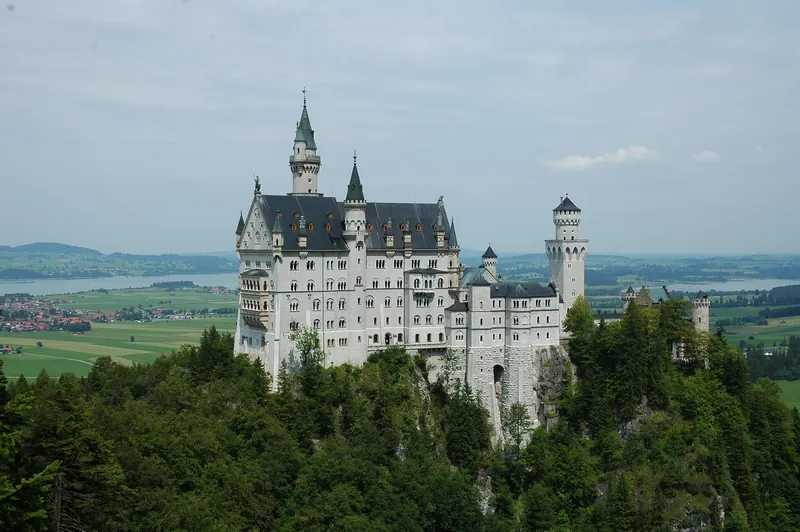
  3. Neuschwanstein Castle seen from the Marienbrücke bridge

    The Marienbrücke

    A bridge spanning a deep gorge just above Neuschwanstein, offering the single best photograph of the castle, with the peaks and lake visible behind it.

    Tip Arrive early — the narrow bridge gets crowded by mid-morning in summer.

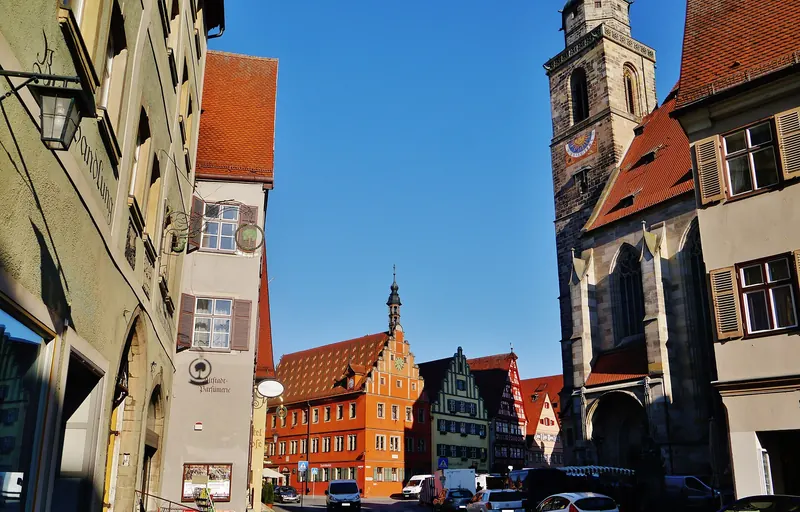
  4. Dinkelsbühl's historic market square

    Dinkelsbühl

    A smaller, quieter walled town than Rothenburg but similarly complete, with its own charming medieval streets and considerably fewer crowds.

    Tip The town's Kinderzeche festival in July, marking a legend of children saving the town, is worth timing a visit around if the dates align.

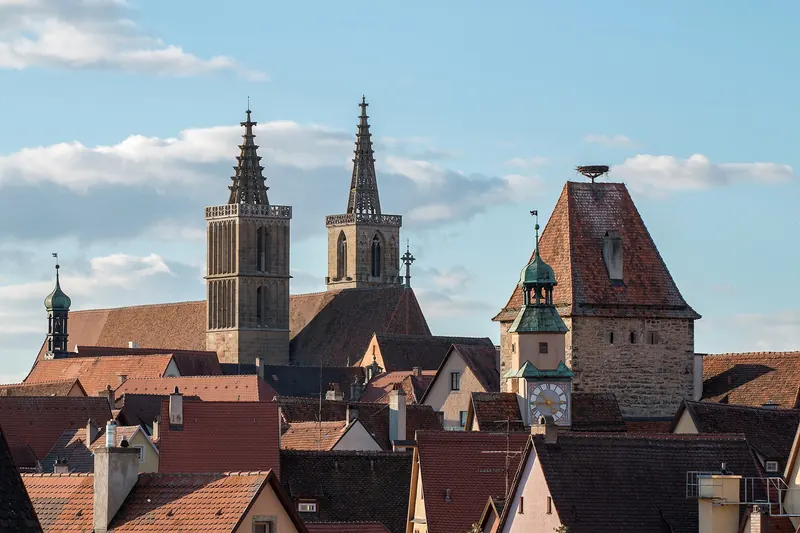
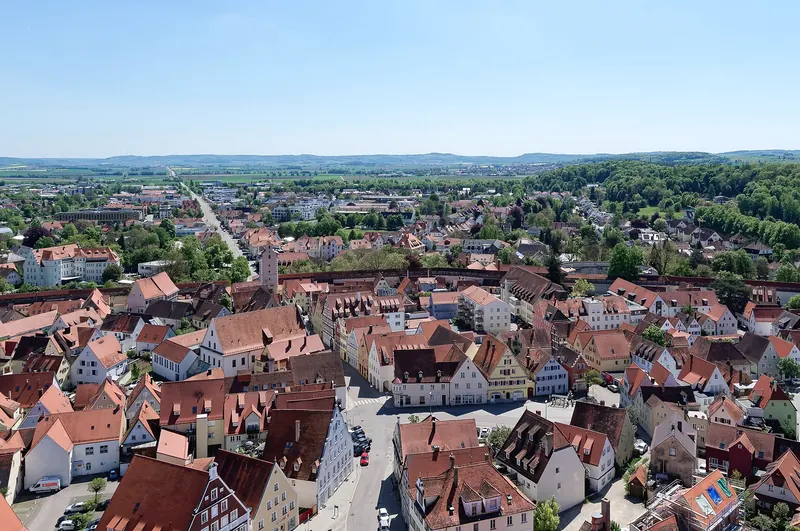
  5. Nördlingen's rooftops seen from St George's Church tower

    Nördlingen

    A walled town built inside a 15-million-year-old meteorite crater, its walls forming a unique complete circle, walkable in about an hour.

    Tip Climb St George's Church tower for a view that makes the town's circular crater-rim layout obvious from above.

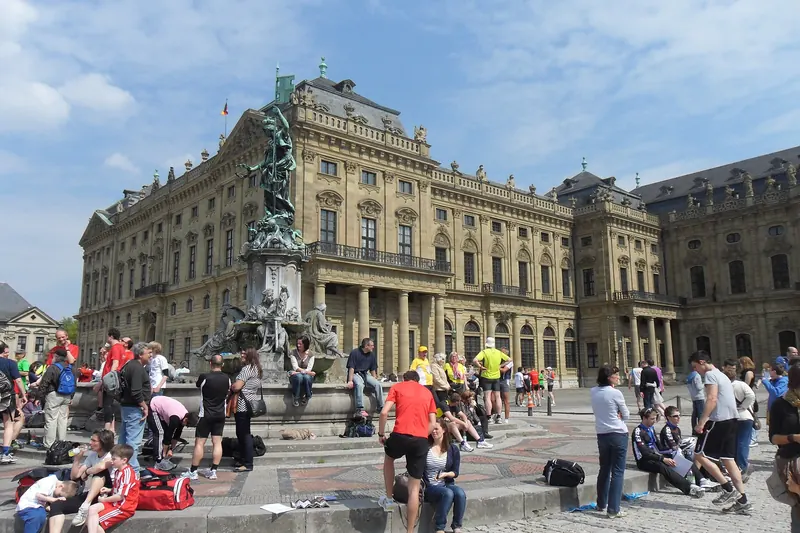
  6. The baroque facade of the Würzburg Residence

    Würzburg Residence

    A vast baroque palace at the Romantic Road's northern starting point, a UNESCO World Heritage site with Tiepolo's largest surviving ceiling fresco above its grand staircase.

    Tip The palace gardens are free to enter and a pleasant way to end a Würzburg visit.

Things to do

Best things to do in the Romantic Road & Neuschwanstein

Beyond touring individual towns and the castle, the route rewards slow driving and a few specifically local experiences.

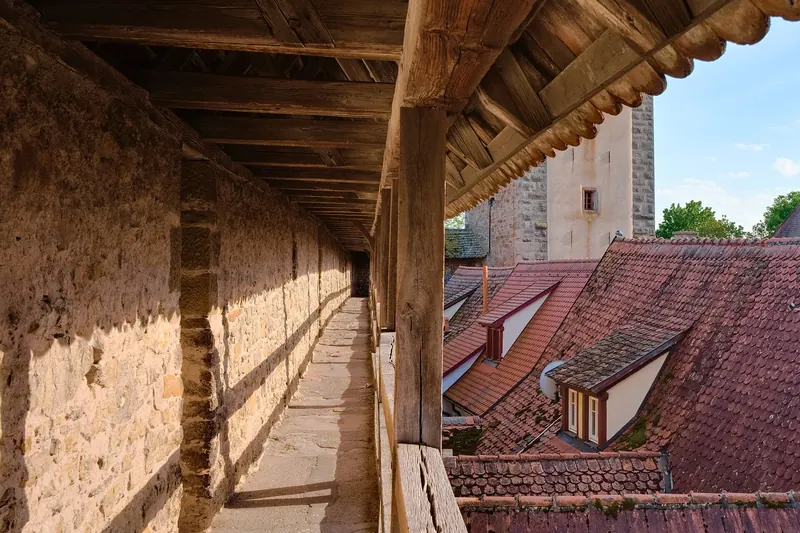
  1. The covered walkway along Rothenburg's town walls

    Walk Rothenburg's town walls

    A largely complete covered walkway circles the town, giving views over the rooftops and countryside beyond, free to walk and rarely crowded even when the streets below are busy.

    Tip The walk takes about an hour at an unhurried pace and works at any time of day.

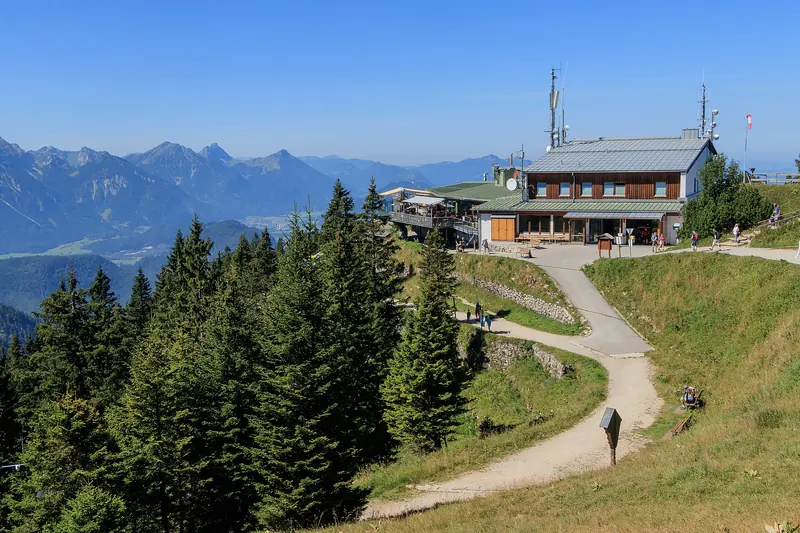
  2. The Tegelberg cable car above the Neuschwanstein valley

    Hike above Neuschwanstein for the classic view

    Beyond the Marienbrücke, several hiking trails climb higher into the hills above the castle for even more dramatic, less crowded viewpoints.

    Tip The Tegelberg cable car offers an even higher viewpoint for those wanting the full valley context without a long hike.

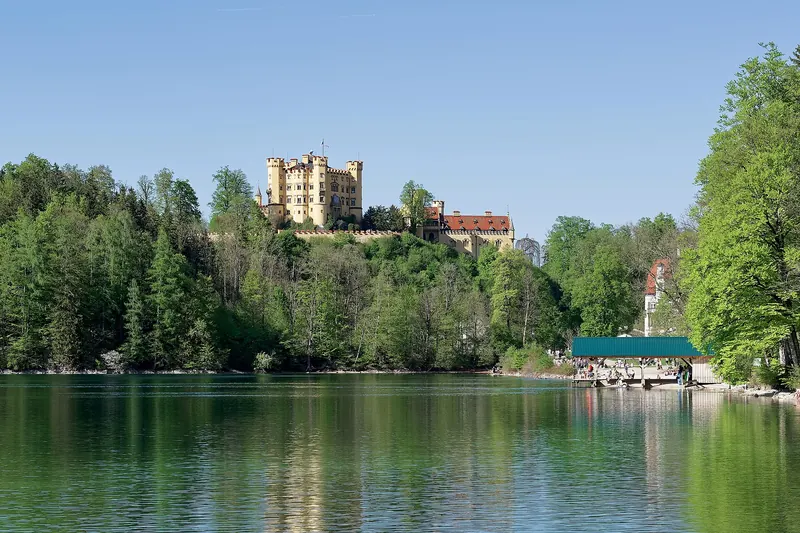
  3. Hohenschwangau Castle above the Alpsee lake

    Tour Hohenschwangau Castle

    Ludwig II's boyhood home, a real, lived-in royal residence in contrast to Neuschwanstein's fantasy construction, sitting on a neighbouring hill with its own worthwhile tour.

    Tip Combining both castles in one day is possible but tight — book both timed tickets with a comfortable gap between them.

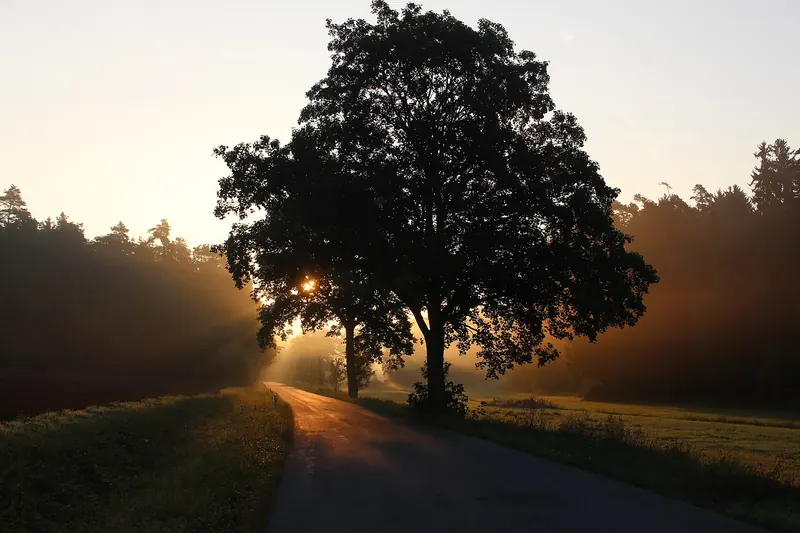
  4. A quiet rural road through the Bavarian countryside

    Drive the route's back roads slowly

    The signposted Romantic Road deliberately avoids the faster autobahns, and the slower country roads between towns are part of the experience rather than just transit time.

    Tip Allow more time than a map suggests — the towns themselves, not just the driving, are the point.

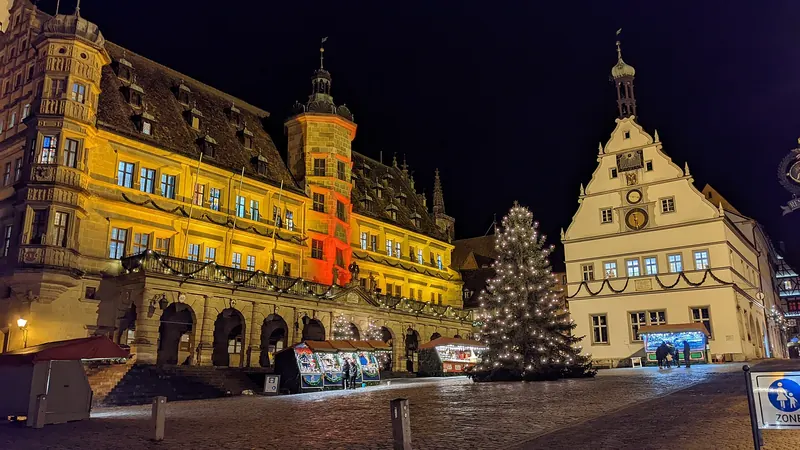
  5. Rothenburg's illuminated market square at Christmas

    Visit a Christmas market in season

    Rothenburg's and Dinkelsbühl's Christmas markets, held in medieval settings, are considerably less commercial than those in larger German cities.

    Tip Rothenburg's Reiterlesmarkt runs from late November, with the town's medieval backdrop giving it real atmosphere.

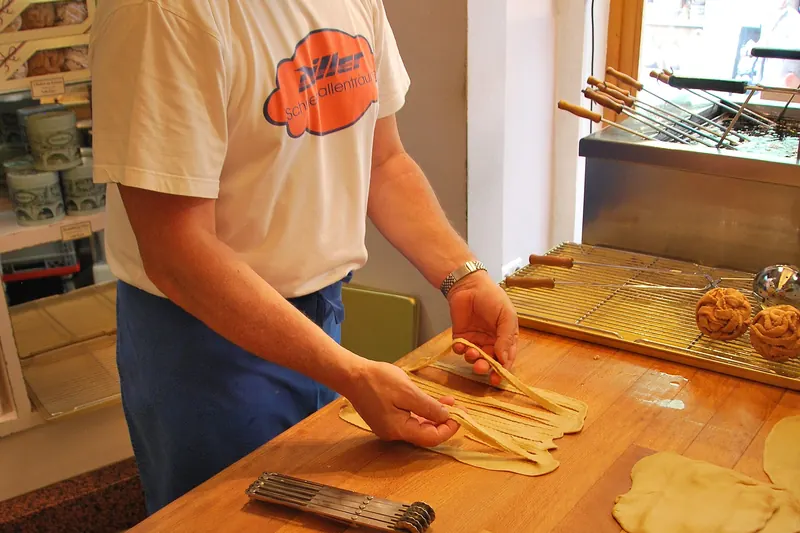
  6. A baker preparing Schneeball pastries in a Rothenburg shop window

    Try a Schneeball in Rothenburg

    A local pastry speciality — a ball of shortcrust pastry strips, fried and dusted with sugar or dipped in chocolate — unique to the town.

    Tip Watch one being made at a bakery window before buying — the preparation is part of the attraction.

Local food

What to eat in the Romantic Road & Neuschwanstein

Franconian and Bavarian food along the route runs hearty and traditional, with a few distinctive local specialities.

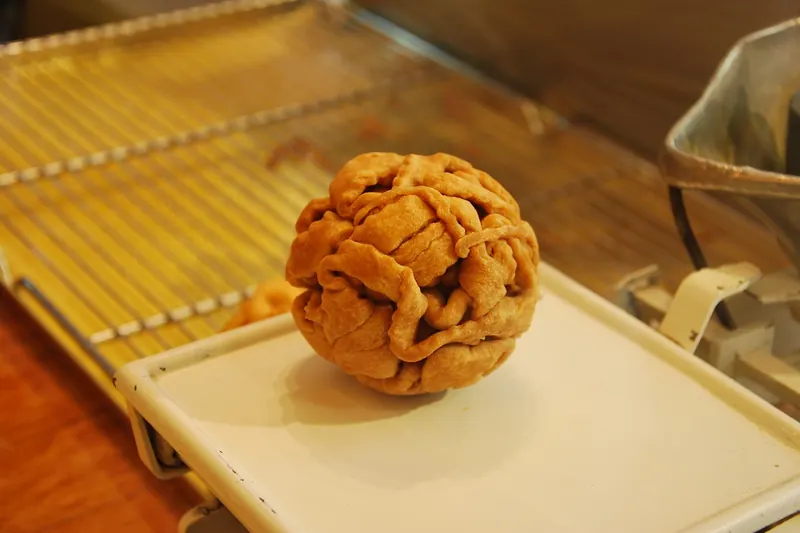
  • A sugar-dusted Schneeball pastry

    Schneeball (Rothenburg's pastry)

    A ball of shortcrust pastry strips, deep-fried and dusted with sugar or dipped in chocolate, invented in and still closely associated with Rothenburg.

    Where to try it Bakeries throughout Rothenburg's old town, many with window displays showing the preparation.

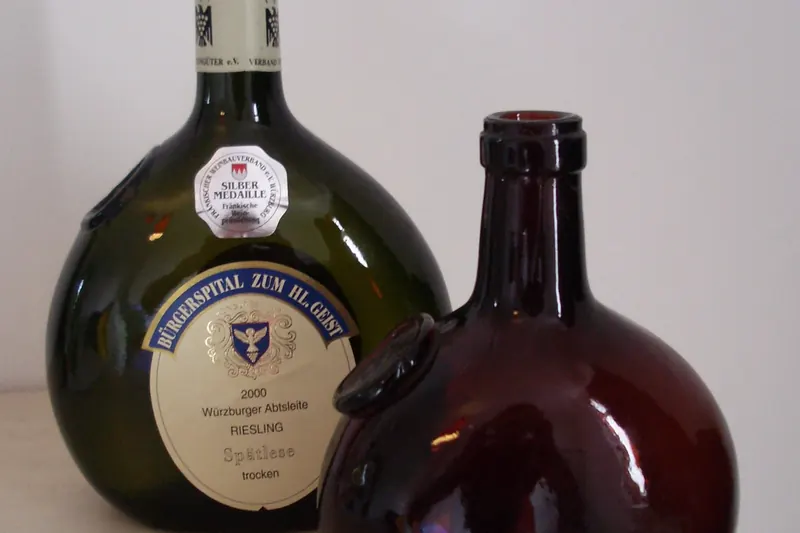
  • Flask-shaped Bocksbeutel bottles of Franconian wine

    Franconian wine

    The region around Würzburg produces distinctive dry white wines, traditionally bottled in the flask-shaped Bocksbeutel, a genuine point of local pride distinct from Rhine wines.

    Where to try it Wine taverns (Weinstuben) in Würzburg, and vineyards throughout the surrounding countryside.

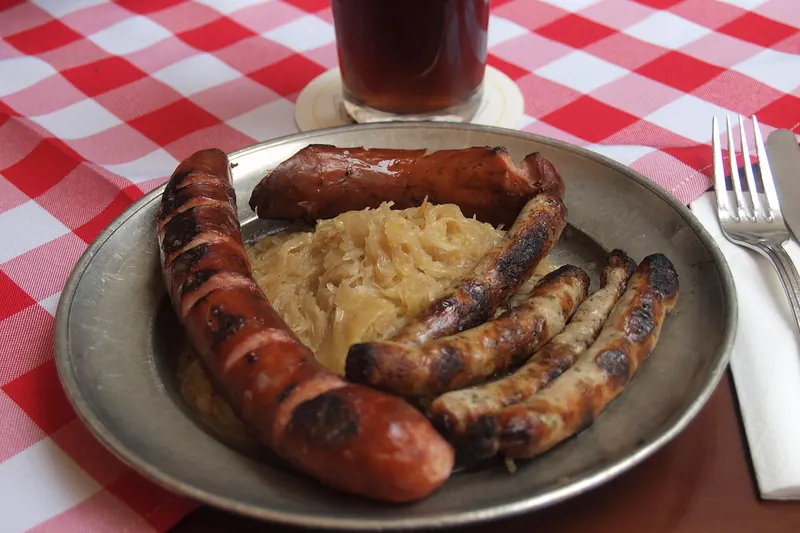
  • A plate of small grilled bratwurst sausages

    Nürnberger-style bratwurst

    Small, finger-sized grilled sausages, traditionally served three, six or a dozen in a roll or on a plate with sauerkraut, found throughout Franconia.

    Where to try it Traditional Gasthaus restaurants throughout the region, especially around Rothenburg and Nördlingen.

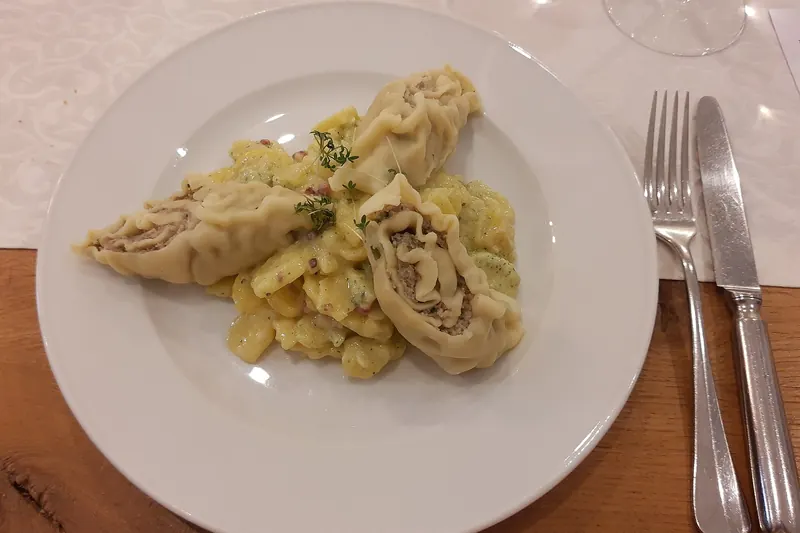
  • A plate of Maultaschen, Swabian filled pasta pockets

    Maultaschen

    Large pasta pockets filled with meat, spinach and herbs, a Swabian speciality sometimes called 'Swabian ravioli', found on menus throughout southern Germany.

    Where to try it Traditional restaurants across the Romantic Road, particularly toward its southern, Swabian-influenced end.

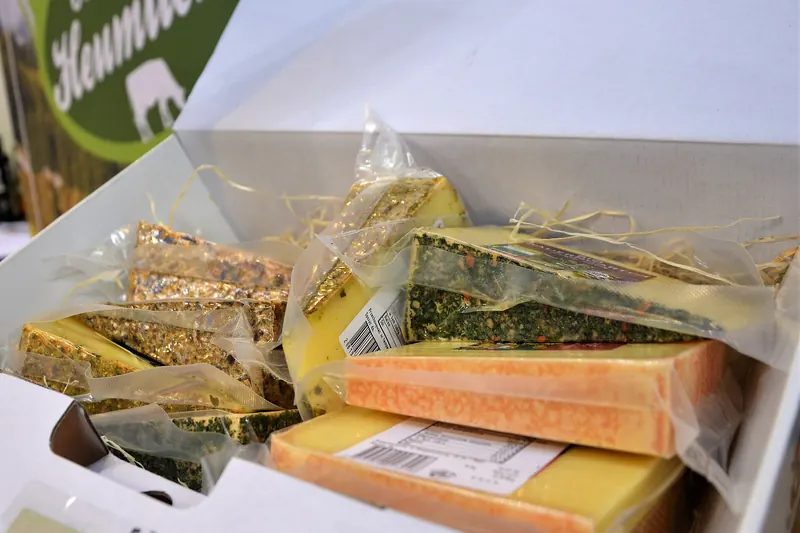
  • Wedges of Allgäu cheese from a local producer

    Allgäu cheese

    The Allgäu region around Füssen produces excellent Alpine cheese, a tradition shaped by the same mountain pastures visible from Neuschwanstein itself.

    Where to try it Farm shops and traditional restaurants around Füssen and the Alpine foothills.

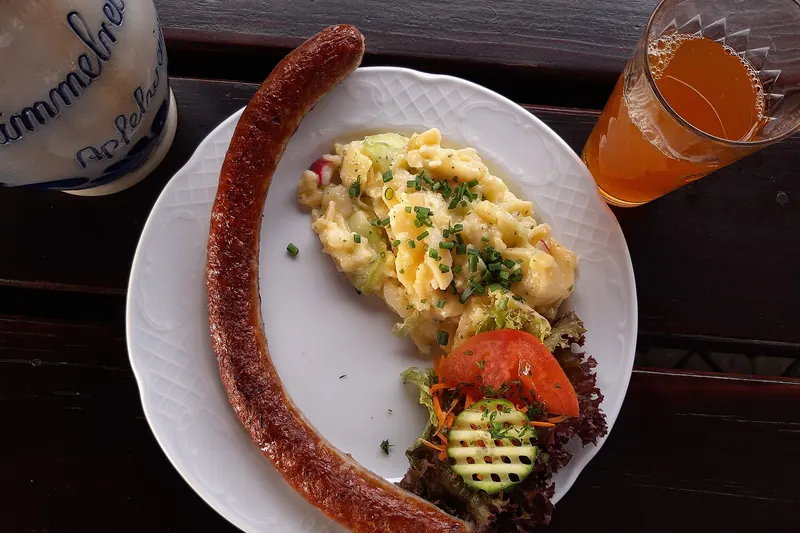
  • Bratwurst served with German potato salad

    Kartoffelsalat and regional sides

    Regional potato salad varies by area — a vinegar-and-broth-based version in Franconia, distinct from the mayonnaise-based versions found further north.

    Where to try it Traditional Gasthaus restaurants throughout the route, usually served alongside sausages or schnitzel.

Accommodation

Where to stay in the Romantic Road & Neuschwanstein

Rothenburg and Füssen are the two natural overnight bases, at the route's midpoint and southern end respectively.

  • Rothenburg ob der Tauber

    Staying overnight within the walls lets you see Rothenburg's streets empty of coach tours, worth the modest premium over a day visit.

    Best for: Experiencing the town without day-trip crowds

  • Füssen

    The practical base for visiting the castles, a short drive or bus ride from Hohenschwangau, with easy access into the Alps beyond.

    Best for: Neuschwanstein and the Alpine foothills

  • Dinkelsbühl or Nördlingen

    Both offer similarly atmospheric walled-town stays at noticeably lower prices and crowds than Rothenburg.

    Best for: A quieter, less touristed alternative

What a night costs

Hostel or guesthouse
€25–45 per night
Mid-range hotel
€85–160 per night
Neuschwanstein Castle tour
€21
Combined Neuschwanstein and Hohenschwangau ticket
€31

Transport

Getting to and around the Romantic Road & Neuschwanstein

Munich and Frankfurt are the practical air gateways, with a car the standard way to actually travel the route.

Getting there

  • Munich Airport (MUC)

    The nearest major airport to the route's southern end, around two hours by car to Füssen and Neuschwanstein.

    A practical starting point for a route driven south to north, or as a base for a Neuschwanstein day trip alone.

  • Rail to Würzburg or Füssen

    Both towns are reachable by train, Würzburg from Frankfurt in about 1h15, Füssen from Munich in about 2 hours.

    Regional trains and buses connect several Romantic Road towns, though a car remains the more flexible option.

  • Rental car

    The standard, recommended way to travel the full route, allowing stops in as many or as few towns as time allows.

    Pick up in Würzburg or Frankfurt and drop off in Füssen or Munich, or vice versa, for a one-way route.

Getting around

A car is close to essential for the full route, though regional buses and trains cover the main towns for those without one.

  • Rental car

    The most practical way to cover the full 350-kilometre route at a comfortable pace, stopping freely between towns.

    The Romantic Road is well signposted throughout, making independent driving straightforward.

  • Romantic Road bus

    A seasonal coach service connects the route's main towns for visitors without a car, though with far less flexibility than driving.

    Runs primarily in summer months — check current schedules before relying on it.

  • Regional trains

    Cover some of the larger towns, including Würzburg, Augsburg and Füssen, though smaller stops like Dinkelsbühl require a bus connection.

    A workable option for a shorter, more focused visit to fewer towns.

When to go

Best time to visit the Romantic Road & Neuschwanstein

The route works in most seasons, but late spring and early autumn balance good weather against summer's considerable Neuschwanstein crowds.

  • Spring (April–June)

    Best time

    Mild weather, blooming countryside between towns, and crowds at Neuschwanstein still below the summer peak.

  • Summer (July–August)

    Shoulder

    The busiest months, with Neuschwanstein and Rothenburg both crowded, though long daylight extends the sightseeing day.

  • Autumn (September–October)

    Best time

    Comfortable temperatures, thinning crowds, and good light for photographing both the castle and the walled towns.

  • Winter (November–March)

    Good

    Christmas markets bring genuine atmosphere to Rothenburg and Dinkelsbühl, and a snow-covered Neuschwanstein is a striking sight.

Worth planning around: Midday in July and August at Neuschwanstein, when tour bus crowds peak — an early morning or late afternoon slot is considerably calmer.

Itinerary

Four days on the Romantic Road

North to south, from Würzburg's baroque palace to Neuschwanstein's fantasy castle, with the walled towns strung between.

  1. Day1

    Würzburg and Rothenburg

    The route's baroque start and its best-known medieval stop.

    • Morning The Würzburg Residence and its gardens.
    • Afternoon Drive to Rothenburg ob der Tauber.
    • Evening Explore Rothenburg's streets after the day-trip crowds leave.
  2. Day2

    Rothenburg to Dinkelsbühl and Nördlingen

    Two quieter walled towns.

    • Morning Walk Rothenburg's town walls at a slow pace.
    • Afternoon Drive via Dinkelsbühl to Nördlingen, climbing St George's tower.
    • Evening Dinner in Nördlingen's old town.
  3. Day3

    To Füssen and Neuschwanstein

    The route's southern end and its most famous castle.

    • Morning Drive south to Füssen.
    • Afternoon Tour Neuschwanstein Castle, timed tickets permitting.
    • Evening Dinner in Füssen.
  4. Day4

    Marienbrücke and Hohenschwangau

    The classic castle view and Ludwig's boyhood home.

    • Morning The Marienbrücke for the classic Neuschwanstein photograph.
    • Afternoon Tour Hohenschwangau Castle.
    • Evening Depart, or continue into the Alps.

Travel tips

The Romantic Road & Neuschwanstein travel tips

Practical notes on booking, timing and driving that make a real difference to a Romantic Road trip.

  • Book Neuschwanstein Castle tickets online well ahead — walk-up availability is unreliable in summer.
  • Stay overnight in Rothenburg rather than day-tripping, to see the town without the coach-tour crowds.
  • Arrive at the Marienbrücke early morning for photographs without the crowds that build by mid-morning.
  • Allow more time than a map suggests — the towns, not just the driving, are the point of this route.
  • Pack for genuine weather variation between the lower towns and the Alpine foothills near Füssen.
  • Consider skipping one or two towns rather than rushing all of them — Dinkelsbühl or Nördlingen alone, well explored, beats a hurried visit to both.
  • Combine Neuschwanstein and Hohenschwangau tickets if visiting both — they're sold together at a modest discount.

FAQ

The Romantic Road & Neuschwanstein: frequently asked questions

How many days do you need for the Romantic Road?

Three to four for the highlights — Rothenburg, one or two smaller towns and Neuschwanstein. A full week allows an unhurried pace covering the entire route from Würzburg to Füssen.

Do I need a car?

Strongly recommended. A seasonal Romantic Road bus and regional trains cover the larger towns, but a car gives the flexibility to stop freely and reach smaller towns like Dinkelsbühl properly.

Is Neuschwanstein worth the crowds?

Yes — photographs undersell how theatrical the castle looks in person, and booking ahead for a specific time slot avoids much of the worst congestion.

What is the best time of year to visit?

May to June and September offer the best balance of good weather and manageable crowds. Winter brings genuine Christmas market atmosphere to the walled towns and a striking snow-covered castle; summer is busiest and hottest.

Can Neuschwanstein be visited as a day trip from Munich?

Yes, comfortably — it's about two hours each way by car or train, making a long but complete day trip possible, though an overnight stay in Füssen allows a far less rushed visit.

Read next

Related travel articles

Practical

Packing by Season and Trip Type

Most packing advice is a list of things. This is the opposite: the small number of decisions that determine whether your luggage helps or hinders, organised by the kind of trip you are actually taking.

Heritage

UNESCO Sites Worth Planning a Trip Around

A UNESCO listing tells you a place matters; it does not tell you whether it is worth two days and a detour. This is how to read the list usefully — and which sites reward building a trip around them.

Advertisement