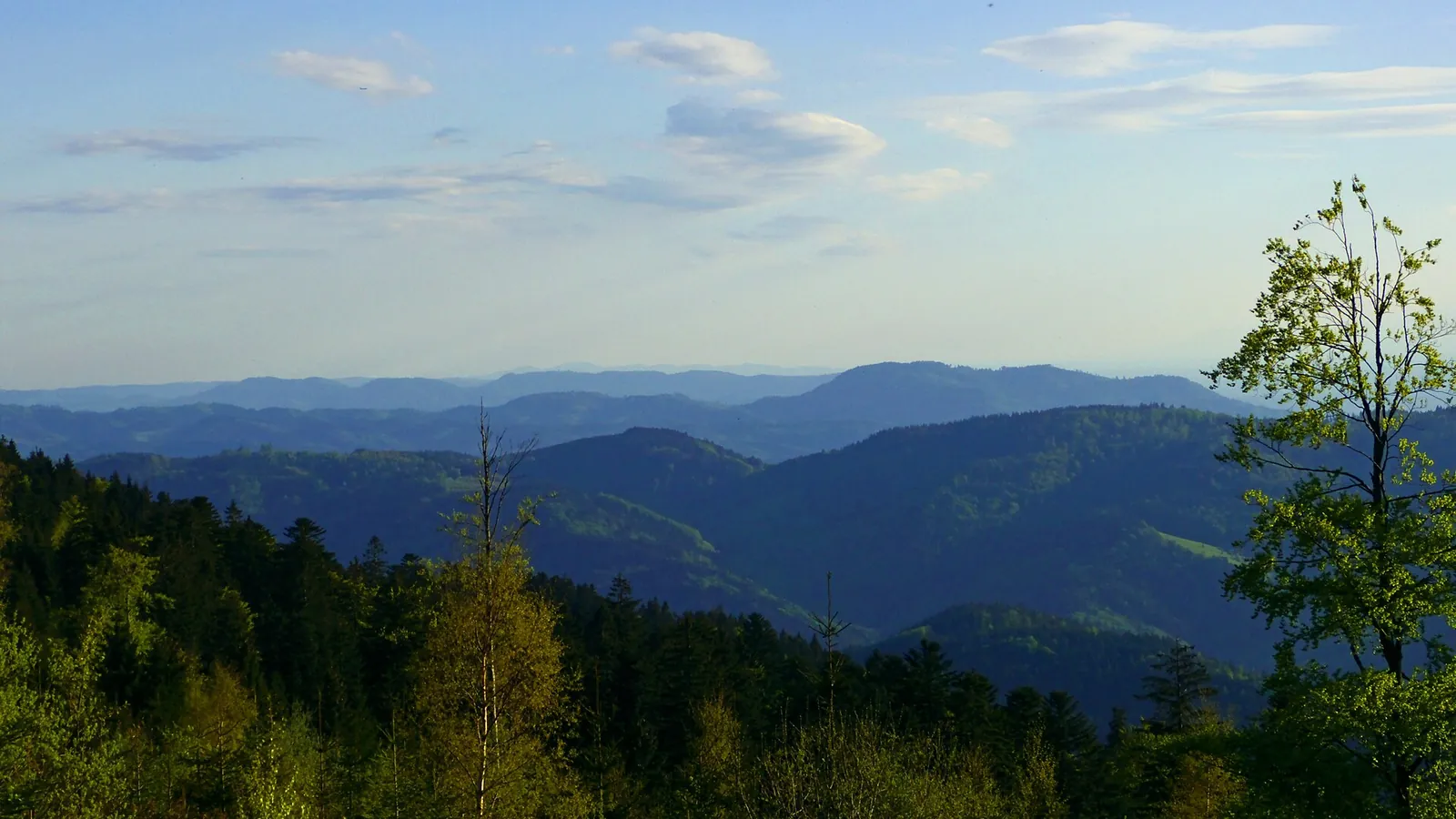
Dense fir forest covering the rolling hills of the Black Forest

Baden-Württemberg · Germany

The Black Forest

Dense fir forest, cuckoo clocks, spa towns and Germany's most famous cake, spread across rolling hills that gave the Grimm brothers plenty of material to work with.

  • Best time May–June and September
  • Stay 3–4 days
  • Good for Hiking, nature, spas, families

Photo: Dg-505 · CC BY 3.0

Welcome to the Black Forest

The Schwarzwald takes its name, and its dark reputation in Grimm fairy tales, from the dense fir canopy that once covered the region so completely that little light reached the forest floor. That density still defines the landscape today — a low mountain range running roughly 160 kilometres along Germany's border with France and Switzerland, covered in forest, dotted with lakes and cut through with river valleys.

The region's craft traditions grew directly out of the forest itself: clockmaking, born from long winters and abundant timber, produced the cuckoo clock in the 17th and 18th centuries and turned it into one of Germany's most recognisable exports. Glassblowing, woodcarving and traditional Black Forest costume — the famous Bollenhut hat with its red or black pom-poms — all developed alongside it in small mountain villages.

Beyond the crafts and the cake that shares the region's name, the Black Forest holds genuine spa town heritage at Baden-Baden, some of Germany's best hiking and cycling terrain, and glacial lakes like the Titisee and Schluchsee that anchor a slower, more rural side of the country than its cities show.

  • Nature Wildlife
  • Mountains
  • Scenic Region

Why visit

Why visit the Black Forest?

The Black Forest's case is that nowhere else in Germany combines this much dense forest scenery, genuine craft heritage and spa-town history in one region.

  • The forest scenery is dense and atmospheric

    Unbroken fir canopy across rolling hills gives the region a real, distinct character within Germany's landscape.

  • The craft traditions are real, not staged

    Cuckoo clock making, glassblowing and woodcarving remain genuine working trades in small workshops, not just souvenir shops.

  • Baden-Baden's spa culture is world class

    One of Europe's great historic spa towns, with thermal baths in use since Roman times.

  • The hiking and cycling network is excellent

    A dense network of well-marked trails suits everything from gentle valley walks to serious multi-day routes.

  • It rewards slow, rural travel

    Small villages, working farms and genuine quiet make the Black Forest a real contrast to Germany's city-focused itineraries.

Main attractions

Top things to see in the Black Forest

The region's essential stops, spread across a large area best covered with a car and an unhurried pace.

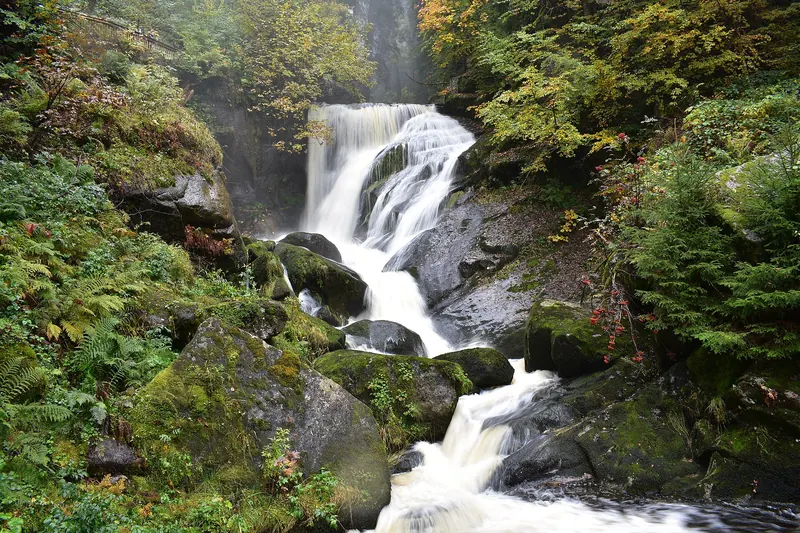
  1. Triberg's waterfall cascading through the forest

    Triberg Waterfalls

    Germany's highest waterfall, dropping 163 metres through the forest in several cascades, reachable by a well-maintained path through the trees.

    Tip The path has multiple viewing platforms at different heights — the upper ones are quieter and arguably more dramatic.

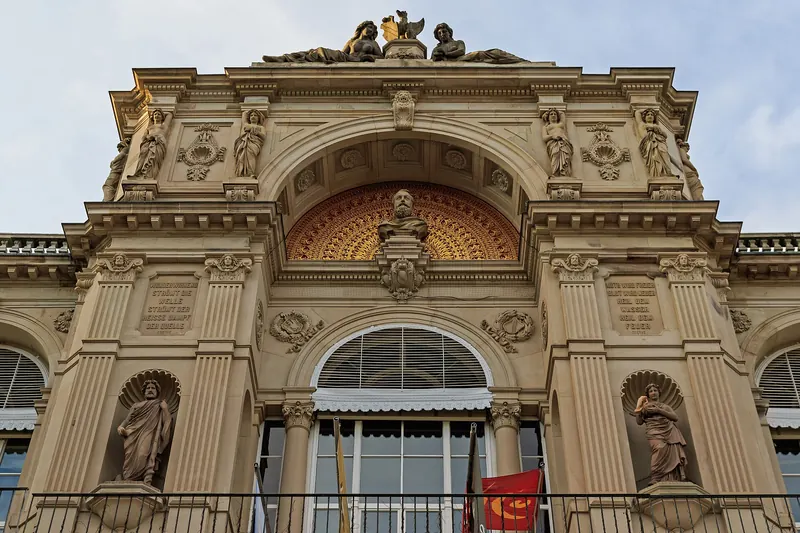
  2. The Friedrichsbad thermal baths building in Baden-Baden

    Baden-Baden's thermal baths

    A grand spa town, its baths in continuous use since Roman times, with the 19th-century Friedrichsbad offering an elaborate traditional bathing ritual.

    Tip The Friedrichsbad's full Roman-Irish bathing ritual takes about three hours — allow a proper half-day rather than rushing it.

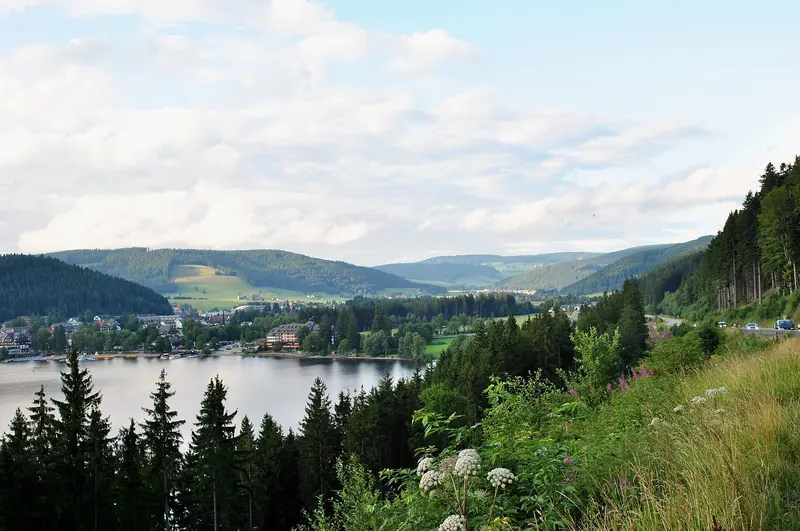
  3. The forest-ringed Titisee lake

    The Titisee

    A glacial lake ringed by forest, the region's most visited natural attraction, with boat rentals and lakeside walks alongside a touristy village at its shore.

    Tip Walk beyond the immediate lakeside village for quieter shoreline views away from the souvenir shops.

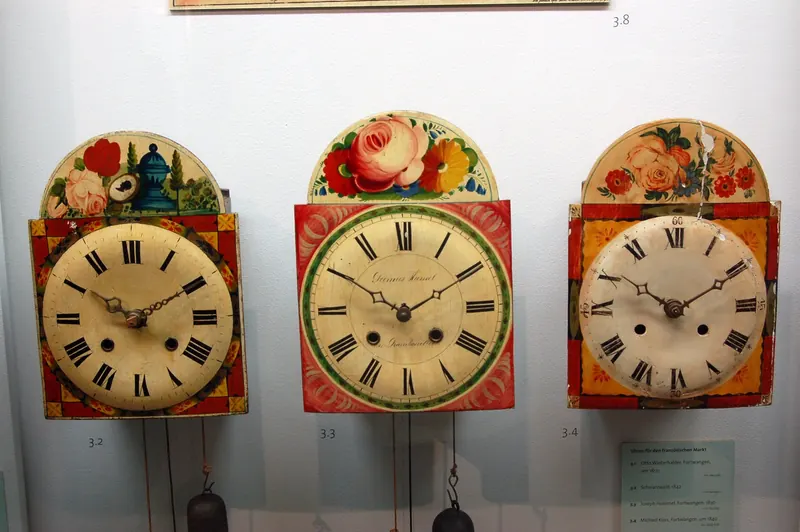
  4. The German Clock Museum building in Furtwangen

    The German Clock Museum, Furtwangen

    The world's largest collection of clocks under one roof, tracing the Black Forest's clockmaking history from early wooden mechanisms to elaborate cuckoo clocks.

    Tip Time a visit for one of the regular demonstrations, when dozens of clocks chime together.

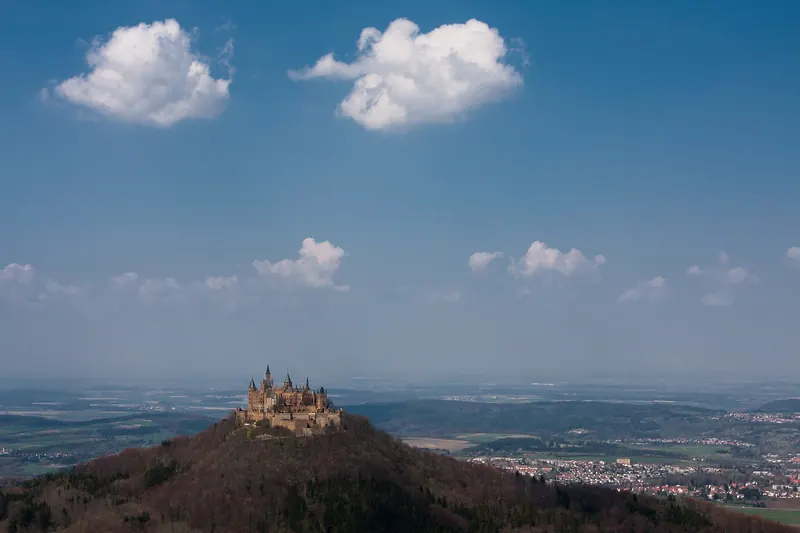
  5. Hohenzollern Castle rebuilt on its hilltop

    Hohenzollern Castle

    A dramatic 19th-century castle rebuilt on a hilltop above the surrounding countryside, the ancestral seat of the Prussian royal family, just east of the main Black Forest region.

    Tip The approach road offers a striking first view of the castle rising from its hilltop, worth a photo stop.

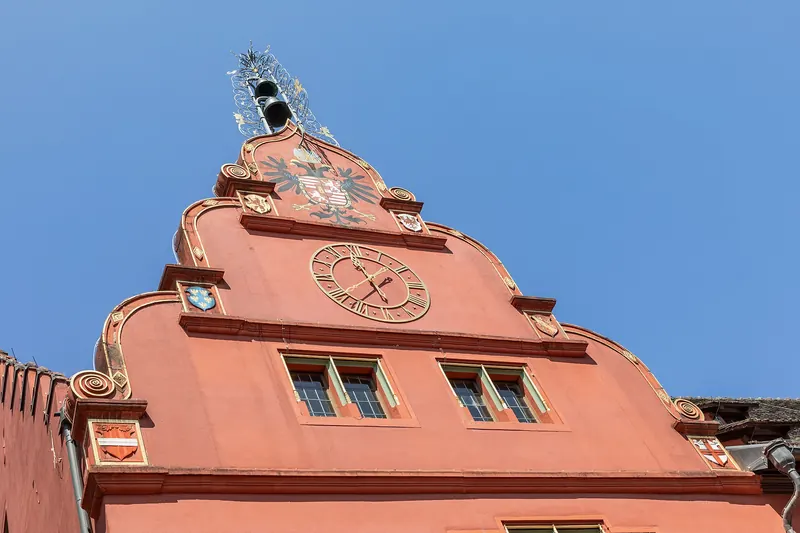
  6. Freiburg's historic old town square

    Freiburg im Breisgau's Old Town

    The Black Forest's unofficial capital, a lively university city with a Gothic minster and a network of small medieval water channels called Bächle running through its streets.

    Tip Local tradition holds that accidentally stepping in a Bächle means you'll marry a Freiburger — a charming, harmless bit of local lore.

Things to do

Best things to do in the Black Forest

Beyond touring individual towns, the Black Forest rewards genuine outdoor time and hands-on engagement with its craft traditions.

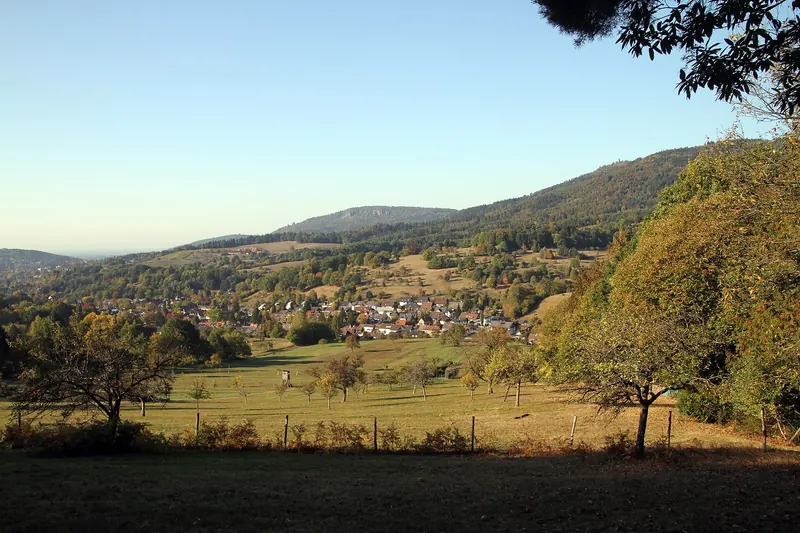
  1. A view over a Black Forest village from a hiking trail

    Hike a section of the Westweg or a shorter forest trail

    The Westweg is a multi-day long-distance trail running the length of the region, though countless shorter day routes give a genuine taste of the forest without the full commitment.

    Tip Well-marked local trails around Triberg and Freudenstadt work well for a half-day forest walk without a car.

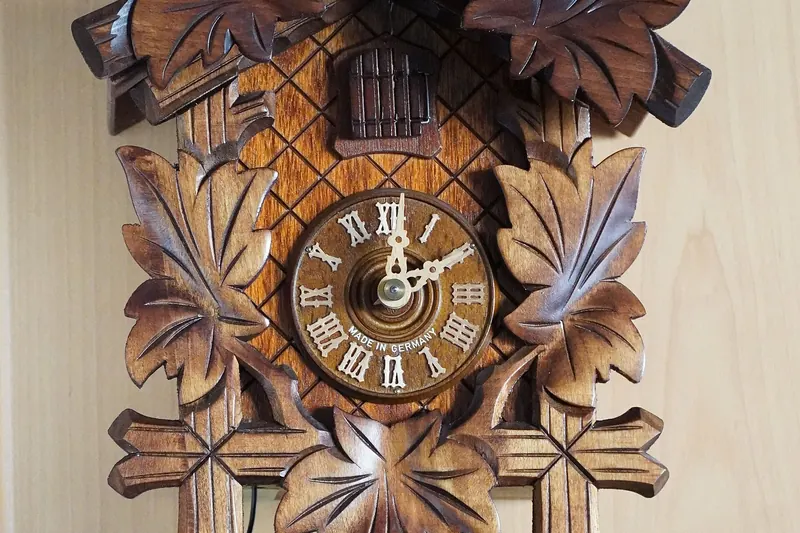
  2. A traditional hand-carved Black Forest cuckoo clock

    Visit a working cuckoo clock workshop

    Small family workshops across the region still hand-carve and assemble traditional clocks, offering a more interesting experience than a souvenir shop alone.

    Tip The House of 1000 Clocks and similar working workshops around Triberg let you watch the carving process directly.

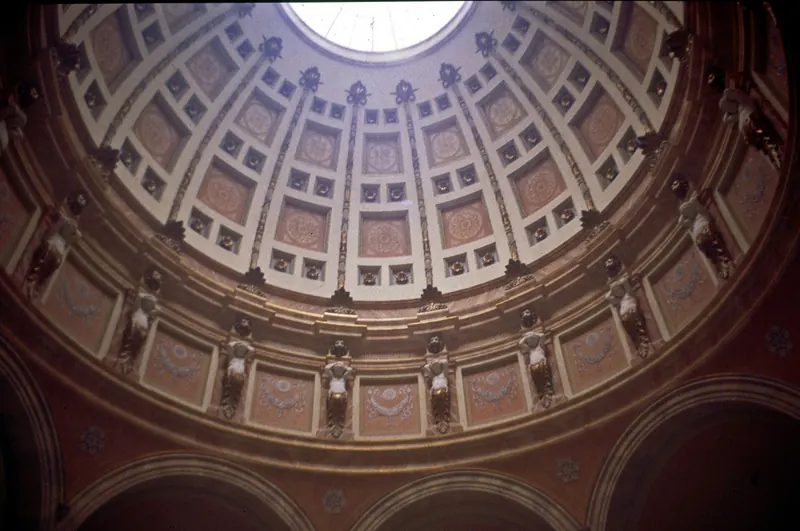
  3. The domed Great Bath Hall inside the Friedrichsbad

    Take the Friedrichsbad bathing ritual in Baden-Baden

    A traditional 17-stage Roman-Irish bathing sequence of saunas, steam rooms and pools, an immersive spa experience rather than a quick soak.

    Tip Most sessions are mixed-gender and clothing-optional by longstanding tradition — worth knowing before booking.

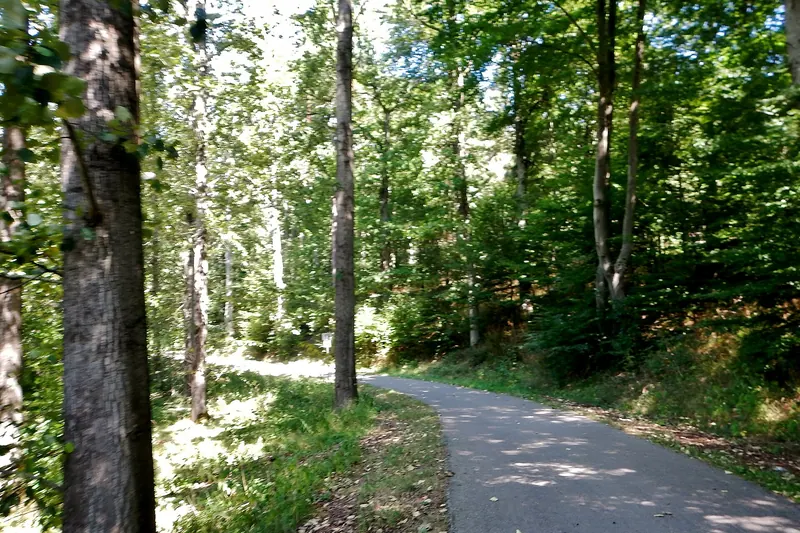
  4. A tree-lined cycle path through a river valley

    Cycle the Black Forest's valley routes

    Well-maintained cycle paths run through the region's river valleys, considerably gentler than the forested hills above, suiting a relaxed multi-day cycling trip.

    Tip Valley routes along the Kinzig and Elz rivers are particularly well suited to cycling without serious hill fitness.

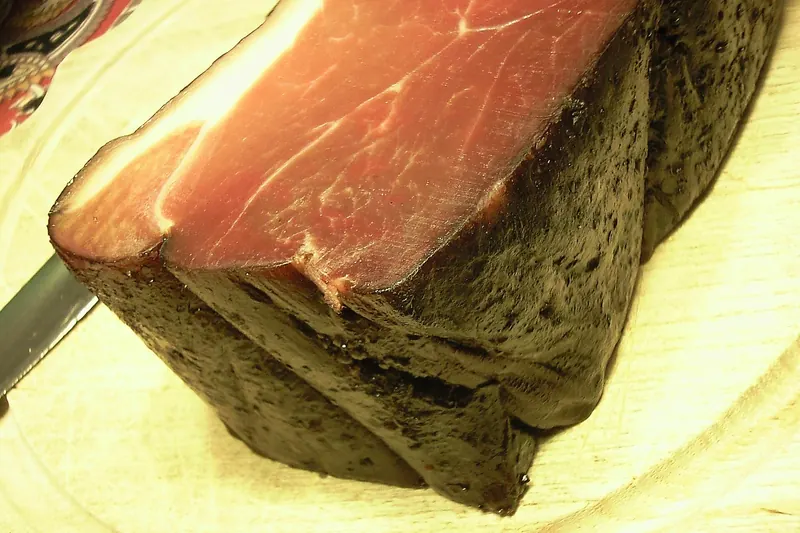
  5. Traditionally smoked Black Forest ham

    Try a traditional Black Forest ham smokehouse

    Genuine smokehouses producing Schwarzwälder Schinken by traditional methods are still found across the region, some offering tours and tastings.

    Tip Look for smaller family producers over larger commercial operations for a traditional version.

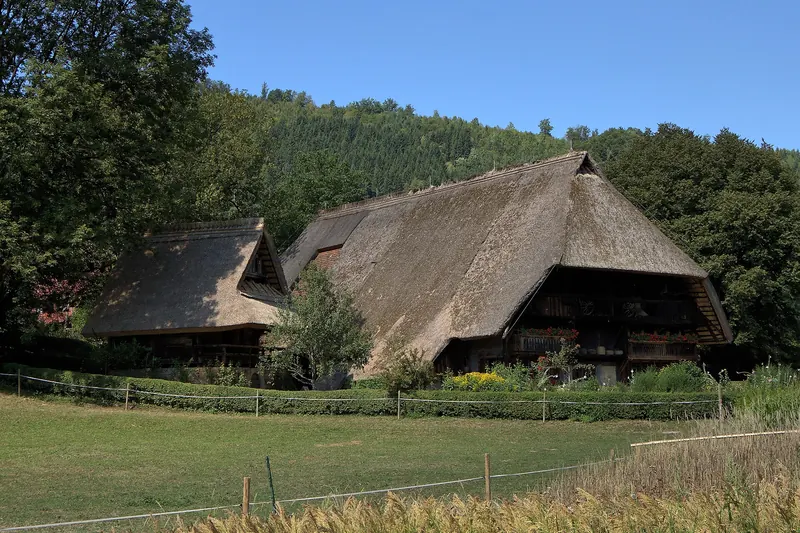
  6. A traditional Black Forest farmhouse at the Vogtsbauernhof museum

    Visit an open-air folk museum

    The Vogtsbauernhof open-air museum near Gutach preserves genuine historic Black Forest farmhouses, giving real insight into how the region's rural communities actually lived.

    Tip Allow at least half a day — the museum spans a large outdoor site with multiple preserved buildings.

Local food

What to eat in the Black Forest

Black Forest food leans on hearty mountain cooking, smoked ham and, above all, the cake that made the region's name famous worldwide.

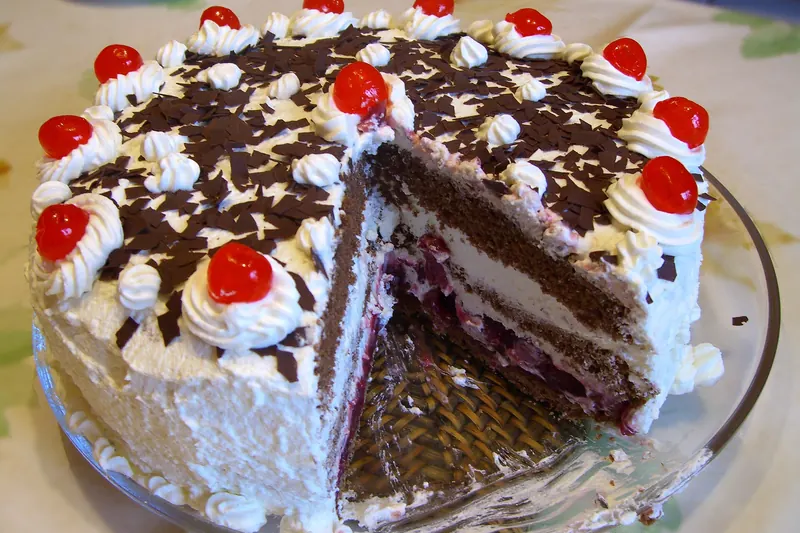
  • A slice of Black Forest gateau with cherries

    Schwarzwälder Kirschtorte (Black Forest gateau)

    Layered chocolate sponge, whipped cream and cherries soaked in Kirschwasser cherry brandy, the region's most famous export and a genuine point of local pride.

    Where to try it Traditional Konditorei cake shops throughout the region, particularly in Triberg.

  • Sliced Schwarzwälder Schinken, Black Forest ham

    Schwarzwälder Schinken (Black Forest ham)

    A distinctively smoked, dry-cured ham with a protected geographical status, different in flavour from other German cured meats.

    Where to try it Traditional smokehouses and delicatessens across the region.

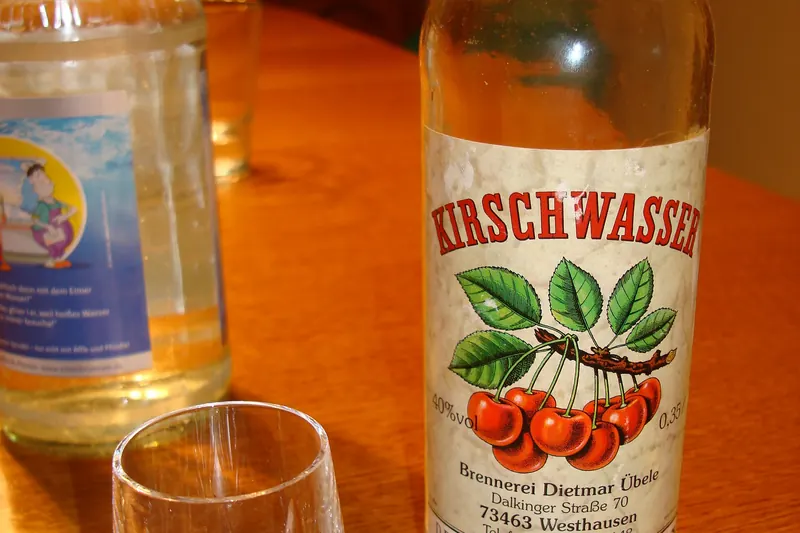
  • A bottle and glass of Kirschwasser cherry brandy

    Kirschwasser (cherry brandy)

    A clear cherry brandy distilled from the region's cherry orchards, both a drink in its own right and the essential flavouring in Black Forest gateau.

    Where to try it Traditional distilleries and restaurants throughout the region.

  • A bowl of Flädlesuppe with pancake strips

    Flädlesuppe

    A traditional Swabian soup of clear broth with thin strips of pancake, simple, comforting and found across southwestern Germany.

    Where to try it Traditional Gasthaus restaurants throughout the Black Forest.

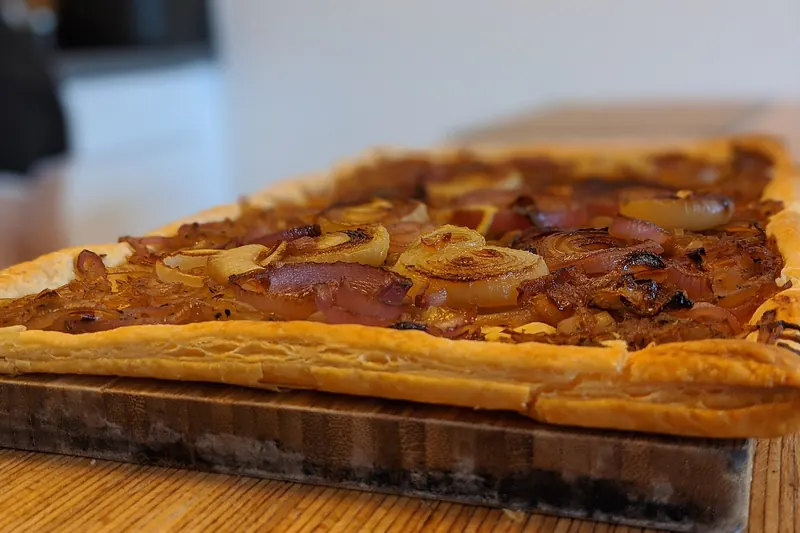
  • A slice of Zwiebelkuchen savoury onion tart

    Zwiebelkuchen

    A savoury onion tart with bacon and caraway seeds, traditionally paired with new wine (Federweisser) in autumn, a genuine regional seasonal specialty.

    Where to try it Traditional restaurants and wine taverns, especially during the autumn wine harvest season.

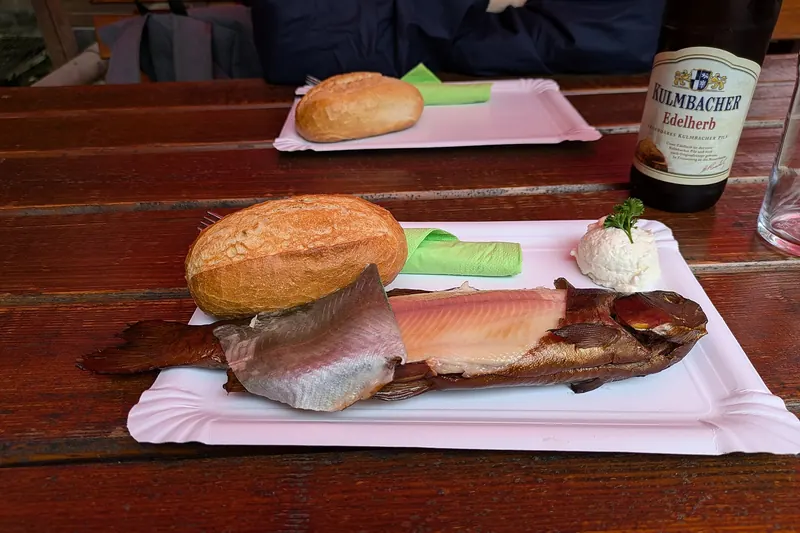
  • Freshly smoked trout from a traditional smokery

    Black Forest trout

    Freshwater trout from the region's clean mountain streams, often served simply pan-fried, a fresh, local specialty distinct from coastal seafood traditions.

    Where to try it Traditional restaurants near the region's rivers and lakes, particularly around the Titisee.

Accommodation

Where to stay in the Black Forest

The Black Forest's spread-out nature means basing yourself in two areas, north and south, generally works better than one fixed base.

  • Baden-Baden

    An elegant base for the region's spa heritage, with easy access to the northern Black Forest's hiking trails.

    Best for: Spa culture and the northern forest

  • Freiburg im Breisgau

    The region's unofficial capital, with the widest range of accommodation and easy access to the Titisee and southern trails.

    Best for: A lively city base for the southern forest

  • Triberg

    A small, practical base directly among the region's clockmaking towns and its highest waterfall.

    Best for: Waterfalls and clockmaking heritage

What a night costs

Hostel or guesthouse
€25–42 per night
Mid-range hotel
€85–160 per night
Friedrichsbad bathing ritual
€28–39
Triberg Waterfalls entry
€6

Transport

Getting to and around the Black Forest

Stuttgart and Basel airports both serve the region well, with a car useful once inside it.

Getting there

  • Stuttgart Airport (STR)

    The most convenient gateway for the northern Black Forest, around an hour and a half by car to Baden-Baden or Freudenstadt.

    Direct trains connect Stuttgart to the region's main towns, though a car offers more flexibility.

  • Basel Airport (BSL)

    A practical gateway for the southern Black Forest, close to Freiburg and the Titisee.

    The airport sits at the intersection of Switzerland, France and Germany, with easy onward connections.

  • Rental car

    The most flexible way to cover the region's spread-out towns and forest roads.

    Pick up in Stuttgart, Basel or Frankfurt, depending on which end of the region you plan to explore first.

Getting around

A car is close to essential for covering the Black Forest's spread-out towns and trailheads efficiently.

  • Rental car

    The most practical way to reach smaller villages, trailheads and the scenic Schwarzwaldhochstrasse mountain road.

    The Schwarzwaldhochstrasse, a signposted scenic route through the northern forest, is a genuine highlight best driven slowly.

  • Regional trains and buses

    Connect the region's main towns, including a scenic rail line through the Höllental gorge to the Titisee.

    A practical option for visitors without a car, though reaching the smallest villages usually still needs a bus connection.

  • Bicycle

    Valley cycle routes offer a pleasant, largely flat alternative for exploring specific sections of the region.

    Bike hire is available in most main towns, with some offering electric bikes for the region's hillier sections.

When to go

Best time to visit the Black Forest

The Black Forest's weather is cooler and wetter than much of Germany given its elevation and forest cover, making the shoulder months the most reliable window.

  • Spring (April–June)

    Best time

    Mild weather, wildflowers in the meadows, and crowds at the Titisee and Triberg still below the summer peak.

  • Summer (July–August)

    Good

    The best weather for hiking and lake swimming, though also the busiest and most crowded season at the main attractions.

  • Autumn (September–October)

    Best time

    Comfortable temperatures, genuine autumn colour across the forest, and the Zwiebelkuchen and new wine season.

  • Winter (November–March)

    Shoulder

    Snowy and atmospheric, with cross-country skiing in the higher areas, though many smaller attractions reduce hours.

Worth planning around: Peak summer weekends at the Titisee, when the lakeside village becomes overcrowded with day-trip traffic.

Itinerary

Four days in the Black Forest

Baden-Baden's spa heritage first, then south through clockmaking country to Freiburg and the Titisee.

  1. Day1

    Baden-Baden

    The region's grand spa town.

    • Morning Arrive and explore Baden-Baden's old town.
    • Afternoon The Friedrichsbad bathing ritual.
    • Evening Dinner in Baden-Baden.
  2. Day2

    The Schwarzwaldhochstrasse and Triberg

    A scenic drive into clockmaking country.

    • Morning Drive the Schwarzwaldhochstrasse scenic route.
    • Afternoon Triberg Waterfalls and a cuckoo clock workshop.
    • Evening Black Forest gateau in Triberg.
  3. Day3

    Furtwangen and Freiburg

    Clock heritage and the region's lively university city.

    • Morning The German Clock Museum in Furtwangen.
    • Afternoon Drive to Freiburg and explore its Old Town and Bächle.
    • Evening Dinner in Freiburg.
  4. Day4

    The Titisee and departure

    A final look at the region's most famous lake.

    • Morning The Titisee, with a lakeside walk or boat rental.
    • Afternoon Depart via Freiburg or Basel.
    • Evening Depart.

Travel tips

The Black Forest travel tips

Practical notes on driving, booking and pacing that make a real difference to a Black Forest trip.

  • Book Friedrichsbad sessions in Baden-Baden ahead, particularly on weekends.
  • Rent a car if serious about exploring beyond the main towns — the region's best parts are spread out and poorly served by public transport.
  • Visit the Titisee outside midday and weekends in summer, when it becomes crowded with day-trippers.
  • Pack layers even in summer — the forest's elevation and canopy keep temperatures noticeably cooler than the surrounding lowlands.
  • Buy Black Forest gateau from a proper Konditorei rather than a tourist-strip cafe for a better version.
  • Drive the Schwarzwaldhochstrasse slowly and stop at viewpoints — it's a scenic route, not a fast transit road.
  • Check opening hours for smaller village attractions carefully — many reduce hours or close entirely outside the main season.

FAQ

The Black Forest: frequently asked questions

How many days do you need in the Black Forest?

Three to four. Three covers Baden-Baden, Triberg and the Titisee at a reasonable pace; four allows a proper stop in Freiburg and a slower overall rhythm.

Do I need a car?

Strongly recommended. Regional trains and buses connect the main towns, but the region's best experiences — smaller villages, scenic drives, specific trailheads — are hard to reach without one.

Is the Black Forest good for families?

Yes — the Titisee, cuckoo clock workshops and open-air folk museums all suit children well, alongside manageable, well-marked hiking trails for various ages and abilities.

What is the best time of year to visit?

May to June and September offer the best balance of good weather and manageable crowds. Summer is busiest, especially at the Titisee; winter brings genuine snow and cross-country skiing but shorter hours at smaller attractions.

Is Black Forest gateau actually from the Black Forest?

The exact origin is debated, but the cake's name and the Kirschwasser cherry brandy that flavours it are both directly tied to the region's cherry orchards and distilling tradition, and it's treated as authentically local throughout the area.

Read next

Related travel articles

Practical

Packing by Season and Trip Type

Most packing advice is a list of things. This is the opposite: the small number of decisions that determine whether your luggage helps or hinders, organised by the kind of trip you are actually taking.

Transport

Getting Around Europe by Train

European rail is excellent and confusing — six national operators, three completely different pricing models, and a rail pass that is either a bargain or a waste depending on where you are going. Here is how to work out which.

Advertisement