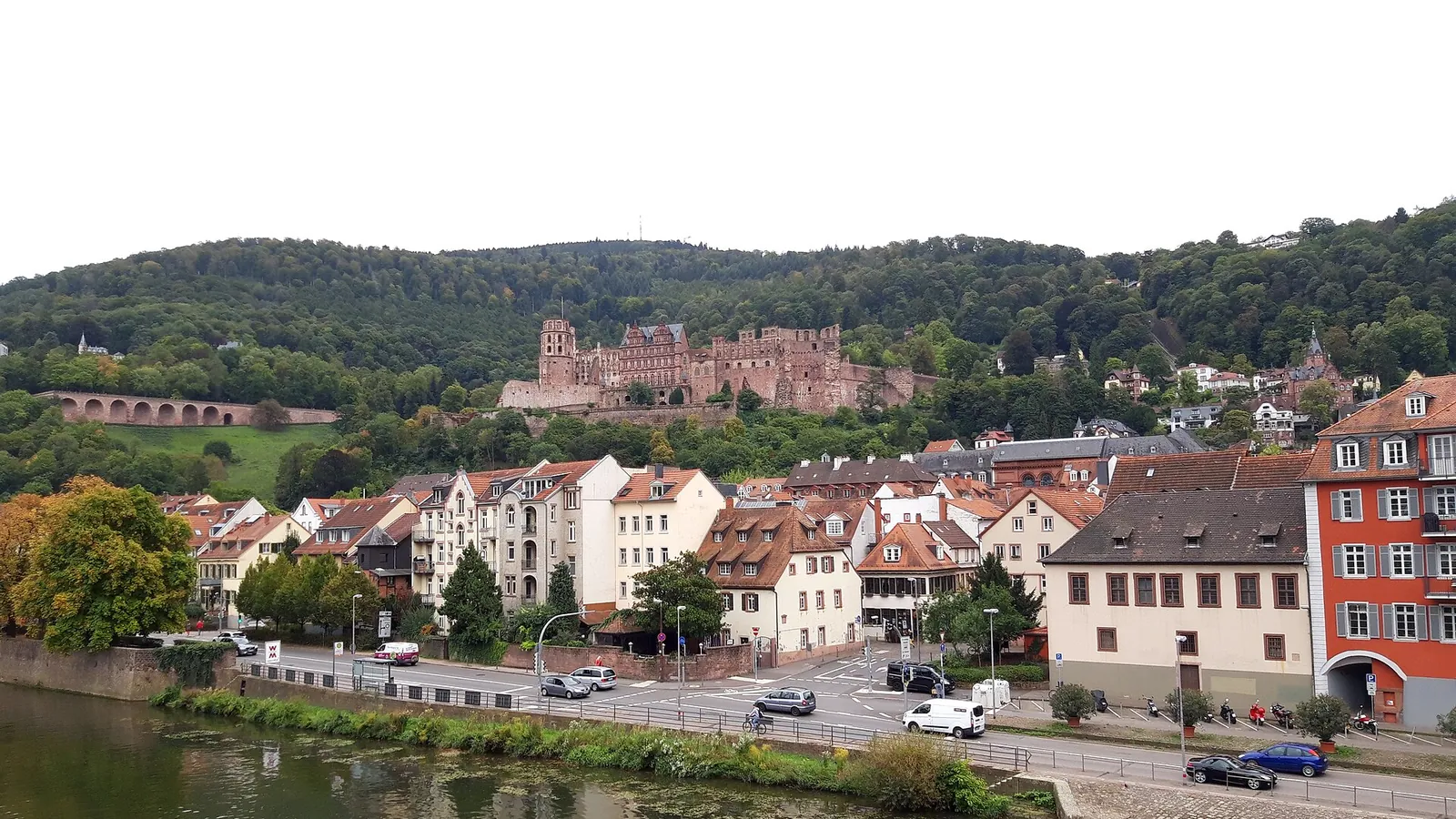
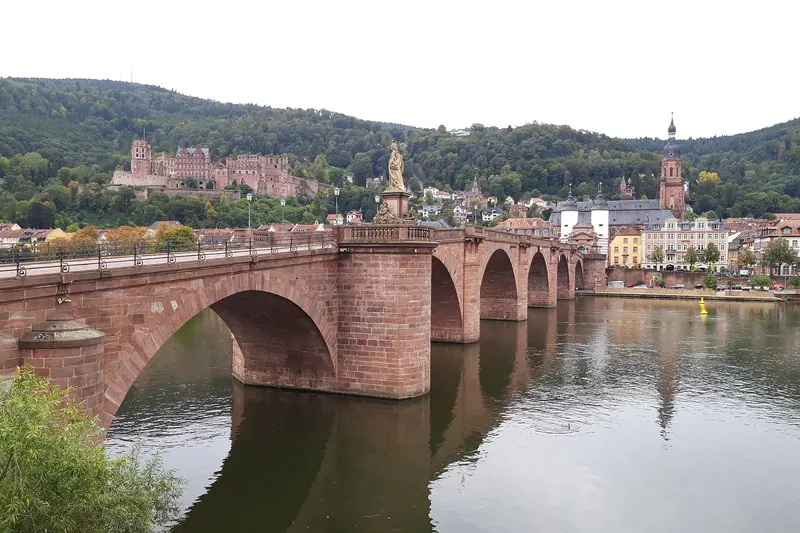
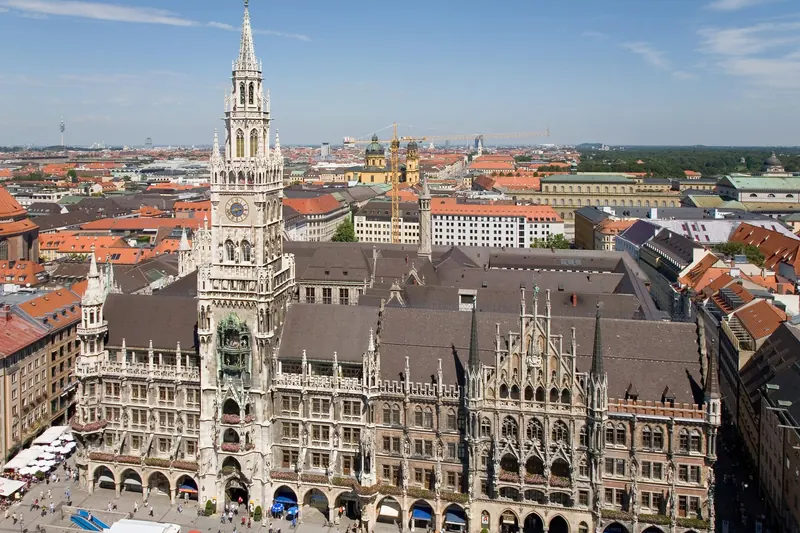
Heidelberg Castle above the old town, seen from the Alte Brücke

Baden-Württemberg · Germany

Heidelberg and the Neckar Valley

Germany's oldest university town, its baroque old town almost entirely spared by the war, watched over by a ruined red sandstone castle and a river valley strung with more.

  • Best time May–June and September for mild weather and manageable crowds
  • Stay 2 days
  • Good for Romance, history, river scenery, day trips

Photo: Eugene Alvin Villar (seav) · CC BY-SA 4.0

Welcome to Heidelberg and the Neckar Valley

Heidelberg is home to Germany's oldest university, founded in 1386, and it still feels like a university town in the most genuine sense — a large student population, centuries of academic tradition and a compact old town built as much around lecture halls and student taverns as around churches and markets. Mark Twain spent part of a summer here in the 1870s and wrote about the town at length in 'A Tramp Abroad', helping cement its reputation among English-speaking travellers.

What makes Heidelberg unusual among Germany's historic cities is that its old town was largely spared the Allied bombing that flattened most of urban Germany in the Second World War — the city held little strategic value and, by some accounts, was deliberately left as a hospital town. The result is a baroque townscape that is authentically old rather than convincingly rebuilt, a real rarity after visiting cities like Dresden or Nuremberg.

Above the old town, the ruined Heidelberg Castle has stood in various states of decay since being damaged by war and lightning in the 17th and 18th centuries, and was deliberately never fully restored — its romantic, half-ruined silhouette is precisely what drew 19th-century Romantic poets and painters here in the first place. The wider Neckar Valley continues the theme upstream, its steep banks lined with still more castles between Heidelberg and Heilbronn.

  • Historic Site
  • Romantic
  • Riverside

Why visit

Why visit Heidelberg and the Neckar Valley?

Heidelberg's case is that no other major German old town survived the war this intact, beneath a castle ruin that was always meant to look this way.

  • The old town is authentically old

    Largely undamaged by the war, its baroque streets are original rather than careful reconstruction, a real rarity in Germany.

  • The castle-and-river view is iconic

    The classic vista from the Philosophers' Walk has drawn Romantic poets, painters and travellers for over two centuries.

  • The university atmosphere is alive

    Germany's oldest university still shapes the city's daily life, not just its history — this is a working academic town.

  • The Neckar Valley rewards going further

    More castles and half-timbered towns line the river upstream, within easy reach for those with an extra day.

  • It works well as a Frankfurt or Rhine addition

    Close enough to Frankfurt's airport and the Rhine Valley to combine easily with either on a wider itinerary.

Main attractions

Top things to see in Heidelberg and the Neckar Valley

Heidelberg's essential sights, from its ruined hilltop castle to its undamaged baroque old town.

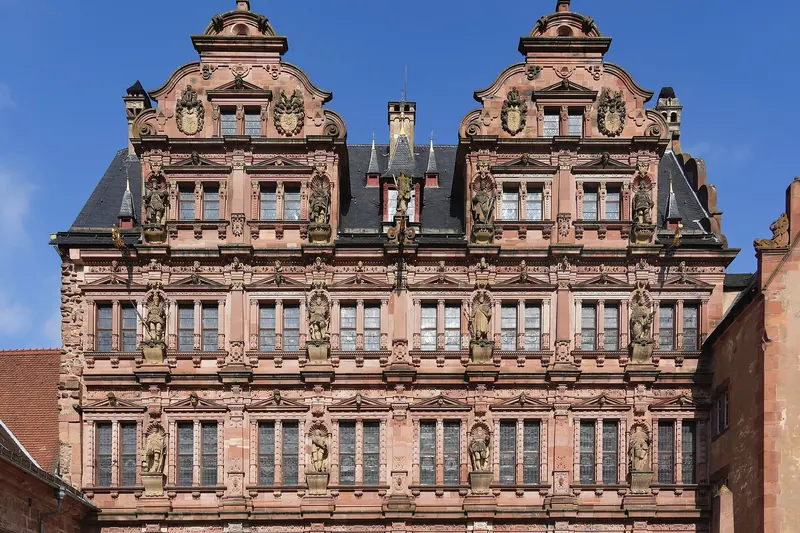
  1. The Renaissance facade of Heidelberg Castle's Friedrichsbau wing

    Heidelberg Castle

    A ruined red sandstone castle above the old town, deliberately left partly unrestored since the 18th century, home to the Great Tun — the world's largest wine barrel — and the German Pharmacy Museum.

    Tip The funicular up is included with most castle tickets and saves a steep climb.

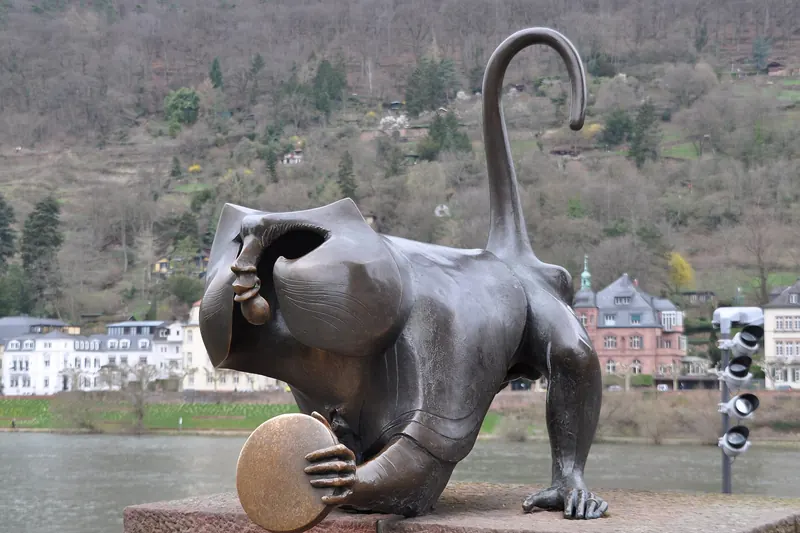
  2. The bronze bridge monkey statue at the old town end of Heidelberg's Old Bridge

    The Old Bridge and the Bridge Monkey

    A graceful baroque bridge across the Neckar, guarded on the old town side by a bronze monkey statue holding a mirror, a favourite photo stop with real local folklore attached.

    Tip Rubbing the monkey's mirror is said to ensure you'll return to Heidelberg — worn shiny by the tradition.

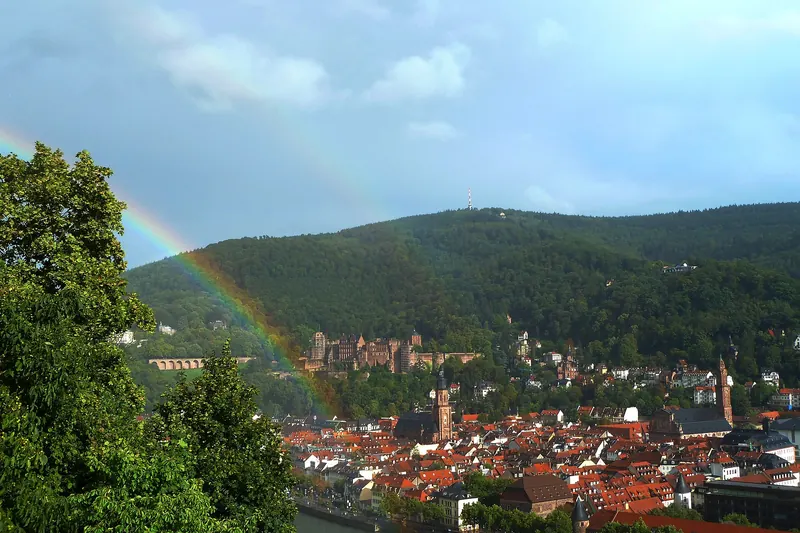
  3. Heidelberg Castle and the old town seen from the Philosophers' Walk

    The Philosophers' Walk

    A path along the opposite hillside, named for the professors and thinkers once said to walk it, offering the single best view over the old town and castle together.

    Tip Go in late afternoon for the best light on the castle's sandstone facade across the river.

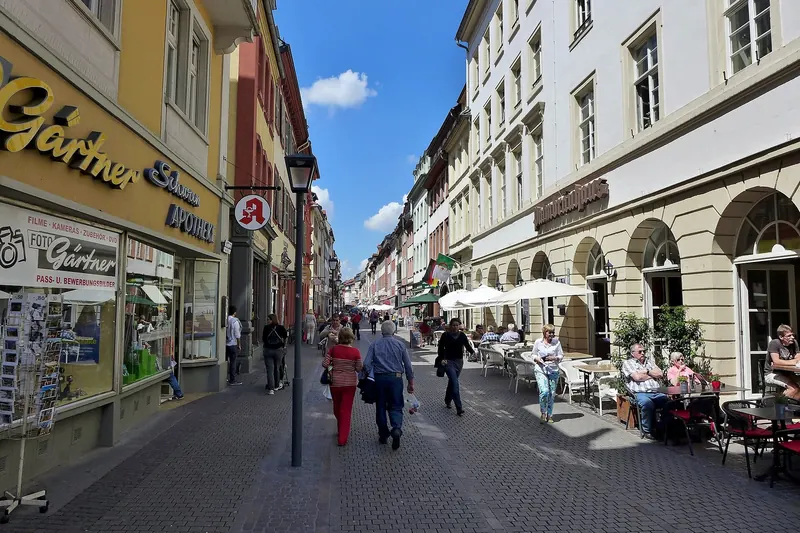
  4. Hauptstraße, Heidelberg's long pedestrian old-town street

    Heidelberg's Old Town and Hauptstraße

    A largely war-undamaged baroque townscape centred on one of Europe's longest pedestrian streets, original rather than rebuilt.

    Tip The side streets off Hauptstraße hold the town's oldest, least touristy taverns.

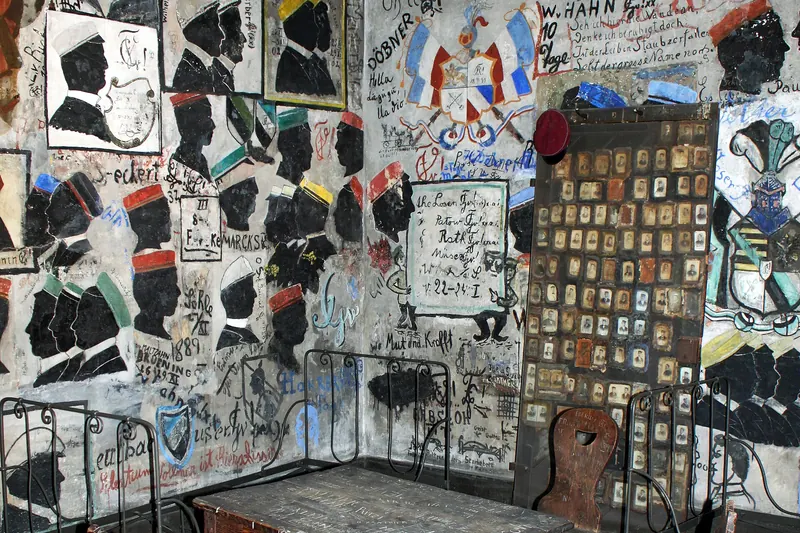
  5. A graffiti-covered cell inside Heidelberg's former Student Prison

    The Student Prison

    A former lock-up for 19th-century students caught in minor offences, its cell walls covered in elaborate decorative graffiti left by generations of inmates.

    Tip A short visit, easily combined with the nearby Old University building.

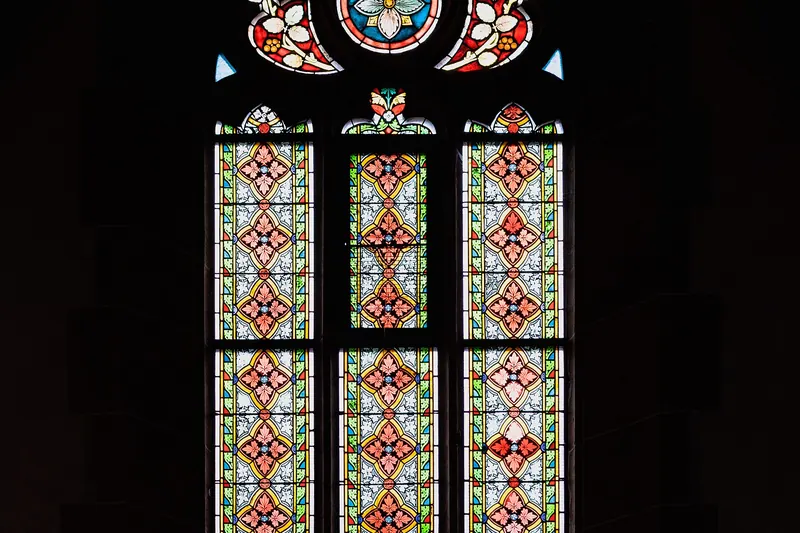
  6. The Church of the Holy Spirit on Heidelberg's market square

    The Church of the Holy Spirit

    The old town's principal late-Gothic church, standing directly on the market square, its tower open for a rewarding climb over the rooftops.

    Tip The market square around the church hosts a good produce market on weekday mornings.

Things to do

Best things to do in Heidelberg and the Neckar Valley

Beyond the castle and the old town, Heidelberg rewards its river valley and its living university traditions.

  1. The Great Tun, an enormous historic wine barrel in Heidelberg Castle's cellar

    Tour the castle and see the Great Tun

    The castle's ruined halls and the enormous 18th-century wine barrel in its cellar are worth the steep approach, whether on foot or by funicular.

    Tip Combine the castle ticket with the funicular's upper section to the Königstuhl viewpoint if time allows.

  2. Heidelberg Castle, the Old Bridge and the old town seen from the Philosophers' Walk hillside

    Walk the full Philosophers' Walk

    The complete path takes a couple of unhurried hours and passes peaceful gardens and viewpoints most day-trippers skip entirely.

    Tip Start from the Alte Brücke end and finish near the Neuenheim district for the easiest return route.

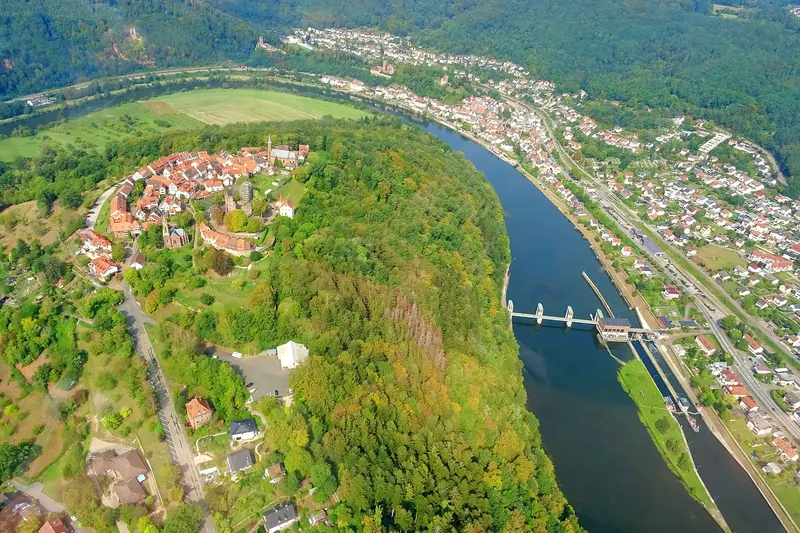
  3. Neckarsteinach's four castles above the Neckar valley

    Cruise or drive the Neckar Valley's castles

    The river valley upstream toward Neckarsteinach and Hirschhorn is lined with striking castles, reachable by boat, bike path or the scenic riverside road.

    Tip Neckarsteinach alone has four castles, giving it the local nickname 'Vierburgenstadt' — town of four castles.

  4. The bronze bridge monkey statue, its mirror worn shiny by visitors

    Rub the bridge monkey's mirror

    A small, enjoyable piece of local folklore at the Old Bridge's old-town gate, said to guarantee a return visit to Heidelberg.

    Tip The statue also holds two bronze mice at its base, worth spotting for a second, smaller detail.

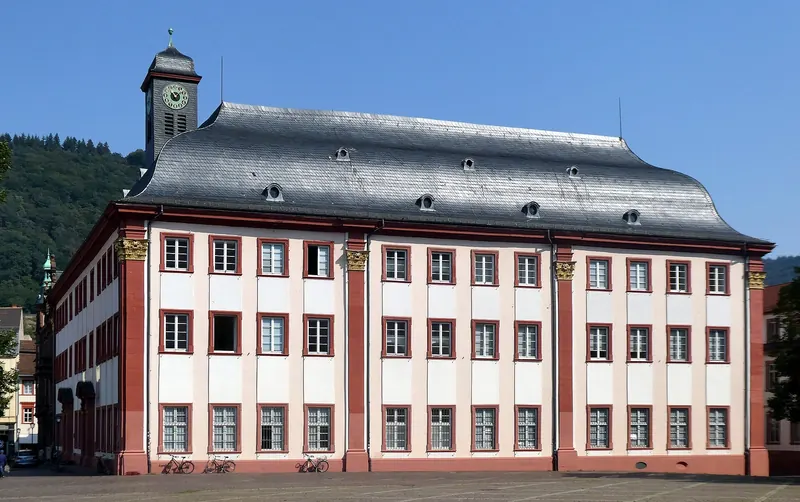
  5. Heidelberg's Old University building on Universitätsplatz

    Explore the Old University and student traditions

    Germany's oldest university still anchors the town's identity, and its historic buildings and traditions give genuine insight into centuries of academic life.

    Tip The university's botanical garden is a quiet, pleasant stop most visitors miss.

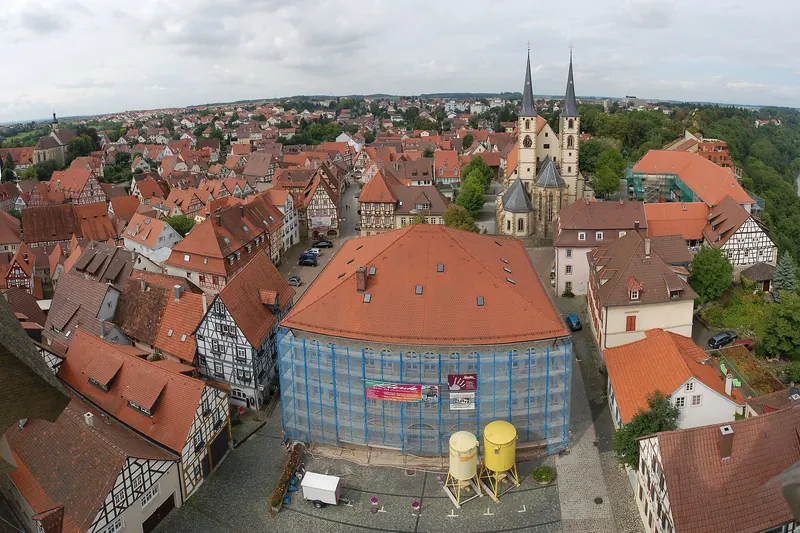
  6. Bad Wimpfen's half-timbered hilltop old town above the Neckar

    Day trip to Bad Wimpfen or Hirschhorn

    Further up the Neckar Valley, these smaller half-timbered towns offer a quieter, less touristed version of Heidelberg's own old-town charm.

    Tip Bad Wimpfen's hilltop old town and imperial palace ruins make it the more rewarding of the two for a half-day trip.

Local food

What to eat in Heidelberg and the Neckar Valley

Heidelberg sits at the edge of Baden and the Palatinate, its food shaped by both regions' hearty, wine-country cooking.

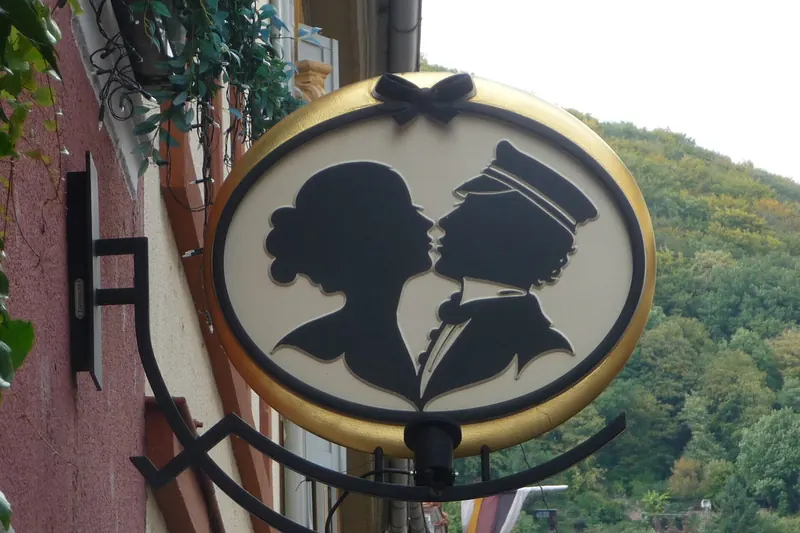
  • Studentenkuss, Heidelberg's own chocolate praline

    Studentenkuss

    Heidelberg's own confectionery, a chocolate praline invented at a local café for female students, whom propriety forbade male students from kissing directly.

    Where to try it Café Knösel in the old town, the confection's genuine 19th-century birthplace.

  • White asparagus, a regional spring speciality across Baden and the Palatinate

    Spargel (white asparagus)

    A genuine regional obsession each spring, white asparagus served simply with hollandaise, ham and potatoes across Baden and the Palatinate.

    Where to try it Traditional Gasthaus restaurants throughout the region, April through June.

  • Maultaschen, large Swabian dumplings filled with meat, spinach and herbs

    Maultaschen

    Large Swabian dumplings filled with meat, spinach and herbs, a genuine regional classic said to have been invented by monks to disguise meat during Lent.

    Where to try it Traditional Baden-Württemberg restaurants throughout Heidelberg's old town.

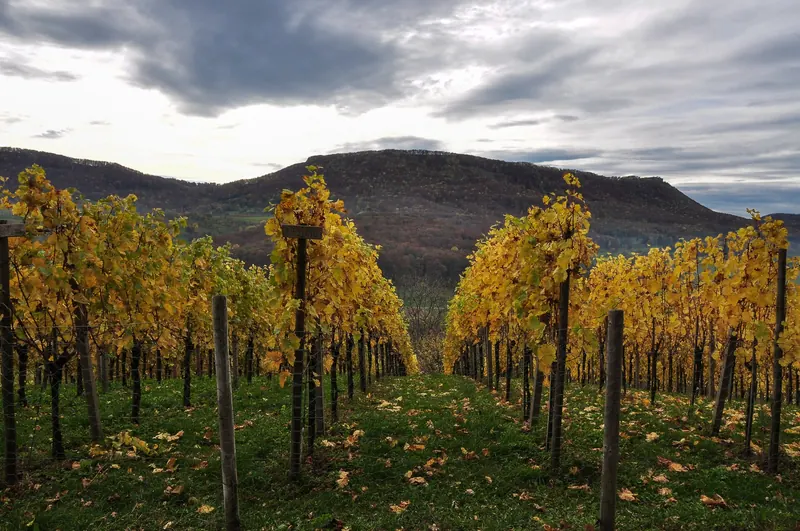
  • Vineyard terraces above the Neckar Valley in autumn

    Neckar Valley wine

    Riesling and Müller-Thurgau grown on the valley's steep terraced slopes, an underrated regional wine tradition overshadowed by its Rhine and Mosel neighbours.

    Where to try it Old-town wine taverns and vineyards along the valley's Neckarsteig hiking route.

  • Flammkuchen, a thin flatbread topped with cream, onions and bacon

    Flammkuchen

    A thin, wood-fired flatbread topped with cream, onions and bacon, common across Baden's restaurants and wine taverns.

    Where to try it Traditional wine taverns throughout Heidelberg's old town.

  • Saumagen, a Palatinate specialty of seasoned pork and potato roasted in a stuffed casing

    Saumagen

    A distinctive Palatinate specialty, seasoned pork and potato stuffed into a pig's stomach casing and roasted, a hearty regional classic.

    Where to try it Traditional Palatinate restaurants in and around Heidelberg.

Accommodation

Where to stay in Heidelberg and the Neckar Valley

Heidelberg's compact old town keeps most central accommodation within easy walking distance of the castle and river.

  • The Altstadt (Old Town)

    The most central, atmospheric base, putting the castle funicular and the old town's full length within easy reach on foot.

    Best for: Walking to the castle and Hauptstraße

  • Bergheim

    A short walk or tram ride from the old town, with a better range of budget and mid-range options.

    Best for: Value and easy station access

  • Neuenheim

    Across the river from the old town, peaceful, and directly beneath the Philosophers' Walk itself.

    Best for: The Philosophers' Walk and a quieter stay

What a night costs

Hostel dorm
€25–40 per night
Mid-range hotel
€90–160 per night
Castle entry with funicular
€9
Studentenkuss box
€6–10

Transport

Getting to and around Heidelberg and the Neckar Valley

Heidelberg has no major airport of its own but sits within very easy reach of Frankfurt's international hub.

Getting there

  • Frankfurt Airport (FRA)

    Direct trains reach Heidelberg in about an hour, making Frankfurt the practical gateway for international arrivals.

    Regional and ICE services both run the route frequently throughout the day.

  • Rail from other German cities

    Heidelberg sits on well-connected lines, with Cologne about 2 hours away and Munich around 3.

    Book Sparpreis fares ahead for savings on longer ICE journeys.

  • Rental car

    Useful for exploring the Neckar Valley's castles and smaller towns at a relaxed pace.

    The old town itself is largely pedestrianised, so parking is only useful for valley day trips.

Getting around

Heidelberg's old town is entirely walkable, with buses and a funicular covering the castle and hillside districts.

  • Walking

    Hauptstraße and the riverside sights all sit within a compact, flat, pedestrian-friendly old town.

    The Philosophers' Walk involves a genuine uphill stretch, so comfortable shoes matter.

  • Funicular

    The Bergbahn funicular climbs directly from the old town to the castle and on to the Königstuhl summit.

    A combined castle-and-funicular ticket is the most efficient option for most visitors.

  • Rental car or bike

    The best way to properly explore the Neckar Valley's castles and smaller towns beyond Heidelberg itself.

    A dedicated cycle path runs much of the valley's length alongside the river.

When to go

Best time to visit Heidelberg and the Neckar Valley

Heidelberg's weather is mild for Germany, and its popularity as a day-trip destination makes shoulder-season timing worthwhile.

  • Spring (April–June)

    Best time

    Mild temperatures, blooming gardens along the Philosophers' Walk, and the start of the region's white asparagus season.

  • Summer (July–August)

    Good

    Warm and lively, though also the year's busiest season for day-trippers from across the region.

  • Autumn (September–October)

    Best time

    Comfortable temperatures and thinning crowds, with the Neckar Valley's vineyards turning scenic colours.

  • Winter (November–February)

    Good

    Quiet and atmospheric, with a modest Christmas market, though several castle sections keep shorter hours.

Worth planning around: Summer weekends without an early start, when day-trip coach groups fill the old town's narrow streets by mid-morning.

Itinerary

Two days in Heidelberg

The old town and castle first, then the wider Neckar Valley on the second day.

  1. Day1

    The old town and castle

    Heidelberg's essential sights, on foot.

    • Morning Hauptstraße, the Church of the Holy Spirit and the Old Bridge.
    • Afternoon The castle, the Great Tun and the funicular up to Königstuhl.
    • Evening Dinner and Studentenkuss in the old town.
  2. Day2

    The Philosophers' Walk and the Neckar Valley

    The classic view, then the valley's further castles.

    • Morning The full length of the Philosophers' Walk.
    • Afternoon A boat, bike or drive upriver toward Neckarsteinach or Bad Wimpfen.
    • Evening Return to Heidelberg for a final wine-tavern dinner.

Travel tips

Heidelberg and the Neckar Valley travel tips

Practical notes on timing, tickets and the valley that make a real difference to a Heidelberg trip.

  • Buy castle tickets online in advance during summer to skip the funicular queue.
  • Visit the Philosophers' Walk in late afternoon for the best light on the castle across the river.
  • Arrive before mid-morning in summer, ahead of the day's coach tour groups.
  • Consider basing here for a Rhine Valley or Frankfurt combination — both sit within easy rail reach.
  • Try Flammkuchen and local wine at an old-town tavern rather than a tourist-strip restaurant.
  • Allow a full extra day if the Neckar Valley's castles interest you — one afternoon isn't enough.
  • Wear comfortable shoes — both the castle approach and the Philosophers' Walk involve real uphill walking.

FAQ

Heidelberg and the Neckar Valley: frequently asked questions

How many days do you need in Heidelberg?

One full day covers the old town and castle; two allows an unhurried Philosophers' Walk and a Neckar Valley excursion.

Is Heidelberg's old town original or rebuilt?

Original — Heidelberg largely escaped the wartime bombing that destroyed most major German cities, making its baroque old town a real rarity.

Is Heidelberg worth visiting as a day trip from Frankfurt?

Yes, it works well as a day trip given the roughly one-hour train connection, though staying overnight allows time for the Philosophers' Walk and a valley excursion without rushing.

What is the best time of year to visit?

May to June and September offer the mildest weather and the most manageable crowds. Summer is livelier but busier with day-trip groups.

Are the Neckar Valley's other castles worth visiting?

Yes, for travellers with an extra day — Neckarsteinach's four castles and Bad Wimpfen's hilltop old town offer a quieter version of Heidelberg's own charm.

Read next

Related travel articles

Practical

Packing by Season and Trip Type

Most packing advice is a list of things. This is the opposite: the small number of decisions that determine whether your luggage helps or hinders, organised by the kind of trip you are actually taking.

Transport

Getting Around Europe by Train

European rail is excellent and confusing — six national operators, three completely different pricing models, and a rail pass that is either a bargain or a waste depending on where you are going. Here is how to work out which.

Advertisement