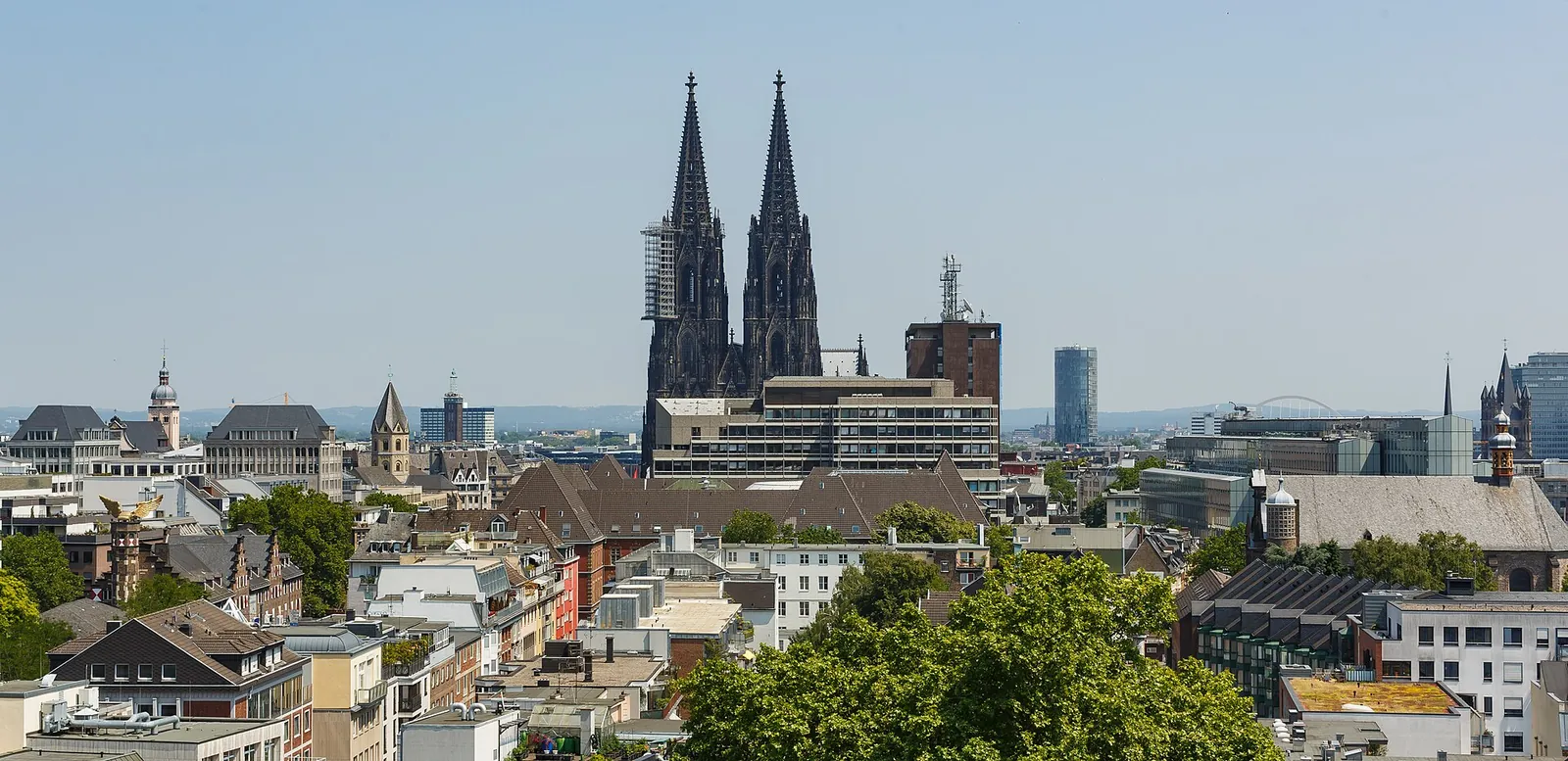
Cologne Cathedral's twin Gothic spires above the city's old town

North Rhine-Westphalia and Rhineland-Palatinate · Germany

Cologne & the Rhine Valley

A twin-spired cathedral city paired with the stretch of river below it where vineyards climb impossibly steep slopes to hilltop castles, and every bend brings another one into view.

  • Best time May–June and September
  • Stay 3–4 days
  • Good for History, architecture, river cruises, wine

Photo: CEphoto, Uwe Aranas · CC BY-SA 3.0

Welcome to Cologne & the Rhine Valley

Cologne is Germany's fourth-largest city and one of its oldest, founded by the Romans in 50 AD, and its cathedral — begun in 1248 and not actually completed until 1880 — dominates the skyline so completely that the rest of the city can feel like an afterthought beside it. That the cathedral survived Allied bombing that destroyed roughly 95% of the city centre around it remains one of the more startling facts of German urban history.

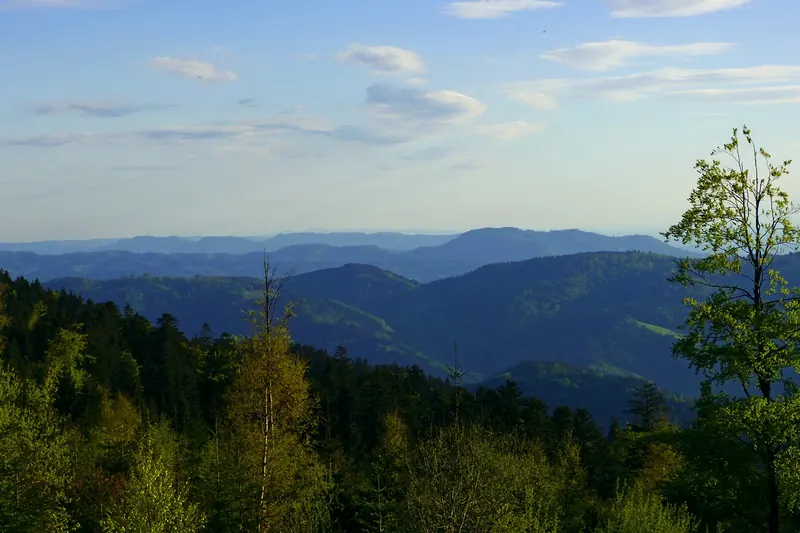
South of the city, the Rhine narrows into the Rhine Gorge, a UNESCO World Heritage stretch of river between Koblenz and Bingen where the valley walls turn steep enough to force vineyards into terraces and left room for barely more than a village and a castle at a time along each bank. More than forty castles and fortresses line this one stretch of river, a density found almost nowhere else in Europe.

The two halves of this trip pair naturally: a cathedral city with genuine urban energy and its own strong beer culture, followed by two or three unhurried days on slower river time, moving between towns by train, boat or bicycle along one of Germany's most scenic landscapes.

  • Historic Site
  • Scenic Region
  • City

Why visit

Why visit Cologne & the Rhine Valley?

The pairing's case is that nowhere else in Germany combines a landmark cathedral city this directly with a river valley this densely packed with castles and vineyards.

  • Cologne Cathedral is overwhelming in person

    Photographs undersell its scale — stepping into the old town and seeing it rise above the surrounding buildings is a real, immediate experience.

  • The Rhine Gorge's castle density is unmatched

    Over forty castles and fortresses line one 65-kilometre stretch of river, a unique concentration.

  • Cologne's own beer culture is distinct

    Kölsch is defended fiercely as the city's own style, served only in small glasses and only in Cologne by strict local tradition.

  • The valley rewards slow travel

    Train, boat and bicycle all cover the Rhine Gorge well, making a relaxed multi-day pace easy without a car.

  • The wine is a real, underrated strength

    Riesling from the Rhine and nearby Mosel valleys ranks among the world's best, produced on slopes visible from the river itself.

Main attractions

Top things to see in Cologne & the Rhine Valley

Cologne's cathedral city and the Rhine Gorge's essential castle towns, best split across a city stay and a slower valley leg.

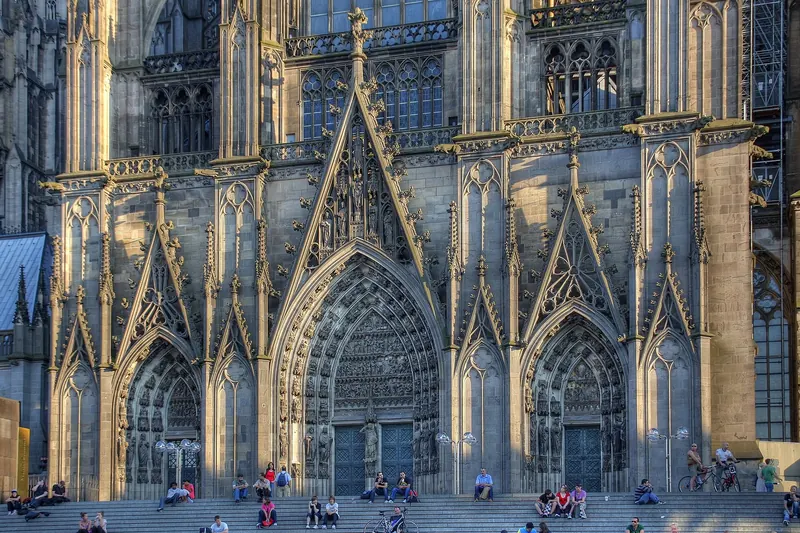
  1. The north entrance of Cologne Cathedral

    Cologne Cathedral

    The tallest twin-spired church in the world, a Gothic masterpiece begun in 1248 and only completed in 1880, its interior housing the Shrine of the Three Kings.

    Tip Climb the south tower's 533 steps for spectacular views over the city and the Rhine.

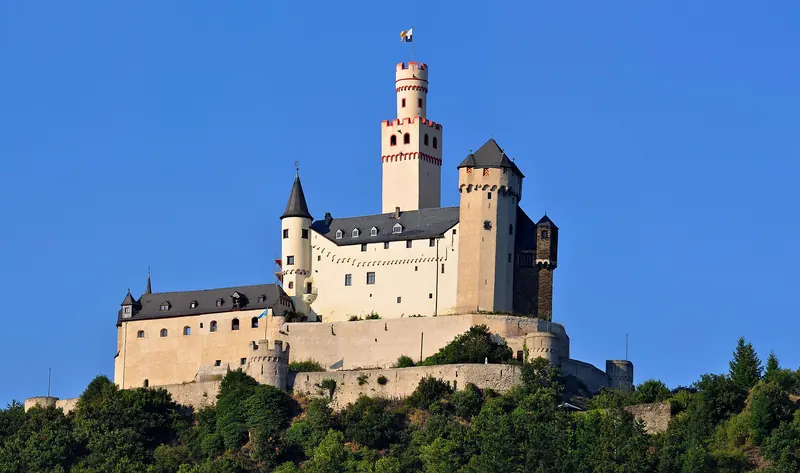
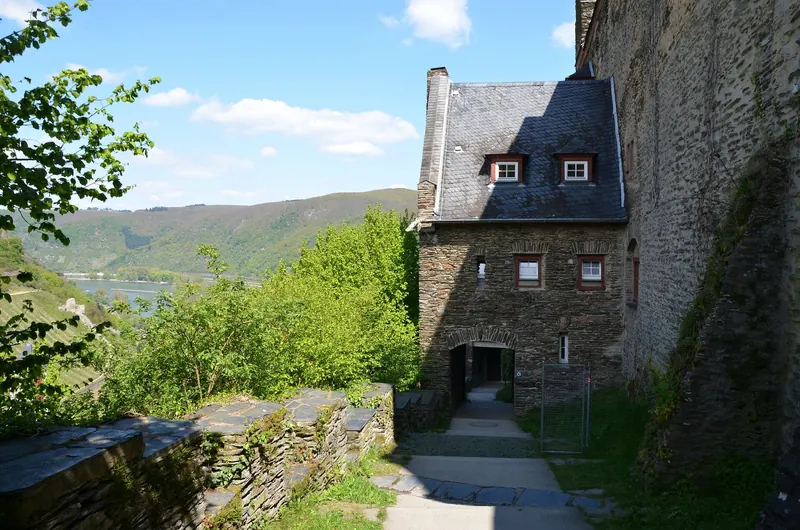
  2. Marksburg Castle above the Rhine

    Marksburg Castle

    The only Rhine Gorge castle never destroyed or significantly damaged, giving an authentic sense of medieval castle life rather than a 19th-century reconstruction.

    Tip Guided tours run regularly and are the only way to see the interior — book ahead in peak season.

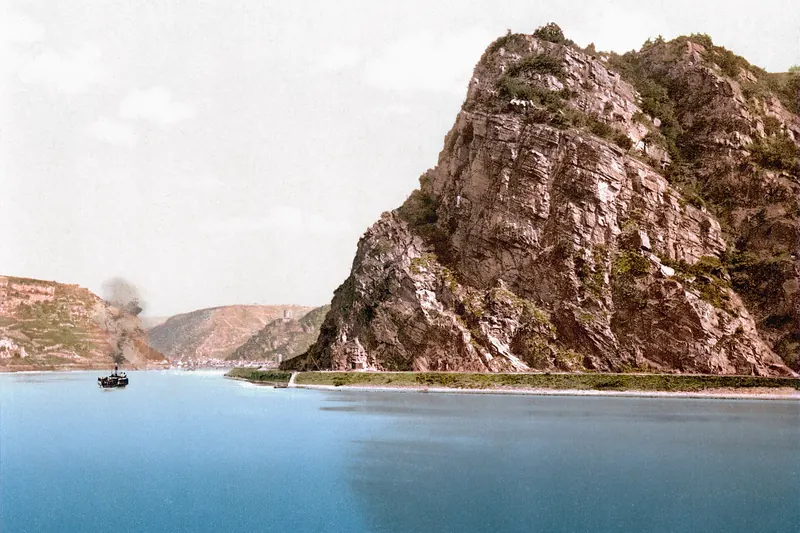
  3. The Lorelei rock rising above the Rhine's narrowest bend

    The Lorelei Rock

    A dramatic slate cliff above the Rhine's narrowest, most treacherous bend, tied to a genuine legend of a siren luring sailors to their deaths on the rocks below.

    Tip The viewpoint above the rock offers the best photograph; boats passing directly beneath it give a different, more dramatic perspective.

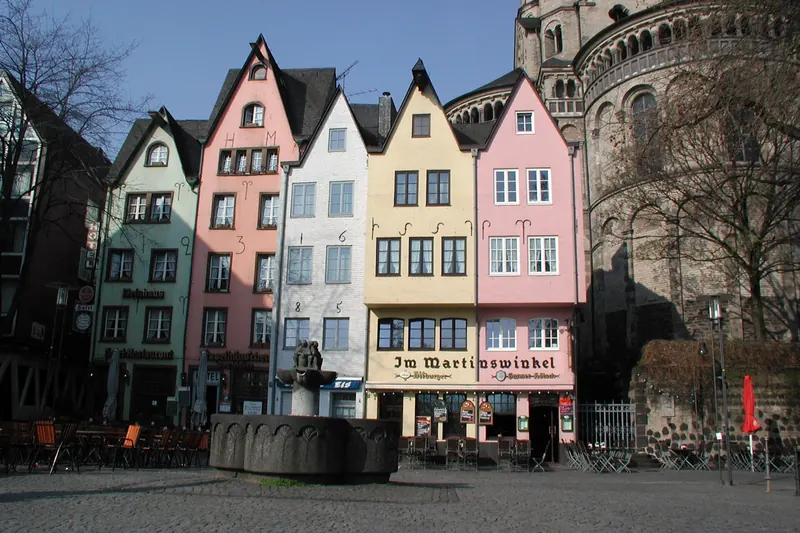
  4. The Fischmarkt square in Cologne's rebuilt old town

    Cologne's Old Town (Altstadt)

    Rebuilt after wartime destruction in a style evoking its medieval character, with colourful riverside houses, breweries and the Fish Market square.

    Tip The riverside promenade at dusk, with the cathedral illuminated behind the old town, is one of the best views in the city.

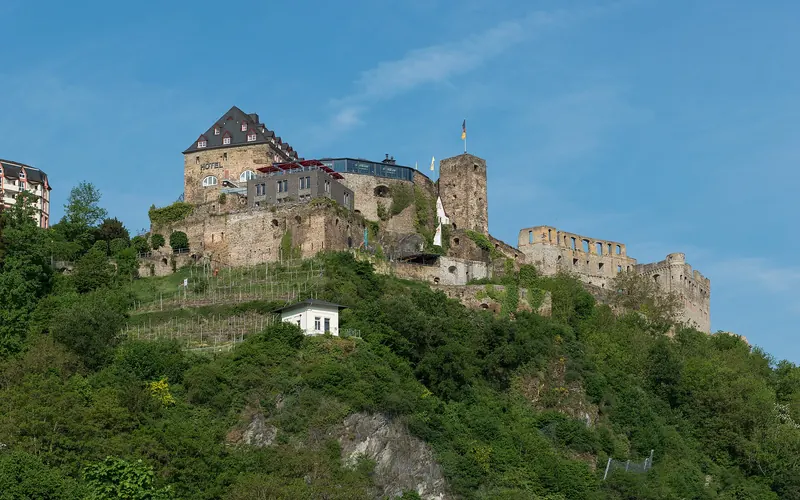
  5. The ruins of Rheinfels Castle above St. Goar

    Rheinfels Castle

    The largest castle ruin on the Rhine, above the town of St. Goar, with an extensive network of tunnels and passages rewarding to explore.

    Tip Bring a torch or phone light for the darker tunnel sections, not always well lit.

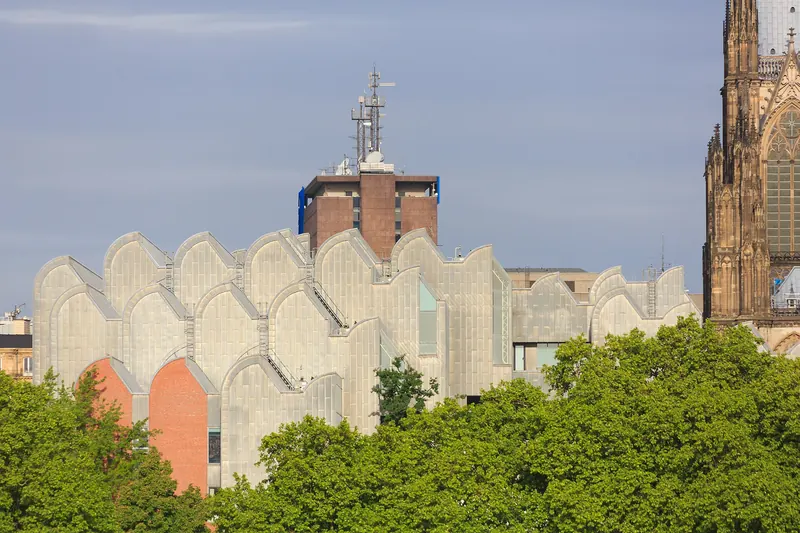
  6. The distinctive rooftops of the Museum Ludwig in Cologne

    The Museum Ludwig

    Cologne's major modern art museum, next to the cathedral, with one of Europe's largest Picasso collections and a strong Pop Art holding.

    Tip The museum's riverside cafe offers a good, less crowded break with cathedral views.

Things to do

Best things to do in Cologne & the Rhine Valley

Beyond touring the cathedral and individual castles, the region rewards slow river travel and Cologne's distinct drinking culture.

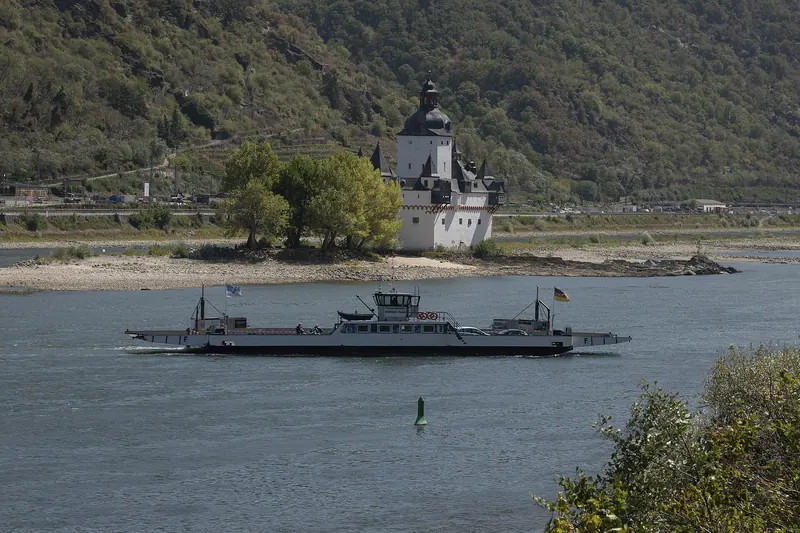
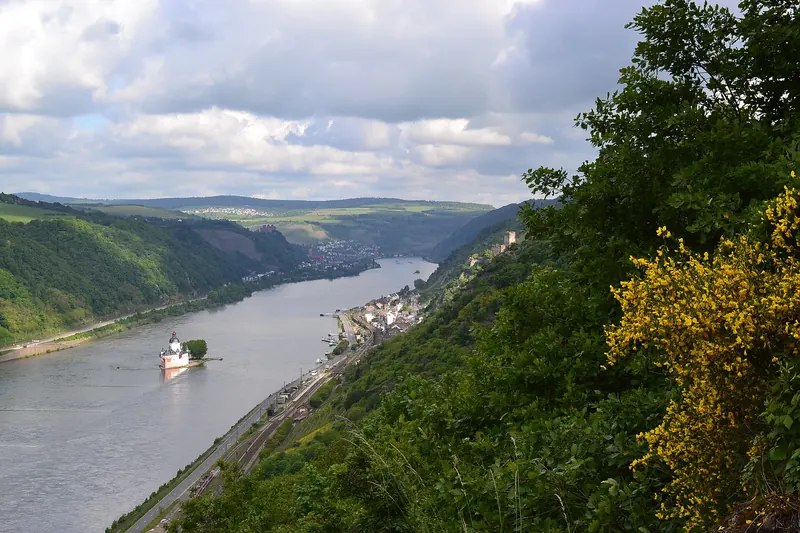
  1. A boat on the Rhine near the island castle of Pfalzgrafenstein

    Take a Rhine river cruise

    Scheduled boats run the length of the gorge, passing castle after castle and vineyard-terraced slopes at a relaxed pace few other transport options can match.

    Tip A shorter, one- or two-town cruise segment is often more rewarding than the full multi-hour route if time is limited.

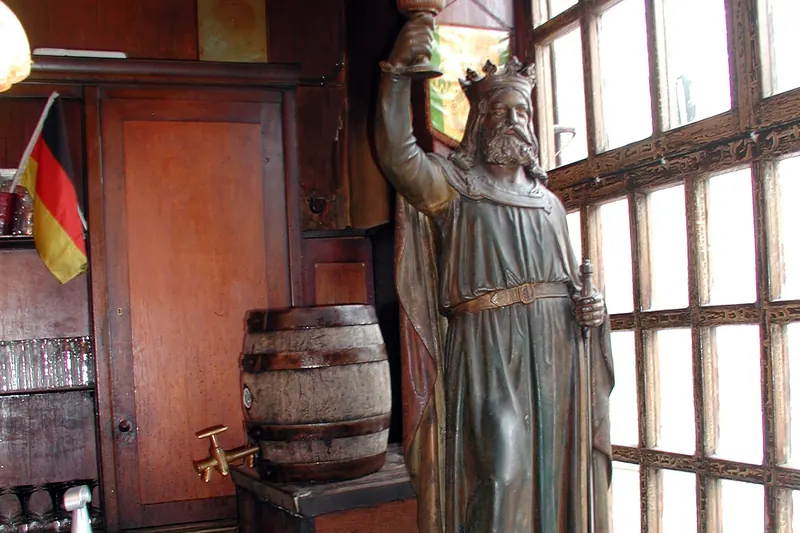
  2. Kölsch beer served from the cask at a traditional Cologne brewery

    Drink Kölsch in a Cologne brewery

    Cologne's own beer style, served exclusively in small 0.2-litre glasses and refilled continuously by roaming waiters until a coaster is placed on top of the glass.

    Tip Traditional Brauhaus establishments in the old town offer the most authentic version of the ritual.

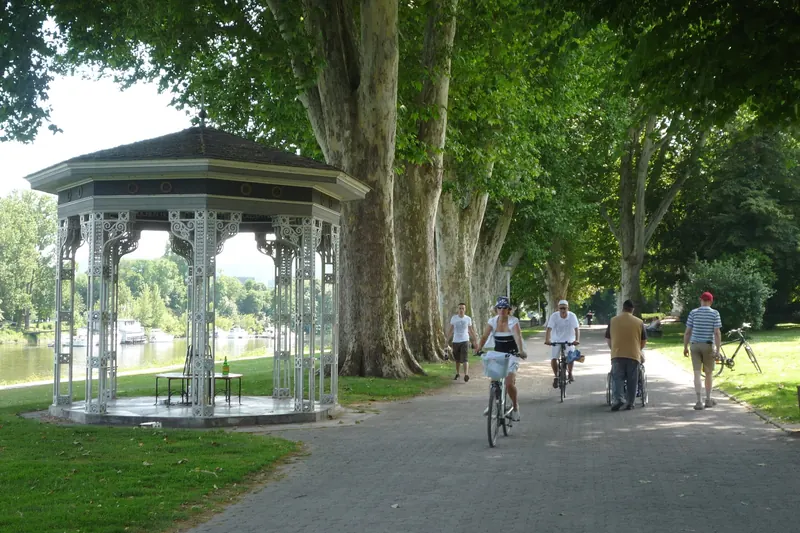
  3. Cyclists on the tree-lined Rhine cycle path near Koblenz

    Cycle the Rhine cycle path

    A well-maintained, largely flat cycle route runs the length of the valley, a pleasant way to move between castle towns at your own pace.

    Tip Bike hire is widely available in the valley's main towns, with one-way rentals possible in some locations.

  4. The wine village of Bacharach on the Rhine

    Visit a Rhine or Mosel wine village

    Terraced vineyards produce excellent Riesling, with small producers across the valley offering tastings, often in the same buildings for generations.

    Tip Bacharach and Bernkastel-Kues are both particularly well set up for casual wine tasting visits.

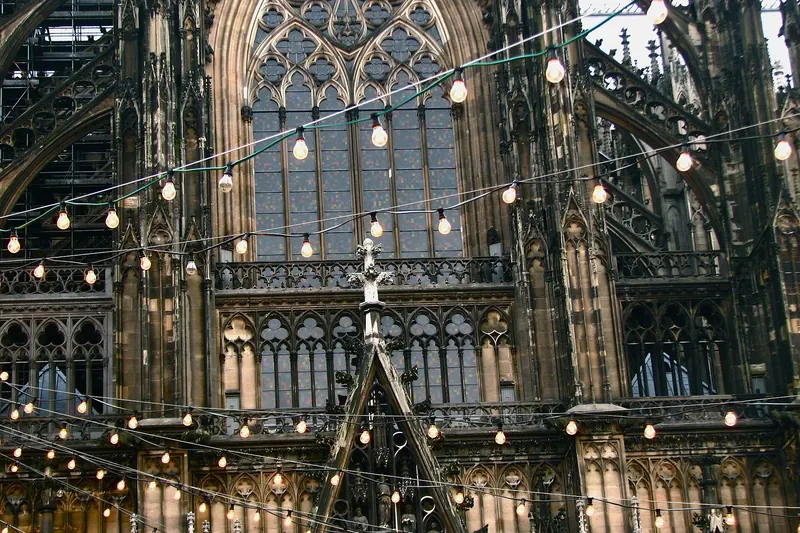
  5. Cologne's Christmas market beneath the cathedral

    Explore Cologne's Christmas markets

    Seven separate Christmas markets run across Cologne each December, the one beneath the cathedral among the most atmospheric settings in Germany.

    Tip The cathedral market gets crowded on weekends — a weekday evening visit is considerably calmer.

  6. A view over the Rhine and Pfalzgrafenstein castle from the Rheinsteig trail

    Hike a section of the Rheinsteig or Rheinburgenweg

    Long-distance hiking trails run along both banks of the gorge, offering elevated views over the river and castles that a boat or train cannot match.

    Tip Even a short two- or three-hour section between towns gives a genuine sense of the valley's dramatic terrain.

Local food

What to eat in Cologne & the Rhine Valley

Rhineland food runs hearty and beer-focused in Cologne, with the valley's own wine-country traditions further south.

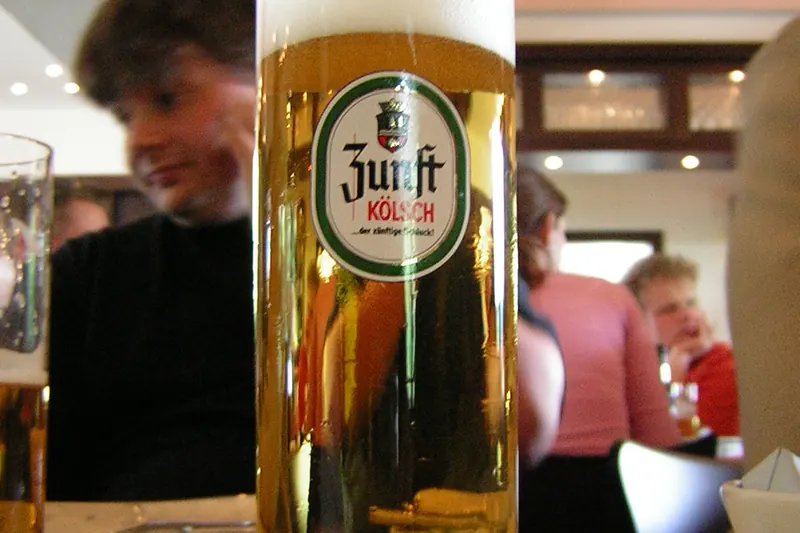
  • A small glass of Kölsch beer

    Kölsch

    Cologne's own top-fermented beer style, light, crisp and served only in small glasses, a genuine point of fierce local identity distinct from Bavarian styles.

    Where to try it Traditional Brauhaus establishments across Cologne's old town.

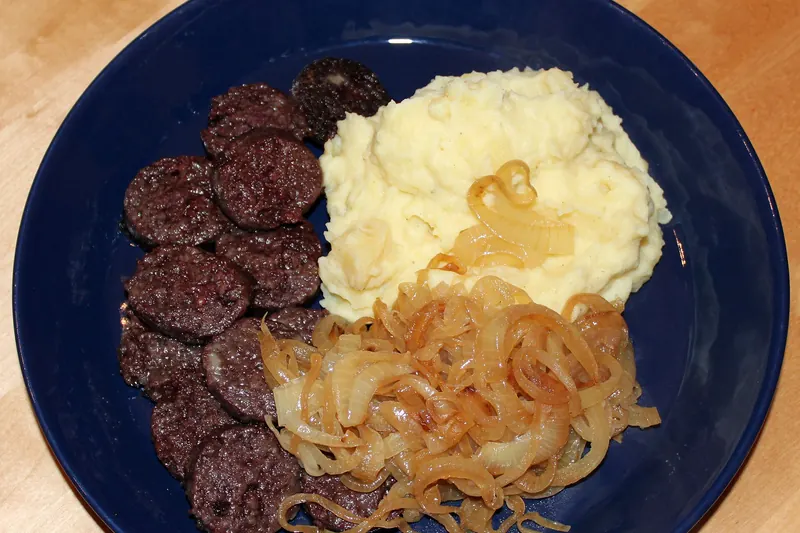
  • A plate of Himmel un Ääd, mashed potato and apple sauce with blood sausage

    Himmel un Ääd

    A traditional Cologne dish of mashed potato and apple sauce served with fried blood sausage, its dialect name literally meaning 'heaven and earth'.

    Where to try it Traditional Cologne restaurants and Brauhaus kitchens.

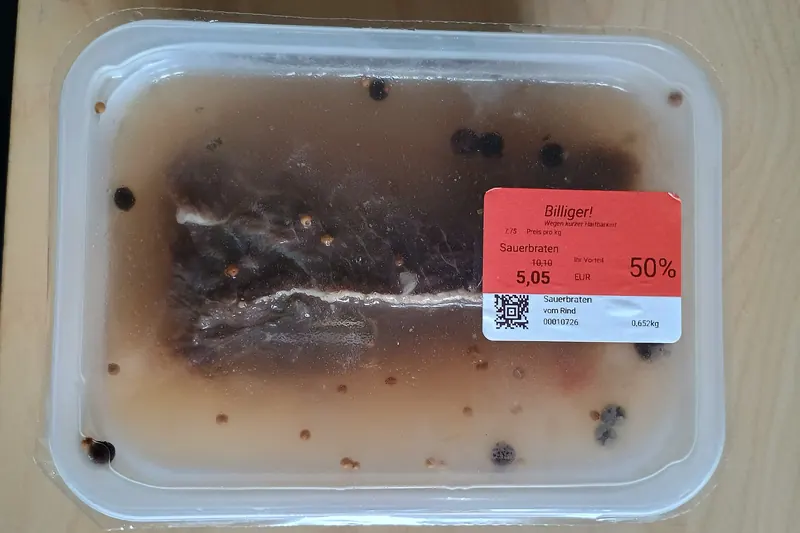
  • A plate of Rheinischer Sauerbraten with gravy

    Rheinischer Sauerbraten

    A regional pot roast marinated for days before cooking, traditionally made with horse meat historically though now usually beef, served with a distinctively sweet-sour raisin gravy.

    Where to try it Traditional Rhineland restaurants across Cologne and the valley towns.

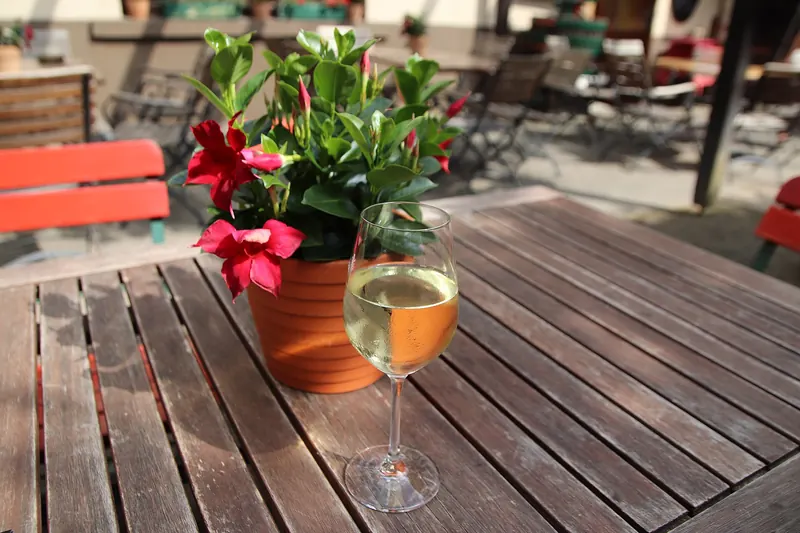
  • A glass of Riesling white wine

    Riesling

    The Rhine and Mosel valleys produce some of the world's best Riesling, from bone-dry to lusciously sweet, grown on steep slate slopes visible from the river.

    Where to try it Wine taverns (Weinstuben) and vineyard tasting rooms throughout the valley.

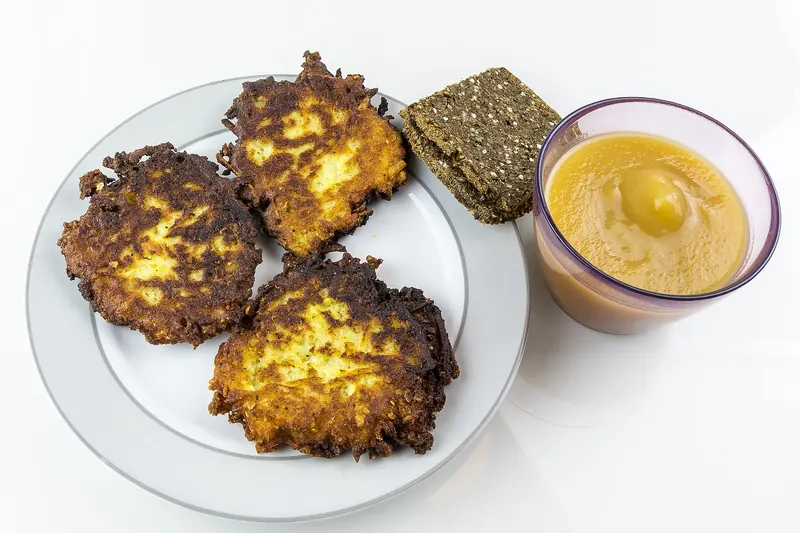
  • Freshly fried Reibekuchen potato pancakes

    Reibekuchen

    Crispy fried potato pancakes, a genuine Rhineland street food staple, traditionally served with apple sauce.

    Where to try it Christmas markets and street stalls across the region, especially in winter.

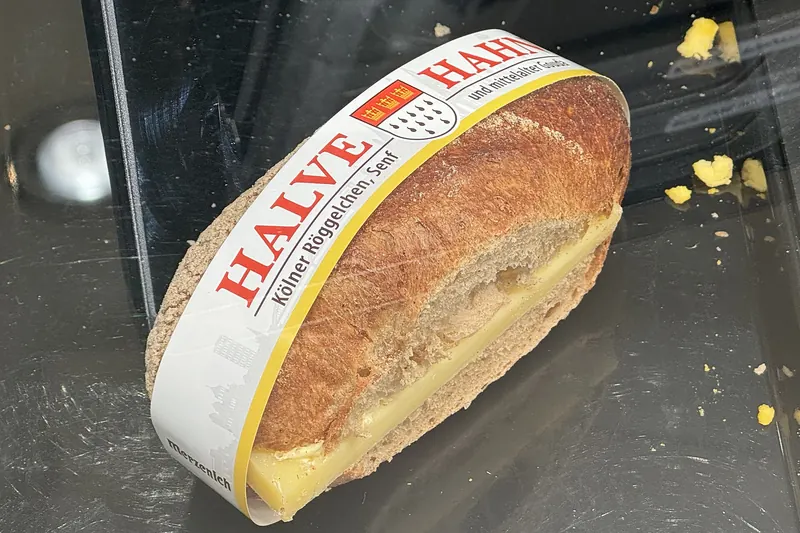
  • A Halver Hahn, a Cologne rye roll with aged Gouda

    Halver Hahn

    Despite the name meaning 'half a chicken', this is actually a rye bread roll with aged Gouda cheese, mustard and onion, a confusing but beloved Cologne pub classic.

    Where to try it Traditional Cologne Brauhaus establishments, usually ordered alongside a round of Kölsch.

Accommodation

Where to stay in Cologne & the Rhine Valley

Cologne is the natural city base, with Bacharach or St. Goar working well as a valley base for the Rhine Gorge leg.

  • Cologne Altstadt

    The most central base, putting the cathedral, Museum Ludwig and old town breweries all within easy walking distance.

    Best for: Walking to the cathedral and old town

  • Bacharach

    A picturesque walled wine town roughly midway through the gorge, well placed for castle-hopping in both directions.

    Best for: A central Rhine Gorge base

  • St. Goar

    A practical valley base close to the region's largest castle ruin and the famous Lorelei rock.

    Best for: Rheinfels Castle and the Lorelei

What a night costs

Hostel dorm
€24–40 per night
Mid-range hotel
€85–160 per night
Marksburg Castle tour
€9
Rhine cruise segment
€15–30

Transport

Getting to and around Cologne & the Rhine Valley

Cologne Bonn and Frankfurt airports both serve the region well, with excellent rail connections throughout.

Getting there

  • Cologne Bonn Airport (CGN)

    Connected to Cologne's centre by regional train in about 15 minutes, with frequent services throughout the day.

    A practical, close gateway specifically for Cologne itself.

  • Rail from other German cities

    ICE trains connect Cologne to Berlin in about 4h30, and to Frankfurt in about 1h15, with regional trains continuing down the Rhine Valley.

    Book Sparpreis fares as early as possible for significant savings over walk-up tickets.

  • Rental car

    Useful for reaching smaller wine villages off the main rail line, though not required for the valley's main towns.

    Parking in Cologne's centre is limited — a car is more useful for the valley leg than the city.

Getting around

Cologne's centre is walkable, and the Rhine Gorge is well served by a combination of regional trains and river boats.

  • Regional trains

    Both banks of the Rhine Gorge have rail lines stopping at every main town, making point-to-point castle-hopping easy without a car.

    A regional day ticket often covers the whole valley leg at good value.

  • River boats (KD Line)

    Scheduled boats run the length of the gorge, allowing a one-way boat trip with a train return, or vice versa.

    Boats run less frequently outside the main summer season — check schedules before planning a boat-dependent day.

  • Bicycle

    The Rhine cycle path is well maintained and largely flat, a pleasant alternative to trains or boats for shorter hops between towns.

    Several valley towns offer bike hire, some with one-way return options.

When to go

Best time to visit Cologne & the Rhine Valley

The valley's vineyard scenery peaks in different ways across the seasons, but late spring and early autumn balance good weather against summer's river-cruise crowds.

  • Spring (April–June)

    Best time

    Mild weather, vineyards freshly leafed out, and crowds along the valley still below the summer peak.

  • Summer (July–August)

    Good

    The busiest river-cruise season, with warm weather ideal for cycling and outdoor dining, though the most crowded castle towns.

  • Autumn (September–October)

    Best time

    The wine harvest brings genuine local celebration, comfortable temperatures and often spectacular vineyard colour on the terraced slopes.

  • Winter (November–March)

    Shoulder

    Cologne's Christmas markets bring real seasonal charm, though many valley boat services and smaller castle attractions reduce hours or close.

Worth planning around: Peak summer weekends for river cruises without advance booking — the most popular sailings can sell out.

Itinerary

Four days between Cologne and the Rhine Valley

The cathedral city first, then a slower castle-hopping leg down the gorge by a mix of boat, train and bicycle.

  1. Day1

    Cologne Cathedral and the old town

    Cologne's defining landmark and its rebuilt historic centre.

    • Morning Cologne Cathedral, including the south tower climb.
    • Afternoon The Museum Ludwig and a wander through the Altstadt.
    • Evening Kölsch and Himmel un Ääd at a traditional Brauhaus.
  2. Day2

    Into the Rhine Gorge

    Travel south into castle country.

    • Morning Train to Koblenz, then onward toward the gorge itself.
    • Afternoon Marksburg Castle, the gorge's only never-destroyed fortress.
    • Evening Dinner in Boppard or St. Goar.
  3. Day3

    The Lorelei and Rheinfels

    The valley's most famous viewpoint and largest ruin.

    • Morning The Lorelei Rock viewpoint.
    • Afternoon Rheinfels Castle's tunnels and ramparts.
    • Evening A wine tasting in Bacharach.
  4. Day4

    A slow return by boat or bike

    A final, unhurried look at the valley.

    • Morning Cycle a section of the Rhine cycle path, or a river cruise segment.
    • Afternoon Return to Cologne by train.
    • Evening Depart, or a final Cologne dinner.

Travel tips

Cologne & the Rhine Valley travel tips

Practical notes on booking, timing and the Kölsch ritual that make a real difference to this trip.

  • Book Marksburg Castle's guided tour ahead in peak season — it's the only way inside and can fill up.
  • Learn the Kölsch ritual before your first Brauhaus visit — a coaster on top of your glass signals you're done, otherwise it keeps getting refilled.
  • Check river boat schedules in advance, especially outside summer, when services thin out considerably.
  • Climb Cologne Cathedral's tower earlier in the day — the 533 steps and queue both get more crowded by afternoon.
  • Consider a regional day ticket for the Rhine Valley leg — it often covers trains across the whole gorge at good value.
  • Book valley accommodation well ahead during the September wine harvest, a popular time to visit.
  • Bring a light or phone torch for Rheinfels Castle's tunnel sections, not consistently well lit.

FAQ

Cologne & the Rhine Valley: frequently asked questions

How many days do you need for Cologne and the Rhine Valley?

Three to four. A full day covers Cologne's cathedral and old town properly; two to three more allow an unhurried castle-hopping leg down the gorge without feeling rushed.

Do I need a car?

No — regional trains and river boats cover the Rhine Gorge's main towns very well, and Cologne's centre is entirely walkable. A car is only useful for reaching the smallest, most off-the-beaten-path wine villages.

How many castles can you realistically visit?

Two or three properly toured castles, such as Marksburg and Rheinfels, make for a full and satisfying visit — the valley has over forty in total, and most are best simply admired from the river or train rather than all entered.

What is the best time of year to visit?

May to June and September offer the best balance of good weather and manageable crowds, with September adding the wine harvest's genuine local celebration. Summer is busiest for river cruises; winter brings Cologne's Christmas markets but reduced valley services.

Is Cologne worth visiting beyond the cathedral?

Yes — the Museum Ludwig, the rebuilt old town and the city's distinct Kölsch beer culture are all genuine reasons to spend more than a single afternoon there before heading into the valley.

Read next

Related travel articles

Transport

Getting Around Europe by Train

European rail is excellent and confusing — six national operators, three completely different pricing models, and a rail pass that is either a bargain or a waste depending on where you are going. Here is how to work out which.

Heritage

UNESCO Sites Worth Planning a Trip Around

A UNESCO listing tells you a place matters; it does not tell you whether it is worth two days and a detour. This is how to read the list usefully — and which sites reward building a trip around them.

Advertisement