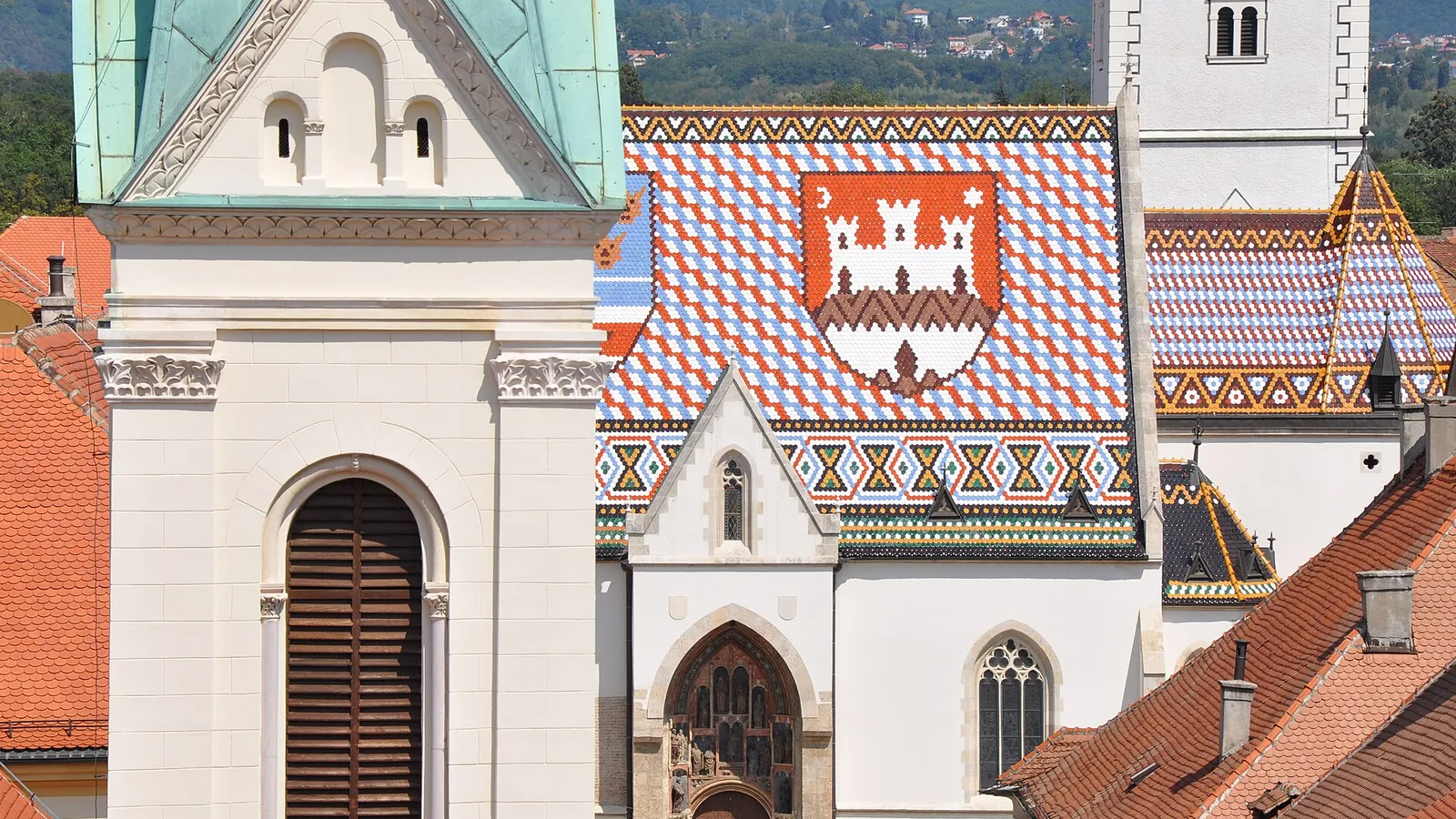
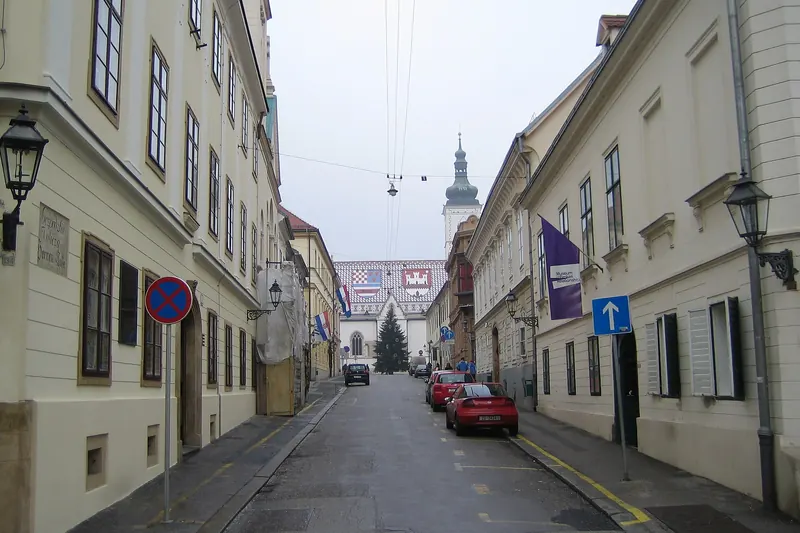
St Mark's Church in Zagreb's Upper Town

Central Croatia · Croatia

Zagreb

Croatia's underrated capital, a Central European city of tiled church roofs, quirky museums and a café culture the coast rarely gets credit for.

  • Best time May, June and September for pleasant weather and a lively city
  • Stay 2-3 days
  • Good for Café culture, museums, city life

Photo: Jorge Láscar from Australia · CC BY 2.0

Welcome to Zagreb

Zagreb is Croatia's most underrated city, a Central European capital most visitors skip entirely on their way to the coast, to their own real loss.

Its Upper Town preserves a compact medieval core, crowned by St Mark's Church and its instantly recognisable tiled roof, while the Lower Town's grid of Austro-Hungarian boulevards holds museums, parks and squares.

What Zagreb does best is a slower pace than the coast — long coffees on Tkalčićeva Street, a proper daily market at Dolac, and a lively, youthful energy that runs year-round rather than just in summer.

  • Capital City
  • Major City
  • Culture Arts
  • Food & Wine

Why visit

Why visit Zagreb?

Zagreb's case rests on being a real, lived-in Central European capital rather than a coastal resort.

  • St Mark's Church is one of the country's iconic images

    Its colourful tiled roof displaying the coats of arms of Zagreb and Croatia.

  • The café culture is a real daily ritual

    Tkalčićeva Street and beyond built around lingering, unhurried coffee.

  • It's full of quirky, memorable museums

    The Museum of Broken Relationships and others go well beyond standard city-break fare.

  • It works well year-round

    Unlike the seasonal coast, Zagreb stays lively through every month of the year.

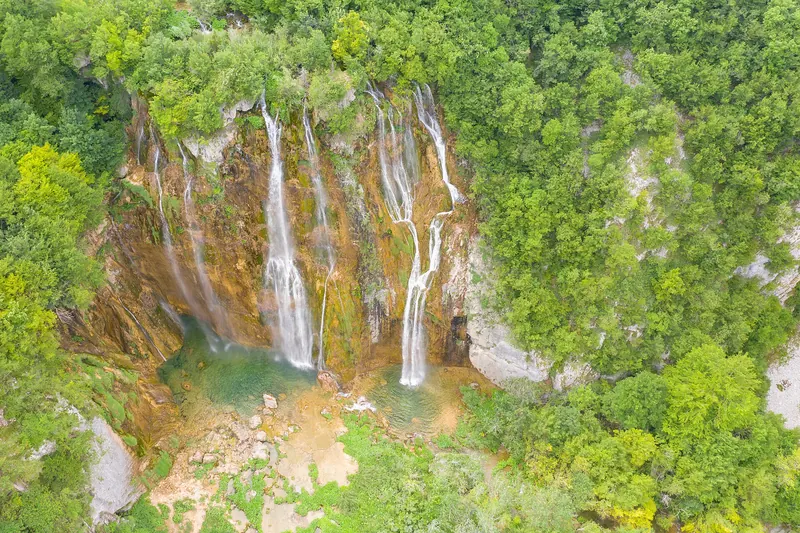
  • It's an easy gateway to Plitvice Lakes

    Croatia's most famous national park sits about two hours away by road.

Main attractions

Top things to see in Zagreb

Zagreb's essential sights are split between the historic Upper Town and the grid-planned Lower Town below it.

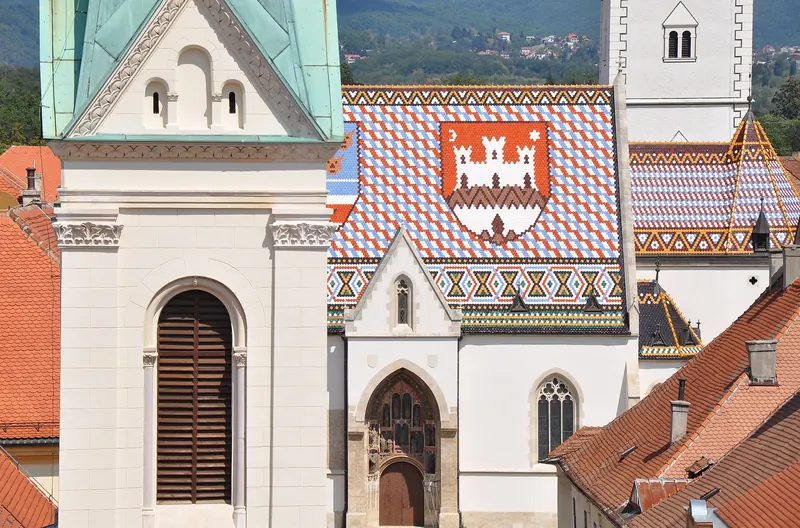
  1. St Mark's Church and its colourfully tiled roof in Zagreb

    St Mark's Church

    The city's most photographed landmark, its tiled roof displaying the coats of arms of Zagreb and the Triune Kingdom.

    Tip The small square out front gets crowded — visit early for photos without a crowd in frame.

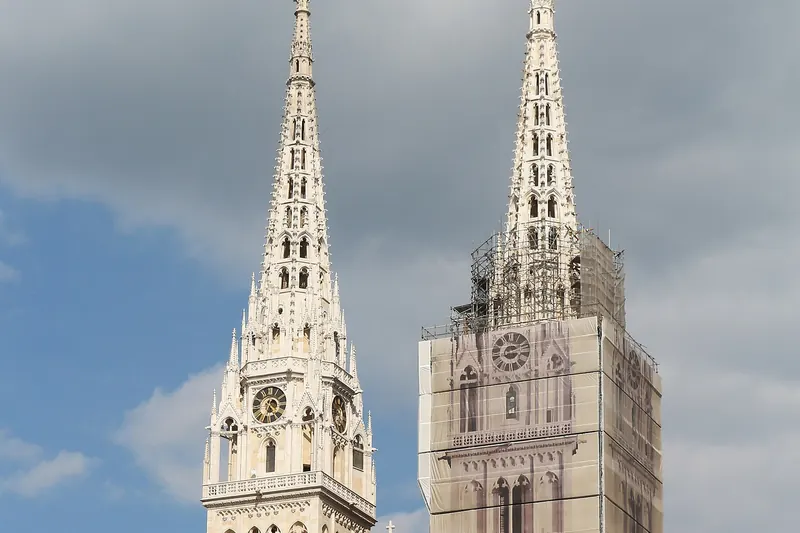
  2. Zagreb Cathedral's twin neo-Gothic spires

    Zagreb Cathedral

    The country's tallest building, its twin neo-Gothic spires visible across much of the city.

    Tip A short walk from Dolac Market — an easy pairing for a morning wander.

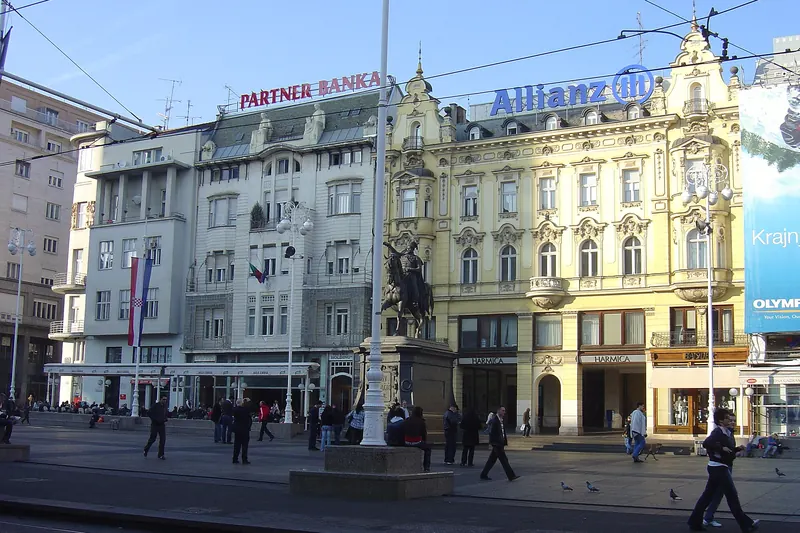
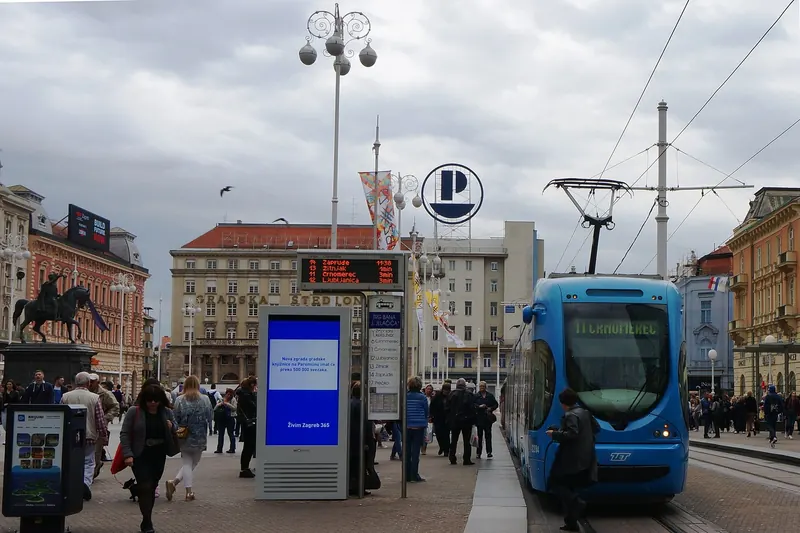
  3. Ban Jelačić Square, the heart of Zagreb

    Ban Jelačić Square

    The city's central meeting point, a grand square named for the 19th-century ban whose statue dominates it.

    Tip A natural starting point for exploring both the Upper and Lower Towns.

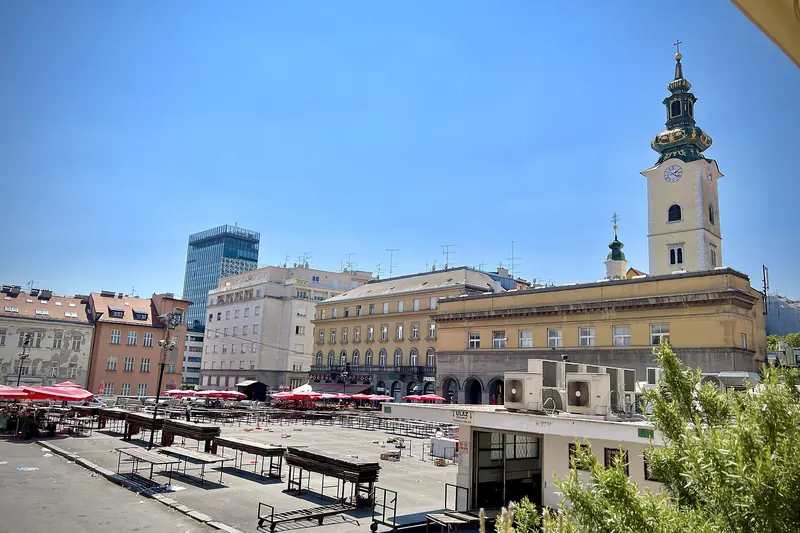
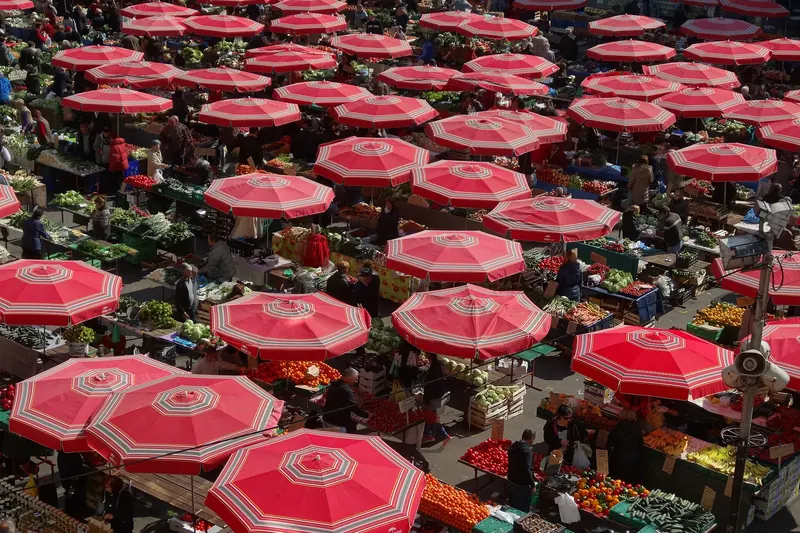
  4. Dolac Market in Zagreb

    Dolac Market

    A real, working farmers' market, its red umbrellas covering stalls of fresh produce, cheese and flowers.

    Tip Go in the morning, when the market is at its freshest and liveliest.

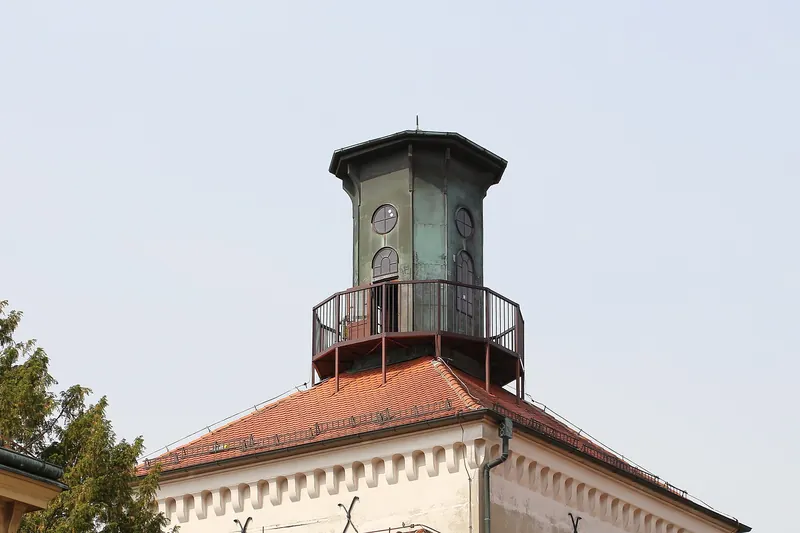
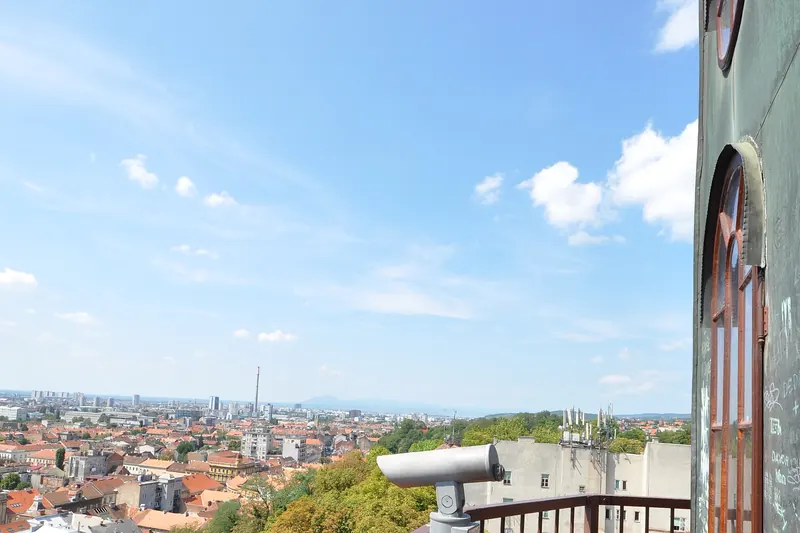
  5. Lotrščak Tower in Zagreb's Upper Town

    Lotrščak Tower

    A medieval defensive tower, famous today for a cannon still fired from its top every day at noon.

    Tip Climb up for one of the best views over the Lower Town's rooftops.

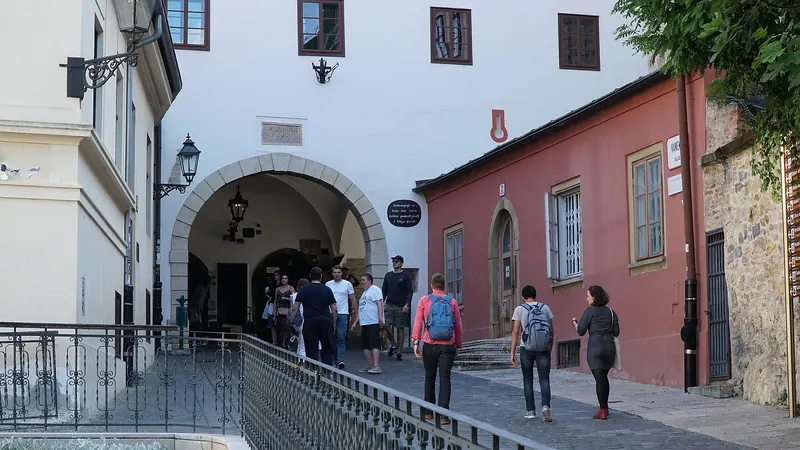
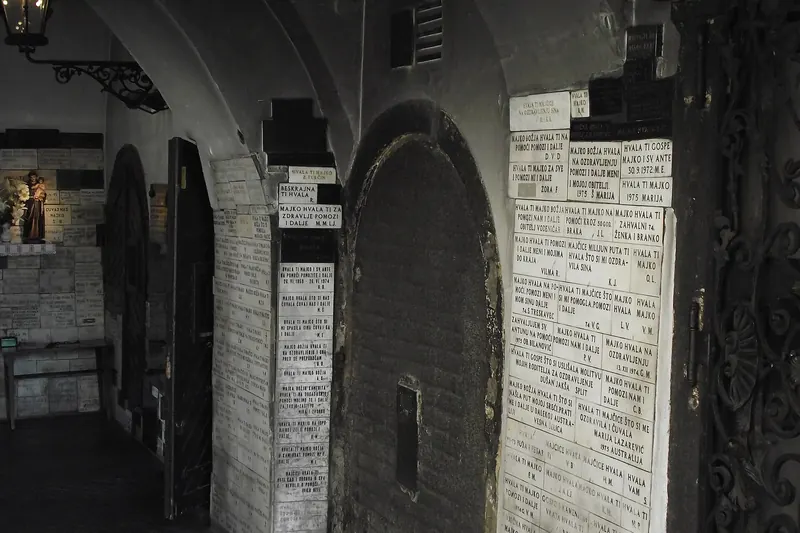
  6. The Stone Gate, a shrine in Zagreb's old city walls

    The Stone Gate

    The only surviving gate from the medieval city walls, now home to a revered shrine to the Virgin Mary.

    Tip A quiet, atmospheric stop, often with candles lit by visitors passing through.

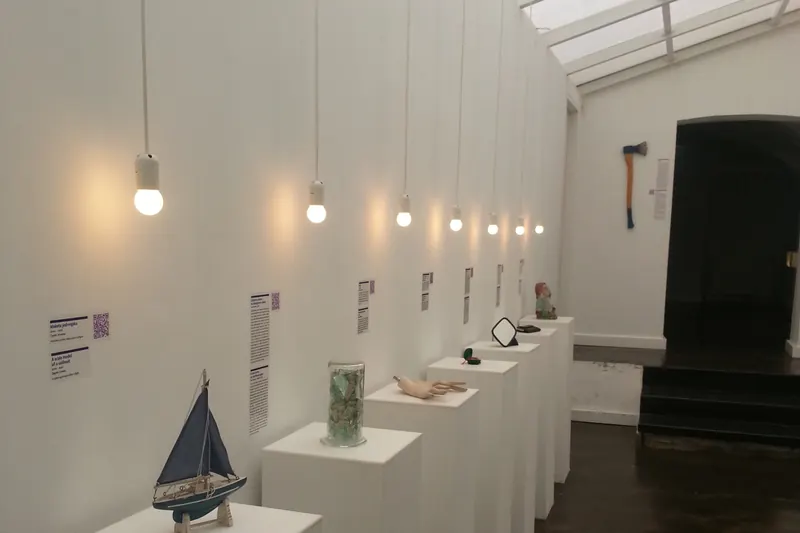
  7. The Museum of Broken Relationships in Zagreb

    The Museum of Broken Relationships

    One of the city's most memorable, unusual museums, objects and stories donated from real failed relationships worldwide.

    Tip Allow more time than you'd expect — the stories are absorbing.

Things to do

Best things to do in Zagreb

Zagreb rewards a slower pace, built around markets, museums and a proper café culture.

  1. The top of Lotrščak Tower in Zagreb

    Watch the Lotrščak Tower's noon cannon

    A fun daily ritual, a cannon fired from the tower every day at exactly noon, a tradition dating back generations.

    Tip Time your Upper Town visit to be nearby at midday for the moment itself.

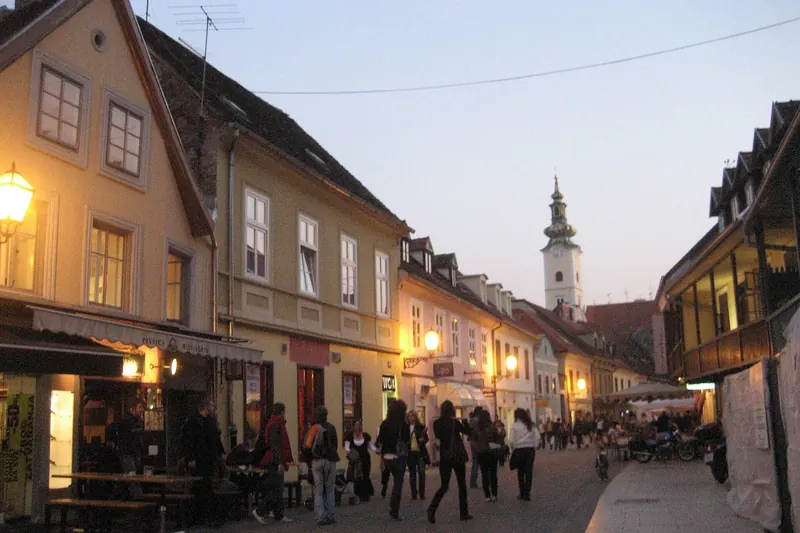
  2. Tkalčićeva Street in Zagreb

    Wander Tkalčićeva Street

    An essential Zagreb experience, a pedestrian street lined with cafés built for exactly this kind of slow wandering.

    Tip At its liveliest in the early evening, when locals fill every outdoor table.

  3. Browsing the stalls at Dolac Market in Zagreb

    Browse Dolac Market

    An authentic slice of daily Zagreb life, browsing stalls of fresh produce, cheese and flowers.

    Tip A great spot to pick up picnic supplies or local cheese to take home.

  4. Exhibits at the Museum of Broken Relationships in Zagreb

    Visit the Museum of Broken Relationships

    An unusual, moving hour, reading real stories behind donated objects from relationships around the world.

    Tip Worth going in without reading too much beforehand — let the exhibits surprise you.

  5. The shrine within Zagreb's Stone Gate

    Touch the Stone Gate's shrine

    A quiet, reflective stop, joining locals who still stop to pray as they pass through.

    Tip Keep your voice down — this remains an active, respected place of devotion.

  6. Ban Jelačić Square in Zagreb

    Sit for coffee on Ban Jelačić Square

    An essential Zagreb pastime, watching the city's trams and crowds go by from a square-side café.

    Tip A good spot to get your bearings before heading up to the Upper Town.

Local food

What to eat in Zagreb

Zagreb's food leans more Central European than the coast, with its own distinct specialities.

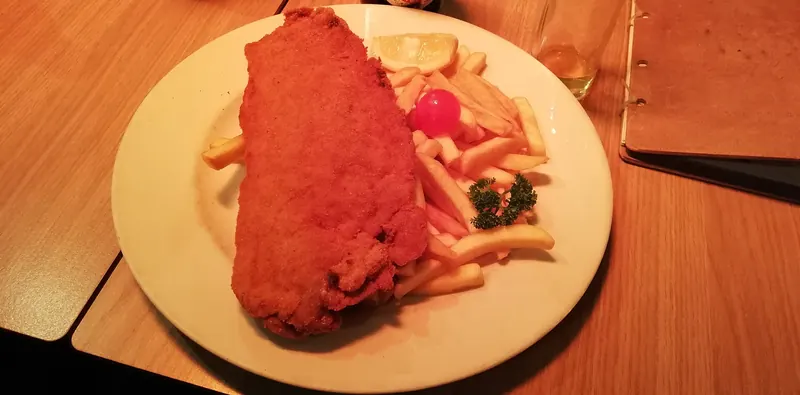
  • Zagrebački odrezak, a breaded veal schnitzel stuffed with ham and cheese

    Zagrebački odrezak (Zagreb-style schnitzel)

    The city's namesake dish, a breaded veal cutlet stuffed with ham and cheese.

    Where to try it Traditional restaurants throughout the Lower Town.

  • Štrukli

    A beloved regional specialty, thin dough layered with cottage cheese, baked or boiled.

    Where to try it Traditional restaurants throughout the city, especially in the Upper Town.

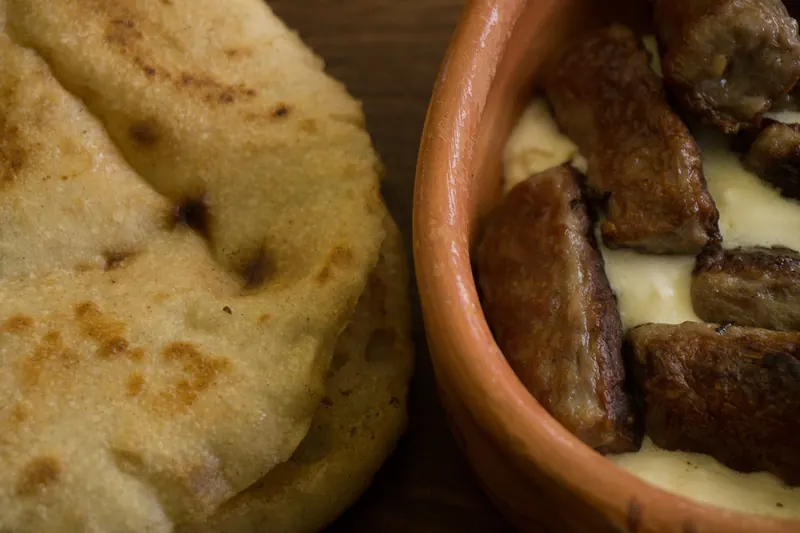
  • Ćevapi, grilled minced meat skewers popular across Croatia

    Ćevapi

    A reliable, inexpensive classic, grilled minced meat served with flatbread and onion.

    Where to try it Casual restaurants throughout the city centre.

  • Kremšnita (custard cream cake)

    A nearby regional favourite from Samobor, layers of custard and cream between crisp pastry.

    Where to try it Cafés and patisseries throughout Zagreb.

  • Croatian wine

    Worth exploring in Zagreb's wine bars, with continental Croatia's whites alongside coastal reds.

    Where to try it Wine bars throughout the Lower Town.

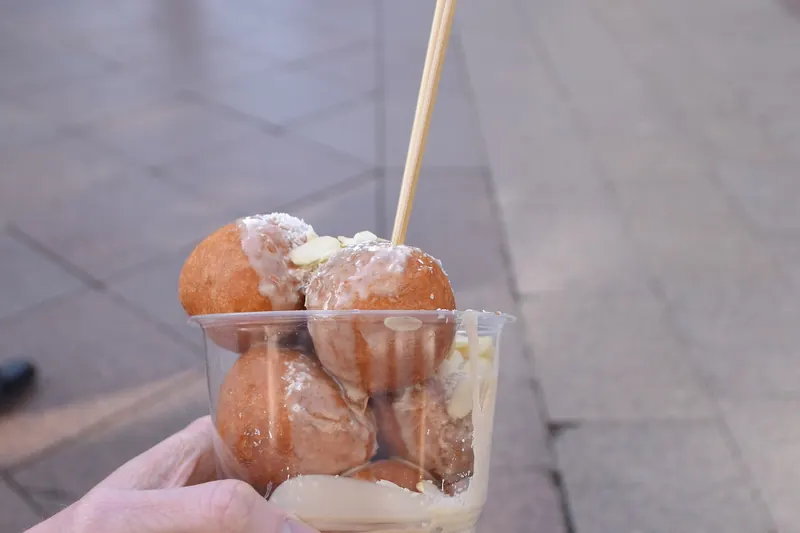
  • Fritule, small Croatian fried doughnuts

    Fritule (small fried doughnuts)

    A nice sweet treat, found at bakeries and cafés throughout the city.

    Where to try it Bakeries and cafés throughout Zagreb.

Accommodation

Where to stay in Zagreb

Zagreb offers noticeably better value than the coast, with everything of interest within easy reach of the centre.

  • Lower Town, near Ban Jelačić Square

    The most convenient base, close to the Upper Town, Dolac and the main museums.

    Best for: Being central and within walking distance of most sights

  • Upper Town (Gornji Grad)

    Fewer accommodation options, but right among the city's oldest streets.

    Best for: A quieter, more atmospheric historic stay

What a night costs

Budget hostel
€25–45 per night
Mid-range hotel
€90–170 per night
Museum of Broken Relationships entry
About €8–10
Dinner at a mid-range restaurant
About €20–40 per person

Transport

Getting to and around Zagreb

Zagreb is well connected by air and rail to the rest of Europe, and by road to the Dalmatian coast.

Getting there

  • Direct international flights

    Available from many European cities year-round.

    Zagreb Airport sits about 30 minutes from the city centre.

  • Train from nearby capitals

    A comfortable option from Vienna, Budapest or Ljubljana.

    Journey times range from about two to six hours depending on the route.

  • Bus or car to the Dalmatian coast

    Straightforward via a modern motorway.

    About five to six hours to Split, or a shorter hop to Plitvice Lakes.

Getting around

Zagreb's compact centre is easily walkable, with trams and a funicular covering the rest.

  • On foot

    The best way to see the Upper and Lower Towns together.

    Most major sights sit within a comfortable 20-minute walk of Ban Jelačić Square.

  • Trams

    Useful for reaching neighbourhoods further from the centre.

    A frequent, easy-to-use network across the wider city.

  • The Zagreb funicular

    One of the shortest funiculars in the world, connecting the Lower and Upper Towns.

    A fun, quick alternative to the short uphill walk.

When to go

Best time to visit Zagreb

Zagreb is a year-round destination, unlike the seasonal Dalmatian coast.

  • Late spring (May–June)

    Best time

    Mild, comfortable weather with the city at its most pleasant for walking.

  • Summer (July–August)

    Good

    Warm, though quieter than usual with many locals away at the coast.

  • Autumn (September–October)

    Best time

    Comfortable weather with the city's cultural calendar back in full swing.

  • Winter (November–February)

    Good

    Festive, with one of Europe's best-regarded Christmas markets running through December.

Worth planning around: Nothing strongly — Zagreb works well as a year-round city break.

Itinerary

Two days in Zagreb

Built around the Upper Town's historic sights and the Lower Town's markets and museums.

  1. Day1

    The Upper Town

    St Mark's, the Stone Gate and Lotrščak Tower.

    • Morning St Mark's Church and the surrounding Upper Town streets.
    • Afternoon The Stone Gate and Lotrščak Tower, timed for the noon cannon.
    • Evening Dinner and drinks along Tkalčićeva Street.
  2. Day2

    The Lower Town

    Dolac Market and the city's museums.

    • Morning Dolac Market and Zagreb Cathedral.
    • Afternoon The Museum of Broken Relationships or another city museum.
    • Evening A final dinner near Ban Jelačić Square.

Travel tips

Zagreb travel tips

Practical notes that make a Zagreb visit noticeably smoother.

  • Time your Upper Town visit for noon to catch the Lotrščak Tower's cannon.
  • Visit Dolac Market in the morning, when it's at its freshest and liveliest.
  • Ride the short funicular between the Lower and Upper Towns, just for the novelty.
  • Book popular restaurants ahead on weekend evenings.
  • Use Zagreb as an easy base for a Plitvice Lakes day trip.
  • Expect noticeably better prices than the Dalmatian coast for food and accommodation.

FAQ

Zagreb: frequently asked questions

Is Zagreb worth visiting?

Yes — it's an underrated Central European capital with real café culture, quirky museums and a lively year-round atmosphere.

How many days do you need in Zagreb?

Two to three days covers the Upper and Lower Towns comfortably, with time for a museum or two.

Is Zagreb cheaper than the Croatian coast?

Yes — accommodation, food and drink all tend to run noticeably cheaper than Dubrovnik or Hvar.

Can you day-trip to Plitvice Lakes from Zagreb?

Yes — it's about two hours by road, a popular day trip or first stop heading toward the coast.

Is Zagreb walkable?

Yes — the Upper and Lower Towns both sit within easy walking distance of the central square.

When is Zagreb's Christmas market?

Throughout December, widely regarded as one of Europe's best, spread across the Upper and Lower Towns.

Read next

Related travel articles

Planning

Planning Your First Trip to Europe

Most first European trips go wrong in the same three ways: too many cities, too little time in each, and a route shaped by a cheap flight rather than by geography. Here is how to avoid all three.

Food

A Country-by-Country Food Primer

Eating well abroad is mostly a matter of knowing when meals happen, how the menu is structured and which dish belongs to the place you are standing in. This covers all three for the five countries in this guide, plus the signals that separate a restaurant that feeds locals from one that feeds coaches.

Advertisement