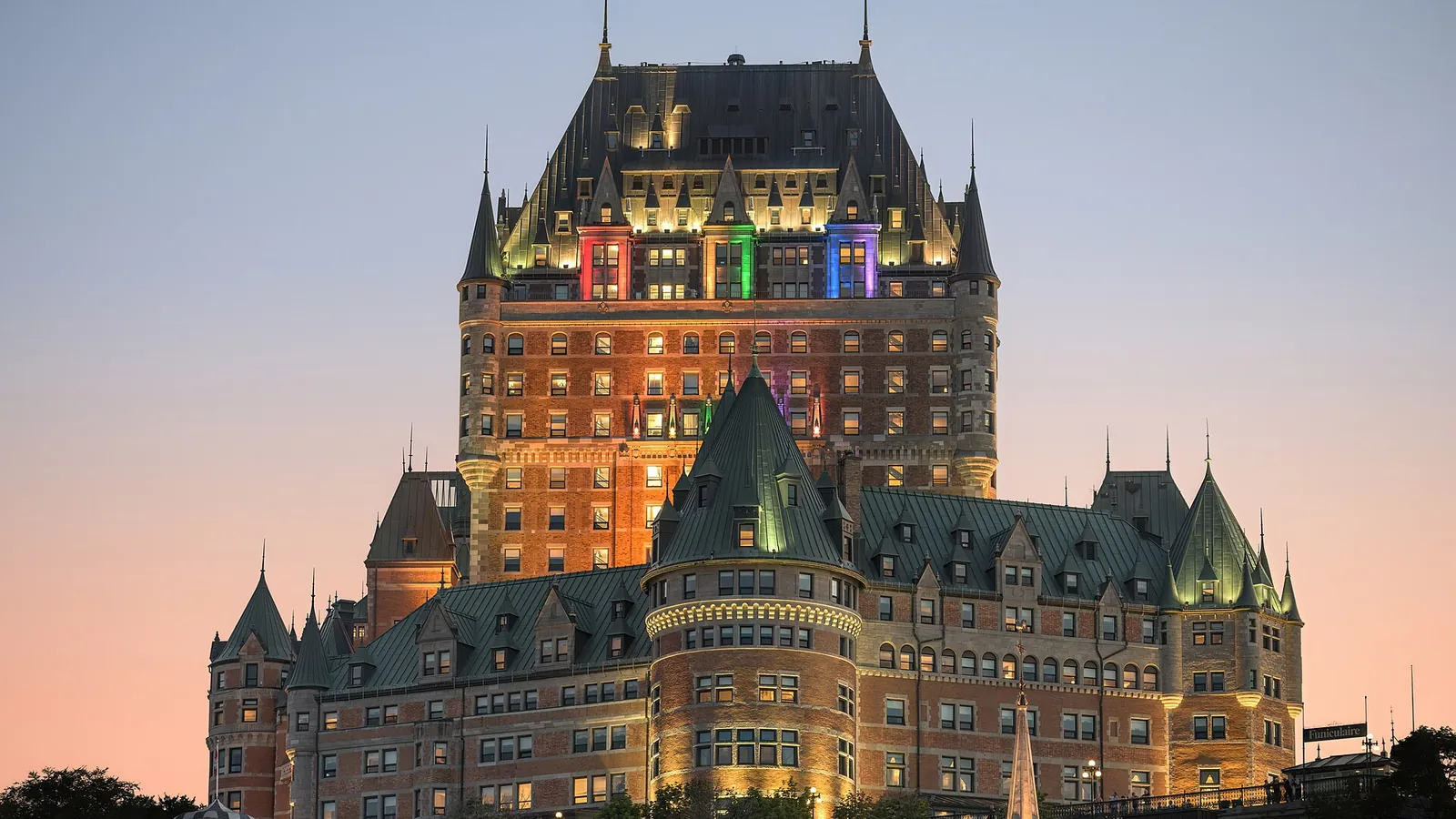
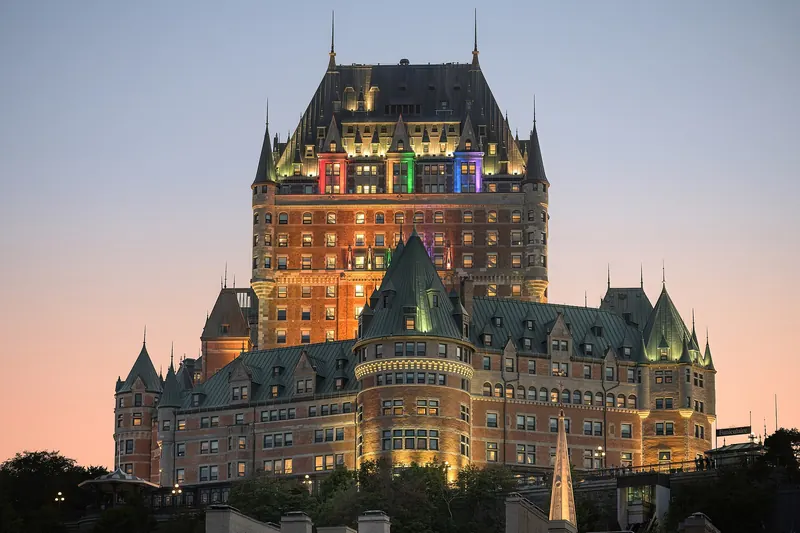
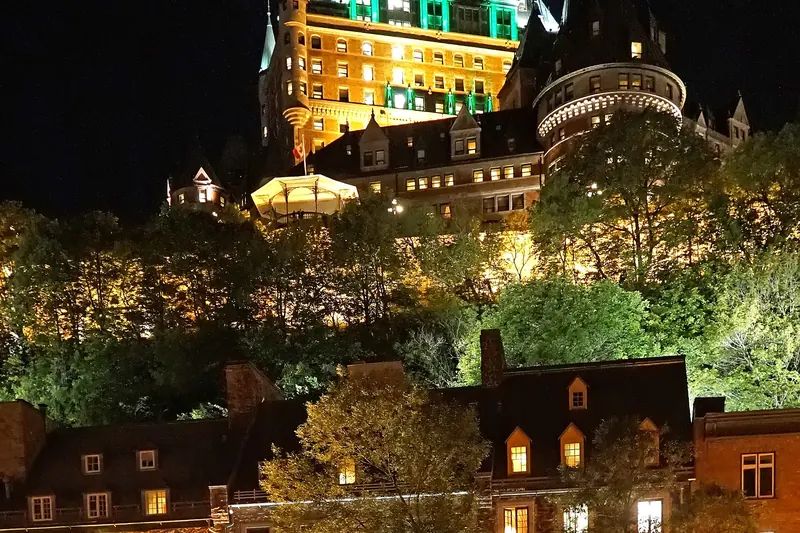

Château Frontenac at dusk above Quebec City

Quebec · Canada

Quebec City

The only walled city north of Mexico in North America, a French colonial capital crowned by a castle-hotel that looks lifted from a fairy tale.

  • Best time June to September for warm weather, or January to February for the Winter Carnival
  • Stay 2-3 days
  • Good for History, romance, French colonial architecture

Photo: Wilfredor · CC0

Welcome to Quebec City

Quebec City is the only walled city north of Mexico anywhere in North America, its Old Town a UNESCO World Heritage Site of French colonial architecture.

Towering above it all is Château Frontenac, a fairy-tale railway hotel so distinctive it's said to be the most photographed hotel on Earth.

Beyond the walls, dramatic Montmorency Falls sits just outside the city, taller than Niagara Falls even if considerably less powerful.

  • Historic Site
  • UNESCO Site
  • Romantic
  • Culture Arts

Why visit

Why visit Quebec City?

Quebec City's case rests on being North America's most complete French colonial capital.

  • It's the only walled city north of Mexico

    A UNESCO World Heritage Site with fortifications still fully intact.

  • Château Frontenac is one of the world's most photographed hotels

    A fairy-tale silhouette that defines the entire city's skyline.

  • The Old Town is astonishingly well preserved

    Cobblestone streets and stone buildings dating back centuries.

  • Montmorency Falls is a dramatic, easy add-on

    Taller than Niagara Falls, and just outside the city.

  • It's even more French-feeling than Montreal

    A smaller, more concentrated dose of Quebec's distinct culture and language.

Main attractions

Top things to see in Quebec City

Quebec City's essential sights are concentrated within and just outside its historic walled core.

  1. Château Frontenac at dusk

    Château Frontenac

    Said to be the most photographed hotel in the world, a turreted 1893 railway hotel dominating the skyline.

    Tip Worth a coffee inside even without staying — the lobby and terrace are open to visitors.

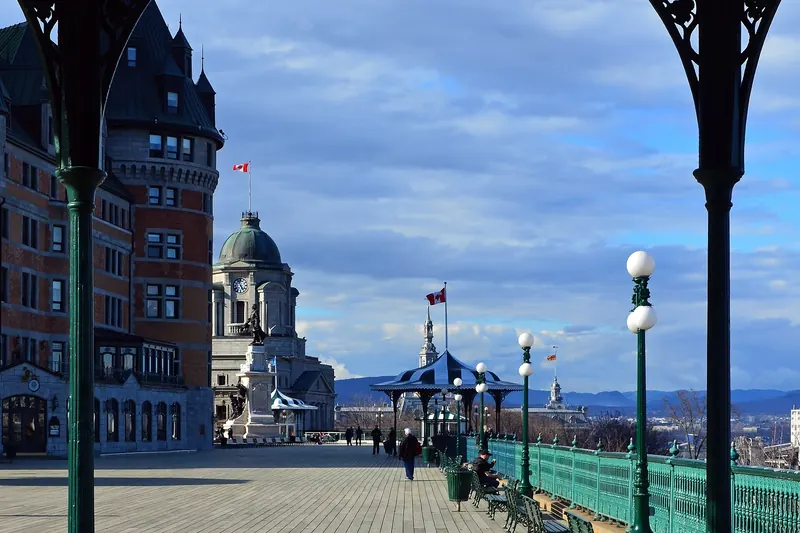
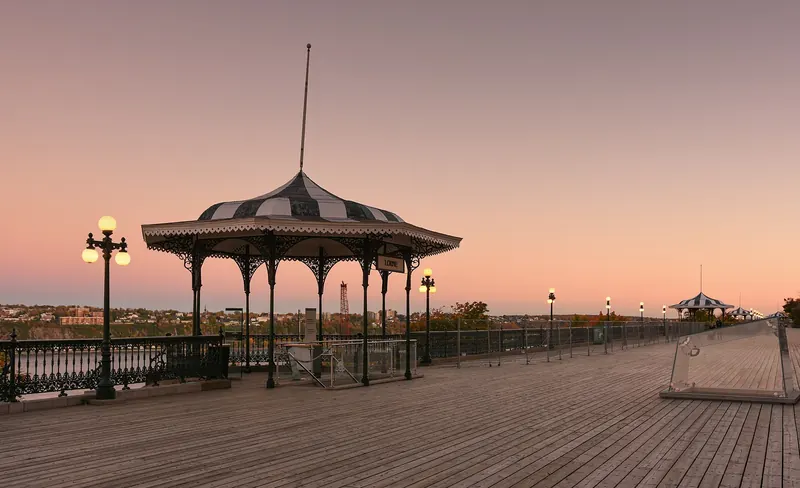
  2. Dufferin Terrace overlooking the St Lawrence River

    Dufferin Terrace

    The city's grandest promenade, a boardwalk running along the clifftop beside Château Frontenac.

    Tip Visit at sunset for the best light over the St Lawrence River.

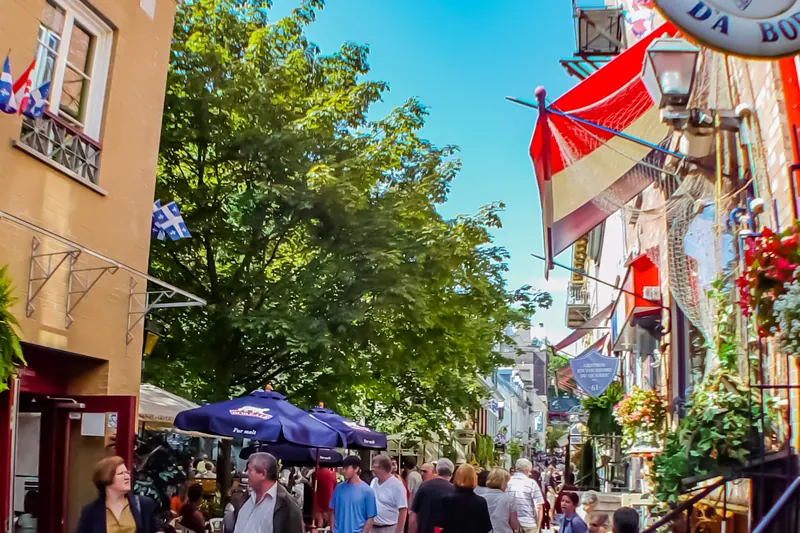
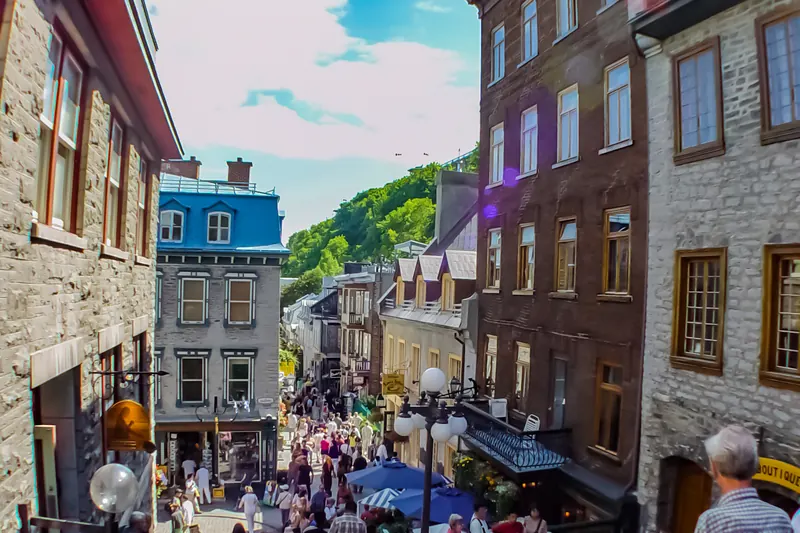
  3. The Petit-Champlain quarter in Quebec City

    The Petit-Champlain quarter

    One of the oldest commercial streets in North America, steep and narrow, lined with boutiques and cafés.

    Tip Take the funicular down from Dufferin Terrace rather than the steep stairs alone.

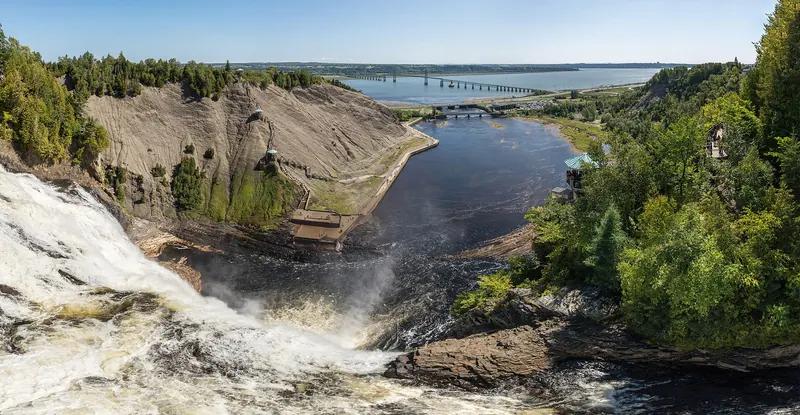
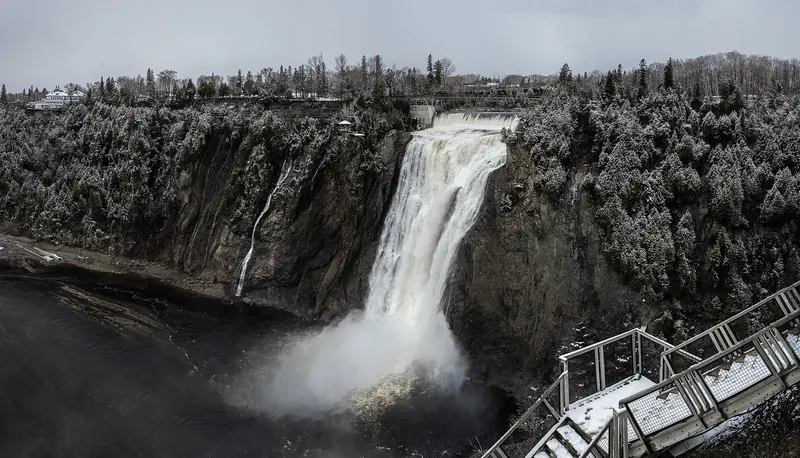
  4. Montmorency Falls near Quebec City

    Montmorency Falls

    Taller than Niagara Falls, a dramatic 83-metre waterfall just outside the city.

    Tip Cross the suspension bridge at the top for a view straight down the falls.

  5. Old Quebec's colonial streets

    Old Quebec's colonial streets

    A near-complete French colonial townscape, stone buildings and cobblestones dating back to the 17th century.

    Tip Visit early morning before day-trippers from cruise ships and tour buses arrive.

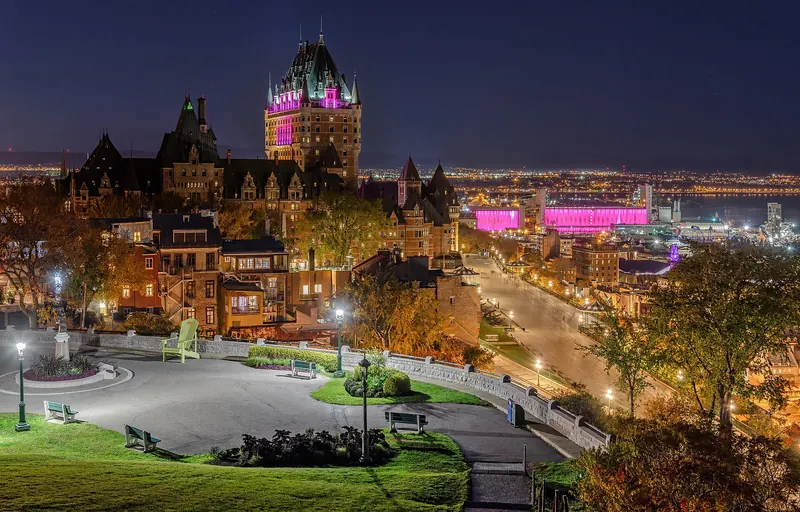
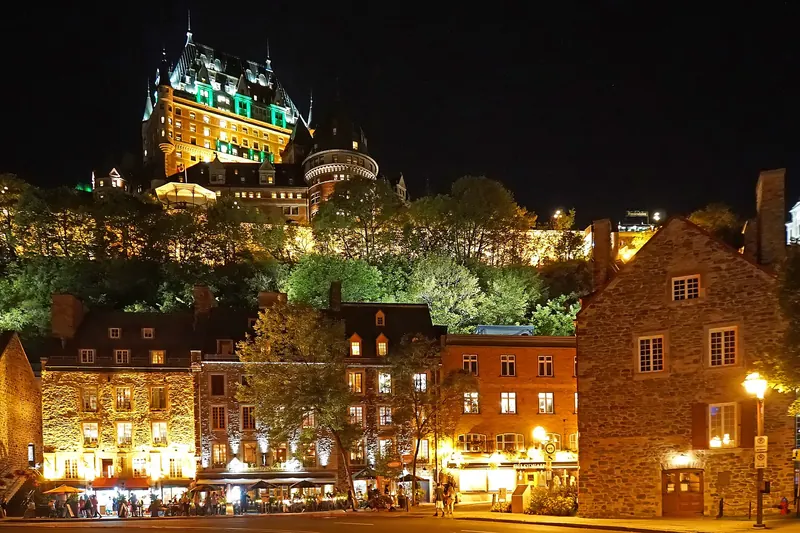
  6. Château Frontenac illuminated at night

    Château Frontenac illuminated at night

    A striking sight after dark, the hotel's copper roofs and turrets lit up above the city.

    Tip Walk down to the Lower Town for a view looking back up at the illuminated hotel.

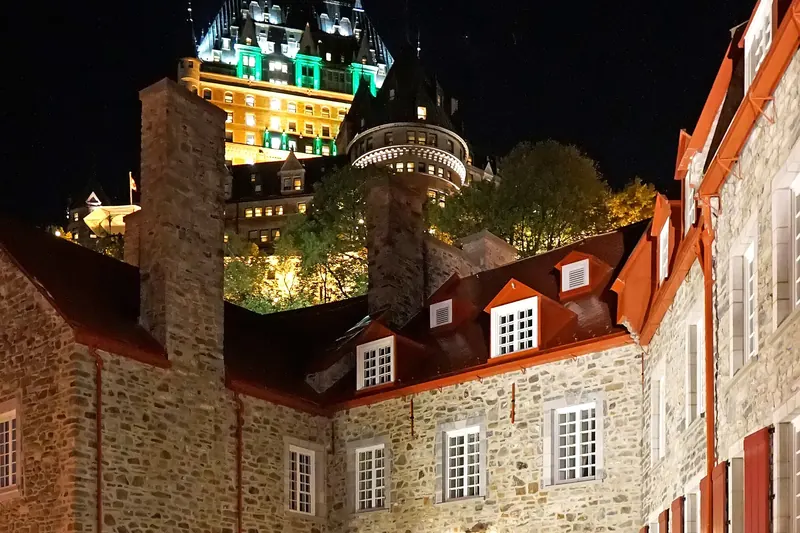
  7. The House of Chevalier in Old Quebec

    The House of Chevalier

    One of the Old Town's best-preserved merchant houses, a glimpse into 18th-century Quebec commerce.

    Tip Just one of many historic facades worth pausing for throughout the Lower Town.

Things to do

Best things to do in Quebec City

Quebec City rewards unhurried wandering, split between the clifftop Upper Town and the riverside Lower Town.

  1. Sunset on Dufferin Terrace in Quebec City

    Walk Dufferin Terrace at sunset

    An essential evening ritual, watching the light change over the St Lawrence River from the boardwalk.

    Tip A lovely spot to simply sit on a bench and take it all in.

  2. Boutiques in the Petit-Champlain quarter

    Explore Petit-Champlain's boutiques

    A relaxed way to spend a couple of hours, browsing shops in one of North America's oldest commercial streets.

    Tip Check the funicular's operating hours if you'd rather not walk back up the hill.

  3. Montmorency Falls near Quebec City

    Day-trip to Montmorency Falls

    A worthwhile half-day trip, a dramatic waterfall taller than Niagara just outside the city.

    Tip Take the cable car up rather than the stairs if you'd like an easier visit.

  4. Walking Old Quebec's walled streets

    Wander Old Quebec's walled streets

    A rewarding way to spend an afternoon, tracing centuries of French colonial history through narrow lanes.

    Tip Walk a stretch of the city's fortified walls for a different perspective on the Old Town.

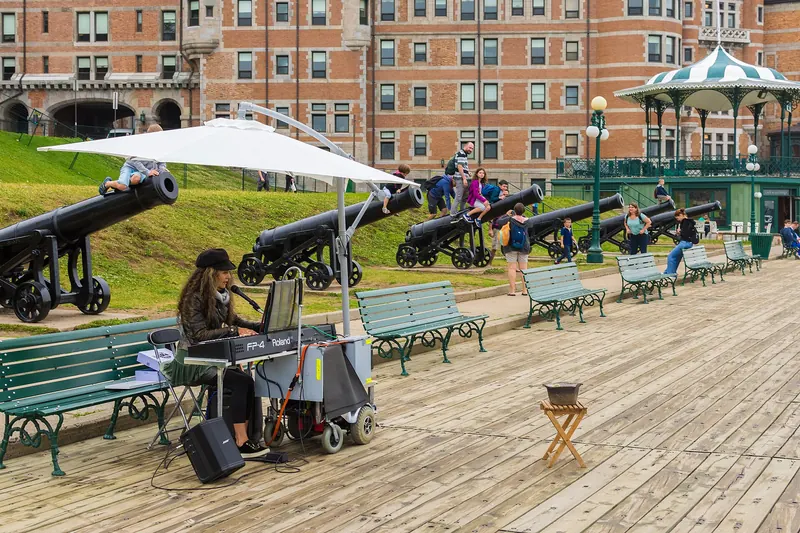
  5. A street pianist performing on Dufferin Terrace

    Listen to a street pianist on Dufferin Terrace

    A charming, low-key pleasure, live music often drifting along the terrace in warmer months.

    Tip A nice reason to linger longer than you'd planned.

  6. Walk the Plains of Abraham

    A significant historic site, the battlefield park where a pivotal 1759 battle shaped Canada's future.

    Tip A peaceful green space today, popular for picnics and jogging as much as history.

Local food

What to eat in Quebec City

Quebec City's food reflects the province's distinct culinary identity, from tourtière to maple products.

  • Poutine, Canada's fries, cheese curds and gravy dish

    Poutine

    Born in rural Quebec, and Quebec City is a fitting place to try it.

    Where to try it Restaurants throughout Old Quebec and beyond.

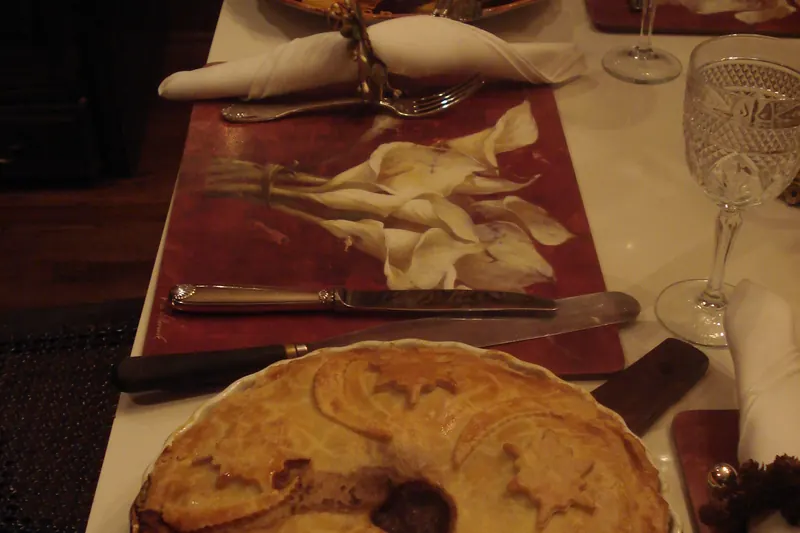
  • Tourtière, a traditional Quebec meat pie

    Tourtière (meat pie)

    A traditional Quebec comfort food, a spiced meat pie especially popular around the winter holidays.

    Where to try it Traditional restaurants throughout Old Quebec.

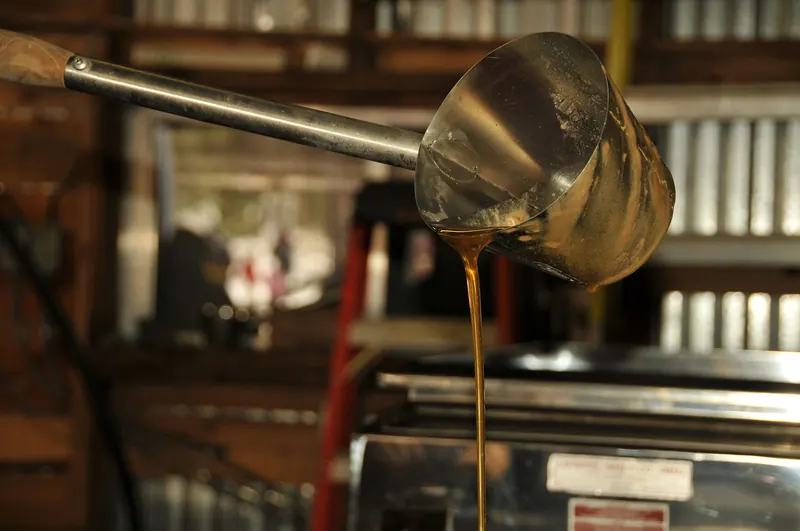
  • Maple sap, the source of Quebec's maple syrup

    Maple products

    A real point of pride, with Quebec producing most of the world's maple syrup.

    Where to try it Markets and specialty shops throughout the city.

  • Quebec cheese

    An underrated part of the province's food scene, with a genuine artisanal cheese-making tradition.

    Where to try it Specialty cheese shops throughout Old Quebec.

  • Caribou (traditional winter drink)

    A quirky Quebec tradition, a fortified wine and spirit blend traditionally drunk during winter carnival.

    Where to try it Bars throughout Old Quebec, especially during the winter carnival season.

  • Fresh game and river fish

    A nod to the region's hunting and fishing traditions, found on menus throughout the city.

    Where to try it Traditional Quebec restaurants throughout Old Quebec.

Accommodation

Where to stay in Quebec City

Quebec City offers everything from budget guesthouses to Château Frontenac itself, with Old Town lodging commanding a premium.

  • Within the city walls (Old Quebec)

    The most atmospheric, though also the priciest, part of the city to stay.

    Best for: Being immersed in the historic atmosphere

  • Just outside the walls

    Easy walking distance to the main sights, with more modern accommodation options.

    Best for: A better-value stay a short walk from the Old Town

What a night costs

Budget guesthouse
C$70–120 per night
Mid-range hotel
C$180–320 per night
Montmorency Falls cable car
About C$15–20
Dinner at a mid-range restaurant
About C$28–50 per person

Transport

Getting to and around Quebec City

Quebec City is well connected by train and road from Montreal, with its own smaller international airport.

Getting there

  • Train from Montreal

    A comfortable, frequent option, no car needed.

    Takes about three hours via Via Rail's Central Canada corridor.

  • Bus or drive from Montreal

    A budget-friendly alternative to the train.

    Similar journey time, with more frequent departures than rail.

  • Direct flights

    Available from a handful of Canadian and US cities.

    Québec City Jean Lesage International Airport sits about 20 minutes from downtown.

Getting around

Quebec City's compact walled core is entirely walkable, with a funicular connecting its two levels.

  • On foot

    The only way to properly explore Old Quebec.

    The Upper and Lower Towns are both compact and best experienced walking.

  • The Old Quebec Funicular

    The easy way to connect the Upper and Lower Towns.

    A quick, fun alternative to the steep stairs between the two levels.

  • Bus or car to Montmorency Falls

    Necessary for reaching the falls outside the city.

    A local bus or short drive covers the distance easily.

When to go

Best time to visit Quebec City

Quebec City is a striking destination in both summer and winter, each offering a very different character.

  • Summer (June–August)

    Best time

    Warm and lively, with outdoor terraces and festivals filling the calendar.

  • Early autumn (September–October)

    Best time

    Comfortable temperatures with excellent fall colour throughout the region.

  • Winter (December–February)

    Good

    Magical under snow, especially during the Quebec Winter Carnival, though cold.

  • Spring (March–May)

    Good

    A quieter shoulder season, with unpredictable weather as snow melts.

Worth planning around: Nothing strongly, though winter demands serious cold-weather gear.

Itinerary

Two days in Quebec City

Built around Château Frontenac, the Old Town's two levels, and a half-day trip to Montmorency Falls.

  1. Day1

    Old Quebec

    The walled city's essential sights.

    • Morning Château Frontenac and Dufferin Terrace.
    • Afternoon The funicular down to Petit-Champlain and the Lower Town.
    • Evening Dinner in the Lower Town, with the illuminated hotel above.
  2. Day2

    Montmorency Falls and the Plains of Abraham

    A day beyond the walls.

    • Morning Day trip to Montmorency Falls.
    • Afternoon Walk the Plains of Abraham.
    • Evening A final dinner in Old Quebec.

Travel tips

Quebec City travel tips

Practical notes that make a Quebec City visit noticeably smoother.

  • Wear comfortable shoes — Old Quebec's streets are cobbled and often steep.
  • Use the funicular to save the climb between the Upper and Lower Towns.
  • Learn a few basic French phrases — French is even more dominant here than in Montreal.
  • Visit Old Quebec early morning to avoid cruise-ship and tour-bus crowds.
  • Pack serious cold-weather gear for a winter visit.
  • Book accommodation well ahead for the Quebec Winter Carnival in February.

FAQ

Quebec City: frequently asked questions

How many days do you need in Quebec City?

Two to three days covers Old Quebec and a trip to Montmorency Falls comfortably.

Is Quebec City worth visiting compared to Montreal?

Yes — it offers a smaller, more concentrated dose of French colonial atmosphere, with Château Frontenac unlike anything in Montreal.

Do you need to speak French in Quebec City?

No, not, though French is even more dominant here than in Montreal, and a few basic phrases are appreciated.

How do you get from Montreal to Quebec City?

Easiest by train, taking about three hours via Via Rail's Central Canada corridor.

Is Montmorency Falls worth visiting?

Yes — at 83 metres, it's taller than Niagara Falls, and sits just outside the city.

Is Quebec City good to visit in winter?

Yes — the Winter Carnival in February is one of the city's real highlights, though it does require serious cold-weather gear.

Read next

Related travel articles

Heritage

UNESCO Sites Worth Planning a Trip Around

A UNESCO listing tells you a place matters; it does not tell you whether it is worth two days and a detour. This is how to read the list usefully — and which sites reward building a trip around them.

Practical

Packing by Season and Trip Type

Most packing advice is a list of things. This is the opposite: the small number of decisions that determine whether your luggage helps or hinders, organised by the kind of trip you are actually taking.

Advertisement