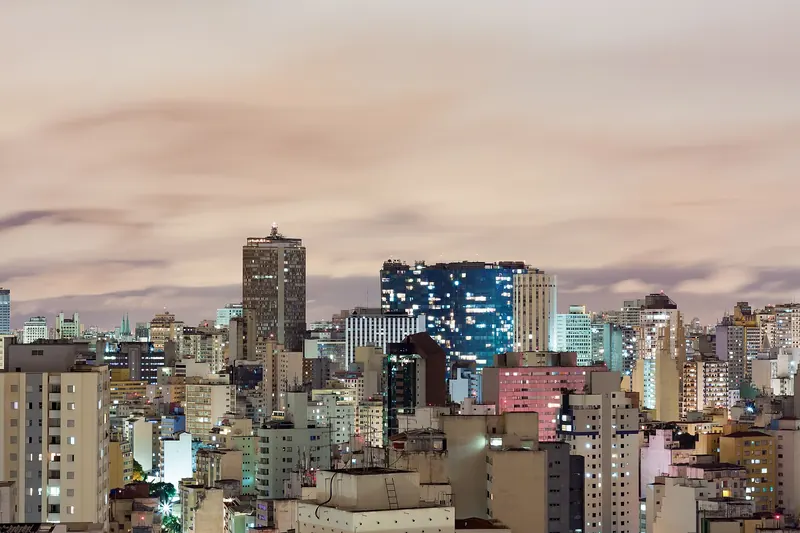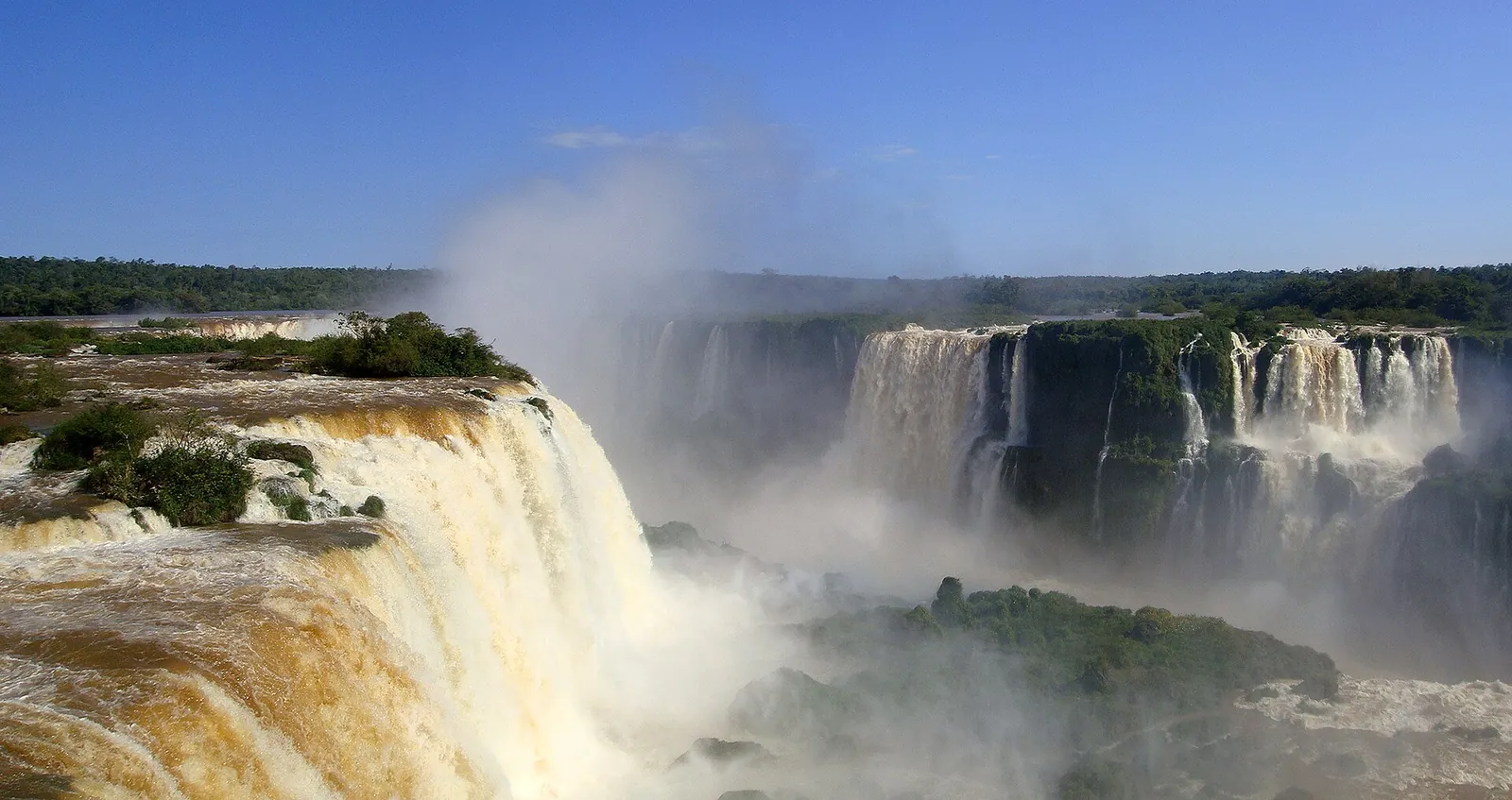

A wide panorama of the Iguazu Falls with many cascades in the rainforest

Paraná, on the border with Argentina · Brazil

Iguazu Falls

A horseshoe of 275 waterfalls thundering into a rainforest gorge, with walkways to the very edge of the Devil's Throat, shared between Brazil and Argentina.

  • Best time March–May and August–October
  • Stay 2 days
  • Good for Nature, photography, families, short visits

Photo: Mariordo (Mario Roberto Durán Ortiz) · CC BY-SA 4.0

Welcome to Iguazu Falls

Iguazu Falls is a system of 275 waterfalls spread over almost 3 km of the Iguazu River, on the border between Brazil and Argentina. The name means big water in the Guarani language. The falls drop up to 80 metres over a basalt cliff into a gorge cloaked in subtropical rainforest, and the volume of water is greater than that of Niagara. UNESCO inscribed the national parks on both sides of the border, in 1984 and 1986.

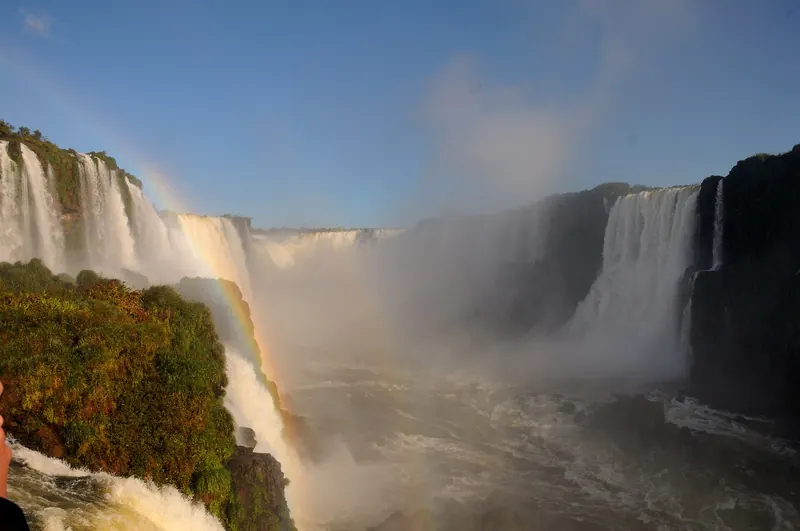
The highlight is the Devil's Throat (Garganta del Diablo), a huge U-shaped chasm where about half of the river plunges in a roaring, misty cataract. Standing on a walkway over its edge is one of the world's great natural experiences.

The falls are best seen from both sides. The Brazilian side, with a 1.2-km walkway, offers wide panoramas and takes half a day, and the Argentine side has more trails, close-up views and a train to the Devil's Throat, and needs a full day. Foz do Iguaçu, the Brazilian gateway, and Puerto Iguazú in Argentina are both easy bases.

  • UNESCO Site
  • Nature & Wildlife
  • National Park
  • Scenic Region

Why visit

Why visit Iguazu Falls?

Iguazu is one of the greatest waterfalls on earth, and an easy addition to a trip to Brazil or Argentina.

  • Sheer scale

    A wall of water more than 2.7 km wide, with spray visible from far away.

  • The Devil's Throat

    A thundering chasm where you stand right at the top.

  • Two national parks

    Different experiences on the Brazilian and Argentine sides.

  • Wildlife

    Coatis, toucans, butterflies and, if you are lucky, caiman and monkeys.

  • Easy access

    Airports on both sides and a border crossing in half an hour.

Main attractions

Top things to see in Iguazu Falls

Give the Brazilian side half a day and the Argentine side a full day.

  1. The Devil's Throat seen from the Brazilian side of Iguazu Falls, with a walkway and mist

    The Brazilian side

    A clifftop trail with sweeping views of the Argentine falls, ending on a walkway that reaches the base of the Devil's Throat. Shorter and less crowded than the Argentine side.

    Tip Go at opening time, and bring a raincoat.

  2. The Argentine side

    More extensive, with the Upper and Lower Circuits, and the Devil's Throat platform, reached by a small train and a long walkway. You get closer to more falls.

    Tip Allow a full day, and go early.

  3. Macuco Safari boat trip

    A jungle truck ride and a speedboat that takes you right beneath the falls, and soaks you completely.

    Tip Bring dry clothes and a waterproof bag.

  4. Bird Park (Parque das Aves)

    A sanctuary near the Brazilian entrance, with toucans, macaws, flamingos and parrots in large walk-through aviaries.

    Tip Visit after the falls.

  5. Itaipu Dam

    One of the largest hydroelectric dams in the world, shared by Brazil and Paraguay, with tours of the power station.

    Tip Book a tour in advance.

Things to do

Best things to do in Iguazu Falls

Iguazu is mostly about walking, looking and getting wet.

  1. Walk to the edge of the Devil's Throat

    Feel the vibration of the water from the walkway.

    Tip Go early to avoid the crowds.

  2. Ride the Macuco boat

    Get soaked under the falls in a speedboat.

    Tip Book the first boat of the day.

  3. Hike the Lower Circuit in Argentina

    See the falls from below, with views of the gorge.

    Tip Wear shoes with grip.

  4. Take a helicopter flight

    A short flight over the falls gives a panoramic view.

    Tip Book in advance.

  5. Visit the Bird Park

    Walk through aviaries and see rare birds.

    Tip Half a day is enough.

  6. See the Three Borders

    The point where Brazil, Argentina and Paraguay meet at the confluence of rivers.

    Tip Go at sunset.

Local food

What to eat in Iguazu Falls

Food near Iguazu is a mix of Brazilian, Argentine and Paraguayan traditions.

  • Churrasco and rodízio

    Grilled meats served in endless rounds at Brazilian churrascarias.

    Where to try it Restaurants in Foz do Iguaçu.

  • Surubi and river fish

    Fish from the Paraná River, grilled or fried.

    Where to try it Riverside restaurants.

  • Chipa

    Cheesy cassava bread rolls from Paraguay and Argentina.

    Where to try it Bakeries and street stalls.

  • Empanadas

    Baked or fried pastries with meat, cheese or vegetables.

    Where to try it Puerto Iguazú.

  • Mate and tereré

    Herbal tea drunk hot or cold, a social ritual.

    Where to try it Everywhere.

Accommodation

Where to stay in Iguazu Falls

Stay near the falls for convenience, or in town for value.

  • Foz do Iguaçu

    Hotels and hostels in the city, with buses to the park.

    Best for: The Brazilian side and value

  • Inside the Brazilian park

    A hotel beside the falls.

    Best for: Early access

  • Puerto Iguazú

    Guesthouses and lodges on the Argentine side.

    Best for: The Argentine side

What a night costs

Budget hostel or hotel
US$25–60 per night
Mid-range hotel
US$80–160 per night
Luxury hotel
US$250–500 per night
Meal at a local restaurant
US$8–20 per person

Transport

Getting to and around Iguazu Falls

Iguazu is in the far south-west of Brazil, and is reached by air.

Getting there

  • Flight to Foz do Iguaçu (IGU)

    Direct flights from Rio (about 2 hours), São Paulo and other Brazilian cities.

    The airport is 20 minutes from the falls.

  • Flight to Puerto Iguazú (IGR)

    Direct flights from Buenos Aires, about 2 hours.

    Good for combining with Argentina.

  • Bus

    Long-distance buses from São Paulo take about 15 hours.

    Fly instead.

Getting around

Buses and taxis link the towns and both parks, and border formalities apply between sides.

  • Local buses

    Buses run from Foz to the Brazilian park, and cross the border to Argentina.

    Carry passports.

  • Taxi or tour

    Convenient for crossing the border and visiting both sides.

    Agree the price.

  • On foot

    Trails and walkways inside the parks.

    Wear good shoes.

When to go

Best time to visit Iguazu Falls

Iguazu has a subtropical climate, with hot, humid summers and mild winters, and rain all year. The falls are fullest in the wetter months.

  • Summer (December–February)

    Good

    Hot and humid, with big flows and crowds.

  • Autumn (March–May)

    Best time

    Warm, with good flow and fewer visitors.

  • Winter (June–August)

    Good

    Mild and drier, with lower flow. Some walkways can be busier.

  • Spring (September–November)

    Best time

    Warm, with good flow and fewer crowds.

Worth planning around: January, when it is very hot and busy, and periods of extreme flooding, when walkways can close.

Itinerary

Two days at Iguazu

The Brazilian side and boat trip, then the Argentine side.

  1. Day1

    The Brazilian side

    Panoramas and a soaking.

    • Morning The Brazilian walkway.
    • Afternoon The Macuco boat and Bird Park.
    • Evening Dinner in Foz.
  2. Day2

    The Argentine side

    Close-ups.

    • Morning The Devil's Throat.
    • Afternoon The Upper and Lower Circuits.
    • Evening Return to Foz.

Travel tips

Iguazu Falls travel tips

A few tips make the visit smoother.

  • Go early to avoid crowds and heat.
  • Carry your passport for the border crossing, and check visa rules for Argentina.
  • Bring a raincoat or poncho, and a waterproof bag.
  • Do not feed the coatis, who can bite.
  • Wear shoes with grip, since walkways are wet.
  • Check whether the Devil's Throat walkway is open, since floods can close it.
  • Use insect repellent.

FAQ

Iguazu Falls: frequently asked questions

Which side is better, Brazil or Argentina?

The Argentine side has more trails and closer views, and the Brazilian side has better panoramas. Most visitors see both.

How many days do you need?

Two days, one for each side.

Do I need a visa for Argentina?

It depends on your nationality. Check the rules for both countries, and carry your passport.

What is the best time to visit?

March to May and August to October.

Will I get wet?

Yes, particularly on the walkways and on the boat. A poncho and a waterproof bag are useful.

Is the Devil's Throat always open?

No. High water can close the walkway to it.

Read next

Related travel articles

Practical

Packing by Season and Trip Type

Most packing advice is a list of things. This is the opposite: the small number of decisions that determine whether your luggage helps or hinders, organised by the kind of trip you are actually taking.

Heritage

UNESCO Sites Worth Planning a Trip Around

A UNESCO listing tells you a place matters; it does not tell you whether it is worth two days and a detour. This is how to read the list usefully — and which sites reward building a trip around them.

Advertisement