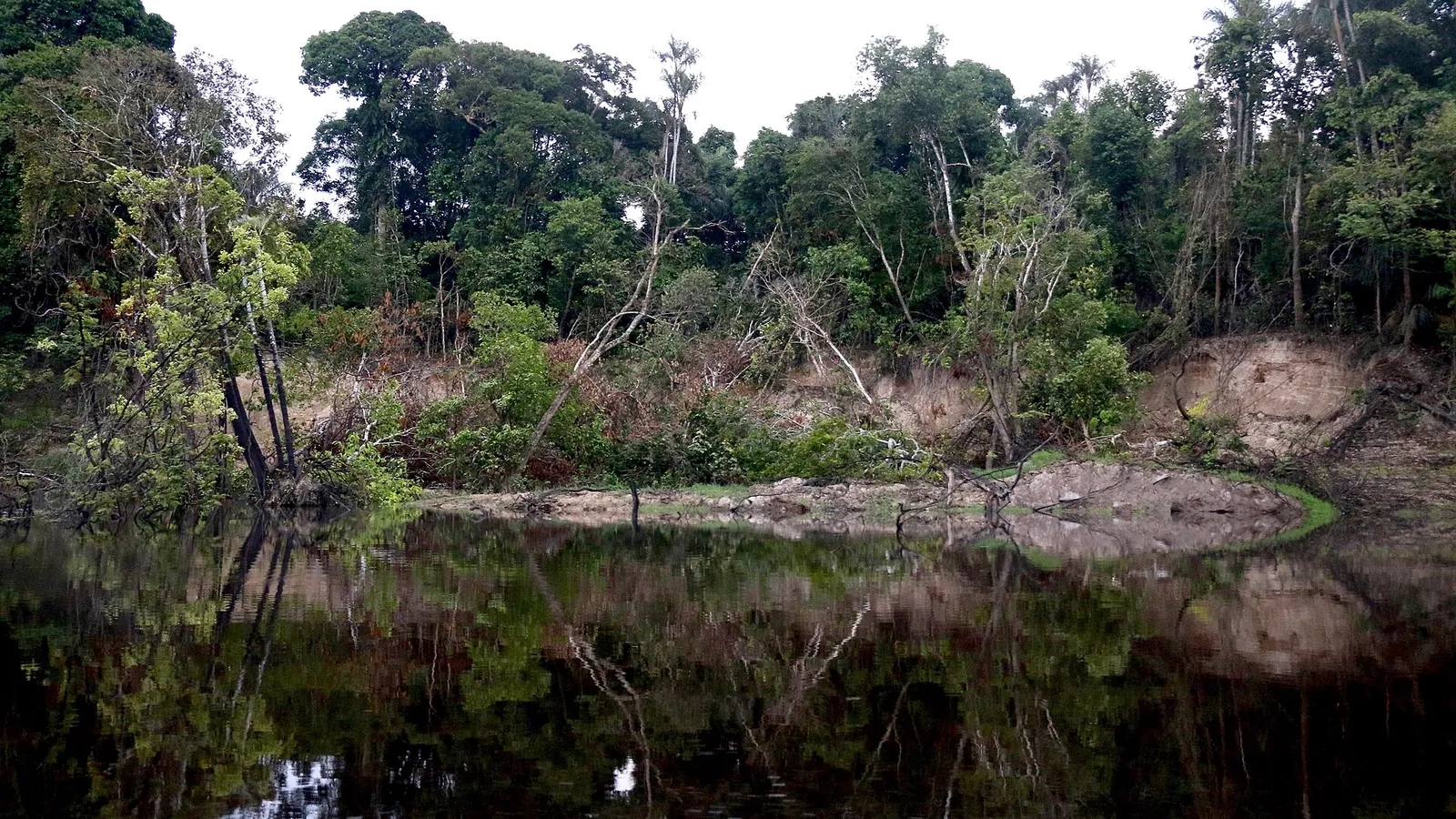
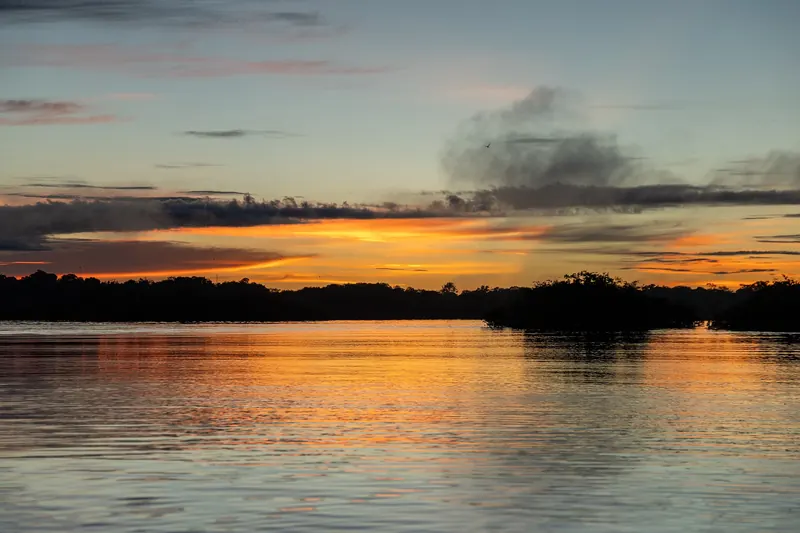
The forested islands of the Anavilhanas archipelago in the Rio Negro

Amazonas State, northern Brazil · Brazil

The Amazon and Manaus

The world's largest rainforest and its greatest river, reached from a jungle city with an opera house, by boat, canoe and lodge, past pink dolphins and giant water lilies.

  • Best time July–December for trekking, December–June for canoeing
  • Stay 4 days
  • Good for Wildlife, rainforest, river life, adventure

Photo: Karen Mohrstedt Badin · CC BY-SA 4.0

Welcome to the Amazon

The Amazon rainforest covers about 5.5 million square kilometres, more than half of the world's remaining tropical forest, and about 60% of it lies in Brazil. It holds around one in ten known species on earth, and its great rivers, the Amazon and its tributaries, carry more water than any others. Manaus, a city of about two million people, stands on the Rio Negro, about 1,500 km from the Atlantic, and is the main gateway for visitors.

Manaus boomed in the late 19th century, when rubber made it one of the richest cities in the world, and the opulent Teatro Amazonas opera house, opened in 1896, is a legacy of that time. Today it is a busy commercial centre and free-trade zone, a base for river trips and lodge stays. Just outside the city, the Meeting of the Waters, where the dark Rio Negro and the sandy Solimões run side by side without mixing for kilometres, is a striking sight.

A trip to the Amazon means time on the water: canoes into flooded forest, jungle walks, night walks for caiman, fishing for piranha, swimming with pink river dolphins at Novo Airão and stays in lodges or on riverboats. The experience varies with the season, as the river rises and falls by up to 10–15 metres over the year.

  • Nature & Wildlife
  • National Park
  • Off the Beaten Path
  • Culture & Arts

Why visit

Why visit the Amazon?

The Amazon is one of the planet's greatest natural wonders, and Manaus is the easiest place to reach it.

  • The world's biggest rainforest

    Its scale, biodiversity and importance to the planet are unmatched.

  • River life

    Boats, floating villages and caboclo communities on the water.

  • Wildlife

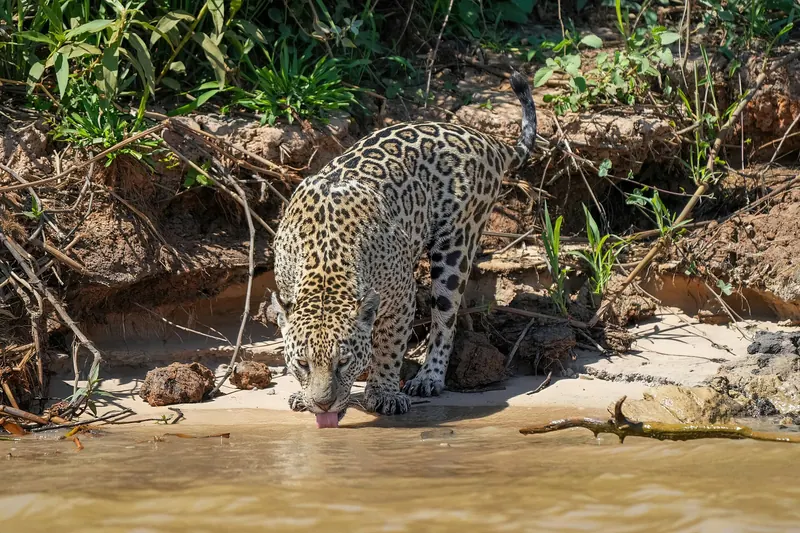
    Monkeys, sloths, caiman, macaws, river dolphins and thousands of insects and birds.

  • The Meeting of the Waters

    Two rivers of different colours, flowing side by side.

  • Manaus itself

    An opera house, markets and a rubber-boom past.

Main attractions

Top things to see in the Amazon

Split your time between a day in Manaus and a stay in the forest.

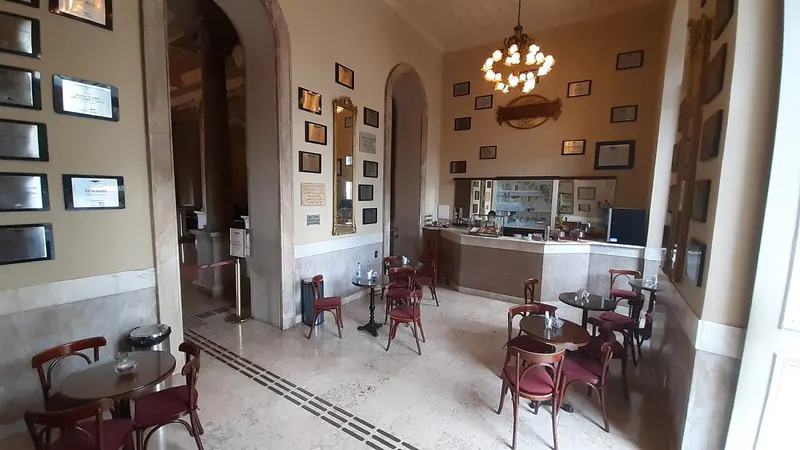
  1. The pink and white Teatro Amazonas opera house in Manaus with its dome

    Teatro Amazonas

    The great opera house built in 1896 with European materials, including Italian marble, French glass and Scottish iron, topped by a dome of tiles in the Brazilian colours. Tours and performances are offered.

    Tip Book a tour, or see a concert.

  2. The Meeting of the Waters

    About 10 km from Manaus, where the black Rio Negro and the sandy Solimões flow side by side for several kilometres, separated by differences in temperature, speed and density.

    Tip Go by boat on a half-day trip.

  3. Islands and channels of the Anavilhanas archipelago in the Rio Negro

    Anavilhanas Archipelago

    One of the largest river archipelagos in the world, with hundreds of forested islands in the Rio Negro, about 100 km upriver. A national park, it has canoe routes, beaches in the dry season and birdlife.

    Tip Go with a guide.

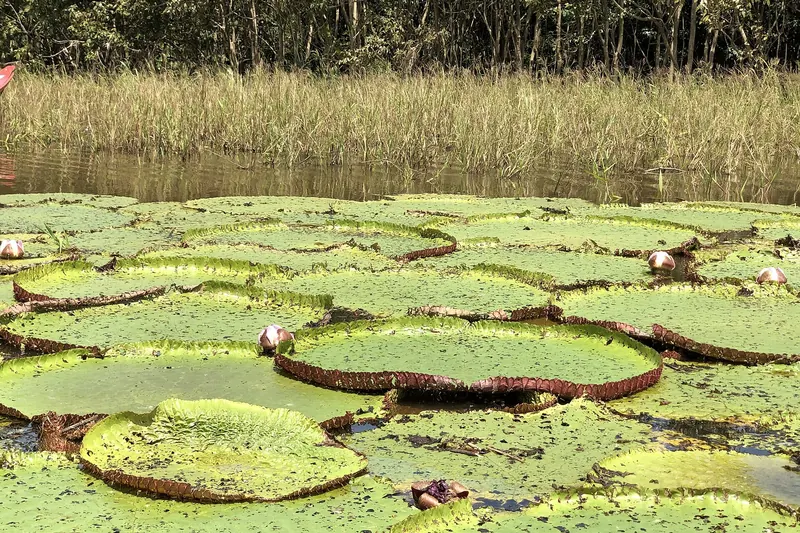
  4. Giant Victoria amazonica water lilies floating on a lake near Manaus

    Giant water lilies at Janauary

    A lake near Manaus where giant Victoria amazonica water lilies, with leaves up to 2.5 metres across, float on the surface.

    Tip Best from January to July.

  5. Mercado Adolpho Lisboa

    A cast-iron market from 1883, modelled on Paris's Les Halles, selling fish, fruit, herbs and Amazonian crafts.

    Tip Go in the early morning.

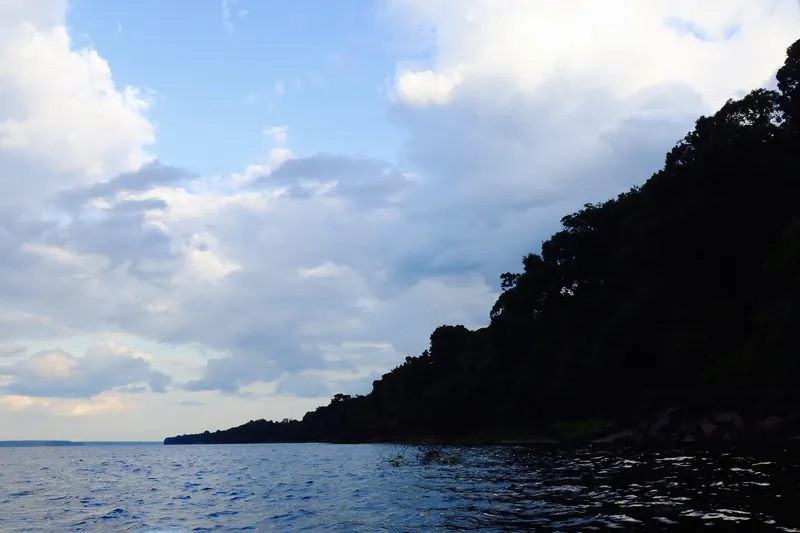
  6. The sun setting over the Amazon rainforest and river

    Jungle lodges and riverboats

    Lodges on the Rio Negro and its tributaries offer guided walks, canoe trips, fishing and night excursions, and riverboats allow multi-day cruises.

    Tip Choose a lodge with local guides and a good reputation.

Things to do

Best things to do in the Amazon

Most experiences are guided and centred on the river.

  1. Canoe through the flooded forest

    In high water, paddle among tree canopies, spotting birds and monkeys.

    Tip Go at dawn or dusk.

  2. Take a jungle walk

    A guide shows medicinal plants, insects and tracks, and explains the ecology of the forest.

    Tip Wear long sleeves and closed shoes.

  3. Swim with pink river dolphins

    In some places, at Novo Airão, dolphins come to feeding platforms. Regulation and welfare issues apply.

    Tip Choose a responsible operator, and do not touch.

  4. Go on a night walk or caiman spotting

    See the nocturnal forest, with frogs, spiders and caiman eyes shining in torchlight.

    Tip Bring a torch and repellent.

  5. Try piranha fishing

    Local guides show how to catch piranha with simple lines.

    Tip Release or eat with care.

  6. Visit a riverside community

    Meet families who live along the river, and learn about their way of life.

    Tip Be respectful, and buy crafts directly.

Local food

What to eat in the Amazon

Amazonian food uses river fish, tropical fruits and manioc, and is distinct from the rest of Brazil.

  • Tambaqui and pirarucu

    Large river fish, grilled or in stews. Pirarucu is one of the world's largest freshwater fish.

    Where to try it Restaurants and lodges.

  • Tacacá

    A hot soup of tucupi (manioc juice), dried shrimp and jambu leaves that make the mouth tingle.

    Where to try it Street stalls in the evening.

  • Açaí with fish

    In the Amazon, açaí is eaten as a savoury accompaniment.

    Where to try it Local markets.

  • Cupuaçu and tropical fruit

    Cupuaçu, guaraná, camu-camu and other fruits, as juice, ice cream and desserts.

    Where to try it Markets.

  • Manioc farofa

    Toasted manioc flour, sprinkled over dishes.

    Where to try it Everywhere.

Accommodation

Where to stay in the Amazon

Stay one night in Manaus, then in a lodge or on a riverboat.

  • Manaus

    Hotels near the Teatro Amazonas and Ponta Negra.

    Best for: Arrival and the city sights

  • Jungle lodges

    Lodges on the Rio Negro and its tributaries, with guided activities.

    Best for: The forest experience

  • Riverboats

    Multi-day cruises on the Amazon and Rio Negro.

    Best for: Cruising

What a night costs

Budget hotel or basic lodge
US$40–100 per night
Mid-range lodge
US$150–300 per night, including activities
Luxury lodge or cruise
US$400–800 per night
Meal at a local restaurant
US$8–20 per person

Transport

Getting to and around the Amazon

Manaus is in the middle of the rainforest, reached by air or by river.

Getting there

  • Flight to Manaus (MAO)

    Direct flights from Rio, São Paulo, Brasília and other cities, about 4 hours from Rio, and some from Miami and Panama.

    The airport is about 30 minutes from the centre.

  • River journey

    Slow boats link Manaus with Belém (about 5 to 7 days) and other towns.

    Bring a hammock.

  • Lodge transfer

    Lodges arrange transfers by boat and road.

    Book together with your stay.

Getting around

In the forest, everything is by boat and on foot.

  • Boat

    The main way to explore.

    Wear a life jacket.

  • Taxi and Uber in Manaus

    Convenient in the city.

    Use the app.

  • On foot with a guide

    Jungle trails.

    Do not go alone.

When to go

Best time to visit the Amazon

The Amazon has a hot, humid climate with rain all year. The rivers rise from December to June, flooding the forest, and fall from July to November.

  • High water (March–June)

    Good

    Flooded forest and easy canoe access, with rain and fewer trails.

  • Falling water (July–September)

    Best time

    Drier, with trails opening and beaches appearing, and wildlife easier to see.

  • Low water (October–December)

    Good

    Hot, with sandbanks and concentrated wildlife, though some channels are shallow.

  • Rising water (January–February)

    Quiet

    Rainy and humid, with fewer visitors.

Worth planning around: Periods of extreme drought or flooding, which can disrupt travel.

Itinerary

Four days in the Amazon

One day in Manaus and three at a lodge.

  1. Day1

    Manaus

    City and opera.

    • Morning Mercado Adolpho Lisboa.
    • Afternoon The Teatro Amazonas.
    • Evening Dinner in the centre.
  2. Day2

    To the lodge

    Rivers and forest.

    • Morning The Meeting of the Waters.
    • Afternoon Arrive at the lodge and take a jungle walk.
    • Evening A night walk.
  3. Day3

    The forest

    Canoe and wildlife.

    • Morning Sunrise canoe trip.
    • Afternoon A community visit and fishing.
    • Evening Stargazing.
  4. Day4

    Return

    Back to the city.

    • Morning A last walk.
    • Afternoon Return to Manaus.
    • Evening Depart.

Travel tips

The Amazon travel tips

The Amazon needs preparation.

  • Get yellow fever vaccination and check malaria advice with a travel clinic well ahead.
  • Choose reputable lodges and local guides.
  • Wear long, light clothes and use repellent.
  • Bring a headlamp, binoculars and a rain jacket.
  • Do not touch or feed wildlife.
  • Carry a waterproof bag for your electronics.
  • Do not swim unless the guide says it is safe.

FAQ

The Amazon: frequently asked questions

How many days do you need in the Amazon?

Three to five days, including a lodge stay.

What is the best time to visit?

July to December for walking, and March to June for canoeing in flooded forest.

Do I need vaccinations?

Yellow fever vaccination is recommended, and malaria prevention may apply. Check with a travel clinic.

Can I see pink dolphins?

Yes. Boto dolphins live in the rivers, and trips can spot them. Choose responsible operators.

Is it safe?

Guided trips are generally safe. Follow the guide, and take health precautions.

Is Manaus worth visiting?

For a day, mainly for the opera house and market, before heading into the forest.

Read next

Related travel articles

Practical

Packing by Season and Trip Type

Most packing advice is a list of things. This is the opposite: the small number of decisions that determine whether your luggage helps or hinders, organised by the kind of trip you are actually taking.

Where to go

Beyond the Big Names: Places Worth the Detour

The most visited place in a country is rarely its best, and it is almost never its best value. This is a method for finding the destinations that do not make the postcards — and a set of examples from five of the 50 countries on this site.

Advertisement