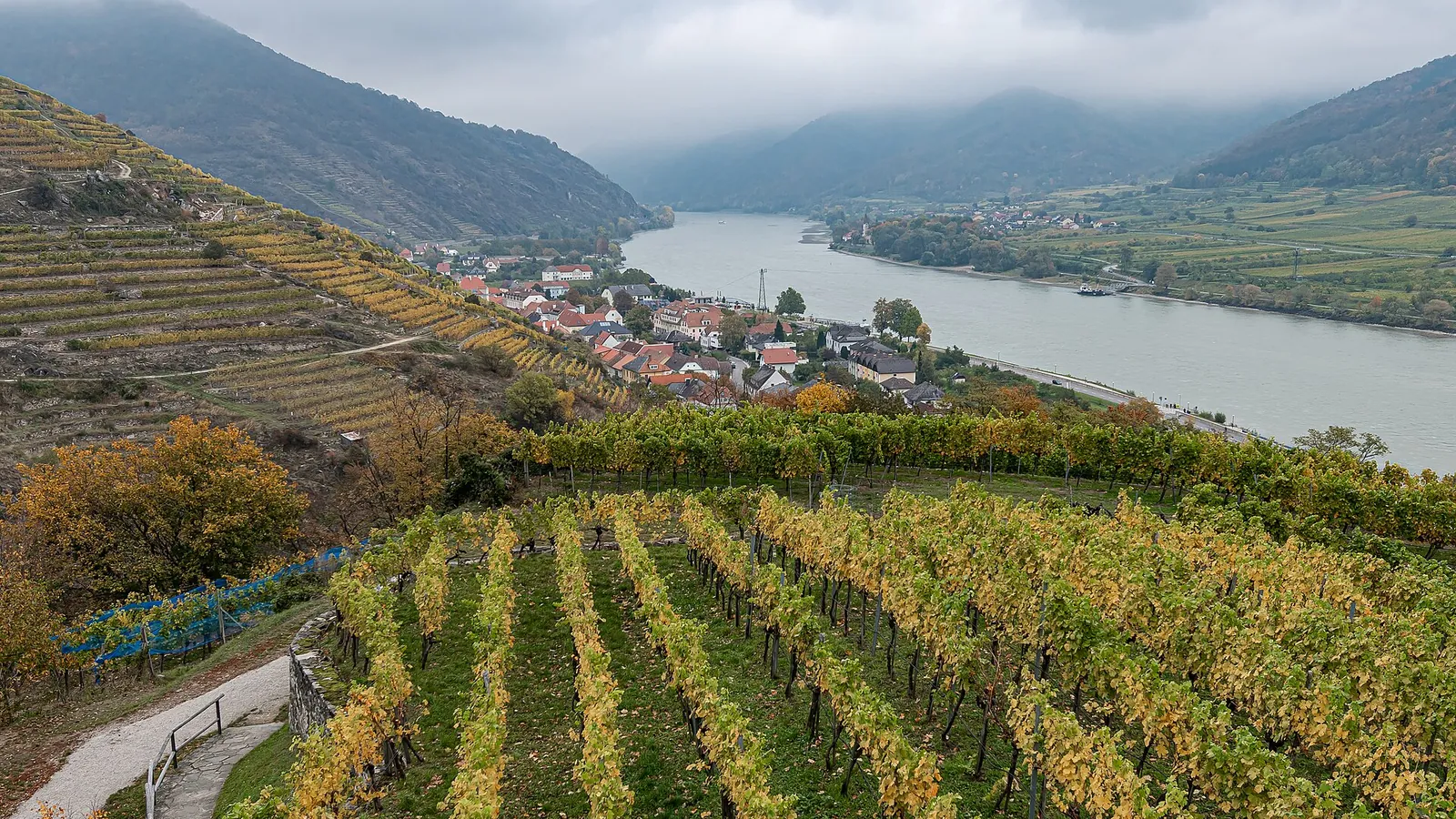
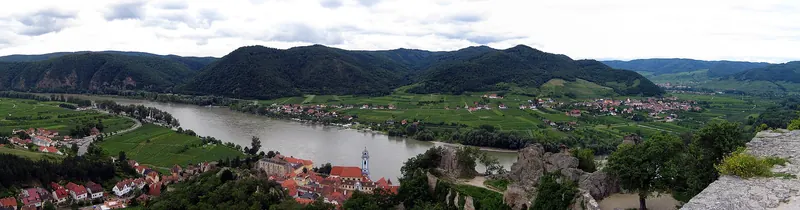
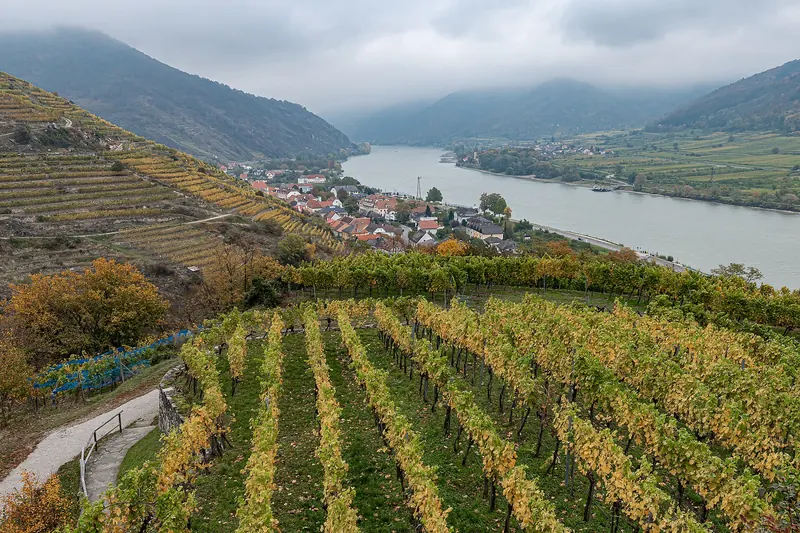
Vineyard terraces above the Danube in Austria's Wachau Valley

Lower Austria · Austria

Wachau Valley

A UNESCO-listed stretch of the Danube where terraced vineyards, ruined castles and apricot orchards line the river between Vienna and Linz.

  • Best time April–May and September–October, for blossoms and harvest
  • Stay 1–2 days
  • Good for Wine, scenery, a genuine Vienna day trip or overnight

Photo: Isiwal · CC BY-SA 4.0

Welcome to Wachau Valley

The Wachau Valley is a roughly 35-kilometre stretch of the Danube between Melk and Krems, its steep terraced vineyards, ruined hilltop castles and apricot orchards recognised as a UNESCO World Heritage cultural landscape since 2000.

The valley's wine has been made here since Roman times, and its Grüner Veltliner and Riesling, grown on dramatic terraced slopes above the river, rank among Austria's best while remaining relatively unexported and unknown outside the country.

That combination of serious wine, genuine medieval history — Dürnstein's ruined castle is where Richard the Lionheart was famously imprisoned — and easy proximity to Vienna makes the Wachau one of the most rewarding half-day or overnight additions to an Austria itinerary.

  • Scenic Region
  • UNESCO Site
  • Food & Wine
  • Off the Beaten Path

Why visit

Why visit Wachau Valley?

The Wachau Valley's case is that it delivers excellent wine and dramatic river scenery within easy reach of Vienna.

  • The vineyard scenery is dramatic

    Steep terraced slopes above the Danube, recognised as a UNESCO cultural landscape for real reasons.

  • The wine is excellent and underrated

    Grüner Veltliner and Riesling from steep river-terrace vineyards, rarely exported and worth tasting on-site.

  • The history is significant

    Dürnstein's ruined castle held Richard the Lionheart captive; Melk Abbey is one of Europe's grandest baroque monasteries.

  • It's easy to reach from Vienna

    Under an hour by train, making a full, worthwhile day trip without extending an itinerary much.

  • A Danube boat or cycle trip is relaxing

    A gentle, scenic way to see several wine villages without driving between them.

Main attractions

Top things to see in Wachau Valley

The Wachau's essential sights, spread along the Danube between Krems and Melk.

  1. The ruined castle above Dürnstein overlooking the Danube in the Wachau Valley

    Dürnstein and its castle ruins

    A picture-perfect blue-domed village beneath the ruins of a castle where Richard the Lionheart was famously held captive in 1192.

    Tip The climb up to the castle ruins is steep but short, rewarded with sweeping views over the river valley.

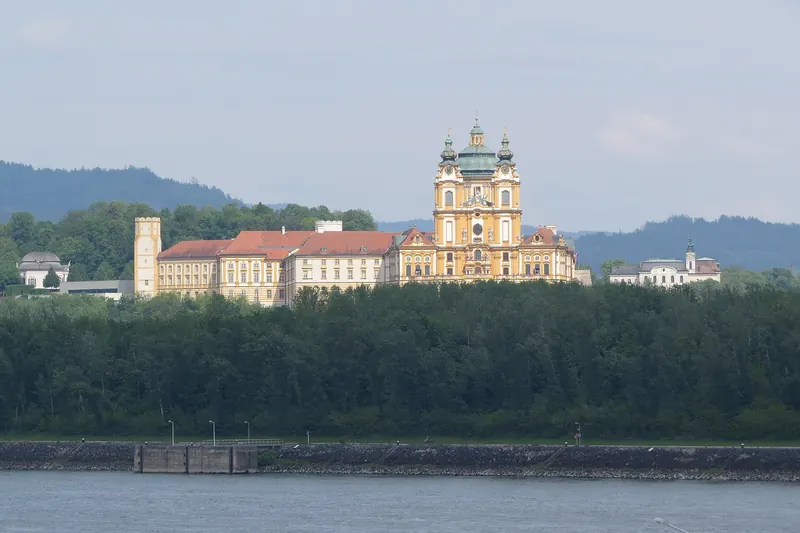
  2. Melk Abbey overlooking the Danube in Austria's Wachau Valley

    Melk Abbey

    A monumental baroque Benedictine monastery perched above the river, its library and ornate church among Austria's grandest religious buildings.

    Tip Book a guided tour for access to the spectacular library, not always included in the basic self-guided ticket.

  3. Krems an der Donau

    The valley's largest town, its well-preserved medieval old town worth a wander beyond just a wine-tasting stop.

    Tip Krems makes a convenient base for exploring the valley without needing to change accommodation.

  4. Spitz

    A charming wine village surrounded by terraced vineyards, with the hilltop 'Thousand-Bucket Hill' (Tausendeimerberg) vineyard visible above it.

    Tip A short, worthwhile hike climbs to the vineyard terraces above the village for sweeping valley views.

  5. Weissenkirchen

    A small, picturesque wine village with a fortified church, considerably quieter than Dürnstein's more famous streets.

    Tip A good stop for wine tasting with a more local, less touristy atmosphere than Dürnstein.

Things to do

Best things to do in Wachau Valley

Beyond the castles and abbey, the Wachau rewards wine tasting and travelling the valley itself at a relaxed pace.

  1. Taste Wachau wine at a local winery

    The valley's steep terraced vineyards produce excellent Grüner Veltliner and Riesling, best tasted directly at family-run wineries.

    Tip Many wineries offer tastings without advance booking, but calling ahead ensures an unhurried, personal visit.

  2. Take a Danube river cruise

    A relaxed way to see the valley's villages and vineyard terraces from the water, connecting Krems, Dürnstein and Melk.

    Tip A one-way cruise combined with a return train is a good way to see the valley without backtracking.

  3. Cycle the Danube cycle path

    One of Europe's best-maintained long-distance cycle routes runs directly through the Wachau, flat and well signed along the river.

    Tip Bicycle rental is widely available in Krems, with several operators offering one-way rentals to Melk.

  4. Visit during apricot season

    The Wachau is known for its apricots (Marillen), celebrated in local products from jam to schnapps, with blossoms in April and harvest in July.

    Tip Look for Wachauer Marille products specifically — the valley's apricots carry a protected geographic status for real quality reasons.

  5. Hike among the vineyard terraces

    Trails above villages like Spitz and Weissenkirchen offer rewarding views over the terraced slopes and the river below.

    Tip The Welterbesteig (World Heritage Trail) links several valley villages via well-marked hiking paths.

Local food

What to eat in Wachau Valley

The Wachau's food centres on its own wine and apricots, alongside standard Austrian dishes served in riverside settings.

  • Vineyard terraces above the Danube in Austria's Wachau Valley

    Grüner Veltliner

    Austria's signature white grape, excellent from the Wachau's steep river terraces, with a distinctive peppery, mineral character.

    Where to try it Family-run wineries throughout Dürnstein, Spitz and Weissenkirchen.

  • Wachauer Marille (apricots)

    The valley's protected-status apricots, central to local food culture, used in jam, schnapps, dumplings and pastries.

    Where to try it Local farm shops and markets throughout the valley, especially in July harvest season.

  • Marillenknödel

    Sweet apricot dumplings, a beloved Austrian dessert made specifically with the Wachau's own apricots when in season.

    Where to try it Traditional restaurants throughout the valley, particularly in summer.

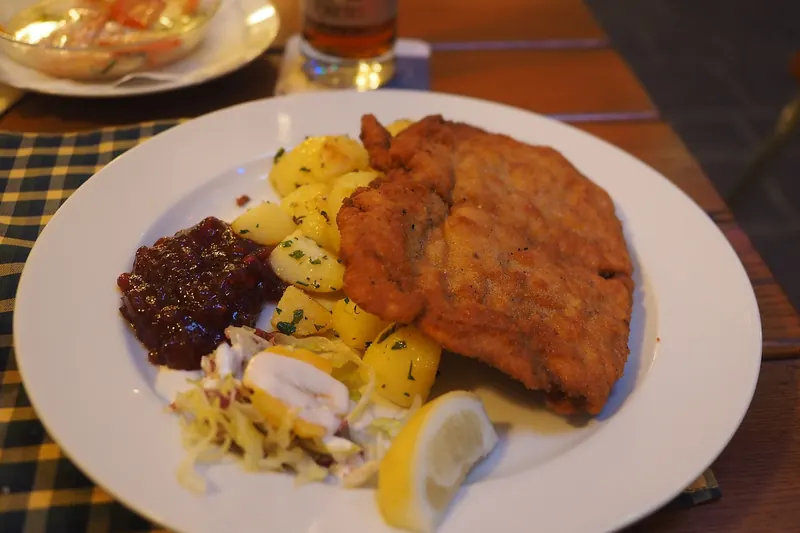
  • A Wiener schnitzel with parsley potatoes

    Wiener schnitzel

    Widely available across the valley as elsewhere in Austria, good from riverside restaurants.

    Where to try it Traditional gasthauses in Krems, Dürnstein and Melk.

  • Riesling

    The Wachau's other excellent white grape, producing wines with real minerality from the valley's steep, rocky terraces.

    Where to try it Wineries throughout the valley, particularly around Spitz's famous vineyard slopes.

Accommodation

Where to stay in Wachau Valley

The Wachau works well as a Vienna day trip, or an overnight stay in one of its riverside towns for a more relaxed pace.

  • Krems an der Donau

    The valley's largest town, convenient as a base for exploring the rest of the Wachau.

    Best for: A base with the most restaurants and services

  • Dürnstein

    Limited but atmospheric accommodation directly beneath the castle ruins.

    Best for: The most picturesque overnight stay

What a night costs

Guesthouse room
€75–130 per night
Boutique riverside hotel
€150–280 per night
Melk Abbey entry (guided)
€16
Winery tasting
€15–30

Transport

Getting to and around Wachau Valley

The Wachau Valley is an easy train, boat or car trip from Vienna, making it Austria's most accessible wine-region day trip.

Getting there

  • Train from Vienna

    Regional trains from Vienna reach Krems in under an hour, with connections along the valley to Dürnstein and Melk.

    A combined train-and-boat ticket lets you take the scenic river route back.

  • Danube river cruise

    A scenic way to reach the valley, with boats departing from Vienna's Danube ports at certain times of year.

    River cruise schedules are seasonal — check current timetables before planning a boat-only visit.

  • Rental car

    The most flexible way to visit several villages and wineries in one day at your own pace.

    Parking is available in each village, though central Dürnstein's spaces are limited in peak season.

Getting around

The valley's villages are connected by train, boat and a well-maintained cycle path along the Danube.

  • Regional train

    Connects Krems, Spitz, Weissenkirchen, Dürnstein and Melk along the valley reliably.

    Trains run regularly through the day, making village-hopping straightforward.

  • Danube cycle path

    A flat, well-signed route connecting the valley's villages, one of Europe's best-maintained long-distance cycle paths.

    Bicycle rental with one-way options is widely available in Krems.

  • River boat

    Seasonal boats connect several valley villages along the Danube itself.

    A relaxed way to see the vineyard terraces from the water, weather and schedule permitting.

When to go

Best time to visit Wachau Valley

The Wachau has two distinct highlight seasons — spring apricot blossoms and autumn's wine and apricot harvest.

  • Spring (April–May)

    Best time

    Apricot blossoms across the valley and vineyards beginning to green, a beautiful, less crowded window.

  • Summer (June–August)

    Good

    Warm weather good for cycling and boat trips, with apricot harvest in July, though busier with visitors.

  • Autumn (September–October)

    Best time

    The wine harvest in full swing, with excellent light for photographing the terraced vineyards.

  • Winter (November–March)

    Shoulder

    Quiet and cold, with many wineries and restaurants operating reduced hours outside the main season.

Worth planning around: Winter if wine tasting or river boat trips are your priority — many smaller producers and boat services reduce or pause operations outside the main season.

Itinerary

One to two days in the Wachau Valley

Dürnstein and Melk's essential sights first, then a slower village-and-wine pace if staying overnight.

  1. Day1

    Dürnstein and Melk

    The valley's essential sights.

    • Morning Train to Dürnstein and the castle ruins climb.
    • Afternoon Melk Abbey.
    • Evening Return to Vienna, or overnight in Krems.
  2. Day2

    Wine villages and the vineyards

    An optional second day for a slower valley pace.

    • Morning Cycle or drive between Spitz and Weissenkirchen.
    • Afternoon A winery tasting.
    • Evening Return to Vienna or onward.

Travel tips

Wachau Valley travel tips

Practical notes on booking, timing and transport that make a real difference to a Wachau Valley trip.

  • Book Melk Abbey's guided tour ahead in peak season for access to the full library experience.
  • Combine train and boat for a scenic round trip rather than backtracking the same way.
  • Visit in April for apricot blossoms or September-October for the wine and apricot harvest.
  • Call ahead to smaller wineries for tastings if visiting outside peak summer season.
  • Rent a bicycle in Krems for a flexible, scenic way to see several villages in one day.
  • Book Dürnstein accommodation well ahead if you want to stay in the valley's most picturesque village.

FAQ

Wachau Valley: frequently asked questions

Is the Wachau Valley worth a day trip from Vienna?

Yes — it's under an hour away by train and offers UNESCO-listed vineyard scenery, genuine medieval history and excellent wine tasting considerably different from Vienna's imperial sights.

Should I stay overnight in the Wachau?

Worth considering if wine tasting and a relaxed pace matter to you — a day trip covers Dürnstein and Melk Abbey well, but an overnight stay allows unhurried winery visits and cycling between villages.

How do I get around the Wachau Valley?

By regional train connecting the main villages, by rental car for maximum flexibility, or by bicycle along the well-maintained Danube cycle path — all three are practical options.

What is Melk Abbey?

A monumental baroque Benedictine monastery overlooking the Danube at the valley's western end, one of Austria's grandest religious buildings, with an ornate library well worth the guided tour.

What is the best time of year to visit?

April and May for apricot blossoms, or September and October for the wine and apricot harvest — both offer beautiful scenery with more manageable crowds than the summer peak.

Read next

Related travel articles

Transport

Getting Around Europe by Train

European rail is excellent and confusing — six national operators, three completely different pricing models, and a rail pass that is either a bargain or a waste depending on where you are going. Here is how to work out which.

Where to go

Beyond the Big Names: Places Worth the Detour

The most visited place in a country is rarely its best, and it is almost never its best value. This is a method for finding the destinations that do not make the postcards — and a set of examples from five of the 50 countries on this site.

Advertisement