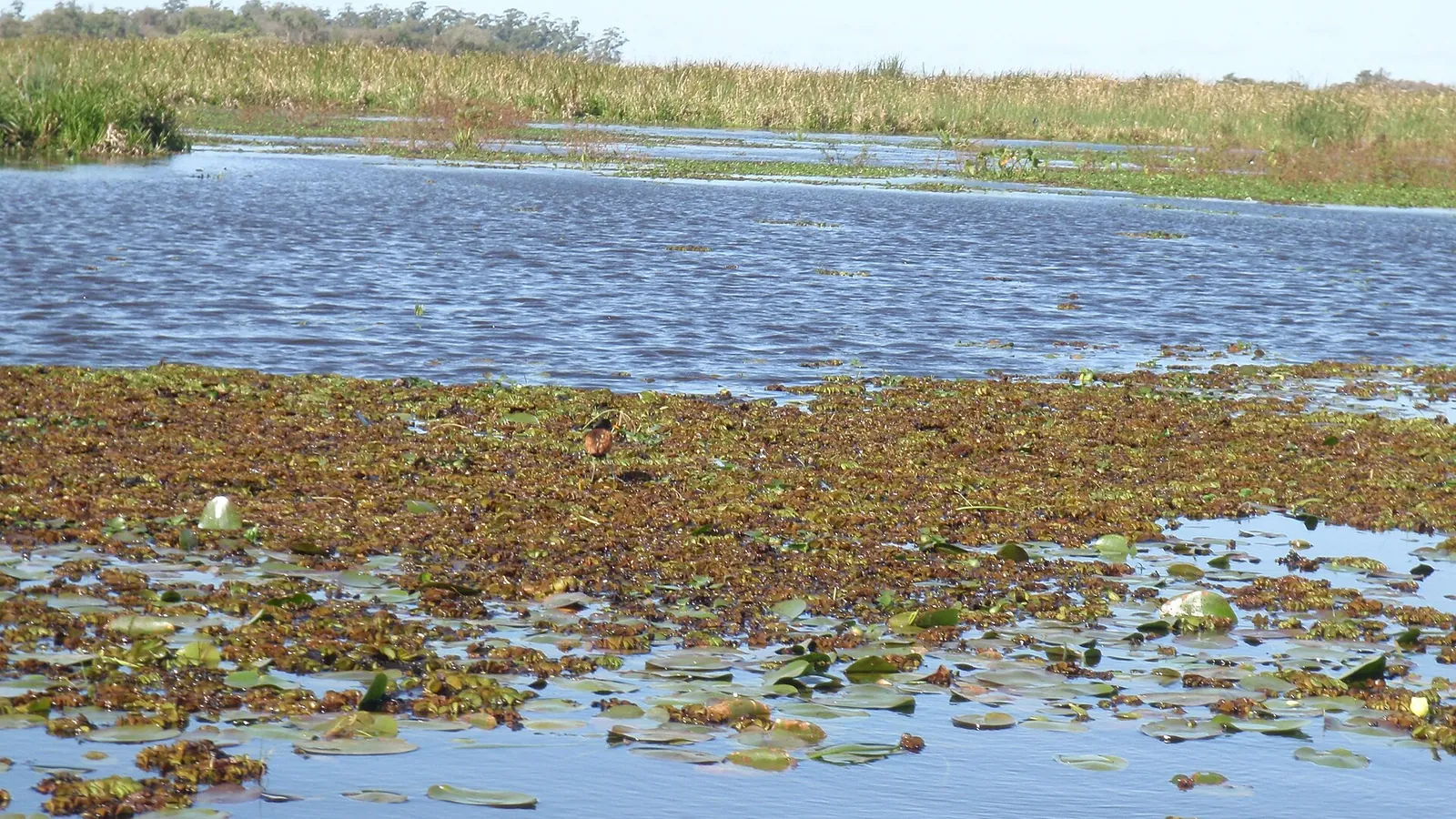
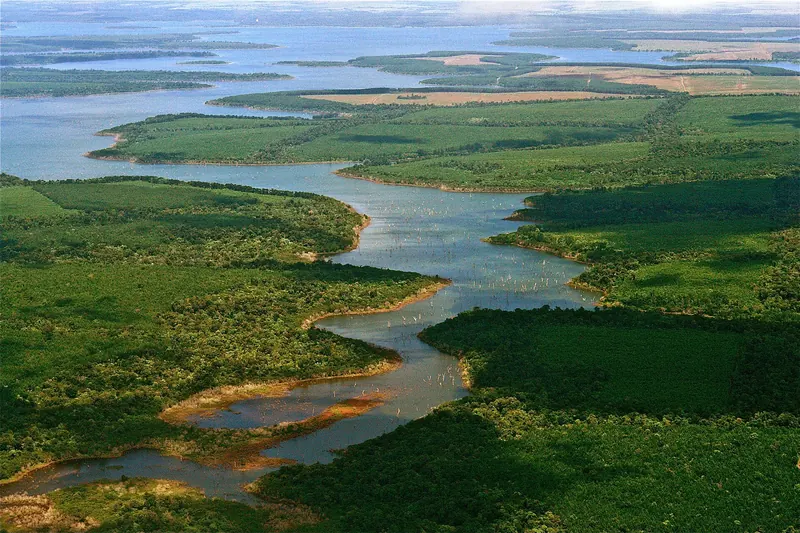
A calm lagoon covered with aquatic plants in the Esteros del Iberá wetlands

Corrientes, north-east Argentina · Argentina

Esteros del Iberá

A vast, quiet wetland of floating islands and lagoons, alive with caimans, capybaras and birds, where jaguars are being brought back to the wild.

  • Best time March–November
  • Stay 3 days
  • Good for Wildlife, birdwatching, photography, quiet nature

Photo: Joshua Stone · CC BY-SA 3.0

Welcome to Esteros del Iberá

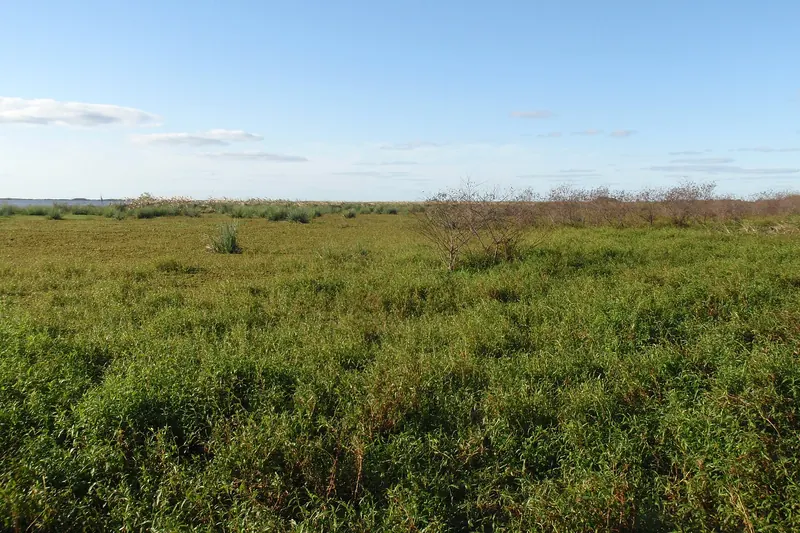
The Esteros del Iberá is one of the largest freshwater wetlands in South America, an area of about 13,000 square kilometres of lagoons, marshes and floating islands, fed by rainfall rather than rivers, in the province of Corrientes. Its shallow, still waters are covered with aquatic plants, and much of the surface is made up of camalotes, floating mats of vegetation. It is home to more than 350 species of bird, and to caimans, capybaras, marsh deer, howler monkeys and many others.

For decades, poaching and cattle ranching reduced the wildlife, but a large conservation project, begun by the American philanthropist Douglas Tompkins and continued by his foundation and the Argentine government, has bought and donated land, creating Iberá National Park in 2018. The project has reintroduced species that had disappeared from the area, including giant anteaters, pampas deer, giant otters and, in recent years, jaguars, and it is one of the most ambitious rewilding projects in South America.

Iberá is remote and quiet. The main base is the small village of Colonia Carlos Pellegrini, on the edge of a large lagoon, where lodges and guesthouses offer boat trips, walks, horseback rides and night safaris. It is not an easy place to reach, and it is not for those who want a big-name attraction, but it is a peaceful and rewarding place for wildlife lovers.

  • Nature & Wildlife
  • National Park
  • Off the Beaten Path

Why visit

Why visit Esteros del Iberá?

Iberá offers close encounters with wetland wildlife in a quiet, uncrowded setting, and a chance to support conservation.

  • Wildlife everywhere

    Caimans, capybaras, marsh deer, howler monkeys and hundreds of bird species.

  • Quiet boat safaris

    Small motorless or low-noise boats drift through lagoons and among floating islands.

  • Rewilding in action

    A project bringing back anteaters, otters, deer and even jaguars.

  • Peace and stars

    Dark skies and a slow pace.

  • Gaucho culture

    Horse riding and estancia hospitality.

Main attractions

Top things to see in Esteros del Iberá

Most experiences are guided, from Colonia Carlos Pellegrini and nearby lodges.

  1. A marsh of floating vegetation and water plants in the Iberá wetlands

    Laguna Iberá boat safari

    A boat trip on the large lagoon beside Carlos Pellegrini, with a guide who spots caimans, capybaras, snail kites and marsh deer among the floating islands.

    Tip Go at dawn or late afternoon.

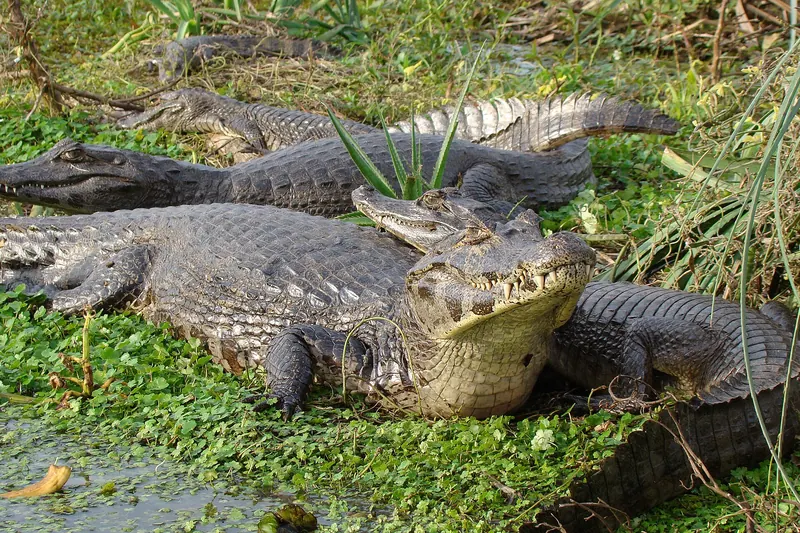
  2. A yacaré caiman resting on the bank in the Iberá wetlands

    Caimans and capybaras

    Yacaré caimans bask on banks and capybaras graze in groups, often at close range, in a landscape where wildlife has little fear of people.

    Tip Keep a safe distance.

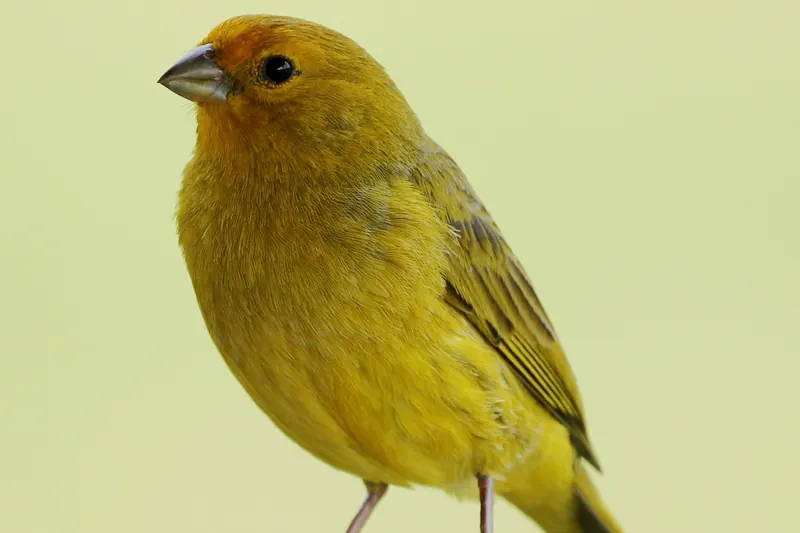
  3. A saffron finch perched among reeds in the Iberá wetlands

    Birdwatching

    More than 350 species, including jabiru storks, herons, spoonbills, ducks, kingfishers and the rare strange-tailed tyrant.

    Tip Bring binoculars.

  4. The Laguna Iberá lookout

    A viewpoint over the lagoon, near the village, for sunset.

    Tip A short walk.

  5. Rewilding centres

    Visitors can see where jaguars, giant otters and other species are prepared for release, though not the animals themselves in some cases.

    Tip Ask a guide about the project.

  6. An aerial view of the Iberá wetlands with lagoons and floating vegetation

    Flying over the marshes

    The vast scale of the wetland is best seen from above, on a small-plane flight.

    Tip Book at your lodge.

Things to do

Best things to do in Esteros del Iberá

Activities are quiet, guided and wildlife-focused.

  1. Take a boat safari

    Drift among floating islands, spotting wildlife.

    Tip Go at sunrise.

  2. Go on a night safari

    See caimans, owls and nocturnal mammals by torchlight.

    Tip Bring a warm layer.

  3. Ride a horse

    Gaucho-led rides through the marsh edge.

    Tip Book in advance.

  4. Walk with a guide

    Trails through palm savannah and wetland edges.

    Tip Bring repellent.

  5. Kayak the lagoon

    Paddle quietly among wildlife.

    Tip Use a guide.

  6. Watch the stars

    Clear, dark skies.

    Tip Bring a jacket.

Local food

What to eat in Esteros del Iberá

Food in Iberá is simple and regional, with river fish, beef and local sweets.

  • Surubí and pacú

    River fish, grilled or in stews.

    Where to try it Lodges and restaurants.

  • Chipa

    Cheesy cassava bread rolls.

    Where to try it Bakeries.

  • Asado

    Grilled beef, the traditional meal.

    Where to try it Lodges.

  • Mbaipy and sopa paraguaya

    Corn-based dishes of the Guaraní tradition.

    Where to try it Local restaurants.

  • Tereré

    Cold mate, a common drink.

    Where to try it Everywhere.

Accommodation

Where to stay in Esteros del Iberá

Stay in Colonia Carlos Pellegrini, in a lodge or guesthouse.

  • Colonia Carlos Pellegrini

    Lodges and guesthouses beside the lagoon.

    Best for: Boat trips and walks

  • Estancias

    Ranches with horse riding.

    Best for: Gaucho hospitality

  • Other entry points

    Small lodges at other sides of the wetland.

    Best for: Quieter stays

What a night costs

Budget guesthouse
US$40–90 per night
Mid-range lodge
US$120–250 per night
Luxury lodge
US$350–700 per night, full board
Guided boat safari
US$30–70 per person

Transport

Getting to and around Esteros del Iberá

Iberá is remote, and reached by road, with some unpaved sections.

Getting there

  • Fly to Corrientes or Posadas, then drive

    About 4 to 5 hours from either airport, with the last stretch unpaved.

    Hire a car or arrange a transfer.

  • Transfer or tour

    Lodges arrange transfers from airports and Iguazú.

    Book in advance.

  • Bus to Mercedes, then transfer

    Buses reach Mercedes, about 120 km from Carlos Pellegrini.

    Book a shuttle.

Getting around

Everything is guided and close to Carlos Pellegrini.

  • Boat

    The main way to see wildlife.

    Book at your lodge.

  • On foot or by bicycle

    Around the village and trails.

    Bring repellent.

  • 4WD vehicle

    For longer excursions.

    Arranged by lodges.

When to go

Best time to visit Esteros del Iberá

Iberá has a humid subtropical climate, with hot, rainy summers and mild winters. Winter is cooler and drier, with fewer insects.

  • Summer (December–February)

    Think twice

    Hot, humid and rainy, with mosquitoes.

  • Autumn (March–May)

    Best time

    Pleasant temperatures, good wildlife.

  • Winter (June–August)

    Best time

    Mild days, cool nights and fewer insects.

  • Spring (September–November)

    Best time

    Warm, with birds in breeding plumage.

Worth planning around: January and February for heat and insects.

Itinerary

Three days in Iberá

Boats, walks and a night safari.

  1. Day1

    Arrive

    Settle in.

    • Morning Transfer to Carlos Pellegrini.
    • Afternoon A walk and a lagoon lookout.
    • Evening Sunset boat trip.
  2. Day2

    Boat and horses

    Wildlife and the countryside.

    • Morning A dawn boat safari.
    • Afternoon A horse ride.
    • Evening A night safari.
  3. Day3

    Walk and depart

    A last look.

    • Morning A guided walk.
    • Afternoon Transfer to Corrientes or Posadas.
    • Evening Depart.

Travel tips

Esteros del Iberá travel tips

A few tips make the visit more comfortable.

  • Visit between March and November, avoiding the summer heat and insects.
  • Bring insect repellent, sun protection, binoculars and a hat.
  • Book lodges and transfers in advance.
  • Carry cash, since there are few ATMs.
  • Do not feed animals, and keep a safe distance.
  • Take a night safari for different wildlife.
  • Allow time to slow down.

FAQ

Esteros del Iberá: frequently asked questions

How many days do you need in Iberá?

Three days is ideal.

Can I see jaguars?

The rewilding project has released jaguars, but sightings are rare. Caimans, capybaras and birds are much easier.

What is the best time to visit?

March to November.

How do I get there?

By road from Corrientes or Posadas, about 4 to 5 hours, or by lodge transfer.

Is Iberá like the Pantanal?

Similar, though quieter and less visited. The Pantanal has more large mammals.

Is it safe?

Yes, with guides and normal precautions.

Read next

Related travel articles

Where to go

Beyond the Big Names: Places Worth the Detour

The most visited place in a country is rarely its best, and it is almost never its best value. This is a method for finding the destinations that do not make the postcards — and a set of examples from five of the 50 countries on this site.

Practical

Packing by Season and Trip Type

Most packing advice is a list of things. This is the opposite: the small number of decisions that determine whether your luggage helps or hinders, organised by the kind of trip you are actually taking.

Advertisement