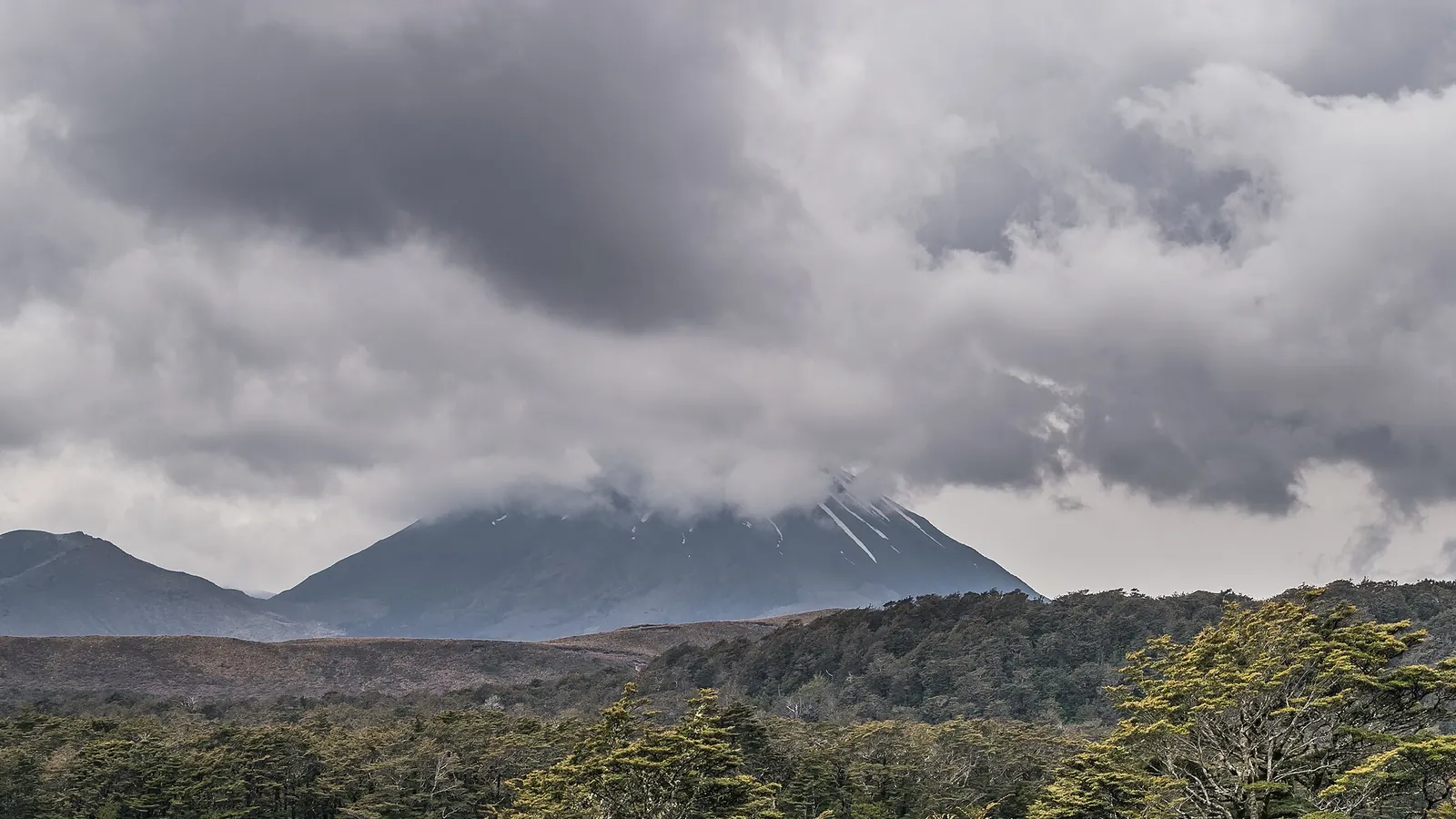
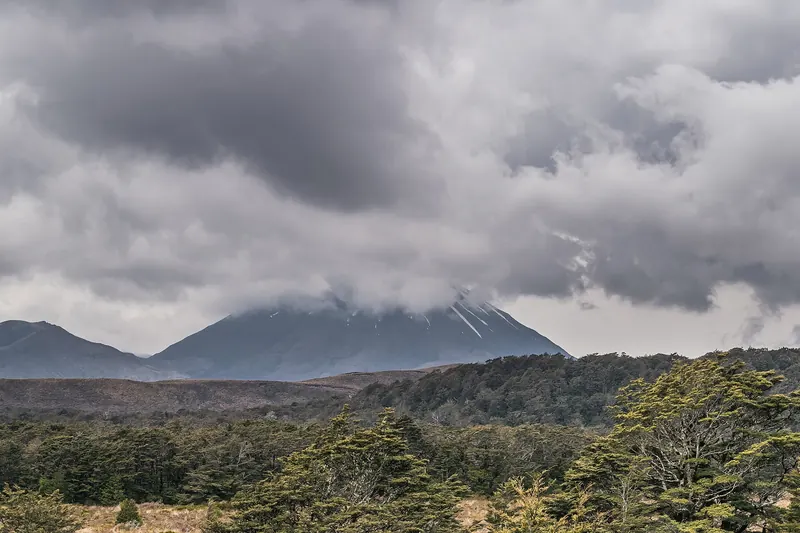
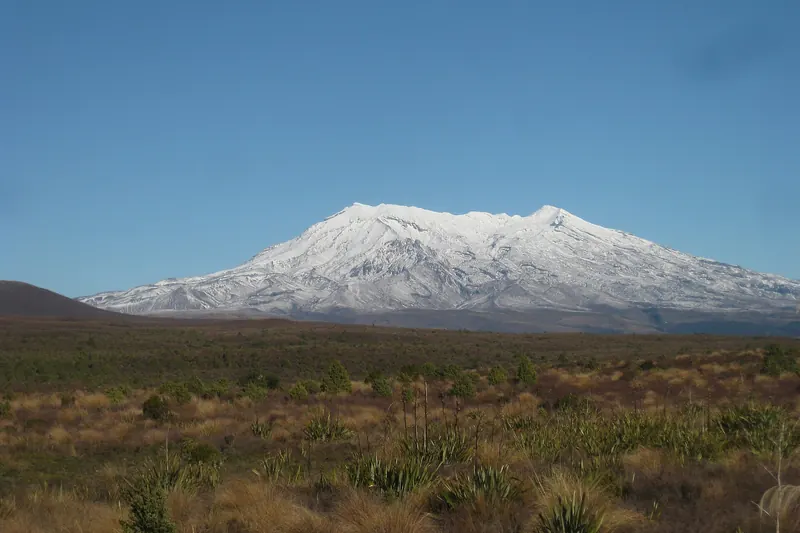


Mount Ngauruhoe's near-perfect volcanic cone in Tongariro National Park

North Island (Central Plateau) · New Zealand

Tongariro National Park

An otherworldly volcanic landscape crossed by one of the world's great single-day hikes, its active cones sacred to Maori long before they became a hiking icon.

  • Best time Summer for the Alpine Crossing, winter for skiing
  • Stay 2 days
  • Good for Serious day hiking, volcanic landscapes, skiing in winter

Photo: Krzysztof Golik · CC BY-SA 4.0

Welcome to Tongariro National Park

Tongariro is New Zealand's oldest national park and a dual UNESCO World Heritage site, recognised for both its active volcanic landscape and its deep, unbroken significance to Maori — the mountains were gifted to the nation by the Ngati Tuwharetoa chief Te Heuheu Tukino IV in 1887, specifically to protect their sacred status.

Its centrepiece is the Tongariro Alpine Crossing, regarded as one of the best single-day hikes in the world, crossing active volcanic terrain past steaming craters, neon-coloured lakes and the near-perfect cone of Mount Ngauruhoe, familiar to many as Mount Doom.

The wider park is a year-round destination — a serious hiking and volcano-watching draw in summer, and a genuine skiing and snowboarding destination on Mount Ruapehu's slopes come winter.

  • Nature & Wildlife
  • Hiking
  • Volcanic
  • UNESCO Site

Why visit

Why visit Tongariro National Park?

Tongariro's case rests on a rare combination of world-class single-day hiking and deep, living Maori significance.

  • The Alpine Crossing is one of the world's great day hikes

    19.4km across active volcanic terrain, widely rated among the very best single-day tramps anywhere.

  • The volcanoes are still active, not dormant curiosities

    Ngauruhoe and Ruapehu have both erupted within living memory, giving the landscape real, ongoing drama.

  • The Emerald Lakes are one of New Zealand's most photographed natural sights

    Mineral-stained volcanic lakes in vivid, almost unreal shades of green.

  • Its Maori significance is central, not incidental

    The mountains were gifted specifically to protect their sacred status, one of the earliest such acts anywhere in the world.

  • It's a real ski destination in winter

    Whakapapa and Turoa on Mount Ruapehu are the North Island's principal ski fields.

Main attractions

Top things to see in Tongariro National Park

Tongariro's essential sights span its active volcanic cones, its famous crossing, and the walking trails around its edges.

  1. Mount Ngauruhoe's near-perfect volcanic cone

    Mount Ngauruhoe

    A near-perfect volcanic cone, active and instantly recognisable, familiar to many visitors as Mount Doom from the Lord of the Rings films.

    Tip Climbing the side trip to the summit is steep loose scoria — allow significant extra time and energy.

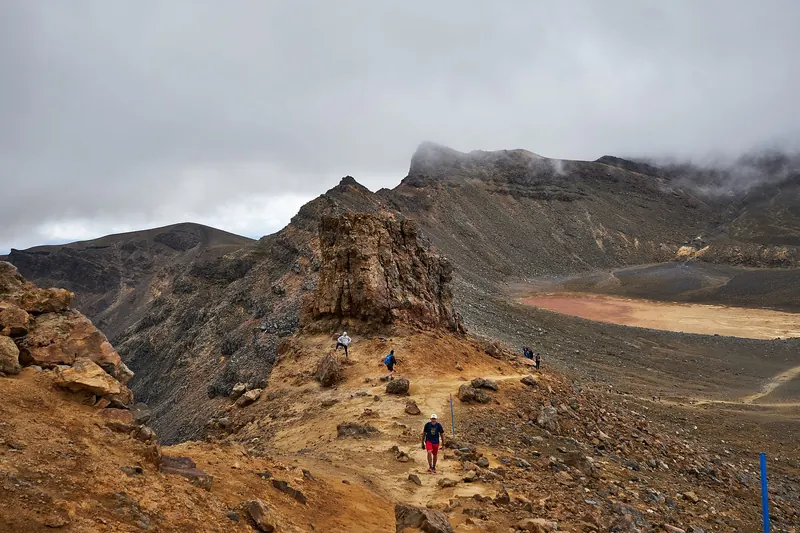
  2. Volcanic terrain along the Tongariro Alpine Crossing

    The Tongariro Alpine Crossing

    A world-famous 19.4km one-way trail across active volcanic terrain, widely considered one of the best day hikes anywhere.

    Tip Start early — the car park shuttle system means you can't simply turn back partway.

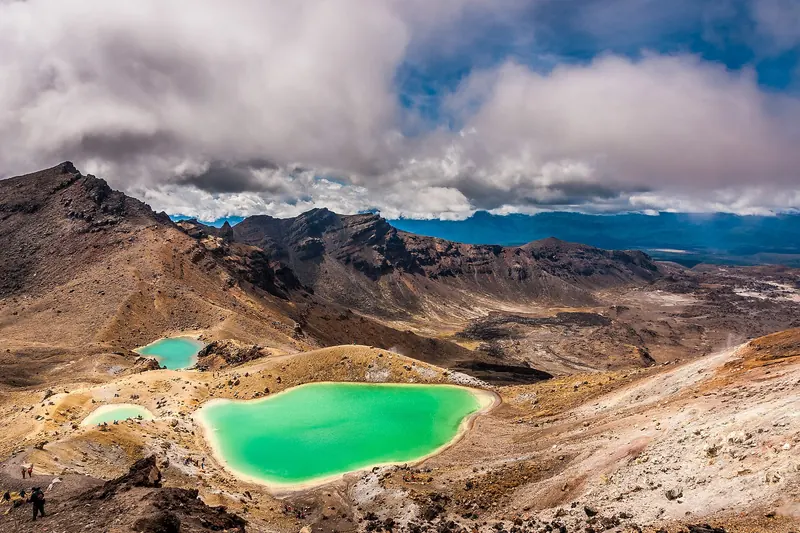
  3. The vividly coloured Emerald Lakes on the Tongariro Alpine Crossing

    Emerald Lakes

    Three vivid, mineral-stained volcanic lakes near the Crossing's highest point, among the most photographed sights in New Zealand.

    Tip The descent to the lakes is loose and steep — take it slowly in wet weather.

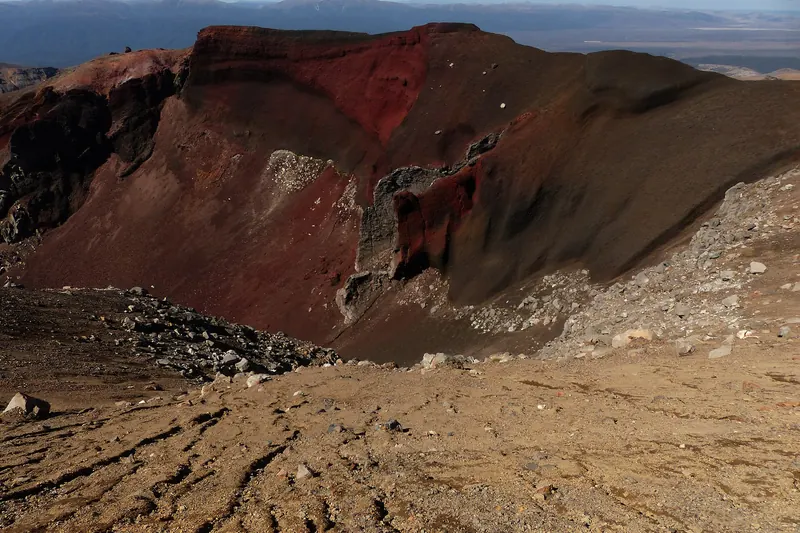
  4. Red Crater, the highest point on the Tongariro Alpine Crossing

    Red Crater

    The Crossing's genuine high point at 1,886 metres, an active vent streaked red with oxidised iron, with sweeping views on a clear day.

    Tip It's the windiest, most exposed point on the whole track — bring a proper windproof layer.

  5. Mount Ruapehu, the North Island's highest peak

    Mount Ruapehu

    The North Island's genuine highest peak and an active volcano, home to the Whakapapa and Turoa ski fields on its slopes.

    Tip The crater lake summit walk is a serious, sometimes closed route — check conditions before attempting it.

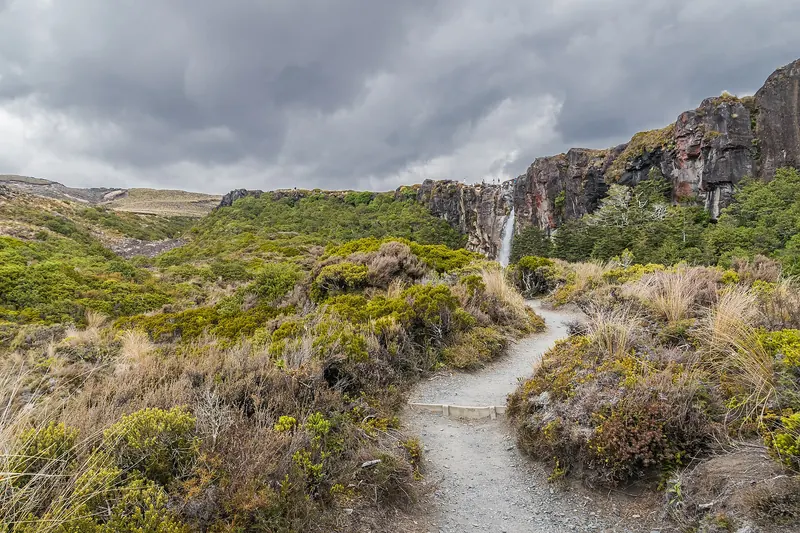
  6. Taranaki Falls, a 20-metre waterfall near Whakapapa Village

    Taranaki Falls

    An accessible 20-metre waterfall reached on an easy circuit walk from Whakapapa Village, a good low-key alternative to the full Crossing.

    Tip The full loop takes about 2 hours and needs no special fitness.

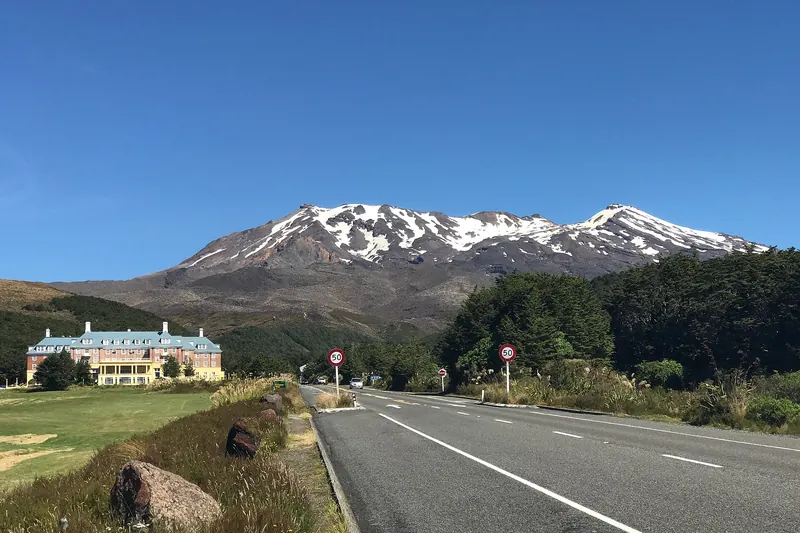
  7. Whakapapa Village, the park's main visitor hub

    Whakapapa Village

    The park's genuine visitor hub, home to the historic Chateau Tongariro hotel and the main information centre for track conditions.

    Tip Check track and weather conditions here before setting out on the Crossing.

Things to do

Best things to do in Tongariro National Park

Tongariro rewards a full day on the Crossing, with gentler walks and skiing as year-round alternatives.

  1. Hiking the Tongariro Alpine Crossing

    Hike the full Tongariro Alpine Crossing

    The essential Tongariro experience, a demanding but non-technical 6-8 hour crossing through active volcanic terrain.

    Tip Book a shuttle both ways well ahead — it's a one-way track with no vehicle access at the far end.

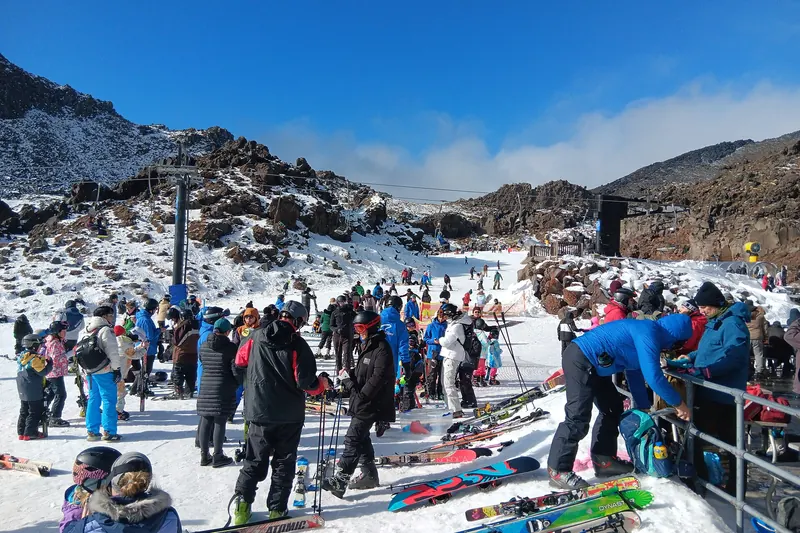
  2. Skiers on the Whakapapa ski field on Mount Ruapehu

    Ski or snowboard Whakapapa or Turoa

    The North Island's principal ski fields, both on Ruapehu's slopes, drawing skiers from across the country each winter.

    Tip Conditions are more variable than the South Island's fields — check snow reports before committing.

  3. Walking the track to Taranaki Falls

    Walk to Taranaki Falls

    A gentle half-day option for visitors not attempting the full Crossing, still delivering real volcanic scenery.

    Tip Doable in trainers, unlike the Crossing itself, which needs proper hiking boots.

  4. The Emerald Lakes, the visual highlight of the Tongariro Alpine Crossing

    See the Emerald Lakes and Red Crater

    The genuine visual highlight of the whole Crossing, reached after the steepest climbing is already behind you.

    Tip This stretch is where most people stop for lunch and photos before the long descent.

  5. Mount Ngauruhoe, used as Mount Doom in the Lord of the Rings films

    Spot Mount Doom

    An unmissable sight throughout the Crossing, Ngauruhoe's cone dominates the skyline for much of the walk.

    Tip Fans of the films will recognise the silhouette from almost every angle on the track.

  6. Learn the mountain's Maori significance

    The peaks are sacred to Ngati Tuwharetoa, gifted to New Zealand specifically to protect that status rather than see them sold off.

    Tip Respect matters here — summiting Ngauruhoe and Tongariro is discouraged out of cultural respect, even where technically allowed.

Local food

What to eat in Tongariro National Park

Tongariro's food centres on the small gateway villages, hearty and practical rather than a dedicated dining scene.

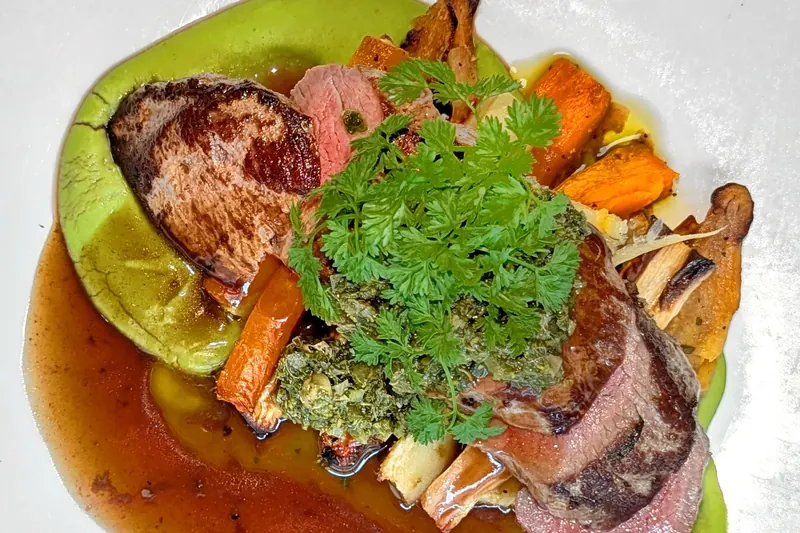
  • A plated lamb dish, a New Zealand high country specialty

    High country lamb

    The sheep-farming country surrounding the park makes lamb a reliable, well-sourced menu staple in the gateway villages.

    Where to try it Restaurants in National Park Village and Turangi.

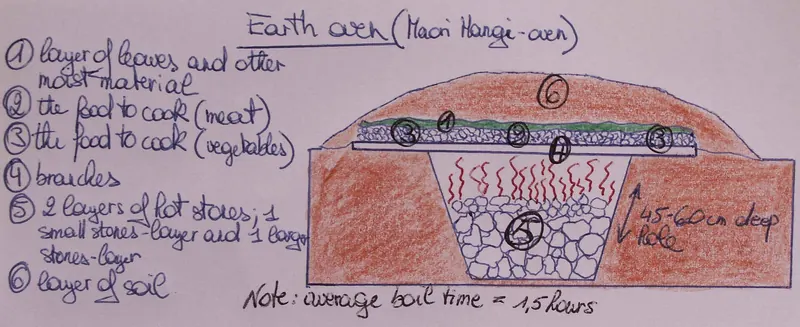
  • A traditional Maori hangi, food cooking in an earth oven

    Hangi

    A fitting dish given the mountain's Maori significance, occasionally offered at local marae-connected experiences.

    Where to try it Occasional cultural experiences around Turangi.

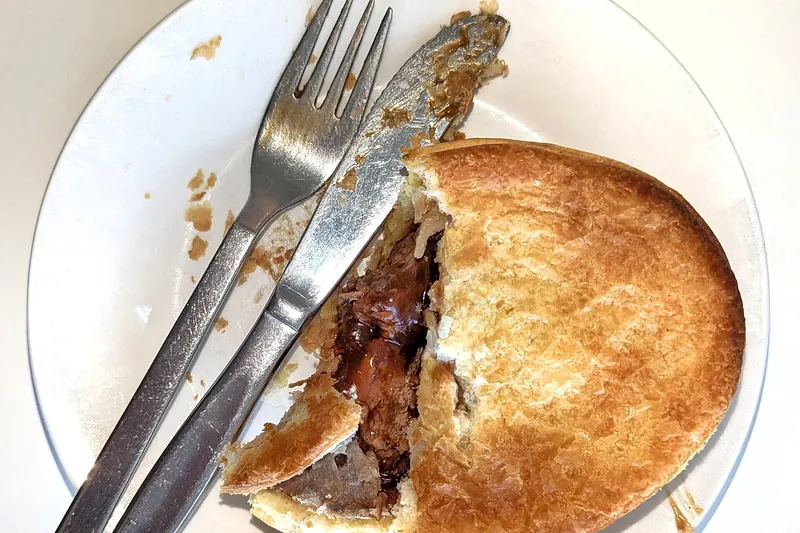
  • A classic New Zealand meat pie

    Meat pie

    An essential post-hike refuel, sold hot at bakeries and cafés in every gateway village.

    Where to try it Bakeries in National Park Village and Whakapapa.

  • Lake Taupo trout

    Nearby Lake Taupo is one of the world's great trout fisheries, and a fresh catch, cooked to order, is a real local experience.

    Where to try it Guided fishing trips and lodges around Lake Taupo and Turangi.

  • Jars of New Zealand manuka honey

    Manuka honey

    The Central Plateau's extensive native bush supports strong local manuka honey production.

    Where to try it Gift shops in Turangi and Whakapapa Village.

  • A flat white coffee, a New Zealand café staple

    Flat white

    Essential before an early Crossing start, with cafés in the gateway villages opening early for hikers.

    Where to try it Cafés in National Park Village and Whakapapa.

Accommodation

Where to stay in Tongariro National Park

National Park Village and Whakapapa are the two main bases, both handy for an early Crossing shuttle.

  • National Park Village

    A small, purpose-built hiking and skiing village with easy shuttle access to the Crossing.

    Best for: The widest choice of budget and mid-range accommodation

  • Whakapapa Village

    The most atmospheric option, though pricier than the surrounding villages.

    Best for: Staying right in the park, including the historic Chateau

  • Turangi

    A short drive from the park, with a wider range of budget accommodation.

    Best for: A cheaper base, also handy for Lake Taupo

What a night costs

Budget lodge
NZ$100–150 per night
Mid-range hotel
NZ$180–280 per night
Crossing shuttle (return)
About NZ$45–55
Day ski lift pass
About NZ$130–150

Transport

Getting to and around Tongariro National Park

Tongariro sits centrally on the North Island, a natural stop between Auckland, Wellington and Rotorua.

Getting there

  • Rental car

    About 3h30 from Auckland or 4h from Wellington, the most flexible way to arrive.

    A natural link on a North Island road trip via Rotorua or Lake Taupo.

  • Bus

    InterCity coaches connect National Park Village to Auckland, Wellington and Rotorua.

    A workable, if slower, budget option for visitors without a car.

  • Train

    The Northern Explorer scenic train stops at National Park Village on its Auckland–Wellington route.

    A scenic, relaxed way to arrive, though services run only a few days a week.

Getting around

The Crossing requires a shuttle, since it's a one-way track with no return road access.

  • Crossing shuttle

    Essential for the Alpine Crossing, dropping hikers at Mangatepopo and collecting them at Ketetahi.

    Numerous operators run from National Park Village, Whakapapa and Turangi.

  • Rental car

    Useful for reaching Taranaki Falls, Whakapapa Village and the wider Central Plateau independently.

    Not usable for the Crossing itself, given its one-way nature.

  • Walking

    Whakapapa Village's shorter walks, including Taranaki Falls, are reachable on foot from accommodation.

    The Crossing itself is the park's only major point-to-point trail.

When to go

Best time to visit Tongariro National Park

Tongariro splits into two very different seasons, and timing your visit depends entirely on which you're after.

  • Summer (December–February)

    Best time

    The safest, most reliable season for the full Alpine Crossing without snow or ice.

  • Autumn (March–May)

    Good

    Still good Crossing conditions, with thinner crowds than summer.

  • Winter (June–August)

    Good

    The Crossing requires alpine experience and equipment in snow; this is ski season on Ruapehu instead.

  • Spring (September–November)

    Good

    Variable — late snow can still affect the Crossing early in the season.

Worth planning around: Attempting the full Alpine Crossing in winter without genuine alpine experience — snow and ice make it a serious mountaineering undertaking, not a hiking trail, in those months.

Itinerary

Two days at Tongariro

Built around the full Alpine Crossing, with a gentler day either side.

  1. Day1

    Arrival and Taranaki Falls

    Settle in and take an easy warm-up walk.

    • Morning Travel to National Park Village or Whakapapa.
    • Afternoon The Taranaki Falls loop walk.
    • Evening An early dinner ahead of a pre-dawn Crossing start.
  2. Day2

    The Tongariro Alpine Crossing

    The full day hike.

    • Morning Shuttle to Mangatepopo and begin the Crossing.
    • Afternoon Continue past Red Crater and the Emerald Lakes to Ketetahi.
    • Evening Shuttle back and a well-earned rest.

Travel tips

Tongariro National Park travel tips

Practical notes on weather, booking and safety that make a real difference to a Tongariro trip.

  • Check the DOC alert level and weather forecast before committing to the Crossing — conditions change fast.
  • Book your shuttle both ways in advance, especially in summer.
  • Wear proper hiking boots and layers — the exposed ridge sections are much colder and windier than the car park.
  • Start early — the walk takes 6-8 hours and afternoon weather is less predictable.
  • Carry more water than you think you need — there's no water source once you leave Mangatepopo.
  • Respect the mountains' sacred status by staying on the marked track rather than summiting Ngauruhoe or Tongariro.

FAQ

Tongariro National Park: frequently asked questions

How hard is the Tongariro Alpine Crossing?

Challenging but non-technical — 19.4km over 6-8 hours with significant elevation gain, achievable by most fit, well-prepared hikers in good weather.

Do you need a guide for the Crossing?

Not required in good conditions, though guided options exist and are worth considering for less experienced hikers or uncertain weather.

Is Mount Ngauruhoe really Mount Doom?

Yes — it was used as Mount Doom's exterior shots in Peter Jackson's Lord of the Rings trilogy.

Can you ski at Tongariro?

Yes — Whakapapa and Turoa on Mount Ruapehu are the North Island's main ski fields, typically open June to October.

Is the Crossing safe for beginners?

Fine for reasonably fit beginners in good summer weather, though it demands real respect — conditions can deteriorate quickly at altitude.

How do you get back to your car after the Crossing?

You can't — it's a one-way track, so a return shuttle from Ketetahi back to Mangatepopo or your accommodation is essential.

Read next

Related travel articles

Where to go

Beyond the Big Names: Places Worth the Detour

The most visited place in a country is rarely its best, and it is almost never its best value. This is a method for finding the destinations that do not make the postcards — and a set of examples from five of the 50 countries on this site.

Practical

Packing by Season and Trip Type

Most packing advice is a list of things. This is the opposite: the small number of decisions that determine whether your luggage helps or hinders, organised by the kind of trip you are actually taking.

Advertisement