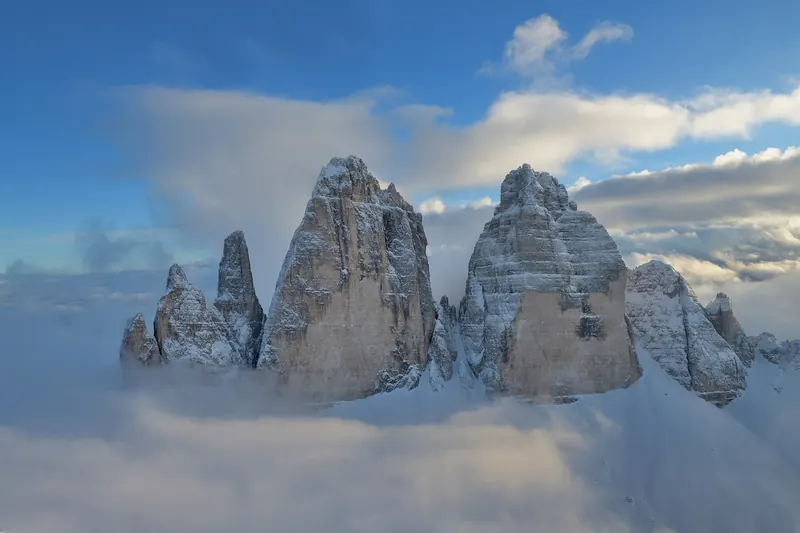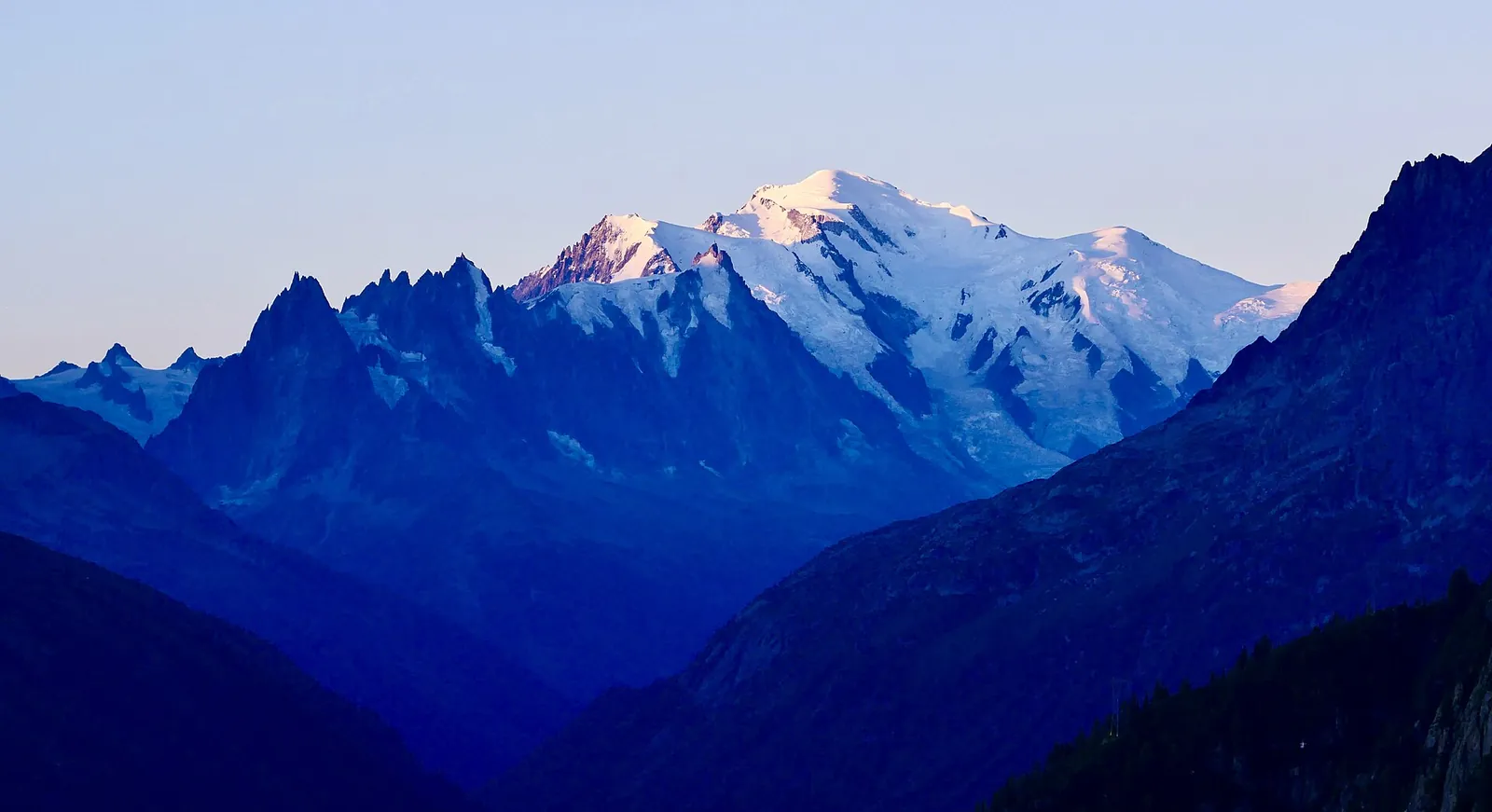
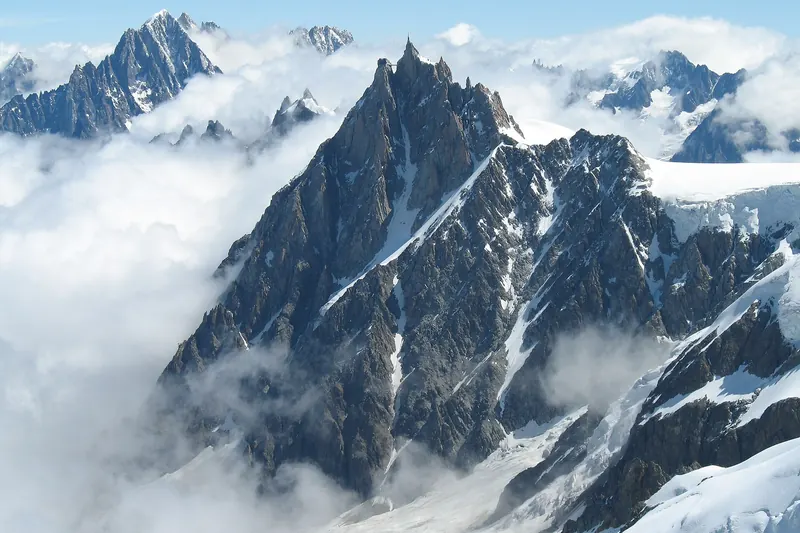
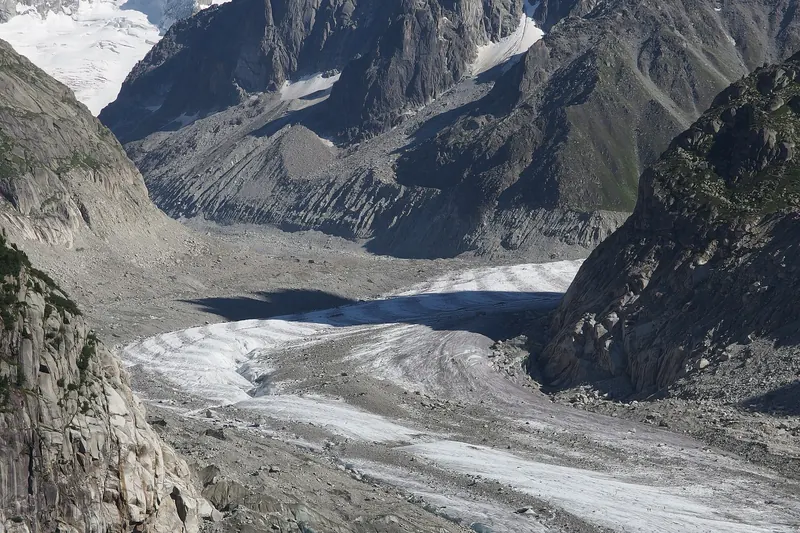
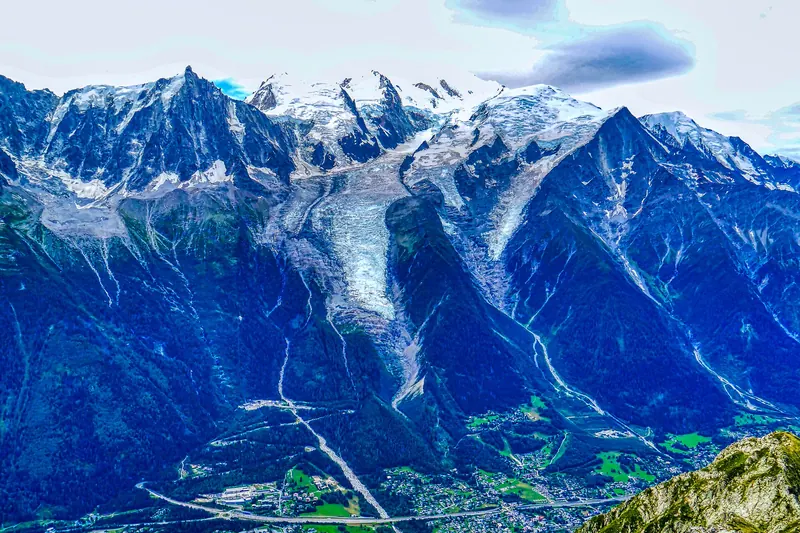
The snow-covered peaks and glaciers of the Mont Blanc massif above the Chamonix valley

Haute-Savoie, Auvergne-Rhône-Alpes · France

Chamonix & Mont Blanc

The highest mountain in Western Europe, and a cable car that takes you to 3,842 metres in twenty minutes without a single step of climbing.

  • Best time Late June–September for hiking, January–March for skiing
  • Stay 3–5 days
  • Good for Hiking, skiing, big views without technical skill

Photo: Olgierd Rudak · CC BY-SA 4.0

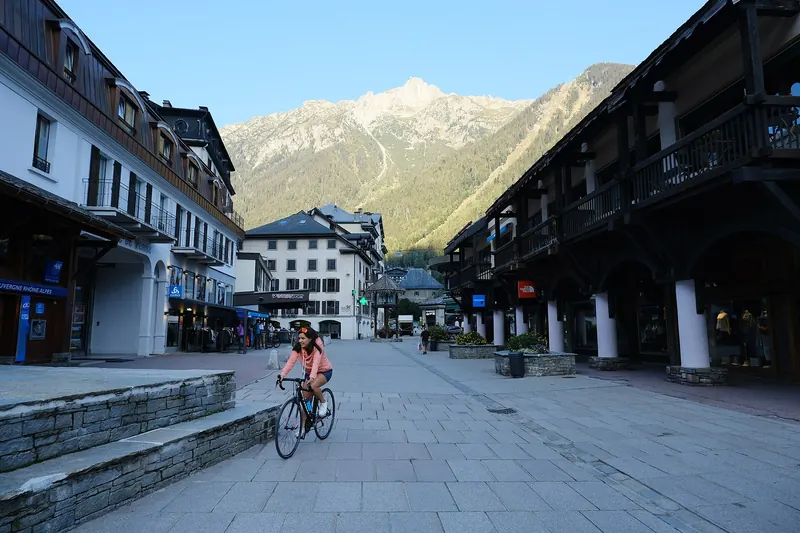
Welcome to Chamonix

Chamonix is a narrow valley floor at about 1,000 metres with a wall of granite and ice rising almost four kilometres above it. That vertical relief — greater than anywhere else in the Alps — is why the town has been the centre of European mountaineering since the 1780s, why it hosted the first Winter Olympics in 1924, and why it looks so absurdly dramatic when you arrive.

It is also unusually democratic. Mont Blanc itself is a serious mountaineering objective that kills people every year, but the valley's lift system means that a visitor with no equipment and no experience can stand on a terrace at 3,842 metres, walk on a glacier, or ride a cable car across a snowfield towards Italy. Very few high-alpine environments are this accessible.

The other thing to understand is the seasonal rhythm. Chamonix has two full seasons — winter skiing from December to April, and summer hiking from late June to September — separated by two dead periods in May and November when most lifts are closed for maintenance and a good share of the hotels and restaurants shut with them. Arriving in the wrong fortnight is the classic mistake here.

  • Mountains
  • Nature & Wildlife
  • Scenic Region

Why visit

Why visit Chamonix?

Plenty of alpine resorts have good views. Chamonix has a specific combination of scale, access and history that none of the others match.

  • The vertical scale is unique in the Alps

    From the valley floor at 1,035 m to the summit of Mont Blanc at 4,808 m is nearly 3,800 metres of relief in a horizontal distance of about ten kilometres. Nowhere else in Western Europe puts that much mountain directly above a town you can drive into.

  • High altitude without climbing

    The Aiguille du Midi cable car climbs from 1,035 m to 3,842 m in two stages and about twenty minutes. You step out onto a terrace surrounded by glaciers and 4,000-metre peaks having done nothing more strenuous than stand still. It remains one of the great engineering rides in the world.

  • Glaciers you can walk to and into

    The Mer de Glace is France's largest glacier at around seven kilometres, reached by a red rack railway from the town centre. An ice cave is carved into it each year. The retreat of the glacier is also visible and sobering — markers on the descent show where the ice stood in past decades.

  • The hiking is exceptional and graded

    The Grand Balcon Sud runs along the sunny side of the valley with Mont Blanc opposite you the whole way, and lifts let you skip the climb at either end. The Tour du Mont Blanc — 170 km around the massif through three countries — starts here and is one of the world's classic long-distance walks.

  • It is a real town, not a purpose-built resort

    Chamonix has 9,000 permanent residents, a church, a market, bookshops and a genuine mountaineering culture rather than a shopping street of ski hire outlets. It feels lived in, which many higher French ski resorts do not.

Main attractions

Top things to see in Chamonix

Almost everything here is a lift, a viewpoint or a trail. These are the ones worth the ticket, roughly in order.

  1. The rock needle of the Aiguille du Midi with its summit station

    Aiguille du Midi

    A two-stage cable car from the town centre to a rock needle at 3,842 metres, with terraces, a tunnel through the summit rock, and a glass box called the Step into the Void cantilevered over a 1,000-metre drop. On a clear day you see the Matterhorn and the Gran Paradiso.

    Tip Book the first lift of the day online. Clouds build from late morning, and the queue in August can exceed two hours without a timed ticket.

  2. The Mer de Glace glacier seen from Montenvers

    Mer de Glace and the Montenvers railway

    A red cog railway from the town climbs to 1,913 m above France's largest glacier. A gondola and stairs descend to an ice cave carved fresh each year. Signs on the descent mark the glacier's level in previous decades — it has lost well over 100 metres of thickness in a century.

    Tip The number of steps to the cave increases every year as the ice retreats. It is currently around 500 down and back up.

  3. The classic view of the Mont Blanc massif from Le Brévent

    Le Brévent and Planpraz

    The cable car up the western side of the valley to 2,525 m, facing Mont Blanc directly. This is the classic photograph of the massif, and the paragliding launch point. It is also the start of some of the valley's best walking.

    Tip Late afternoon light on Mont Blanc from Brévent is better than morning, when you are shooting into the sun.

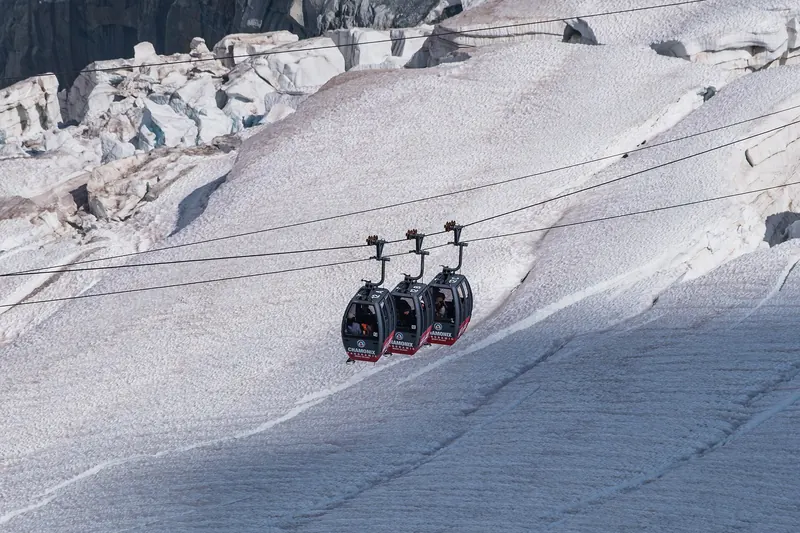
  4. Gondola cars crossing the crevassed glacier below the Aiguille du Midi

    The Panoramic Mont-Blanc gondola

    From the Aiguille du Midi, a small gondola crosses the Vallée Blanche glacier for five kilometres towards Pointe Helbronner on the Italian side — a thirty-minute ride suspended over crevasses with no pylons for much of the way.

    Tip Runs roughly mid-May to late September only. From the Italian end you can descend to Courmayeur and return by bus through the Mont Blanc tunnel.

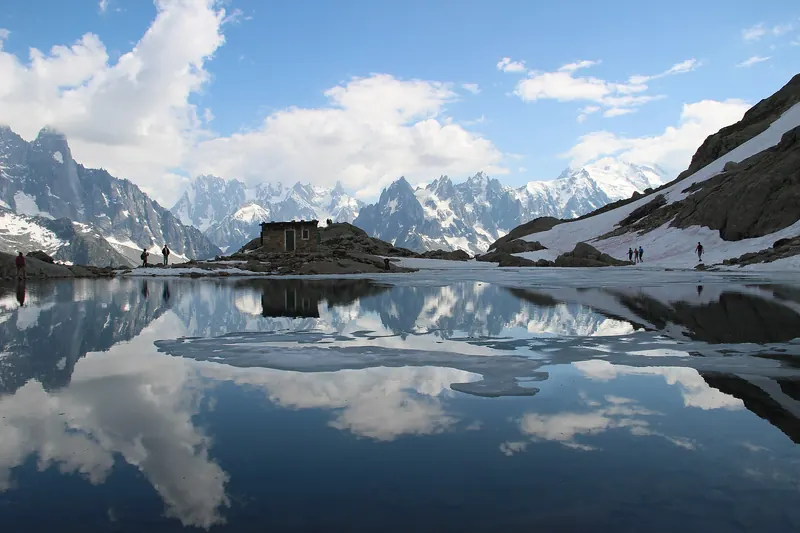
  5. Lac Blanc reflecting the surrounding peaks

    Lac Blanc

    A high alpine lake at 2,352 m that reflects the entire Mont Blanc massif on a still morning. Reached by the Flégère lift then about 90 minutes of walking, or a longer climb from the valley. The most photographed hike in the region and deservedly so.

    Tip Snow lingers on the approach into early July. Go early for the reflection — wind ruins it by mid-morning.

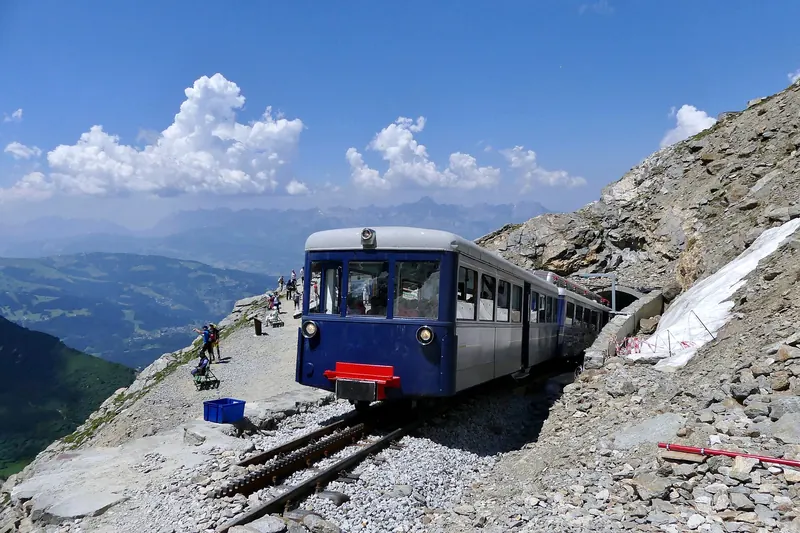
  6. The Tramway du Mont-Blanc arriving at the Nid d'Aigle

    Tramway du Mont-Blanc

    From Saint-Gervais, a rack tramway climbs to the Nid d'Aigle at 2,372 m on the normal ascent route of Mont Blanc. It is quieter than the Chamonix lifts and gives a different, more agricultural view of the massif.

    Tip A good alternative on a busy August day when the Aiguille du Midi is booked out.

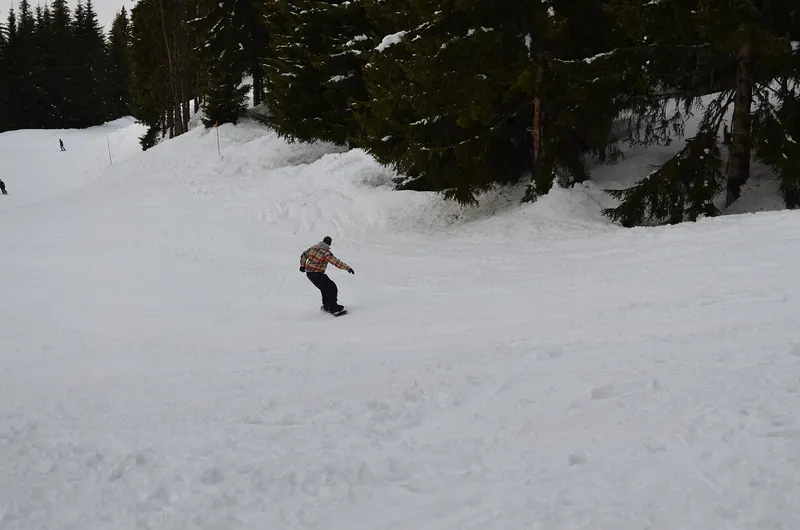
  7. A snowboarder among the trees on a piste at Les Houches

    The valley's ski areas

    In winter, Chamonix is really several separate areas: Grands Montets for steep terrain, Le Tour for gentle cruising, Brévent-Flégère for views, and Les Houches for tree skiing in bad weather. The Vallée Blanche is a 20 km off-piste glacier descent with a guide.

    Tip The valley is not one linked ski area. Free buses connect the bases, but it suits confident skiers more than beginners.

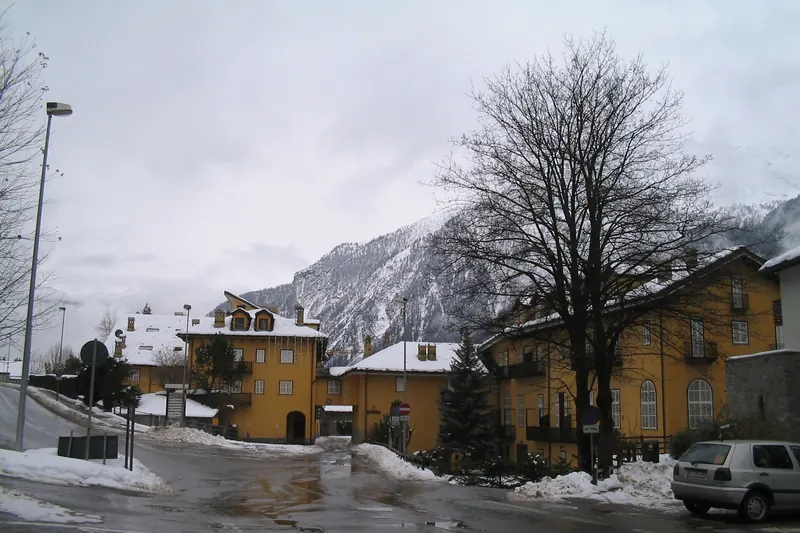
  8. The village of Chamonix beneath the surrounding peaks

    Chamonix town

    The Alpine Museum, the Maison de la Montagne, the statue of Balmat and Saussure pointing at the summit, and a Saturday market. Small but characterful, and the mountaineering culture is visible everywhere.

    Tip The Office de Haute Montagne in the Maison de la Montagne gives free, expert and blunt advice on trail conditions.

Things to do

Best things to do in Chamonix

In summer this means walking; in winter, skiing. Both are supported by the same lift network, and both work for a wide range of abilities.

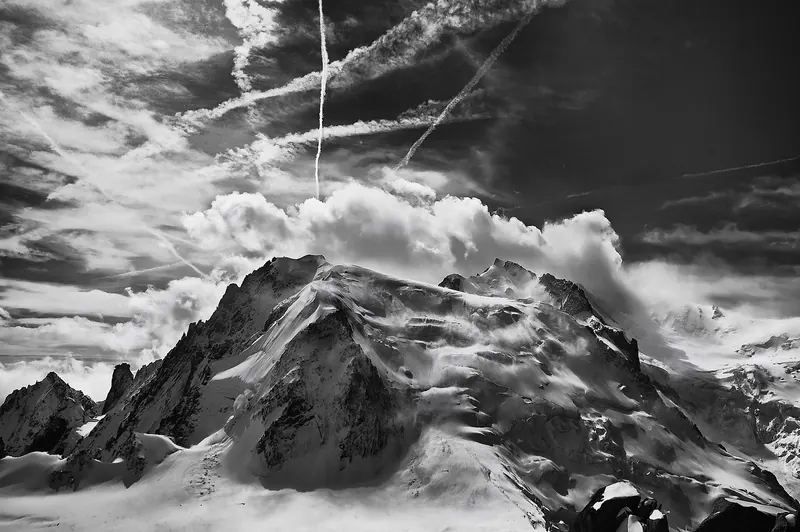
  1. Mont Blanc du Tacul seen from the Aiguille du Midi terrace

    Ride to 3,842 metres

    The Aiguille du Midi is the single thing everyone should do. Take warm clothing — it can be -10°C at the top on a summer day — and move slowly, because the altitude gain is abrupt and light-headedness is common.

    Tip There is a small pressurised rest area at the top. If you feel unwell, descend rather than pushing through it.

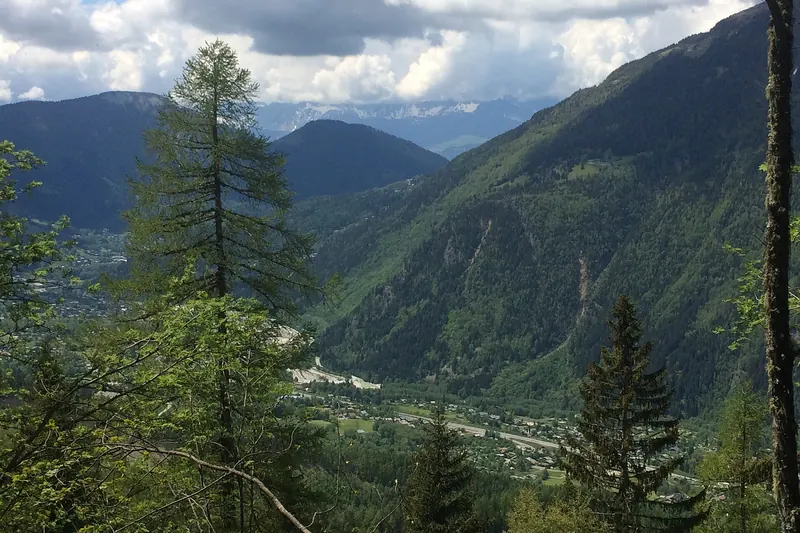
  2. The Chamonix valley seen from a balcony hiking trail

    Walk the Grand Balcon Sud

    A largely level traverse at about 2,000 m along the sunny western side of the valley from Planpraz to Flégère, with Mont Blanc and the Aiguilles opposite you the entire way. Lifts at both ends mean two hours of walking and no climbing.

    Tip The best introduction to alpine hiking there is. Extend it uphill to Lac Blanc if you have the legs.

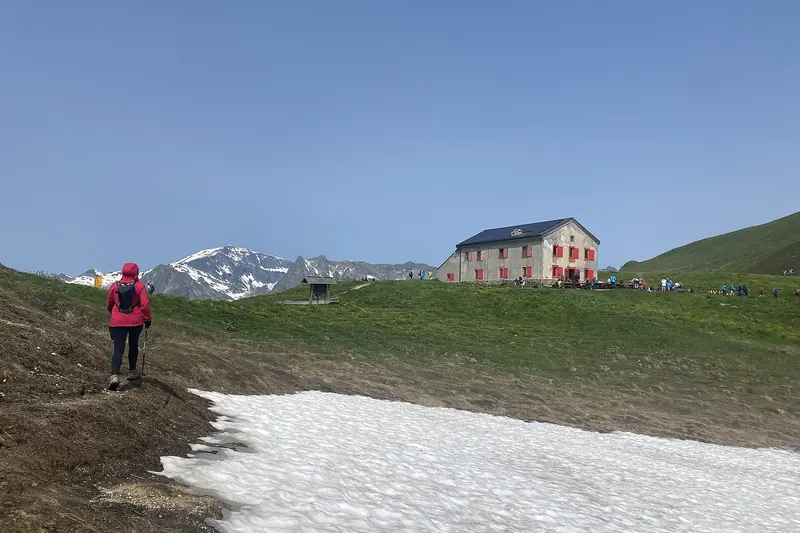
  3. The refuge at the Col de Balme on the Tour du Mont Blanc

    Do part of the Tour du Mont Blanc

    The full circuit is 170 km and ten days through France, Italy and Switzerland. Individual stages make excellent day walks — the Col de Balme on the Swiss border, or the crossing to Trient — with buses back.

    Tip Refuges on the TMB book up months ahead for July and August. Day sections need no booking at all.

  4. Ski the Vallée Blanche

    A 20-kilometre off-piste descent from the Aiguille du Midi down the glacier to the town, dropping 2,800 metres. It is not technically difficult but it crosses crevassed terrain and requires a guide, without exception.

    Tip Book a guide well ahead for February and March. The arête at the start is exposed and roped — not for the nervous.

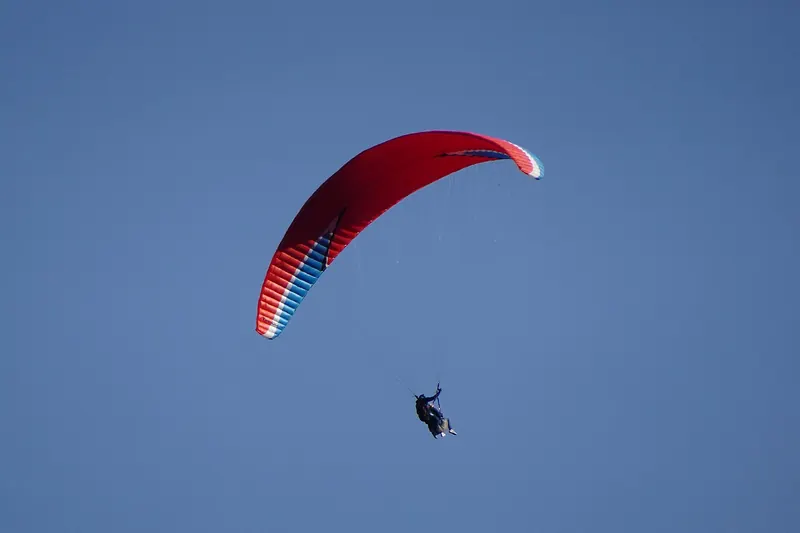
  5. A tandem paraglider over the Chamonix valley

    Go paragliding

    Tandem flights launch from Planpraz and Le Brévent and land in the valley floor, giving fifteen to thirty minutes over the whole massif. No experience needed, and it is the single best way to grasp the scale of the place.

    Tip Morning flights are usually smoother; afternoon thermals give a longer flight but a bumpier one.

  6. The Italian town of Courmayeur on the far side of the Mont Blanc tunnel

    Cross into Italy for lunch

    The Panoramic gondola or the road tunnel takes you to Courmayeur on the Italian side in well under an hour. The change in food, language and architecture over such a short distance is startling.

    Tip The Skyway Monte Bianco on the Italian side is a rotating cable car and worth doing in its own right.

Local food

What to eat in Chamonix

Savoyard mountain food is built for cold weather and physical work: cheese, potatoes, cured pork and white wine, in various combinations.

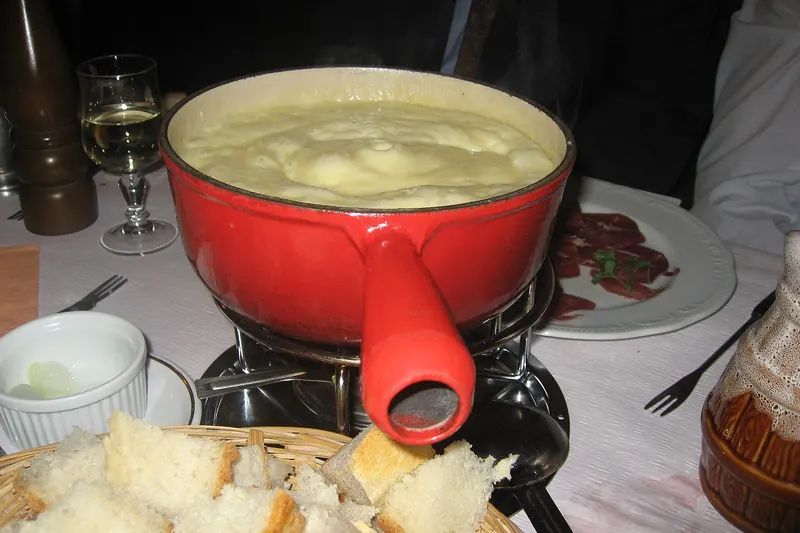
  • A pot of melted cheese fondue

    Fondue savoyarde

    Melted Beaufort, Comté and Emmental with white wine and garlic, eaten with bread on long forks. Traditionally not eaten with water — the local advice is white wine or nothing, on the grounds that cold water sets the cheese.

    Where to try it Traditional restaurants throughout the valley. Usually a minimum of two people.

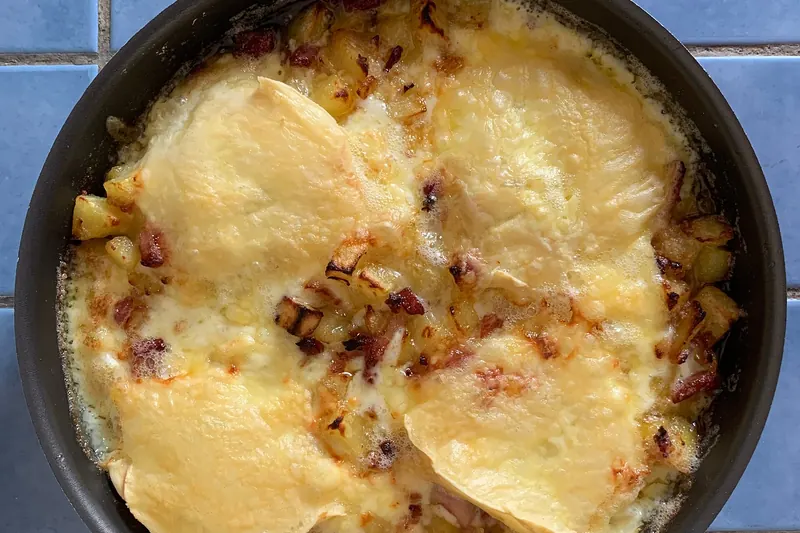
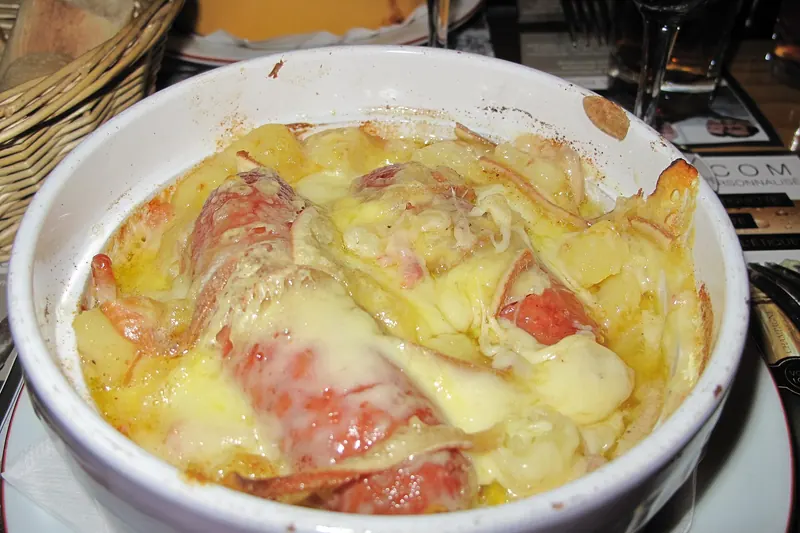
  • Tartiflette fresh from the oven, its Reblochon top browned

    Tartiflette

    Potatoes, lardons and onions baked under a whole Reblochon cheese until the top browns. It was essentially invented in the 1980s to sell more Reblochon and has become the definitive Alpine comfort dish anyway.

    Where to try it Mountain restaurants at the lift stations, ideally after a day's skiing or walking.

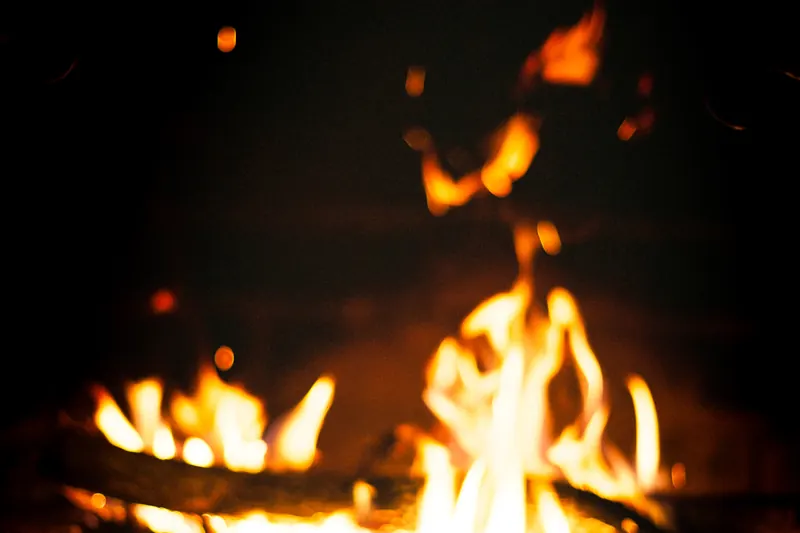
  • Raclette cheese melted by the fire, scraped onto potatoes

    Raclette

    A half-wheel of cheese melted under a grill and scraped onto potatoes, with cornichons, pickled onions and cured ham. Usually served as a table-top appliance so you do it yourself over an hour or two.

    Where to try it Any Savoyard restaurant. A slow, sociable meal rather than a quick one.

  • Diots, Savoyard pork sausages simmered in white wine

    Diots and polenta

    Savoyard pork sausages simmered in white wine with onions, served with polenta or potatoes. Less famous than the cheese dishes and often what locals actually order.

    Where to try it Village restaurants and refuges away from the main street.

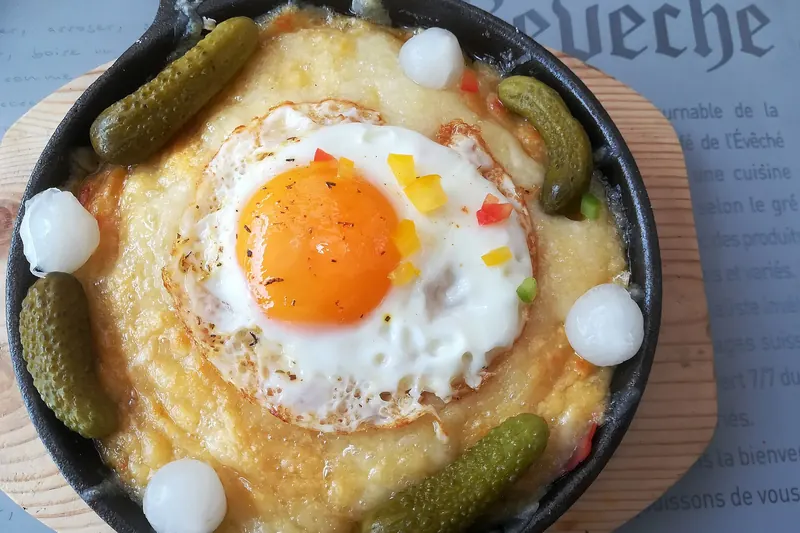
  • Croûte au fromage, bread and cheese baked together

    Croûte au fromage

    Bread soaked in white wine, covered in cheese and baked, sometimes with ham and an egg on top. The mountain refuge staple, and the best-value hot meal at altitude.

    Where to try it Refuges and mountain restaurants along the hiking trails.

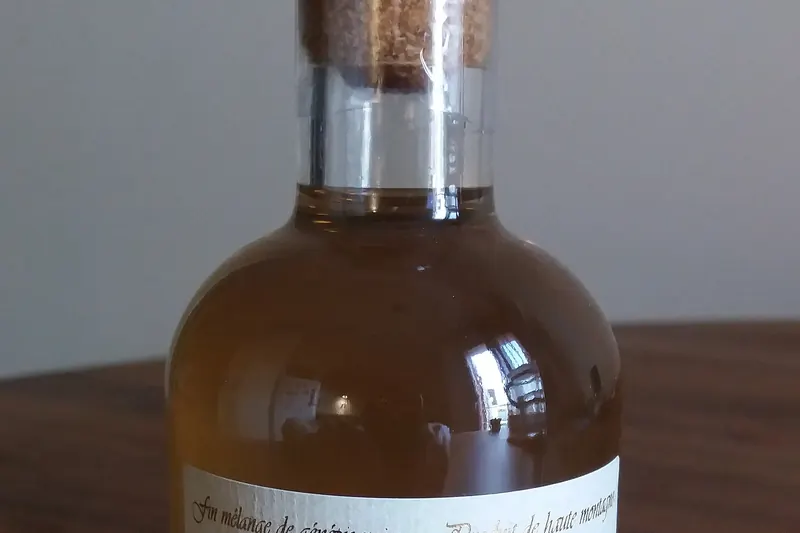
  • A bottle of génépi, the alpine herbal liqueur, made in Savoie

    Génépi

    A pale green herbal liqueur distilled from a high-altitude alpine wormwood, drunk as a digestif after a heavy cheese meal. Many families still make their own, and it is offered at the end of a meal almost as a matter of course.

    Where to try it Offered in most traditional restaurants. Bottles are sold in the valley's grocers.

Accommodation

Where to stay in Chamonix

The valley is 20 km long and served by free buses and a local train, so you have a genuine choice between the town's convenience and the villages' quiet. Almost all accommodation includes a guest card giving free valley transport.

  • Chamonix centre

    Walking distance to the Aiguille du Midi and Montenvers stations, with the widest choice of restaurants and bars. Busiest and most expensive, and noisy on winter weekends.

    Best for: Convenience, restaurants, the lifts

  • Les Praz and Argentière

    Villages a few kilometres up the valley, with the Flégère and Grands Montets lifts respectively. Calmer, prettier and slightly cheaper, with the free bus and train into town every few minutes.

    Best for: Quieter, better skiing access

  • Les Houches

    At the lower, sunnier end of the valley with gentler skiing and tree cover for bad weather. Noticeably better value than Chamonix itself and only 15 minutes away by bus.

    Best for: Families and value

  • Mountain refuges

    Staffed huts on the Tour du Mont Blanc and elsewhere provide a bunk and a communal dinner at altitude. Basic, sociable and often in spectacular positions — and the only way to see alpine sunrise properly.

    Best for: Hikers and a night at altitude

  • Saint-Gervais or Servoz

    Just outside the Chamonix valley proper, cheaper again and connected by the same rail line. Saint-Gervais has its own thermal spa and the Tramway du Mont-Blanc.

    Best for: Budget and a quieter valley

What a night costs

Hostel or refuge bunk
€35–70 per night, refuges usually with dinner
Comfortable hotel or apartment
€120–200 per night, more in February
Aiguille du Midi return
About €75 per adult
Multi-lift pass
€90–150 for several days, better value than individual tickets

Transport

Getting to and around Chamonix

Geneva is the obvious gateway and puts you in the valley in about seventy-five minutes. Rail from Paris is slower but scenic on the final stretch.

Getting there

  • Geneva Airport

    About 88 km, 1h15 by road, with frequent shared and private shuttles running directly to valley hotels. The single easiest way to arrive from outside France.

    Shared shuttles cost roughly €35–45 each way and should be booked ahead in winter.

  • Train from Paris

    TGV from Paris Gare de Lyon to Saint-Gervais-Les Bains-Le Fayet in about 5h30 to 6h, then the Mont-Blanc Express regional train up the valley in 40 minutes.

    The final valley train is a scenic ride in its own right, climbing steeply alongside the river.

  • By car

    About 1h from Geneva, 2h15 from Lyon, 9h from Paris. The Mont Blanc tunnel connects to Courmayeur in Italy in around 20 minutes.

    Winter tyres or chains are legally required in the valley from November to March. Hire cars from Geneva must be specified as winter-equipped.

  • From Italy or Switzerland

    Courmayeur is 20 minutes through the tunnel, Martigny in Switzerland about an hour by the Mont-Blanc Express over the Col des Montets.

    The Swiss rail connection makes a Chamonix–Zermatt or Chamonix–Geneva loop straightforward.

Getting around

The valley runs on a free bus and train network included with almost every hotel stay. A car is not needed and parking in town is difficult.

  • Free valley buses and trains

    Guest cards issued by hotels and apartments give free travel on the valley buses and the Mont-Blanc Express train between Servoz and Vallorcine, which covers every village and lift base.

    Ask for the guest card at check-in — it is easy to forget and worth a great deal over a week.

  • Cable cars and lifts

    The main way to gain height. Individual returns are expensive, so a multi-day or multi-lift pass usually pays for itself on the second day.

    Lifts close for maintenance in May and November. Check the current opening calendar before booking those months.

  • Walking

    Chamonix town is small and entirely walkable, and trails start directly from the valley floor. Marked routes are graded and signed with realistic timings.

    Signed times assume a steady pace with no stops. Add a third if you photograph a lot.

  • Bicycle

    A cycle path runs the length of the valley floor, and mountain biking is well developed with lifts carrying bikes in summer.

    The valley floor route is gentle; anything off it is steep.

  • Mountain guides

    The Compagnie des Guides de Chamonix, founded in 1821, is the oldest in the world. Guides are required for glacier travel, the Vallée Blanche and any ascent of Mont Blanc.

    Book months ahead for peak summer and for the Vallée Blanche in late winter.

When to go

Best time to visit Chamonix

Chamonix has two distinct seasons with two closed periods between them. Getting the timing right matters more here than at any other destination in this guide — arrive in May or November and half the valley is shut.

  • Summer (late June–September)

    Best time

    The hiking season. Trails clear of snow from late June at lower levels and mid-July higher up, lifts all running, and long daylight. July and August are busy and August is the peak; September is quieter with excellent stable weather and autumn colour.

  • Winter (December–April)

    Best time

    Ski season, with the most reliable conditions from January to March. February is the busiest and most expensive month because of French and British school holidays. The Vallée Blanche descent is generally in condition from January to April.

  • Spring gap (May–mid June)

    Think twice

    The valley's low season. Most lifts close for maintenance, high trails are still under snow, and a significant share of hotels and restaurants shut. The valley floor is green and pleasant but the mountains are largely inaccessible.

  • Autumn gap (November–mid December)

    Think twice

    The second closed period. Lifts are down, ski season has not begun, weather is unsettled and many businesses are shut. Cheap, and there is very little to do.

Worth planning around: Check the lift opening calendar before booking anything in May, early June, November or early December. Also note that the Aiguille du Midi closes in high wind, which can happen at short notice in any season.

Itinerary

Three days in Chamonix (summer)

Built around doing the Aiguille du Midi on the clearest morning available, with flexibility to swap days if the weather turns. Assumes no technical mountain experience.

  1. Day1

    The Aiguille du Midi

    Do the big one first, on the first lift, while the weather is good.

    • Morning First cable car to 3,842 m. The terraces, the tunnel, the Step into the Void, and time to adjust to the altitude.
    • Afternoon In season, the Panoramic gondola across the Vallée Blanche towards Italy and back. Otherwise descend and walk the valley floor.
    • Evening Chamonix town, the Alpine Museum if it is wet, and fondue.
  2. Day2

    The Grand Balcon Sud

    The valley's best walk, with lifts removing the climbing.

    • Morning Cable car to Planpraz, then the traverse north towards Flégère with Mont Blanc opposite the whole way — about two hours.
    • Afternoon Continue and climb to Lac Blanc for the reflection, or take the Flégère lift down and rest.
    • Evening Dinner in Les Praz or Argentière rather than the town centre.
  3. Day3

    Glacier and altitude

    The Mer de Glace, then something chosen by weather and energy.

    • Morning The Montenvers rack railway to the Mer de Glace, the ice cave, and the markers showing the glacier's retreat.
    • Afternoon A tandem paraglide from Planpraz, a stage of the Tour du Mont Blanc towards the Col de Balme, or the tunnel to Courmayeur for an Italian lunch.
    • Evening Last dinner in the valley, and the walk back with the massif lit by the last light.

Travel tips

Chamonix travel tips

Mountain-specific practicalities. Some of these are comfort; a couple are safety.

  • Book the Aiguille du Midi online for the first lift of the day. Cloud builds from late morning, and in August the walk-up queue can exceed two hours.
  • It can be -10°C on the Aiguille du Midi terrace on a 25°C summer day in the valley. Take a warm layer, a hat and sunglasses regardless of what the weather looks like from the town.
  • The ascent from 1,035 m to 3,842 m happens in about twenty minutes, which is fast. Light-headedness and breathlessness are common — move slowly, and descend if you feel unwell rather than pushing on.
  • Ask for your guest card at check-in. It gives free travel on all valley buses and the Mont-Blanc Express train, and many people never realise they have it.
  • Never go onto a glacier without a guide. The Mer de Glace and Vallée Blanche have crevasses under snow bridges, and this is not a risk that experience elsewhere prepares you for.
  • Lifts close for maintenance in May and November, and a large share of hotels and restaurants close with them. Check the lift calendar before booking those months.
  • Multi-day lift passes are much better value than individual returns, and several cover the whole valley including Montenvers and Brévent.
  • Winter tyres or chains are a legal requirement in the valley from November to March. If hiring a car in Geneva, confirm it is winter-equipped when booking.

FAQ

Chamonix: frequently asked questions

Can you see Mont Blanc without climbing?

Yes, easily. The Aiguille du Midi cable car takes you from Chamonix at 1,035 m to a terrace at 3,842 m in about twenty minutes, putting you level with the surrounding peaks and looking directly across at Mont Blanc's summit. The Brévent lift on the opposite side of the valley gives the classic head-on view of the whole massif. Neither requires any walking or experience.

When is the best time to visit Chamonix?

Late June to September for hiking, when the trails are clear and all the lifts run, and January to March for skiing. Avoid May, early June, November and early December — the lifts close for maintenance in those windows and a large share of hotels and restaurants close with them. September is the single best month for walking: stable weather, clear air and far fewer people than August.

How high is the Aiguille du Midi and is the altitude a problem?

3,842 metres, reached in about twenty minutes from 1,035 m. That rate of ascent is fast enough that mild altitude effects are common — breathlessness, light-headedness, occasional headache. Most people are fine if they move slowly and do not exert themselves. There is a pressurised rest room at the top, and the correct response to feeling unwell is to take the next cable car down.

Do you need a car in Chamonix?

No. The valley has free buses and a local train for guests, connecting every village and lift base every few minutes, and parking in the town is limited and expensive. A car is only useful if you plan to explore beyond the valley into Switzerland or Italy — and even then the tunnel bus and the Mont-Blanc Express cover most of it.

Is Chamonix good for beginner skiers?

Less than most French resorts. The valley is not one linked ski area but four separate ones connected by bus, and its reputation rests on steep and off-piste terrain. Le Tour and Les Houches have good gentle slopes and Les Houches offers tree skiing in bad weather, so beginners can have a fine time — but a purpose-built linked resort would be easier for a first ski holiday.

How do you get to Chamonix from Geneva?

About 1h15 by road for 88 km. Shared shuttle minibuses run directly from Geneva Airport to valley hotels for roughly €35–45 each way and are the simplest option. There is also a rail route via Saint-Gervais, but it involves changes and takes closer to three hours.

Can you walk on the Mer de Glace?

You can visit the ice cave carved into it each year, reached by the Montenvers rack railway, a gondola and several hundred steps down — and the number of steps grows annually as the glacier retreats. Walking on the glacier surface itself requires a qualified guide and equipment, because the crevasses are frequently hidden under snow bridges.

Read next

Related travel articles

Practical

Packing by Season and Trip Type

Most packing advice is a list of things. This is the opposite: the small number of decisions that determine whether your luggage helps or hinders, organised by the kind of trip you are actually taking.

Planning

Planning Your First Trip to Europe

Most first European trips go wrong in the same three ways: too many cities, too little time in each, and a route shaped by a cheap flight rather than by geography. Here is how to avoid all three.

Where to go

Beyond the Big Names: Places Worth the Detour

The most visited place in a country is rarely its best, and it is almost never its best value. This is a method for finding the destinations that do not make the postcards — and a set of examples from five of the 50 countries on this site.

Advertisement