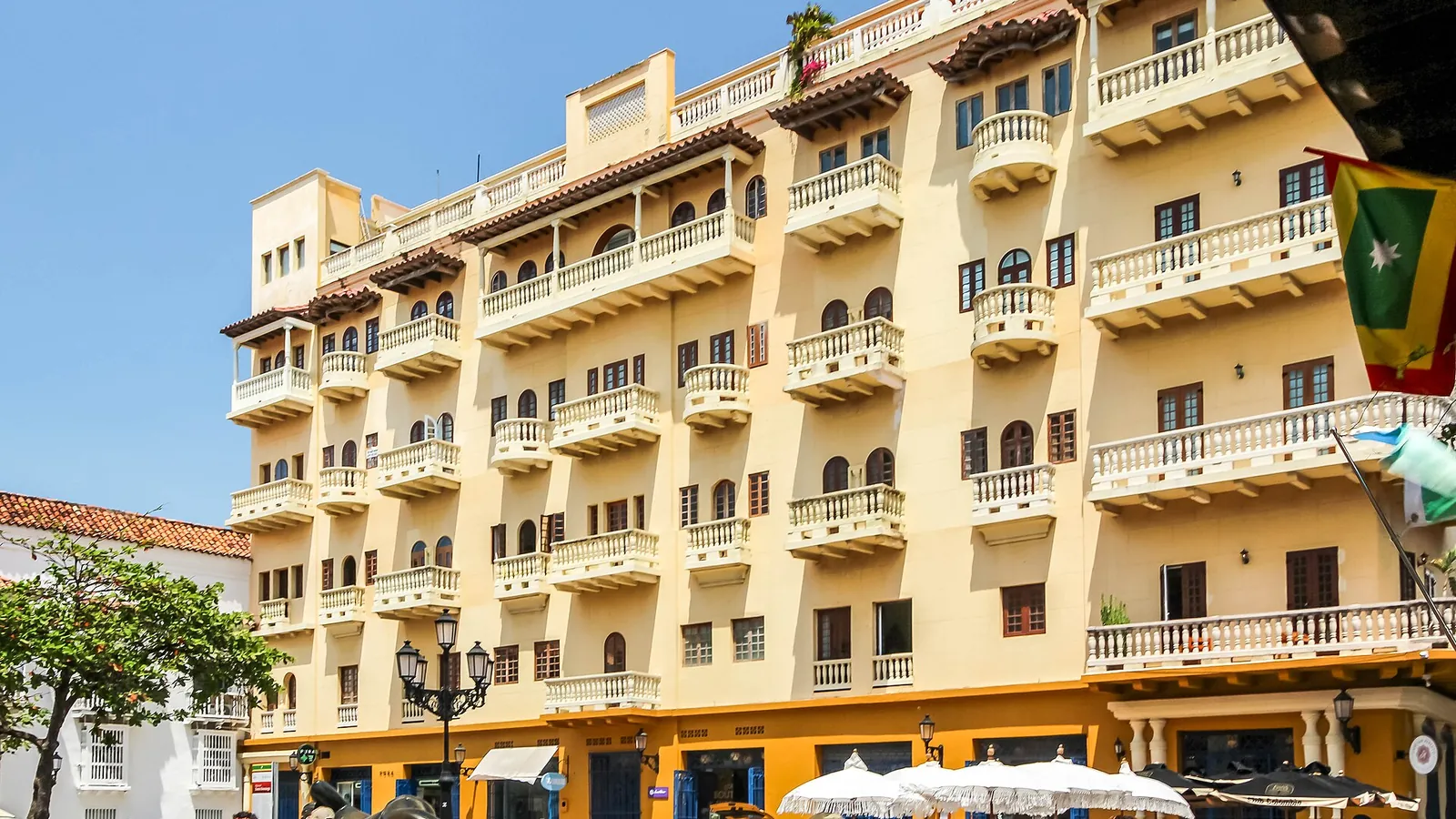
Plaza de Santo Domingo in the old city of Cartagena with coloured colonial buildings

Bolívar, Caribbean coast · Colombia

Cartagena

A UNESCO-listed walled Spanish colonial city on the Caribbean, all bougainvillea balconies, salsa in the plazas, sunset on the ramparts and island beaches a boat ride away.

  • Best time December–April
  • Stay 3–4 days
  • Good for Couples, history, food, nightlife, beaches

Photo: © Dr. Thomas Liptak · CC BY-SA 4.0

Welcome to Cartagena

Cartagena de Indias was founded by the Spanish in 1533, and for two centuries it was the main port through which the wealth of the Americas, including gold and emeralds, was shipped to Spain. Pirates and privateers, including Sir Francis Drake, attacked it repeatedly, and in response the Spanish built miles of stone walls and forts that survive today. The walled city and its fortresses are a UNESCO World Heritage Site.

Inside the walls, the old town is a maze of cobbled streets, plazas and coloured houses with wooden balconies draped in bougainvillea. Sidewalk cafés, fruit vendors, palenqueras in bright dresses and horse-drawn carriages give it a theatrical air, and in the evening the plazas fill with music. Just outside the walls, Getsemaní, once a working-class quarter, is now a lively neighbourhood of street art, hostels and bars.

Cartagena is hot and humid, so days are best spent early or on the water. The Castillo San Felipe de Barajas fortress is the largest built by the Spanish in the Americas, and boats take visitors to the Rosario Islands for snorkelling and beaches. Three or four days is a good stay, and the city is a natural start or end to a Colombian trip.

  • Historic Site
  • UNESCO Site
  • Coast & Beaches
  • Major City
  • Food & Wine

Why visit

Why visit Cartagena?

Cartagena is one of the most beautiful and atmospheric colonial cities in the Americas.

  • A walled colonial city

    Streets, plazas and ramparts.

  • Getsemaní

    Street art and nightlife.

  • Caribbean beaches

    Boat trips to islands.

  • Seafood and fruit

    Ceviche, coconut rice and juices.

  • Music and nightlife

    Salsa, champeta and rooftop bars.

Main attractions

Top things to see in Cartagena

The old city is compact and best on foot, with the fortress and islands as excursions.

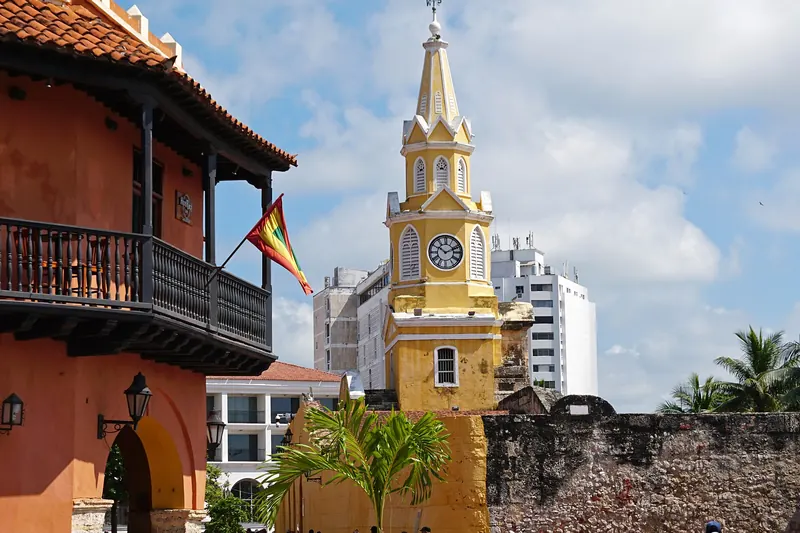
  1. The yellow Clock Tower gateway at the entrance to Cartagena's walled city

    The Clock Tower and the walled city

    The Torre del Reloj is the main gate into the walled city, opening onto the Plaza de los Coches and a maze of colonial streets.

    Tip Enter at dusk.

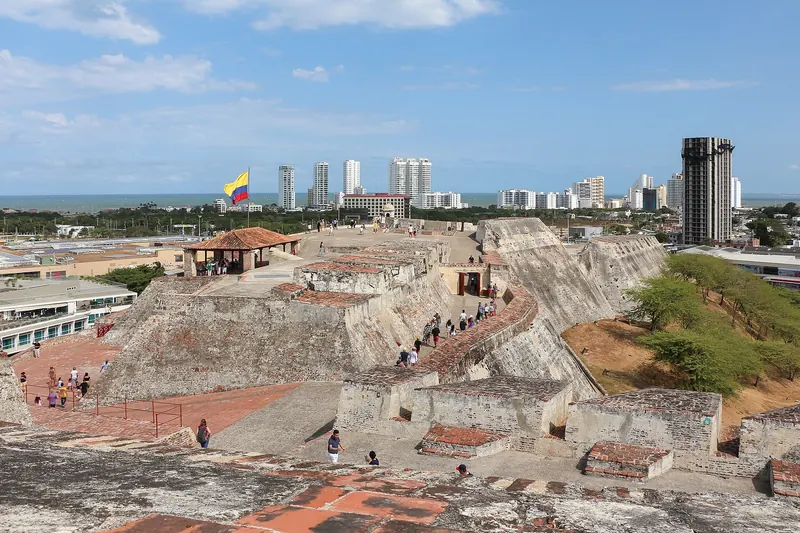
  2. The stone walls of Castillo San Felipe de Barajas above Cartagena

    Castillo San Felipe de Barajas

    The largest Spanish fortress in the Americas, built in the 17th century on a hill with tunnels and cannon.

    Tip Go early, since it is hot.

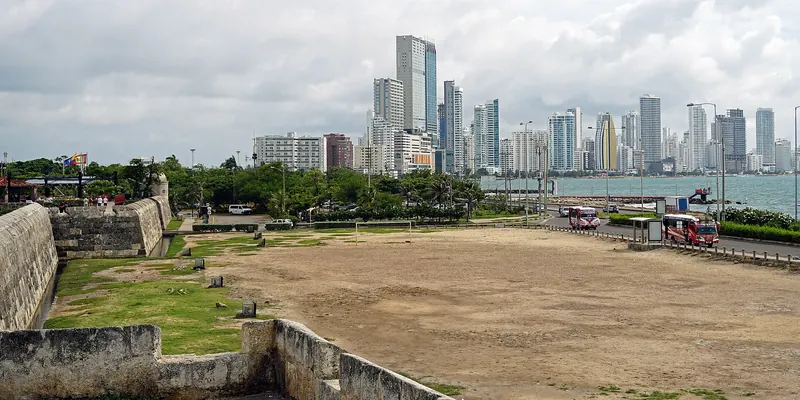
  3. The Bocagrande skyline seen from the old city ramparts

    The walls and sunset

    The ramparts around the old city make a lovely walk, with a sunset drinking spot at Café del Mar.

    Tip Arrive before sunset.

  4. A resort on the turquoise waters of the Rosario Islands near Cartagena

    Rosario Islands

    A coral archipelago about an hour by boat from the city, with clear water, snorkelling and beach clubs.

    Tip Book a boat for a full day.

  5. Getsemaní

    A colourful neighbourhood of murals, plazas, hostels and bars, centred on Plaza de la Trinidad.

    Tip Come in the evening.

  6. Convent of La Popa

    A hilltop convent with views over the city.

    Tip Take a taxi.

Things to do

Best things to do in Cartagena

Cartagena rewards wandering, eating and a day on the water.

  1. Walk the old town

    Early morning or evening.

    Tip Bring water.

  2. Take a boat to the islands

    Snorkel and swim.

    Tip Book with a reputable operator.

  3. Visit the fortress

    Explore the tunnels.

    Tip Go at opening time.

  4. Dance salsa

    In Café Havana or Getsemaní bars.

    Tip Go with friends.

  5. Try a street art tour

    Learn about Getsemaní's murals.

    Tip Book a guide.

  6. Take a mud volcano trip

    Float in El Totumo's mud.

    Tip Half-day trip.

Local food

What to eat in Cartagena

Cartagena's food is Caribbean, with seafood, coconut and fruit.

  • Ceviche and fried fish

    Fresh seafood.

    Where to try it Restaurants in the old city.

  • Arroz con coco

    Coconut rice.

    Where to try it Traditional restaurants.

  • Arepa de huevo

    A fried arepa stuffed with egg.

    Where to try it Street stalls.

  • Fruit from palenqueras

    Cut tropical fruit from vendors.

    Where to try it Plazas.

  • Cocktails and rum

    Rum drinks and lulada.

    Where to try it Rooftop bars.

Accommodation

Where to stay in Cartagena

Stay in the old city or Getsemaní.

  • Walled city

    Boutique hotels in colonial houses.

    Best for: Atmosphere

  • Getsemaní

    Hostels and guesthouses.

    Best for: Nightlife and budget

  • Bocagrande

    Big hotels.

    Best for: Beach and resort

What a night costs

Hostel dorm
US$12–25 per night
Mid-range hotel
US$80–160 per night
Luxury hotel
US$250–500 per night
Meal
US$8–25 per person

Transport

Getting to and around Cartagena

Cartagena has an airport and bus links.

Getting there

  • Flight

    About 1.5 hours from Bogotá or Medellín.

    Book early.

  • Taxi from the airport

    About 15 minutes at a fixed fare.

    Use the official desk.

  • Bus

    From Santa Marta, about 4 hours.

    Comfortable.

Getting around

The old city is walkable.

  • On foot

    Everything in the walls.

    Go early.

  • Taxi and Uber

    To the fortress and Bocagrande.

    Agree fares.

  • Boat

    To the islands.

    Book.

When to go

Best time to visit Cartagena

Cartagena is hot year-round, with a dry season from December to April.

  • December–April

    Best time

    Dry and breezy.

  • May–August

    Good

    Hot and humid, with some rain.

  • September–November

    Think twice

    The wettest months, with flooding possible.

  • Christmas and New Year

    Quiet

    Crowded and expensive.

Worth planning around: October and November rains.

Itinerary

Three days in Cartagena

The old city, the fortress and the islands.

  1. Day1

    The old city

    Streets and plazas.

    • Morning Walk the walled city.
    • Afternoon Rest in the heat.
    • Evening Sunset on the walls.
  2. Day2

    Fortress and Getsemaní

    History and art.

    • Morning Castillo San Felipe.
    • Afternoon Getsemaní street art.
    • Evening Salsa.
  3. Day3

    Islands

    Beach day.

    • Morning Boat to Rosario Islands.
    • Afternoon Swim and snorkel.
    • Evening Return.

Travel tips

Cartagena travel tips

A few tips help you plan.

  • Go out early and in the evening.
  • Bring sun protection.
  • Use Uber or official taxis.
  • Agree prices before boat trips.
  • Ignore touts on the beach.
  • Keep valuables safe.
  • Book hotels early for December.

FAQ

Cartagena: frequently asked questions

How many days do you need in Cartagena?

Three or four.

Is Cartagena safe?

The old city is generally safe, with normal precautions.

Is it hot?

Yes, always.

Are the Rosario Islands worth it?

Yes, for a beach day.

What is Getsemaní?

A lively neighbourhood outside the walls.

When is the best time?

December to April.

Read next

Related travel articles

Heritage

UNESCO Sites Worth Planning a Trip Around

A UNESCO listing tells you a place matters; it does not tell you whether it is worth two days and a detour. This is how to read the list usefully — and which sites reward building a trip around them.

Where to go

Choosing a Mediterranean Coast

The Mediterranean coasts in this guide are not interchangeable. Some have sand and some have rock; some are glamorous and some are cheap; two of them are effectively closed for half the year. This is a comparison by the things that decide whether a coastal week works — swimming, crowds, cost, transport and what there is to do when you get out of the water.

Advertisement