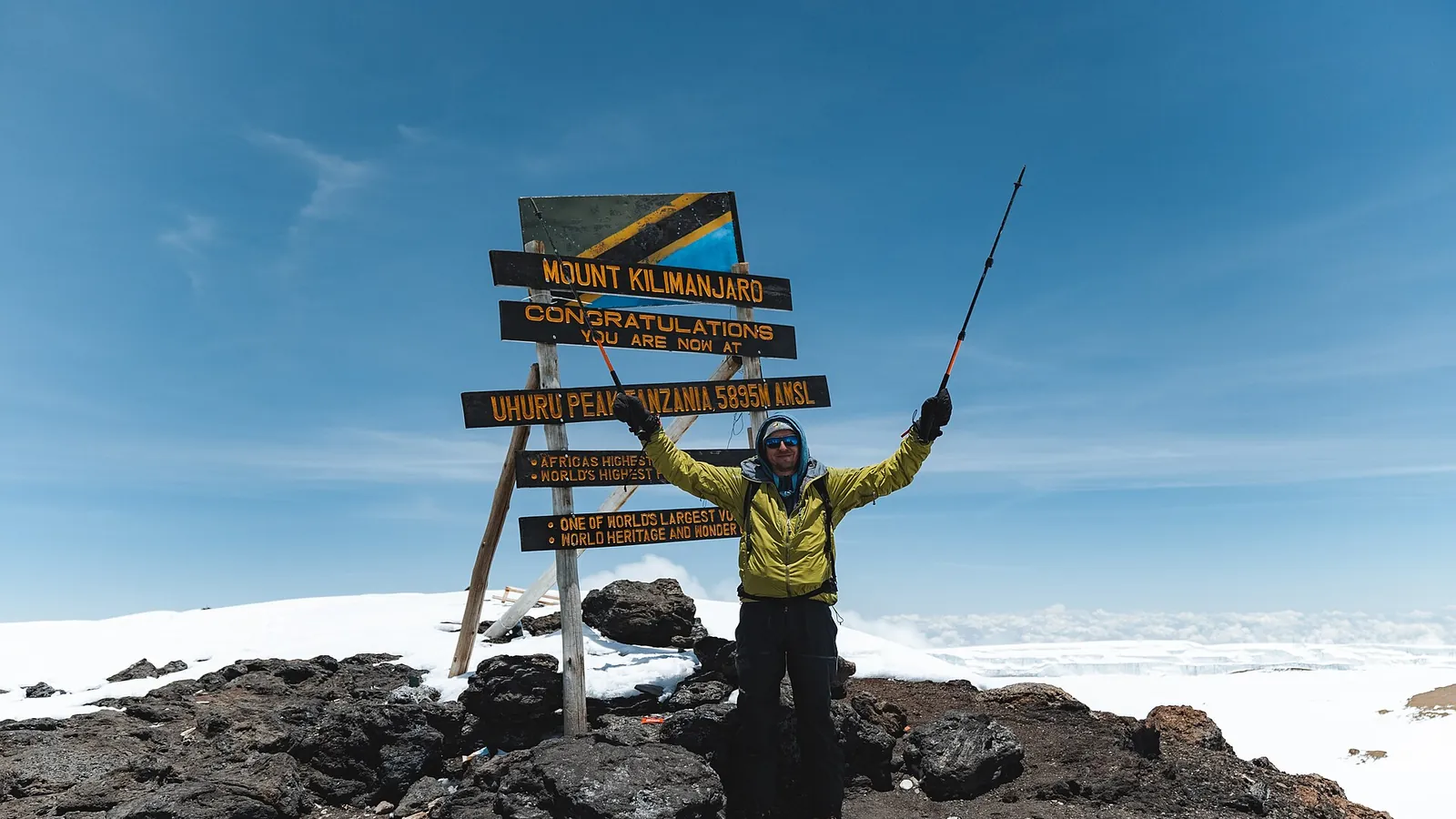
Hikers on Uhuru Peak, the summit of Mount Kilimanjaro

Kilimanjaro Region, northern Tanzania · Tanzania

Mount Kilimanjaro

Africa's highest mountain at 5,895 metres, a free-standing volcano with glaciers on the equator.

  • Best time January-March, June-October
  • Stay 6-9 days for a climb
  • Good for Trekkers, adventurers, fit walkers

Photo: Altezzatravel · CC BY-SA 4.0

Welcome to Mount Kilimanjaro

Kilimanjaro rises from the plains of northern Tanzania to 5,895 metres, the highest point in Africa and the tallest free-standing mountain in the world. It has three volcanic cones: Kibo, Mawenzi and Shira, and Uhuru Peak on the rim of Kibo is the summit most climbers aim for.

It is one of the few seven-summit peaks that needs no technical climbing skills. The trek passes through five ecological zones: farmland, rainforest, heath and moorland, alpine desert and the arctic summit. Several routes lead to the top, with different lengths, difficulty and scenery.

Altitude is the real challenge. Longer routes give your body more time to adapt, and success rates are much higher on seven- to nine-day itineraries. Climbs must be arranged through a licensed operator, with guides, cooks and porters, and the mountain's permit fees are significant. You do not have to reach the top to enjoy the lower slopes, which offer day walks, waterfalls and coffee farm tours.

  • Mountains
  • National Park
  • Nature & Wildlife
  • UNESCO Site
  • Scenic Region

Why visit

Why visit Mount Kilimanjaro?

Kilimanjaro is a bucket-list adventure that anyone fit and well-prepared can attempt.

  • Africa's highest peak

    Reach 5,895 metres.

  • Five climate zones

    Jungle to ice on one walk.

  • No technical climbing

    A trek, not a mountaineering feat.

  • Multiple routes

    Choose your pace.

  • Rich local culture

    Chagga and Maasai communities.

Main attractions

Top things to see in Mount Kilimanjaro

The mountain and its foothills offer several highlights.

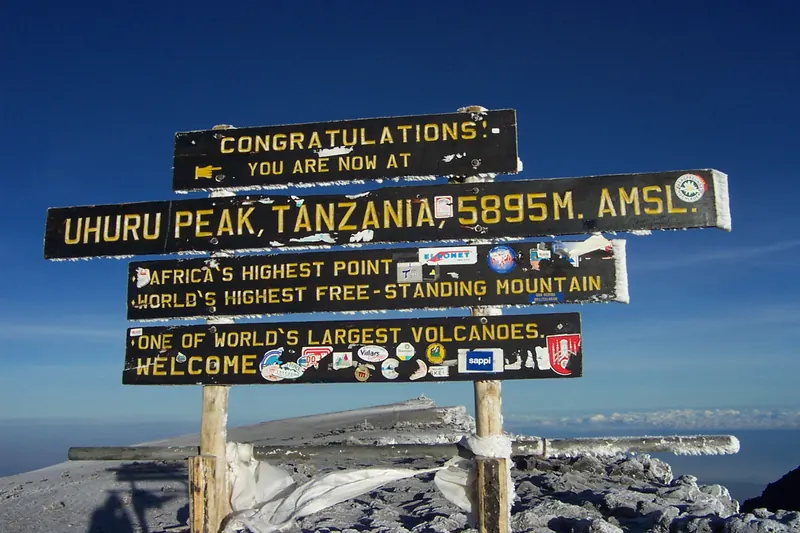
  1. The summit sign at Uhuru Peak on Kilimanjaro

    Uhuru Peak

    The summit on the rim of Kibo.

    Tip Start the final push around midnight.

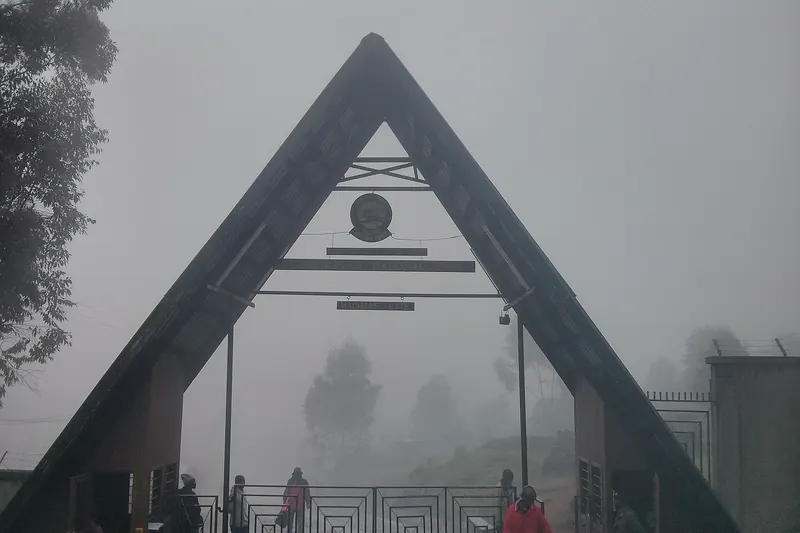
  2. The Machame Gate at the start of the route

    Machame Route

    The "Whisky route", scenic and popular.

    Tip Allow seven days.

  3. Lemosho Route

    A quieter, high-success route from the west.

    Tip Eight days is ideal.

  4. Marangu Route

    The "Coca-Cola route" with huts.

    Tip The only route with huts.

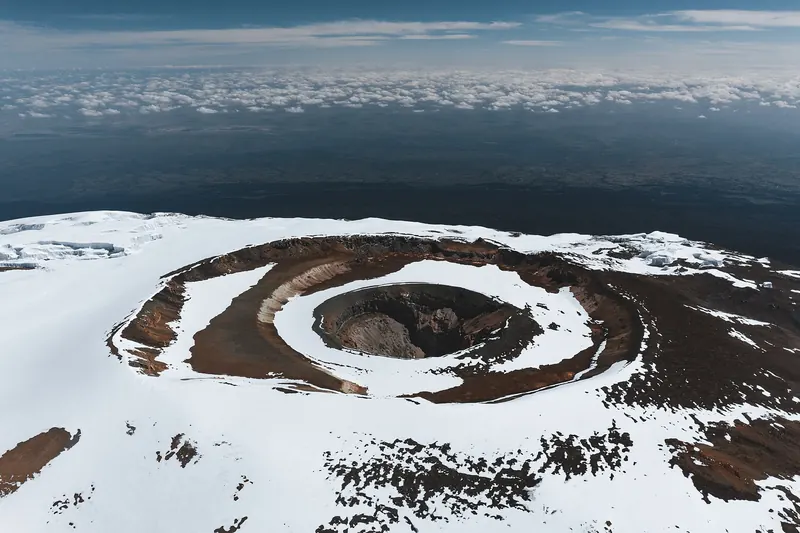
  5. Reusch Crater at the top of Kilimanjaro

    Kibo crater and glaciers

    Remaining ice on the summit.

    Tip Bring a warm layer.

  6. Materuni Waterfall

    A foothill waterfall with coffee tours.

    Tip A good rest-day trip.

Things to do

Best things to do in Mount Kilimanjaro

Many visitors climb, but there are other options too.

  1. Climb to the summit

    A 6 to 9 day trek.

    Tip Choose a longer route.

  2. Hike in the foothills

    Day walks in the forest zone.

    Tip Good for acclimatising.

  3. Visit a coffee farm

    With the Chagga people.

    Tip Often combined with Materuni.

  4. Soak in hot springs

    At Kikuletwa near Moshi.

    Tip A refreshing break.

  5. Take a cultural walk

    Through Chagga villages.

    Tip Join a guided tour.

  6. Ride along Marangu

    Visit local waterfalls.

    Tip Ask your hotel.

Local food

What to eat in Mount Kilimanjaro

Moshi and the villages around the mountain have simple local food.

  • Mbege

    Banana beer of the Chagga.

    Where to try it Village bars.

  • Ndizi nyama

    Banana and meat stew.

    Where to try it Local restaurants.

  • Ugali

    Maize porridge.

    Where to try it Everywhere.

  • Machalari

    Bananas cooked with meat.

    Where to try it Villages.

  • Kilimanjaro coffee

    Grown on the slopes.

    Where to try it Cafes in Moshi.

Accommodation

Where to stay in Mount Kilimanjaro

Most climbers base themselves in Moshi or Arusha.

  • Moshi

    Town at the foot of the mountain.

    Best for: Climbers

  • Marangu

    Villages on the lower slopes.

    Best for: Quiet

  • Arusha

    City with more services.

    Best for: Safaris

  • Machame

    Lodges near the gate.

    Best for: Scenery

What a night costs

Budget climb
From US$1,800-2,500 per person
Mid-range climb
US$2,500-3,500 per person
Luxury climb
US$4,000-5,500 per person
Park fees
A major part of the cost, charged per day (check)

Transport

Getting to and around Mount Kilimanjaro

Most climbers fly to Kilimanjaro airport.

Getting there

  • Fly to JRO

    Kilimanjaro International Airport.

    About 45 minutes from Moshi.

  • Drive from Arusha

    About 1.5 hours.

    Shuttle or private.

  • Operator transfer

    Included in most packages.

    Arrange in advance.

Getting around

Climbs are guided and supported.

  • Guided trek

    With guides, cooks and porters.

    Required by park rules.

  • Taxi

    Between Moshi and the gates.

    Agree the fare.

  • Dala-dala

    Local minibuses.

    Cheap but crowded.

When to go

Best time to visit Mount Kilimanjaro

Two dry seasons give the clearest weather: January to March and June to October.

  • January-March

    Best time

    Dry, warm and clear.

  • June-October

    Best time

    Cooler and dry, the busiest season.

  • April-May

    Think twice

    Long rains, with wet and cloudy conditions.

  • November-December

    Quiet

    Short rains, fewer climbers.

Worth planning around: April, May and November, when rain and cloud are common.

Itinerary

Seven days on the Machame route

A classic scenic route.

  1. Day1

    Machame Gate

    Rainforest

    • Morning Hike through forest
    • Afternoon Lunch on the trail
    • Evening Camp at Machame
  2. Day2

    Shira Plateau

    Moorland

    • Morning Walk to Shira
    • Afternoon Lunch
    • Evening Camp
  3. Day3

    Lava Tower

    Acclimatise

    • Morning Climb high, sleep low
    • Afternoon Descend to Barranco
    • Evening Camp
  4. Day4

    Barranco Wall

    Scramble

    • Morning Climb the wall
    • Afternoon Karanga valley
    • Evening Camp
  5. Day5

    Barafu

    Prepare

    • Morning Short trek
    • Afternoon Rest
    • Evening Camp at Barafu
  6. Day6

    Summit Day

    Uhuru

    • Morning Midnight start to Uhuru Peak
    • Afternoon Descend to Mweka
    • Evening Camp
  7. Day7

    Descent

    Back to Moshi

    • Morning Walk to Mweka Gate
    • Afternoon Transfer
    • Evening Celebration dinner

Travel tips

Mount Kilimanjaro travel tips

Planning a climb takes some preparation.

  • Choose a longer route to adapt to altitude.
  • Hire a reputable, licensed operator.
  • Check porter welfare standards.
  • Pack warm layers and good boots.
  • Train with long hikes beforehand.
  • Drink plenty of water.
  • Tip guides and porters fairly.

FAQ

Mount Kilimanjaro: frequently asked questions

How hard is it?

Demanding because of altitude, not technique.

Which route is best?

Lemosho and Machame are popular, Lemosho has the best odds.

Do I need a guide?

Yes, it is required.

How much does it cost?

Typically US$2,000 and up.

What about altitude sickness?

Climb slowly and tell your guide.

When should I go?

January to March or June to October.

Read next

Related travel articles

Heritage

UNESCO Sites Worth Planning a Trip Around

A UNESCO listing tells you a place matters; it does not tell you whether it is worth two days and a detour. This is how to read the list usefully — and which sites reward building a trip around them.

Where to go

Beyond the Big Names: Places Worth the Detour

The most visited place in a country is rarely its best, and it is almost never its best value. This is a method for finding the destinations that do not make the postcards — and a set of examples from five of the 50 countries on this site.

Advertisement