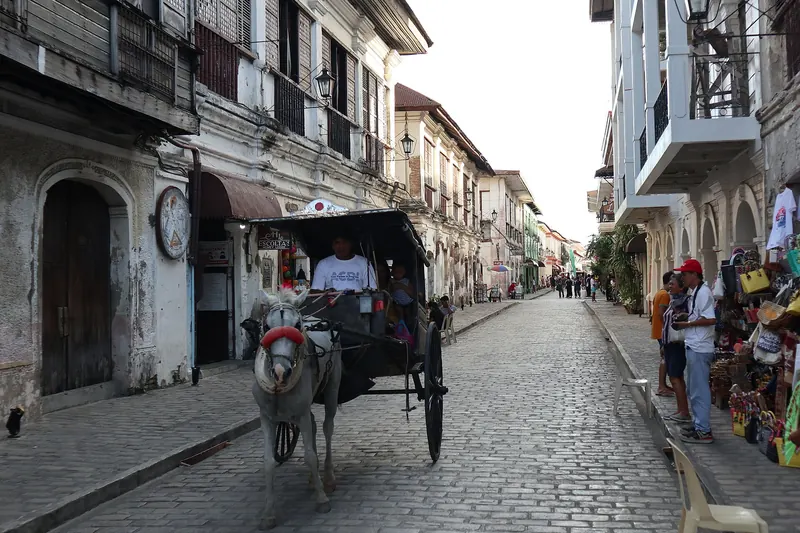
The cobbled Calle Crisologo in Vigan lined with colonial houses

Ilocos Sur, northern Luzon · Philippines

Vigan

The best-preserved Spanish colonial town in Asia, a cobbled street of ancestral houses, horse-drawn calesas and empanada stalls.

  • Best time November–April
  • Stay 2 days
  • Good for History, photography, food, culture

Photo: Simon Burchell · CC BY-SA 3.0

Welcome to Vigan

Vigan, on the north-west coast of Luzon, is the best-preserved example of a planned Spanish colonial town in Asia. It was established in the 16th century as a trading post, where Chinese, Filipino and Spanish cultures met, and its surviving grid of streets and mansions combines Philippine, Chinese and European building traditions. It is a UNESCO World Heritage Site, and in 2015 it was named one of the New 7 Wonders Cities.

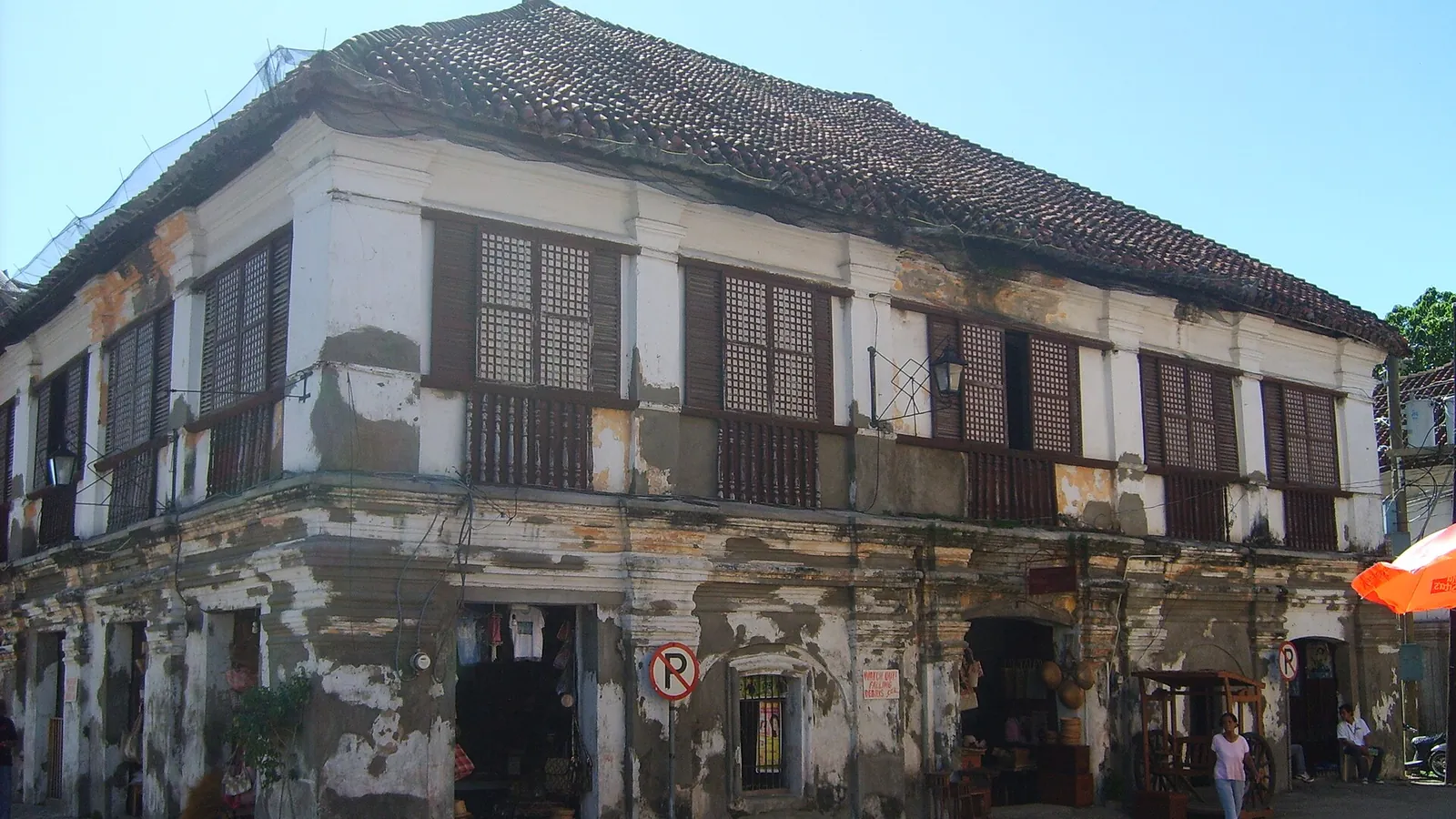
The heart of the historic district is Calle Crisologo, a cobbled street lined with ancestral houses whose ground floors are stone or brick and whose upper floors are wooden with sliding capiz-shell windows. Horse-drawn calesas clatter along the street, and lamps light it in the evening. Traffic is closed at times. The nearby Plaza Salcedo, Vigan Cathedral and Plaza Burgos are the social heart.

Vigan is also a craft and food town. The Pagburnayan workshops produce large burnay clay jars, and the Ilocos region is famous for its empanadas, longganisa sausage and bagnet, crispy pork belly. A day trip can take in nearby Paoay Church and the sand dunes of Laoag. Two days is a good stay.

  • Historic Site
  • UNESCO Site
  • Culture & Arts

Why visit

Why visit Vigan?

Vigan is the best place in the Philippines to feel colonial history.

  • A preserved colonial street

    Calle Crisologo.

  • Calesa rides

    Horse-drawn carriages.

  • Ilocano food

    Empanada and longganisa.

  • Crafts

    Burnay pottery.

  • A UNESCO site

    Listed in 1999.

Main attractions

Top things to see in Vigan

The historic district is compact and walkable.

  1. A horse-drawn calesa on the cobbled street of Calle Crisologo in Vigan

    Calle Crisologo

    The famous cobbled street of ancestral houses and shops, magical in the evening.

    Tip Go at dusk.

  2. Vigan Cathedral

    A baroque cathedral of the 16th century, with a striking facade.

    Tip Visit in the morning.

  3. Plaza Salcedo

    A park with a monument and a dancing fountain at night.

    Tip Go in the evening.

  4. Pagburnayan

    Pottery workshops where burnay jars are made.

    Tip Try the potter's wheel.

  5. Syquia Mansion

    A museum in the home of a president's family.

    Tip Allow an hour.

  6. Baluarte Zoo

    A zoo with animals and a view.

    Tip Good for families.

Things to do

Best things to do in Vigan

Vigan is for slow walks and food.

  1. Ride a calesa

    Along the cobbles.

    Tip Agree the price.

  2. Eat Vigan empanada

    Crispy orange pastry.

    Tip Try at Plaza Burgos.

  3. Watch the potters

    At Pagburnayan.

    Tip Buy a small jar.

  4. Walk at night

    The street glows.

    Tip Go after 6 pm.

  5. Day trip to Paoay

    A baroque church.

    Tip Hire a tricycle.

  6. Sandboard at Laoag

    On the dunes.

    Tip Go with a tour.

Local food

What to eat in Vigan

Ilocano food is meaty and bold.

  • Vigan empanada

    Rice-flour pastry with papaya, egg and longganisa.

    Where to try it Plaza Burgos stalls.

  • Vigan longganisa

    Garlicky sausage.

    Where to try it Restaurants.

  • Bagnet

    Crispy fried pork belly.

    Where to try it Restaurants.

  • Okoy

    Shrimp fritters.

    Where to try it Street food.

  • Basi wine

    Sugar cane wine.

    Where to try it Shops.

Accommodation

Where to stay in Vigan

Stay in a heritage house.

  • Historic district

    Heritage hotels.

    Best for: Atmosphere

  • Outside the centre

    Guesthouses.

    Best for: Budget

  • Bantay

    Small inns.

    Best for: Quiet

What a night costs

Guesthouse
US$15–30 per night
Heritage hotel
US$50–120 per night
Calesa ride
US$3–8
Meal
US$3–8 per person

Transport

Getting to and around Vigan

Vigan is about 400 km north of Manila.

Getting there

  • Bus from Manila

    About 8 to 10 hours.

    Overnight buses.

  • Flight to Laoag

    Then a 2-hour bus or van.

    Flights from Manila.

  • Car

    About 8 hours.

    Scenic.

Getting around

The district is walkable.

  • On foot

    In the centre.

    Wear comfortable shoes.

  • Calesa

    Horse-drawn carriage.

    Fixed rates.

  • Tricycle

    To other sites.

    Cheap.

When to go

Best time to visit Vigan

Vigan is best in the dry season.

  • November–February

    Best time

    Cool and dry.

  • March–May

    Good

    Hot.

  • June–August

    Quiet

    Rain.

  • September–October

    Think twice

    Typhoons.

Worth planning around: Typhoon season.

Itinerary

Two days in Vigan

The heritage district and crafts.

  1. Day1

    The old town

    Streets.

    • Morning Cathedral and Plaza Salcedo.
    • Afternoon Syquia Mansion.
    • Evening Calle Crisologo by calesa.
  2. Day2

    Crafts and food

    Pottery.

    • Morning Pagburnayan.
    • Afternoon Empanada and longganisa.
    • Evening Depart.

Travel tips

Vigan travel tips

A few tips help you plan.

  • Go at dusk.
  • Agree calesa prices.
  • Try the empanada.
  • Wear comfy shoes.
  • Visit outside Holy Week.
  • Bring cash.
  • Book heritage stays.

FAQ

Vigan: frequently asked questions

How many days in Vigan?

Two.

How do I get there?

Overnight bus from Manila.

Is it a UNESCO site?

Yes.

What is a calesa?

A horse-drawn carriage.

When to go?

November to April.

Is it touristy?

Somewhat, but charming.

Read next

Related travel articles

Heritage

UNESCO Sites Worth Planning a Trip Around

A UNESCO listing tells you a place matters; it does not tell you whether it is worth two days and a detour. This is how to read the list usefully — and which sites reward building a trip around them.

Where to go

Beyond the Big Names: Places Worth the Detour

The most visited place in a country is rarely its best, and it is almost never its best value. This is a method for finding the destinations that do not make the postcards — and a set of examples from five of the 50 countries on this site.

Advertisement