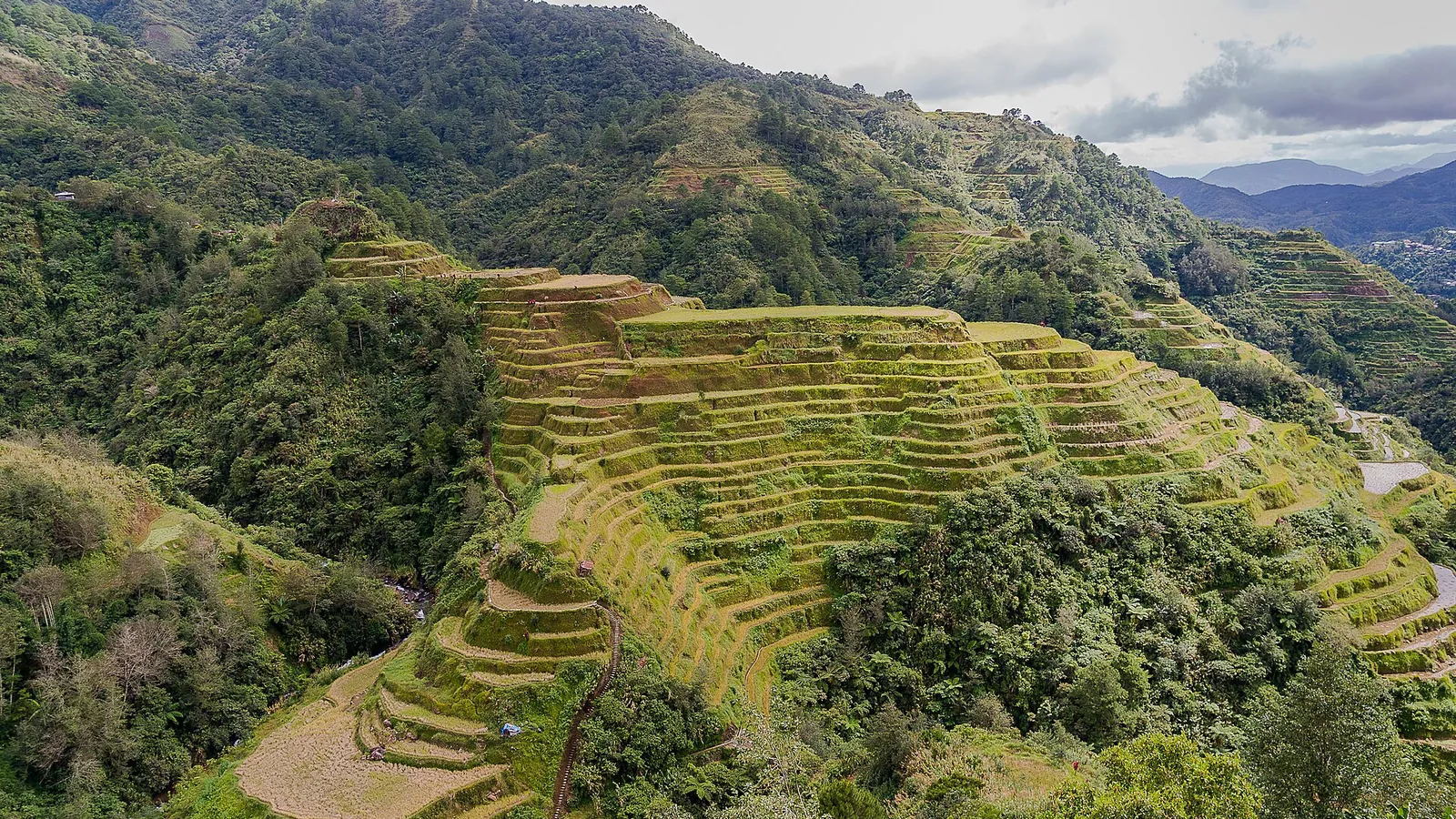
The Banaue rice terraces climbing the green mountain slopes

Ifugao, northern Luzon · Philippines

Banaue and Batad

Two-thousand-year-old rice terraces carved by hand into the Cordillera mountains, a green amphitheatre of stone walls and water.

  • Best time February–June
  • Stay 3 days
  • Good for Hikers, culture, photographers

Photo: CEphoto, Uwe Aranas · CC BY-SA 3.0

Welcome to Banaue and Batad

In the Cordillera Mountains of northern Luzon, the Ifugao people have shaped whole mountainsides into stepped rice paddies, held by stone or mud walls, watered by a network of channels from the forest above. Built over about 2,000 years, and still farmed by hand, the Ifugao Rice Terraces are a UNESCO World Heritage Site, and often called the eighth wonder of the world, although the phrase is a promotional one.

Banaue is the gateway town, with terrace views from the town viewpoints, an Ifugao museum and guesthouses. The most spectacular terraces are at Batad, an hour and a half by jeepney and then a 30-minute walk from the road, where the terraces form a giant amphitheatre around a small village, with a trek to Tappiya Falls. Other terrace clusters include Bangaan, Hapao and Cambulo.

The area is remote, cool in the mornings and misty, and best explored on foot. Many visitors combine Banaue with Sagada, another mountain destination, and it is an eight- to nine-hour overnight bus trip from Manila. Planting season, from February to April, and the golden harvest from May to June, offer contrasting scenery.

  • UNESCO Site
  • Mountains
  • Culture & Arts
  • Scenic Region

Why visit

Why visit Banaue and Batad?

The rice terraces are one of the most impressive human landscapes in Asia.

  • Ancient terraces

    Built by hand 2,000 years ago.

  • Batad amphitheatre

    The most photogenic terraces.

  • Trekking

    Through villages and forest.

  • Ifugao culture

    Living traditions.

  • Cool mountain air

    Relief from the heat.

Main attractions

Top things to see in Banaue and Batad

Batad is the highlight, with several other terrace sites.

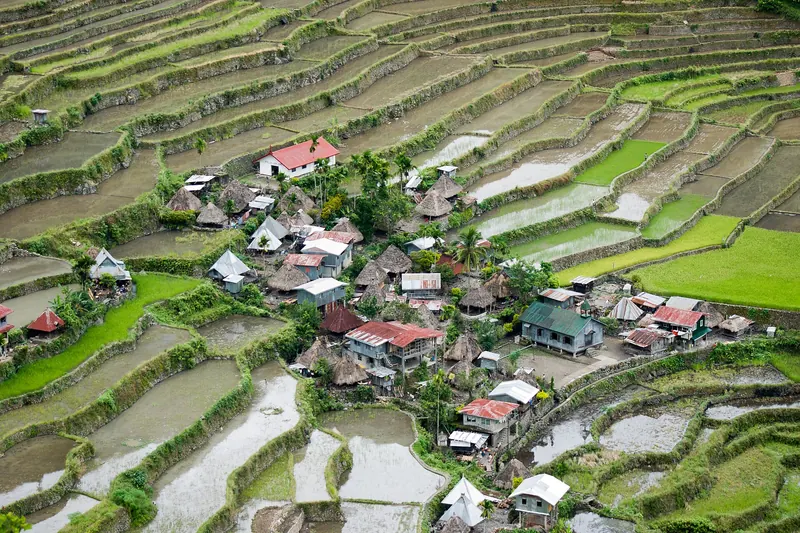
  1. The Batad rice terraces forming a green amphitheatre around a village

    Batad Rice Terraces

    A natural amphitheatre of terraces with a village at the centre, seen from the Tappiya viewpoint.

    Tip Stay the night for sunrise.

  2. Banaue viewpoint

    The main terraces near Banaue town, with viewpoints along the road.

    Tip Go at sunrise.

  3. Tappiya Falls

    A waterfall at the end of a hike through Batad's terraces.

    Tip Bring a swimsuit.

  4. Bangaan Terraces

    A village with terraces near the road.

    Tip A short stop.

  5. Ifugao Museum

    A museum with woodcarving and artefacts.

    Tip Learn about the culture.

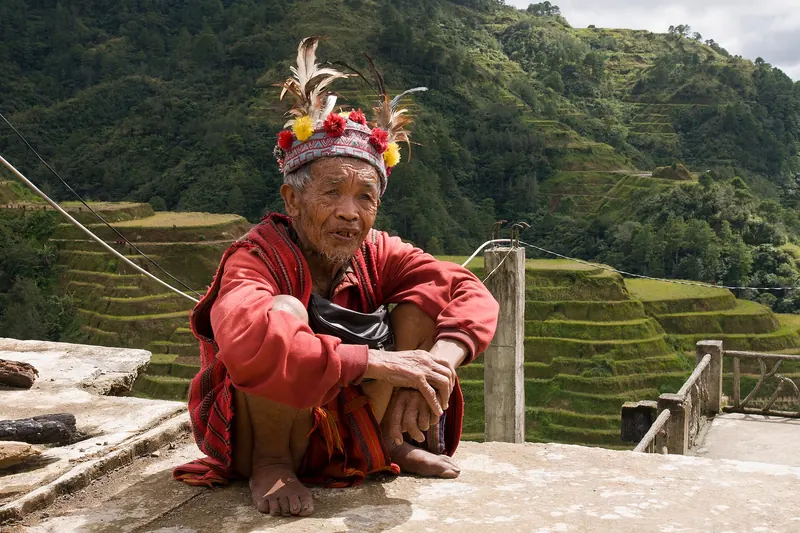
  6. An Ifugao man in traditional dress in Banaue

    Ifugao people

    Elders in traditional dress pose for photos in Banaue, for a donation.

    Tip Ask permission and tip.

Things to do

Best things to do in Banaue and Batad

This area is for walking.

  1. Hike to Tappiya Falls

    Through Batad.

    Tip Wear grippy shoes.

  2. Stay in a Batad homestay

    Wake to the terraces.

    Tip Book ahead.

  3. Walk to Cambulo

    Village trek.

    Tip Hire a guide.

  4. Visit at planting time

    Water-filled paddies.

    Tip February to April.

  5. Try rice wine

    Tapuy.

    Tip Drink with locals.

  6. Combine with Sagada

    A mountain town.

    Tip Take a jeepney.

Local food

What to eat in Banaue and Batad

Ifugao food is simple and mountain-based.

  • Heirloom rice

    Tinawon rice from the terraces.

    Where to try it Homestays.

  • Pinikpikan

    A chicken dish, a traditional ritual meal.

    Where to try it Local restaurants.

  • Tapuy

    Rice wine.

    Where to try it Villages.

  • Camote and vegetables

    Staples.

    Where to try it Homestays.

  • Mountain coffee

    Local beans.

    Where to try it Cafés.

Accommodation

Where to stay in Banaue and Batad

Stay in Banaue or Batad.

  • Banaue town

    Guesthouses.

    Best for: Transport

  • Batad village

    Homestays.

    Best for: Immersion

  • Hapao

    Village stays.

    Best for: Quiet

What a night costs

Guesthouse
US$10–25 per night
Batad homestay
US$10–20 per night
Guide
US$15–30 per day
Meal
US$3–8 per person

Transport

Getting to and around Banaue and Batad

Banaue is about 350 km from Manila.

Getting there

  • Overnight bus from Manila

    About 8 to 9 hours.

    Book in advance.

  • Jeepney to Batad junction

    About 1 hour, then a walk.

    Ask locally.

  • Private van

    From Manila or Baguio.

    Expensive.

Getting around

Jeepneys and walking.

  • Jeepney and tricycle

    To trailheads.

    Limited schedules.

  • On foot

    Treks.

    Wear boots.

  • Guide

    Recommended.

    Hire locally.

When to go

Best time to visit Banaue and Batad

The terraces are photogenic at planting and harvest.

  • February–April

    Best time

    Planting, with flooded paddies.

  • May–June

    Best time

    Green and golden.

  • July–October

    Think twice

    Wet, with landslides.

  • November–January

    Quiet

    Fallow, cool.

Worth planning around: The rainy season.

Itinerary

Three days in Ifugao

Banaue, Batad and a trek.

  1. Day1

    To Banaue

    Arrive.

    • Morning Overnight bus arrives.
    • Afternoon Banaue viewpoint.
    • Evening Rest.
  2. Day2

    Batad

    The amphitheatre.

    • Morning Jeepney and walk to Batad.
    • Afternoon Tappiya Falls.
    • Evening Homestay.
  3. Day3

    Return

    Sunrise.

    • Morning Sunrise on the terraces.
    • Afternoon Return to Banaue.
    • Evening Night bus.

Travel tips

Banaue and Batad travel tips

A few tips help you plan.

  • Book night buses early.
  • Bring a headlamp.
  • Wear good shoes.
  • Hire a guide.
  • Tip for photos.
  • Bring cash.
  • Pack warm layers.

FAQ

Banaue and Batad: frequently asked questions

How do I get to Banaue?

By overnight bus from Manila.

Is Batad worth it?

Yes.

How many days?

Three.

When to go?

February to June.

Do I need a guide?

Recommended.

Is it a UNESCO site?

Yes.

Read next

Related travel articles

Heritage

UNESCO Sites Worth Planning a Trip Around

A UNESCO listing tells you a place matters; it does not tell you whether it is worth two days and a detour. This is how to read the list usefully — and which sites reward building a trip around them.

Where to go

Beyond the Big Names: Places Worth the Detour

The most visited place in a country is rarely its best, and it is almost never its best value. This is a method for finding the destinations that do not make the postcards — and a set of examples from five of the 50 countries on this site.

Advertisement