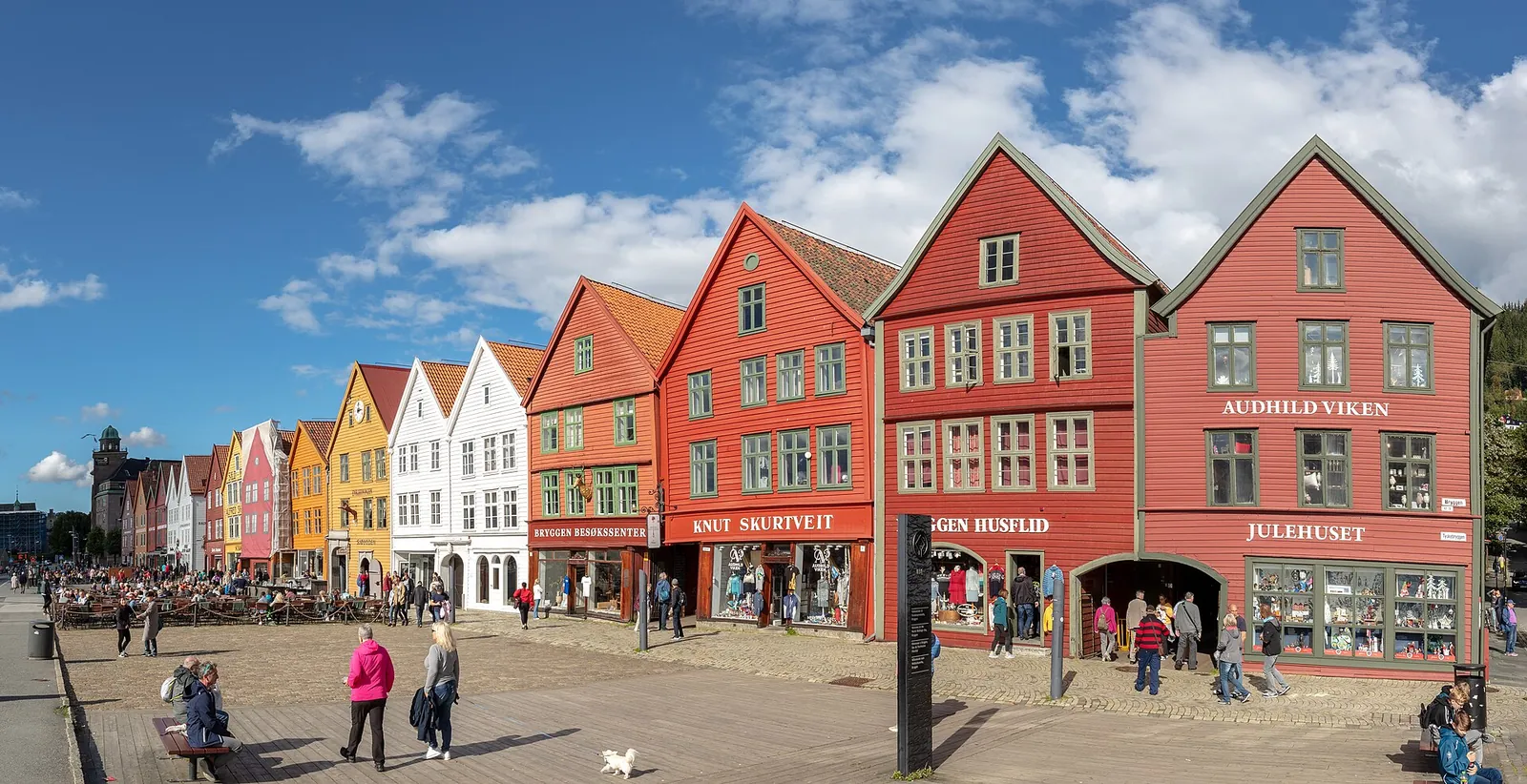
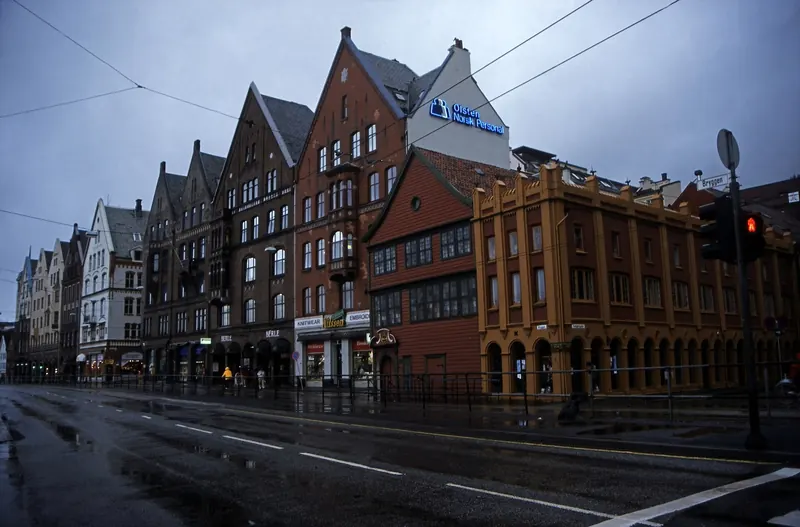
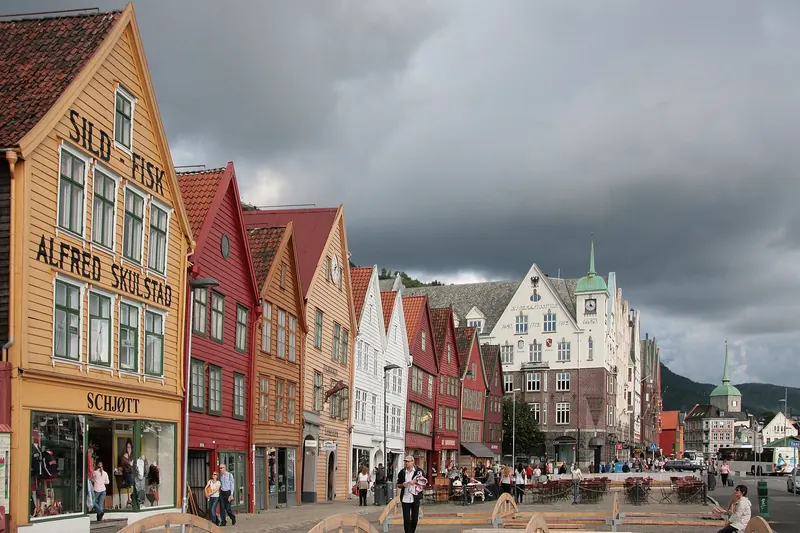
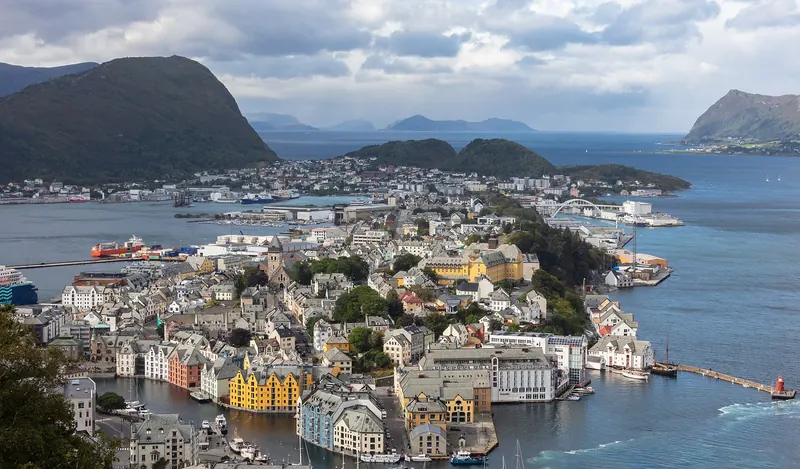
The colourful wooden buildings of Bryggen wharf in Bergen

Western Norway · Norway

Bergen

A colourful harbour city ringed by seven mountains, its UNESCO-listed wharf the historic gateway to Norway's fjords.

  • Best time May to September for the driest weather and best fjord access
  • Stay 2-3 days
  • Good for History, seafood, the start of a fjord trip

Photo: Diego Delso · CC BY-SA 4.0

Welcome to Bergen

Bergen is Norway's traditional gateway to the fjords, a colourful harbour city ringed by seven mountains and centred on Bryggen, a UNESCO World Heritage wharf of tilted, brightly painted wooden buildings dating back to the city's Hanseatic trading days.

The mountains that surround it are part of the city's identity, not just scenery — funiculars and cable cars up Fløyen and Ulriken give sweeping views over the harbour within minutes of the centre, and locals treat the surrounding trails as a normal part of daily life.

Bergen's famous rain has become something of a local joke, but the city makes a strong case for itself even on a wet day, with world-class museums, an excellent fish market and Bryggen's wharf all worth exploring regardless of weather.

  • City
  • Culture
  • History
  • Gateway

Why visit

Why visit Bergen?

Bergen's case rests on genuine history and mountain scenery packed into a compact, walkable harbour city.

  • Bryggen is a UNESCO World Heritage site

    Tilted, colourful wooden buildings dating to the city's medieval Hanseatic trading days, still standing right on the harbour.

  • It's Norway's traditional fjord gateway

    The classic starting point for cruises and day trips into the western fjords, including Hardangerfjord and Sognefjord.

  • The surrounding mountains are part of daily life

    Funiculars and cable cars put sweeping views within minutes of the harbour, not a special-occasion trip.

  • The fish market is a real working institution

    Fresh, high-quality seafood sold right on the harbour, not a purely touristic display.

  • It's more compact than Oslo

    Most major sights sit within an easy walk of Bryggen, making it a relaxed, unhurried city to explore.

Main attractions

Top things to see in Bergen

Bergen's essential sights combine its historic wharf with the mountains rising directly above the city.

  1. The tilted, colourful wooden facades of Bryggen wharf

    Bryggen

    Bergen's defining sight, a UNESCO-listed row of tilted, brightly painted wooden buildings dating to the city's medieval Hanseatic trading era.

    Tip Duck into the narrow passageways behind the main facades — much of Bryggen's character is hidden just out of sight.

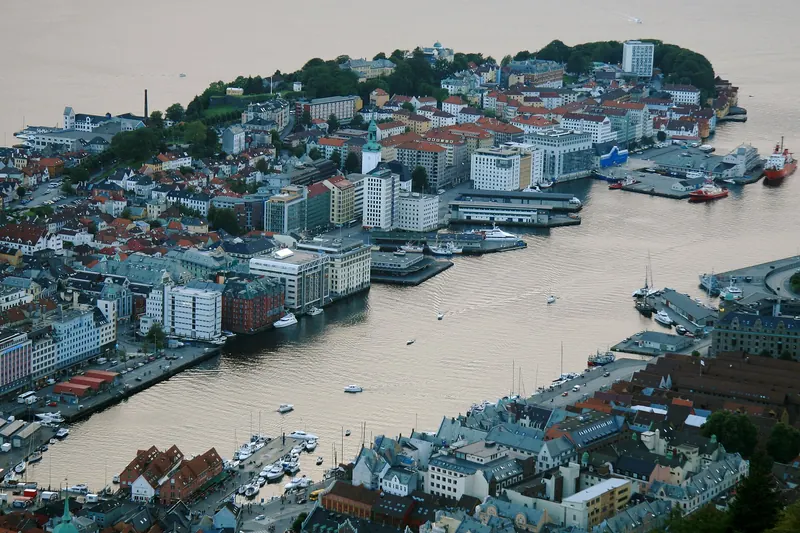
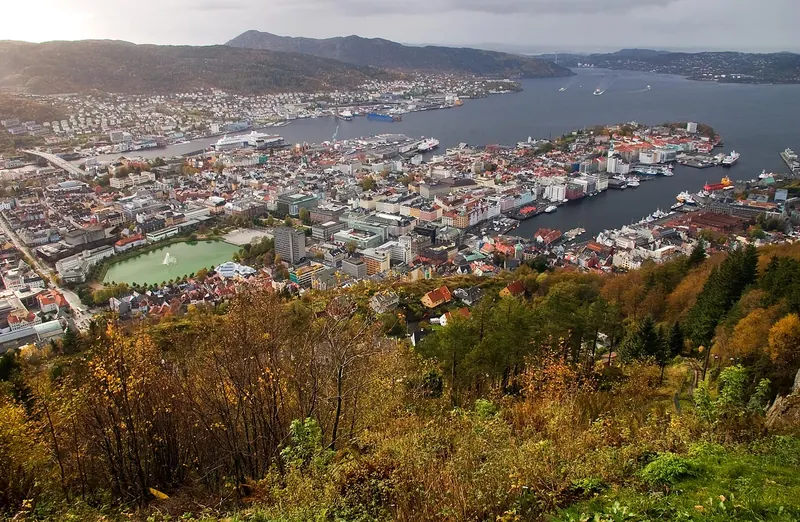
  2. The view over Bergen's harbour from Mount Fløyen

    Mount Fløyen

    A sweeping viewpoint over the city and harbour, reached by a historic funicular that's been running since 1918.

    Tip Walk back down through the forest trails rather than taking the funicular both ways.

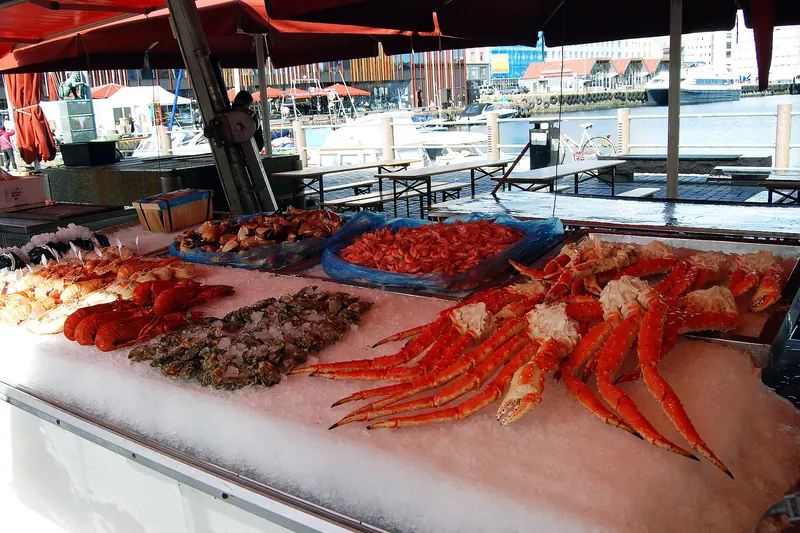
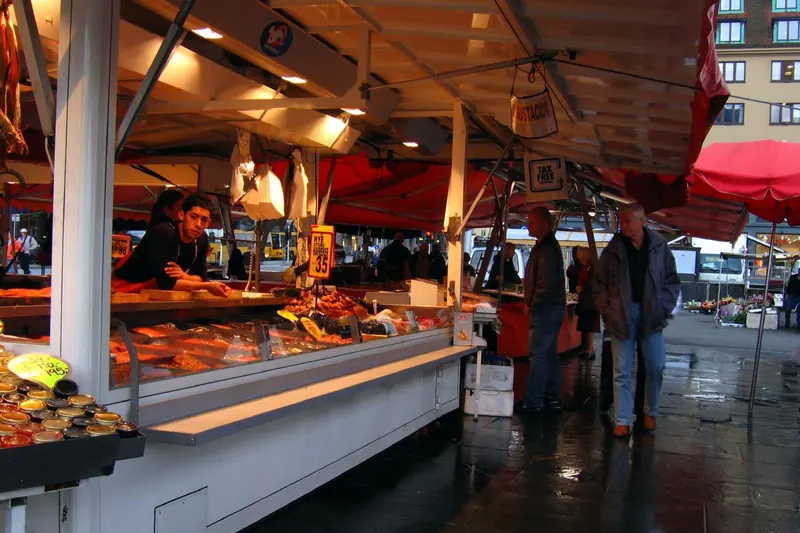
  3. Fresh seafood stalls at Bergen's harbourside fish market

    Fisketorget (Fish Market)

    A real working fish market, selling fresh catch, smoked salmon and prepared seafood right on the harbour front.

    Tip Prices favour buying a bit less from several stalls rather than a lot from one — compare before ordering.

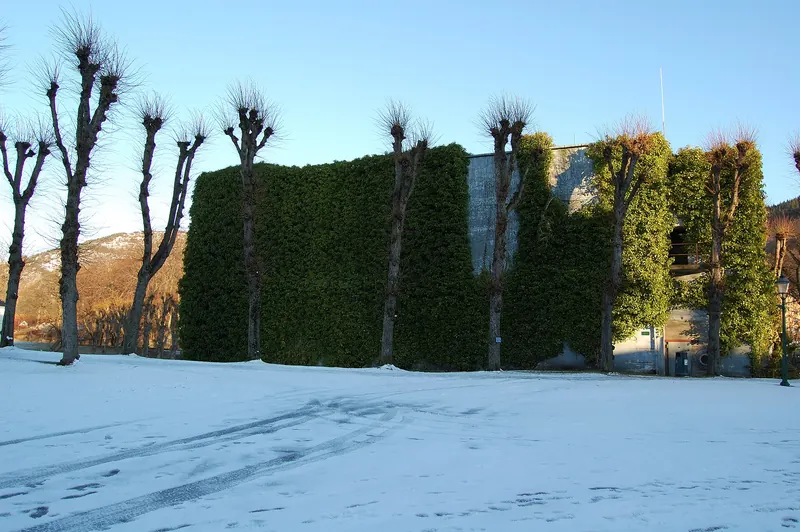
  4. The medieval walls of Bergenhus Fortress in Bergen

    Bergenhus Fortress

    A significant medieval fortress guarding the harbour entrance, including the 13th-century Håkon's Hall.

    Tip The fortress grounds are free to wander, with fine harbour views included.

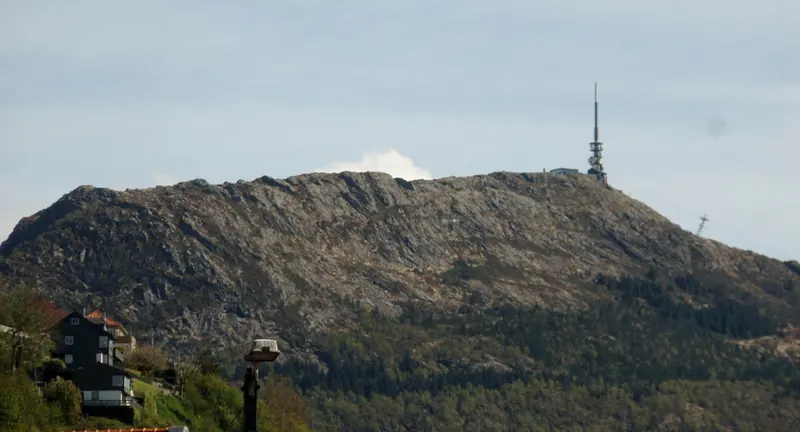
  5. Mount Ulriken, Bergen's highest peak, rising above the city

    Mount Ulriken

    Bergen's highest peak, reached by cable car, with hiking trails and views extending well beyond the city itself.

    Tip The trail between Ulriken and Fløyen (Vidden) is a serious but rewarding full-day hike for fit visitors.

  6. A historic Hanseatic-era building at the Hanseatic Museum in Bergen

    Hanseatic Museum

    An evocative preserved trading house, giving real insight into the harsh daily life of the city's medieval German merchants.

    Tip The original, unheated interiors make clear just how tough Hanseatic trading life really was.

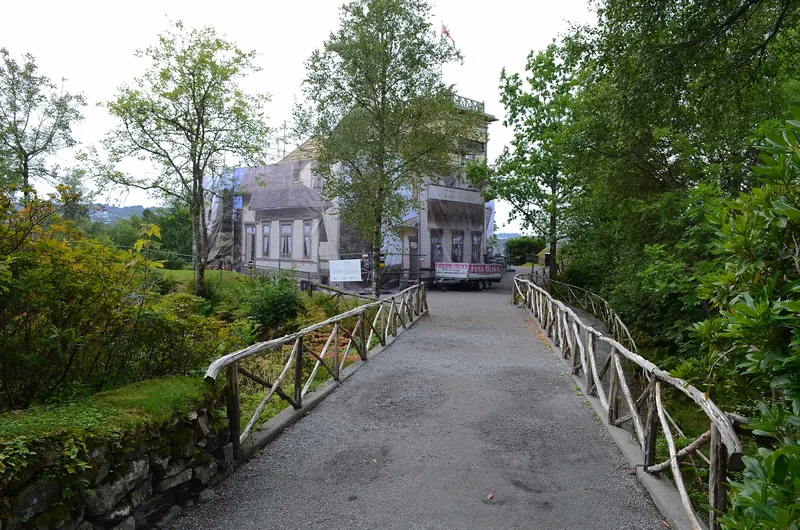
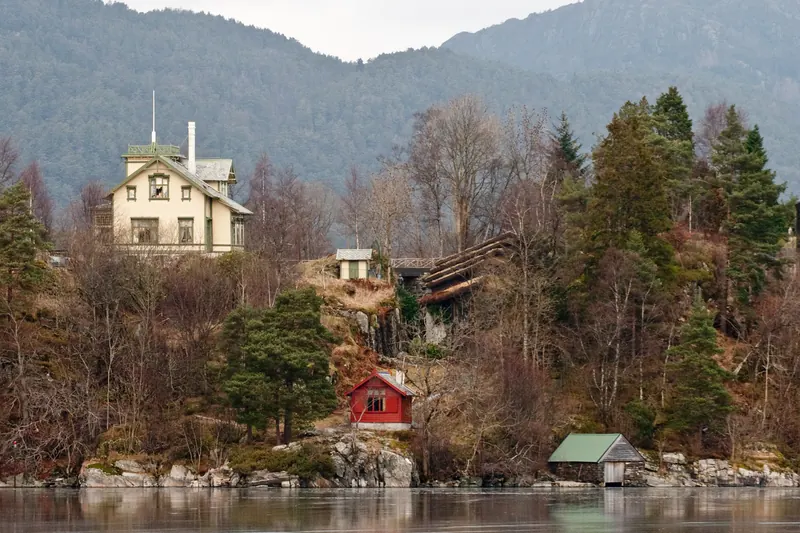
  7. Troldhaugen, composer Edvard Grieg's lakeside summer home near Bergen

    Troldhaugen

    The lakeside home of composer Edvard Grieg, preserved with his piano and personal belongings, a short trip from the centre.

    Tip Summer brings lunchtime concerts in the lakeside concert hall — check the schedule ahead.

Things to do

Best things to do in Bergen

Bergen rewards mixing its historic wharf with the mountains and water that surround it.

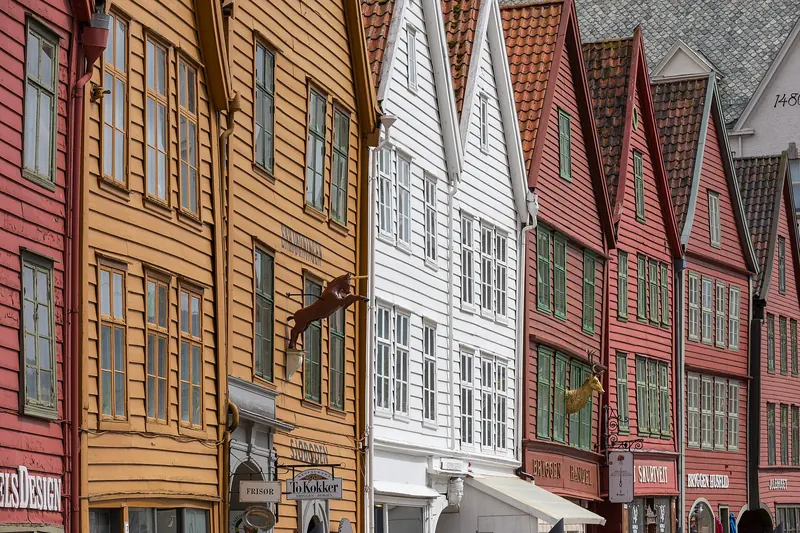
  1. Narrow wooden alleys and passageways within Bryggen

    Wander Bryggen's wooden alleys

    An absorbing wander through the narrow passageways behind Bryggen's main facades, now home to small craft shops and galleries.

    Tip Early morning, before the day-trip crowds arrive, gives the most atmospheric photos.

  2. The view from Mount Fløyen over Bergen

    Ride the funicular up Fløyen

    A quick, easy way to get one of Bergen's best views, whether for a short visit or as the start of a longer hike.

    Tip Sunset rides are popular in summer — book ahead if visiting during peak season.

  3. Fresh seafood on display at Bergen's fish market

    Sample fresh seafood at the fish market

    An essential Bergen experience, sampling fresh catch, smoked salmon or a seafood platter right on the harbour.

    Tip Lunchtime offers the freshest selection before the day's catch starts running low.

  4. Ride the cable car up Ulriken

    A quick way to Bergen's highest peak, with a restaurant and hiking trails waiting at the top.

    Tip Clear days offer views extending well out to the surrounding fjords and islands.

  5. Troldhaugen, Edvard Grieg's lakeside home near Bergen

    Visit Troldhaugen for a lakeside concert

    A lovely way to spend an afternoon, exploring Grieg's preserved home and, in summer, catching a lakeside piano concert.

    Tip Book concert tickets ahead — the small hall fills up quickly in summer.

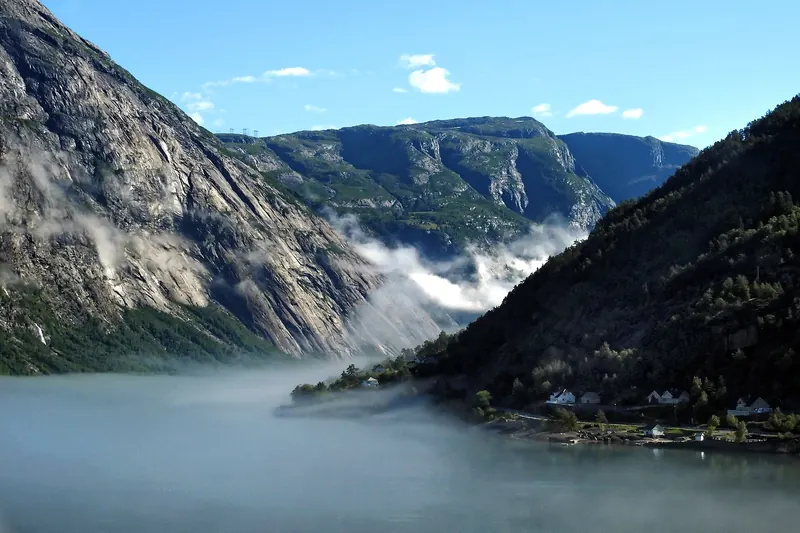
  6. Hardangerfjord, a scenic fjord reachable on a day trip from Bergen

    Day-trip to a nearby fjord

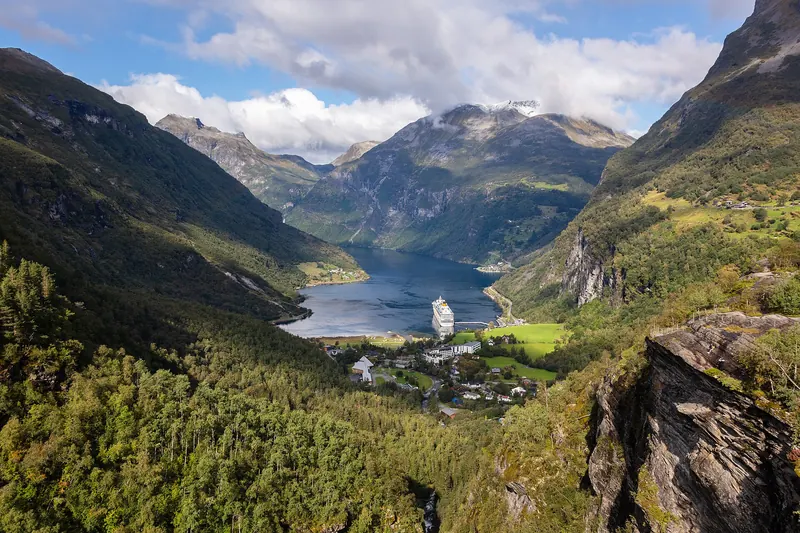
    An easy way to see real fjord scenery without committing to a multi-day trip, with Hardangerfjord and Sognefjord both reachable in a day.

    Tip Organised day tours handle the transport logistics for visitors without a rental car.

Local food

What to eat in Bergen

As Norway's genuine historic fish trading capital, Bergen's food leans heavily on fresh and preserved seafood.

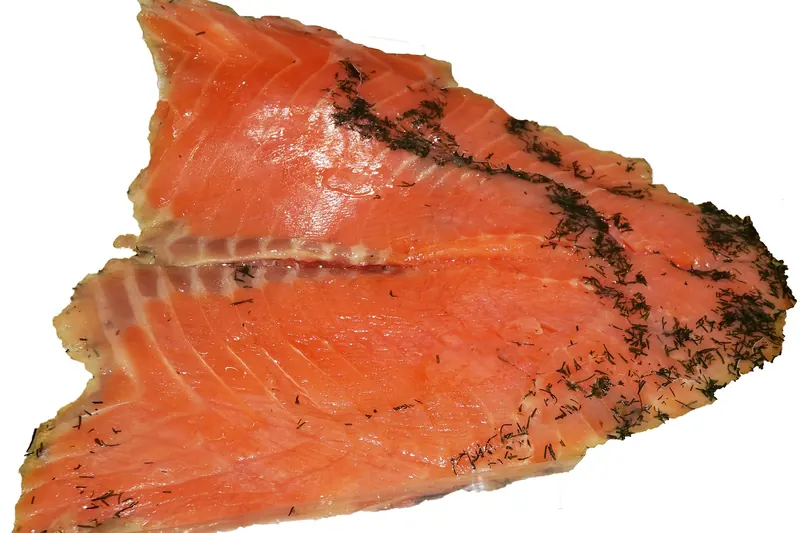
  • Gravlax, cured salmon, a Norwegian specialty

    Salmon (gravlax)

    Exceptional in Bergen, sold fresh or cured at the fish market and served throughout the city's restaurants.

    Where to try it The fish market and harbourside restaurants.

  • Brunost, Norway's caramel-coloured brown cheese

    Brunost (brown cheese)

    An essential taste of Norway, widely available at cafés and breakfast tables across the city.

    Where to try it Cafés and hotel breakfasts throughout Bergen.

  • Fiskesuppe (fish soup)

    A creamy, warming fish soup, a Bergen specialty and a real comfort on the city's famously rainy days.

    Where to try it Traditional restaurants throughout the city centre.

  • Klippfisk (dried salted cod)

    Central to Bergen's historic trading wealth, dried and salted cod once exported worldwide from this very harbour.

    Where to try it The fish market and traditional Bergen restaurants.

  • Fresh shrimp

    A popular harbourside treat, peeled and eaten fresh, sometimes bought straight from a boat.

    Where to try it The fish market and harbourfront vendors.

  • Cinnamon buns (kanelboller)

    An essential Norwegian bakery treat, worth pairing with a coffee at one of Bergen's many independent cafés.

    Where to try it Bakeries and cafés throughout the city centre.

Accommodation

Where to stay in Bergen

Bergen offers accommodation across every budget, concentrated within easy walking distance of Bryggen.

  • City centre (near Bryggen)

    The most convenient base, close to the harbour, fish market and Bryggen itself.

    Best for: Being central and walkable to major sights

  • Nordnes peninsula

    A short walk from the centre, with good harbour views and a more local atmosphere.

    Best for: A quieter, more residential feel

What a night costs

Hostel or guesthouse
NOK 400–800 per night
Mid-range hotel
NOK 1,300–2,500 per night
Mount Fløyen funicular (return)
About NOK 180
Fjord day cruise
About NOK 900–1,500

Transport

Getting to and around Bergen

Bergen is well connected to Oslo by one of the world's great scenic train journeys, plus direct flights.

Getting there

  • The Bergen Line train from Oslo

    A spectacular roughly 7-hour journey crossing Norway's mountains directly.

    Widely considered one of the world's great scenic rail routes in its own right.

  • Flight to Bergen Flesland

    The fastest option from Oslo or international destinations, about 30 minutes from the city centre.

    A light rail line connects the airport directly to central Bergen.

  • Fjord cruise or ferry

    A scenic way to arrive if combining Bergen with a wider fjord itinerary.

    Several coastal and fjord routes connect Bergen to other western Norway towns.

Getting around

Bergen's compact centre is easily walkable, with funiculars and cable cars covering the surrounding heights.

  • On foot

    Covers Bryggen, the fish market and Bergenhus Fortress easily.

    Central Bergen's main sights sit within a comfortable walking radius of each other.

  • Funicular and cable car

    The standard way to reach Fløyen and Ulriken's viewpoints above the city.

    Both run frequently and are quick, scenic rides in their own right.

  • Light rail (Bybanen)

    Useful for reaching Troldhaugen and other sights slightly further from the centre.

    Runs frequently and connects to the airport as well.

When to go

Best time to visit Bergen

Bergen is famous for rain in any season, but summer brings the longest daylight and most reliable conditions for fjord day trips.

  • Summer (June–August)

    Best time

    The longest daylight and most reliable weather for fjord cruises and mountain viewpoints.

  • Shoulder months (May, September)

    Good

    Good weather odds with thinner crowds than peak summer.

  • Winter (November–February)

    Good

    Atmospheric and moody, with museums and Bryggen's covered passageways offering shelter from the rain.

  • Any season

    Good

    Bergen's famous rain means no season is guaranteed dry — pack a proper waterproof regardless.

Worth planning around: Nothing strongly — Bergen's rainy reputation means every season carries some chance of wet weather, so plan for it rather than around it.

Itinerary

Two days in Bergen

Built around Bryggen and the fish market on day one, the surrounding mountains on day two.

  1. Day1

    Bryggen and the harbour

    The historic wharf, fish market and Hanseatic Museum.

    • Morning Bryggen's wooden wharf and the Hanseatic Museum.
    • Afternoon The fish market and Bergenhus Fortress.
    • Evening Dinner near the harbour.
  2. Day2

    The mountains

    Fløyen's viewpoint and Grieg's lakeside home.

    • Morning Funicular up Mount Fløyen.
    • Afternoon Troldhaugen, Edvard Grieg's home.
    • Evening A final wander around Bryggen at dusk.

Travel tips

Bergen travel tips

Practical notes that make a Bergen stay noticeably smoother.

  • Pack a proper waterproof — Bergen's rain is a real, year-round possibility.
  • Book Bergen Line train tickets well ahead for the best fares and window seats.
  • Visit the fish market around lunchtime for the freshest selection.
  • Book any fjord day cruise ahead in peak summer season.
  • Wear sturdy shoes if planning to hike beyond the funicular stations.
  • Check Troldhaugen's concert schedule ahead if a lakeside performance interests you.

FAQ

Bergen: frequently asked questions

How many days do you need in Bergen?

Two to three days covers Bryggen, the fish market and a mountain viewpoint at a comfortable pace.

Is Bergen the best base for fjord trips?

Yes — it's Norway's traditional fjord gateway, with day cruises and multi-day routes both departing from the city.

Does it really rain that much in Bergen?

Yes — Bergen is famously one of Europe's rainiest cities, so a proper waterproof is worth packing regardless of season.

How do you get from Oslo to Bergen?

The scenic Bergen Line train takes about 7 hours, or a direct flight takes under an hour.

Is Bergen expensive?

Yes, like most of Norway — supermarket meals and a hostel or guesthouse help manage costs.

What is Bergen known for?

Its UNESCO-listed Bryggen wharf, its seven surrounding mountains, and its role as the historic gateway to Norway's western fjords.

Read next

Related travel articles

Where to go

Beyond the Big Names: Places Worth the Detour

The most visited place in a country is rarely its best, and it is almost never its best value. This is a method for finding the destinations that do not make the postcards — and a set of examples from five of the 50 countries on this site.

Transport

Getting Around Europe by Train

European rail is excellent and confusing — six national operators, three completely different pricing models, and a rail pass that is either a bargain or a waste depending on where you are going. Here is how to work out which.

Advertisement