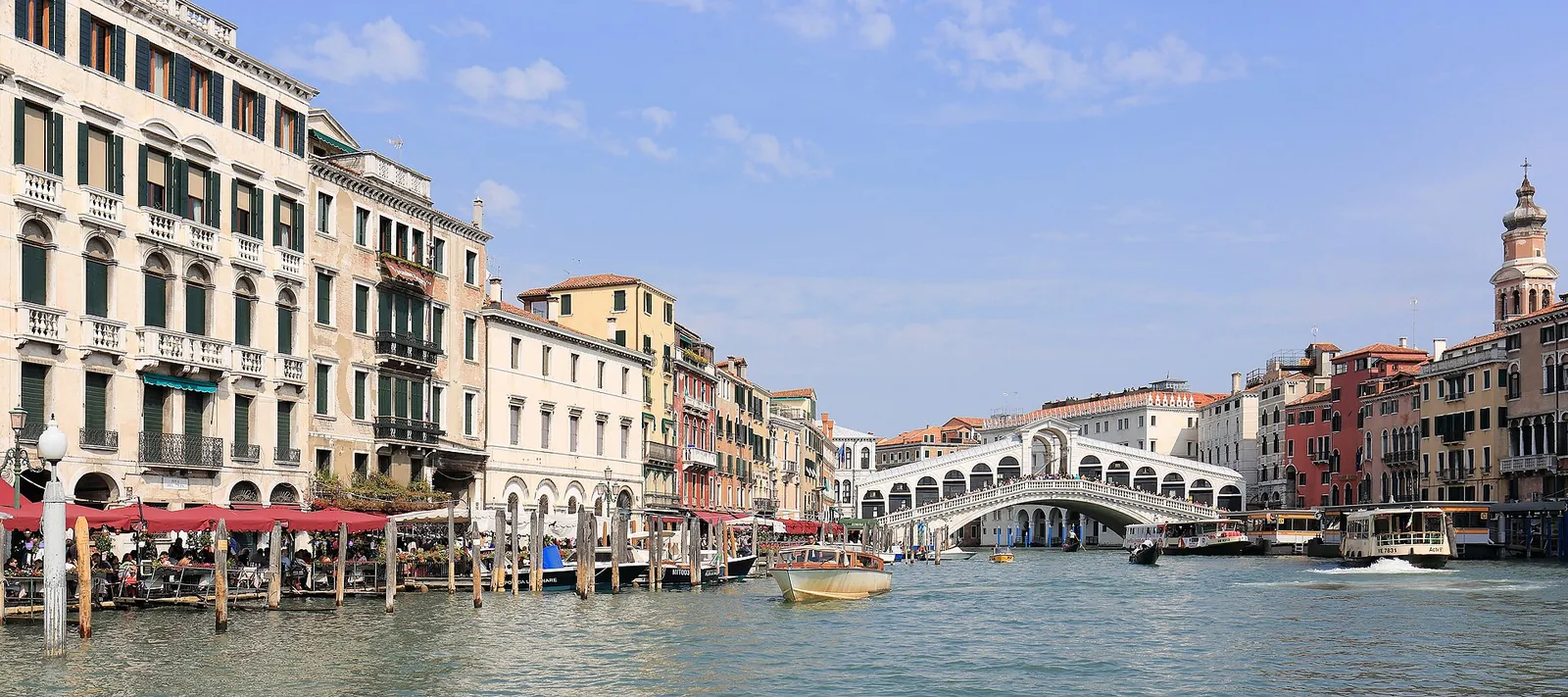
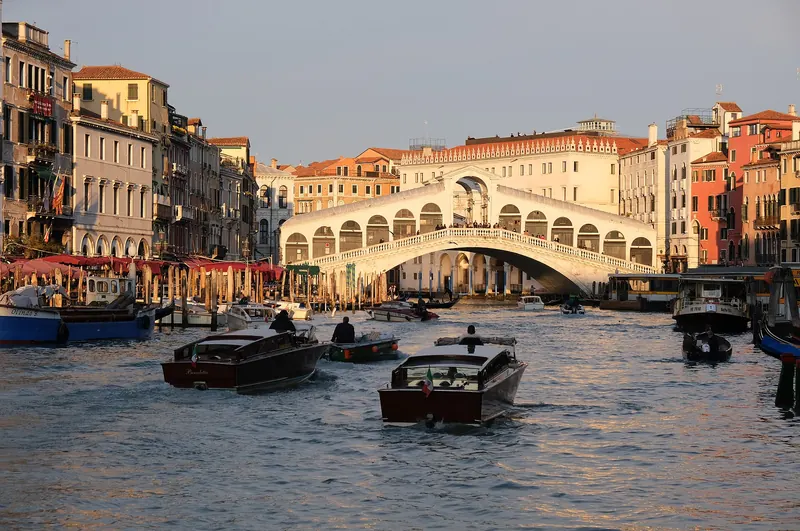
The Grand Canal curving past palace facades towards the Rialto Bridge in Venice

Veneto · Italy

Venice

A city of 118 islands built on wooden piles in a lagoon, which functioned as a naval superpower for a thousand years and has no roads at all.

  • Best time October–November and February–March
  • Stay 3 days
  • Good for Art, architecture, walking, food crawls, doing nothing well

Photo: Martin Falbisoner · CC BY-SA 4.0

Welcome to Venice

Venice should not exist. It was built on marshy islands in a lagoon by people fleeing the mainland, on millions of wooden piles driven down through mud into firm clay, and it went on from there to run a maritime empire for over a thousand years — the Republic lasted from the eighth century until Napoleon ended it in 1797. There are no roads. There are no cars. Everything, including the post, the rubbish, the building materials and the ambulances, moves by boat or on foot over some four hundred bridges.

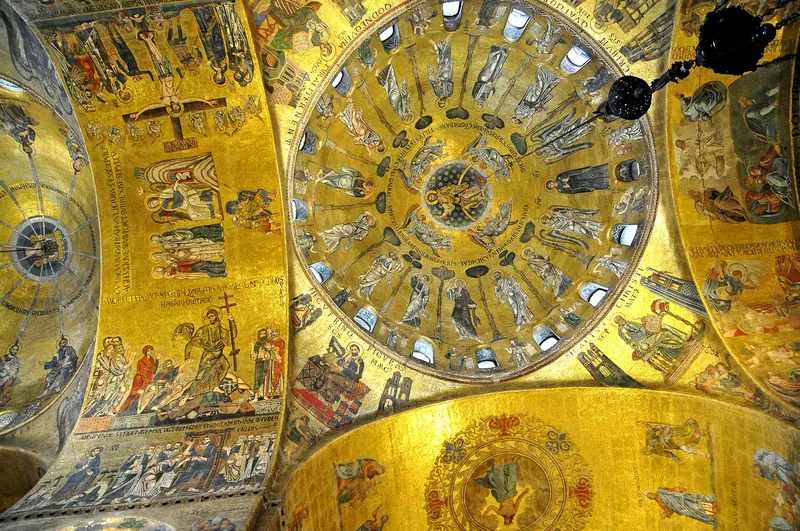
The consequence for a visitor is that Venice is the one European city where the layout itself is the attraction. St Mark's Basilica is covered inside with something in the order of eight thousand square metres of gold-ground mosaic and carries four bronze horses looted from Constantinople in 1204. The Doge's Palace next door holds one of the largest canvas paintings in the world. But the thing people actually remember is walking for an hour through alleys barely wide enough for two people, crossing bridges over green water, and coming out into a square with a well-head in the middle and nobody in it.

The city has a real problem with its own popularity, and it is worth understanding before you arrive. Some twenty million visitors a year arrive in a historic centre whose resident population has fallen below fifty thousand, and the municipality has trialled an access fee for day visitors on peak days. The single most useful thing any traveller can do about this is to stay overnight: between roughly six in the evening and ten in the morning, when the day boats and the cruise crowds are gone, Venice becomes a quiet residential city and one of the most extraordinary places in the world.

  • Historic Site
  • UNESCO Site
  • Culture & Arts
  • Coast & Beaches
Why visit

Why visit Venice?

There is no comparison for Venice, which is both the whole argument and the reason it is so overrun.

  • A city with no roads

    Every journey is by boat or on foot. That single fact changes the sound, the pace and the shape of everything — no traffic noise, no pavements, no way to be anywhere in a hurry.

  • Byzantine, Gothic and Renaissance in one square

    St Mark's is essentially a Byzantine church; the Doge's Palace is Venetian Gothic; the Libreria opposite is High Renaissance. Three worlds facing each other across one piazza.

  • Painting where it was painted for

    Tintoretto's sixty-canvas cycle still hangs in the Scuola Grande di San Rocco he made it for; Titian's Assumption is over the Frari's high altar; Veronese fills the Doge's ceilings. Not a museum, a building.

  • The cicchetti bar is a great institution

    Small plates on the counter, a glass of wine called an ombra, standing up, moving on after twenty minutes. It is the cheapest and best way to eat in an expensive city.

  • The lagoon is a second destination

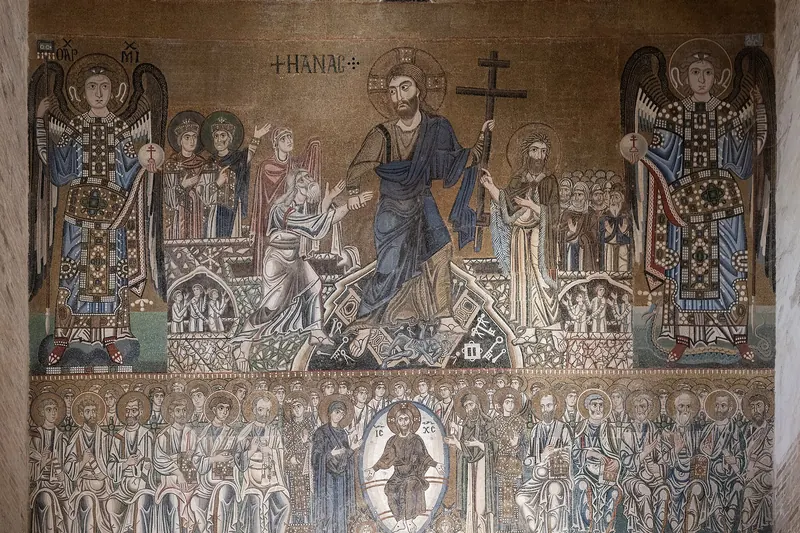
    Murano's furnaces, Burano's painted houses, and Torcello — the island Venice was founded from, now almost empty, with seventh-century foundations and a Last Judgment in mosaic.

Main attractions

Top things to see in Venice

Everything in Venice is close together, but the alleys mean nothing is where you expect. Allow more walking time than the map suggests.

  1. Gold-ground Byzantine mosaics covering a domed vault inside St Mark's Basilica

    St Mark's Basilica

    A Byzantine church in a Gothic square, its interior sheathed in gold-ground mosaics, with the jewelled Pala d'Oro altarpiece behind the altar and the original bronze horses taken from Constantinople upstairs in the museum.

    Tip Book a timed slot. Go on a bright morning when the mosaics light up, and pay the small extra for the loggia and the horses.

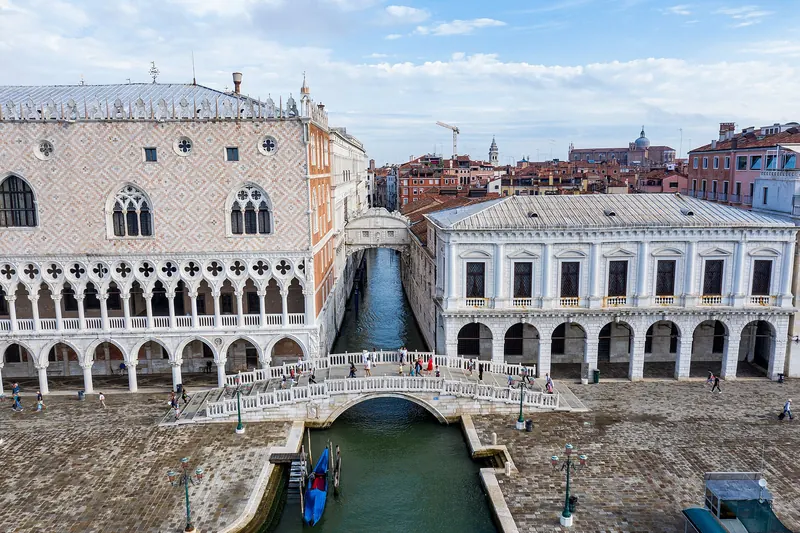
  2. The enclosed Bridge of Sighs connecting the Doge's Palace to the old prisons

    The Doge's Palace

    The seat of the Republic's government: council chambers hung with Veronese and Tintoretto, including a Paradise that is among the largest canvases ever painted, and the Bridge of Sighs leading to the prisons.

    Tip The Secret Itineraries tour of the administrative rooms, torture chamber and Casanova's cell is far better than the standard route.

  3. Palace facades lining the Grand Canal near the Ponte degli Scalzi

    The Grand Canal

    Four kilometres of palace facades from the thirteenth to the eighteenth century, curving through the city in an S. The number 1 vaporetto runs its whole length, stopping everywhere, for the price of a standard fare.

    Tip Sit outside at the back. Do it once by day and once after dark — they are entirely different journeys.

  4. The Rialto Bridge arching over the Grand Canal

    Rialto and its market

    The bridge of 1591 and, on the western bank, the market that has fed the city for eight centuries: the produce stalls and the Pescheria fish hall under its Gothic arcade.

    Tip The fish market is closed Sunday and Monday, and finished by early afternoon. Go at 08:00 — it is the best hour in Venice.

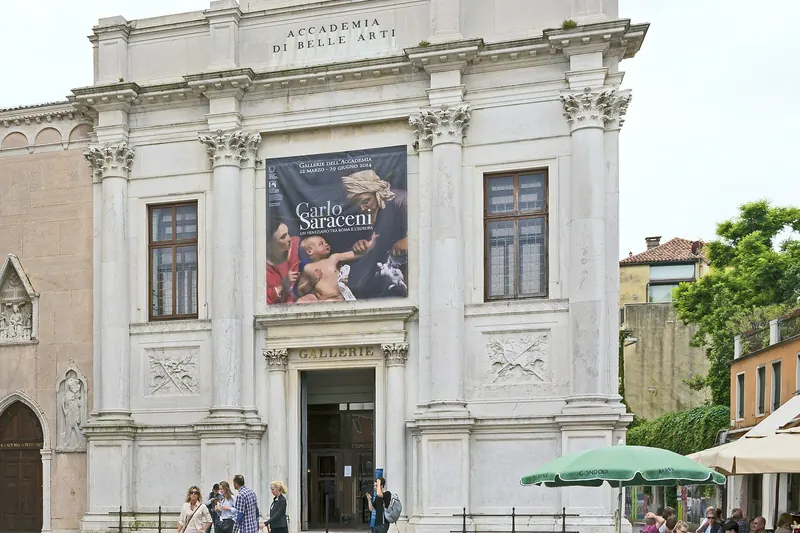
  5. The stone facade of the Gallerie dell'Accademia on its Venice square

    Gallerie dell'Accademia

    The great collection of Venetian painting: Bellini, Giorgione's Tempest, Titian, Tintoretto, Veronese's enormous Feast in the House of Levi and Carpaccio's narrative cycles.

    Tip Rarely as busy as it should be. Two hours, and the Peggy Guggenheim's modern collection is a ten-minute walk along the same bank.

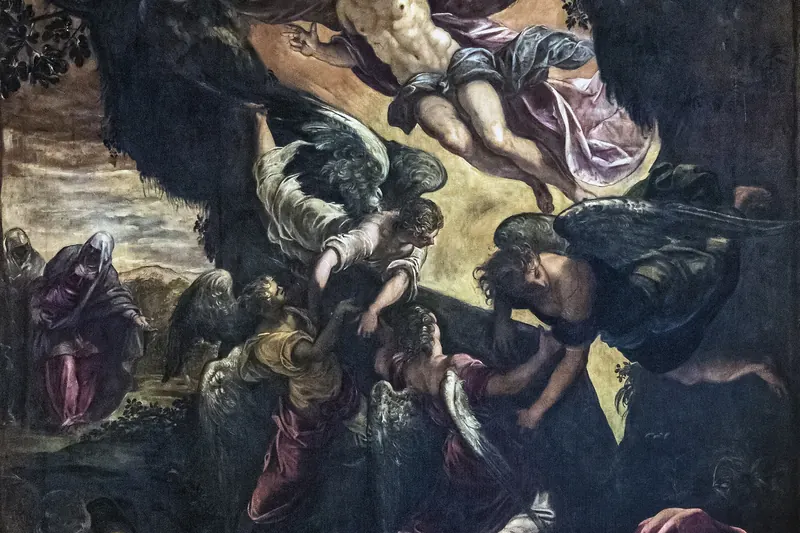
  6. Tintoretto's Resurrection of Christ, one of dozens of his canvases painted for the Scuola Grande di San Rocco

    San Rocco and the Frari

    The Scuola Grande di San Rocco holds around sixty Tintorettos painted for its walls and ceilings over twenty years. The Frari, two minutes away, has Titian's Assumption above the altar and Titian's own tomb.

    Tip San Rocco lends mirrors so you can look at the ceilings without breaking your neck. Use one.

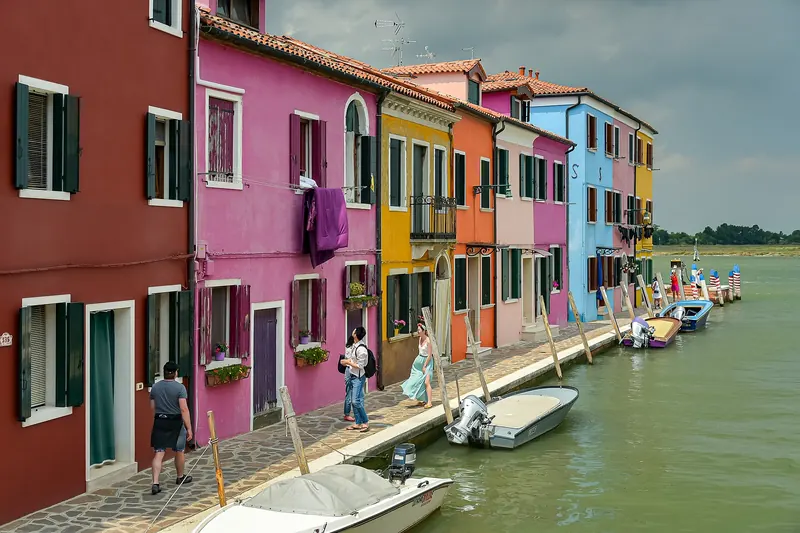
  7. A canal lined with brightly painted houses on the island of Burano

    Murano, Burano and Torcello

    Murano has made glass since the furnaces were moved off the main islands in 1291; Burano is a fishing village of saturated painted houses and lacework; Torcello, nearly deserted, has Venice's oldest church and its Byzantine mosaics.

    Tip Take line 12 from Fondamente Nove and do all three in one day, working outward and coming back through Murano.

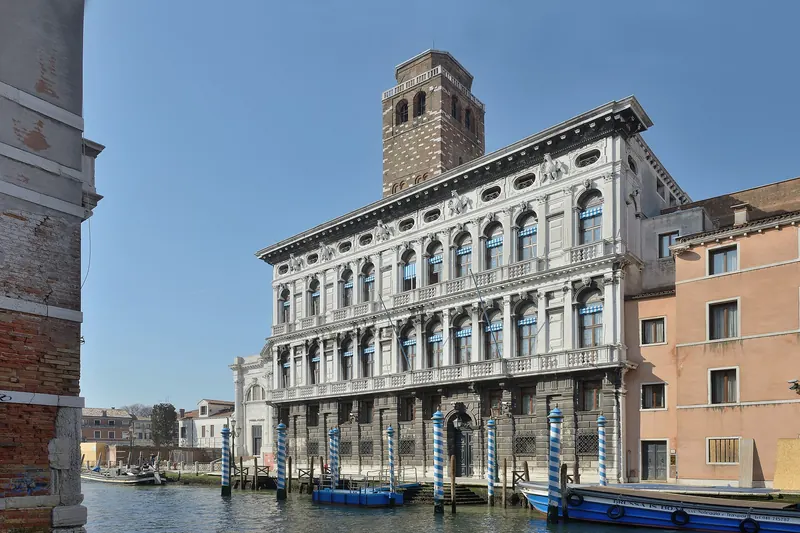
  8. Palazzo Labia standing on the wide Cannaregio canal

    The Ghetto and Cannaregio

    The world's first ghetto, established in 1516 and the origin of the word, with unusually tall buildings and five synagogues; and around it, Cannaregio's long straight canals, which is where Venetians actually live.

    Tip The Jewish Museum runs guided synagogue visits. Cannaregio's Fondamenta della Misericordia is the best evening street in the city.

Things to do

Best things to do in Venice

Venice is a city to walk and eat in rather than to tick off. Book two major sights, and leave the rest of the time unstructured.

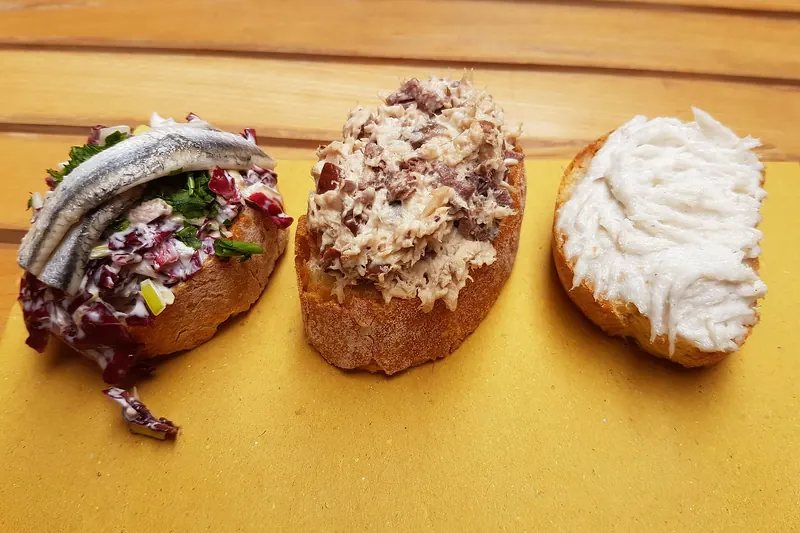
  1. A counter laid with small plates of Venetian cicchetti

    Do a cicchetti crawl

    Move between three or four bacari, standing at the counter for a plate of baccalà on bread, a fried sardine or a meatball and a small glass of wine, then walking to the next one.

    Tip Around Rialto's market side and along Cannaregio's Misericordia. Two euros a plate, three for the wine, and it beats any sit-down dinner in San Marco.

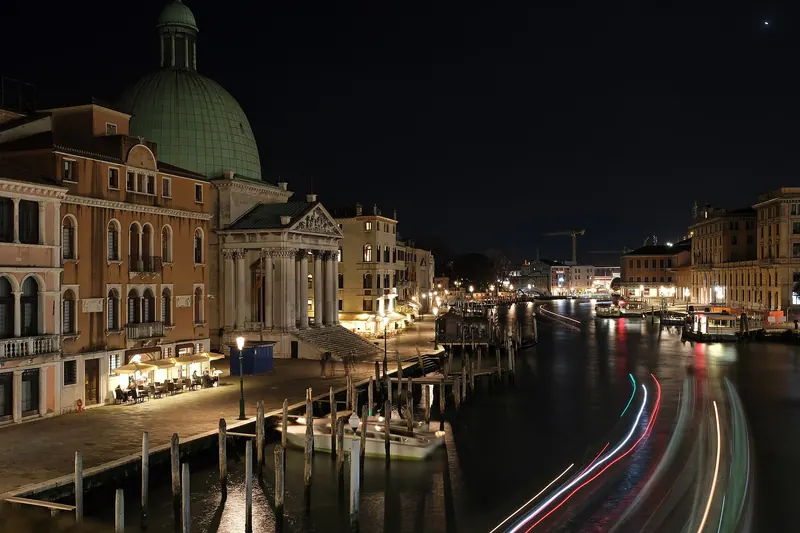
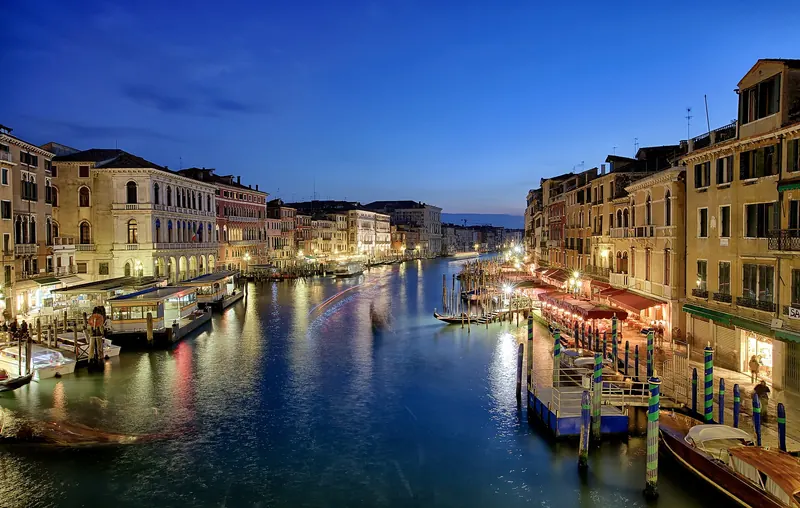
  2. Palace windows lit along the Grand Canal after dark

    Ride the number 1 at night

    The Grand Canal after dark, with the palace windows lit and the boat almost empty, is one of the best hours anyone can spend in Italy. It costs a standard vaporetto fare.

    Tip Board at Piazzale Roma or San Marco for the full run and stand at the open stern.

  3. The Byzantine Last Judgement mosaic covering the west wall of Torcello's cathedral

    Spend a whole day in the lagoon

    Torcello for the mosaics and the silence, Burano for the colours and the lace, Murano for the furnaces. The boat journeys between them are half the pleasure.

    Tip Buy a day travel pass; it pays for itself by the third boat. Start early — Torcello is at its best empty.

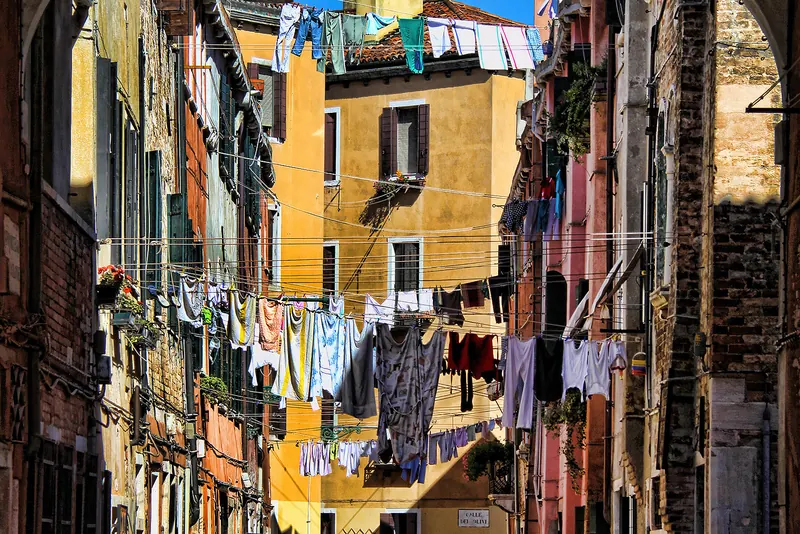
  4. A narrow Venetian calle strung with laundry between old buildings

    Get deliberately lost

    Put the map away in Castello or Cannaregio and follow whatever looks interesting. Venice is an island — you cannot go far wrong, and the yellow signs for San Marco and Rialto will always find you.

    Tip The further you get from San Marco the cheaper and better the food becomes. That rule almost never fails here.

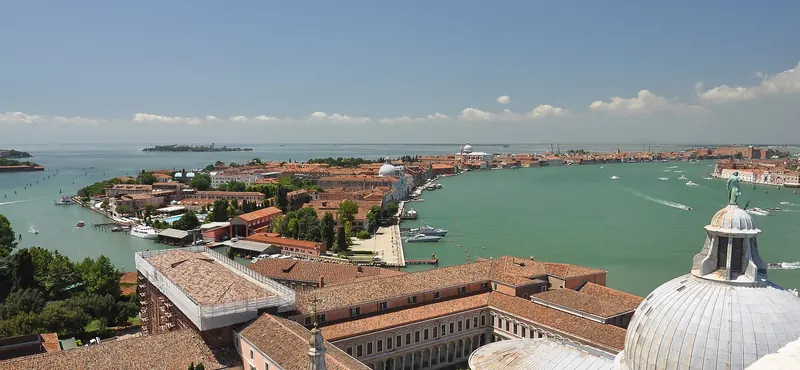
  5. The view across the water to Giudecca from the top of San Giorgio Maggiore's campanile

    Climb San Giorgio Maggiore instead

    The campanile on the island opposite San Marco has a lift, no real queue, and a better view than the famous one — because it looks back at the piazza rather than standing in it.

    Tip Two minutes on the number 2 vaporetto from San Zaccaria. Palladio's church at its foot is worth the stop alone.

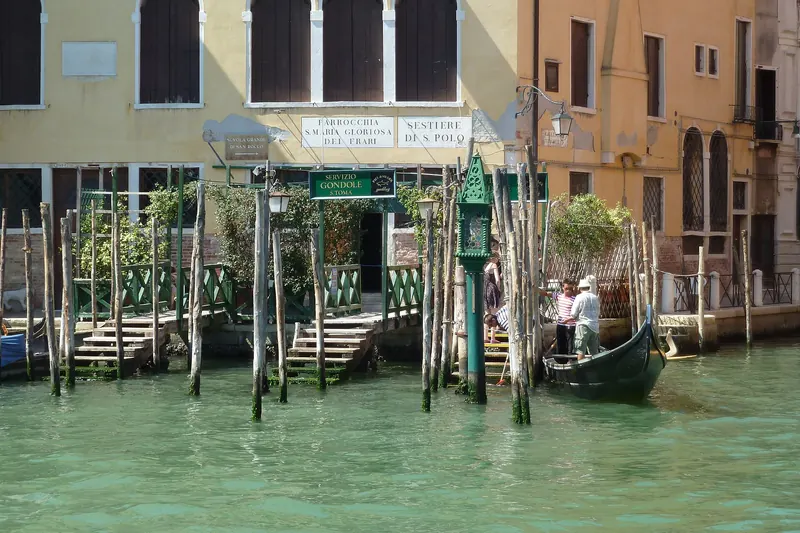
  6. A gondola traghetto ferrying standing passengers across the Grand Canal at San Tomà

    Cross by traghetto

    There are only four bridges over the Grand Canal, so gondola ferries shuttle across at several points for a couple of euros. Locals stand for the crossing; you may sit, at the cost of some dignity.

    Tip A far more honest gondola experience than the hour-long serenaded version, and about two per cent of the price.

Local food

What to eat in Venice

Venetian cooking is lagoon food — fish, salt cod, cuttlefish, rice from the mainland marshes — and it is served in small plates at a bar more naturally than at a table.

  • A spread of Venetian cicchetti laid out on a bacaro counter

    Cicchetti and an ombra

    Small plates laid on the counter of a bacaro: crostini with whipped salt cod, fried sardines, meatballs, marinated vegetables, half a boiled egg with anchovy. An ombra is the small glass of wine that goes with them.

    Where to try it Bacari around the Rialto market and along Cannaregio. Standing up, one or two plates per stop.

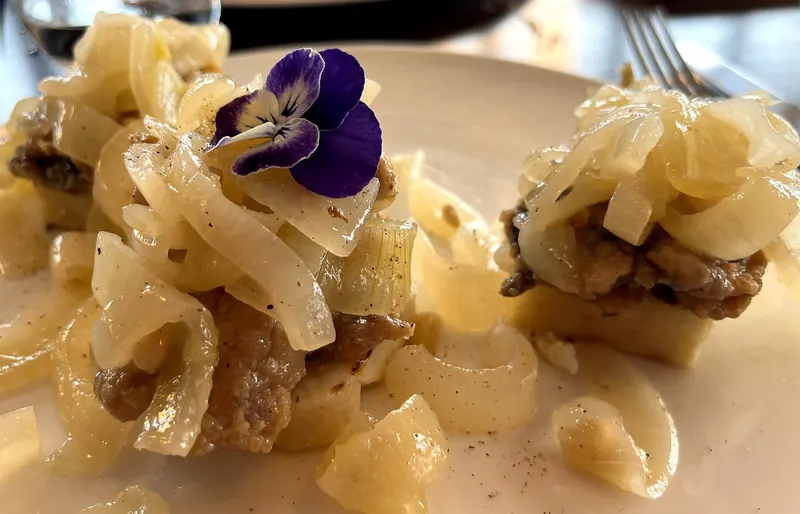
  • A plate of sarde in saor, sardines marinated with sweated onions

    Sarde in saor

    Fried sardines marinated with sweated onions, vinegar, pine nuts and raisins — a preserving technique from the days when the fleet needed food that kept. Sweet, sour and much better than it sounds.

    Where to try it Almost every bacaro. The version with raisins is the traditional one.

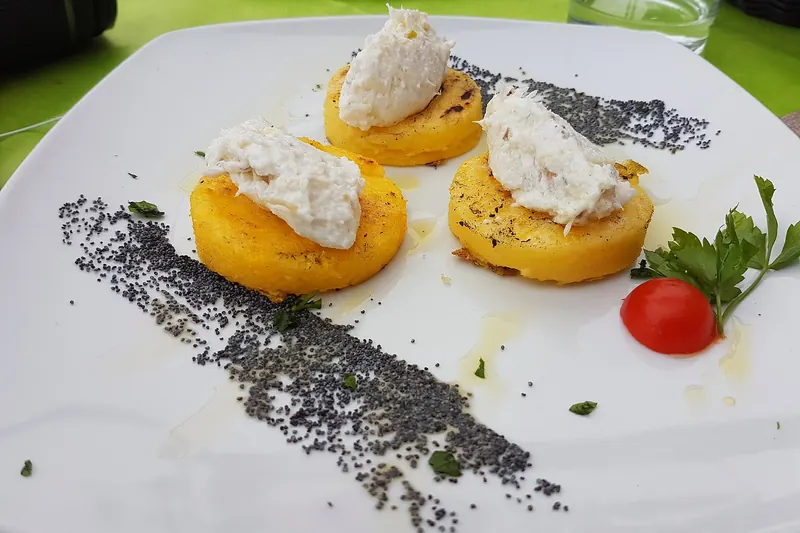
  • Whipped baccalà mantecato spread over grilled white polenta

    Baccalà mantecato

    Salt cod poached and then beaten with olive oil until it becomes a pale, airy cream, spread on grilled white polenta. Venice's signature cicchetto and, done properly, remarkable.

    Where to try it Any decent bacaro. It should be white and fluffy, never grey or grainy.

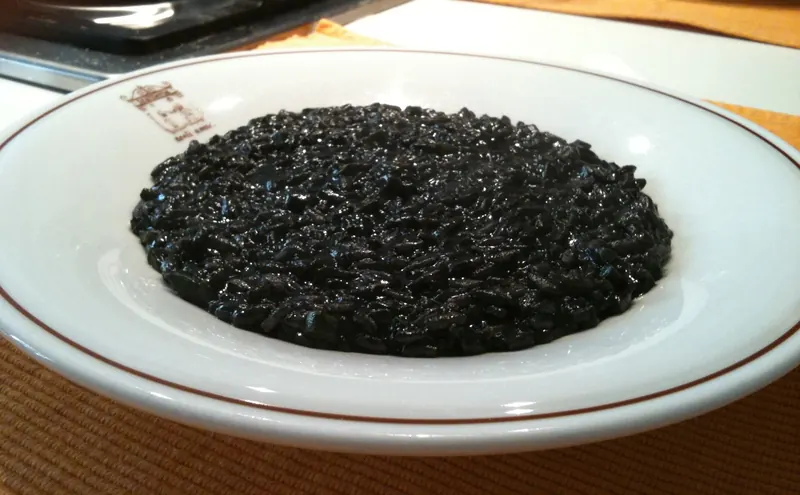
  • Risotto al nero di seppia, stained black with cuttlefish ink

    Risotto, black or green

    Risi e bisi with peas in spring, once served to the Doge on St Mark's day; and risotto al nero di seppia, stained with cuttlefish ink, which is far more delicate than its colour implies.

    Where to try it Sit-down trattorias in Dorsoduro and Cannaregio rather than the bars.

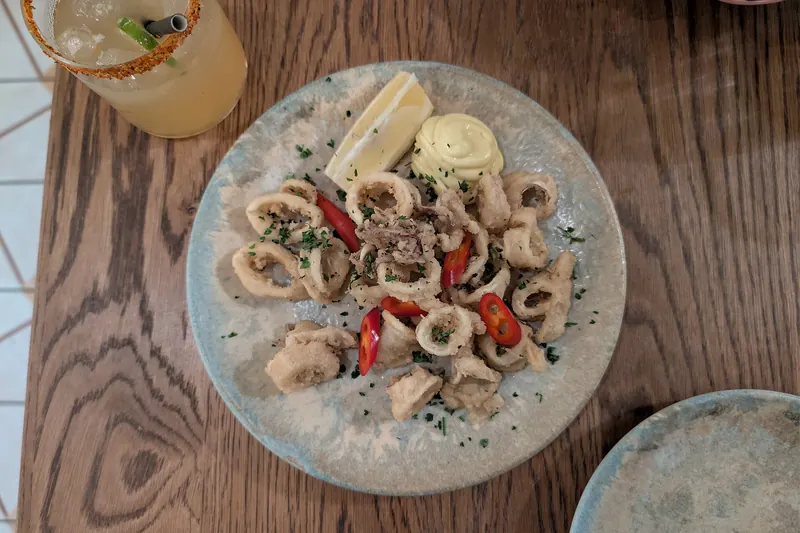
  • A plate of fried calamari rings, the everyday version of Venice's fritto misto

    Moeche and fritto misto

    Moeche are lagoon crabs caught during the few weeks each spring and autumn when they moult, floured and fried whole and eaten shell and all. Fritto misto is the everyday version — squid, prawns, small fish.

    Where to try it Moeche only in season and worth seeking out. Fritto misto in a paper cone from the fried-fish shops.

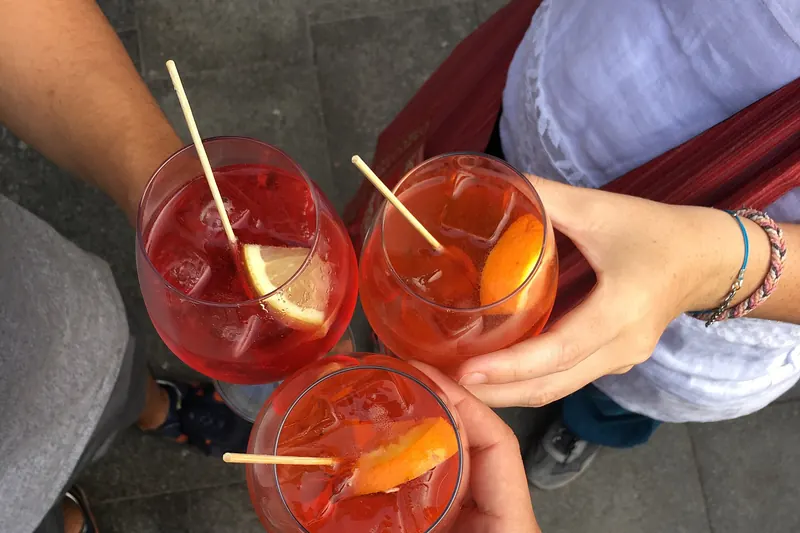
  • A glass of orange Aperol spritz with ice and a slice

    The spritz

    The Veneto's own aperitivo and the origin of the drink: white wine, soda and a bitter — Select in Venice proper, Aperol for something sweeter, Campari for something harder. Ordered from about six.

    Where to try it Campo Santa Margherita in Dorsoduro at aperitivo hour, where students and locals fill the square.

Accommodation

Where to stay in Venice

Staying in the historic centre rather than on the mainland is the single decision that most changes a Venice trip. It costs more and it is worth it.

  • San Marco

    The most expensive and the most crowded by day, but you step out into the Piazza at seven in the morning when it is empty. Restaurants here are the worst value in the city.

    Best for: Being at the centre of it

  • Dorsoduro

    The Accademia, the Guggenheim, the Salute and Campo Santa Margherita, with a student population, good bars and the long sunny Zattere promenade facing the Giudecca canal.

    Best for: The best all-round base

  • Cannaregio

    The northern district where most remaining Venetians live: straight canals, the Ghetto, excellent bacari along the Misericordia, and prices noticeably below San Marco.

    Best for: Value and real life

  • Castello

    East of San Marco, running out towards the Arsenale and the public gardens where the Biennale is held. Increasingly residential the further east you go, and much calmer.

    Best for: Quiet and the Biennale

  • Giudecca or Mestre

    Giudecca is across the water with views back at the city and a two-minute boat ride. Mestre on the mainland is far cheaper — and you will miss the city at dawn and after dark, which is the point of coming.

    Best for: Space, or budget

What a night costs

Mid-range hotel in the centre
€150–300 per night
Vaporetto day pass
€25–27, and worth it from the third journey
Cicchetti dinner
€15–25 per person including wine
Gondola, official rate
Around €90 for 30 minutes, more after 19:00 — rates are set by the city

Transport

Getting to and around Venice

Venice is easy to reach and slightly awkward to enter, because the last leg is always on foot or by boat.

Getting there

  • Marco Polo Airport (VCE)

    On the lagoon edge, 13 km north. Alilaguna water buses run to the city in about 75 minutes; ordinary buses reach Piazzale Roma in 25 minutes and cost a fraction of that.

    Private water taxis cost well over €100 but deliver you to your hotel's water door, which is memorable.

  • By train

    Venezia Santa Lucia is on the Grand Canal itself, which makes arriving by rail unusually pleasant. Milan 2h15, Florence 2h05, Rome 3h45.

    Do not get off at Venezia Mestre on the mainland — it is one stop short and a different place entirely.

  • Treviso Airport (TSF)

    Forty kilometres north, used by budget carriers, with coaches timed to flights running to Piazzale Roma in about 70 minutes.

    Cheap fares, but add the transfer and the total time is close to flying into Marco Polo.

  • By car

    You can drive only as far as Piazzale Roma or the Tronchetto car park, where you leave the car in an expensive garage and continue on foot or by boat.

    There is no reason to bring a car to Venice. If you have one, park at Mestre and take the train in.

Getting around

Walking and the vaporetto, in that order. Nothing else is necessary and nothing else is cheap.

  • Walking

    The whole historic centre is about three kilometres across and every part of it is reachable on foot, over roughly four hundred bridges, all with steps.

    Wheeled luggage over stepped bridges is miserable. Pack light or arrange a porter — this is not a minor detail.

  • Vaporetto

    The public water buses. Line 1 runs the Grand Canal stopping everywhere, line 2 runs it faster, and lines 12 and 14 serve the lagoon islands.

    Single fares are steep, so buy a 24, 48 or 72-hour pass if you expect more than two or three trips a day.

  • Traghetto

    Gondola ferries crossing the Grand Canal at points between the four bridges, for a couple of euros. Locals stand for the crossing.

    Hours are limited and shrinking. A useful shortcut when one is running.

  • Water taxi

    Fast, private and expensive — well over €100 from the airport, €60 or more within the city. Occasionally justified with luggage or late at night.

    Agree the fare before boarding and use licensed boats from official ranks.

  • Gondola

    Rates are set by the city rather than negotiated: roughly €90 for thirty minutes by day and more in the evening, for the boat rather than per person.

    Split between four or six it is reasonable. Ask for the back canals rather than the Grand Canal.

When to go

Best time to visit Venice

Venice inverts the usual advice. Its best months are the quiet, cool ones, because the city's real enemy is not weather but the number of people in it.

  • Spring (April–June)

    Good

    Warm, bright and extremely busy, with the Biennale opening and cruise season under way. Lovely, but the alleys around San Marco and Rialto are shoulder to shoulder by ten in the morning.

  • Summer (July–August)

    Think twice

    Hot, humid and airless, with the canals at their least fragrant and crowds at their peak. Prices are highest and many Venetians leave. The Redentore fireworks in July are the one great argument for it.

  • Autumn (September–November)

    Best time

    September is still warm and thins out sharply after the first week; October and November are cool, misty and beautiful. Acqua alta becomes possible from late autumn, which is atmospheric more often than it is a problem.

  • Winter (December–March)

    Best time

    Cold, foggy and half empty, with the lowest prices of the year and the city at its most itself. Carnival in February is the exception and is enormously busy.

Worth planning around: Cruise-ship mornings and the middle of any summer day around San Marco and Rialto. The city has trialled an access fee for day visitors on peak dates — check the current rules if you are not staying overnight.

Itinerary

Three days in Venice

One day for St Mark's, one for the art and the bacari, one for the lagoon. Deliberately unhurried, because rushing Venice defeats it.

  1. Day1

    San Marco and the Grand Canal

    The set pieces, done early.

    • Morning St Mark's Basilica on a booked slot, then the Doge's Palace and the Bridge of Sighs.
    • Afternoon The number 1 vaporetto down the Grand Canal, then San Giorgio Maggiore's campanile.
    • Evening Cicchetti near Rialto, then the Piazza after eleven when it empties.
  2. Day2

    Painting and the back canals

    Tintoretto and Titian, then get lost.

    • Morning The Rialto market at eight, then the Frari and the Scuola Grande di San Rocco.
    • Afternoon The Accademia, or the Peggy Guggenheim if you would rather have modern.
    • Evening Aperitivo in Campo Santa Margherita and dinner in Dorsoduro.
  3. Day3

    The lagoon

    Three islands and a lot of boat.

    • Morning Line 12 to Torcello for the Byzantine mosaics and the silence.
    • Afternoon Burano's painted houses, then Murano's glass furnaces on the way back.
    • Evening Cannaregio's Misericordia for a last bacaro crawl.

Travel tips

Venice travel tips

Venice-specific practicalities, and the one piece of advice that matters more than the rest.

  • Stay overnight in the historic centre. Between six in the evening and ten in the morning the day boats are gone and the city becomes quiet and residential — which is the Venice everybody says they want and most visitors never see.
  • Pack light. There are around four hundred bridges and every one of them has steps; dragging a large wheeled case from the station to your hotel is a bad half hour.
  • The further you walk from San Marco, the better and cheaper the food becomes. Restaurants with photographs on the menu, a tout at the door or a 'menu turistico' anywhere near the Piazza should be walked past.
  • Buy a vaporetto pass rather than singles if you plan more than two or three journeys a day — single tickets are among the most expensive public transport fares in Europe.
  • Book St Mark's Basilica and the Doge's Palace ahead. The basilica's timed slots cost very little and save an hour, and the Doge's Secret Itineraries tour is much better than the standard route.
  • The Rialto fish market runs from early morning until about lunchtime and is closed Sunday and Monday. Eight in the morning there is one of the best hours in the city.
  • Gondola prices are set by the city, not negotiated — roughly €90 for thirty minutes by day, more after seven, for the whole boat. Split between four or six people it is reasonable; ask for the back canals rather than the Grand Canal.
  • Acqua alta between about October and January floods the lowest parts of the city — mainly San Marco — for a few hours around high tide. Raised walkways appear, sirens sound in advance, and rubber boots are sold everywhere. It is rarely a reason to change plans.

FAQ

Venice: frequently asked questions

How many days do you need in Venice?

Three is right: one for St Mark's and the Grand Canal, one for the painting and the bacari, and one for the lagoon islands. Two works if you skip the islands, but the islands are where Venice gets quiet again. Crucially, at least two of those nights should be in the historic centre rather than on the mainland.

Is Venice too crowded to enjoy?

At midday around San Marco and Rialto in summer, yes. But the crowds are concentrated in a narrow band of hours and a small part of the city. Stay overnight, be out before ten and after six, and walk into Cannaregio or Castello, and you will spend most of your trip in near-empty streets. Choosing October, November or February over July changes it completely.

Do I have to pay to enter Venice?

The city has trialled an access fee for day visitors on selected peak dates, with people staying overnight in the city exempt because they already pay tourist tax. The scheme has changed between years, so check the current rules for your dates before travelling — and note that staying a night is both the exemption and the better trip.

Is a gondola ride worth it?

The rates are set by the city — roughly €90 for thirty minutes by day and more in the evening, for the boat rather than per person — so it is expensive alone and reasonable split between four or six. Ask for the quiet back canals rather than the Grand Canal. For a couple of euros, the traghetto ferries that cross the Grand Canal give you a standing gondola trip with no serenade at all.

Where should I stay in Venice?

Dorsoduro for the best all-round base, with the Accademia, the Zattere and a proper evening scene in Campo Santa Margherita. Cannaregio for value and the district where Venetians actually live. Castello for quiet. San Marco if you want to step into the Piazza at dawn and do not mind the prices. Avoid Mestre on the mainland unless budget makes it unavoidable.

When is the best time to visit Venice?

October and November, or February and March outside Carnival. Venice is one of the few places where the cold, quiet months are the best — low prices, thin crowds, fog on the canals. September is warm and empties after the first week. July and August are hot, humid and at peak crowding, and the canals are at their least appealing.

What is acqua alta?

High water: a combination of tide, wind and low pressure that floods the lowest parts of the city — mostly St Mark's Square — for a few hours, mainly between October and January. Sirens warn in advance, raised walkways go out, and shops sell boots. The MOSE barriers at the lagoon mouths have been raised against the higher tides since 2020. For most visitors it is a curiosity rather than a disruption.

Read next

Related travel articles

Transport

Getting Around Europe by Train

European rail is excellent and confusing — six national operators, three completely different pricing models, and a rail pass that is either a bargain or a waste depending on where you are going. Here is how to work out which.

Heritage

UNESCO Sites Worth Planning a Trip Around

A UNESCO listing tells you a place matters; it does not tell you whether it is worth two days and a detour. This is how to read the list usefully — and which sites reward building a trip around them.

Planning

Planning Your First Trip to Europe

Most first European trips go wrong in the same three ways: too many cities, too little time in each, and a route shaped by a cheap flight rather than by geography. Here is how to avoid all three.

Advertisement