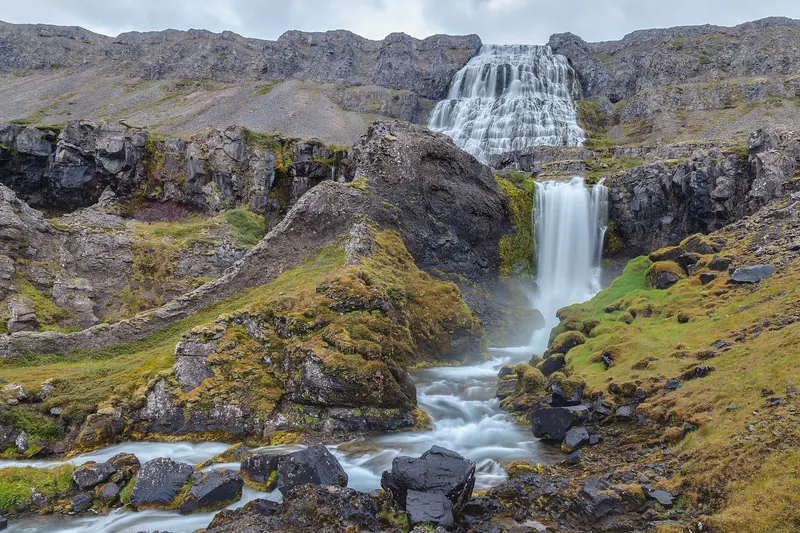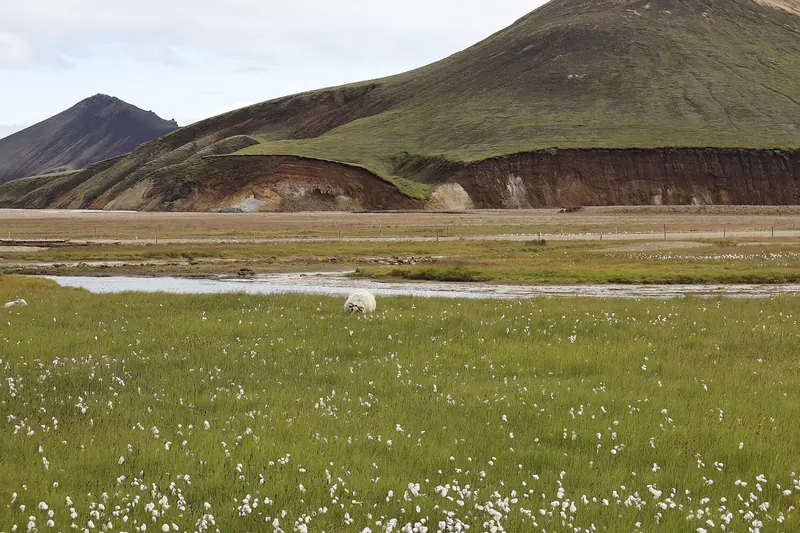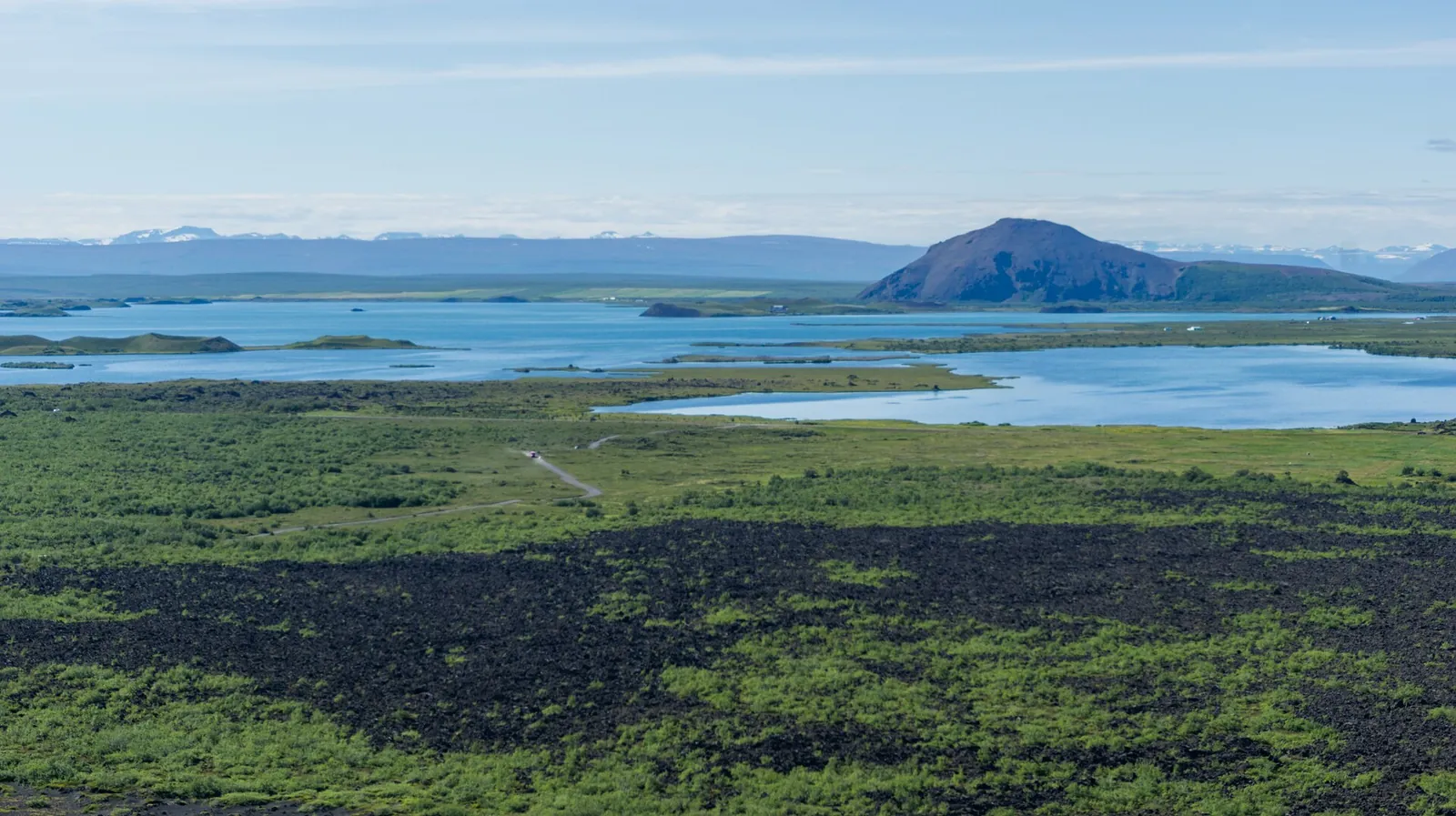


Lake Mývatn surrounded by volcanic terrain in North Iceland

North Iceland · Iceland

Lake Mývatn & North Iceland

A volcanic lake ringed by lava fields and mudpots, with Iceland's second city and its best whale watching a short drive away.

  • Best time Summer for easy access, winter for the northern lights
  • Stay 2-3 days
  • Good for Geology, wildlife, a quieter alternative to the south

Photo: Michal Klajban · CC BY-SA 4.0

Welcome to Lake Mývatn & North Iceland

Lake Mývatn is North Iceland's answer to the Golden Circle: a compact area packed with geothermal fields, lava formations and an otherworldly volcanic lake, but with a fraction of the crowds since it sits a full day's drive from Reykjavik.

The region rewards a slower pace than a day trip — Hverir's roaring steam vents, Dimmuborgir's lava pillars and Goðafoss and Dettifoss waterfalls are all close together, while Akureyri, Iceland's genuine second city, and Húsavík, the country's best whale-watching town, are both under an hour away.

It's also one of the best bases for exploring the north as a whole, whether you're driving the full Ring Road or flying directly into Akureyri to skip the long drive from Reykjavik.

  • Nature & Wildlife
  • Geothermal
  • Wildlife
  • Road Trip

Why visit

Why visit Lake Mývatn & North Iceland?

North Iceland's case rests on genuine geological drama with far fewer crowds than the south.

  • Hverir is one of Iceland's most visceral geothermal fields

    Roaring steam vents and bubbling mudpots on a stark, colourful, almost lunar landscape.

  • It's far quieter than the south coast or Golden Circle

    The same volcanic drama, without anywhere near the same tour bus traffic.

  • Húsavík is Iceland's best whale-watching town

    Calm bay waters and a high density of humpback and other whale species through the summer.

  • Akureyri is a real, charming small city

    A proper working town with good restaurants, unlike some of Iceland's more purely scenic stops.

  • It's rich in waterfalls beyond the famous ones

    Goðafoss and Dettifoss both rival the south coast's headline falls for sheer drama.

Main attractions

Top things to see in Lake Mývatn & North Iceland

North Iceland's core sights cluster tightly around Lake Mývatn, with two of the country's most powerful waterfalls a short drive further.

  1. Lake Mývatn surrounded by volcanic terrain and pseudocraters

    Lake Mývatn

    A shallow volcanic lake dotted with pseudocraters and rich in birdlife, formed by a massive basalt lava eruption 2,300 years ago.

    Tip The short Höfði peninsula walk gives some of the lake's best photo angles.

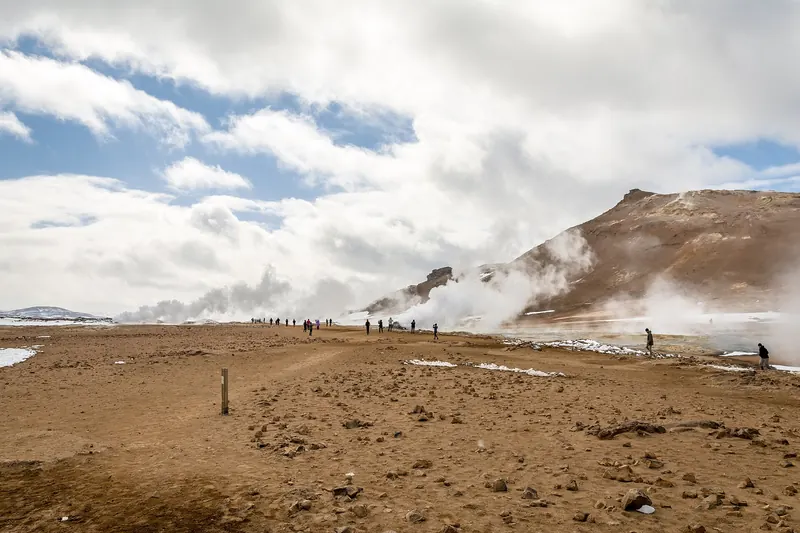
  2. Steaming vents and bubbling mudpots at the Hverir geothermal field

    Hverir Geothermal Area

    A stark, almost lunar geothermal field of roaring steam vents, bubbling mudpots and mineral-stained orange earth beneath Námafjall mountain.

    Tip Stay on the marked paths — the ground here is scalding and unstable underfoot.

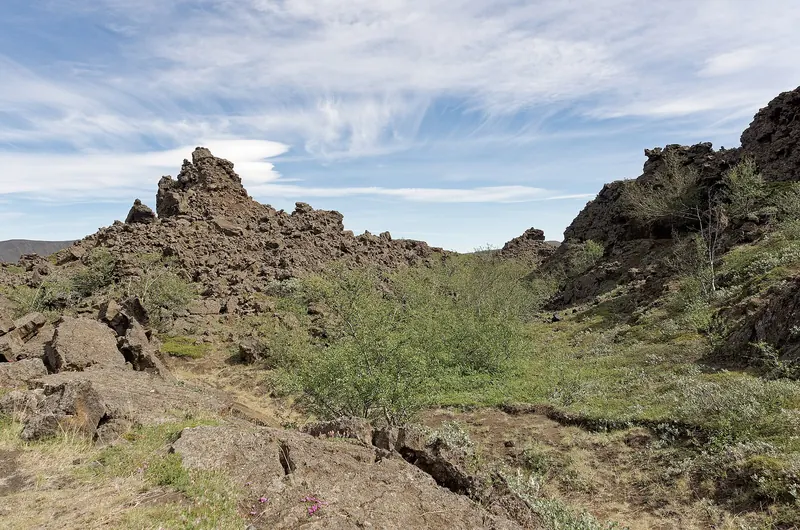
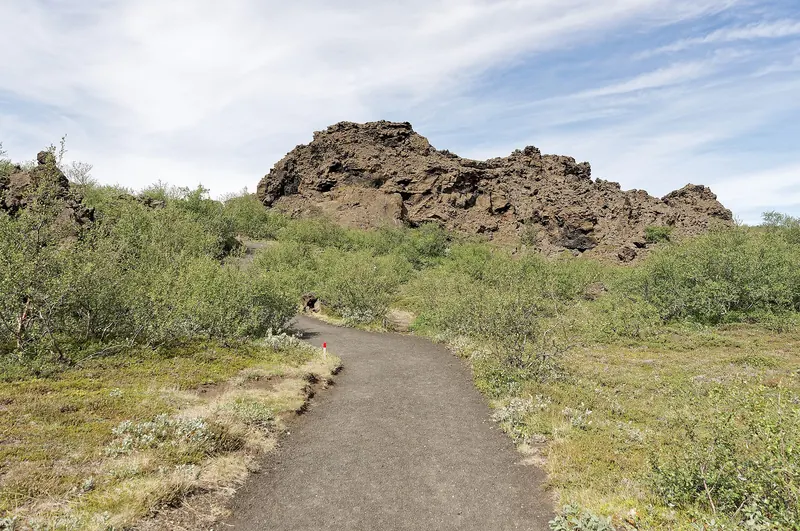
  3. Twisted black lava pillars and arches at Dimmuborgir

    Dimmuborgir

    An eerie labyrinth of twisted lava pillars, caves and arches, formed when a lava lake drained and left its crust collapsed and standing.

    Tip The longer loop trail gets you well away from the crowds near the car park.

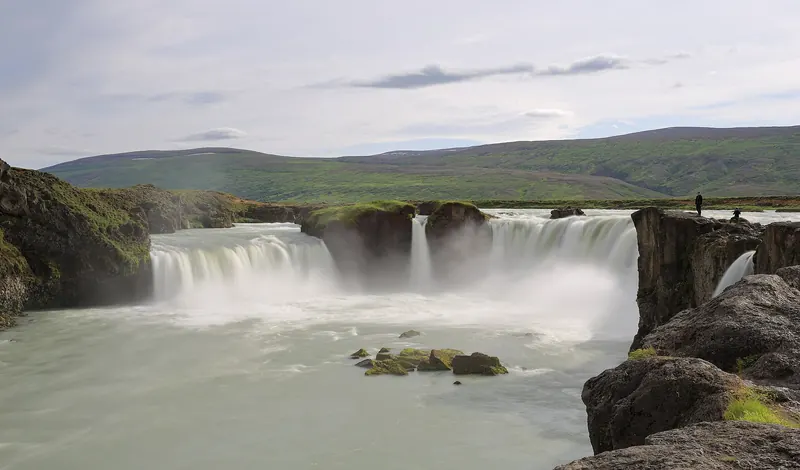
  4. Goðafoss waterfall curving over a horseshoe-shaped basalt cliff

    Goðafoss

    A striking horseshoe-shaped waterfall on the Skjálfandafljót river, its name meaning 'waterfall of the gods.'

    Tip Trails on both sides of the river offer different, equally good angles.

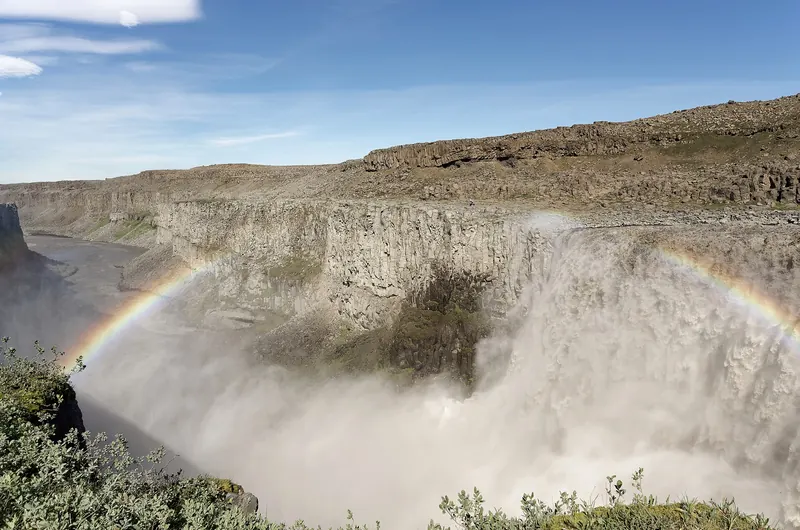
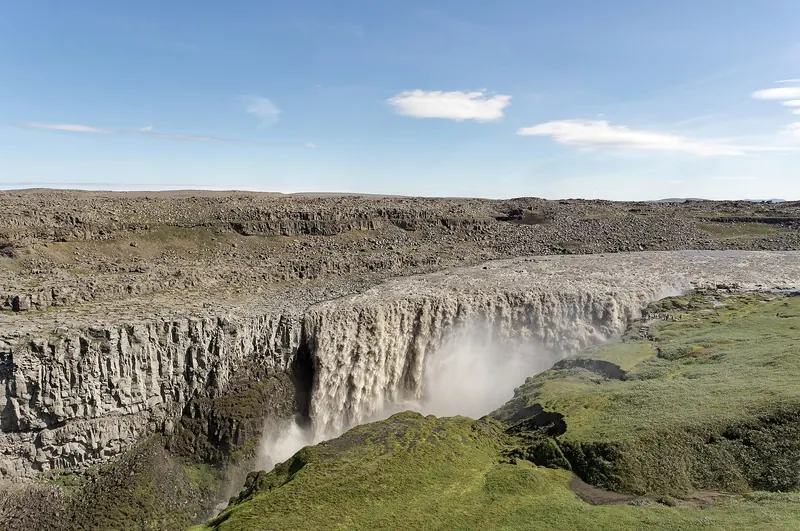
  5. Dettifoss, one of Europe's most powerful waterfalls, in Vatnajökull National Park

    Dettifoss

    One of Europe's most powerful waterfalls by volume, thundering into Jökulsárgljúfur canyon with a spray visible from a distance.

    Tip The rougher east-side road gives closer views, but the west side has an easier, paved approach.

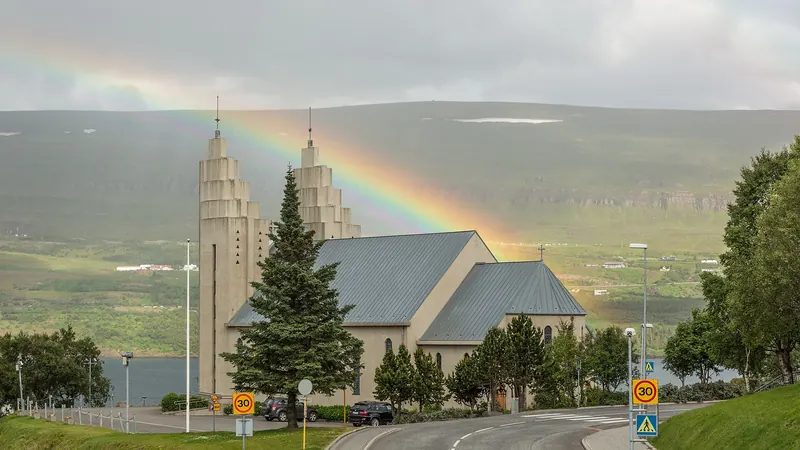
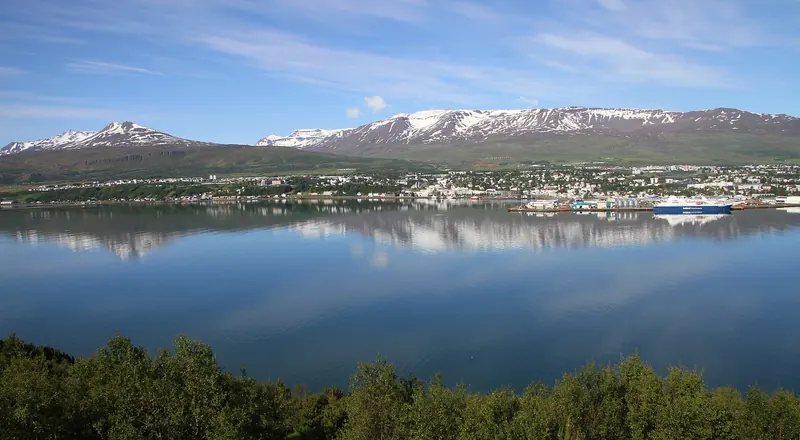
  6. Akureyrarkirkja church overlooking the town of Akureyri

    Akureyri

    Iceland's genuine second city, a compact, colourful town at the head of Eyjafjörður fjord with good restaurants and a striking modernist church.

    Tip Climb the steps to Akureyrarkirkja for the best view down the town's main street.

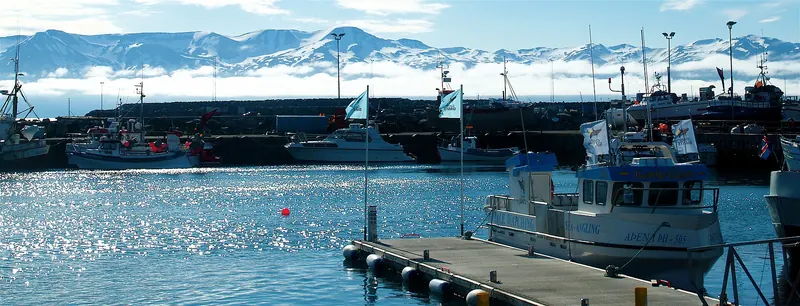
  7. The harbour at Húsavík, Iceland's whale-watching capital

    Húsavík

    A picturesque fishing town on Skjálfandi Bay, widely considered Iceland's best base for whale watching.

    Tip Book an early morning tour for the calmest water and best sighting odds.

Things to do

Best things to do in Lake Mývatn & North Iceland

North Iceland rewards mixing geothermal walks with wildlife and a proper town stop in Akureyri.

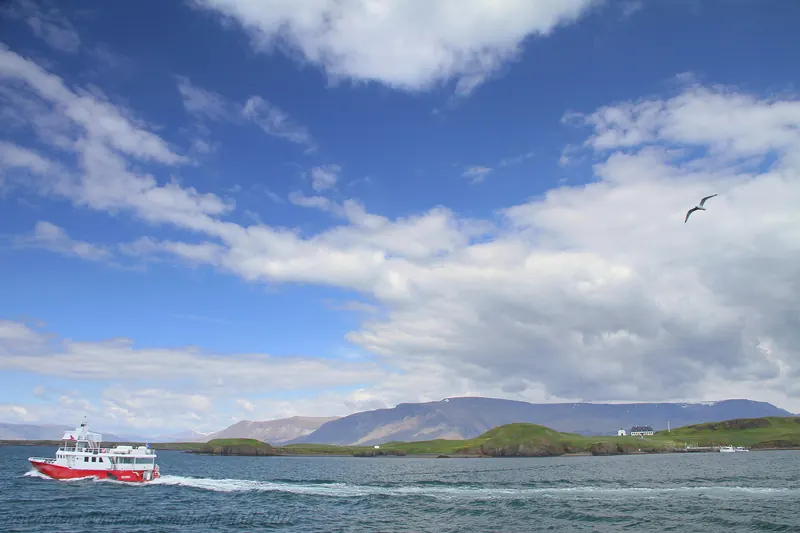
  1. A whale-watching boat off the Icelandic coast

    Go whale watching from Húsavík

    Iceland's best whale-watching odds, with humpback, minke and sometimes blue whales spotted through the summer months.

    Tip Dress far warmer than you think you need to — the boat deck is cold even in summer.

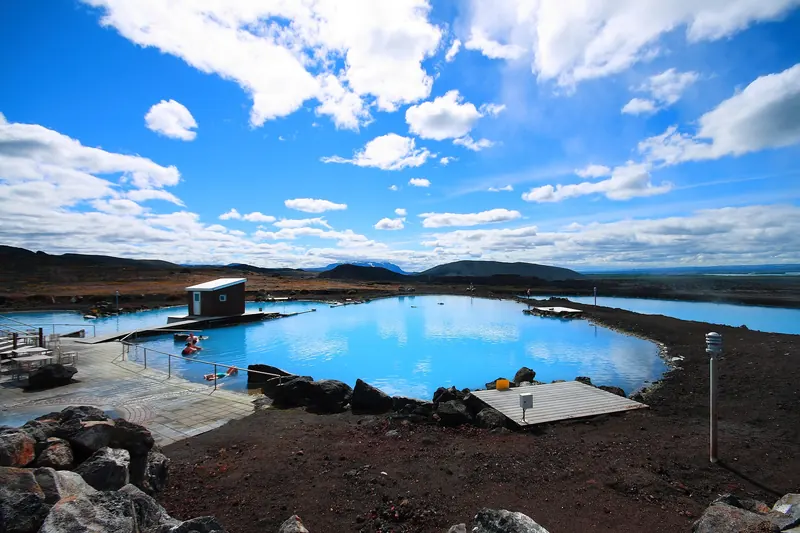
  2. The geothermal Mývatn Nature Baths overlooking the surrounding lava landscape

    Soak in the Mývatn Nature Baths

    A quieter, cheaper alternative to the Blue Lagoon, with the same warm, mineral-rich water and far fewer crowds.

    Tip Sunset makes for the best light over the surrounding landscape.

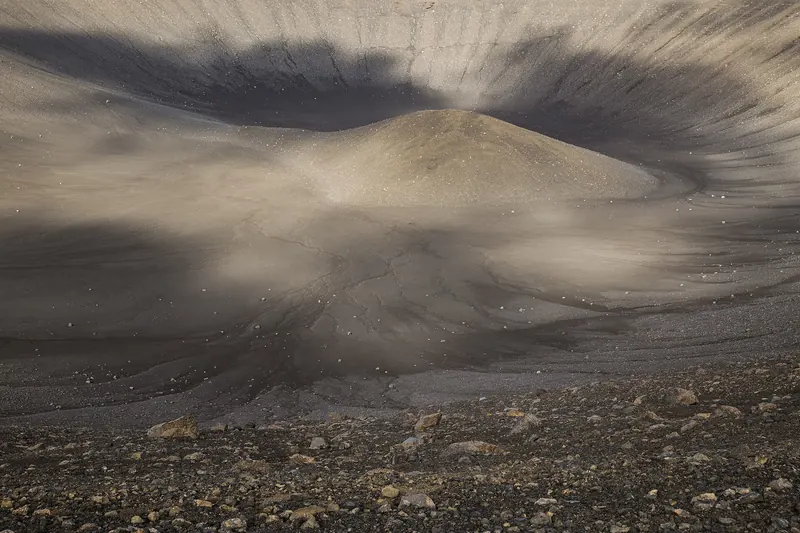
  3. The rim trail around Hverfjall volcanic crater

    Climb Hverfjall crater

    A straightforward climb up the rim of this near-perfectly symmetrical explosion crater, with sweeping views over Mývatn.

    Tip The full rim loop takes about an hour, though the short climb alone is worth it too.

  4. A walking path winding through Dimmuborgir's lava formations

    Wander Dimmuborgir's lava labyrinth

    Several marked trails wind through the pillars and arches, ranging from a quick 20-minute loop to a longer hour-plus circuit.

    Tip Local folklore holds these formations are home to Iceland's Yule Lads — ask locally for the stories.

  5. The thundering spray of Dettifoss waterfall

    Feel Dettifoss's power

    One of the most visceral waterfall experiences in Iceland — the ground itself seems to shake near the viewing platform.

    Tip A waterproof layer is essential — the spray carries a long way on a windy day.

  6. A panoramic view over the town of Akureyri and its fjord

    Wander Akureyri's town centre

    A relaxed afternoon of cafés, a good bookshop and the excellent botanical garden, a rare treat this far north.

    Tip The free botanical garden is worth an hour even outside peak bloom season.

Local food

What to eat in Lake Mývatn & North Iceland

North Iceland leans on traditional preserved foods alongside fresh fish from Húsavík and Akureyri's harbours.

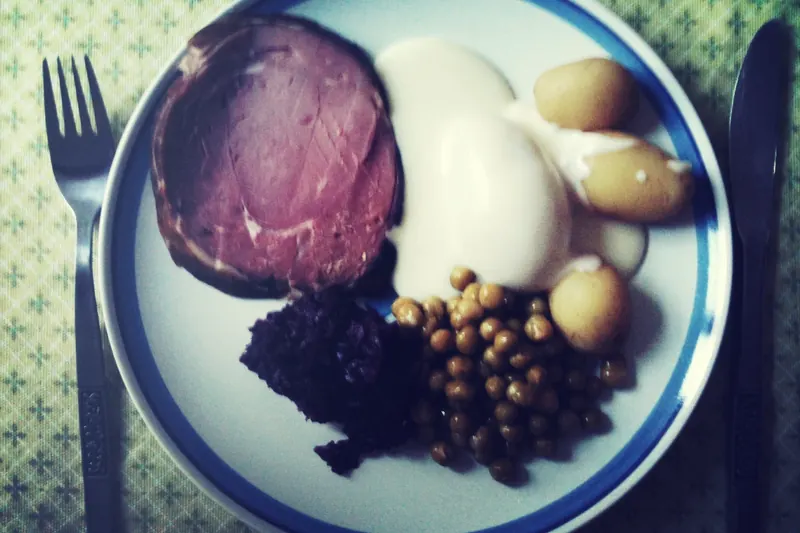
  • Sliced hangikjöt, traditional Icelandic smoked lamb

    Hangikjöt (smoked lamb)

    A traditional smoked lamb, historically cured over smouldering birch or dried sheep dung, served thinly sliced.

    Where to try it Restaurants and guesthouses around Akureyri and Mývatn.

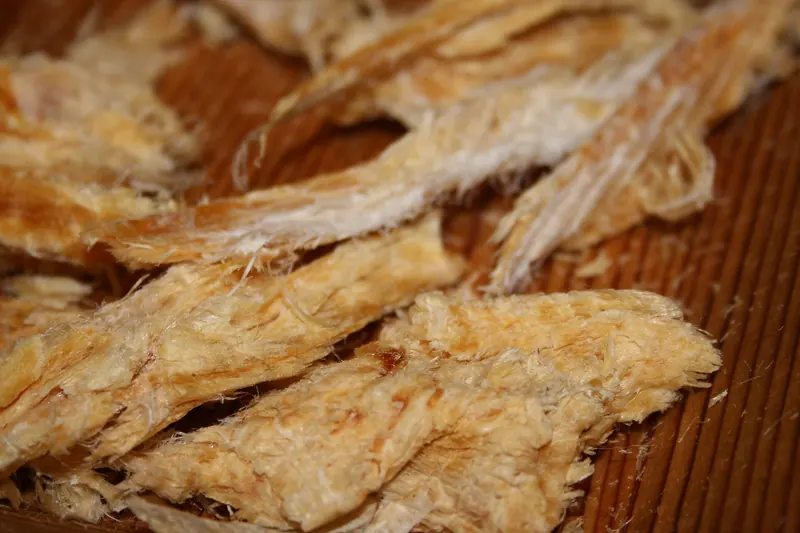
  • Harðfiskur, traditional Icelandic dried fish

    Harðfiskur (dried fish)

    A traditional wind-dried fish snack, often eaten with a thick smear of butter, sold at petrol stations and markets alike.

    Where to try it Supermarkets and fish shops in Húsavík and Akureyri.

  • A bowl of skyr topped with berries

    Skyr

    A reliable breakfast staple across the north, often served with local berries in season.

    Where to try it Cafés in Akureyri and guesthouses around Mývatn.

  • A bowl of plokkfiskur fish stew

    Fresh Icelandic seafood

    Excellent in Húsavík especially, a working fishing harbour where the catch barely travels before it's served.

    Where to try it Harbourside restaurants in Húsavík and Akureyri.

  • A loaf of traditional Icelandic rye bread

    Rúgbrauð

    A dense, dark rye bread, often served alongside smoked fish or lamb at breakfast buffets.

    Where to try it Guesthouses and cafés around Mývatn.

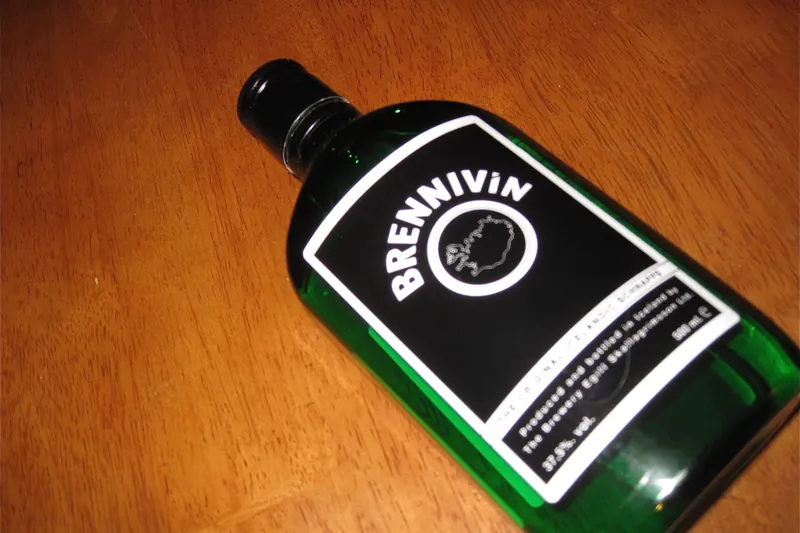
  • A bottle of Brennivín, Iceland's signature schnapps

    Brennivín

    Iceland's famous caraway schnapps, a fitting way to end a day of geothermal walking in Akureyri's bars.

    Where to try it Bars and restaurants in Akureyri.

Accommodation

Where to stay in Lake Mývatn & North Iceland

Most visitors split their nights between Akureyri and a guesthouse near Mývatn itself.

  • Akureyri

    The north's main hub, about an hour from Mývatn and close to Húsavík.

    Best for: Restaurants, services and a real small-city base

  • Reykjahlíð (Mývatn village)

    Small, but puts you within minutes of Hverir, Dimmuborgir and the Nature Baths.

    Best for: Being right at the lake itself

  • Húsavík

    A charming small harbour town, useful if whale watching is your main priority.

    Best for: Prioritising early whale-watching tours

What a night costs

Guesthouse near Mývatn
ISK 20,000–35,000 per night
Akureyri hotel
ISK 22,000–40,000 per night
Whale watching tour
About ISK 14,000–16,000
Mývatn Nature Baths entry
About ISK 7,000–8,500

Transport

Getting to and around Lake Mývatn & North Iceland

North Iceland is reached either by a long Ring Road drive or a short domestic flight.

Getting there

  • Domestic flight to Akureyri

    A quick 45-minute hop from Reykjavik, the fastest way to reach the north.

    Multiple daily flights run year-round, weather permitting.

  • Self-drive via the Ring Road

    About 5-6 hours from Reykjavik, often broken up with stops along the way.

    Route 1 runs directly through Akureyri and past Mývatn.

  • Organised multi-day tour

    Bundles transport, guiding and accommodation for visitors who'd rather not self-drive the whole Ring Road.

    Multi-day North Iceland tours typically depart from Reykjavik.

Getting around

The region's sights are spread along Route 1 and a few short side roads.

  • Rental car

    The most practical way to link Mývatn, Akureyri, Húsavík and the waterfalls.

    Route 1 and 87 connect all the main stops directly.

  • Local tours from Akureyri or Mývatn

    Cover Dettifoss, Goðafoss and whale watching for visitors without a car.

    Day tours run regularly from both Akureyri and Mývatn village.

  • On foot at each stop

    All the individual sights are short, well-marked walks from parking areas.

    None require more than an hour or two on foot.

When to go

Best time to visit Lake Mývatn & North Iceland

Summer gives the easiest driving and long daylight, while winter offers a real shot at the aurora away from Reykjavik's light pollution.

  • Summer (June–August)

    Best time

    Easy driving, long daylight and the best whale-watching season.

  • Winter (November–February)

    Good

    Excellent aurora viewing, though some roads and the airport can face weather delays.

  • Autumn (September–October)

    Good

    Quiet, with good early-season aurora chances and mild weather.

  • Spring (March–May)

    Good

    Increasing daylight, though some minor roads may still be closed.

Worth planning around: Avoid Hverir on still, windless days if you're sensitive to sulphur smell — it lingers close to the vents.

Itinerary

Two days in North Iceland

Built around Mývatn's geothermal core, with Húsavík's whale watching and Akureyri's town centre either side.

  1. Day1

    Mývatn's geothermal core

    Hverir, Dimmuborgir and Goðafoss.

    • Morning Hverir Geothermal Area and Hverfjall crater.
    • Afternoon Dimmuborgir's lava labyrinth, then Goðafoss.
    • Evening Soak at the Mývatn Nature Baths, staying near the lake.
  2. Day2

    Dettifoss, Húsavík and Akureyri

    Iceland's mightiest waterfall, whale watching and a real town.

    • Morning Dettifoss, Europe's most powerful waterfall by volume.
    • Afternoon Whale watching from Húsavík harbour.
    • Evening Dinner and a wander around Akureyri's town centre.

Travel tips

Lake Mývatn & North Iceland travel tips

A handful of practical notes make North Iceland far easier to plan around.

  • Book whale-watching tours a day or two ahead in peak summer.
  • Fly into Akureyri if you want to skip the long Ring Road drive from Reykjavik.
  • Bring warm, windproof layers for the whale-watching boat deck, even in July.
  • Check road.is for the Dettifoss access roads, which can close in bad weather.
  • Base yourself near Mývatn village rather than driving in daily from Akureyri.
  • Allow a full two to three days rather than a rushed day trip from Akureyri.

FAQ

Lake Mývatn & North Iceland: frequently asked questions

Is Lake Mývatn worth visiting?

Yes — it's North Iceland's geothermal and volcanic highlight, with far fewer crowds than the south coast or Golden Circle.

Is Húsavík the best place for whale watching in Iceland?

Yes, widely considered so — its calm bay waters and whale density are hard to match elsewhere in the country.

How far is Mývatn from Reykjavik?

About 5-6 hours by car, or a 45-minute flight to Akureyri followed by a short drive.

Can you visit North Iceland without a car?

Yes — local tours from Akureyri and Mývatn village cover the main sights and whale watching.

How does Dettifoss compare to Gullfoss?

Dettifoss is more powerful by volume and rawer in feel, while Gullfoss is more accessible and better set up for visitors.

How many days do you need for North Iceland?

Two to three days covers Mývatn's geothermal sights, the waterfalls, Húsavík and Akureyri at a relaxed pace.

Read next

Related travel articles

Where to go

Beyond the Big Names: Places Worth the Detour

The most visited place in a country is rarely its best, and it is almost never its best value. This is a method for finding the destinations that do not make the postcards — and a set of examples from five of the 50 countries on this site.

Practical

Packing by Season and Trip Type

Most packing advice is a list of things. This is the opposite: the small number of decisions that determine whether your luggage helps or hinders, organised by the kind of trip you are actually taking.

Advertisement