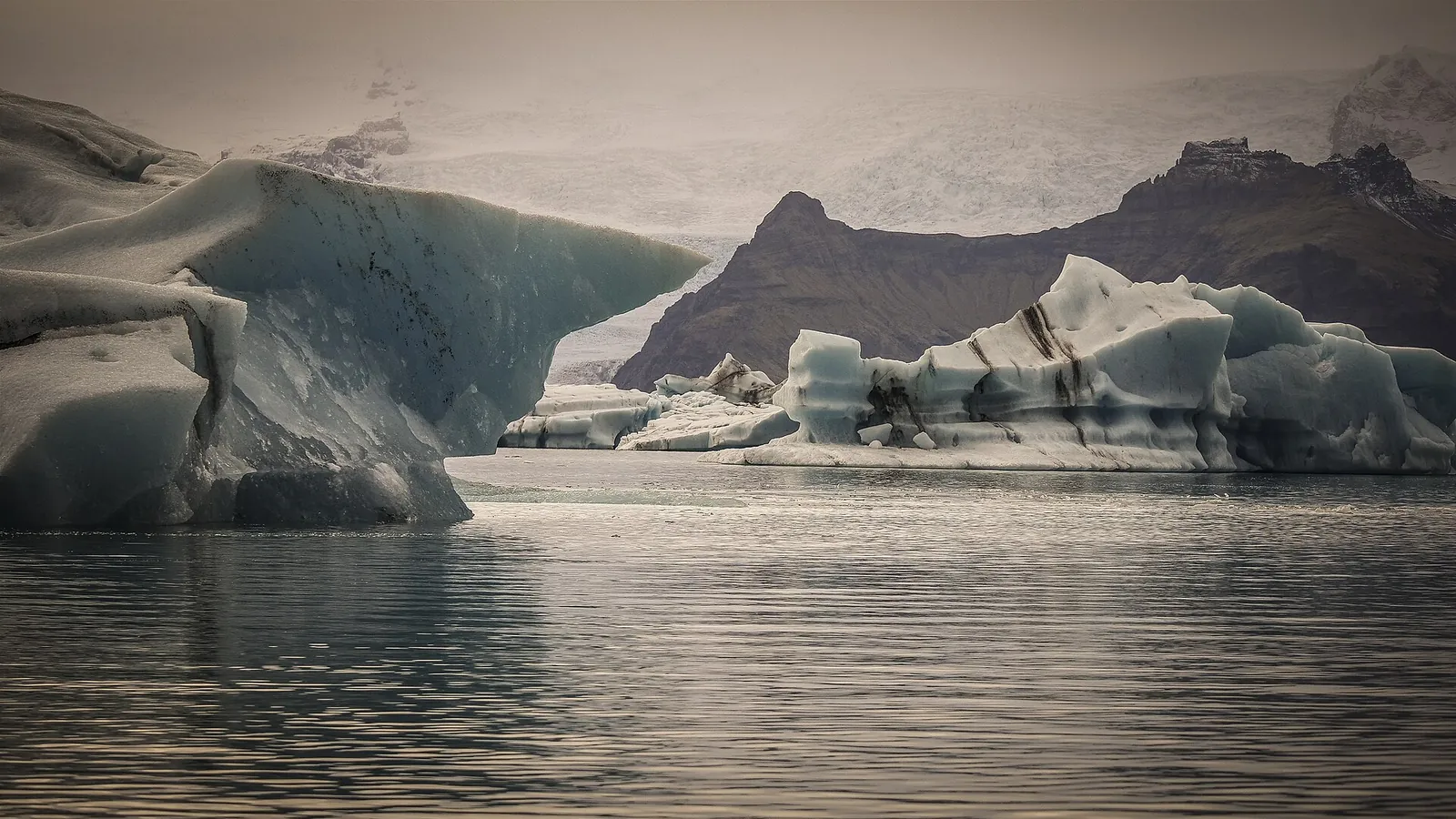
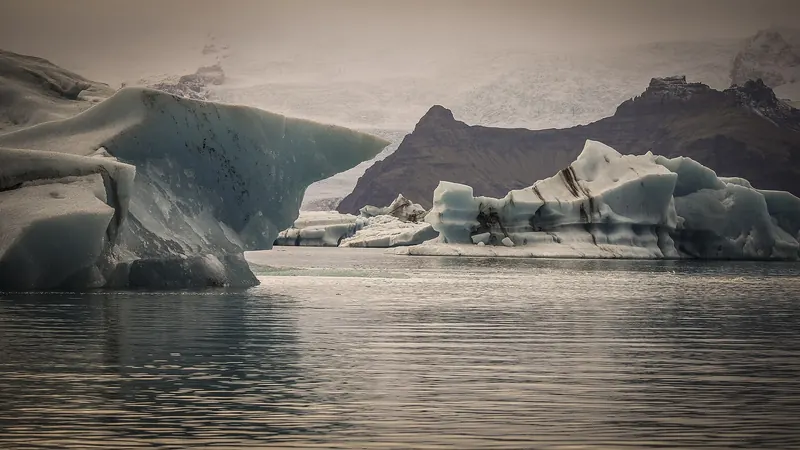
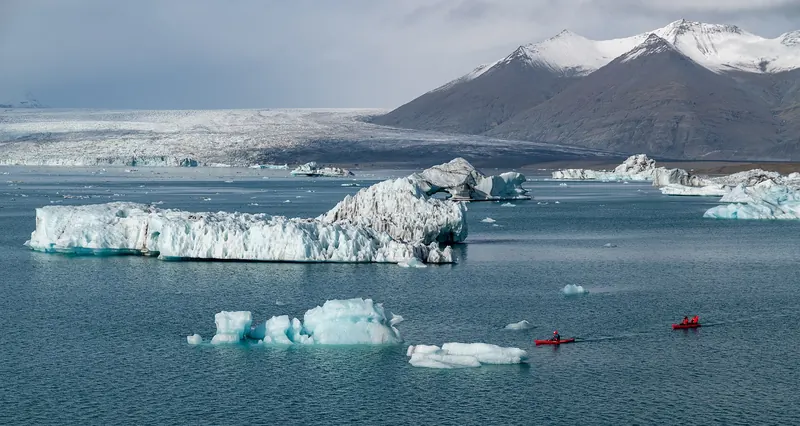
Icebergs drifting in the Jökulsárlón glacier lagoon

South-East Iceland · Iceland

Jökulsárlón and Vatnajökull

A lagoon where house-sized icebergs calve from Europe's largest ice cap and drift out to a beach that scatters them across black sand like diamonds.

  • Best time Winter for ice caves, summer for the easiest driving and boat tours
  • Stay 2 days
  • Good for Glacier scenery, ice caves, an otherworldly landscape

Photo: Marine SABRES · CC BY 4.0

Welcome to Jökulsárlón and Vatnajökull

Jökulsárlón sits at the edge of Vatnajökull, Europe's largest ice cap by volume, and it's one of the most surreal landscapes in Iceland — a lagoon where icebergs calved from the glacier drift slowly toward the sea, some the size of houses, in shades of white, blue and ash-streaked black.

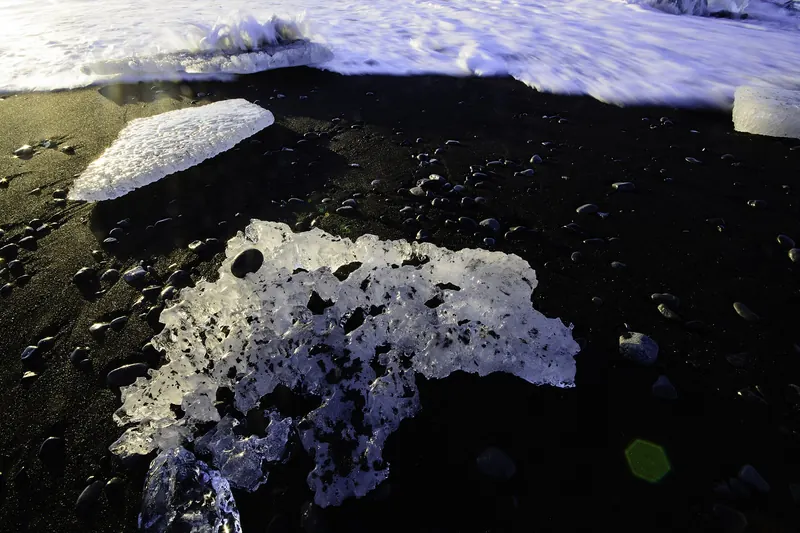
The current that carries them out to the ocean deposits many back on the black sand beach across the road, where they wash up and melt slowly into ice sculptures scattered across the sand — a sight striking enough to have earned the beach its own name, Diamond Beach.

The wider Vatnajökull National Park, a UNESCO World Heritage Site, extends far beyond the lagoon itself, taking in Skaftafell's waterfalls and hiking trails, and ice caves that form fresh each winter beneath the glacier's edge.

  • Nature & Wildlife
  • Glacier
  • UNESCO Site
  • Scenic Region

Why visit

Why visit Jökulsárlón and Vatnajökull?

This region's case rests on a rare combination of a photogenic glacier lagoon and real, accessible access to Europe's largest ice cap.

  • Jökulsárlón is one of the most photographed sights in Iceland

    Drifting icebergs, seals and the ice cap behind combine into a scene unlike anywhere else on the Ring Road.

  • Diamond Beach is a free, unmissable extra

    Ice chunks wash up directly across the road from the lagoon, scattered across black sand.

  • Vatnajökull's ice caves are a rare winter-only spectacle

    Crystal-clear blue ice caves form fresh each year, safely accessible only with a guide.

  • Svartifoss is one of Iceland's most distinctive waterfalls

    Framed by dark hexagonal basalt columns, a short hike from the Skaftafell visitor centre.

  • It's a natural stop on any full Ring Road loop

    Sitting directly on Route 1 between the South Coast and the East Fjords.

Main attractions

Top things to see in Jökulsárlón and Vatnajökull

This region's essential sights span the glacier lagoon itself and the wider Vatnajökull National Park around it.

  1. Icebergs drifting across the Jökulsárlón glacier lagoon

    Jökulsárlón Glacier Lagoon

    A surreal lagoon where icebergs calved from Breiðamerkurjökull drift slowly toward the sea, some centuries old and striped with volcanic ash.

    Tip Visit at different times of day — the light and iceberg positions change constantly.

  2. Ice chunks scattered across the black sand of Diamond Beach

    Diamond Beach

    The genuine black sand beach directly across the road from the lagoon, where stranded ice chunks glitter like diamonds against the dark sand.

    Tip Visit right after high tide, when the freshest ice has just washed ashore.

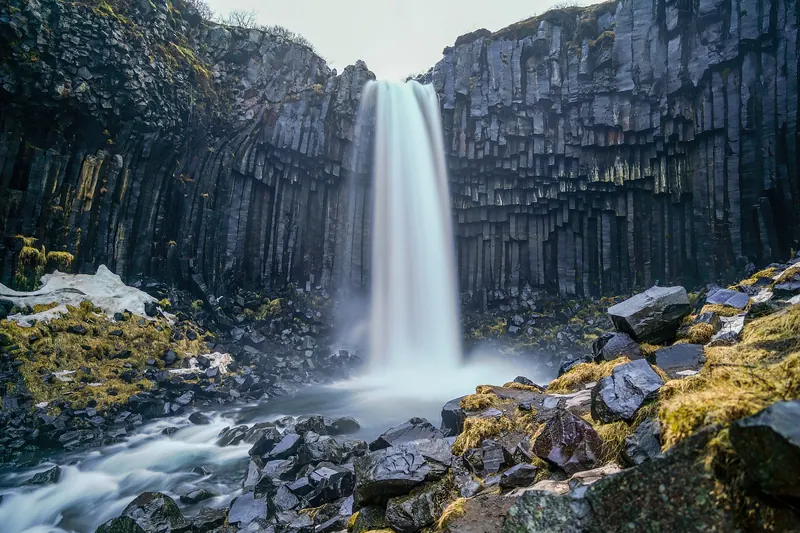
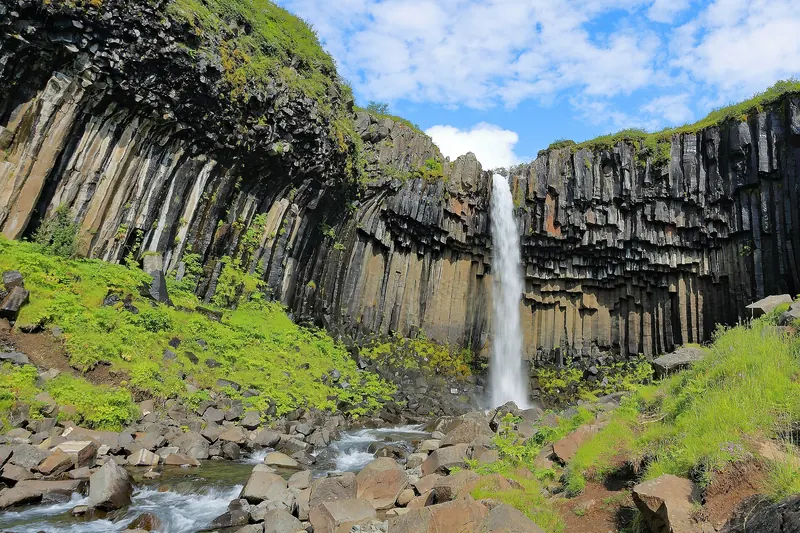
  3. Svartifoss waterfall framed by dark hexagonal basalt columns

    Svartifoss

    A distinctive waterfall framed by dark hexagonal basalt columns, reached by an easy hike from the Skaftafell visitor centre.

    Tip The round trip takes about 1.5-2 hours at an easy pace.

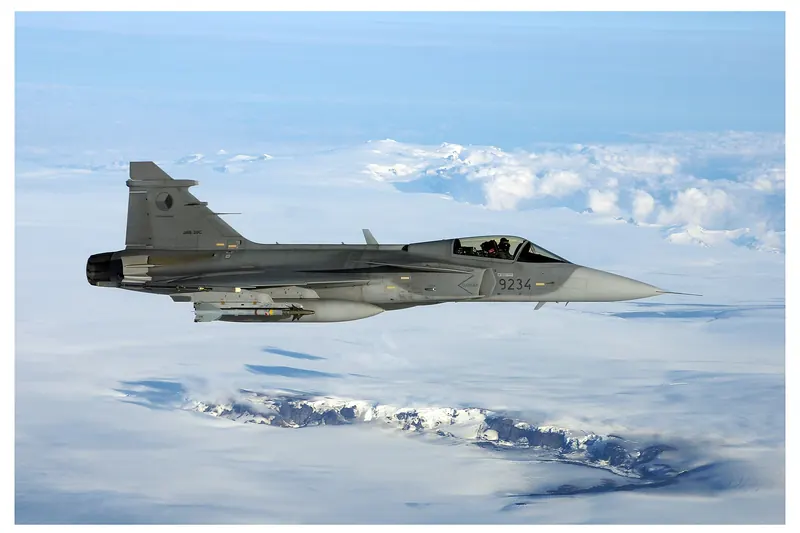
  4. Vatnajökull, Europe's largest ice cap by volume

    Vatnajökull Ice Cap

    Europe's largest ice cap by volume, covering around 8% of Iceland and feeding numerous outlet glaciers, including the one that calves into Jökulsárlón.

    Tip A scenic flight gives the best sense of the ice cap's true scale, invisible from ground level.

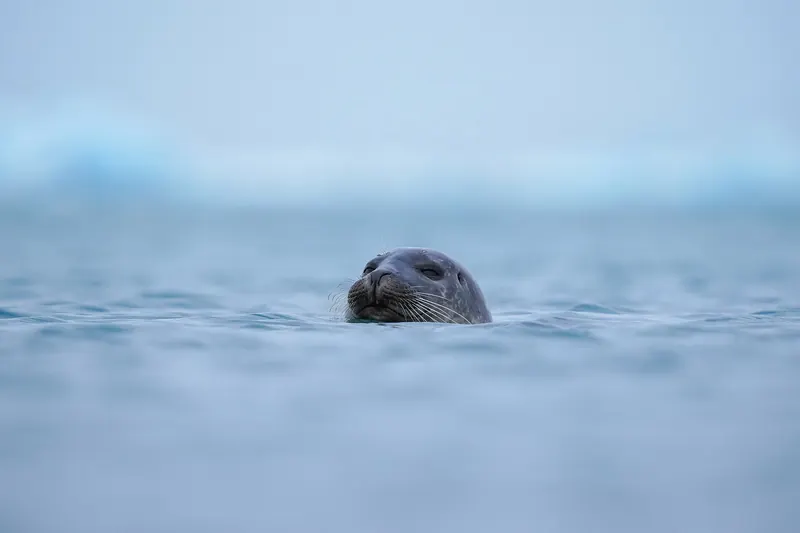
  5. A harbour seal in the water at Jökulsárlón lagoon

    Seals at Jökulsárlón

    A resident population of harbour seals hunts and rests among the icebergs, regularly visible from the shore.

    Tip The eastern shore of the lagoon is a reliable spot for seal sightings.

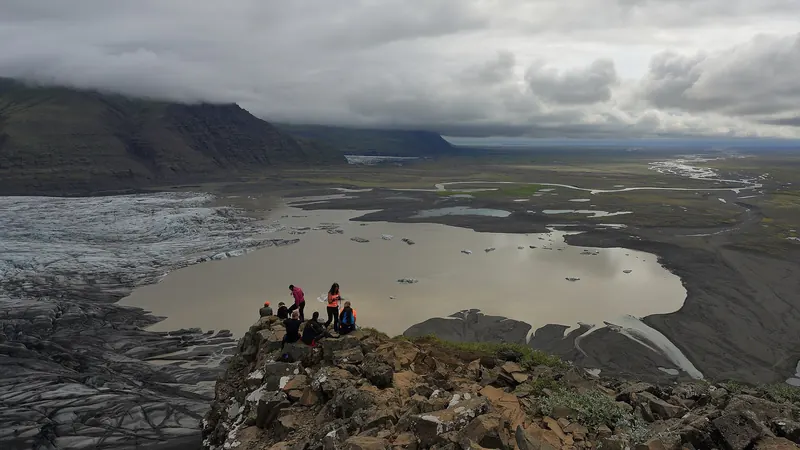
  6. The view over Skaftafell, part of Vatnajökull National Park

    Skaftafell Nature Reserve

    A green, sheltered oasis within the wider national park, its trails leading to Svartifoss and views over outlet glaciers.

    Tip The visitor centre has current trail conditions and glacier tour bookings.

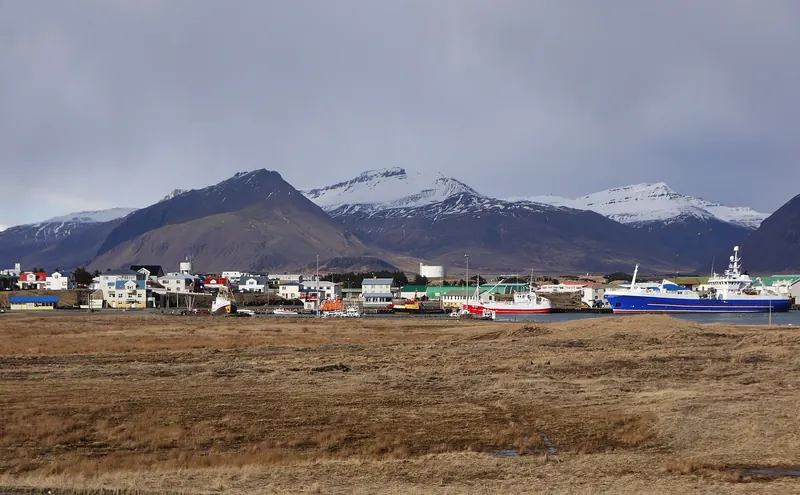
  7. The harbour town of Höfn with mountains behind

    Höfn

    A small fishing town and Iceland's self-declared langoustine capital, with Vatnajökull's peaks visible across the bay.

    Tip A good overnight base between Jökulsárlón and the East Fjords.

Things to do

Best things to do in Jökulsárlón and Vatnajökull

This region rewards getting close to the ice, whether by boat, on foot or inside a cave.

  1. A boat tour among the icebergs at Jökulsárlón lagoon

    Cruise among the icebergs

    Amphibious boat and Zodiac tours get you right up close to the icebergs, with seals often surfacing nearby.

    Tip Zodiac tours reach further into the lagoon than the larger amphibious boats.

  2. Walk Diamond Beach at sunrise or sunset

    The low, warm light at either end of the day makes the ice on the black sand glow, particularly rewarding for photography.

    Tip Winter's short days put sunrise and sunset light within easy reach of a normal visit.

  3. The trail leading to Svartifoss waterfall

    Hike to Svartifoss

    A rewarding, moderate hike from Skaftafell, climbing past smaller falls before reaching Svartifoss's basalt columns.

    Tip Continue a little further to the Sjónarnípa viewpoint for glacier views if you have the energy.

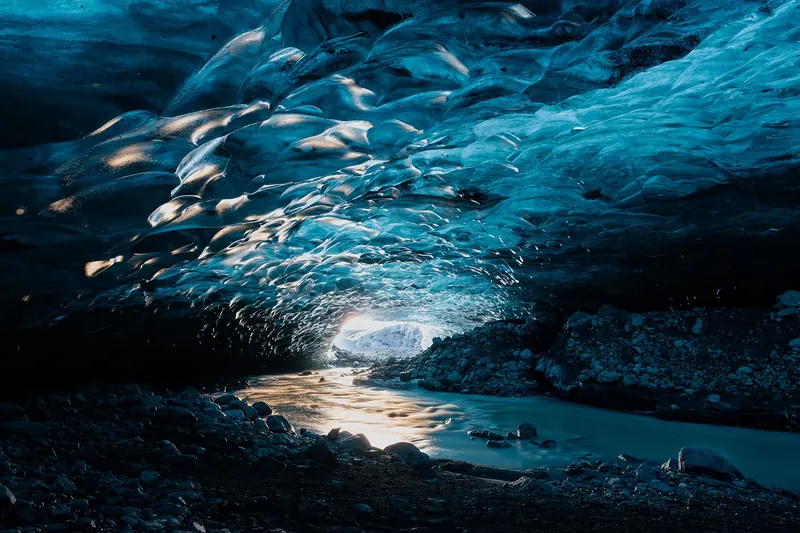
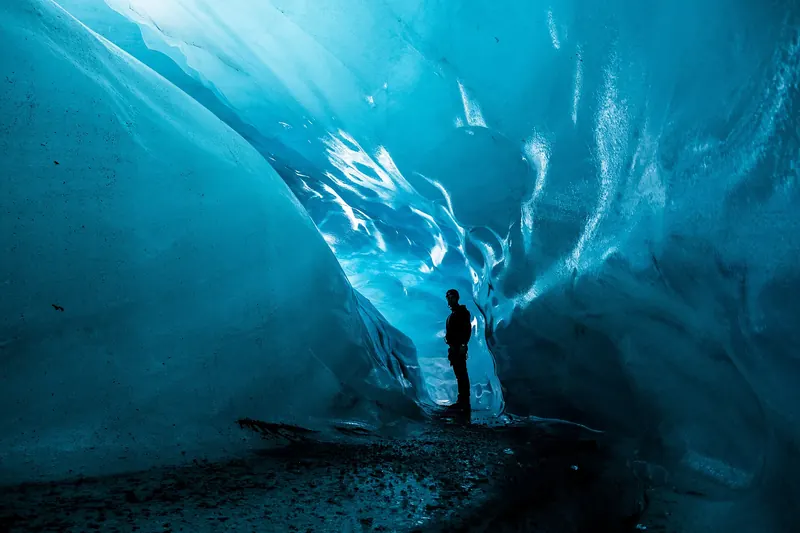
  4. A blue ice cave inside Vatnajökull glacier

    Take a guided ice cave tour

    Spectacular crystal-blue ice caves form fresh each winter, safely accessible only on a guided tour with proper equipment.

    Tip Ice caves are a winter-only experience — book well ahead, as tours sell out.

  5. A guided glacier hike on Vatnajökull's ice

    Try a glacier hike

    Guided hikes with crampons and an ice axe let you walk directly on the glacier's surface, crevasses and all.

    Tip No prior experience is needed — all equipment and instruction is provided.

  6. Eat langoustine in Höfn

    Höfn calls itself Iceland's langoustine capital, and the town's restaurants serve it simply grilled or in soup.

    Tip The town's annual Lobster Festival in late June is worth timing a visit around.

Local food

What to eat in Jökulsárlón and Vatnajökull

This region's food centres on Höfn's langoustine and standard Icelandic staples along the Ring Road.

  • Langoustine

    Höfn's genuine signature dish, small Icelandic langoustine served simply grilled with garlic butter or in a rich soup.

    Where to try it Restaurants in Höfn, particularly around the harbour.

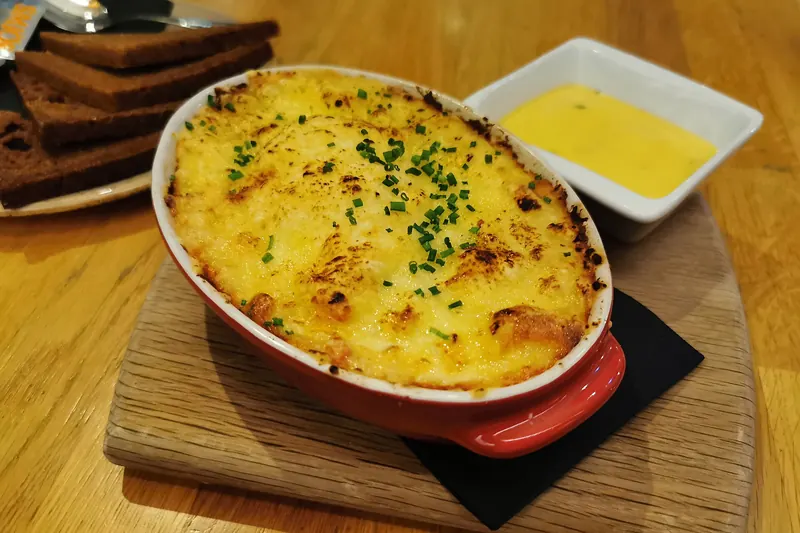
  • A bowl of plokkfiskur fish stew

    Fresh Icelandic seafood

    Fresh, landed daily at Höfn's working harbour and served throughout the region.

    Where to try it Restaurants in Höfn and guesthouses near Jökulsárlón.

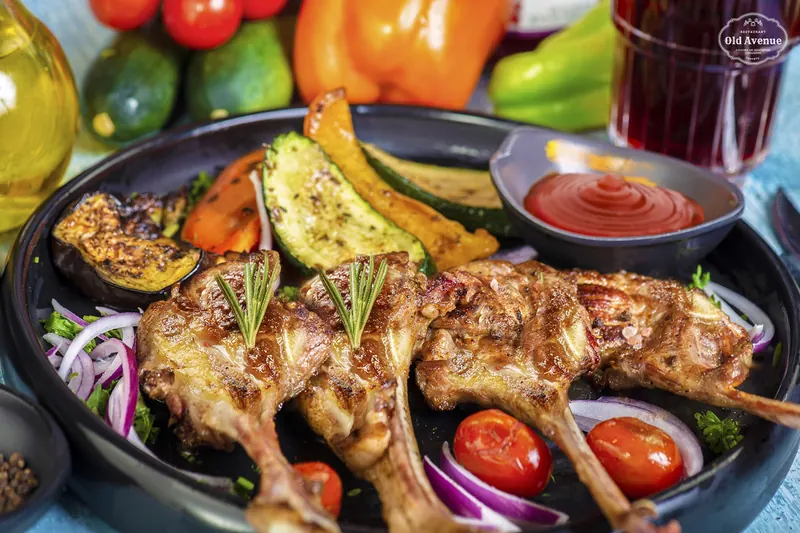
  • A roast lamb dish

    Icelandic lamb

    Widely available at guesthouses and farm restaurants along this stretch of the Ring Road.

    Where to try it Guesthouses near Skaftafell and Jökulsárlón.

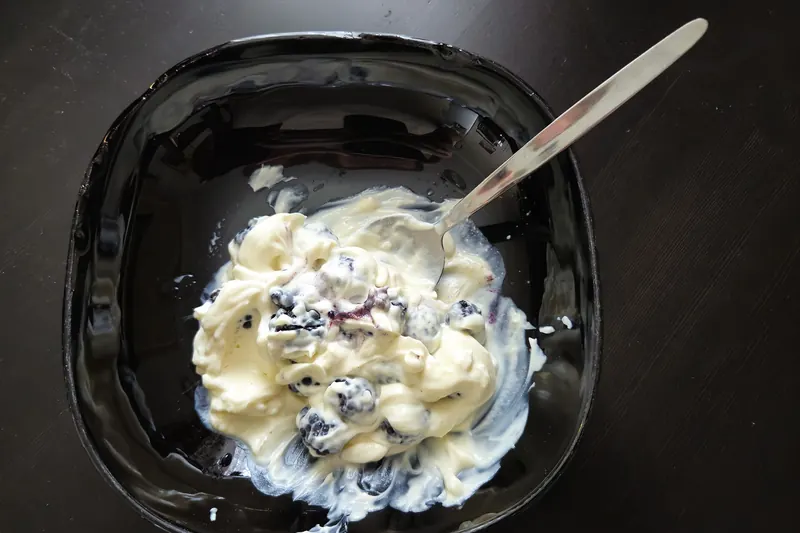
  • A bowl of skyr topped with berries

    Skyr

    A reliable stop at any café or petrol station along this remote stretch of road.

    Where to try it Petrol station cafés and guesthouses along Route 1.

  • An Icelandic hot dog

    Icelandic hot dog

    A reliable, quick option at the region's limited service stations.

    Where to try it Service stations in Kirkjubæjarklaustur and Höfn.

  • A loaf of traditional Icelandic rye bread

    Rúgbrauð

    A traditional dark rye bread, found at bakeries and cafés along the route.

    Where to try it Bakeries and guesthouse cafés along Route 1.

Accommodation

Where to stay in Jökulsárlón and Vatnajökull

Höfn and the small guesthouses near Skaftafell are the two main bases for this region.

  • Höfn

    The largest town in the area, about 40 minutes from Jökulsárlón.

    Best for: The widest range of accommodation and restaurants

  • Near Skaftafell or Jökulsárlón

    Limited but well-placed guesthouses sit close to the lagoon and national park entrance.

    Best for: Being right at the sights for sunrise or sunset light

What a night costs

Budget guesthouse
ISK 22,000–32,000 per night
Mid-range hotel
ISK 40,000–60,000 per night
Glacier lagoon boat tour
About ISK 8,000–12,000
Guided ice cave tour
About ISK 20,000–25,000

Transport

Getting to and around Jökulsárlón and Vatnajökull

This region sits far along the South Coast route, about 5 hours' drive from Reykjavik.

Getting there

  • Rental car via the South Coast

    About 5 hours from Reykjavik via the South Coast route, a long but spectacular drive.

    Most visitors break this into an overnight stop rather than a single push.

  • Domestic flight to Höfn

    A short regional flight connects Reykjavik to Höfn, useful for a focused visit without the full drive.

    A rental car is still needed locally to reach the lagoon and Skaftafell.

  • Multi-day organised tours

    Widely available from Reykjavik, covering this region as part of a South Coast and glacier lagoon package.

    A practical option for visitors without a car or limited time.

Getting around

The region's main sights sit directly on or just off Route 1, with guided tours needed for the ice itself.

  • Rental car

    Sufficient for reaching Jökulsárlón, Diamond Beach and Skaftafell, all just off Route 1.

    A standard car is fine outside winter conditions.

  • Boat and Zodiac tours

    The only way to get close to the icebergs themselves, departing directly from the lagoon's car park.

    Multiple operators run frequent departures in season.

  • Guided glacier and ice cave tours

    Essential and non-negotiable for safely accessing the glacier's surface or any ice cave.

    Never attempt these independently — crevasses and unstable ice are serious hazards.

When to go

Best time to visit Jökulsárlón and Vatnajökull

This region offers different highlights by season, with ice caves specifically a winter-only experience.

  • Summer (June–August)

    Best time

    Long daylight, reliable boat tours and easy driving, also the busiest season.

  • Autumn (September–October)

    Good

    Quieter, with early ice cave season sometimes beginning by late October.

  • Winter (November–February)

    Best time

    The genuine only season for ice caves, plus strong aurora odds over the lagoon.

  • Spring (March–May)

    Good

    Ice caves close as the ice becomes unstable, but boat tours resume by late spring.

Worth planning around: Expecting ice cave access outside winter — they are only safe to enter roughly November to March, and close as spring approaches.

Itinerary

Two days at Jökulsárlón and Vatnajökull

The lagoon and Diamond Beach on the first day, Skaftafell and the glacier on the second.

  1. Day1

    The glacier lagoon

    Jökulsárlón and Diamond Beach.

    • Morning A boat tour among the icebergs at Jökulsárlón.
    • Afternoon Diamond Beach across the road.
    • Evening Settle in around Höfn.
  2. Day2

    Skaftafell and the ice

    Svartifoss and a glacier or ice cave experience.

    • Morning The hike to Svartifoss from Skaftafell.
    • Afternoon A guided glacier hike or ice cave tour, in season.
    • Evening Continue toward the East Fjords or back along the South Coast.

Travel tips

Jökulsárlón and Vatnajökull travel tips

Practical notes on booking, safety and timing that make a real difference to this region.

  • Book ice cave and glacier hike tours well ahead — they sell out, especially in winter.
  • Never walk on the glacier or into an ice cave without a guide — crevasses are a real, hidden danger.
  • Visit Diamond Beach at low tide for the most ice stranded on the sand.
  • Dress warmer than the temperature suggests — wind off the ice cap is relentless.
  • Check ice cave tour operators' current conditions before booking — access changes year to year.
  • Fill up on fuel in Höfn or Skaftafell — the region between is sparsely served.

FAQ

Jökulsárlón and Vatnajökull: frequently asked questions

How many days do you need at Jökulsárlón?

Two days allows a boat tour, Diamond Beach and a Skaftafell hike or glacier experience without rushing. A single long day trip from the South Coast is possible but tight.

Can you visit Jökulsárlón in winter?

Yes, and winter is when the ice caves are accessible — the lagoon itself is a year-round sight, reached via the same Route 1.

Are the ice caves safe?

Only with a qualified guide, who monitors conditions daily. Independent ice cave visits are dangerous and not recommended.

Is the boat tour on Jökulsárlón worth it?

Yes — it's the only way to get close to the icebergs and reliably spot seals up close.

What is Diamond Beach?

The black sand beach directly across the road from Jökulsárlón, where stranded ice chunks from the lagoon wash ashore and glitter like diamonds.

Do you need a guide for Skaftafell's hiking trails?

No, not for the marked trails to Svartifoss and the viewpoints — only glacier travel itself requires a guide.

Read next

Related travel articles

Where to go

Beyond the Big Names: Places Worth the Detour

The most visited place in a country is rarely its best, and it is almost never its best value. This is a method for finding the destinations that do not make the postcards — and a set of examples from five of the 50 countries on this site.

Practical

Packing by Season and Trip Type

Most packing advice is a list of things. This is the opposite: the small number of decisions that determine whether your luggage helps or hinders, organised by the kind of trip you are actually taking.

Advertisement