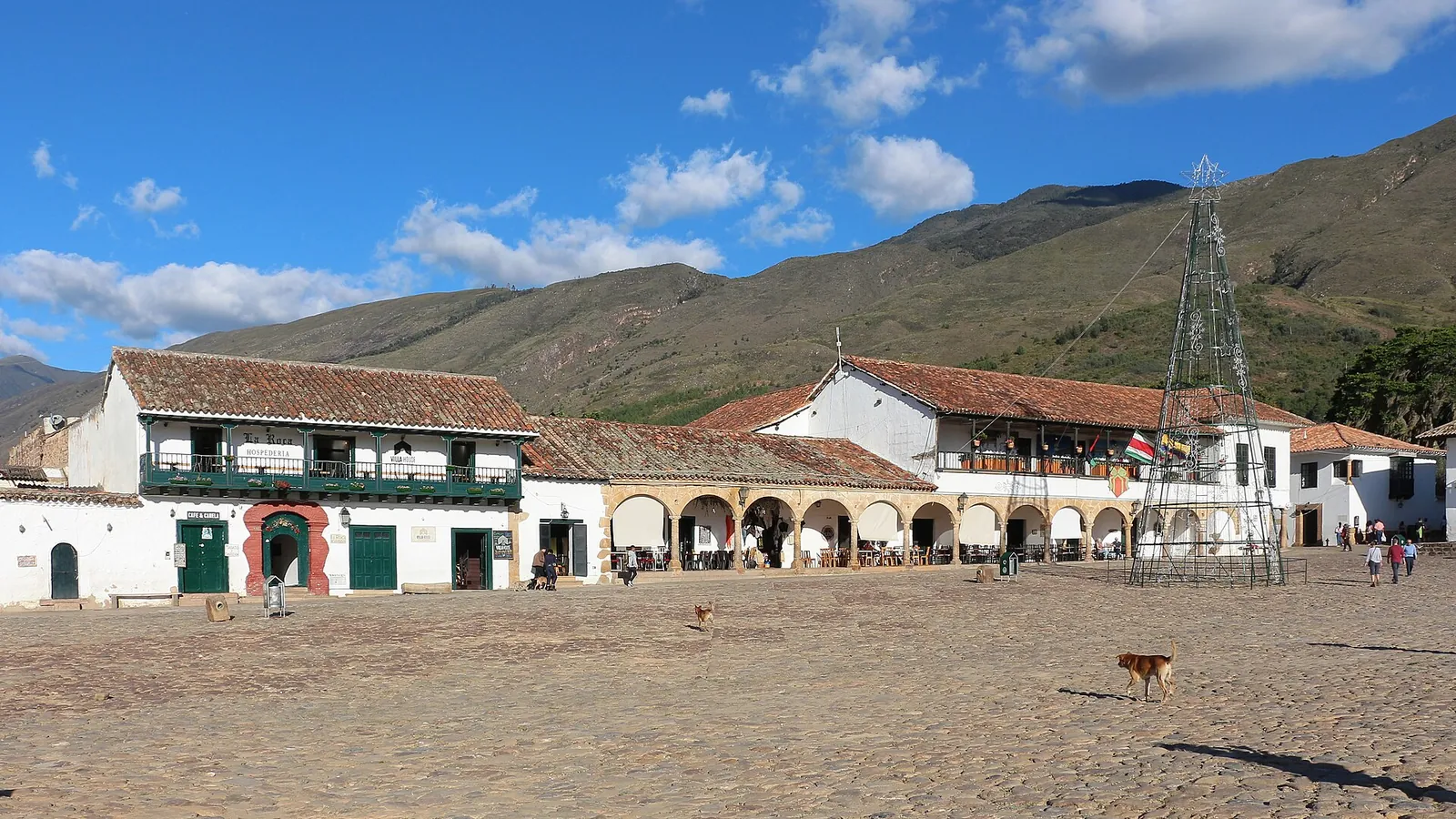
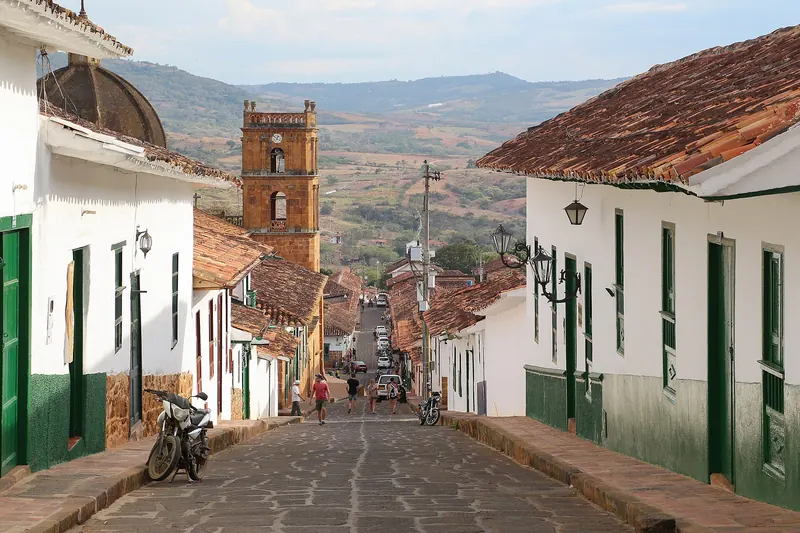
The vast cobbled Plaza Mayor of Villa de Leyva with its white church

Boyacá, Andean highlands · Colombia

Villa de Leyva

A whitewashed 16th-century colonial town on one of the largest cobbled squares in the Americas, with fossils, waterfalls and desert-like hills.

  • Best time December–March and June–August
  • Stay 2 days
  • Good for Weekend trips, history, cycling, slow travel

Photo: Bernard Gagnon · CC BY-SA 4.0

Welcome to Villa de Leyva

Villa de Leyva was founded in 1572, and it has been preserved as a national monument since 1954, so building styles, roof tiles and whitewash follow the colonial pattern. It sits at 2,150 metres in a high, dry valley in Boyacá, with a mild, sunny climate that contrasts with cloudy Bogotá.

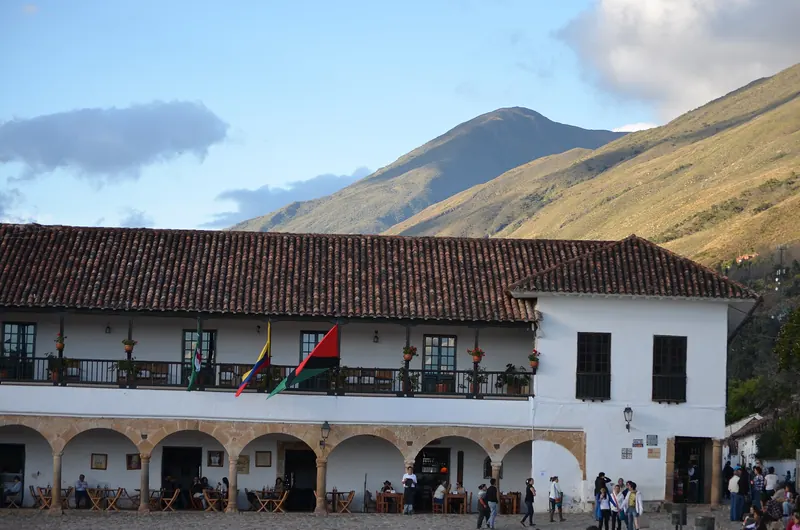
The heart of the town is the Plaza Mayor, one of the largest cobbled plazas in the Americas at around 14,000 square metres, surrounded by whitewashed buildings and a church. Narrow streets lead off in a grid, past courtyards, museums and cafés. Weekends fill with visitors from Bogotá, but weekdays are quiet.

The surroundings offer plenty to do. There are fossils of a 110-million-year-old kronosaurus at El Fósil, blue pools called Pozos Azules, the Iguaque sanctuary with a sacred lake, waterfalls, wineries and the pottery village of Ráquira. Cycling is popular. It is about three to four hours by bus from Bogotá, and two days is a good stay.

  • Historic Site
  • Culture & Arts
  • Off the Beaten Path

Why visit

Why visit Villa de Leyva?

Villa de Leyva is the prettiest colonial town within reach of Bogotá.

  • A giant cobbled square

    The Plaza Mayor.

  • Preserved streets

    Whitewashed colonial houses.

  • Fossils and nature

    El Fósil and Iguaque.

  • Easy from Bogotá

    A short bus ride.

  • Sunny weather

    Drier than the capital.

Main attractions

Top things to see in Villa de Leyva

The town is small, and the sights are around it.

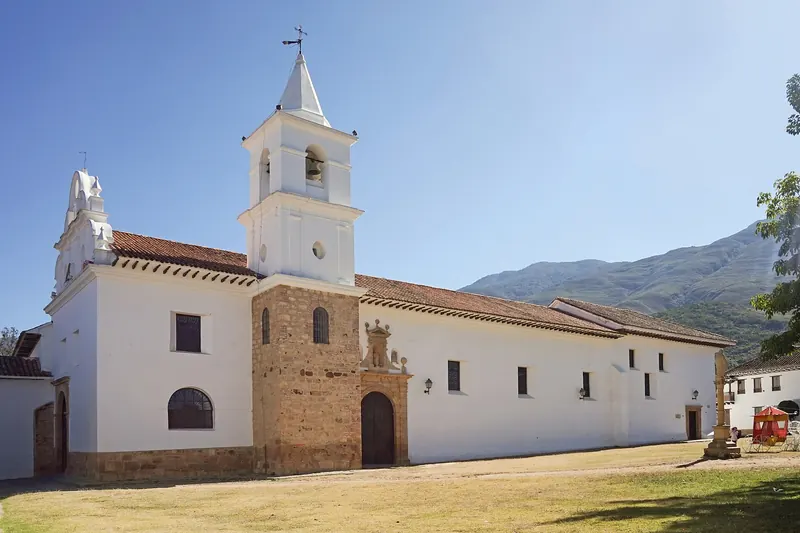
  1. The Iglesia del Carmen church beside the plaza in Villa de Leyva

    Plaza Mayor

    The enormous cobbled square, with a church and colonial buildings all around.

    Tip Visit early or at dusk.

  2. Villa de Leyva in the valley below the Iguaque mountain

    Cerro de Iguaque

    A nearby mountain reserve with cloud forest and a lake sacred to the Muisca.

    Tip Start hikes early.

  3. El Fósil

    A museum around a 110-million-year-old fossil of a marine reptile.

    Tip A short visit.

  4. Pozos Azules

    Blue and green pools in the desert.

    Tip Go in the morning.

  5. Ráquira

    A village of colourful handicraft shops and pottery.

    Tip Visit for gifts.

  6. Casa Terracota

    A house made entirely of clay.

    Tip Unusual architecture.

Things to do

Best things to do in Villa de Leyva

Villa de Leyva is for slow walks and cycling.

  1. Walk the town

    Cobbled streets.

    Tip Go early.

  2. Cycle to the sights

    Rent a bike.

    Tip Bring water.

  3. Hike Iguaque

    To the lake.

    Tip Register at the park.

  4. Taste local wine

    Boyacá wineries.

    Tip Book.

  5. Watch stargazing

    Clear skies.

    Tip Go at night.

  6. Shop for crafts

    Ceramics.

    Tip Bargain politely.

Local food

What to eat in Villa de Leyva

Boyacá food is hearty.

  • Cocido boyacense

    Hearty soup.

    Where to try it Traditional restaurants.

  • Arepa boyacense

    Cheese-filled arepa.

    Where to try it Stalls.

  • Mazorca

    Grilled corn with cheese.

    Where to try it Street.

  • Local wine

    Regional wines.

    Where to try it Wineries.

  • Cheese and honey

    Local products.

    Where to try it Markets.

Accommodation

Where to stay in Villa de Leyva

Stay in the historic centre.

  • Centre

    Colonial guesthouses.

    Best for: Atmosphere

  • Outskirts

    Cabins.

    Best for: Quiet

  • Near Iguaque

    Farm stays.

    Best for: Hiking

What a night costs

Hostel dorm
US$10–18 per night
Mid-range hotel
US$50–100 per night
Luxury stay
US$120–250 per night
Meal
US$6–15 per person

Transport

Getting to and around Villa de Leyva

Villa de Leyva is 165 km from Bogotá.

Getting there

  • Bus from Bogotá

    About 3.5 to 4 hours.

    Change at Tunja on some services.

  • Car

    About 3 hours.

    Avoid weekend traffic.

  • Tour

    Day tours from Bogotá.

    Long.

Getting around

The town is walkable.

  • On foot

    In town.

    Cobbles.

  • Bicycle

    For the sights.

    Rent.

  • Taxi and tours

    To Pozos Azules.

    Agree the price.

When to go

Best time to visit Villa de Leyva

Villa de Leyva is drier than most of the Andes.

  • December–March

    Best time

    Dry.

  • April–May

    Quiet

    Wet.

  • June–August

    Good

    Windy, with a kite festival.

  • September–November

    Think twice

    Wetter.

Worth planning around: Busy long weekends.

Itinerary

Two days in Villa de Leyva

Town, fossils and pools.

  1. Day1

    The town

    Colonial streets.

    • Morning Plaza Mayor.
    • Afternoon Museums and cafés.
    • Evening Dinner.
  2. Day2

    Around the town

    Nature.

    • Morning El Fósil and Pozos Azules.
    • Afternoon Ráquira.
    • Evening Return.

Travel tips

Villa de Leyva travel tips

A few tips help you plan.

  • Go on a weekday.
  • Bring sun protection.
  • Wear good shoes for cobbles.
  • Book weekends far ahead.
  • Rent a bike.
  • Bring cash.
  • Bring a jacket for evenings.

FAQ

Villa de Leyva: frequently asked questions

How far from Bogotá?

About 3 to 4 hours.

Is it worth it?

Yes.

When is the best time?

December to March.

How many days?

Two.

Can I do it as a day trip?

Possible but long.

Is the plaza really big?

Yes, among the largest in the Americas.

Read next

Related travel articles

Where to go

Beyond the Big Names: Places Worth the Detour

The most visited place in a country is rarely its best, and it is almost never its best value. This is a method for finding the destinations that do not make the postcards — and a set of examples from five of the 50 countries on this site.

Heritage

UNESCO Sites Worth Planning a Trip Around

A UNESCO listing tells you a place matters; it does not tell you whether it is worth two days and a detour. This is how to read the list usefully — and which sites reward building a trip around them.

Advertisement