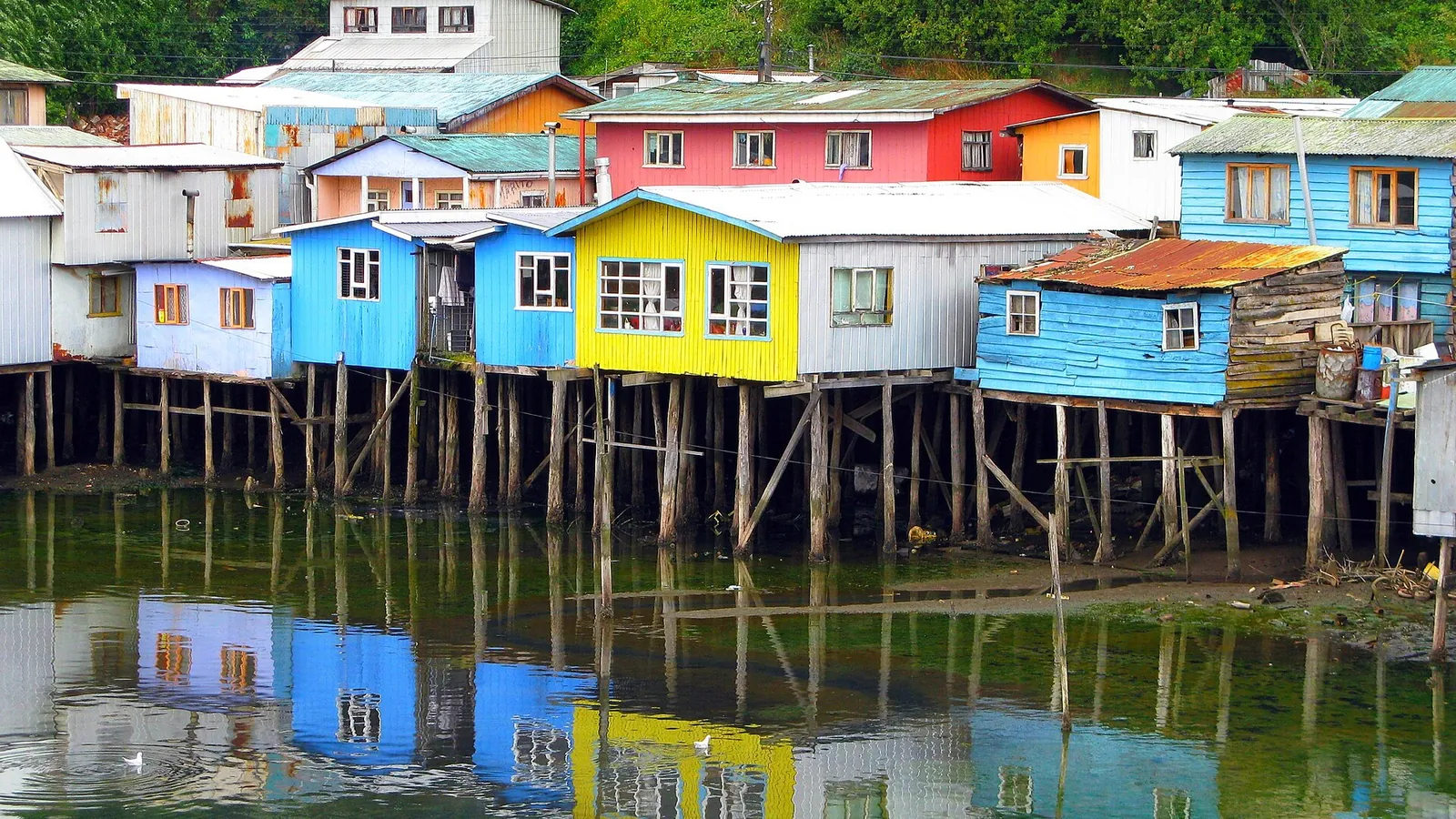
The colourful palafito stilt houses of Castro

Los Lagos Region, southern Chile · Chile

Chiloe

A misty island of wooden churches, stilt houses, myths and seafood.

  • Best time December-March
  • Stay 2-4 days
  • Good for Culture, food, slow travel

Photo: Christian Córdova · CC BY 2.0

Welcome to Chiloe

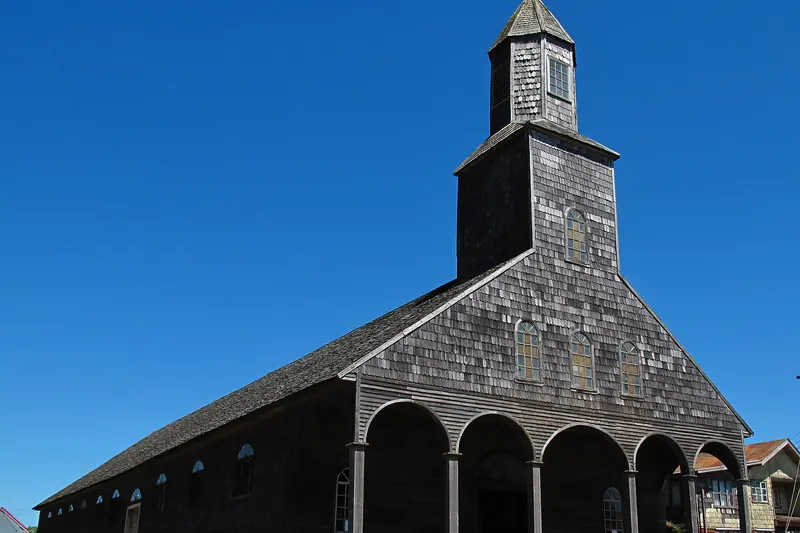
Chiloe is a large island off the coast of southern Chile, shaped by rain, sea and a distinct culture. The Chilotes developed their own architecture, cuisine, myths and traditions, and the island is full of wooden churches, stilt houses and misty shores. Sixteen of its churches are UNESCO World Heritage Sites.

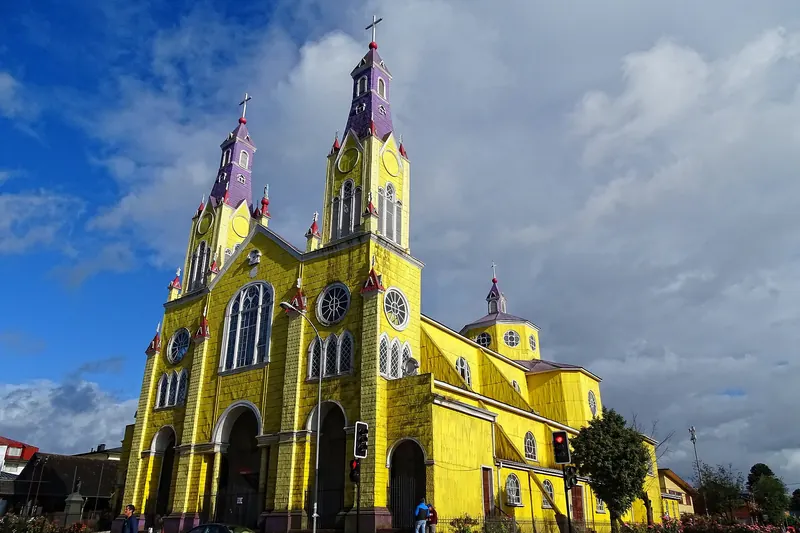
Castro, the capital, is known for its palafitos, wooden houses on stilts above the tide, and the colourful San Francisco church. Elsewhere, Achao and Nercon have beautiful churches, and the nearby islands of Quinchao and Aucar offer a slower pace. The island also has national parks, tidal shores, and colonies of Magellanic and Humboldt penguins at Puñihuil.

Chilote food is a highlight, especially curanto, a stew of seafood, meat and potatoes cooked in a pit. Weather is wet and changeable, but the sun often appears, and the island is a gentle, atmospheric place to slow down.

  • Island
  • UNESCO Site
  • Culture & Arts
  • Coast & Beaches

Why visit

Why visit Chiloe?

Chiloe feels different from the rest of Chile.

  • Wooden churches

    A unique island architecture.

  • Stilt houses

    Palafitos at Castro.

  • Cuisine

    Curanto and seafood.

  • Folklore

    Myths and legends.

  • Wildlife

    Penguins and whales.

Main attractions

Top things to see in Chiloe

The main sights are along the east coast and near Castro.

  1. Castro palafitos

    Colourful stilt houses over the water.

    Tip Photograph at high tide.

  2. The San Francisco church in Castro

    San Francisco Church, Castro

    A yellow and purple wooden landmark.

    Tip Look inside.

  3. The church at Achao on Quinchao island

    Achao church

    One of the oldest surviving churches.

    Tip Take a ferry to Quinchao.

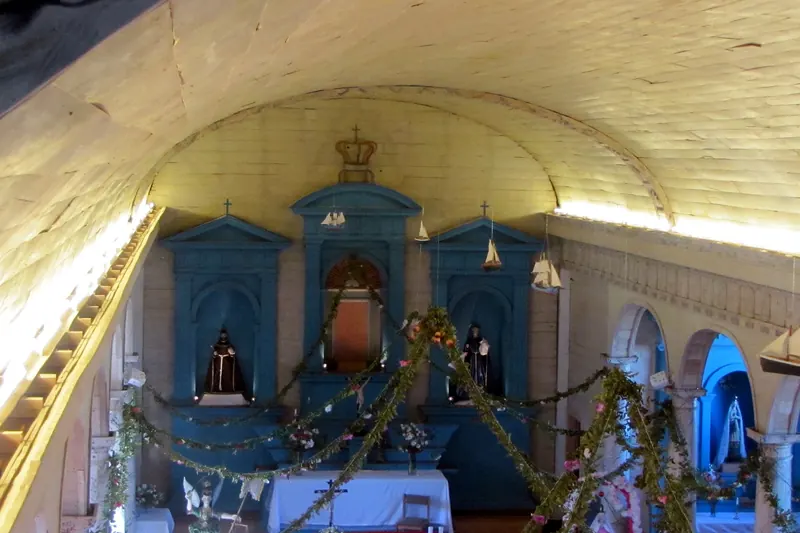
  4. The wooden ceiling inside Nercon church

    Nercon church

    Known for its wooden interior.

    Tip Visit by car.

  5. Chiloe National Park

    Temperate forest and coast.

    Tip Go for a walk.

  6. Puñihuil penguins

    Boat trips among penguin colonies.

    Tip Go from October to March.

Things to do

Best things to do in Chiloe

Slow travel suits Chiloe.

  1. Eat curanto

    At a pit in Castro.

    Tip Order at lunch.

  2. Tour the churches

    By car or bus.

    Tip Check opening hours.

  3. Take a boat to the penguins

    At Puñihuil.

    Tip Wrap up warm.

  4. Walk the national park

    On boardwalks.

    Tip Bring rain gear.

  5. Browse the Dalcahue market

    Crafts and seafood.

    Tip Go on Sundays.

  6. Stay in a palafito

    Wake over the water.

    Tip Book ahead.

Local food

What to eat in Chiloe

Chilote cooking is distinctive.

  • Curanto

    Seafood and meats in a pit.

    Where to try it Castro restaurants.

  • Milcao

    Potato pancakes.

    Where to try it Markets.

  • Chapaleles

    Potato dumplings.

    Where to try it Home-style restaurants.

  • Empanada de mariscos

    Seafood pastries.

    Where to try it Bakeries.

  • Licor de oro

    Local liqueur.

    Where to try it Shops.

Accommodation

Where to stay in Chiloe

Castro is the main base.

  • Castro

    Hotels and palafito stays.

    Best for: Base

  • Dalcahue

    Guesthouses.

    Best for: Quiet

  • Ancud

    Lodges and hostels.

    Best for: North

  • Chonchi

    Historic houses.

    Best for: Culture

What a night costs

Hostel
US$20-40 per night
Mid-range hotel
US$60-120 per night
Boutique palafito
US$120-250 per night
Meal
US$8-20 per person

Transport

Getting to and around Chiloe

You reach Chiloe by air or ferry.

Getting there

  • Fly to Mocopulli

    From Santiago via Puerto Montt.

    Limited flights.

  • Bus and ferry

    From Puerto Montt to Ancud.

    About 4 hours total.

  • Drive

    Cross by ferry at Pargua.

    Short crossing.

Getting around

Roads connect the main towns.

  • Rental car

    The best option.

    Book ahead.

  • Bus

    Between towns.

    Cheap.

  • Ferry

    To smaller islands.

    Check times.

When to go

Best time to visit Chiloe

Summer is the driest and warmest, and penguins nest from October to March.

  • December-March

    Best time

    Warmest and driest.

  • October-November

    Good

    Penguin season begins.

  • April-May

    Quiet

    Autumn and rain.

  • June-September

    Think twice

    Cold, wet and windy.

Worth planning around: Winter, when ferries and sights can be limited.

Itinerary

Three days on Chiloe

Churches and coast.

  1. Day1

    Castro

    Palafitos

    • Morning Palafitos and San Francisco Church
    • Afternoon Curanto lunch
    • Evening Walk by the water
  2. Day2

    Churches

    Achao and Dalcahue

    • Morning Ferry to Quinchao
    • Afternoon Dalcahue market
    • Evening Return
  3. Day3

    Coast

    Nature

    • Morning Puñihuil penguins
    • Afternoon Chiloe National Park
    • Evening Farewell dinner

Travel tips

Chiloe travel tips

Tips for Chiloe.

  • Pack rain gear.
  • Book accommodation early in summer.
  • Try curanto at least once.
  • Check church opening times.
  • Rent a car for flexibility.
  • Bring cash for rural areas.
  • Learn basic Spanish.

FAQ

Chiloe: frequently asked questions

How long do I need?

Two to four days.

Is it rainy?

Yes, often.

Are there penguins?

Yes, October to March.

Can I use the ferry?

Yes, frequent.

Is it expensive?

Moderate.

Do I need a car?

It helps.

Read next

Related travel articles

Food

A Country-by-Country Food Primer

Eating well abroad is mostly a matter of knowing when meals happen, how the menu is structured and which dish belongs to the place you are standing in. This covers all three for the five countries in this guide, plus the signals that separate a restaurant that feeds locals from one that feeds coaches.

Practical

Packing by Season and Trip Type

Most packing advice is a list of things. This is the opposite: the small number of decisions that determine whether your luggage helps or hinders, organised by the kind of trip you are actually taking.

Advertisement