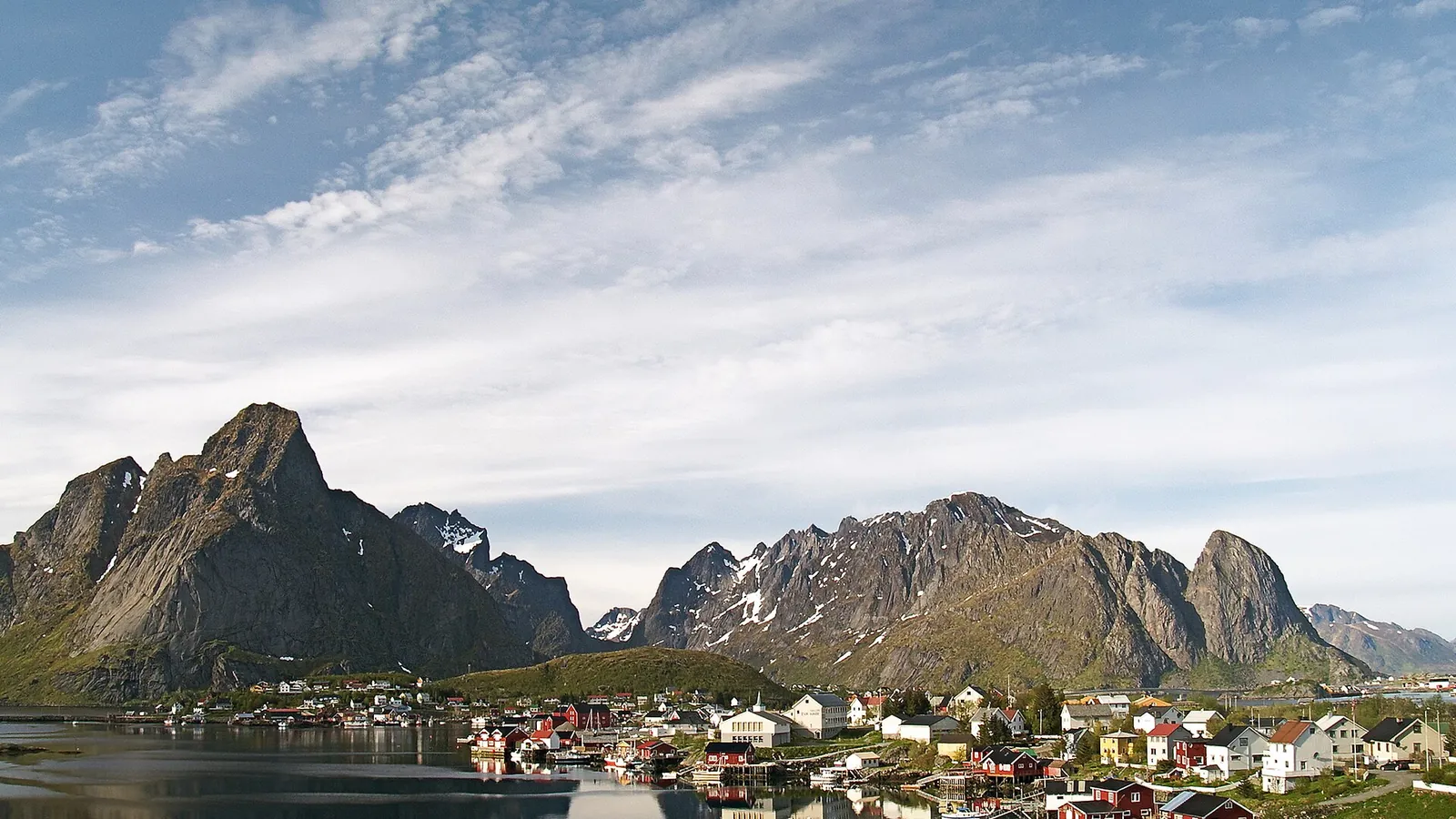
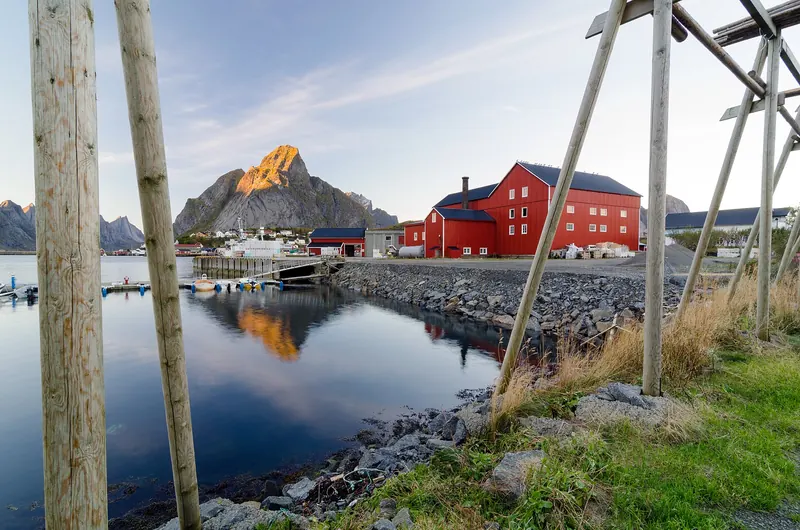
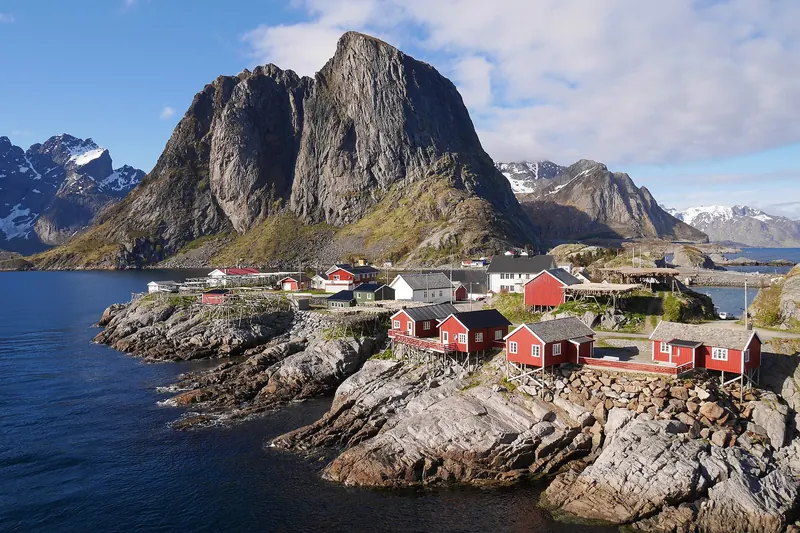
The fishing village of Reine beneath jagged peaks in the Lofoten Islands

Nordland, Northern Norway · Norway

The Lofoten Islands

Jagged granite peaks rising straight from the sea above red fishing cabins, ranking among the most photographed islands on Earth.

  • Best time Summer for the midnight sun, winter for the northern lights
  • Stay 3-5 days
  • Good for Photography, hiking, the midnight sun or northern lights

Photo: Jörg Hempel · CC BY-SA 2.0 de

Welcome to the Lofoten Islands

The Lofoten Islands are among the most photographed places in Norway, a chain of granite peaks rising almost vertically straight out of the Norwegian Sea, well above the Arctic Circle, with tiny red fishing villages tucked into the narrow flat ground between mountain and water.

The islands have built their whole identity around fishing for over a thousand years — the traditional wooden rorbuer cabins now rented out to visitors were originally built for fishermen, and the cod-drying racks still standing across the islands remain a working part of the local economy, not a museum display.

Lofoten also delivers Norway's seasonal extremes at their most dramatic: near-constant daylight around midsummer, and some of the country's best northern lights viewing in the darker months, both set against scenery that looks almost too sharp-edged to be real.

  • Island
  • Nature & Wildlife
  • Hiking
  • Photography

Why visit

Why visit the Lofoten Islands?

Lofoten's case rests on combining Norway's most dramatic mountain scenery with real, still-working fishing villages.

  • The scenery is among the most striking in Norway

    Granite peaks rising almost vertically from the sea, with barely any land between mountain and water.

  • The fishing villages are still working communities

    Reine, Hamnøy and Henningsvær aren't preserved museum pieces — cod fishing remains a real local industry.

  • It's one of Norway's best spots for both extremes

    The midnight sun in summer and the northern lights in winter are both reliable here.

  • The hiking is rewarding and varied

    From easy coastal walks to serious peak climbs like Reinebringen, with views to match the effort.

  • It's more remote and less crowded than southern Norway

    Distance from Oslo keeps visitor numbers noticeably lower than the classic fjord regions.

Main attractions

Top things to see in the Lofoten Islands

Lofoten's essential sights are its iconic fishing villages, each with its own distinct character.

  1. The fishing village of Reine surrounded by jagged peaks

    Reine

    One of Norway's most photographed villages, a small fishing settlement scattered across islets beneath sheer granite peaks.

    Tip The village itself is tiny — most visitors combine it with the Reinebringen hike for the classic elevated view.

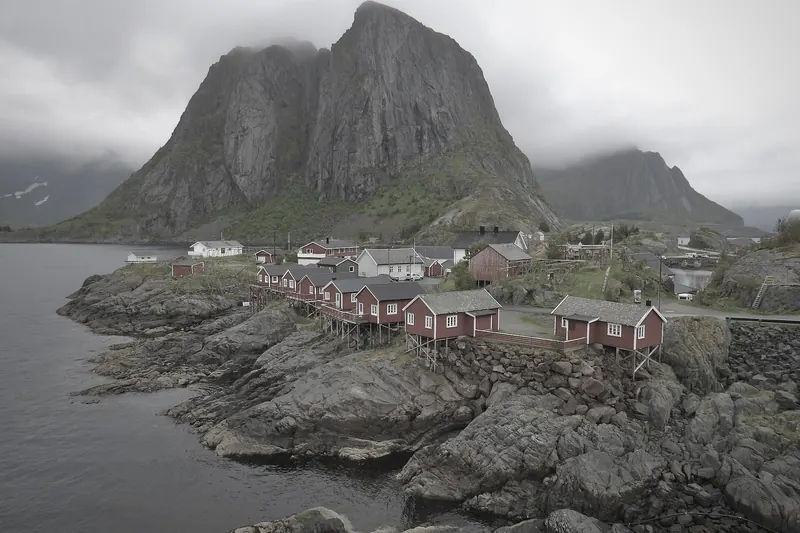
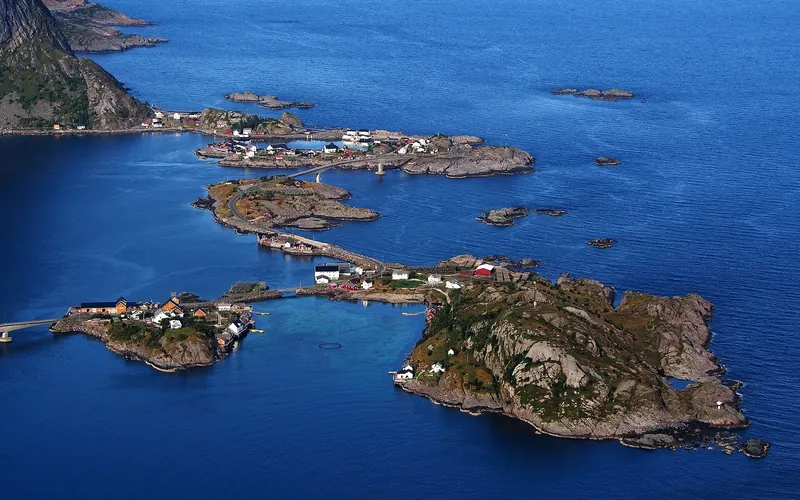
  2. The red fishing cabins of Hamnøy against the Lofoten peaks

    Hamnøy

    Home to one of Lofoten's most iconic views, red rorbuer cabins clustered on a small island beneath the Olstind peak.

    Tip The bridge just outside the village gives the classic postcard angle.

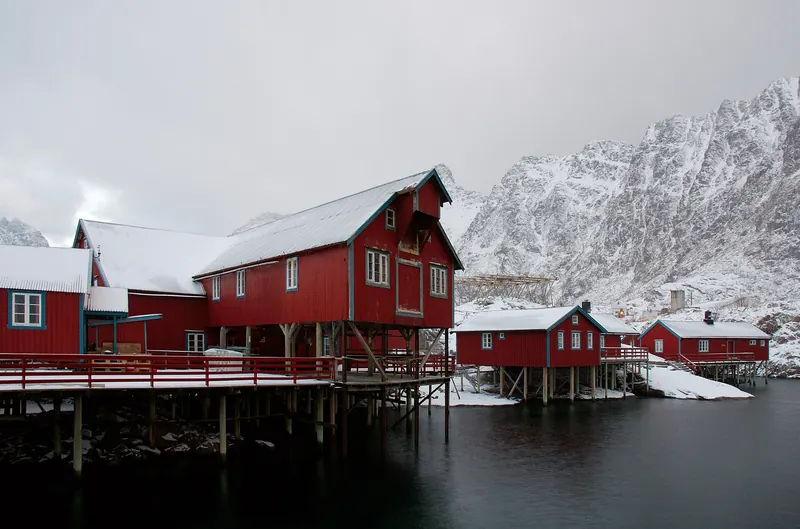
  3. The historic fishing village of Å at the southern tip of Lofoten

    Å

    The literal end of the road — a single-letter-named village at Lofoten's southern tip, its old buildings preserved as an open-air museum.

    Tip The stockfish museum here explains the cod-drying tradition that shaped the whole archipelago.

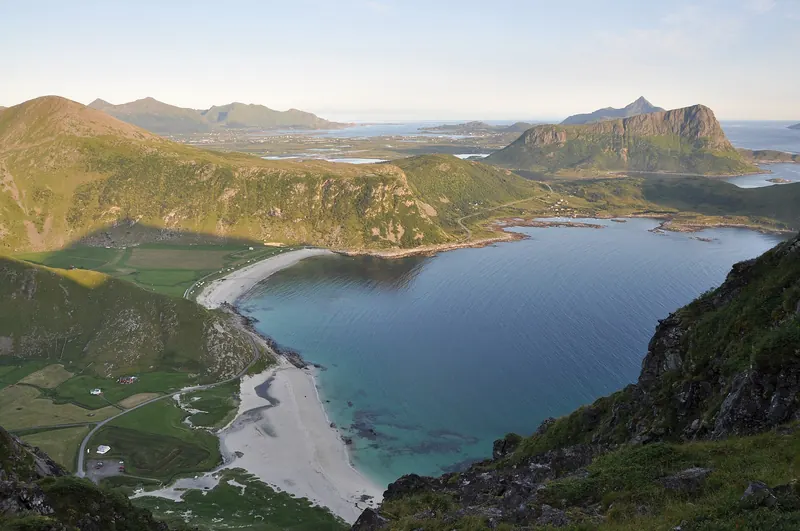
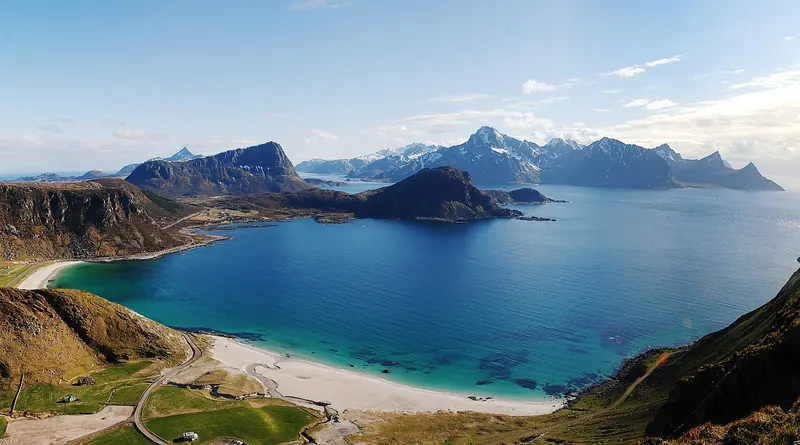
  4. The white sand and turquoise water of Haukland Beach in Lofoten

    Haukland Beach

    A striking white sand beach with turquoise water that looks tropical until the surrounding snow-capped peaks come into frame.

    Tip The water stays cold year-round despite the tropical appearance — a wetsuit helps for swimming.

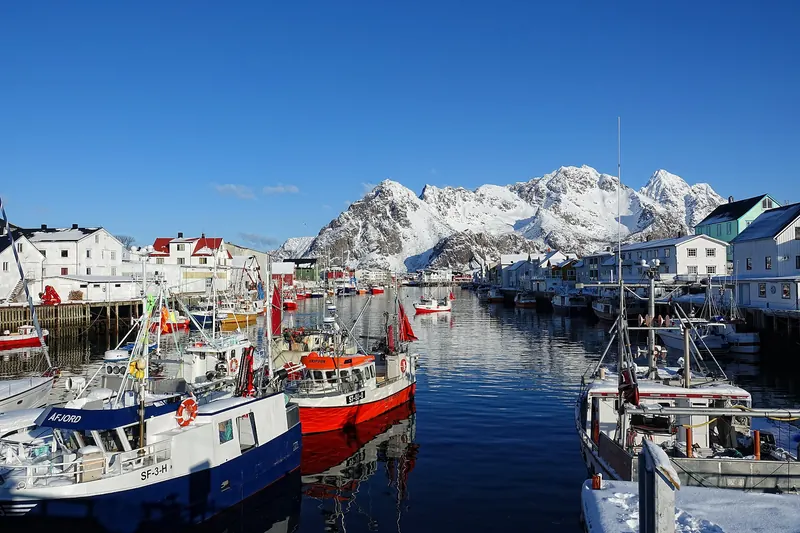
  5. The fishing village of Henningsvær spread across small islands

    Henningsvær

    Nicknamed the 'Venice of Lofoten,' a lively fishing village spread across several small connected islands.

    Tip The famous football pitch squeezed between the harbour and the sea is worth seeking out.

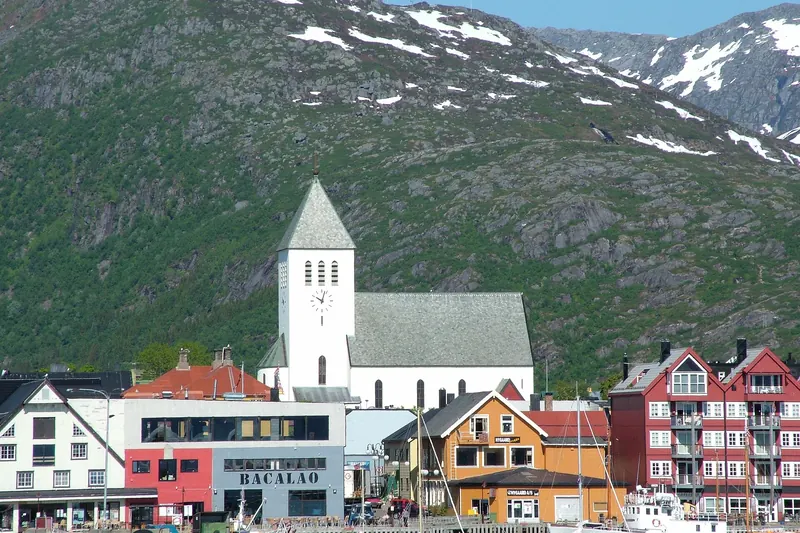
  6. The harbour town of Svolvær, Lofoten's main hub

    Svolvær

    Lofoten's largest town and main transport hub, with the best range of services, restaurants and onward connections.

    Tip The dramatic Svolværgeita rock formation above town is a well-known local climbing challenge.

  7. The view down over Reine from the Reinebringen hiking trail

    Reinebringen

    The classic Lofoten hike, a steep stone-stepped trail leading to the iconic elevated view over Reine and the surrounding peaks.

    Tip The climb is short but steep — allow 1.5-2 hours round trip at a steady pace.

Things to do

Best things to do in the Lofoten Islands

Lofoten rewards a mix of hiking, photography and simply taking in the scale of the scenery.

  1. The stone-stepped trail up Reinebringen above Reine

    Hike Reinebringen for the classic view

    The single most rewarding short hike in Lofoten, a steep climb to one of Norway's most photographed views.

    Tip Start early — the trail can get busy and the stone steps are more comfortable in cooler morning temperatures.

  2. Red fishing cabins in Hamnøy beneath the Lofoten peaks

    Photograph Hamnøy's red fishing cabins

    An essential Lofoten photo stop, with the bridge outside the village giving the classic wide-angle composition.

    Tip Golden hour light, especially around the midnight sun in summer, gives the most striking results.

  3. Explore Henningsvær's harbour on foot

    A relaxed wander around the 'Venice of Lofoten,' its narrow streets and harbour packed onto a cluster of small islands.

    Tip The small art galleries and cafés here make it a good rainy-day option too.

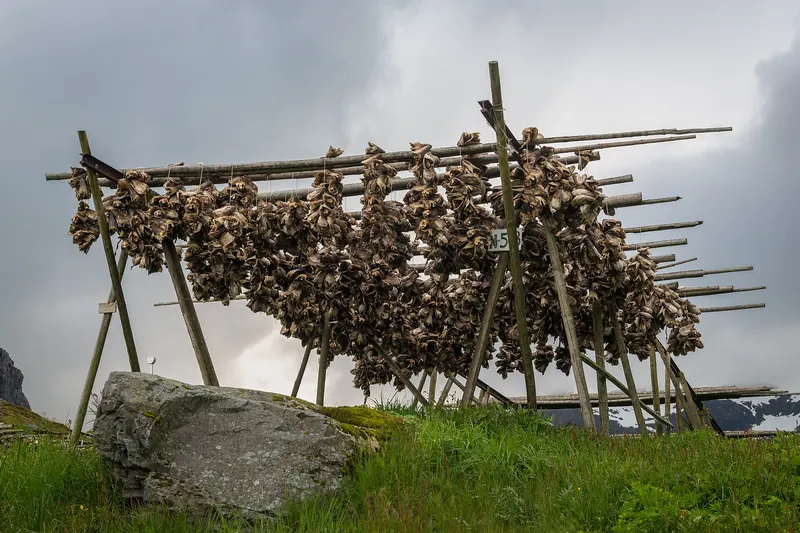
  4. Traditional wooden racks used for drying stockfish in Lofoten

    See traditional cod drying racks

    A still-active part of Lofoten's economy, with thousands of cod hung to dry on wooden racks each winter and spring.

    Tip Late winter and early spring is when you'll see the racks actually loaded with drying fish.

  5. Haukland Beach's white sand and turquoise water in Lofoten

    Relax on Haukland Beach

    A surreal spot to picnic or walk, with tropical-looking water framed by dramatic Arctic peaks.

    Tip Bring warm layers even on a sunny day — the wind off the sea can be sharp.

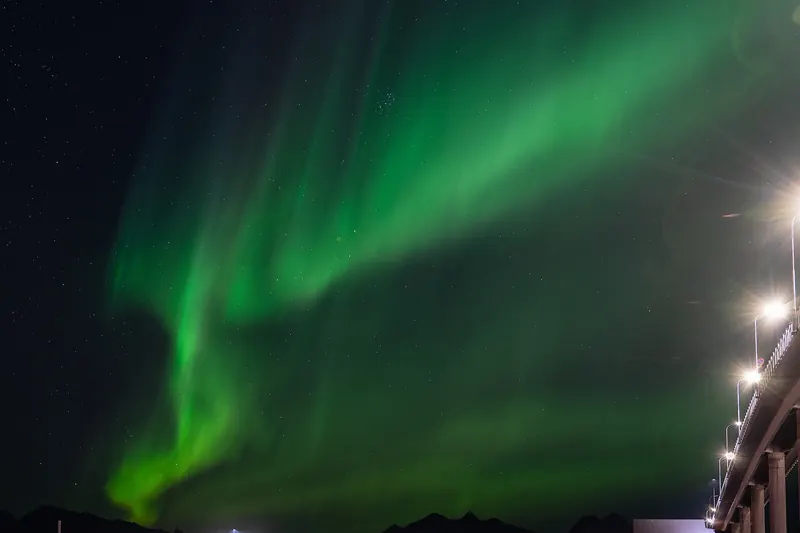
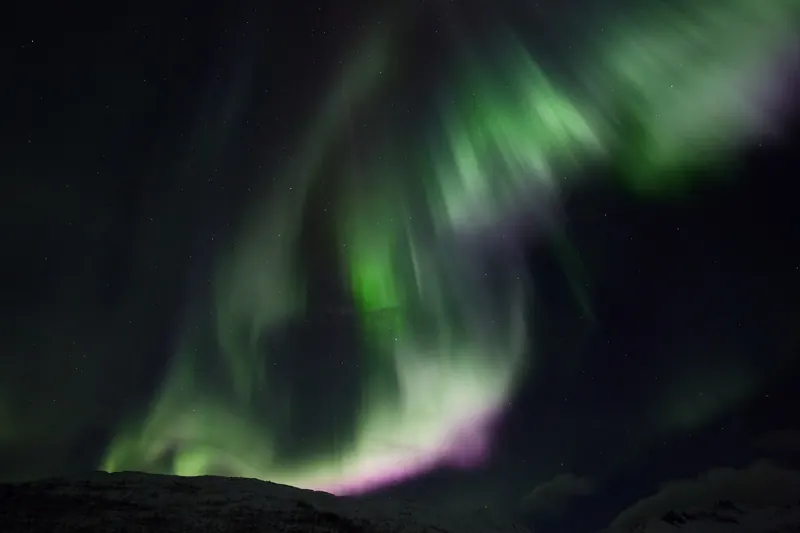
  6. The aurora borealis over Svolvær in the Lofoten Islands

    Chase the northern lights or midnight sun

    One of Norway's best spots for both seasonal extremes, depending entirely on when you visit.

    Tip Winter visitors should check the aurora forecast; summer visitors should pack a proper eye mask for sleeping.

Local food

What to eat in the Lofoten Islands

Lofoten's food centres on cod, the fish that has shaped the islands' economy and culture for over a thousand years.

  • Cod drying on traditional wooden racks in Lofoten

    Tørrfisk (stockfish)

    Lofoten's defining product, cod air-dried on wooden racks for months, a trade dating back to the Viking era.

    Where to try it Restaurants throughout Lofoten, and the stockfish museum in Å.

  • Fresh cod (torsk)

    An essential fresh alternative to the dried version, especially good during the winter skrei cod season.

    Where to try it Restaurants throughout Reine, Henningsvær and Svolvær.

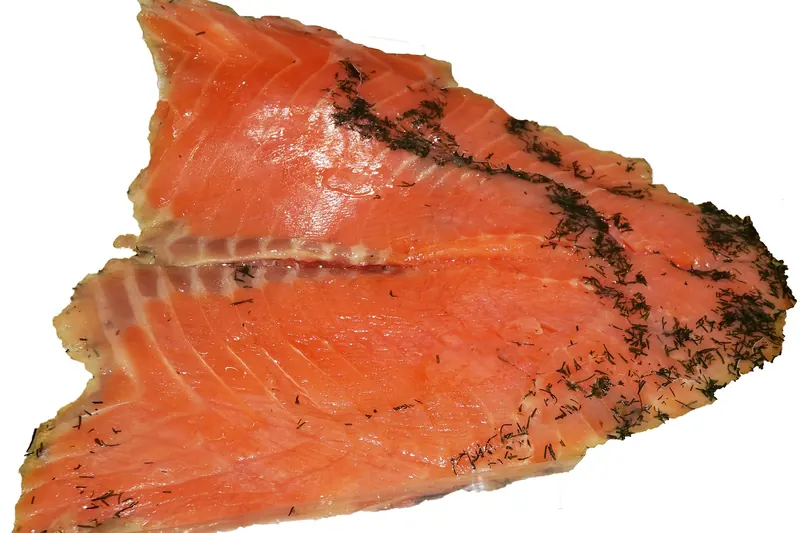
  • Gravlax, cured salmon, a Norwegian specialty

    Salmon (gravlax)

    Widely available alongside the region's cod, served across Lofoten's restaurants.

    Where to try it Restaurants throughout the islands.

  • Brunost, Norway's caramel-coloured brown cheese

    Brunost (brown cheese)

    A reliable breakfast staple at guesthouses and rorbuer cabin rentals across the islands.

    Where to try it Guesthouse and rorbuer breakfasts throughout Lofoten.

  • Fiskekaker (fish cakes)

    A traditional, humble dish of pan-fried fish patties, a comforting local classic.

    Where to try it Traditional restaurants in Svolvær and smaller villages.

  • Cloudberries (molter)

    A prized wild arctic berry, found across northern Norway including Lofoten's hillsides in late summer.

    Where to try it Restaurants across the islands in late summer.

Accommodation

Where to stay in the Lofoten Islands

Lofoten's iconic accommodation option is the rorbuer, traditional fishermen's cabins now rented to visitors.

  • Reine and Hamnøy

    Rorbuer cabins here put you directly among Lofoten's most photographed views.

    Best for: The most iconic scenery, right at your doorstep

  • Svolvær

    Lofoten's largest town, with more restaurants, shops and transport connections.

    Best for: The genuine main hub, with the widest range of services

  • Henningsvær

    A charming base with good cafés and galleries within walking distance.

    Best for: A lively village atmosphere

What a night costs

Rorbuer cabin (per night)
NOK 1,500–3,500
Guesthouse room
NOK 900–1,800 per night
Rental car (per day)
About NOK 700–1,200
Guided hiking or photography tour
About NOK 900–1,500

Transport

Getting to and around the Lofoten Islands

Lofoten is reached by domestic flight, coastal ferry, or a long scenic drive from mainland Norway.

Getting there

  • Domestic flight to Svolvær or Leknes

    The fastest option, connecting via Bodø or Tromsø from other parts of Norway.

    Small regional airports serve both towns with short connecting flights.

  • Hurtigruten coastal ferry

    A scenic way to arrive, stopping in Svolvær as part of its full coastal route.

    A memorable journey in its own right, not just practical transport.

  • Ferry from Bodø

    A popular route for visitors bringing a rental car from the mainland.

    Crossings take a few hours and should be booked ahead in summer.

Getting around

Lofoten's single main road (the E10) connects most villages, making a rental car the standard way to explore.

  • Rental car

    The most flexible way to see Reine, Hamnøy, Å and Henningsvær in one trip.

    The E10 connects most of the islands' main sights along a single scenic route.

  • Local buses

    A workable but limited option connecting the main towns and villages.

    Less frequent than a car allows, especially for reaching trailheads.

  • On foot within villages

    Fine for exploring Reine, Hamnøy or Henningsvær themselves once you've arrived.

    Each village is small enough to explore fully on foot.

When to go

Best time to visit the Lofoten Islands

Lofoten offers two completely different experiences depending on season, both worth planning around deliberately.

  • Summer (June–August)

    Best time

    The midnight sun season, with near-constant daylight and the easiest hiking conditions.

  • Winter (December–February)

    Good

    Excellent northern lights odds, though short days and cold limit hiking options.

  • Shoulder months (May, September)

    Good

    Quieter, with a reasonable balance of daylight and thinner crowds.

  • Skrei cod season (January–April)

    Good

    When the cod-drying racks are actually loaded with fish, adding real working atmosphere.

Worth planning around: Nothing strongly — Lofoten offers a worthwhile, if very different, experience in every season.

Itinerary

Three days in Lofoten

Built around the classic southern villages first, then Henningsvær and Svolvær to the north.

  1. Day1

    Reine and Hamnøy

    Lofoten's most iconic villages and the Reinebringen hike.

    • Morning Explore Reine and the village of Å.
    • Afternoon Hike Reinebringen for the classic elevated view.
    • Evening Photograph Hamnøy's red cabins in the evening light.
  2. Day2

    Beaches and Henningsvær

    Haukland Beach and the 'Venice of Lofoten.'

    • Morning Relax at Haukland Beach.
    • Afternoon Drive to Henningsvær and wander its harbour.
    • Evening Dinner in Henningsvær.
  3. Day3

    Svolvær and departure

    Lofoten's main town before onward travel.

    • Morning Explore Svolvær's harbour and shops.
    • Afternoon A final coastal walk or viewpoint.
    • Evening Depart by flight or ferry.

Travel tips

The Lofoten Islands travel tips

A handful of practical notes make a Lofoten trip go far more smoothly.

  • Book rorbuer cabins months ahead for summer visits.
  • Bring a proper eye mask if visiting during the midnight sun season.
  • Pack warm, windproof layers regardless of season.
  • Fill up on fuel whenever you pass a station — they're spread out along the E10.
  • Wear sturdy footwear for the Reinebringen and other Lofoten hikes.
  • Check ferry and flight schedules carefully if your visit is time-limited.

FAQ

The Lofoten Islands: frequently asked questions

Are the Lofoten Islands worth visiting?

Yes — the combination of dramatic granite peaks and real, still-working fishing villages makes it one of Norway's most rewarding regions.

How do you get to Lofoten?

By domestic flight to Svolvær or Leknes, the Hurtigruten coastal ferry, or a car ferry from Bodø.

What is Lofoten famous for?

Its dramatic scenery — granite peaks rising straight from the sea — alongside a thousand-year-old cod fishing tradition.

How many days do you need in Lofoten?

Three to five days covers the main villages, a hike and some beach time at a comfortable pace.

Is Lofoten good for the northern lights?

Yes, in winter — its location well above the Arctic Circle gives reliably good aurora conditions on clear nights.

Do you need a car in Lofoten?

Practically yes — the islands' single main road connects the villages, and a car gives far more flexibility than the limited bus network.

Read next

Related travel articles

Where to go

Beyond the Big Names: Places Worth the Detour

The most visited place in a country is rarely its best, and it is almost never its best value. This is a method for finding the destinations that do not make the postcards — and a set of examples from five of the 50 countries on this site.

Practical

Packing by Season and Trip Type

Most packing advice is a list of things. This is the opposite: the small number of decisions that determine whether your luggage helps or hinders, organised by the kind of trip you are actually taking.

Advertisement