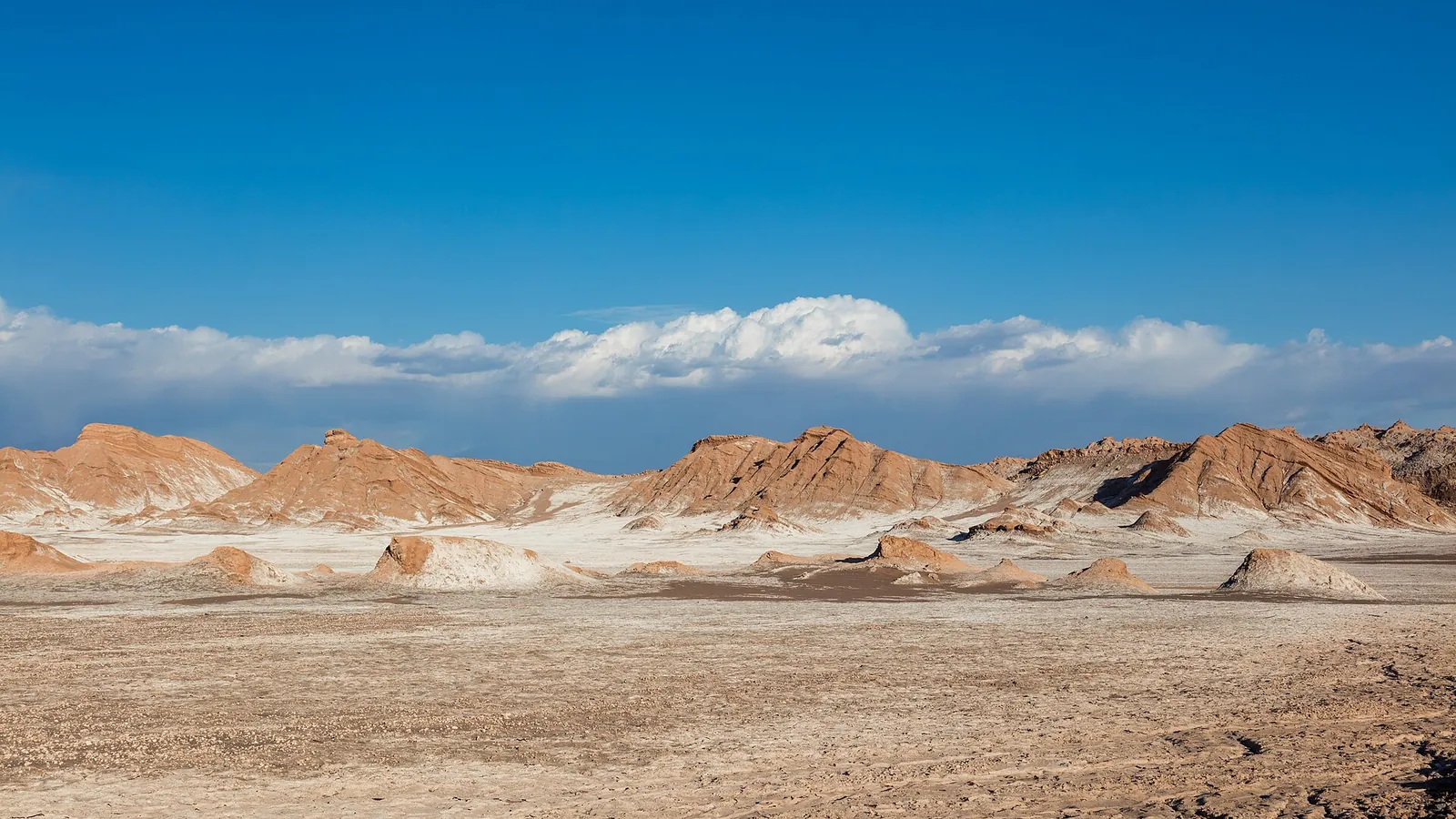
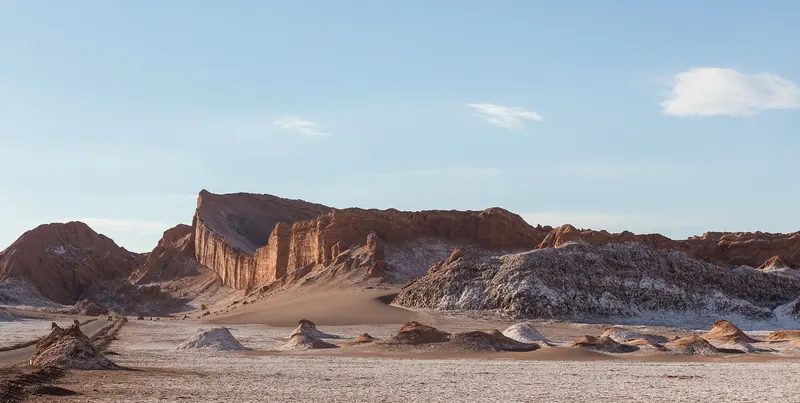
The otherworldly landscape of the Valle de la Luna near San Pedro de Atacama

Antofagasta Region, northern Chile · Chile

San Pedro de Atacama

An adobe desert oasis beside salt flats, geysers, volcanoes and the clearest night skies on Earth.

  • Best time March-May, September-November
  • Stay 3-5 days
  • Good for Nature, photographers, stargazers

Photo: Diego Delso · CC BY-SA 4.0

Welcome to San Pedro de Atacama

San Pedro de Atacama is a small oasis of adobe buildings and dusty streets on the edge of the driest non-polar desert in the world. At 2,400 metres, it serves as the base for exploring a landscape of salt flats, volcanoes, lagoons and geysers, all within a few hours of town.

Tours leave at all hours, from sunrise trips to the El Tatio geysers, where steam rises at 4,300 metres, to afternoon excursions to the Valle de la Luna, where sunset turns the rocks red. The Salar de Atacama has flamingo lagoons, and Laguna Cejar and other salt lakes allow floating like in the Dead Sea. At night, the skies are famously clear and local operators run astronomy tours.

The altitude and dryness are real factors, so plan an easy first day, drink water and wear sun protection. Tours are the main way to see the area, though bicycles can reach nearby sights.

  • Nature & Wildlife
  • Scenic Region
  • Off the Beaten Path
  • Mountains

Why visit

Why visit San Pedro de Atacama?

San Pedro is one of the most dramatic natural destinations in South America.

  • Otherworldly landscapes

    Dunes, salt flats and volcanoes.

  • Stargazing

    Some of the clearest skies in the world.

  • Geysers

    El Tatio at sunrise.

  • Floating lagoons

    Swim in salt water.

  • Flamingos

    Birds in high lagoons.

Main attractions

Top things to see in San Pedro de Atacama

Most sights are an excursion away from town.

  1. The amphitheatre in the Valle de la Luna

    Valle de la Luna

    Sand dunes and eroded rock formations, best at sunset.

    Tip Book a sunset tour.

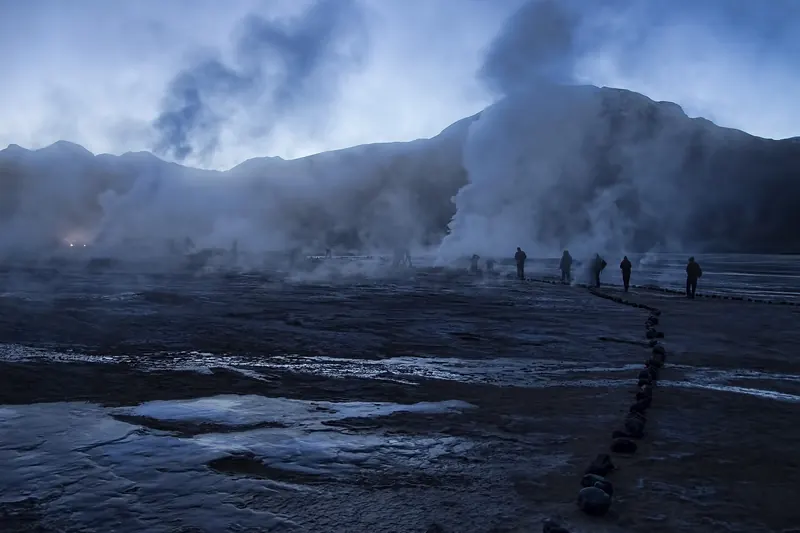
  2. Steaming geysers at El Tatio

    El Tatio geysers

    A high-altitude geyser field, best at dawn.

    Tip Dress warmly.

  3. Laguna Cejar in the Atacama

    Laguna Cejar

    A salt lagoon where you float.

    Tip Shower afterwards.

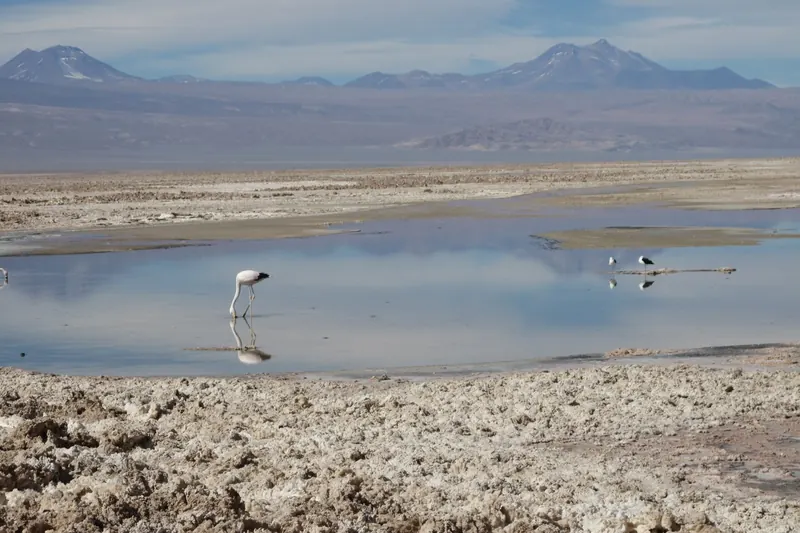
  4. Flamingos at the Salar de Atacama

    Salar de Atacama

    The largest salt flat in Chile, with flamingos.

    Tip Visit Laguna Chaxa.

  5. Altiplanic lagoons

    Turquoise lakes at high altitude.

    Tip Take it slowly.

  6. San Pedro town

    Adobe church and craft shops.

    Tip Walk in the cool evening.

Things to do

Best things to do in San Pedro de Atacama

Book excursions the day before.

  1. Watch the geysers at sunrise

    At El Tatio.

    Tip Wear layers.

  2. Float in a lagoon

    At Cejar or Tebinquinche.

    Tip Avoid cuts.

  3. Go on an astronomy tour

    Look through telescopes.

    Tip Book ahead.

  4. Hike Valle de la Luna

    On foot at sunset.

    Tip Carry water.

  5. Bike to Pukara de Quitor

    A ruined fortress.

    Tip Go early.

  6. Soak in hot springs

    At Termas de Puritama.

    Tip Book a transfer.

Local food

What to eat in San Pedro de Atacama

Food is simple and adapted to high altitude.

  • Empanada

    Cheese or meat pastries.

    Where to try it Bakeries.

  • Quinoa soup

    Local grain.

    Where to try it Restaurants.

  • Llama steak

    A local meat.

    Where to try it Restaurants.

  • Pisco sour

    Cocktail.

    Where to try it Bars.

  • Coca tea

    For altitude.

    Where to try it Cafes.

Accommodation

Where to stay in San Pedro de Atacama

Stay in town or in nearby ayllus.

  • Town centre

    Hostels and guesthouses.

    Best for: Convenience

  • Ayllus

    Adobe lodges.

    Best for: Quiet

  • Luxury lodges

    All-inclusive stays.

    Best for: Spa

  • Camping

    Local sites.

    Best for: Budget

What a night costs

Hostel
US$25-50 per night
Mid-range hotel
US$80-170 per night
All-inclusive lodge
US$400-900 per night
Tour
US$25-120 per excursion

Transport

Getting to and around San Pedro de Atacama

San Pedro is reached via Calama.

Getting there

  • Fly to Calama

    From Santiago in about 2 hours.

    Frequent flights.

  • Transfer

    Shuttle to San Pedro in about 1.5 hours.

    Book ahead.

  • Bus

    From Calama or Salta.

    Long journeys.

Getting around

Tours and bikes.

  • Tour

    Most excursions.

    Book at agencies.

  • Bicycle

    To nearby ruins.

    Carry water.

  • Rental car

    For flexible trips.

    Check fuel.

When to go

Best time to visit San Pedro de Atacama

Shoulder seasons offer warm days and clear nights.

  • March-May

    Best time

    Warm days and clear skies.

  • September-November

    Best time

    Mild and dry.

  • December-February

    Good

    Hot with altiplanic rain.

  • June-August

    Good

    Cold nights, perfect stars.

Worth planning around: January and February, when altiplanic storms can close roads.

Itinerary

Four days in the Atacama

Acclimatise and explore.

  1. Day1

    Arrival

    Rest

    • Morning Walk around town
    • Afternoon Pukara de Quitor
    • Evening Early dinner
  2. Day2

    Valle de la Luna

    Sunset

    • Morning Rest
    • Afternoon Valle de la Luna tour
    • Evening Astronomy tour
  3. Day3

    Lagoons

    Salt flats

    • Morning Laguna Cejar
    • Afternoon Laguna Chaxa
    • Evening Free evening
  4. Day4

    Geysers

    Sunrise

    • Morning El Tatio at dawn
    • Afternoon Hot springs
    • Evening Departure

Travel tips

San Pedro de Atacama travel tips

Prepare for altitude.

  • Take it slow on arrival day.
  • Drink plenty of water.
  • Wear sun protection.
  • Bring layers for cold mornings.
  • Book tours in advance.
  • Carry cash for small purchases.
  • Use reputable operators.

FAQ

San Pedro de Atacama: frequently asked questions

Is altitude a problem?

It can be, rest first.

How long do I need?

Three to five days.

Is it expensive?

Yes, tours add up.

When is best?

March to May.

Can I swim in lagoons?

Yes in designated ones.

Is it good for stargazing?

Among the best.

Read next

Related travel articles

Heritage

UNESCO Sites Worth Planning a Trip Around

A UNESCO listing tells you a place matters; it does not tell you whether it is worth two days and a detour. This is how to read the list usefully — and which sites reward building a trip around them.

Where to go

Beyond the Big Names: Places Worth the Detour

The most visited place in a country is rarely its best, and it is almost never its best value. This is a method for finding the destinations that do not make the postcards — and a set of examples from five of the 50 countries on this site.

Advertisement